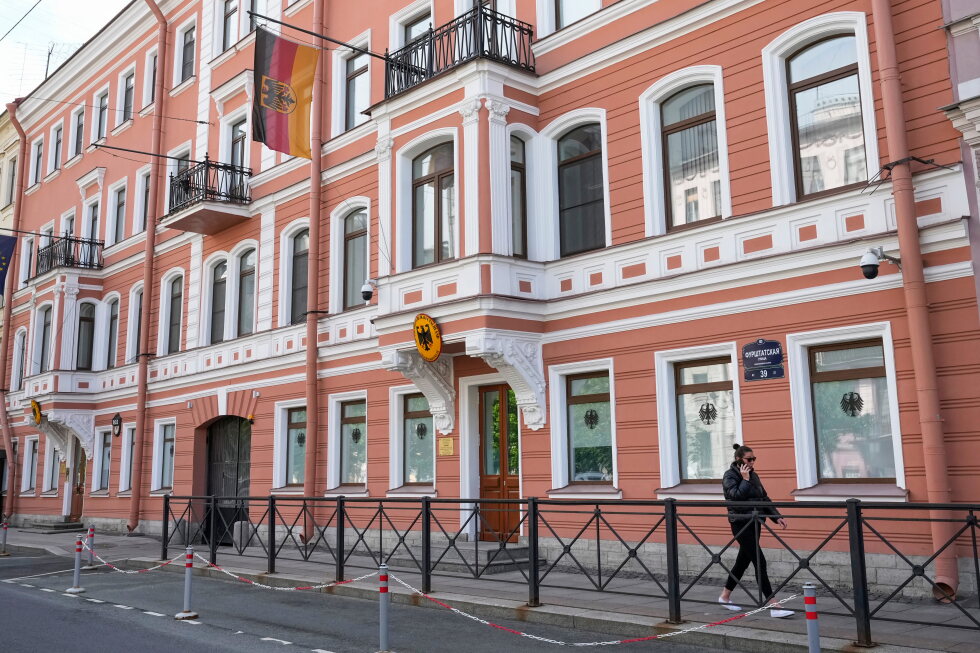
Diplomatic tensions between Russia and Germany have surged to a new low this week, as Russia’s Foreign Ministry announced Monday it will shutter Germany’s consulate general in St. Petersburg — the latest retaliatory measure in a rapidly expanding cycle of reciprocal diplomatic actions. The escalation traces back to an alleged attempted drone strike at Germany’s Leipzig/Halle Airport in early August, a plot Berlin has openly blamed on Russian actors.
According to the official Russian Foreign Ministry statement, all operations at the St. Petersburg German consulate must cease, and all consular staff are required to exit Russian territory by September 18. The announcement also reaffirmed an earlier order to close two German-run cultural institutions, the Goethe-Institut centers in Moscow and St. Petersburg, giving their personnel until this coming Sunday to leave the country.
Moscow framed the entire set of measures as a direct response to what it called Germany’s “unfriendly” actions taken just last Wednesday. In that move, Berlin ordered the shutdown of Russia’s consulate in the western German city of Bonn, as well as the Russian House cultural center located in the heart of Berlin, Germany’s capital.
The root of the current confrontation lies in the August 4 incident at Leipzig/Halle Airport, a critical European cargo hub that frequently handles shipments of military and humanitarian aid bound for Ukraine amid the ongoing Russia-Ukraine conflict. German authorities discovered an explosive-laden drone positioned in close proximity to a Ukrainian cargo plane parked at the airport; the device was successfully disarmed before it could cause any harm or casualties.
Russian officials have flatly denied any connection to the attempted attack, with Moscow characterizing the entire incident as a deliberate provocation staged against Russia. “It was the German authorities who once again provoked a new round of escalation in bilateral relations,” the Russian Foreign Ministry stressed in its statement Monday. “All responsibility for the consequences lies entirely with the German government.”
This latest exchange comes amid a broader pattern of accusations from Western governments, which have repeatedly claimed Moscow is orchestrating a coordinated campaign of sabotage and disruptive activities across Western nations. Western officials argue these actions are intended to erode public and political support for Ukraine, and to destabilize domestic political order in European countries. The Kremlin has consistently rejected all such allegations as unfounded and misleading.