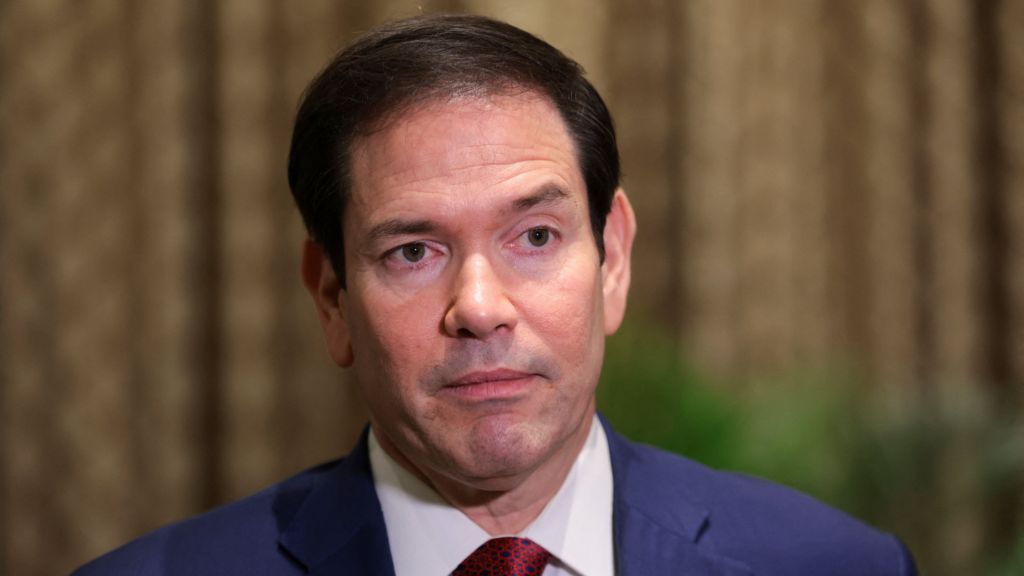
During a surprise high-profile diplomatic trip to India this week, U.S. Secretary of State Marco Rubio bypassed the traditional mandatory stop in the national capital of New Delhi, instead centering his itinerary on the financial hub of Mumbai and the remote western port town of Jamnagar, a move that analysts frame as a strategic gambit tied directly to the Donald Trump administration’s urgent domestic energy priorities in the run-up to November’s U.S. midterm elections. Rubio, making his second official visit to India in a single calendar year, first landed in Mumbai where he held closed-door bilateral talks with Indian External Affairs Minister S Jaishankar at the iconic Taj Hotel, alongside a series of roundtable meetings with top-tier Indian business leaders. The official U.S. State Department pre-visit announcement had flagged energy cooperation, cross-border commercial investment, and broader bilateral economic alignment as core agenda pillars, but the complete omission of New Delhi from the formal itinerary sparked initial speculation from Indian opposition politicians about a potential snub to the national government. Experts including Michael Kugelman, senior fellow at the Atlantic Council, explained that the deliberate choice to avoid Delhi was rooted in the deep existing trust deficit between the two national administrations: Delhi policymakers have publicly voiced frustration over a string of Trump administration policies, including sweeping tariffs on Indian goods, previously active sanctions targeting Indian entities for purchasing Russian energy, and a 20-month-long stalemate in negotiations for a landmark bilateral trade deal. Former Indian ambassador to the U.S. Meera Shankar, however, pushed back against overinterpreting the skipped capital stop, noting that the entire trip was explicitly structured as an energy-focused mission, and that the critical high-level diplomatic engagement with Jaishankar had already been completed in Mumbai. The defining stop of the visit came in Jamnagar, Gujarat, the site of Mukesh Ambani’s sprawling Reliance Industries oil refinery complex: a facility that processes 1.4 million barrels of crude oil per day, accounting for roughly 1.5% of total global refining capacity, and standing as one of the world’s largest single-site exporters of diesel and other refined petroleum products. Against a backdrop of escalating tensions across the Middle East that threaten to disrupt global energy supply chains, and with no new major refining capacity slated to come online in the U.S. in the immediate short term, the Trump administration is under intense domestic pressure to curb rising retail fuel prices ahead of the midterm elections, making India’s world-class refining ecosystem a uniquely viable solution to ease upward pressure on U.S. fuel markets. During a tightly restricted, low-media-access tour of the Jamnagar facility, Rubio met privately with Ambani and senior members of the Reliance leadership team, with the conglomerate later releasing a carefully worded statement noting that discussions covered the shifting global energy landscape and cross-sector commercial partnership opportunities spanning both traditional fossil fuels and renewable new energy projects, without confirming any formal binding commitments on crude sourcing or refined product exports. Speaking to reporters a day prior to the refinery tour, Rubio lauded India as a “refining superpower” and explicitly called for Reliance to ramp up processing of heavy crude oil from Venezuela, whose energy sector sanctions the U.S. partially eased earlier this year after the American intervention that resulted in the capture of Venezuelan President Nicolás Maduro. Analysts note that the push to redirect Reliance’s refining capacity toward Venezuelan crude serves multiple overlapping U.S. goals: it would immediately boost global supplies of refined fuel to cool U.S. domestic prices, while also gradually reducing India’s longstanding reliance on discounted Russian crude. Since the 2022 Russian invasion of Ukraine, India has emerged as one of the world’s top importers of Russian crude, with data from the Centre for Research on Energy and Clean Air showing that between December 2022 and July 2026, 37% of Russia’s total crude exports flowed to India, a dynamic that has long been a major point of friction in U.S.-India ties. The Trump administration had imposed an additional 25% tariff on Indian goods over these Russian oil purchases in August 2025, pushing total tariffs on many Indian products as high as 50%, before pausing the penalty in February 2026; the U.S. also temporarily lifted sanctions on Russian diesel imports earlier this month, creating a new opening for negotiated energy alignment. Kugelman further revealed that Rubio’s meeting with the Ambani family included a second key, less public priority: securing Reliance’s commitment to invest in the proposed Port of Brownsville refinery in Texas, a project Donald Trump first announced on his Truth Social platform in March as the first major new U.S. refinery to be built in 50 years. While no public details on the project’s timeline or investment structure have been released to date, the planned Texas facility represents a long-term U.S. play to expand domestic refining capacity. Despite the apparent progress on energy cooperation, all analysts consulted emphasized that a swift breakthrough on the long-stalled bilateral trade deal is unlikely in the immediate term. Even as two-way trade between the U.S. and India continues to show robust growth – Indian merchandise exports to the U.S. hit $50.81 billion in the April to September 2026 period, marking an 11.1% year-over-year increase, while Indian imports of U.S. goods rose to $32.33 billion – significant unresolved frictions remain, from outstanding tariff disputes to geopolitical misalignments. For now, the unconventional itinerary has succeeded in resetting strained bilateral relations, but it remains to be seen whether the emerging energy partnership will translate into a durable, long-term realignment of U.S.-India economic and diplomatic ties.