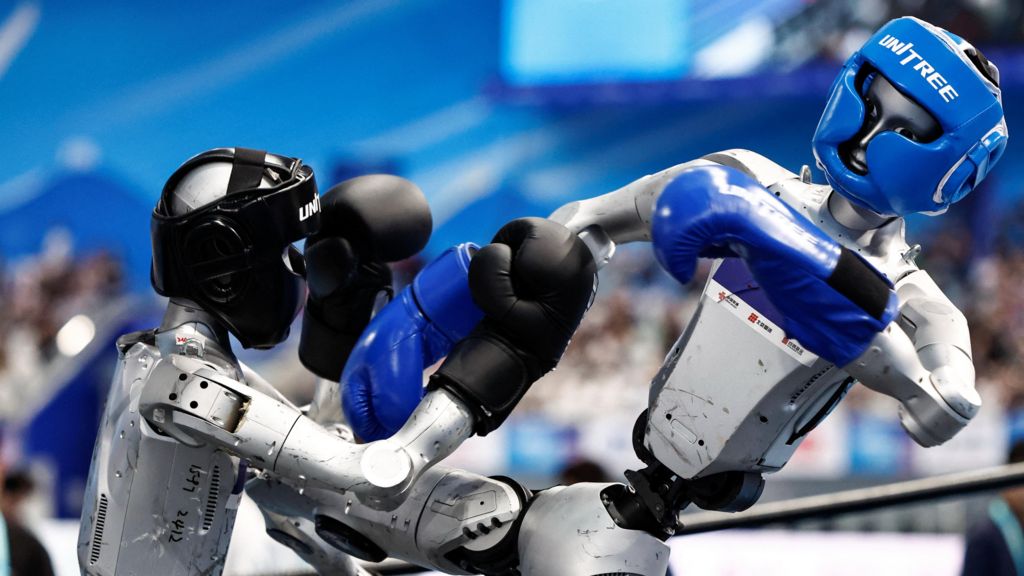
The global stage of humanoid robotic innovation has arrived in Beijing, as the second iteration of the World Humanoid Games officially kicked off on Saturday. The five-day landmark competition brings together cutting-edge robotic designs from engineering teams across the globe, all gathering to test their creations’ agility, coordination and real-world performance through a series of human-style athletic events.
Unlike traditional robotics trade shows that focus on technical specifications behind closed booths, the World Humanoid Games adopts a competitive, sports-inspired format that pushes humanoid robots to demonstrate their capabilities in dynamic, real-time challenges. This year’s event features three core competitive categories: boxing, 11-a-side football, and sprinting, each designed to evaluate different critical functions of bipedal humanoid robots, from balance control and rapid movement to responsive decision-making and physical interaction.
Organizers note that the competition serves a far greater purpose than entertainment: it provides a shared, standardized testing ground for robotic developers to refine balance algorithms, improve motor control, and advance the sensory technology that allows humanoid robots to adapt to changing, unpredictable environments. The event, hosted in Beijing, also highlights the growing global collaboration in humanoid robotics research, bringing together academic institutions, private tech firms, and engineering start-ups to showcase the latest progress in the field. As the competition gets underway, attendees and online viewers around the world are watching to see which teams have pushed the boundaries of what humanoid robots can achieve.