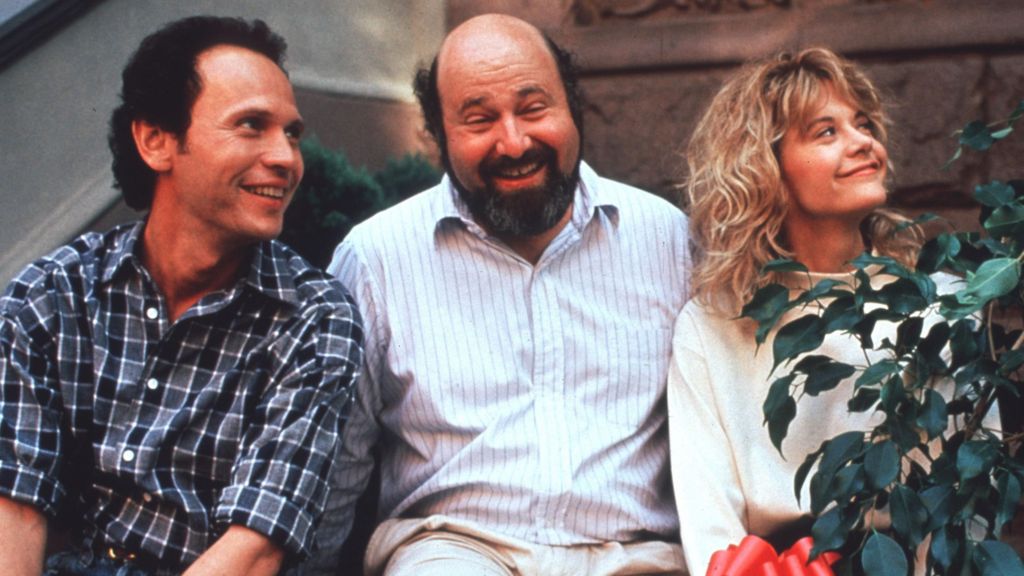
The entertainment world is reeling from the tragic loss of acclaimed filmmaker Rob Reiner and his wife Michele. Reiner, who passed away recently, leaves behind an extraordinary legacy that reshaped American cinema across multiple genres.
Born in the Bronx, Reiner first captured national attention through his Emmy-winning portrayal of Michael “Meathead” Stivic on the groundbreaking 1970s sitcom “All in the Family.” His transition from actor to director began with the 1974 TV movie “Sonny Boy,” but his directorial breakthrough arrived with 1984’s “This Is Spinal Tap.” This pioneering mockumentary, created alongside comic talents Christopher Guest, Harry Shearer and Michael McKean, revolutionized comedy filmmaking with its improvised deadpan humor and gave the world the legendary phrase “turn it up to eleven.”
Reiner’s directorial genius manifested through an incredible eight-year creative surge that produced several timeless classics. His 1986 adaptation of Stephen King’s “Stand By Me” explored childhood innocence and loss with profound sensitivity, launching the careers of River Phoenix and Kiefer Sutherland. The filmmaker revealed this project held special personal significance as his first work distinct from his father Carl Reiner’s comedic legacy.
The following year, Reiner delivered the beloved fantasy “The Princess Bride,” creating what would become a cultural touchstone that reportedly even saved a life when a skier trapped in an avalanche quoted the film to maintain consciousness. His 1989 romantic comedy “When Harry Met Sally” fundamentally redefined the genre, featuring Meg Ryan’s iconic fake orgasm scene that prompted the legendary line from Reiner’s own mother: “I’ll have what she’s having!”
Personal life profoundly influenced Reiner’s art during this period. He met photographer Michele Singer while directing “When Harry Met Sally,” and their real-life romance inspired him to reshoot the ending to allow the protagonists to reunite. The couple married shortly after and raised three children together.
Reiner demonstrated remarkable versatility with 1990’s psychological thriller “Misery,” guiding Kathy Bates to an Oscar-winning performance as the terrifying Annie Wilkes. His 1992 legal drama “A Few Good Men” assembled an all-star cast including Tom Cruise, Demi Moore, and Jack Nicholson, who delivered the immortal line “You can’t handle the truth!” The film earned an Academy Award nomination for Best Picture.
Beyond cinema, Reiner was renowned for his passionate activism. He advocated tirelessly for LGBTQ+ rights, childhood education, healthcare access, and gun control reforms. Entertainment journalist K.J. Matthews described him as “a big hearted genius” and noted his significant humanitarian work in Los Angeles communities.
Later works included 2007’s “The Bucket List” with Nicholson and Morgan Freeman, which popularized the term for end-of-life aspirations, and 2015’s semi-autobiographical “Being Charlie,” co-written with his son Nick about addiction struggles. Reiner continued acting recently as a studio executive in Netflix’s “Hollywood” miniseries and various television appearances.
Throughout his career, Reiner maintained that creative works should represent “an extension of yourself”—a philosophy evident in films that balanced humor with melancholy, fantasy with truth, and entertainment with substantive social commentary. His extraordinary contributions to film and society leave an indelible mark on global culture.