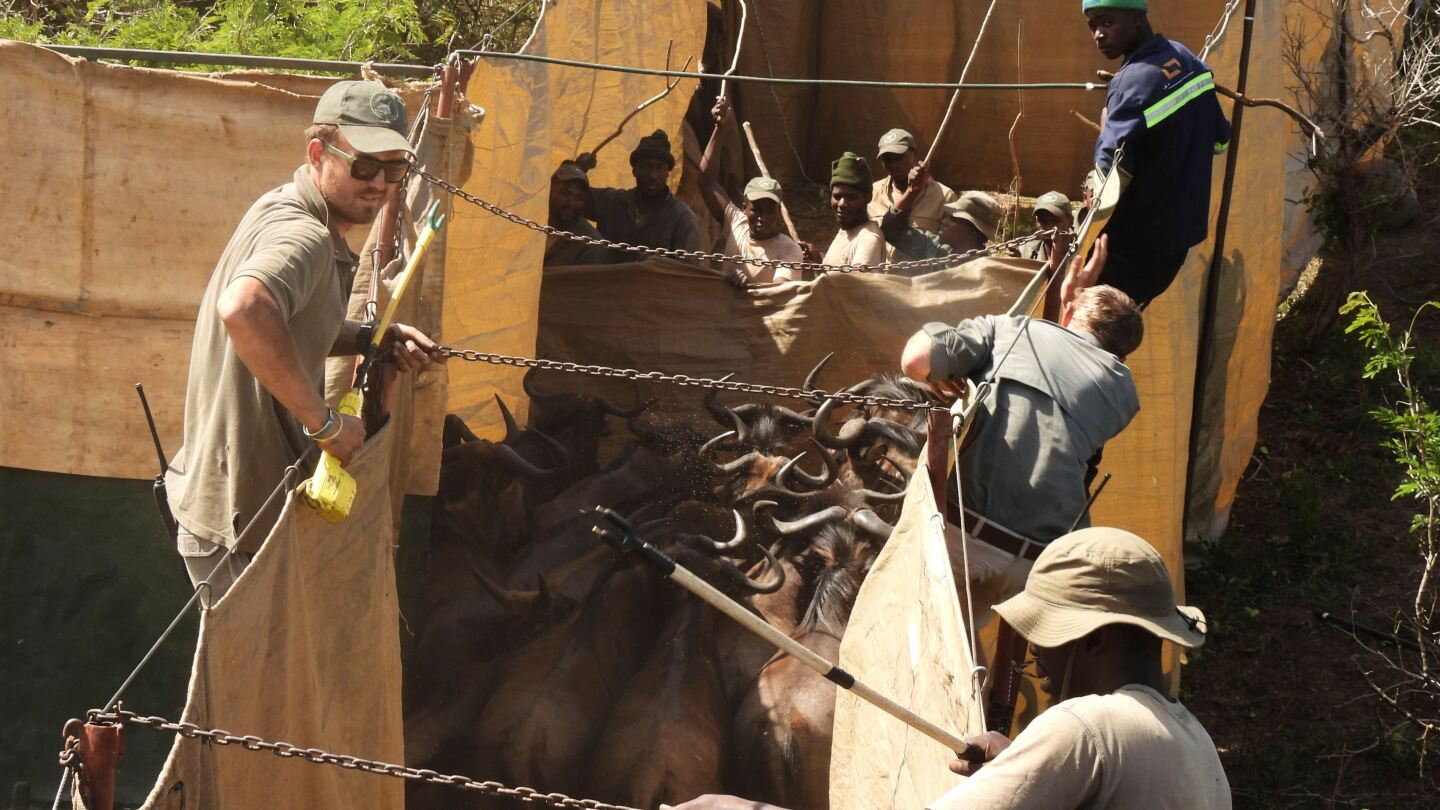
CAPE TOWN, South Africa — Once a thriving sanctuary for wildlife, Banhine National Park in Mozambique faced near devastation due to decades of civil war and rampant poaching. Now, a groundbreaking initiative is breathing new life into this historic reserve. In collaboration with the Mozambican government, private conservationists have successfully relocated nearly 400 animals, including zebras, wildebeests, and various antelope species, to Banhine. This effort marks a critical step in reviving the park, which is part of the Great Limpopo Transfrontier Park—a network of reserves spanning Mozambique, South Africa, and Zimbabwe that serves as a vital wildlife corridor. The relocated animals were sourced from Maputo National Park, a testament to the success of similar restoration efforts 15 years ago. The relocation process was a logistical feat, involving helicopters to herd the animals into funnel-shaped enclosures, followed by an 18-hour truck journey to Banhine. The operation spanned 12 days, with the animals initially introduced into an 8-square-mile sanctuary. This area will gradually expand as the animals acclimate and prepare to roam the larger park. Donald Sutton, head of operations and development at Banhine, emphasized the project’s significance in enhancing biodiversity and boosting tourism. Banhine’s restoration is part of a broader initiative by the Peace Parks Foundation, which has relocated over 18,000 animals to degraded conservation areas across southern Africa. Sutton expressed optimism, envisioning Banhine returning to its former glory as a thriving wildlife haven.
Reviving this African game reserve meant catching and transporting hundreds of wild animals