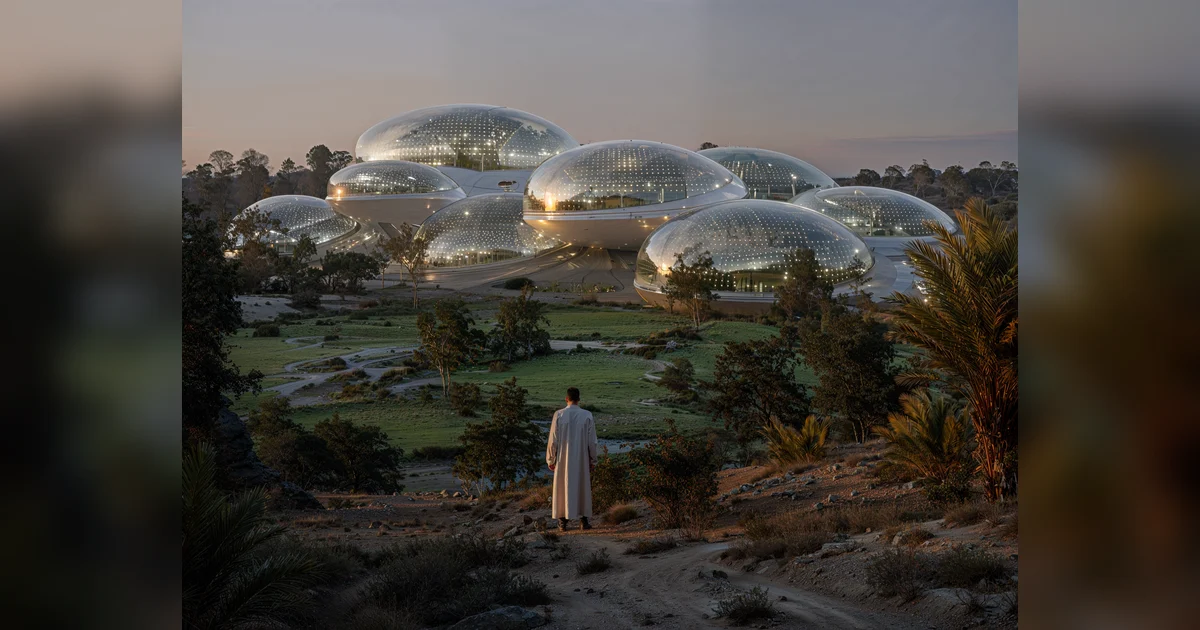
In a groundbreaking partnership announced January 23, 2026, technology firm Red Rock and urban design specialists City Meta Lab have unveiled an innovative framework merging artificial intelligence, architectural intelligence, and food security systems. This collaboration represents a paradigm shift in how nations might address critical sustainability challenges through integrated technological solutions.
The strategic alliance combines Red Rock’s proficiency in AI-driven systems, digital governance, and technological oversight with City Meta Lab’s internationally acclaimed expertise in architectural design, urban systems, and spatial innovation. Together, they are developing next-generation Food Security and Resilience Centers—comprehensive infrastructures designed for production, research, education, and institutional engagement.
Unlike conventional agricultural or vertical farming initiatives, this model incorporates fully automated AI-supervised hydroponic production systems, advanced seed preservation and genetic safeguarding facilities, and centralized AI control centers. The infrastructure additionally features public-facing components dedicated to knowledge transfer and global cooperation.
Red Rock’s chairman emphasized that food security has evolved beyond traditional agricultural concerns to encompass technological, architectural, and governance dimensions. The partnership aims to create systems that are resilient, transparent, and future-proof at national and institutional levels.
City Meta Lab contributes an urban design vision that transforms technical infrastructure into accessible, symbolic spaces capable of hosting researchers, policymakers, and international delegations while maintaining operational efficiency.
The initiative aligns with the United Arab Emirates’ long-term sustainability, innovation, and strategic autonomy priorities, potentially establishing the nation as a global reference for integrated infrastructure models. The collaboration supports phased implementation, allowing various entities to engage at different levels—from research and pilot programs to full-scale deployment.
This partnership establishes a new benchmark for critical infrastructure development in an era characterized by artificial intelligence advancement and climate uncertainty, potentially offering replicable models for global adoption.