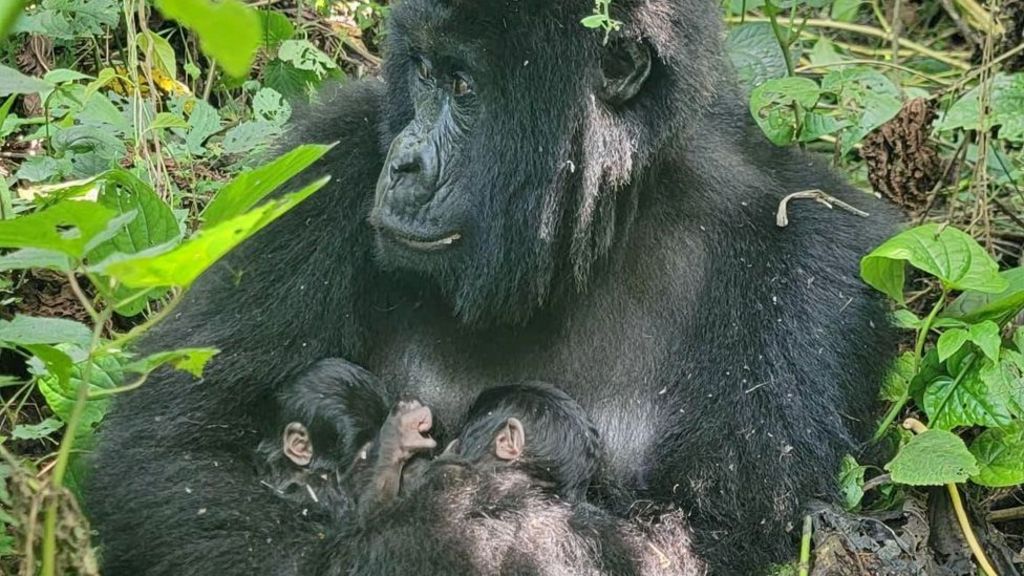
In a significant conservation milestone, Virunga National Park in the eastern Democratic Republic of Congo has welcomed the birth of twin mountain gorillas—an exceptionally rare event for this endangered species. The twins were discovered on Saturday by community trackers who found 22-year-old mother Mafuko tenderly holding her newborn sons. Both infants and their mother appear to be in good health.
Twin births occur in only approximately 1% of mountain gorilla births, making this event particularly noteworthy for conservationists. The park has implemented enhanced monitoring protocols to support Mafuko and her twins during this critical early period, with rangers providing close observation and necessary intervention.
This birth represents both hope and challenge for the species. Mafuko previously gave birth to twins in 2016, but tragically lost both infants within their first week of life. Young gorillas are exceptionally vulnerable, relying entirely on their mothers for care and protection in an environment that remains threatened by poaching activities and armed groups operating in the region.
Mafuko’s own survival story adds poignancy to this event. Born in 2003 into the Kabirizi family, she lost her mother to armed attackers at just four years old. She later joined the Bageni family at age ten and has now experienced five pregnancies throughout her life.
The Virunga National Park, Africa’s oldest and largest protected area established exactly a century ago specifically to safeguard mountain gorillas, provides essential habitat for the species. According to the International Union for Conservation of Nature (IUCN), which maintains the Red List of threatened species, fewer than 1,100 mountain gorillas remain in the wild, exclusively found in Virunga and neighboring national parks in Rwanda and Uganda.
This twin birth—the first in Virunga since September 2020—signals continued progress for conservation efforts. Through anti-poaching patrols and community programs supported by the European Union and UNESCO, mountain gorilla populations in Virunga have demonstrated gradual recovery over the past decade. This positive trend led to the species’ conservation status improvement from “critically endangered” to “endangered” in 2018.
Virunga National Park, a UNESCO World Heritage Site spanning 7,800 square kilometers of diverse landscapes including active volcanoes, vast lakes, rainforests, and mountains, remains a critical sanctuary for biodiversity conservation in Central Africa.