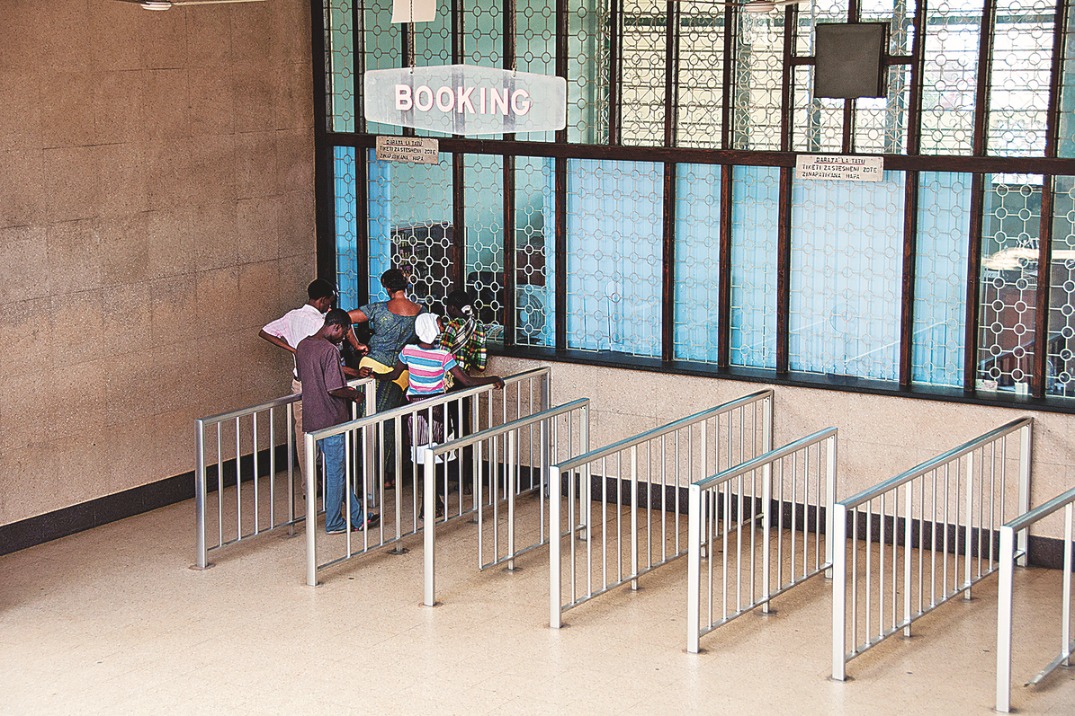
Cross-regional trade and cross-border investment across East and Southern Africa are on the cusp of major expansion, after authorities launched a $1.4 billion rehabilitation project for the iconic Tanzania-Zambia Railway (TAZARA). Backed by Chinese investment and delivered under the Belt and Road Initiative, the three-year modernization program will restore the 1,860-kilometer strategic corridor to its full operational capacity, transforming its role in regional connectivity.
Originally constructed with Chinese assistance half a century ago, the aging railway is undergoing a full transition from outdated manual operation systems to a modern semi-automated network. This transformation promises to deliver far safer, faster and more dependable movement of cargo for the entire region, according to project leaders.
Bruno Ching’andu, managing director of TAZARA, explained that the operational upgrade will boost service predictability and overall efficiency, repositioning the historic line as a core logistics backbone connecting landlocked Southern African economies to the Indian Ocean via Tanzania’s Port of Dar es Salaam.
“By strengthening connectivity to this key Indian Ocean port, the project will cut transport costs for landlocked nations across the region, while providing a much-needed alternative to overstretched, heavily congested road networks,” Ching’andu noted.
Headed by China Civil Engineering Construction Corporation, the rehabilitation project is expected to strengthen regional value chains across key economic sectors including mining, agriculture and manufacturing. Ching’andu highlighted that the upgraded corridor will be particularly well-positioned to support a projected surge in mineral exports, most notably copper from Zambia and the Democratic Republic of Congo, as production ramps up in the coming years.
“Beyond mineral resources, the modernized railway will also streamline the movement of agricultural harvests, fertilizer, fuel and finished manufactured goods, cementing its role as an indispensable bulk cargo artery for the whole of East and Southern Africa,” he added.
The comprehensive overhaul covers every aspect of the railway’s infrastructure and operations. Key upgrades include a full modernization of signaling and telecommunications systems, shifting to semi-automated, satellite-enabled infrastructure that allows for real-time train tracking and more strategic maintenance planning — changes that will drastically improve both safety and service reliability.
In addition to track and digital upgrades, existing maintenance workshops and quarry facilities will be renovated, and new production facilities for railroad ties will be installed to support long-term upkeep of the corridor. The entire project will be rolled out in three phases, including replacement of worn-out rails and aging ties, rehabilitation of major bridges and culverts, and reinforcement of earthworks along the full length of the line.
For rolling stock, the project will procure brand-new locomotives and freight wagons, while refurbishing existing rolling stock to meet modern international performance and safety standards. Ching’andu shared that preliminary surveys across all key project sections are nearly complete, and detailed engineering designs for the full rehabilitation are in the final stages of approval.
Once the upgrade is finished, annual freight volume on the line is projected to jump from the current 400,000 metric tons to more than 2.4 million metric tons. Maximum train speeds will also increase from 40 kilometers per hour to roughly 70 kilometers per hour, enabling much faster and more consistent delivery of goods.
Beyond improved infrastructure and trade capacity, the project is set to deliver substantial socioeconomic benefits to local communities. It will create at least 5,000 direct jobs during the construction phase across engineering, technical and support roles, with additional long-term employment opportunities expected to emerge as operational volumes expand following project completion.