In the aftermath of three fatalities linked to a suspected hantavirus outbreak aboard a Dutch-operated expedition cruise ship, global and national health authorities were in a urgent race on Tuesday to secure a port of disembarkation for the vessel, which remained anchored off the coast of Cape Verde after local officials blocked it from docking.
The MV Hondius, operated by Netherlands-based Oceanwide Expeditions, launched its journey on April 1 from Ushuaia, Argentina, bound for Cape Verde off the western coast of Africa, carrying 147 passengers and crew representing 23 nationalities. To date, the World Health Organization (WHO) has confirmed two cases of hantavirus infection, with five additional suspected cases, resulting in three deaths, one critical case, and three people experiencing mild symptoms.
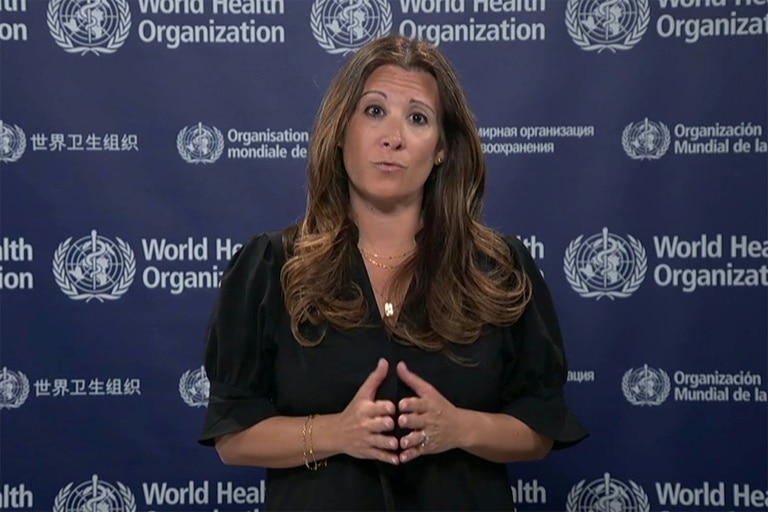
According to WHO, the virus strain responsible for the outbreak has not yet been definitively identified. Genetic sequencing is currently being conducted by South African health laboratories, and officials expect results imminently. Maria Van Kerkhove, director of WHO’s epidemic and pandemic preparedness and prevention division, told reporters in Geneva that the leading working assumption among experts is that the pathogen is the Andes virus, a specific hantavirus variant endemic to South America that has been linked to rare cases of human-to-human transmission in past outbreaks.
Two of the three people who died and one infected patient previously disembarked the vessel before the outbreak was declared. Most notably, a female passenger who fell ill after disembarking flew to Johannesburg, South Africa, and died on April 26. Health officials have already launched contact tracing operations to identify and monitor all passengers and crew that may have been exposed to the woman during her flight.
The first two fatalities were a Dutch couple that joined the expedition in Argentina. The husband died aboard the Hondius on April 11, and his wife disembarked in Saint Helena on April 24 to accompany his remains home. She developed gastrointestinal symptoms, her condition deteriorated during a flight to Johannesburg, and she died the day after arriving. A British passenger remains in intensive care in Johannesburg, while two crew members – one British and one Dutch – require urgent medical evacuation that could see them flown to the Netherlands for care.
Van Kerkhove noted that the typical incubation period for hantavirus ranges from one to six weeks, leading WHO investigators to conclude that the initial infected Dutch couple most likely contracted the virus before boarding the vessel, or during one of the multiple shore excursions the expedition made to Atlantic islands for birdwatching and outdoor activities. “There could be some source of infection on the islands,” she explained.
Hantavirus is a rare but potentially lethal infection that is most commonly spread to humans through contact with infected rodents or their excreta. While human-to-human transmission is extremely rare for most hantavirus strains, Van Kerkhove said investigators believe limited transmission among close contacts may have occurred on the Hondius. She stressed that even for the Andes variant, spread is almost exclusively limited to close personal contacts, and the risk to the broader global population remains very low, per WHO assessments.
The WHO announced Tuesday that the MV Hondius would be redirected to Spain’s Canary Islands for a full epidemiological investigation and complete disinfection. However, Spanish health officials clarified that no final decision on which specific port will accept the vessel has been made, pending a full review of all epidemiological data collected from the ship while it remained off Cape Verde. Once the two crew members requiring urgent care are evacuated, the vessel will be cleared to travel to its assigned destination.
All passengers and crew remaining aboard the Hondius have been in isolation since the outbreak was detected, after Cape Verdean authorities refused the ship permission to dock. Spanish officials have confirmed they will accept the vessel to complete the outbreak response, conduct full public health risk assessments for all people on board, and carry out complete sanitation of the ship.