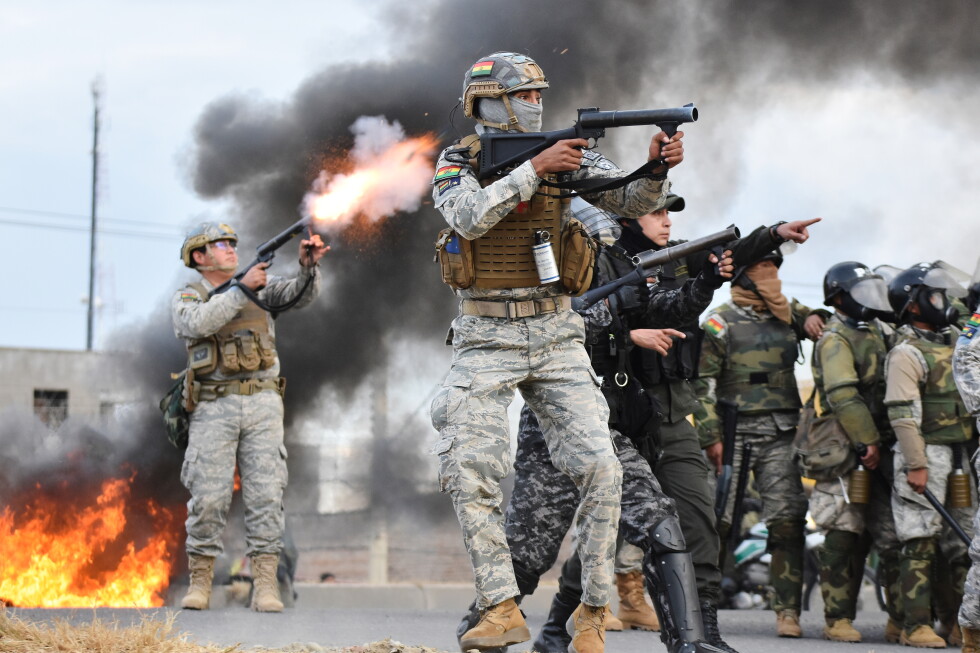
Five weeks of widespread anti-government unrest has pushed Bolivia, the landlocked Andean nation, into a deepening political and humanitarian crisis, as fresh violent clashes between demonstrators and security forces broke out on Monday following new legislation that opens the door for a potential military crackdown on blockades.
Protesters, who are demanding the immediate resignation of seven-month conservative incumbent President Rodrigo Paz, clashed with security personnel across multiple urban centers. In the central hub of Cochabamba, crowds hurled stones, firecrackers and sticks at police, who responded with tear gas to disperse the crowds. In El Alto, the populous neighboring city of administrative capital La Paz, demonstrators stormed a local public transport union office amid mounting anger over crippling fuel shortages. By the end of the day, local police confirmed that at least 51 people had been arrested across the two hotspots of unrest.
The current wave of demonstrations was first ignited in early May by Paz’s controversial decision to scrap long-standing national fuel subsidies, a move that sent energy prices soaring for working-class and low-income Bolivian households. The anger has since broadened, with protesters pointing to the administration’s failure to address the country’s persistent economic challenges, including sky-high inflation and stagnant low wages that have squeezed livelihoods across the country. Protesters, many of whom cast Paz as a betrayer of the public trust, note that they helped vote him into office just seven months ago, only to be neglected by the new administration.
The movement has drawn broad participation from across Bolivian civil society: the national workers’ union, highland Indigenous communities, and peasant farmer organizations have all joined the mobilization, turning to widespread road blockades as a core protest tactic. So far, demonstrators have established 90 blockades across the country’s key transportation arteries, cutting off supply routes to major urban centers and leaving the administrative seat of government La Paz particularly isolated. The blockades have paralyzed national logistics, leading to acute shortages of critical goods including food, fuel, and essential medical supplies.
A preliminary independent report released over the weekend by Bolivia’s public ombudsman, an autonomous state oversight body, offered the first full accounting of the human cost of the five-week crisis: between May 1 and June 2, the unrest has left 10 people dead, 37 injured, and more than 360 arrested across the country. The Bolivian government has confirmed that seven of the recorded deaths stemmed from delays in emergency medical care caused by blocked transportation routes, and has stated that all violent incidents linked to the unrest are currently under investigation.
Paz’s election victory last year marked a historic political shift for Bolivia, ending nearly two decades of uninterrupted rule by the left-wing Movement Toward Socialism (MAS), the party founded by iconic former President Evo Morales. Since the unrest began, the president has attempted to open dialogue with protest leaders and has so far instructed police to show restraint when responding to demonstrations. However, organizers have refused all calls for negotiation, insisting that their only non-negotiable demand is Paz’s immediate resignation from office.
In recent days, political pressure has grown on Paz from conservative allies to take a far more aggressive approach to clearing the blockades and restoring order. On Monday, he signed into law a new piece of legislation that lowers the legal barriers for the executive branch to declare a national state of emergency. If enacted, the measure would suspend certain constitutional rights and deploy the military to clear road blockades and reassert government control. A separate presidential decree is still required to activate the state of emergency, and it remains unclear whether Paz will move forward with the step. The uncertainty stems from Bolivia’s own political history: past violent military crackdowns on mass popular protests have resulted in the ousting of sitting presidents, creating a major political risk for the incumbent.
Framing the new legislation in a nationally televised address after signing the bill, Paz claimed the measure was necessary to protect the Bolivian majority from what he called “narco-terrorism” instigating the protest movement. “I extend my hand to the social organizations that have legitimate demands and reiterate my willingness to engage in dialogue,” Paz added in his address, even as tensions continued to boil over across the country in the hours after his speech.