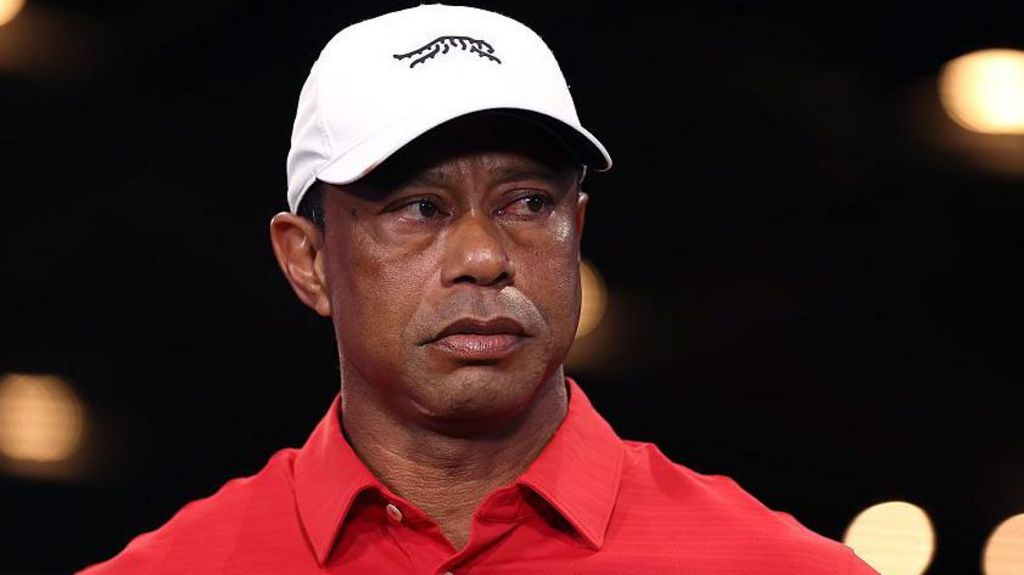
Golf legend Tiger Woods is facing renewed legal scrutiny following his recent driving under the influence arrest in Florida, with prosecutors formally moving to obtain complete documentation of all his prescription medications, including detailed dosage information and driving-related warning labels listed on pill containers, newly unsealed court records confirm.
The legal action stems from a single-car crash that unfolded in the Sunshine State last month, where Woods was taken into custody and directly charged with DUI. The 15-time major champion has formally entered a not guilty plea to the allegations against him.
According to a court filing submitted Tuesday, the subpoena demanding the sensitive medical records — which prosecutors have framed as critical to building their criminal case against the golfer — is scheduled to be officially issued on April 22. Legal representatives for Woods have not yet issued a public response to the latest development, after being contacted for comment by the BBC.
Court rules give Woods’ legal team a 10-day window to file a formal objection to the subpoena, which would allow them to challenge the legal order’s validity and block the release of the private medical information. If no objection is submitted within that period, the subpoena will proceed as scheduled, per the filing.
Earlier this month, law enforcement released full body camera footage documenting the immediate aftermath of the crash, which occurred when Woods’ vehicle struck a parked truck before rolling over. In the raw footage, Woods appears calm as he kneels on one knee beside the wreckage, telling responding officers, “I looked down at my phone, and all of a sudden, boom.”
No other people were injured in the incident, though Woods was forced to escape the flipped vehicle by crawling out through the passenger side door. Martin County Sheriff John Budensiek confirmed that Woods passed a standard breathalyzer test for alcohol, but declined to complete a urinalysis screening that would detect the presence of other controlled substances.
Woods told officers he had not consumed any alcohol that day. When pressed about whether he was taking any prescription medications, he replied that “I take a few,” adding that he had taken his scheduled doses earlier that morning. He then went on to list the specific medications he was using, but that portion of the body camera footage has been redacted from public release.
Responding officers told Woods they suspected his “normal faculties” were impaired by an “unknown substance” at the time of the crash. Investigators later found two small white pills in his pocket, which were subsequently identified as hydrocodone, a powerful opioid typically prescribed to manage moderate to severe chronic pain.
Shortly after the crash, Woods released a public statement on his social media platform X addressing the incident. “I know and understand the seriousness of the situation I find myself in today,” he wrote. “I am stepping away for a period of time to seek treatment and focus on my health. This is necessary in order for me to prioritise my wellbeing and work toward lasting recovery.”
This latest arrest is not the first time Woods has faced DUI-related allegations: this incident marks his second arrest on suspicion of driving under the influence. His first came in 2017, when police found him asleep behind the wheel of a badly parked car roughly 15 miles from his Florida home. A toxicology report from that arrest found five different prescription medications in his system, including a mix of powerful painkillers and sleep aids. He was not arrested for DUI in a 2009 single-car crash, but toxicology tests from that incident also detected sleeping medications in his system.