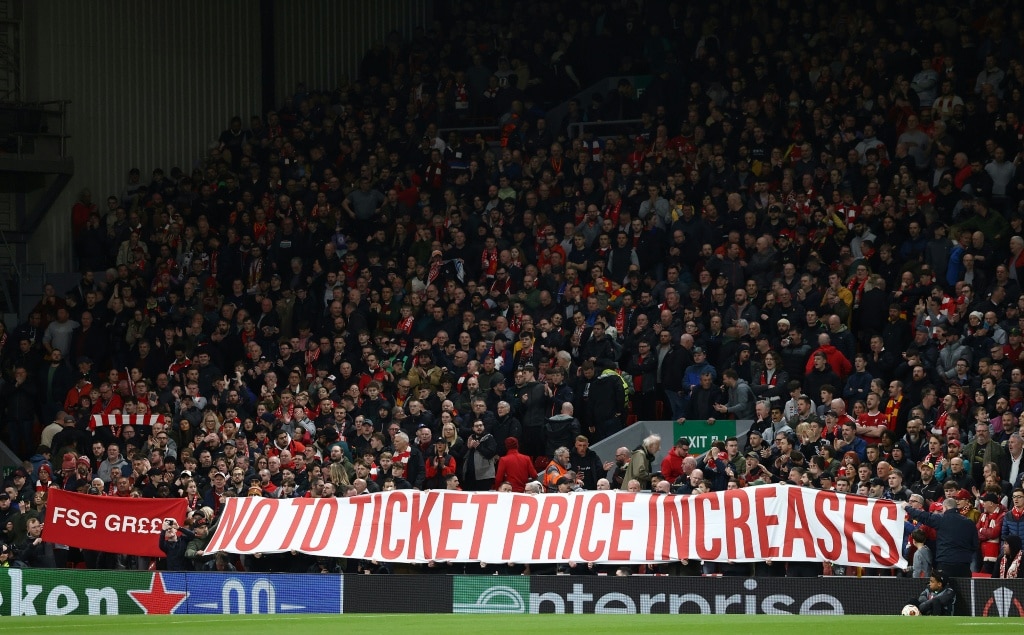
English football’s Premier League, renowned for its vibrant stadium atmospheres and global fanbase, faces growing discontent as clubs implement substantial ticket price increases. A strategic shift toward maximizing matchday revenue has emerged following slowed growth in broadcasting income, prompting clubs to target wealthier international visitors over traditional local supporters.
The financial landscape reveals stark contrasts: while broadcasting and sponsorship remain primary income sources, matchday revenue has gained renewed focus. UEFA data indicates the ‘Big Six’ clubs—Arsenal, Chelsea, Liverpool, Manchester City, Manchester United, and Tottenham—achieved a 20% increase in ticketing revenue for the 2024/25 season compared to previous years.
This monetization strategy manifests dramatically across venues. Fulham’s Riverside Stand offers luxury amenities including rooftop pools and premium catering, with season tickets reaching £3,000 (approximately $4,000). Similarly, Manchester City’s hospitality packages for high-profile matches command up to £5,500 per game.
Football finance expert Kieran Maguire explains the commercial logic: ‘Clusters analyze yield per fan, prioritizing experience-seeking visitors over long-term supporters who may spend less on merchandise and concessions.’
The policy shift has tangible consequences. Liverpool’s announcement of inflation-linked price hikes for three consecutive seasons provoked outrage, with fan group Spirit of Shankly accusing management of disregarding core supporters. Manchester United compounded pressures by implementing a 5% season ticket increase while reducing senior citizen discounts.
Campaign group Fair Game warns of long-term risks. CEO Niall Couper states: ‘While clubs view each seat as individual revenue opportunities, maintaining affordable access for local communities represents a more sustainable approach to financial stability.’
Despite nearly 99% average attendance rates last season, emerging patterns suggest vulnerability. Tottenham Hotspur Stadium, with 63,000 capacity, has experienced unsold seats during Champions League fixtures amidst poor team performance.
The enduring cultural significance of football complicates this commercial calculus. As Maguire observes: ‘In our secular society, football has become a national religion. When budgeting between holidays, dining out, or season tickets, many supporters prioritize their football commitments.’
This tension between commercial optimization and fan accessibility continues to shape England’s football landscape, with the ‘Stop Exploiting Loyalty’ campaign gaining momentum among supporters of multiple clubs.