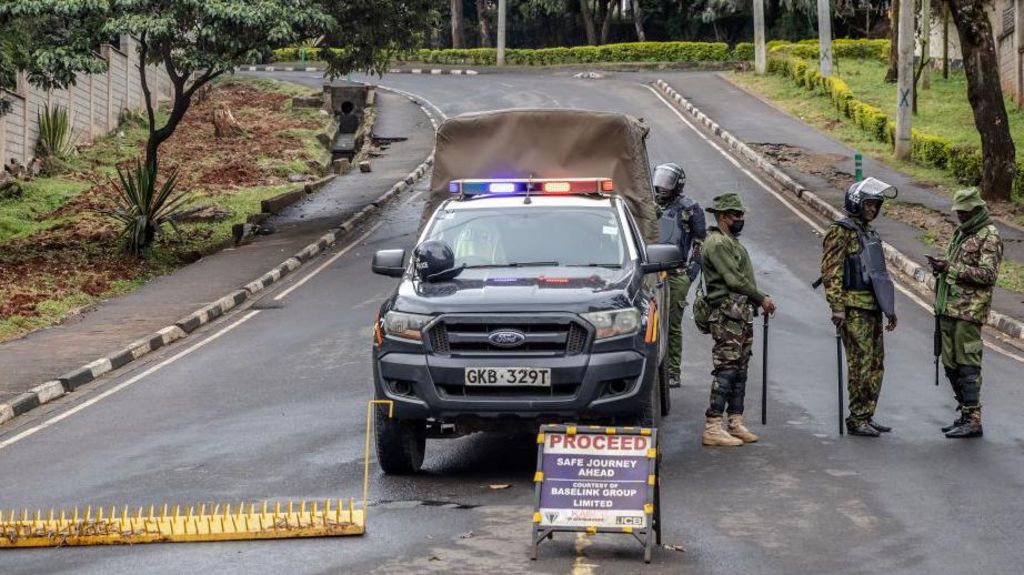
Nairobi, Kenya – As the second anniversary of the 2024 Gen-Z-led anti-government protest approaches, Kenyan authorities have implemented a sweeping security lockdown on major arteries leading into central Nairobi, triggering widespread disruption to daily life across the country ahead of planned nationwide demonstrations.
The original 2024 unrest was a defining moment for Kenyan politics: thousands of young people poured into the streets to oppose a controversial proposed finance bill that included steep new tax hikes. The demonstrations grew increasingly heated, culminating in protesters storming the national parliament building, and ultimately forcing the government to withdraw the unpopular legislation. But the crackdown that followed left a bitter, unresolved legacy: more than 80 people were killed and dozens more injured during the 2024 protests and last year’s anniversary gatherings. This year’s demonstrators say their core demand is simple: justice for those killed and harmed.
By early Thursday morning, security forces had already erected concrete and vehicle roadblocks across key routes into the city centre, including the busy Thika Super Highway, Mombasa Road, the Nairobi-Namanga Highway in Athi River, Kenyatta Avenue, Waiyaki Way, and Jogoo Road. The lockdown left thousands of commuters stranded, unable to reach their workplaces or homes. In response to the security deployment and expected unrest, dozens of businesses and schools across Nairobi and other major urban centres opted to close for the day.
Organisers have mobilised the new wave of protests largely through social media platforms, and demonstrations are planned in major population centres across the country, including the coastal hub of Mombasa and multiple regions in central Kenya. Security agencies have heightened digital and physical surveillance across all major urban areas, with a heavy, visible police deployment planned for central Nairobi and critical state infrastructure installations.
The run-up to the protests has exposed deep political and social divisions across the country. President William Ruto, who took office in 2022, has acknowledged that Kenyans hold a constitutional right to peaceful assembly, but issued a stern warning last week that any person “mobilised to destroy property or cause chaos” would face the full force of the law. Authorities have also issued a formal appeal to demonstrators to refrain from violence, looting, and the destruction of public or private property.
In a surprise move ahead of the anniversary, Ruto announced last week a nearly $15 million compensation fund for almost 2,000 victims of protest-related human rights abuses that occurred between 2017 and 2025, a list compiled by independent Kenyan rights groups. Ruto stressed that the fund was not intended to act as a “price for life, pain or loss,” nor should it be interpreted as a reward for violence or criminal activity. Despite this gesture, the plan has been widely rejected by domestic human rights organisations, which cite critical flaws: the exclusion of dozens of known victims, inadequate individual compensation amounts, and a total lack of transparency around how the fund will be administered.
Political factions are also split on the protests. Multiple opposition political leaders, domestic civil society coalitions, and regional and international human rights groups have publicly expressed support for peaceful demonstrations, framing the gatherings as a legitimate exercise of democratic expression explicitly protected under Kenya’s constitution. But Rigathi Gachagua, Ruto’s former deputy who is now one of the president’s most high-profile bitter rivals, has taken an unusual stance: he has urged Gen Z activists to avoid taking to the streets, warning of a high risk of the protests descending into violence. Instead, Gachagua has called on Kenyans to stay home as a quiet, symbolic act of dissent against the government.
With the 2027 general election just over a year away, Ruto is facing growing public discontent over his administration’s performance. Critics across the political spectrum accuse the president of failing to deliver on the majority of key campaign promises that got him elected. Ruto has forcefully rejected these claims, insisting that his government has delivered on most of its pledges, and that he is prepared to defend his administration’s record as he seeks a second term in office.