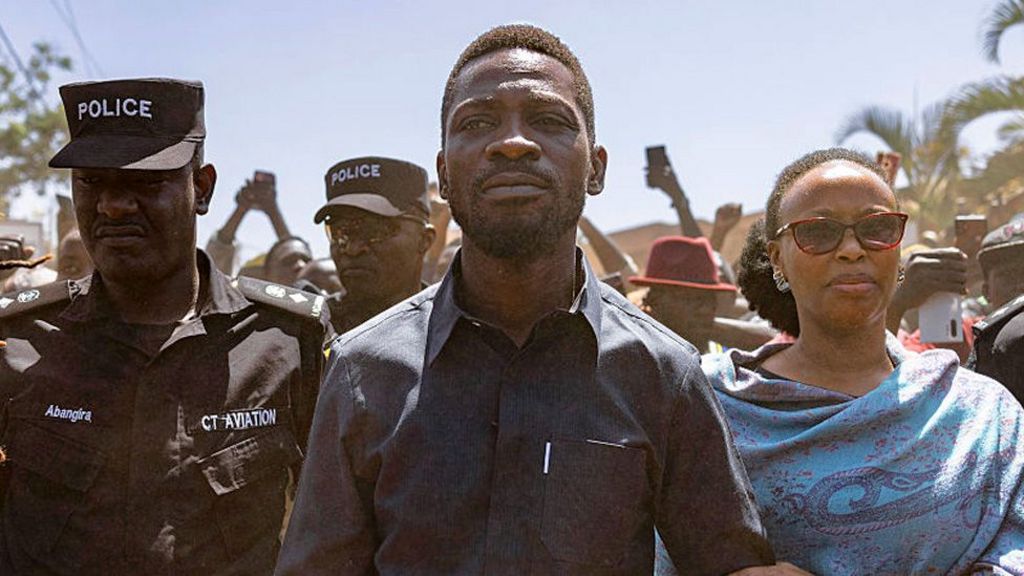
Uganda’s political landscape remains fraught with tension as authorities and opposition figures offer conflicting narratives regarding the whereabouts and status of presidential challenger Bobi Wine. The National Unity Platform (NUP) party leader’s residence in Kampala has become the epicenter of a deepening crisis, with police asserting controlled access due to security concerns while Wine’s family alleges his abduction by helicopter.
The electoral commission’s latest figures indicate a substantial lead for incumbent President Yoweri Museveni, showing 72% of counted votes against Wine’s 24% with 94% of polling stations reporting. These results emerge against the backdrop of a nationwide internet blackout implemented earlier this week, severely hampering information verification and communication capabilities.
Police spokesman Kituuma Rusoke categorically denied abduction allegations during a Saturday press briefing, characterizing family claims as “untrue” and “unfounded.” He explained that security measures around Wine’s property were necessary to prevent gatherings that could potentially incite violence or destabilize national security.
Contradictory accounts emerged from Wine’s son, Solomon Kampala, who initially reported both parents’ seizure before later asserting his father had “escaped” while his mother remained under house arrest. These developments occurred alongside reports of opposition supporter fatalities in Butambala and documented instances of security forces employing tear gas and warning shots to disperse gatherings.
Technical difficulties plagued Thursday’s electoral process, with voting delays of up to four hours reported at numerous stations due to malfunctioning biometric verification systems and delayed ballot box deliveries. Electoral chief Simon Byabakama maintained that vote counting proceeded unaffected by communication restrictions, with final results expected by Saturday afternoon.
The campaign period preceding this election witnessed significant violence and allegations of suppression against opposition activities. Museveni, seeking an unprecedented seventh term after initially assuming power in 1986, positions himself as Uganda’s sole guarantor of stability. Meanwhile, Wine—a former pop star representing the country’s substantial youth demographic—has campaigned on anti-corruption platforms and sweeping reform promises.
Uganda’s Communications Commission justified internet suspension as necessary to prevent misinformation, fraud, and violence incitement, though the United Nations human rights office condemned this measure as “deeply worrying.”