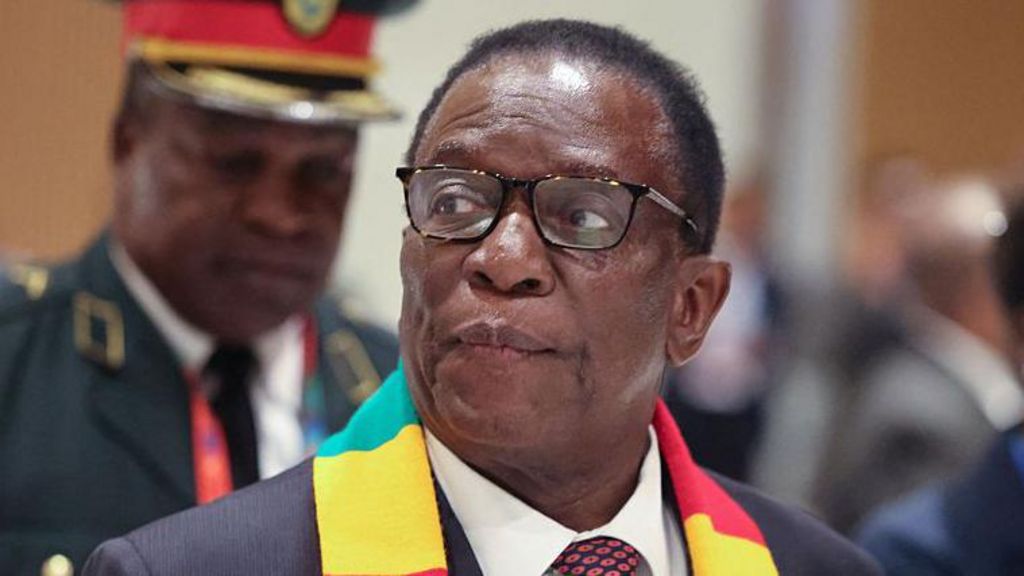
A bitter political battle is unfolding in Zimbabwe over a sweeping set of proposed constitutional changes that have reignited fears of authoritarian backsliding, just decades after the end of Robert Mugabe’s decades-long authoritarian rule. At the heart of the conflict is a draft bill championed by the long-ruling Zanu-PF party, which has held uninterrupted power since Zimbabwe gained independence in 1980. If passed, the legislation would upend the country’s electoral system, stripping ordinary voters of their three-decade-old right to directly elect the president and shifting that power exclusively to parliament. It would also extend both presidential and parliamentary terms from five years to seven, delay the 2028 general election to 2030, and allow sitting President Emmerson Mnangagwa—whose second and constitutionally mandated final term was set to end in 2028—to remain in office for an extra two years.
Mnangagwa first rose to power in 2017, when a military-backed coup ousted Mugabe, who had ruled the country for 37 years. Mnangagwa went on to win disputed presidential elections in 2018 and 2023, and the proposed changes now have opposition leaders sounding the alarm over what they call a calculated power grab. “This is a coup, a slow coup that is unfolding in Zimbabwe,” Tendai Biti, a veteran opposition figure and former finance minister who now leads the Constitution Defenders Forum, told the BBC.
Biti’s warning comes amid a growing crackdown on opposition voices ahead of parliamentary consideration of the bill, which is expected to pass in the coming weeks. The campaign to advance the changes first launched in 2024, with supporters rallying behind the slogan “2030 – he will still be the leader.” In the lead-up to recent public hearings held to gather public input on the draft legislation, Zimbabwean police banned more than a dozen opposition events aimed at organizing against the bill. Biti himself has been released on bail after being charged with holding an unauthorized public meeting. Last month, Lovemore Madhuku, leader of the opposition National Constitutional Assembly, said he was beaten by masked attackers while police stood by and did not intervene.
Tensions boiled over during the public hearings, which drew thousands of attendees to a Harare sports arena. While speaker after speaker voiced support for the bill and called for Mnangagwa to stay in office beyond 2028, chaos erupted when critics attempted to speak. Opposition lawmaker and lawyer Fadzayi Mahere told the BBC that Zanu-PF supporters instigated commotion, including pushing, shoving, physical fighting, theft of mobile phones, and forced deletion of footage of the unrest to silence opposing views. Zanu-PF spokesperson Patrick Chinamasa rejected the accusations, arguing that the ruling party has no need for violence because it holds majority public support, and instead blamed the opposition for the unrest, saying opponents refuse to accept that their views are not widely shared.
Zanu-PF officials have forcefully defended the proposed overhaul, framing it as a pragmatic, cost-saving reform that will reduce the political violence that has plagued popular presidential elections for decades. “There’s nothing that stops us to change, to go to another system that’s less costly, less controversial,” Chinamasa said, noting that electoral violence linked to direct presidential votes is not unique to Zimbabwe. He added that the changes are intended to preserve the political stability and ongoing economic development that the country has seen since Mnangagwa took office in 2018, and dismissed claims that the bill marks a permanent power grab, saying “When his time is up we will choose other leaders.” Zanu-PF also argues that the changes comply with the country’s 2013 constitution, claiming the two-term limit for presidents remains intact, and that only the length of each term is being adjusted, eliminating the need for a public referendum as required for term extensions.
But critics counter that the bill directly violates the 2013 constitution, a document that was the product of years of activism to curb executive power after Mugabe’s rule. The 2013 charter restricts presidents to two terms and explicitly requires any extension of term limits to be approved by voters in a public referendum, with a second separate referendum required if a sitting president wants to benefit from an extended term. Opposition leaders say the proposed changes roll back hard-won democratic gains and open the door to a complete elimination of term limits down the line. “If they can get away with two years what stops them from getting away with 20 years?” Biti said. Critics add that the changes would recreate the over-powerful “imperial presidency” that activists fought to end during Mugabe’s tenure, and that the shift to parliamentary presidential elections will entrench Zanu-PF’s permanent hold on power, as the party already controls a parliamentary majority.
Even within Zanu-PF, the proposal faced initial internal opposition, but the most prominent internal critic, Blessed Geza—commonly known by his nickname “Bombshell”—died earlier this year, clearing a path for the bill to move forward. The deep divide over the proposed amendments has laid bare the persistent polarization that defines Zimbabwe’s modern political landscape, pitting a ruling party that has held power for 44 years against an opposition that says the country is sliding back into the authoritarian patterns of the Mugabe era. “They are making the mistake that Mugabe made. That of closing [the democratic] space absolutely,” Biti said.
Plan to scrap presidential elections puts Zimbabweans at loggerheads