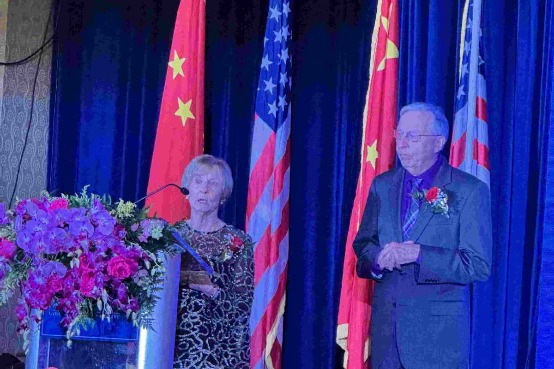
LOS ANGELES – Five decades after a simple table tennis exchange thawed frozen diplomatic relations, the legacy of ping-pong diplomacy continues to resonate as a powerful example of sports bridging geopolitical divides. At a recent forum commemorating the 54th anniversary of the historic exchange, former athletes, diplomats, and community leaders gathered to reflect on how a sporting gesture transformed international relations.
Connie Sweeris, former US national team member who participated in the original 1971 exchange, recounted the unexpected invitation that changed history. “On the final day of the World Table Tennis Championships in Nagoya,” Sweeris recalled, “the Chinese delegation invited the American team to extend their trip and visit China for what they termed ‘friendship matches’ – emphasizing friendship first, competition second.”
This invitation marked the first American visit to China in 22 years, creating an unprecedented people-to-people exchange during a period of prolonged separation between the nations. Sweeris described feeling “privileged to be one of those people” who participated in the groundbreaking trip, which included a memorable meeting with Premier Zhou Enlai at the Great Hall of the People.
Chinese Consul General in Los Angeles Guo Shaochun emphasized the historical significance of the exchange. “Fifty-four years ago, young table tennis players from China and the US planted the seeds of friendship and sincerity, breaking the ice of 22 years of separation,” Guo stated. “It opened a new chapter of our friendship that has lasted for more than half a century.”
The forum, organized by the All American Chinese Association, highlighted how the ping-pong diplomacy initiative created a “small safe space for first exchange,” as described by International Table Tennis Federation President Petra Sorling. This human encounter, visible to the world, made larger diplomatic steps possible, including President Richard Nixon’s historic 1972 visit to China.
Dragomir Cioroslan, Director of International Relations for the United States Olympic and Paralympic Committee, noted that the exchange proved “history is not only made in the halls of power by presidents and premiers, but also through the actions of ordinary people.”
Contemporary applications of this diplomatic model were discussed, with participants citing recent table tennis exchanges between French and Chinese leaders in Chengdu. Virginia Sung, CEO of the USA Table Tennis Association, emphasized the ongoing relevance: “We gather not just to honor the legacy of ping-pong diplomacy, but to carry it forward – to continue using sport as a bridge to strengthen relationships rooted in mutual respect.”
The personal impact of these exchanges was illustrated through the story of Jeffrey Lehman, now Vice-Chancellor of NYU Shanghai, whose attendance at a 1972 ping-pong match influenced his decision to pursue opportunities in China. “It taught me to cross borders, make new friends and discover myself in new ways,” Lehman reflected.
Despite today’s more developed communication channels, participants agreed that genuine human encounters remain essential. As Sorling observed, “Today, we do not lack communication, but we lack genuine encounter – the opportunity to meet people who are different and exchange in good faith. Sport can create that space.”