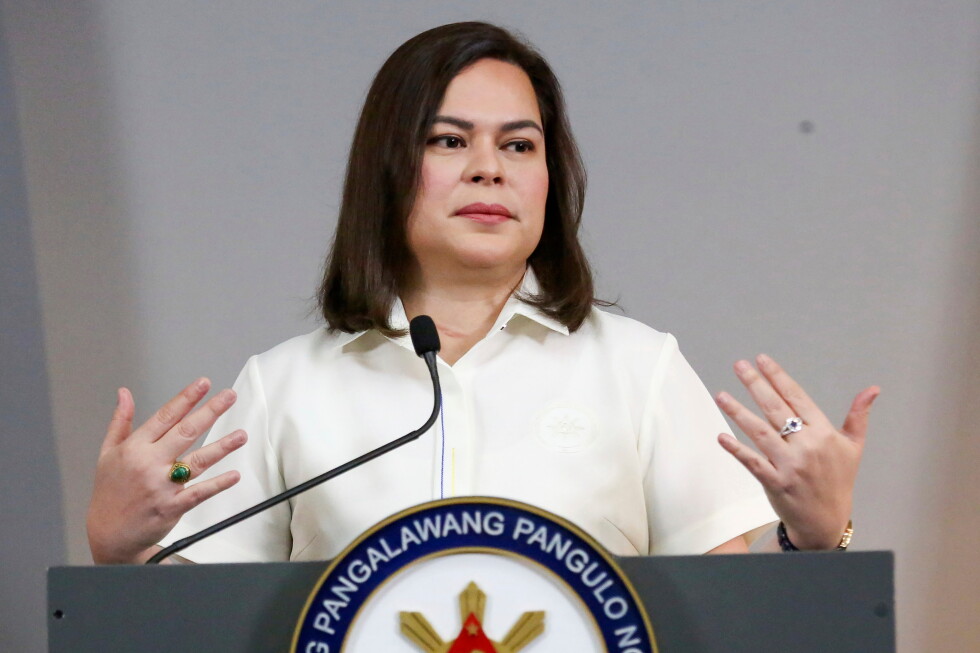
MANILA, Philippines – A defining chapter of Philippine political turbulence is set to open Monday, as the country’s Senate convenes as an impeachment court to hear historic charges against Vice President Sara Duterte, in a proceeding that lays bare the collapse of one of Southeast Asia’s most powerful political alliances. The trial comes amid a deep and public rift between Duterte and sitting President Ferdinand Marcos Jr., a split that has reshaped the country’s domestic politics and shifted its geopolitical alignment, and carries high stakes for Duterte’s planned 2028 presidential bid.
Security preparations are already in full force to manage expected unrest: more than 6,000 Philippine police officers, including specialized anti-riot units, have been deployed around the Senate complex in Manila to separate expected gatherings of both pro- and anti-Duterte demonstrators. According to a pretrial planning document obtained by the Associated Press, the trial is scheduled to run for 92 days, and Duterte has the option to appear in person at the opening hearing, or be represented exclusively by her legal team.
The impeachment charges against Duterte are severe: they include allegations of amassing unexplained wealth, misappropriating confidential state funds, and making a public threat to assassinate President Marcos Jr., his wife, and a top pro-Marcos House speaker if Duterte were killed amid their ongoing political conflict. Duterte has issued a blanket denial of all allegations, but has declined to address the specific claims in public ahead of the trial’s start. A two-thirds majority vote from the 24-member Senate – equivalent to 16 votes – is required to convict Duterte. If found guilty, she will be permanently stripped of the right to hold any public office, effectively ending her already announced plan to run for the presidency in 2028, when Marcos concludes his current six-year term.
The current impeachment proceeding is the culmination of a rapid and spectacular collapse of a once-formidable political partnership. Duterte and Marcos ran as joint running mates in the 2022 national elections, a strategic alliance that merged the electoral power of two of the Philippines’ most influential political dynasties to seize control of the country’s top two offices. That alliance fractured almost immediately after taking office, and has devolved into open hostility in recent months.
Sara Duterte is the daughter of former Philippine President Rodrigo Duterte, Marcos’ immediate predecessor, who remains in detention at the International Criminal Court (ICC) in The Hague following his arrest last year. The elder Duterte is scheduled to go on trial starting November 30 on charges of crimes against humanity, stemming from his administration’s brutal anti-drug crackdown that killed an estimated thousands of mostly low-income suspects, drawing widespread condemnation from Western governments and global human rights organizations. Rodrigo Duterte has repeatedly denied authorizing extrajudicial killings, though he openly threatened drug suspects with death throughout his time in office. Sara Duterte has publicly blamed Marcos for facilitating her father’s arrest and transfer to the ICC, deepening the animosity between the two camps.
Beyond domestic political conflict, the rift between Marcos and the Duterte political bloc also reflects a sharp shift in Philippine geopolitics. Since taking office, the Marcos administration has expanded defense cooperation with the United States, the Philippines’ longstanding treaty ally, and taken a firmer public stance against China’s escalating territorial claims and aggressive actions in the disputed South China Sea. This marks a sharp reversal from the elder Duterte’s tenure, during which he cultivated close diplomatic and economic ties with Chinese President Xi Jinping and Russian President Vladimir Putin, while repeatedly threatening to cut diplomatic and military ties with Washington. Sara Duterte has faced widespread public criticism for refusing to condemn China’s recent aggressive actions against Philippine coast guard vessels and fishing boats operating in the disputed waters, including incidents where Chinese coast guard units used high-powered water cannons to block Filipino vessels.
The impeachment process was initiated last month by the Philippine House of Representatives, where Marcos holds a commanding majority of allied lawmakers, who voted overwhelmingly to approve the articles of impeachment against Duterte. Duterte’s supporters have decried the proceedings as a politically motivated persecution, designed to eliminate Duterte as a political rival and weaken her bloc ahead of upcoming elections. The crackdown on pro-Duterte political figures has already accelerated in recent weeks: Sen. Jinggoy Estrada, a leading member of the Senate bloc that backs the Duterte family, was arrested and detained last month on a non-bailable plunder charge linked to an alleged bribery scheme connected to national flood-control infrastructure projects. Estrada has denied all wrongdoing. Another pro-Duterte senator, Rodante Marcoleta, is also facing potential arrest on a non-bailable plunder charge for allegedly accepting massive undeclared campaign donations that were never disclosed in his mandatory public assets declaration. Marcoleta has also denied any illegal activity. A third pro-Duterte political figure, Sen. Ronald dela Rosa – who served as national police chief under Rodrigo Duterte and oversaw the implementation of the anti-drug crackdown – has gone into hiding after the ICC issued an arrest warrant for him as a co-perpetrator in the alleged crimes against humanity committed during the Duterte administration.