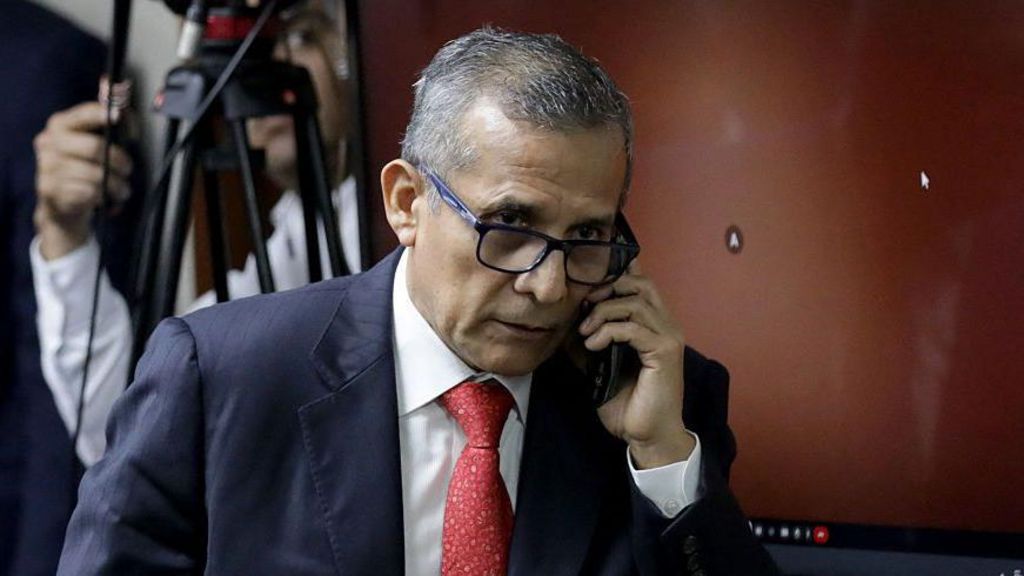
In a landmark ruling that upends a high-profile corruption conviction, Peru’s Constitutional Court has overturned a 15-year prison sentence for former Peruvian President Ollanta Humala and voided all criminal proceedings connected to the case.
Humala, who held Peru’s highest office from 2011 to 2016, was found guilty in 2025 of accepting illegal campaign financing from the Brazilian construction conglomerate Odebrecht and late Venezuelan President Hugo Chávez for his 2006 and 2011 presidential bids. The case was one of the most high-profile to emerge from the sprawling Odebrecht corruption scandal that has roiled politics across Latin America for nearly a decade.
Local media reports confirm Humala is set to be imminently released from Barbadillo Prison in Lima, the Peruvian capital. Following the court’s decision, Julio Espinoza Goyena, Humala’s defense attorney, announced on social media that the tribunal ruled the campaign contributions his client received do not meet the legal definition of money laundering, the charge that secured the 2025 conviction. Espinoza Goyena added that the Criminal Chamber currently overseeing the case is now required to issue a permanent dismissal of all charges and formalize Humala’s release.
The same 2025 trial that convicted Humala also found his wife, former First Lady Nadine Heredia, guilty of money laundering and sentenced her to an identical 15-year prison term. However, Heredia has already received safe passage to Brazil after requesting and being granted asylum at the Brazilian embassy in Lima, a resolution that avoided her detention.
Humala’s case sits at the center of a far broader corruption reckoning in Peru: he was the first of four consecutive sitting or former Peruvian presidents to face investigation linked to the Odebrecht scandal, a scheme where the construction giant admitted to paying hundreds of millions of dollars in bribes across Latin America to secure lucrative public infrastructure contracts.
The ripple effects of the scandal have been severe for Peruvian politics. Alejandro Toledo, who served as president from 2001 to 2006, was sentenced to more than 20 years in prison last year for accepting $35 million in bribes from Odebrecht. Alan García, who held the presidency for two non-consecutive terms between 1985 and 2011, died by suicide in 2019 as law enforcement moved to arrest him on Odebrecht bribery allegations, which he repeatedly denied. Pedro Pablo Kuczynski, who held office from 2016 to 2018, faced impeachment proceedings after it was revealed Odebrecht had made multi-million dollar payments to him during his earlier career in public office. Kuczynski has consistently maintained the payments were lawful, and the investigation into his case remains ongoing.
Court documents from Humala’s original trial lay out specific accusations: he and Heredia, who co-founded Peru’s Nationalist Party together, were accused of accepting $3 million in illegal contributions from Odebrecht to fund Humala’s successful 2011 presidential campaign, plus an additional $200,000 from Chávez to bankroll his unsuccessful 2006 candidacy. Humala and Heredia have never wavered from their claim that the charges against them are rooted in political persecution, not actual criminal conduct.
A former career army officer, Humala first entered the national spotlight in 2000, when he led a brief military uprising against then-president Alberto Fujimori. He made his first presidential run in 2006 on a left-wing platform aligned with Hugo Chávez’s Venezuelan socialist movement, but lost the race. His second bid in 2011 took a more moderate policy tone, modeled after the center-left governance of former Brazilian President Luiz Inácio Lula da Silva, and he defeated right-wing candidate Keiko Fujimori, Alberto Fujimori’s eldest daughter, to win the presidency.
Legal proceedings against the couple began shortly after Humala left office in 2016, just months after Odebrecht publicly admitted to its widespread bribery scheme across the region. Both Humala and Heredia spent one year in pre-trial detention before their 2025 conviction, a process that stretched out over nearly a decade of legal wrangling before this week’s ruling overturned the result.