In an era defined by digital transparency and heightened global competition, personal branding has evolved from a peripheral consideration to a fundamental leadership competency. Across rapidly developing economies including the UAE and Saudi Arabia, executives are recognizing that their individual reputation, visibility, and authenticity now directly influence commercial outcomes alongside corporate strategy.
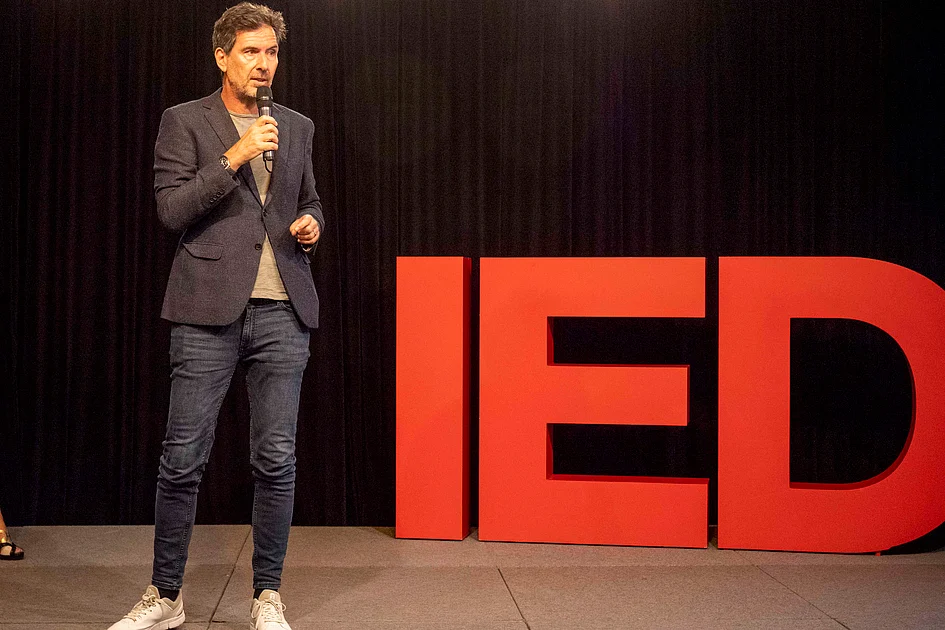
According to Jürgen Salenbacher, personal branding strategist and founder of CPB LAB in Barcelona, “Trust has become the new currency of leadership.” This shift reflects broader market transformations where accelerated decision-making, globalized operations, and diverse stakeholder ecosystems demand greater transparency about who drives organizations, not just what they do.
The strategic importance of executive visibility manifests in concrete business interactions. Investment discussions, partnership formations, and talent acquisition increasingly center on the public profile of founders and CEOs. This trend proves particularly significant in Middle Eastern markets where long-term relationships form the foundation of commercial culture. Leaders with well-developed personal brands experience accelerated access, enhanced credibility, and greater strategic influence.
Contrary to superficial self-promotion, effective personal branding represents strategic clarity. Salenbacher emphasizes that “Leadership visibility is no longer optional. It is strategic infrastructure.” As organizations navigate transformations driven by artificial intelligence, generational succession, and regional expansion, consistent leadership communication reduces uncertainty for teams, markets, and stakeholders.
This evolution demands a new approach to sustainability—not environmental, but reputational. “A sustainable personal brand is built on coherence, clarity and long-term consistency,” Salenbacher notes. “It is not about being loud. It is about being aligned.” In high-growth economies, executives must demonstrate alignment between their stated values and decisions, between their communication style and character, and between their ambitions and tangible contributions.
The personal branding movement parallels broader shifts in global brand strategy. Just as successful corporations have transitioned from rigid messaging to ecosystem thinking, leaders must move beyond traditional corporate communications. Salenbacher describes this new reality: “Strategy is no longer projection. It is presence… It is dialogue… It is cultural intelligence.” In multicultural hubs like Dubai, where diverse markets intersect, executives must communicate across contexts while maintaining distinctive identity.
Personal branding also integrates directly with business networking, which remains particularly crucial in Gulf economies where relationships operate as functional currency. Robust professional networks “reduce friction, accelerate opportunity and amplify credibility,” according to Salenbacher, who emphasizes that genuine influence stems from contribution rather than extraction. While difficult to quantify precisely, the impact is systemic: “A strong personal brand does not just increase visibility. It increases leverage. And leverage drives growth.”
As the Middle East positions itself as a global laboratory for next-generation leadership, personal branding emerges as an essential component of business competitiveness—built not on superficial image, but on authentic identity, earned trust, and sustained credibility.