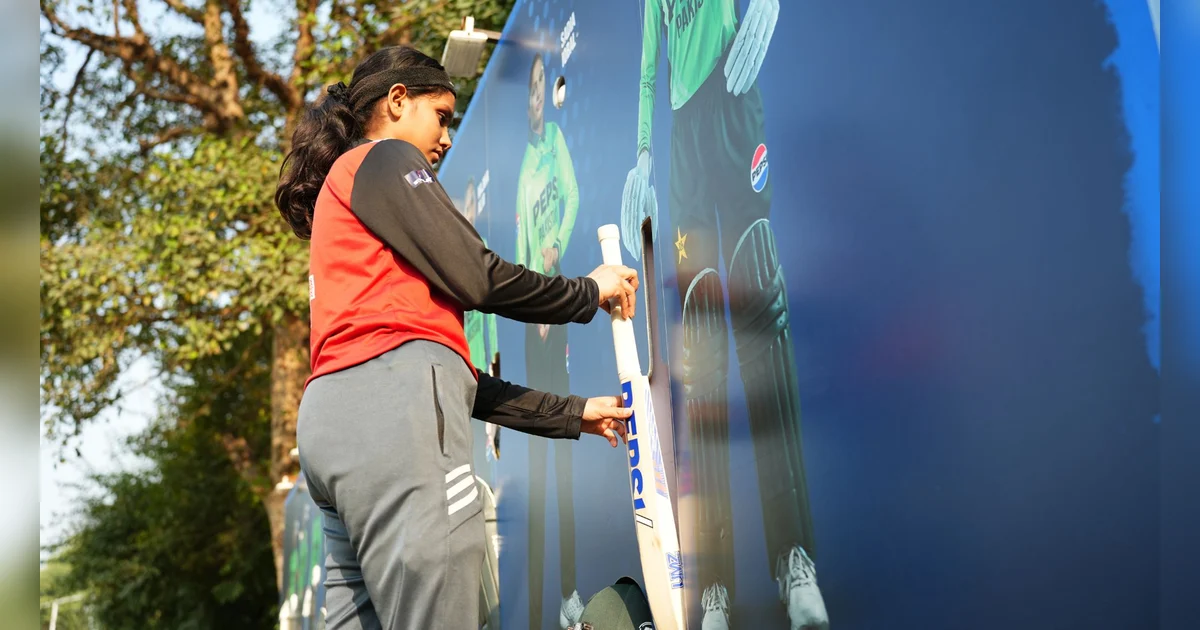
In a significant move to advance gender equality in sports, PepsiCo has joined forces with the Pakistan Cricket Board (PCB) to launch an innovative program addressing critical barriers facing aspiring female cricketers. The collaboration introduces ‘Ab Hai Tumhari Bari’ (It’s Your Turn Now), a transformative initiative that reimagines sports accessibility through creatively repurposed advertising infrastructure.
The partnership emerges against a backdrop of growing interest in women’s cricket across South Asia and the Gulf region, where participation has traditionally been hampered by equipment shortages and gender-specific design limitations. Female players frequently resort to borrowing ill-fitting gear from male relatives, resulting in discomfort, diminished confidence, and compromised performance due to equipment typically engineered for male physiques.
Pepsi’s pioneering solution converts conventional billboards into functional ‘Playboards’ stocked with professionally designed cricket equipment tailored specifically for female athletes. Strategically installed at schools and community cricket grounds throughout Pakistan, these accessible stations provide complimentary access to bats, balls, stumps, and protective gear without requiring registration or payment. The borrow-and-return model ensures sustainable community sharing while eliminating financial barriers.
Hakima Mirza, Senior Marketing Director at PepsiCo Pakistan, emphasized the program’s immediacy: ‘Cricket permeates daily life, but access hasn’t mirrored enthusiasm. Our mission enables young women to engage now rather than postponing their dreams.’
Complementing the Playboards, the program distributes custom-fitted cricket kits to emerging women’s teams, facilitating proper training and skill development from foundational levels. Rafia Haider, PCB’s Head of Women’s Cricket, noted the performance correlation: ‘Appropriately sized equipment extends training duration and boosts confidence—access ignites development.’
The initiative presents a replicable model for sports advocacy worldwide, particularly in markets like the UAE where similar participation challenges persist despite growing institutional support. By transforming advertising spaces into community resources, the project demonstrates how corporate-sports partnerships can structurally advance inclusion beyond symbolic gestures.