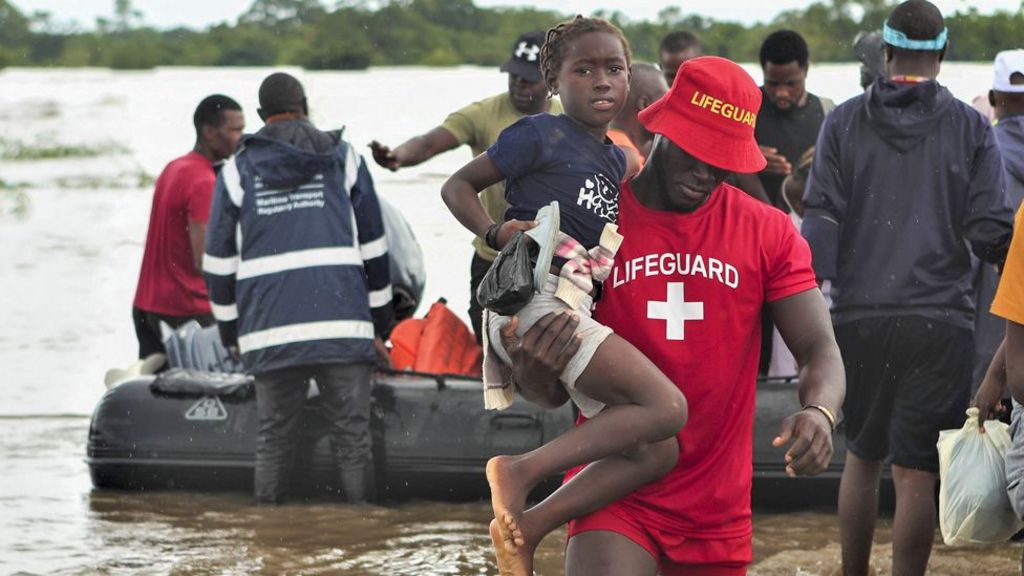
Mozambique is grappling with its most devastating flooding event in a generation, as relentless rainfall over two weeks has submerged vast regions of south and central Mozambique. The catastrophic inundation has prompted massive international rescue operations, with emergency teams from Brazil, South Africa, and the United Kingdom assisting in life-saving efforts.
According to provisional data from Mozambique’s National Institute for Disaster Risk Management and Reduction, the flooding has affected 642,122 people since January 7th, with at least 12 flood-related deaths recorded. The overall death toll since the rainy season began in October has reached 125 people.
The Inkomati River’s breach of its banks has been particularly destructive, forcing residents like 24-year-old mechanic Tomaz Antonio Mlau and his family to abandon their home near Marracuene, approximately 30 kilometers north of the capital Maputo. “For me, this is the first time I have experienced a calamity of this magnitude,” Mlau stated, noting that elders recall similar devastation occurring in the 1990s.
Thousands of displaced citizens have found temporary refuge in six emergency centers established in schools and churches throughout the region. At Gwazamutini Secondary School alone, approximately 4,000 people are receiving shelter, primarily farmers from low-lying agricultural areas who have lost everything to the rising waters.
Sixty-seven-year-old rice farmer Francisco Fernando Chivindzi described the unprecedented scale of the disaster: “The floodwaters reached heights we weren’t expecting. We have never experienced this level of flooding in my lifetime.” Like many others, Chivindzi lost his home, possessions, and livestock in the deluge.
Rescue operations face significant challenges as some residents refuse to evacuate danger zones, clinging to treetops and rooftops to protect their property. Marracuene municipality Mayor Shafee Sidat reported that more than 10,000 people are affected in his district alone, with rescuers struggling to reach those who resist evacuation.
The crisis is expected to worsen as heavy rains in neighboring South Africa threaten to release additional water from dams into the Inkomati River system. Mayor Sidat expressed grave concern: “We are worried about discharges of a South African dam on the Inkomati River. Our town is the last one downstream before the waters flow into the Indian Ocean.”
The flooding has severely disrupted transportation, with all vehicles banned from roads between Maputo and Gaza provinces after the N1 highway—the country’s primary north-south artery—became impassable. This suspension has triggered supply chain disruptions, resulting in shortages and price increases for basic foodstuffs and fuel as far away as Tete, over 1,500 kilometers from the capital.
For those in emergency shelters, food scarcity remains a pressing concern. Aninha Vicente Mivinga, a police officer and mother of two, described the initial food shortages: “It was painful to see children sleeping without anything to eat, except biscuits.” While conditions have improved, adequate nutrition remains uncertain for many displaced families.
The education system faces significant disruption, with Education Minister Samaria Tovela indicating that the cabinet may reschedule the start of the 2026 academic year to allow schools to continue serving as accommodation centers for flood victims.
As recovery efforts continue, residents face uncertain futures. While some like Chivindzi remain determined to “restart life from scratch” in their home communities, others like Mlau express hesitation about returning to flood-prone areas even after waters recede, highlighting the long-term challenges Mozambique will face following this unprecedented natural disaster.