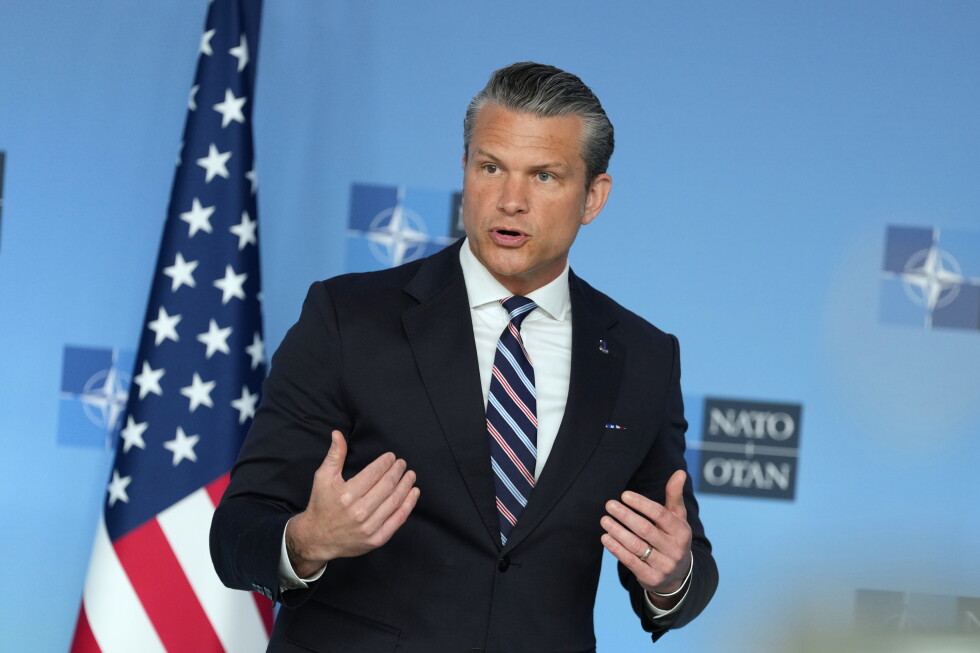
BRUSSELS – In a landmark address to a gathering of NATO defense ministers on Thursday, United States Defense Secretary Pete Hegseth delivered a clear directive to the alliance’s European members: the continent must take primary ownership of its own territorial defense, while pushing for a sweeping reorganization that would reshape NATO into a more uncompromising, combat-ready military bloc. Hegseth framed the proposed restructuring as a transition to what he calls “NATO 3.0” — a reimagined 32-nation alliance built from the ground up to credibly deter modern security threats across the European theater.
Hegseth’s comments come just weeks after the Trump administration notified NATO allies that it would no longer commit specific critical military assets, including warships and combat aircraft, to support an ally that comes under armed attack. The announcement has sent European allies and Canada scrambling to assess gaps in their collective defense capabilities and identify solutions to fill the resulting shortfalls.
“NATO 3.0 represents a post-Cold War reckoning: the alliance needs to return to its core identity as a genuine hard-line military alliance, equipped with tangible military capabilities capable of deterring aggression right here on the continent and leading the conventional defense of Europe,” Hegseth told reporters following the closed-door meeting.
As part of the new framework, Hegseth outlined that the United States will allocate $1.5 trillion to its own domestic defense budget by 2027, a move he says sends an unmistakeable global signal that Washington is expanding what he called the “arsenal of freedom.” “This arsenal first and foremost protects America and our core national interests, but it will also serve as a strategic backstop for NATO and our alliance partners,” he added.
Hegseth made clear that his message to European allies is non-negotiable: they must be willing to step up and take decisive, robust ownership of the defense of their own continent. The shift in U.S. defense posture dates back to a June 3 announcement, when Washington signaled it would pull back planned commitments of a full aircraft carrier strike group, aerial refueling aircraft, and dozens of frontline fighter jets for crisis response in Europe. In response, NATO’s Supreme Allied Commander, an American officer, has already begun developing alternative contingency defense plans for the continent.
The Trump administration has justified the shift by arguing it needs greater flexibility to prepare for two concurrent major conflicts, prioritizing the reallocation of military resources to counter growing Chinese influence and potential aggression in the Indo-Pacific region.
Under NATO’s founding collective security framework, Article 5, all 32 member states agree that an armed attack on one member counts as an attack on the entire alliance. While the treaty does not legally require all members to deploy military forces in response, the vast majority of allies would almost certainly contribute. In practice, the current shift means the U.S. — which maintains by far the largest and most capable military force within the alliance — is scaling back the scope of its automatic military support for a potential Article 5 activation. The administration has clarified it has no plans to withdraw U.S. nuclear weapons deployed in Europe, a core component of NATO’s long-standing nuclear deterrence strategy.