Deadly cross-border airstrikes carried out by Pakistan against targets inside Afghanistan have reignited long-simmering tensions between the two neighboring nations, marking the most severe outbreak of violence in weeks after a brief period of relative calm, officials from both governments confirmed Wednesday.
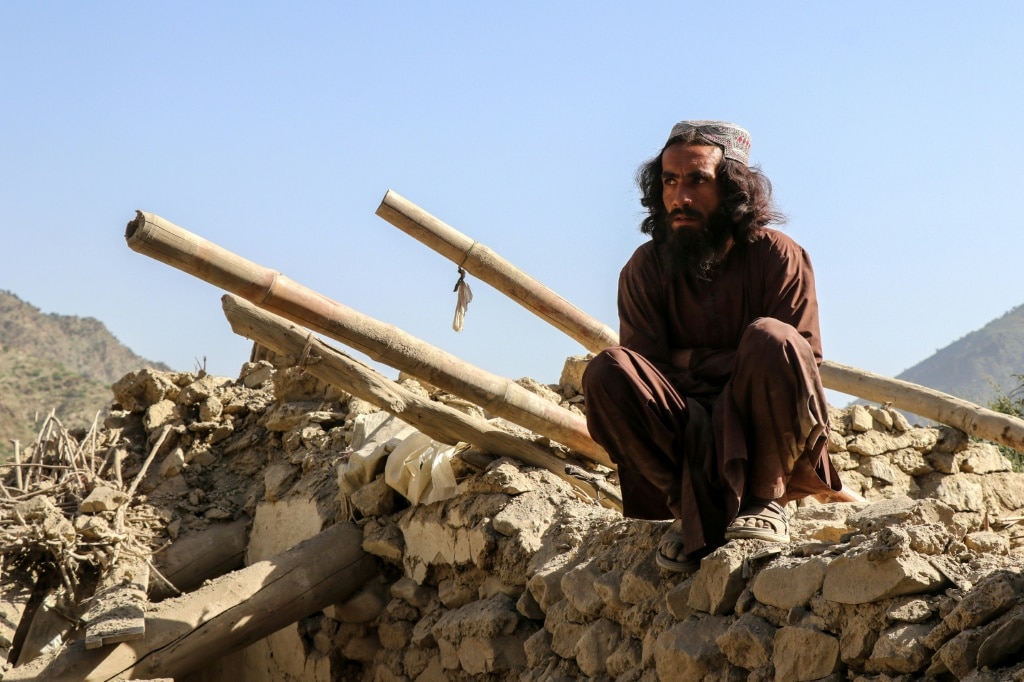
On the ground in Afghanistan’s southeastern Khost Province, an Agence France-Presse reporter witnessed a flattened residential structure in Mane village, where local residents worked through the morning digging fresh graves for those killed in the overnight assault. A provincial official, speaking on condition of anonymity, told AFP that the attack in Khost’s Spera district alone left nine people dead and 10 more injured, many of them children. Multiple local residents corroborated this casualty count, confirming the strike hit the village shortly after midnight, which corresponded to 19:30 GMT on Tuesday.
Ali Jan Akhlaqi, a 29-year-old Mane village resident who helped respond to the aftermath of the attack, described the immediate chaos. “We and people from the neighbouring areas rushed to the scene and rescued the remaining people. We even took some wounded to the clinic,” he told AFP. Shirbat Khan, a 55-year-old local resident, condemned the strike, saying the family killed in the attack was poor and had no connections to any armed militant groups. “They had done nothing,” he emphasized.
Across the border region, additional strikes were reported in Afghanistan’s Kunar and Paktika Provinces. In Barmal district of Paktika, two local residents confirmed a separate strike hit a private home, killing three civilian children. Afghan government spokesperson Zabihullah Mujahid put the total nationwide death toll from the strikes at 13: 11 children, one woman, and one elderly man.
Pakistani authorities have framed the operation as a targeted counterterrorism measure in response to a recent wave of attacks inside Pakistan. Islamabad says the strikes killed 26 militants affiliated with the Tehreek-e-Taliban Pakistan (TTP), an anti-state armed group that uses border areas of Afghanistan as staging grounds for attacks inside Pakistan. Information Minister Attaullah Tarar described the operation as “precise and calibrated strikes” that hit militant “hideouts and safe havens” in the border region, declining to address reports of civilian casualties. Tarar added that the strikes hit four pre-selected targets: a militant training camp, an ammunition cache, and hideouts linked to two high-ranking TTP commanders.
In a post on X, Tarar signaled that cross-border counterterrorism operations would continue, noting that “Pakistan has always strived for maintaining peace and stability in the region, but at the same time the safety and security of our citizens remains our top priority.”
The latest escalation comes after a flare-up of border conflict between the two nations in late February, which saw unprecedented Pakistani airstrikes that reached major Afghan population centers, including Kabul, the national capital, and Kandahar, where Taliban supreme leader Hibatullah Akhundzada is based. A United Nations report published last month recorded that at least 372 Afghan civilians were killed and another 397 wounded in cross-border violence in the first three months of 2024.
Diplomatic and security relations between Pakistan and Afghanistan have remained deeply strained since the Taliban retook full control of Afghanistan in 2021. The TTP issue has emerged as the core sticking point: Pakistan has repeatedly demanded the Taliban government crack down on TTP operations from Afghan territory, accusing Kabul of sheltering the militants behind a surge in attacks inside Pakistan. Afghan Taliban officials have consistently denied these accusations, countering that Pakistan hosts anti-Afghan hostile groups and has repeatedly violated Afghan national sovereignty.
Tensions have already disrupted economic ties between the two countries: the main border crossing has remained largely closed since an earlier flare-up in violence last October, bringing bilateral trade to a near standstill.