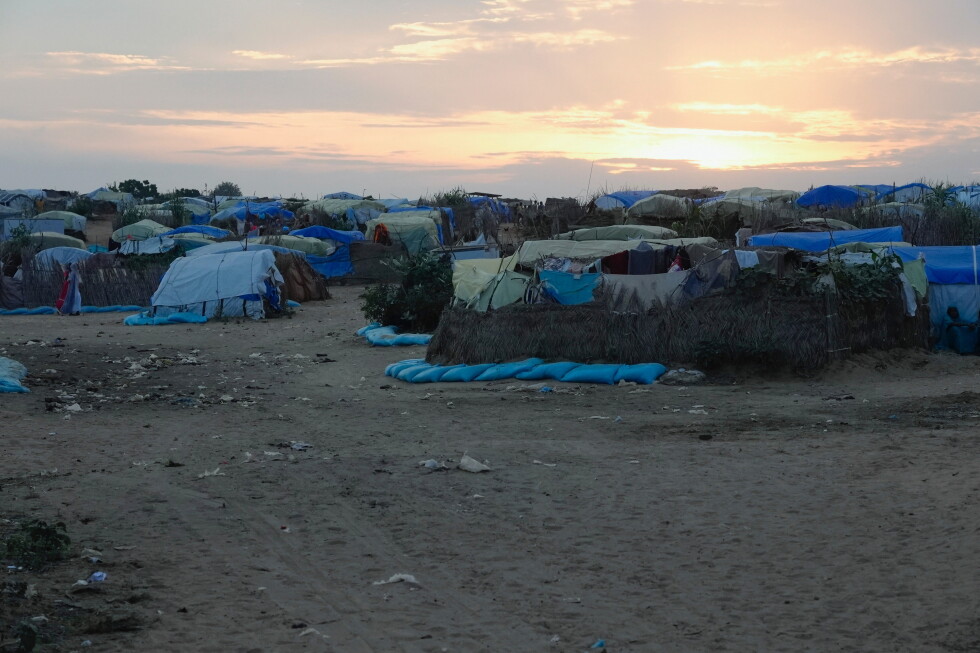
A confidential internal investigation from global humanitarian organization Doctors Without Borders (MSF) has uncovered a widespread pattern of sexual abuse and exploitation targeting vulnerable displaced populations on the Chad-Sudan border, exposing deep systemic failures in the group’s safeguards against misconduct in crisis settings. The 59 verified and alleged abuses, first brought to public attention by Associated Press investigative reporting, include exploitation of underage girls, transactional sex for food and work, and even indicators of potential organized trafficking among both local and international MSF staff.
博客
-

Married at First Sight Australia stars not told partners had drug and violence convictions
A landmark investigation by the BBC has uncovered serious safety and duty of care failures on the hit reality dating series *Married At First Sight Australia*, revealing that multiple female contestants were matched with male co-stars who had undisclosed criminal convictions, leaving them feeling unprotected and at risk. The revelations come on the heels of a separate scandal involving the UK adaptation of the format, MAFS UK, which was thrown into crisis after BBC Panorama published rape accusations from two female participants — claims that all men named have denied.\n\nNine former cast members from the Australian iteration of the show, which is produced by Endemol Shine Australia and broadcast domestically on the Nine Network (Channel 9), have spoken out to the BBC, calling for sweeping overhauls of the series’ background vetting protocols and a ban on casting individuals with prior criminal convictions or formal allegations of harm. Unlike MAFS UK, the Australian production is operated by an entirely separate production team.\n\nThe format of MAFS sees consenting single people agree to a ceremonial, non-legal “marriage” to a complete stranger, who they meet for the first time only at their on-screen wedding. After the ceremony, couples go on honeymoons, move into shared accommodation, and have their daily relationship interactions filmed almost 24/7 for broadcast.\n\nOne of the contestants speaking out is Sierah Swepstone, who appeared on the 2025 season of the show. Swepstone told the BBC she was never informed that her on-screen match, Billy Belcher, had a 2014 conviction for multiple drug-related offenses in Perth, Australia, and only discovered the details after filming wrapped. \”There should be informed consent,\” Swepstone said in an interview. \”You shouldn’t be left alone with a stranger with a criminal record. At the very least, there should be informed consent. They should let us know. Why is the show accepting that risk on our behalf? We should have the choice.\” Swepstone added that she now believes the production failed its duty of care, saying plainly: \”Brides are not safe on MAFS Australia.\”\n\nIn response to queries about Belcher’s casting, Channel 9 and Endemol Shine Australia said Belcher had been fully transparent with production about his conviction, which he received as an 18-year-old and resulted in a suspended sentence with a good behavior bond. They also noted Belcher has never been convicted or accused of any form of violence or abuse. Belcher himself did not respond to the BBC’s request for comment.\n\nA second female contestant, speaking to the BBC on condition of anonymity under the pseudonym Anna, shared a far more alarming account. Anna said her on-screen partner disclosed to her during filming that he had a history of aggressive behavior — information that she says producers already knew about when they matched them. \”I was terrified the whole time,\” Anna said. \”I thought I’d be safe, that’s why I signed up to the show.\” She described multiple angry outbursts from her co-star, including an incident where he threw a microphone pack into a wall, smashing it, and another where he threw an object at production staff. The BBC has verified a photograph of a bruise Anna sent to her co-star during filming, to which he responded, \”Shit! I’m so sorry.\” Anna says the experience left her traumatized.\n\nChannel 9 and Endemol Shine Australia countered that the male contestant only had one isolated reported incident in his background from several years before filming, that he has no criminal record, and that the production has no documentation of the outbursts Anna described. The contestant has \”categorically denied every allegation\” made by Anna, calling the claims entirely false, malicious, and a distortion of reality. Anna said her primary criticism is directed at the production, not just her co-star: \”Channel 9 are making money off people who are vulnerable. They did the checks and they knew about his background, and they cast him anyway as it makes ‘good TV.’\”\n\nThe BBC’s investigation also uncovered three other male cast members with criminal convictions that were not disclosed to their on-screen matches: 2025 groom Adrian Araouzou, who was convicted of affray in 2017; 2024 contestant Timothy Smith, who served one year in a U.S. prison for drug trafficking; and 2026 series contestant Chris Nield, who was found guilty of common assault more than a decade prior.\n\nAraouzou called the BBC’s reporting on his conviction false and said the details of his past were none of the outlet’s business. The BBC confirmed the affray conviction through publicly accessible Australian court records, and understands Araouzou’s on-screen bride was never told about the conviction. In response, production said all contestants complete extensive background checks including police screenings, and noted Araouzou’s conviction was nine years old, resulted in a $400 Australian fine (around £210), and fell on the lowest end of the court’s sentencing spectrum for the offense.\n\nSmith, who describes himself on his personal website as a \”cartel pilot to corporate leader,\” confirmed his drug trafficking conviction to the BBC. Production said Smith did not disclose his U.S. criminal conviction until after the 2024 series finished airing. Nield did not respond to the BBC’s request for comment, and production noted his 11-year-old assault conviction stemmed from a one-off altercation with no repeated offenses since.\n\nMultiple other former cast members told the BBC they have deep concerns about the speed and thoroughness of the show’s casting vetting process. One anonymous male groom said only two weeks passed between his application and the start of filming, leading to what he described as \”rushed\” checks. When he was unable to locate official documentation confirming he had no criminal record, he said producers told him they would \”just take his word for it\” to keep production on schedule. \”I didn’t have a criminal record, but it raises the question over what happens if they put someone on the show who does have a history,\” he said.\n\nOther former contestants who were not personally matched with convicted individuals say they have been aware of the gaps in vetting for years. Katie Johnstone, a 2025 cast member, said: \”If you’re with someone who has a sketchy background, then you should be made aware of that. Especially considering you’re expected to be alone and share a room with this person. You need to know and it’s not fair that women are being placed in these positions.\” Tahnee Cook, who appeared on the 2023 series, added: \”These checks can’t just be a tick box. I don’t think you should be allowed on with any previous offense. I think it’s unsafe.\”\n\nAustralia’s Our Watch, a leading non-profit organization focused on preventing violence against women, told the BBC that reality TV productions must treat prior convictions or allegations of harm \”as a serious safeguarding issue, and not withhold from the people most at risk.\”\n\nIn its official response to the investigation, Channel 9 and Endemol Shine Australia say they take participant safety, health, and wellbeing \”extremely seriously,\” and maintain they have \”strong protocols\” in place, including a multi-stage vetting process that covers police and criminal background checks across all countries a contestant has lived, independent psychological assessments, medical screenings, legally binding disclosure statements, and digital and legal due diligence. The production also confirmed that their current protocols do not require sharing personal background information between matched participants, a policy the BBC specifically asked about and did not receive a revised answer on.\n\nWhile the series is a ratings juggernaut in its native Australia, it also boasts a large international fanbase, particularly in the UK, where it airs on Channel 4. After the MAFS UK scandal broke, Channel 4 pulled all episodes of the UK adaptation from its streaming service All 4, but the Australian version remains available to stream. Channel 4 said it does not participate in production of the Australian series and holds no editorial control over its content, but that it ensures all acquired programming aired on its networks adheres to the Ofcom Broadcasting Code.
-
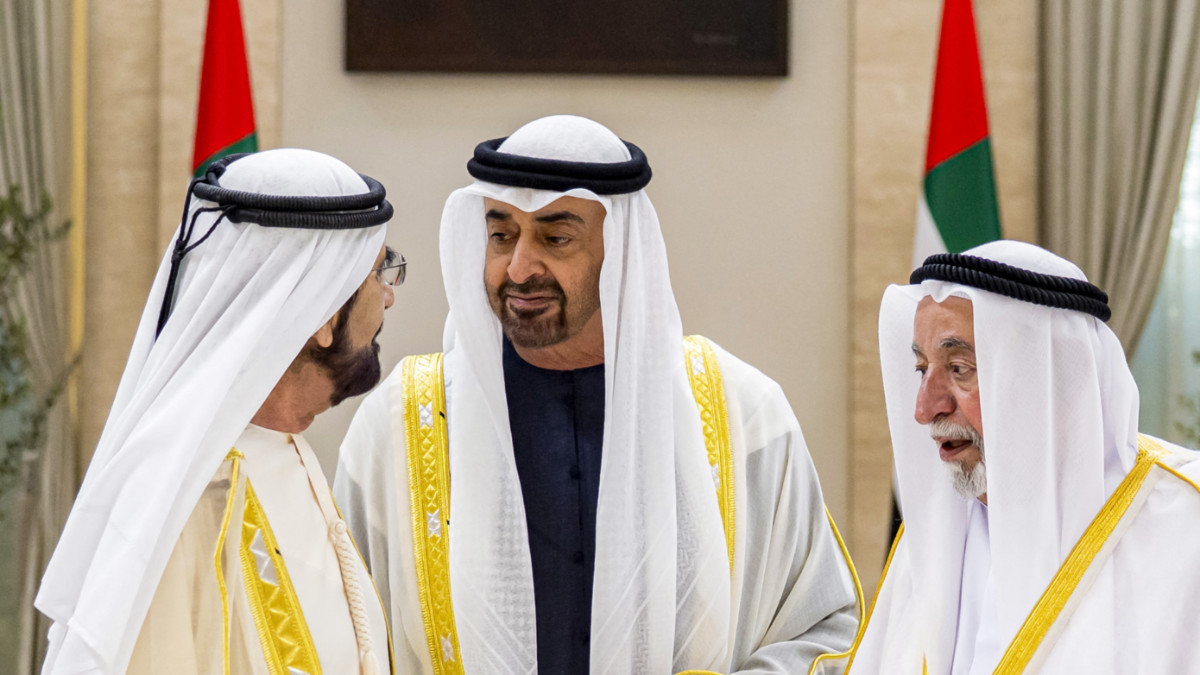
UAE paid Iran billions of dollars to halt strikes: Report
In a dramatic reversal of its long-held hardline stance toward Iran, the United Arab Emirates has reached a landmark agreement that includes billions of dollars in payments to Tehran in exchange for a permanent halt to Iranian attacks on Emirati territory, multiple international news outlets have reported. The development marks one of the most significant geopolitical realignments in the Persian Gulf in recent years, reshaping long-standing regional power dynamics in the wake of the US-led conflict against Iran.
Details of the agreement remain fragmented across multiple anonymous sources, but the core framework has been confirmed by reporting from Reuters, Bloomberg, and Middle East Eye. According to two regional insiders cited by Reuters, the UAE has already transferred $3 billion to Iran as an initial installment, with the total value of the deal projected to reach as high as $10 billion. Two other anonymous sources, however, put the eventual total payout at $20 billion. It remains unclear whether the funds were drawn from frozen Iranian assets held in Emirati financial institutions or from the UAE’s own sovereign wealth funds, a question Reuters did not pursue in its initial reporting.
The shift comes after years of the UAE positioning itself as one of Iran’s most vocal critics in the Gulf. Abu Dhabi once led regional lobbying efforts in Washington to push for continued aggressive US policy toward the Islamic Republic, and joined the US and Israel in launching dozens of strikes against Iranian targets during the recent regional war. It even took punitive measures against Pakistan when Islamabad hosted mediation talks aimed at ending the conflict, calling in outstanding debt obligations that forced Saudi Arabia to step in with a new emergency loan to stabilize Pakistan’s economy.
In recent weeks, however, the rapid reversal of this policy has been impossible to ignore. Just days after Israeli Prime Minister Benjamin Netanyahu made a high-profile wartime visit to Abu Dhabi that resulted in a new joint defense acquisition deal between the two countries, the UAE’s powerful national security adviser and Abu Dhabi Deputy Ruler Sheikh Tahnoun bin Zayed al-Nahyan hosted senior officials from Iran’s US-sanctioned Islamic Revolutionary Guard Corps at his private guest house. This meeting was followed by a new round of face-to-face diplomatic talks between Emirati envoys and senior Iranian leaders this week, held to further de-escalate cross-border tensions, Bloomberg confirmed. A Gulf diplomat told Middle East Eye that the discussions were aimed explicitly at securing guarantees that the UAE would not be targeted in Iranian retaliatory attacks.
The new arrangement has already played out in regional security dynamics: as Iran has launched retaliatory strikes against smaller Gulf states including Bahrain, Kuwait, and Jordan in recent weeks amid a fragile US-Iran ceasefire, the UAE has faced no attacks, and has refrained from joining new strikes against Iran. Analysts say the deal signals that Iran has emerged from the recent conflict in a strengthened regional position, despite coordinated pressure from the US, Israel, and Gulf allies.
For decades, the UAE has served as a key financial and trade hub for Iran, with deep economic ties that have often outlasted periods of geopolitical tension. Iranians hold major stakes in the UAE’s lucrative real estate sector, and even after the outbreak of the US-Israeli war on Iran, when Abu Dhabi publicly considered freezing billions of dollars in Iranian-linked assets, it never followed through with a public implementation of that threat. Esfandyar Batmanghelidj, chief executive of the Bourse & Bazaar Foundation, noted on social media platform X that the agreement is likely the first step toward revitalizing these cross-border economic bonds. “Everyone needs to remember that the UAE is Iran’s most important trading partner. By ‘releasing’ funds to Iran, the UAE ensures those funds will be spent in the Emirates,” Batmanghelidj wrote. “Both countries will double down on economic interdependence and the multiplier effects of bilateral trade.”
The deal also carries implications for US diplomacy in the region. One source told Reuters that the arrangement allows Iran to secure the financial concessions it demanded for a ceasefire, while enabling the Trump administration to publicly claim it did not directly pay Iran for the agreement. A former US intelligence official told Middle East Eye that it is nearly impossible that Washington was unaware of the IRGC meeting hosted by Sheikh Tahnoun, given the extensive US intelligence footprint in the Gulf. The shift in UAE-Iran ties comes as the US and Iran are on the verge of finalizing a 60-day memorandum of understanding to negotiate over security in the Strait of Hormuz and Iran’s nuclear program.
The Reuters report follows a similar recent development reported by the Washington Post, which claimed Qatar agreed to shut down its Ras Laffan refinery in exchange for Iran halting attacks on Qatari territory. Qatar has since denied any such coordination with Tehran.
-
In Syria’s Daraa, water is life – and today the land is parched
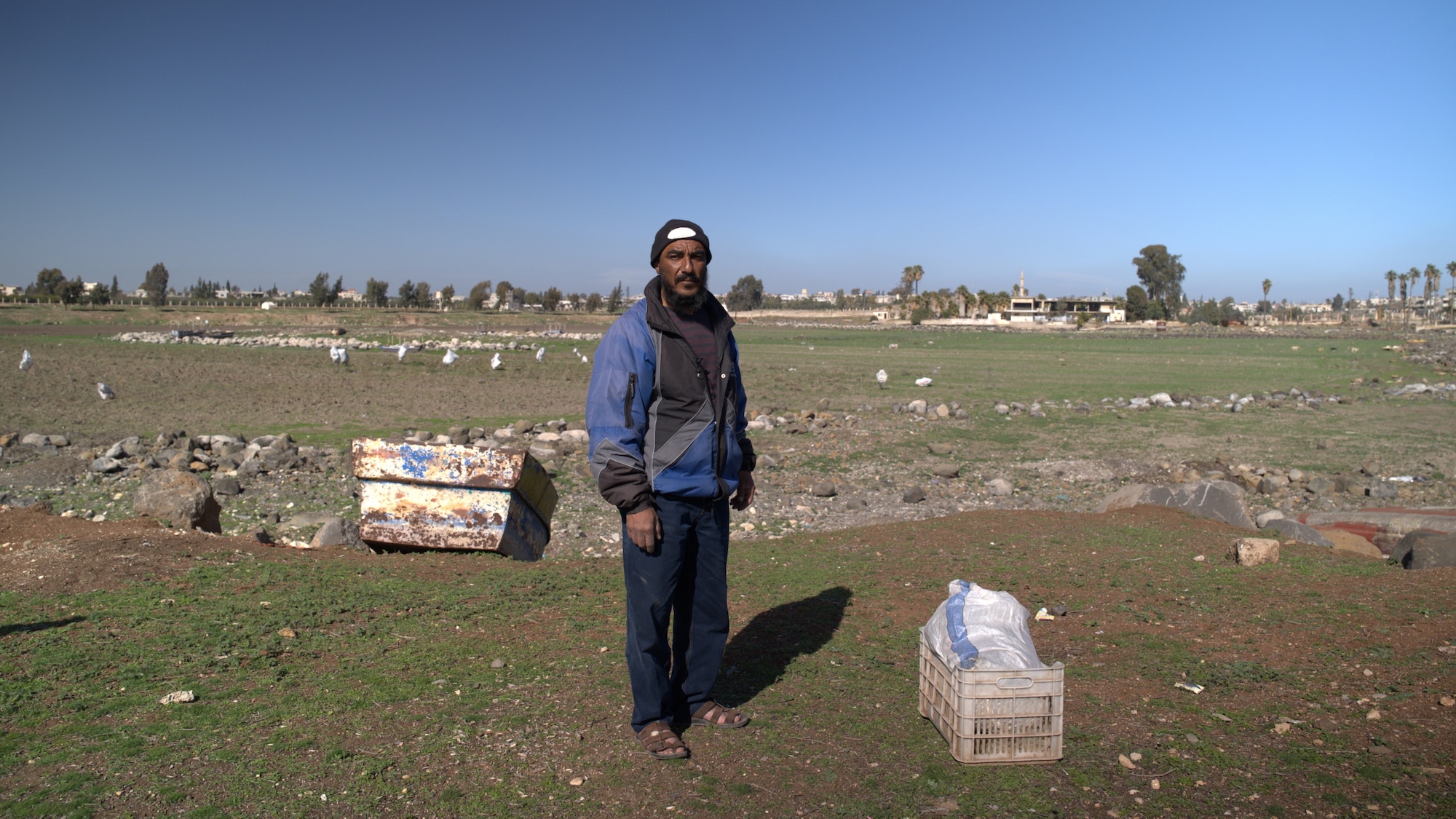
Once a sprawling, horizon-spanning body of water that anchored life and livelihoods across southern Syria’s Daraa province, Lake al-Muzayrib is no more. What remains is a vast, cracked expanse of parched earth dotted with scattered stones and sparse tufts of dead grass, where an abandoned fishing boat rests on hardened soil—a stark, silent monument to a world that has vanished. A handful of birds pick their way across the empty basin, their movements the only disruption to the stillness of a space that once teemed with the hum of human and aquatic life.
Standing at the edge of the former lake bed, 64-year-old Abdul-Munaf al-Masri, a fisherman who worked these waters for nearly 30 years, can barely bring himself to look at the barren landscape. “I don’t like to come here,” he says softly, his gaze fixed on the dry ground under his feet. “The sight of this drought breaks my heart.” For Masri, who fished Lake al-Muzayrib from 1993 until the fish population collapsed entirely in 2021, the lake was far more than a workplace—it was the center of his entire existence, tied to his childhood, his identity, and his ability to provide for his family.
Decades of accelerating decline have led to this moment. Data from Syria’s Daraa Water Resources Directorate shows that in the 1990s, the natural springs feeding Lake al-Muzayrib flowed at a rate of up to 1,000 litres per second. By 2016, that flow had plummeted to fewer than 170 litres per second. Today, the springs are completely dry. While the lake partially refilled after occasional heavy rainfall during past dry spells, by the end of 2024, it had vanished for good.
The disappearance of Lake al-Muzayrib is not an isolated disaster—it is the most visible symptom of a catastrophic collapse of water resources across southern Syria, a crisis decades in the making that has been amplified by 14 years of civil conflict and systemic mismanagement. For years, researchers tracking the impacts of the Syrian war have warned that the country’s southern region was sliding toward an unprecedented water emergency, driven by prolonged drought cycles that have been worsened by unregulated, excessive well-drilling across Daraa. Today, both surface water and groundwater reserves are declining at rates never seen in recorded history.
Engineer Hani al-Abdullah, Daraa’s director of water resources, says the crisis has reached a breaking point. Of the 16 dams that once supplied water for irrigation and drinking across the province, 14 are now partially or completely dry. The combined total storage capacity of these dams stands at 92.5 million cubic metres, but in 2025, they held less than 4 million cubic metres total—an all-time low for the 21st century, and a dramatic drop from the 65 million cubic metres stored just five years prior. Standing on the crest of the nearly empty Daraa Dam, a reservoir that once drew local visitors with its abundant fish and served as the lifeline for surrounding farmland, Abdullah describes a landscape unrecognizable from decades past. Where trees once lined the dam’s banks and echoed with the sound of children playing and birds singing, only silence and barren earth remain.
Agriculture, the centuries-old backbone of Daraa’s economy that has sustained generations of families across the Hauran plains’ fertile volcanic soil, has been brought to its knees. Long before the war, the region’s strategic position at the crossroads of Jordan, historic Palestine, and central Syria, combined with its rich natural resources, made it a hub for grain, vegetable, and livestock production famous for its high-quality tomatoes, olives, pomegranates, and grapes. But 14 years of open conflict shattered that economy: water and irrigation networks were targeted in fighting, trade routes were severed, and decades of drought pushed the system past the breaking point.
As state authority collapsed during the war, thousands of desperate farmers turned to unlicensed well-drilling to keep their crops alive, turning a temporary survival tactic into a widespread phenomenon that has accelerated groundwater depletion. In the western Daraa town of Tafas, Abu Mahmoud, a smallholder farmer who relies on his half-hectare pomegranate orchard for his family’s income, spoke to Middle East Eye under a pseudonym over fears of government reprisal, explaining that he had no other choice when drought withered his crops. “I had no alternative. We all did it. It was the only way to hold onto our land and keep working,” he says. “But even that didn’t fix anything. It cost a fortune, and within three years, the well ran dry.”
For many farmers, illegal wells have become both a lifeline and an unsustainable burden. In eastern Daraa, farmer Hatem al-Zoubi, who tends 700 olive trees and two hectares of mixed crops, drilled a solar-powered well on his property in 2020 for $70,000—a sum that has eaten nearly all his profits, given falling crop prices and rising input costs. The well now supplies not just his farm, but drinking water for dozens of local families, especially as summer demand surges and displaced populations increase strain on existing resources. “A well isn’t a luxury. It’s a lifeline, for me and for dozens of families in this town,” he explains. “Without it, we would have faced catastrophic drinking water shortages already.”
Local residents and water officials alike confirm that this unregulated extraction has driven catastrophic declines in groundwater levels. Abdullah says that in some areas, groundwater tables have dropped by five to 10 metres, with solar-powered pumping allowing faster extraction than ever before. Masri estimates that more than 7,000 illegal wells now operate in the Lake al-Muzayrib area alone. “People don’t understand the risk. A farmer digs a well to water his own trees, but in doing that, he destroys the water supply for an entire community,” he says.
The crisis has pushed water out of reach for many low-income families, turning a basic necessity into an expensive commodity. The cost of 1,000 litres of water has risen to roughly $5—a staggering expense in a region where the average monthly salary ranges from just $75 to $150. Water officials have taken steps to curb unregulated drilling: the Daraa governor issued an order last year to confiscate unlicensed drilling equipment, issue fines to illegal well operators, ramp up monitoring, repair damaged irrigation infrastructure, drill regulated wells in high-need areas, and truck in emergency water from neighbouring regions. Dozens of drilling rigs have been seized, but the problem has become so widespread that enforcement remains extremely limited.
Returning residents displaced by the war are adding new strain to a system already on the brink. Basel al-Zoubi, a student who returned to the small town of Tseel after living as a refugee in Jordan, says much of the town’s original water infrastructure was destroyed during the conflict, leaving most residents reliant on expensive water delivered by private tankers. The town urgently needs new pumping systems to transport water from natural springs and state-managed wells to residential areas, he says, calling for stronger enforcement of well regulations to protect existing drinking water sources. “Water is a lifeline. There’s no replacement, especially when people are already struggling with such bad economic conditions,” Zoubi says.
The disaster has wiped out Daraa’s once-thriving fishing sector entirely. Masri is one of roughly two dozen fishermen who once worked Lake al-Muzayrib; all have either left the country or been forced to take odd jobs to survive. Since he stopped fishing in 2021, Masri has scraped by doing plumbing and household work. “I’m like a fish out of water. If I leave this place, I die,” he says. “The drought destroyed us. I was born and raised here, and it’s devastating to lose something that precious.”
Amin al-Haibi, another Daraa fisherman, confirms the sector has been completely destroyed: only the al-Wehda Dam on the Jordanian border still has enough water to support limited fishing, leaving the rest of the province without a working fishing industry. Masri still remembers the bountiful catches of the 1990s and early 2000s, when he could pull 200 to 300 kilograms of fish from the lake in a single day, enough to support his family comfortably. “It made you happy, coming home with a full catch,” he recalls. Today, the fishing boats that once fed 100 families across the region have been sold for scrap.
Masri joins other local residents in calling for stronger regulation of well drilling, public awareness campaigns to encourage conservation, and the creation of a fisherman’s union that could support efforts to restock dams if water levels ever recover. But current efforts to address the crisis remain fragmented and under-resourced, highlighting the urgent need for a comprehensive national strategy that balances urgent water conservation measures with support for local livelihoods in a region where access to water is now synonymous with survival. Standing on the empty lake bed that once defined his life, Masri holds out quiet hope for a return to the world he lost. “Nothing makes me want to come here anymore. The drought, the cut trees—it’s all so painful,” he says. “We just hope life can come back here, the way it used to be.”
-

Watch: Peru police dress up as World Cup mascots during drug raid
In a clever and unconventional sting operation that has caught global attention, law enforcement agents in Peru pulled off a high-stakes drug raid with a surprising twist: officers disguised themselves as official mascots for the upcoming 2026 FIFA World Cup to gain entry to the residence of a suspected drug trafficker. What made the operation even more notable is that the target of the raid is an avowed football fan, a detail that law enforcement leveraged to lower his guard and pull off the surprise entry. The brazen, creative approach to police work has been shared widely across social media, with footage of the disguised officers showing them leaning into the full mascot costumes to avoid tipping off the suspect before they could execute the search warrant. While unusual tactics, the disguise proved to be a successful strategic choice, allowing officers to enter the property without immediate suspicion before moving in to apprehend the suspect and seize any contraband on site.
-
US kills leader of Venezuela’s Tren de Aragua gang in airstrike, Trump says
In a Wednesday announcement made via his Truth Social platform, former and current U.S. President Donald Trump confirmed that U.S. military forces have eliminated Héctor Rusthenford Guerrero Flores — widely known as Niño Guerrero, the long-serving leader of Latin America’s most feared transnational criminal syndicate Tren de Aragua — in a targeted airstrike.
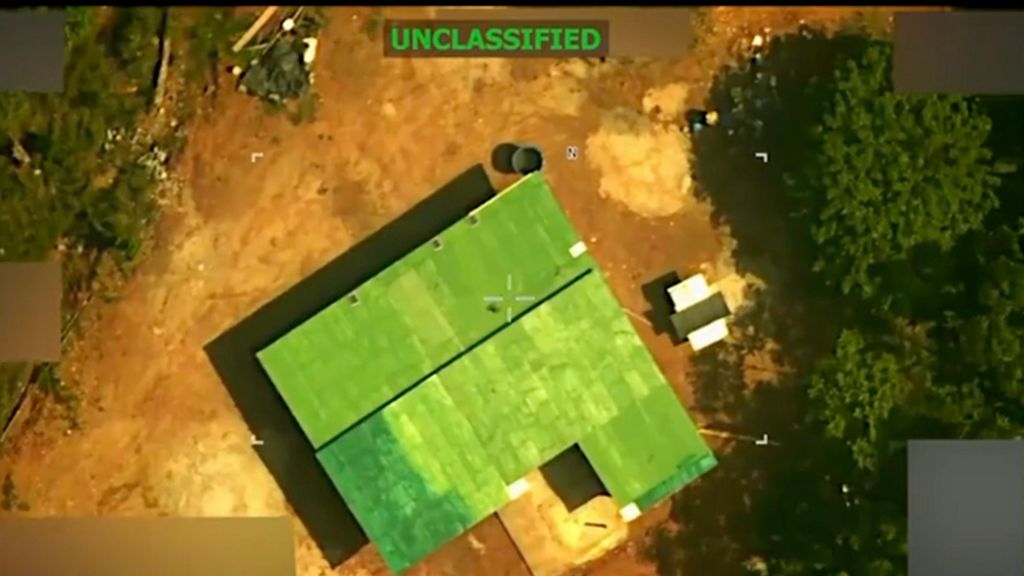
“At my direction, the United States Southern Command delivered a swift and lethal kinetic strike to successfully execute Niño Guerrero,” Trump wrote in his social media post. Accompanying the announcement was video footage appearing to capture the strike itself, which shows a green two-story building and an adjacent outbuilding erupting in a massive explosion, with debris hurled into the air in the immediate aftermath of the blast. Trump added that the operation was “coordinated closely with our friends in Venezuela, with whom we are working very well” following January’s raid that removed former Venezuelan president Nicolás Maduro from power.
For years, Niño Guerrero has topped U.S. law enforcement’s most wanted lists, with the State Department offering a multi-million dollar reward for any information leading to his capture. Under his decades-long leadership, what began as a small prison gang inside Venezuela’s Tocorón Prison evolved into a sprawling transnational criminal organization that the Trump administration formally designated as a foreign terrorist group earlier this term, placing it in the same classification as the Islamic State. Trump has repeatedly accused the syndicate of waging what he calls “irregular warfare” against the United States.
A career criminal who cycled in and out of Venezuelan custody for decades, Niño Guerrero first catapulted to notoriety in 2012, when he bribed a prison guard to escape custody, only to be recaptured a year later. Upon his return to Tocorón Prison, located in Venezuela’s northern Aragua state, he transformed the overcrowded, under-governed facility into a self-contained criminal compound equipped with a private zoo, full-service restaurants, a public nightclub, a betting parlor and a swimming pool. It was not until September 2023, when then-president Maduro deployed 11,000 soldiers to retake control of the prison, that Niño Guerrero escaped once again, going off-grid while continuing to direct his sprawling criminal network.
Under Niño Guerrero’s leadership, Tren de Aragua expanded far beyond Venezuela’s borders, establishing operational nodes in eight countries across the Americas including Colombia, Ecuador, Peru, Chile, and the United States. The syndicate diversified its criminal revenue streams away from its origins extorting vulnerable migrants moving through Venezuela, expanding into sex trafficking, contract killing, kidnapping, illicit gold mining, and international drug trafficking. The group seized control of unregulated gold mines in Venezuela’s southern Bolívar state, key drug trafficking corridors along the country’s Caribbean coast, and unpatrolled clandestine border crossings between Venezuela and Colombia, often partnering with established local criminal groups to expand its reach. In Ecuador, the gang has been linked to factions aligned with Mexico’s Sinaloa Cartel, while in Colombia, reports have tied it to fighters from the left-wing National Liberation Army (ELN) guerrilla group.
This targeted killing of Niño Guerrero is the latest escalation in a series of aggressive U.S. counter-criminal operations launched by the Trump administration against Tren de Aragua and other drug trafficking groups. Since September, U.S. forces have launched dozens of airstrikes against maritime vessels the administration claims are smuggling drug shipments bound for the United States, many of which are linked to the Venezuelan syndicate. U.S. media reports estimate that more than 200 people have been killed in these maritime strikes to date.
The campaign has sparked significant controversy and legal scrutiny, however. The U.S. military has yet to release public evidence confirming that the targeted boats were actually carrying drugs or affiliated with drug smuggling operations, leading critics to question the legality and ethics of the ongoing campaign. Multiple international law experts have argued that the strikes violate fundamental norms of international law, as they target individuals — including potentially civilian bystanders — without affording them basic due process protections. The Trump administration has pushed back against these criticisms, asserting that all operations are legally justified. In a formal statement to Congress last year, the White House confirmed that President Trump had formally determined the U.S. is in a state of armed conflict with transnational drug cartels, meaning that crew members of suspected smuggling vessels are classified as enemy combatants, legalizing targeted lethal force against them.
-
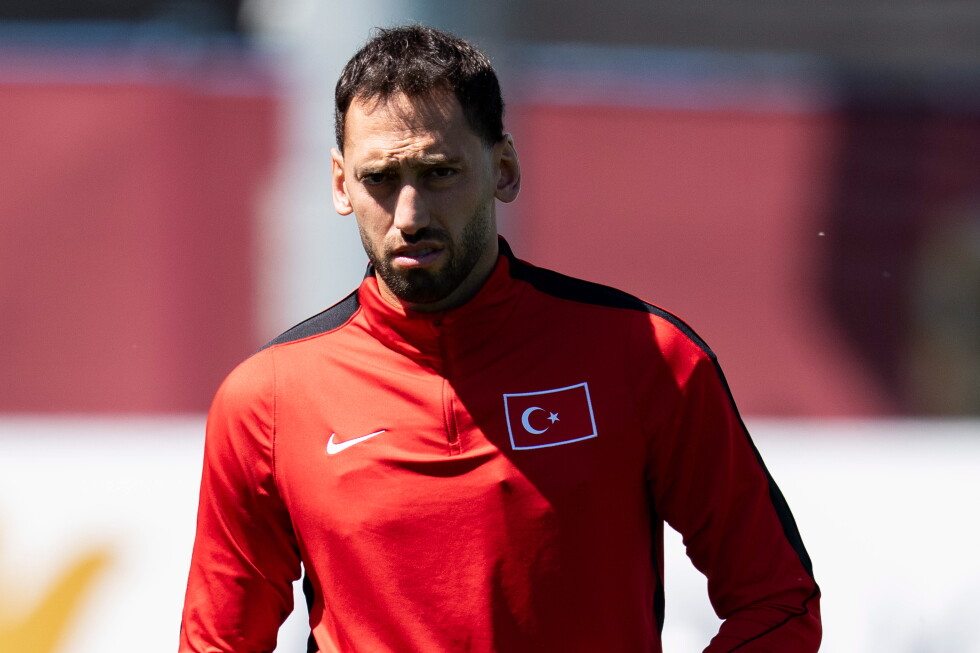
Turkey captain Hakan Calhanoglu says his ‘more talented’ team will ‘dominate’ Australia in World Cup
VANCOUVER, British Columbia — A tense pre-match war of words has emerged ahead of Turkey’s long-awaited return to the FIFA World Cup, as captain Hakan Calhanoglu has declared his side will dominate their opening Group clash against Australia this Saturday at BC Place. For Turkey, this tournament marks their first appearance on the world’s biggest football stage in 22 years, having failed to qualify for the previous five editions of the competition despite consistent strong performances at the continental level through much of the 21st century. The 32-year-old Inter Milan midfielder, who lifted the Serie A title with the Italian giants just this past season, doubled down on his confidence in comments made Friday. “I think we will dominate Saturday’s game, because we have more qualities and a more talented team,” Calhanoglu said. “So we will see what happens this weekend.”
Australia, by contrast, heads into this match as a seasoned World Cup competitor, appearing in their sixth consecutive finals tournament after advancing to the knockout round at the 2022 Qatar World Cup. The Socceroos were quick to respond to Calhanoglu’s bold claim, with midfield star Aiden O’Neill saying the Turkish captain was entitled to his perspective while emphasizing his own side’s competitive strength. “He’s allowed to have his own opinion,” O’Neill said Friday. “We’ve got quality players on our team, too, so we’re ready.”
Not all interactions between the two camps have been tense, however. Turkish manager Vincenzo Montella, who previously managed top-flight clubs across Europe, offered a complimentary nod to Australia’s playing style, noting that he found the Socceroos’ tactical approaches compelling. “I would like to use some of their techniques because I think they are interesting techniques,” Montella said.
This opening match is set to be a test of two teams with contrasting recent World Cup trajectories: a Turkey side hungry to prove it belongs back among the world’s elite after two decades away, and an Australia side looking to build on their impressive 2022 run and silence their opponent’s pre-match bravado.
-
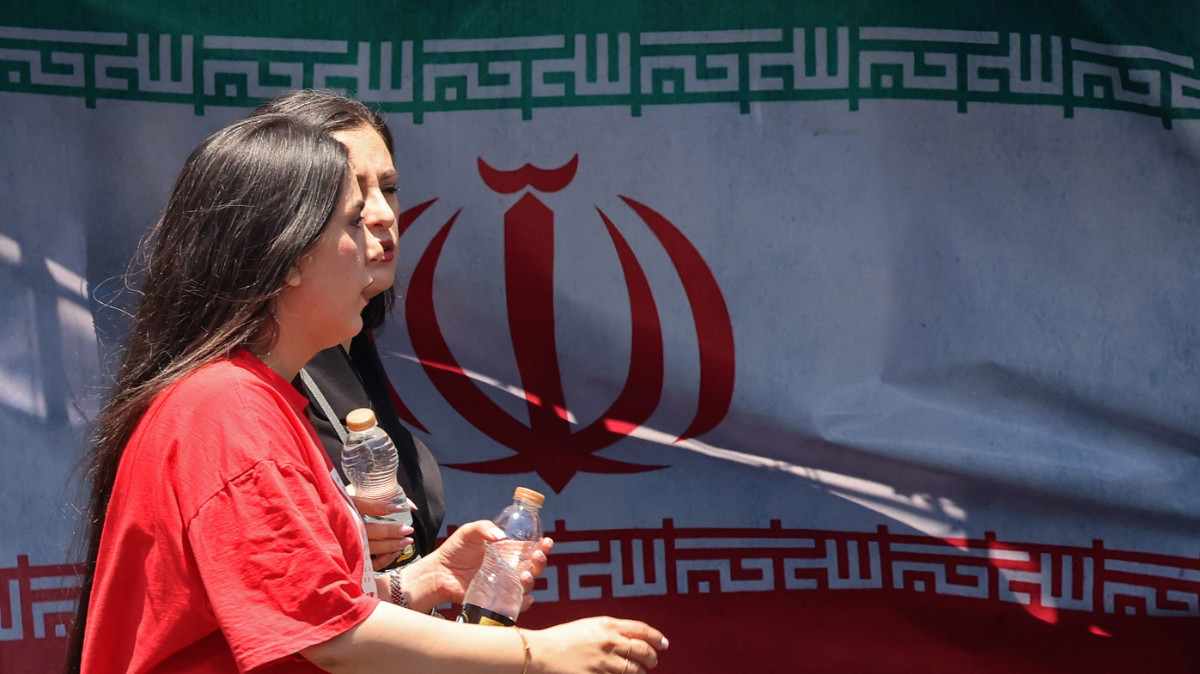
Iran and US confirm they are on cusp of new ceasefire, as they fight to frame terms
After months of indirect negotiations mediated by Pakistan, the United States and Iran have moved to the brink of signing a landmark memorandum of understanding (MOU) that could reshape geopolitics across the Middle East, though stark public disagreements over the agreement’s core terms have cast uncertainty over its final shape.
On Friday, Iranian Foreign Minister Abbas Araghchi offered the clearest confirmation yet that a final deal is imminent, writing on social media that the so-called Islamabad Memorandum of Understanding is closer than ever. He urged media outlets to avoid unfounded speculation ahead of the text’s formal finalization. US President Donald Trump quickly shared Araghchi’s statement, but hours later launched a scathing rebuke of Iranian claims about the MOU’s content.
The dispute broke into public view after Iran’s Mehr News Agency reported the draft agreement would unlock $24 billion in Iranian assets frozen by international sanctions, codify Iran’s long-held control over the Strait of Hormuz, and include a full ceasefire across regional hotspots including Lebanon. A senior Iranian source later confirmed that account to Reuters, adding the deal would also lift restrictions on Iranian oil exports and require an end to hostilities on all regional fronts. Multiple Iranian officials have long maintained that any ceasefire agreement must include an end to Israel’s ongoing military campaign in southern Lebanon, where Israeli forces have expanded ground operations in recent weeks.
The Trump administration has pushed back forcefully against Iran’s version of events. In a post on his Truth Social platform, Trump dismissed Iranian leaks of the deal’s terms as entirely disconnected from the written agreement under negotiation. “Very dishonorable people to deal with,” he wrote. “They better get their act together, and FAST!”
A senior anonymous Trump administration official outlined a far different set of agreed terms to reporters, saying Tehran has committed to five core pillars, including the destruction and permanent removal of all its enriched nuclear material from Iranian territory. The official confirmed that some Iranian assets are tied to the agreement, but stressed no funds will be released until Tehran fully meets all its performance-based obligations. The administration’s version also states the MOU will require the Strait of Hormuz—a critical global energy chokepoint through which 25% of the world’s oil supplies pass—to be kept open to all international shipping, and bars Iran from providing military funding to regional proxies including Lebanon’s Hezbollah. US Vice President JD Vance echoed that pushback in a post on X, emphasizing that no Iranian funds will be released immediately upon signing the MOU, calling widespread reports to the contrary “fake information.”
Despite the conflicting public narratives from the two negotiating parties, Pakistan—the key third-party mediator facilitating the indirect talks—has confirmed that both sides have reached a final agreed text. “We can confirm that a final, agreed upon text of the peace deal has been reached,” Pakistani Prime Minister Shehbaz Sharif wrote on X Friday. “Pakistan is now working closely with both sides to finalize the next steps. Peace has never been this close as it is now.”
International markets reacted swiftly to the news of progress: global oil prices dropped sharply, while equity markets surged, as investors priced in the possibility of a broader breakthrough that could ease geopolitical tensions and open up new Iranian oil supplies to global markets. The possibility of a diplomatic breakthrough also gained further cred Friday when Switzerland’s foreign ministry confirmed it had been in contact with both parties and offered to host the signing ceremony if both sides agree to the venue.
Senior US officials have struck a cautiously optimistic tone, saying a formal signing could come as early as the next several days, with Trump floating the possibility of a ceremony in Europe. One senior US official told reporters on a background call that the likelihood of a final agreement had climbed throughout the day, from an estimated 75% that morning to between 80% and 85% by Friday afternoon, stopping short of declaring a done deal. It is not the first time Trump has announced a near-completed agreement with Iran; past announcements of impending deals have ultimately collapsed before reaching a final signing.
-
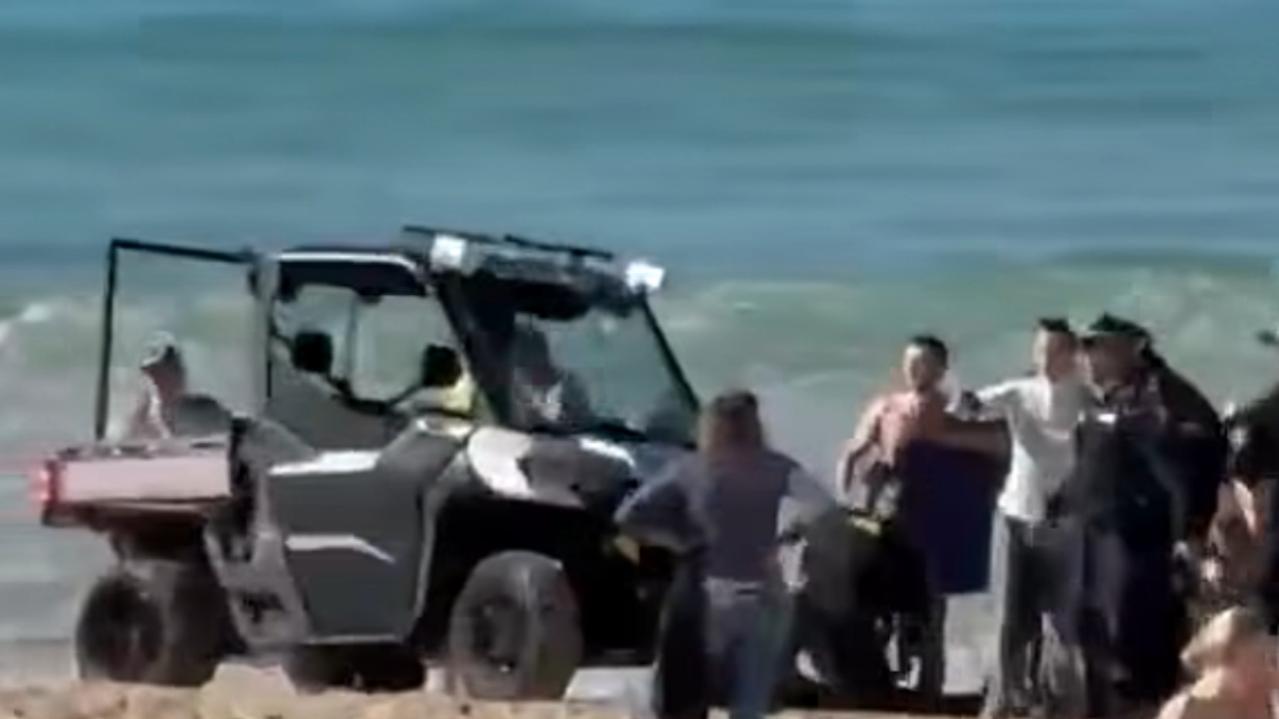
Woman suffers horrific injuries in Coogee Beach shark attack
A series of deadly shark encounters in Australian waters has taken another alarming turn, with a woman in her 30s sustaining catastrophic injuries in an attack at one of Sydney’s most frequented coastal stretches on Saturday morning.
The incident unfolded just after 11 a.m. local time, when the victim was swimming approximately 30 meters from shore — right within the patrolled swimming area marked by beach safety flags — when a shark bit her, multiple official and witness accounts confirm.
Witness Sharni Gotterson told local outlet The Daily Telegraph that she initially dismissed screams coming from the water as playful noise from beachgoers, before spotting urgent signals from a woman on a nearby paddleboard. When Gotterson looked closer, she saw a large pool of blood spreading across the surface of the near-shore water.
Other bystanders reported spotting a shark fin cutting through the water, before a lifeguard issued the universal danger signal by raising his arms into an X shape and triggering the official beach shark alarm.
More than a dozen members of the public sprang into action immediately, pulling the injured woman from the ocean and starting life-saving first aid before emergency responders arrived. NSW Police officers who arrived on scene also administered additional first aid to the victim, who suffered severe lacerations to both her arm and leg, ahead of NSW Ambulance paramedics taking over care.
As a critical safety precaution following the attack, local authorities closed Coogee Beach along with two adjacent popular beaches, Clovelly and Bronte, to prevent further risk to the public. As of the latest updates, the woman remains in critical condition.
This attack marks the fourth reported shark encounter in Australian waters in just four weeks, and the third that has resulted in a fatality. Just seven days before the Coogee incident, 35-year-old Daniel Turpin was killed in a shark attack off the coast of Albany, Western Australia. Earlier in May, two other men lost their lives to shark attacks while spearfishing: 38-year-old Steven Mattaboni off Rottnest Island on May 16, and 39-year-old Michael Jensz in waters near Cairns on May 24.
-
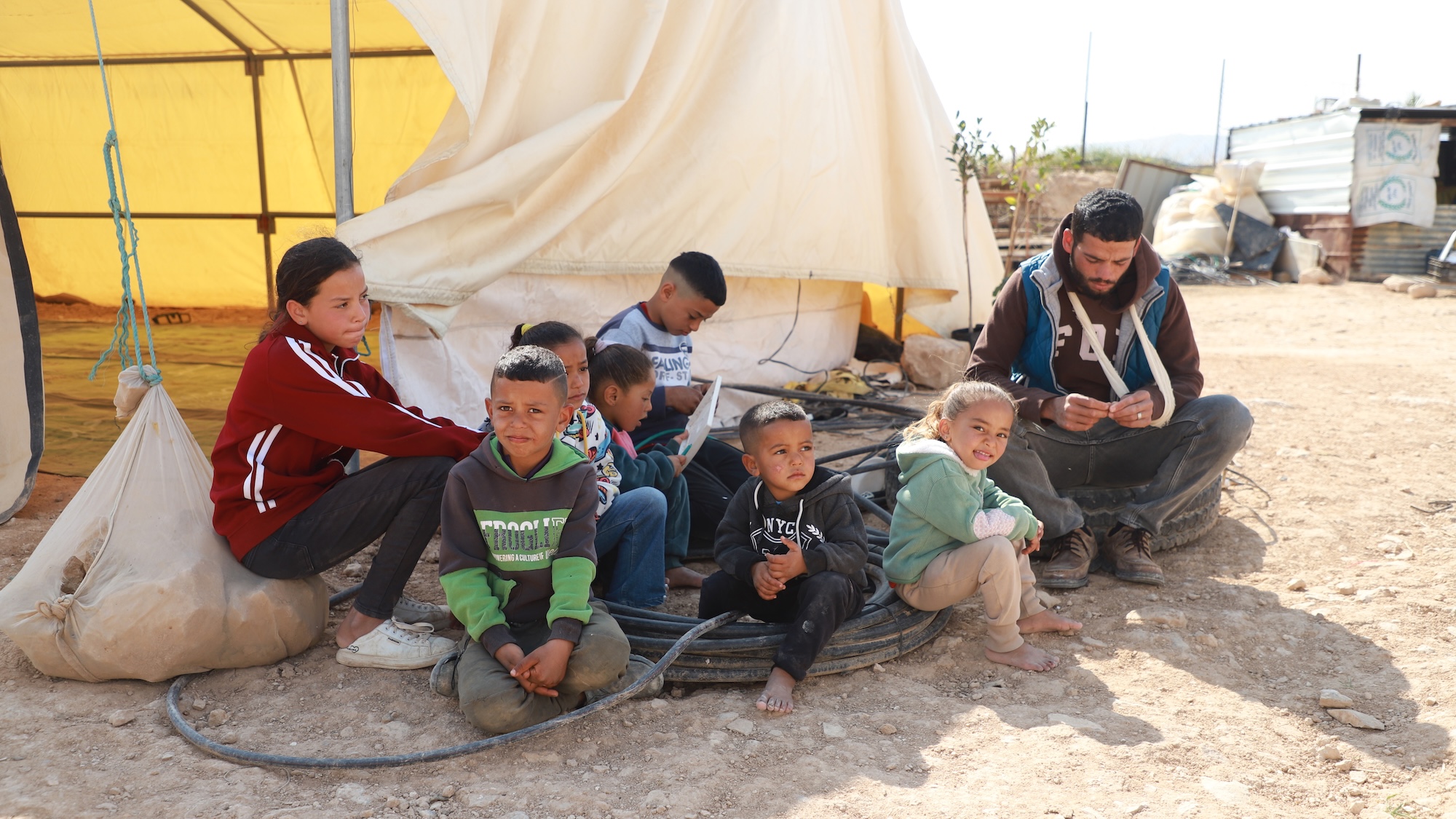
Ein al-Auja: How settler attacks and water diversion erased a Palestinian community
North of Jericho in the occupied West Bank, Ein al-Auja once stood as a lush, life-giving Palestinian oasis: a cascading natural spring whose waters flowed at more than 1,000 cubic meters per hour, sustaining hundreds of people, thousands of hectares of irrigated farmland, and a tight-knit Bedouin community that had called the land home for generations. Today, that oasis is a hollowed-out shell, its spring reduced to a faint trickle, its soil parched and cracked, and its entire Indigenous population displaced to remote, underserved encampments miles away. For Haitham Rashaidh, one of the last residents to abandon Ein al-Auja, the departure was not a choice—it was the breaking point of years of relentless pressure.
Rashaidh’s family packed their tents and loaded all their possessions onto a tractor earlier this year, trekking two hours across rough terrain to al-Balqa, a sparsely populated stretch of the Jordan Valley where they now camp alongside dozens of other displaced neighbors. “Leaving Ein al-Auja felt like losing a part of ourselves,” Rashaidh told Middle East Eye in an interview. For years, he said, his community resisted repeated attempts to push them out. “We did not leave the first time they tried to push us out. We came back, rebuilt what we could, and tried to continue our lives. But it didn’t stop. Every time we returned, the pressure came back stronger: more restrictions, more attacks, less access to water.” By January 2026, the community could endure no more.
For displaced families in al-Balqa, the consequences of displacement are immediate and devastating. The remote encampment has no access to public services, and the nearest city center is more than two hours away. Rashaidh’s children can no longer attend school regularly, a reality shared by dozens of displaced children across the area. The crisis in Ein al-Auja has accelerated dramatically since the October 7 attacks and the outbreak of the Gaza war, reshaping life for Palestinian communities across the occupied West Bank.
United Nations Office for the Coordination of Humanitarian Affairs (OCHA) data underscores the sharp escalation of violence: between 2017 and 2023, the agency recorded just two settler attacks resulting in casualties or property damage in the Ein al-Auja area. Since early 2024, however, Israeli settlers have established multiple new illegal outposts in the region, pushing the number of documented attacks to at least 38 in 2025 alone. Access to water has become the primary battleground, OCHA noted in a January 2026 report: settlers linked to the new outposts have repeatedly cut and damaged water pipes connected to the Ein al-Auja spring, blocked access roads for water delivery, emptied residential water tanks, and assaulted residents and herders attempting to collect water, destroying local livelihoods in the process. In one high-profile incident earlier this year, 124 people across 26 families were forcibly displaced amid coordinated violence by armed settlers and Israeli troops.
Environmental researchers trace the spring’s collapse to both systemic water diversion by Israeli authorities and compounding pressure from climate change. Ayman Abu Zaher, an environmental researcher who monitors the local hydrological system, explained that Ein al-Auja draws its water from a deep regional aquifer. Historically, three state-managed wells in the area reached depths of 500 to 600 meters, but over the past three decades, Israeli authorities have deepened these wells to nearly 1,000 meters and added a fourth. Collectively, these wells pump between four and six million cubic meters of water annually from the deep aquifer—water that is almost entirely diverted to nearby Israeli settlements, rather than supplied to local Palestinian communities.
Local Palestinian wells, by contrast, are limited to the shallow aquifer and rarely exceed 100 meters in depth, leaving them insufficient to meet community needs. Abu Zaher estimates that the spring’s flow has dropped by 50 to 70 percent in recent years, and it often runs completely dry during dry seasons. Where more than 3,000 hectares of irrigated orchards and cropland once covered the Ein al-Auja area, only 300 hectares remain actively farmed today, pushing the region toward accelerating desertification.
For displaced women like Naifa Zaied, who relocated to al-Balqa earlier this year, the water crisis has rewritten daily life. When the community lived near Ein al-Auja, women could fill their household water containers at the spring in minutes. Now, Zaied said, they must walk kilometers under the scorching Jordan Valley sun to find water tankers or distribution points, and they are often turned away by Israeli forces or left empty-handed when supplies run out. “We used to have water close to us. Today, every litre has become a struggle,” Zaied said. “Sometimes we wait for water tankers that never arrive, and we are forced to save water for drinking before anything else.”
The crisis has extended beyond household survival to destroy traditional Bedouin livelihoods across the region. Repeated settler raids, livestock theft, and movement restrictions have left herding families with massive losses: in one early 2025 raid, settlers stole roughly 1,500 sheep and goats from the Ein al-Auja community, and dozens of animal carcasses were found the following day. With their land and livestock gone, many displaced Bedouin men have been forced to take unregulated, low-wage work in nearby Israeli settlements, commuting through dangerous checkpoints with no work permits or legal protections. Rashaidh, who once farmed and raised livestock, now works as a day laborer on a date palm farm near al-Balqa. “It is a highly risky environment, without work permits, and many of us are injured or arrested while going to or returning from work,” he said.
Displacement has also fragmented long-standing community social support networks and cut off access to basic services. Many children now miss school regularly due to the long, unsafe commute from al-Balqa, and the community is cut off from the hospitals and markets they once relied on. “Everything has become far. Even reaching basic services takes hours now,” one anonymous displaced resident told MEE. “We are cut off from the places we used to depend on.”
Ein al-Auja’s collapse has also devastated the local tourism industry, which once drew Palestinian and international visitors to its scenic waterfall and mountain trails. The region already saw a massive drop in tourism revenue after the 2023 Gaza war outbreak, and repeated attacks on visitor groups have deterred what little traffic remains. In January 2023, a group of international hikers including American, Italian, and French nationals was confronted by armed settlers who attacked the group with clubs and pepper spray, injuring two people. Israeli forces took hours to arrive and secure the group’s exit. Today, the roads that once carried tour buses and weekend visitor traffic are nearly empty, and local vendors go hours without customers. “We used to wait for buses coming from the northern and southern West Bank every weekend, but now traffic has become almost nonexistent,” said Muhammad Taha, a Jericho-based vendor.
For the displaced families, a court petition to Israel’s High Court has become their last formal hope of returning to their land. Last year, residents petitioned the court to order the dismantling of the illegal settlement outposts encroaching on Ein al-Auja and to guarantee their safe return. The Israeli state has denied any formal evacuation policy, arguing there is no barrier to residents returning, despite the ongoing violence and water access restrictions that made life untenable.
In February 2026, the court ordered Israeli authorities to facilitate the community’s return and submit a security plan within 60 days. By April, the state had missed the deadline, and petitioners asked the court to compel compliance. The state continues to contest the order, arguing it has no obligation to station permanent security forces in the area. The case follows a familiar pattern for Palestinian land rights petitions: most are rejected or stalled indefinitely in Israeli courts, which grant the state broad discretion over land management even when long-term Palestinian residency is well-documented. By the time the court issued its February order, the last families had already left Ein al-Auja.
Today, the oasis is silent. There are no children’s voices, no grazing herds, no vendors serving visitors. Only the wind blows across the cracked, dry soil where a community once thrived. Back in al-Balqa, Rashaidh says international and regional solidarity is the only path forward for displaced Palestinian communities facing expanding settler pressure. “No one leaves their land willingly, and that is one of the hardest things in life,” he said. “But to stand alone is not enough. We defended our land alone, and we lost our land, our livestock and our water. If we do not stand together, we will all lose.”
This report was produced as part of the 2026 Middle East Eye Fellowship.