博客

  • ‘We fear for our lives’ – deadline for migrants to leave South Africa looms

    ‘We fear for our lives’ – deadline for migrants to leave South Africa looms

    As South Africa counts down to a self-imposed June 30 deadline for all undocumented migrants to leave the country, the nation has become a landscape of fear for thousands of foreign-born residents. What started as a series of mostly peaceful public protests led by anti-migrant groups and opposition political actors has erupted into widespread targeted intimidation, pushing even documented refugees and long-term residents to flee their homes and seek voluntary repatriation to their home countries.

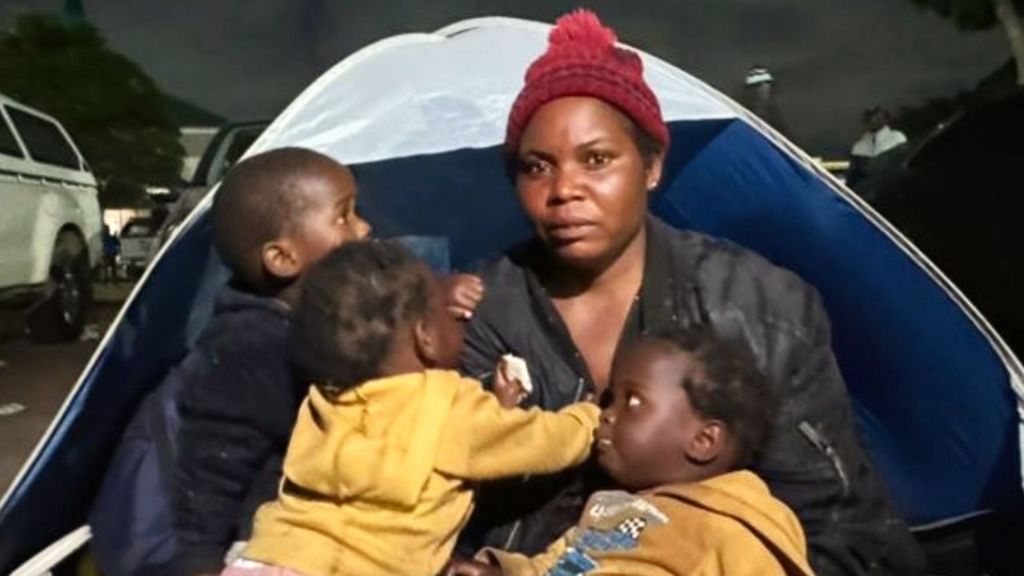
    One of the thousands living in crisis is Esnat Joseph, a 36-year-old Malawian mother of one-year-old triplets. Sitting in an open-air Durban field where as many as 7,000 displaced foreigners have gathered over the past two weeks, the mother struggled to calm her crying infants as she recalled the armed attack that forced her family from their informal settlement home. “A group of 10 South African men showed up at my door carrying machetes and whips, telling me we had to go back to our country,” Joseph explained. “They grabbed my husband, cut his head and neck, holding his throat like they intended to kill him. By the grace of God he survived, but he is still recovering in a hospital.”

    Joseph, who moved to South Africa three years ago to work as a domestic servant before having her children, lost her passport and immigration paperwork in a robbery three years ago, leaving her with no formal legal status. Like hundreds of other Malawians stranded in Durban, she has signed up for a repatriation bus organized by the Malawian consulate, which has arranged voluntary departures with funding from public donations. She is far from alone: over the past four weeks, Ghana, Mozambique, Nigeria and Zimbabwe have all organized air and bus repatriation efforts, with roughly 3,500 foreign nationals having already chosen to leave South Africa voluntarily. South African authorities confirm that more than 500 recently repatriated Nigerians were in the country without valid documentation.

    Benjamin, a Nigerian returnee who arrived in Lagos last week after living nine years in South Africa, summed up the sentiment of many who have left. “South Africans do not welcome foreigners, especially Nigerians,” he told the BBC. “It is a place where your life can be taken at any moment, it is not safe to stay.”

    The June 30 deadline was first put forward by a coalition of anti-migrant groups including the organization March and March, as well as opposition party ActionSA. Marchers carrying wooden sticks have taken to streets across the country for months, chanting the Zulu phrase *Mabahambe*, which translates to “They must go.” Organizers reject accusations that their movement is xenophobic, arguing that they are pushing for enforcement of existing immigration laws and policy prioritization for South African citizens. “If you enter the country on a 30-day visitor visa and stay for 50 days, two years, even five years, you know you are breaking the law,” March and March leader Jacinta Ngobese-Zuma told reporters at a Durban rally. “South Africa cannot become a refugee camp for every struggling state on the continent. Every country puts its own citizens first, and we demand our government does the same.”

    Protesters’ anger is rooted in deep-seated economic hardship that has plagued South Africa for years. Official government data puts national unemployment at 32.7%, one of the highest rates in the world, with 350,000 jobs lost in the first quarter of 2026 alone, most held by young workers. Protesters argue undocumented migrants strain already overstretched public services, taking scarce jobs, education seats and hospital access from native citizens. “We fight to get our own kids into school, we struggle to get our elderly into hospital beds,” Mecha Ramorola, a protester at a Pretoria march, explained. “Scarce resources should go to South Africans first.”

    Despite this economic context, the current wave of tension has also been amplified by political opportunism, analysts note. South Africa is set to hold local government elections this coming November, and multiple parties have weaponized migration anxiety to win votes. A widely debunked claim that South Africa holds 15 million undocumented migrants, first pushed five years ago by ActionSA leader Herman Mashaba (who is currently campaigning to become mayor of Johannesburg), continues to circulate on social media. “Political parties are scraping the bottom of the barrel, lying to voters that all of South Africa’s problems can be fixed by getting rid of migrants,” said Sharon Ekambaram, a human rights lawyer with the movement Kopanang Africa Against Xenophobia. “This scapegoating has a long history in our politics, and it always gets worse around election season.”

    Worryingly, the current tension has echoes of past waves of deadly xenophobic violence that have struck South Africa: in 2008, anti-migrant riots killed 62 people (including 21 South African citizens) and displaced thousands more, with further outbreaks in 2015, 2016 and 2019. Just last month, the Mozambican government reported that five of its citizens had been killed in anti-foreigner attacks in Western Cape province, a claim South Africa’s foreign minister disputed, saying only two Mozambicans died and investigations into the circumstances are ongoing.

    Social media has played a major role in amplifying hostility in recent weeks. Viral videos showing protesters harassing foreign nationals have spread widely, including one clip of a Ghanaian man being ordered to leave the country that prompted the Ghanaian government to summon South Africa’s ambassador to demand improved protections for Ghanaian citizens. Another viral video features prominent anti-migrant activist Nkosikhona Ndabandaba, a Facebook creator with 1.4 million followers who is known publicly as Phakel’umthakathi, approaching a Congolese man at the roadside. Without asking for proof of his immigration status, Ndabandaba politely told the man: “June 30 is the deadline. You don’t have to wait until then. Leave now.” Ndabandaba has amplified fears further by warning that he cannot control public anger after the deadline passes.

    Critically, even foreign nationals with valid legal status in South Africa are being targeted. Dozens of documented refugees have camped outside Durban’s Home Affairs department to seek government protection. One Burundian mother of four, who has official refugee status, said she has been targeted regardless. “I have all the valid paperwork proving I can stay here, but we are all being chased out,” she said, wrapping herself in a blanket to ward off the southern hemisphere winter chill. “I fear for my life, my children are terrified. We get insulted just walking down the street, my kids get bullied even at school.”

    Even long-term residents with deep roots in the country live in fear. A Malawian beauty therapist who has lived in Cape Town for 16 years (and who does not have formal legal status) said even routine trips to the grocery store have become intimidating. She, her husband and their nine-year-old daughter were recently confronted by their Uber driver, who demanded to see their immigration papers and questioned their origin because of their accent. Her daughter has stopped attending school entirely because of the family’s fear of attack. She says she supports President Cyril Ramaphosa’s plans to reform immigration policy, but stresses that all people, regardless of status, deserve to be safe. “My child can’t even go to school because we are terrified,” she said. “We don’t know what will happen next.”

    President Ramaphosa has pushed back against the intimidation and scapegoating, warning in a recent national address that no individual or group has the right to demand proof of nationality from people in public spaces, and that the government will take action against vigilante harassment. “There is no place for xenophobia, racism, intolerance of any kind in South Africa,” he said, unveiling a five-point plan from his coalition government to address the migration crisis. The plan includes rejecting asylum claims from people who have already passed through other safe countries, introducing quotas for citizenship naturalization, expanding digital identity systems for non-citizens, and imposing jail sentences for employers that hire undocumented migrants for below-minimum wage work.

    Analysts say the policy targeting of underpaid informal work reflects a longstanding pattern of exploitation. “You see undocumented migrants taking jobs that South Africans won’t accept, paying less than the legal minimum, because migrants are desperate and open to exploitation,” noted Professor Shepherd Mpofu, an immigration analyst. Ramaphosa’s plan also includes cracking down on systemic corruption within South Africa’s border and immigration system, a problem that is well-documented. One 36-year-old Malawian salon owner in Johannesburg, who spoke on condition of anonymity for fear of retaliation, told the BBC she has been paying border officials bribes every few months for years to get her passport stamped without having to leave the country. She has now closed her salon and plans to return to Malawi to keep her young children safe.

    In Johannesburg, the government’s enforcement campaign, called Operation New Broom, has already resulted in the bulldozing of hundreds of informal roadside shops that officials say are mostly run by undocumented migrants, which they label hotbeds of criminal activity. During a recent visit to the area, Ethiopian migrants watched in horror as their life’s work was demolished, even after advance warning from authorities.

    Across the country, the growing pressure has left all foreign-born residents feeling trapped. Even the third-largest political party, uMkhonto we Sizwe (MK) led by former President Jacob Zuma, which holds major support in KwaZulu-Natal, has stopped short of endorsing the June 30 deadline but backed the movement’s core anti-undocumented migrant stance. “We all agree that undocumented migrants are breaking the law, they must leave the country peacefully without violence or intimidation,” MK member Bonginkosi Khanyile said.

    Still, fear is tangible nationwide. Long lines of vehicles are backed up at border posts with Mozambique as foreign nationals rush to leave before the June 30 deadline. Back at the open displacement camp in Durban, where aid groups have been distributing blankets and food to thousands of displaced people, terrified Malawian migrants can’t wait to leave. When the first repatriation bus pulled in on Sunday, crowds cheered and chanted the Zulu phrase *Siyahamba*, meaning “We are leaving.”

  • India: Why a country of 1.4 billion is not in the football World Cup

    India: Why a country of 1.4 billion is not in the football World Cup

    As the 2026 FIFA World Cup kicked off last week, one age-old question has resurfaced across Indian football circles, echoing the quiet frustration that fans of the Blue Tigers — India’s men’s national football team — have grown accustomed to over decades of disappointment.

    India has never advanced beyond the preliminary qualifying rounds of Asian Zone qualifiers for the World Cup, making the question of when (or if) the country will ever compete on soccer’s biggest global stage one of the most familiar refrains in the nation’s sporting discourse. The bitter irony, though, is impossible to miss: even without a national team competing in the tournament, the World Cup is celebrated with fevered passion across football-mad Indian states including West Bengal, Kerala, and Goa, and a growing cohort of accredited Indian journalists travel to cover the event in person every edition.

    “We constantly get asked in the press box whether India even plays football. Most global observers only know us as a cricket nation,” joked a veteran Indian football reporter who has covered four World Cups.

    India is not alone in its drought: neighboring China, the world’s second most populous nation, also failed to qualify for this year’s tournament. Still, FIFA has not overlooked the massive untapped market potential of both countries, dispatching a senior media rights delegation to India at the eleventh hour to lock in a live broadcast deal for the 2026 tournament, ensuring the matches reach millions of hungry Indian viewers.

    So, is a World Cup berth still an unreachable goal for Indian football? For Baichung Bhutia, former national team captain and one of the most iconic figures in Indian football history, a spot at the World Cup is not impossible — but it cannot be achieved through quick fixes.

    “Yes, India can absolutely qualify for the World Cup, nothing is impossible. The expanded 48-team format has increased the Asian quota to eight spots, plus a ninth for Iraq via the inter-confederation play-off this year, and teams like Uzbekistan and Jordan have already taken advantage of that opportunity. But getting there will require massive, consistent hard work,” Bhutia explained.

    Bhutia added that the country’s huge population means talent is not the bottleneck. “What we lack is the right development ecosystem. We do not have a serious, long-term focused grassroots football programme. Football is the world’s most popular team sport, and we have to give sustained development time to deliver results,” he said.

    Seventy-eight-year-old Shyam Thapa, who helped India claim bronze at the 1970 Asian Games — the nation’s last major continental football success — echoed Bhutia’s call for long-term grassroots investment, stressing that the foundation of success starts with getting more children involved in the sport. The former striker, famous for his iconic bicycle-kick goals, made no effort to hide his frustration with the current status quo, noting that middle and upper-middle-class parents across India increasingly push their children toward cricket rather than football, lured by the prospect of lucrative contracts in the Indian Premier League (IPL) cricket tournament.

    “I’ve run a youth academy for years, and I can confirm that the more children that play the game, the higher our chances of uncovering elite talent. But what has the All India Football Federation (AIFF) done to build this kind of system from the ground up?” Thapa asked. “Parents need to understand that a professional football career can also be very financially rewarding,” he added.

    A closer look at the nine Asian nations that qualified for the 2026 World Cup underscores just how steep the climb is for India. The qualified sides include Australia, Iran, Japan, Jordan, South Korea, Uzbekistan, Qatar, Saudi Arabia, and Iraq, with Jordan and Uzbekistan making their long-awaited World Cup debuts this year. Both debutants sit well above India in the current FIFA global rankings: Uzbekistan at 52nd and Jordan at 63rd, while India has plummeted to 136th after a steep 18-month decline.

    These rankings lay bare the scale of the challenge facing Indian football. When Kalyan Chaubey, the first former professional player to take the helm as AIFF president, took office in 2022, he struck a pragmatic tone: “I will not sell fans a dream that India will qualify for the World Cup in eight years. Instead, I promise to move Indian football forward from its current poor state.” Nearly four years later, progress remains elusive, with many critics arguing the AIFF has become a laughingstock over the past three years rather than driving rapid improvement.

    The Indian Super League (ISL), the domestic club competition launched in 2014 with massive fanfare and investment from business, Bollywood, and cricket figures, was once hailed as a catalyst for growth. The professionally run league attracted top foreign talent and grew a loyal fanbase, but its future is now deeply uncertain. The most recent ISL season was severely delayed after the AIFF failed to attract any commercial partnership bidders, leaving hundreds of professional players in limbo and sparking widespread public criticism. The federation ultimately was forced to run a shortened season without any commercial sponsors, and is now back to square one planning for the next campaign.

    Against this backdrop, Chaubey’s ambitious 2047 Vision — which pledged to bring 35 million children into organised football — increasingly looks like a forgotten campaign promise, with the gap between lofty strategic targets and on-field results growing wider by the year.

    A brief bright spot came in 2023, when the senior men’s national team climbed back into FIFA’s top 100 after winning an invitational tournament and the South Asian Football Federation (SAFF) Championship. But those hard-won gains have since evaporated. After raising hopes that India would reach the third round of 2026 World Cup Asian qualifiers for the first time in history, the team fell short, and later failed dramatically to qualify for next year’s AFC Asian Cup.

    For the near term, consistent qualification for the 24-team AFC Asian Cup is widely seen as the logical immediate priority for Indian football. In an off-the-record conversation with reporters several years ago, former national captain Sunil Chhetri, who came out of retirement in 2025, argued that the national program must set realistic, incremental goals.

    “We need to take this one step at a time. Right now, our goal should be to qualify for every AFC Asian Cup, because that will give us regular opportunities to play against stronger, higher-ranked opposition. Once we can establish ourselves among the top 15 to 20 teams in Asia, only then can we start aiming for a World Cup spot,” Chhetri said.

    For the moment, the short-term outlook remains gloomy, though AIFF leadership has pushed for a key policy change that could shift the trajectory of the national team: allowing overseas citizens of India (OCI cardholders) to represent India. Currently, players of Indian origin holding foreign passports must renounce their citizenship to play for India, a rule that Australia-born Ryan Williams already followed to impressive effect, delivering strong results after switching his international allegiance.

    If the rule change is approved, it could deliver a significant boost to the national team. Notably, four players of Indian origin are competing at this year’s World Cup for other nations: Tahsin Mohammed for Qatar, Nishan Velupillay for Australia, Sarpreet Singh for New Zealand, and Samuel Moutoussamy for Congo.

    For now, though, that change remains a distant possibility. Until India qualifies, Indian fans will once again watch the World Cup from the sidelines, cheering on global superstars like Lionel Messi and Cristiano Ronaldo, and marveling at the achievement of tiny Curaçao, the smallest nation ever to qualify for the tournament. The unavoidable question will linger in the back of every fan’s mind: If Curaçao can do it, why can’t India?

  • Israeli press casts emerging US-Iran deal as a strategic defeat for Netanyahu

    Israeli press casts emerging US-Iran deal as a strategic defeat for Netanyahu

    In the wake of mounting Israeli backlash against the pending agreement between the United States and Iran, top regional military and security analysts have issued stark warnings that the deal will reshape Middle East power dynamics, cement Iran’s rise as a dominant regional force, and stand as one of the most consequential strategic failures of Prime Minister Benjamin Netanyahu’s tenure.

    The wave of criticism began Sunday, when Israeli politicians and media figures publicly voiced outrage over the emerging framework. By Monday, veteran military correspondent Alon Ben David of Israel’s Channel 13 News outlined the long-term risks, framing the deal as a paradigm shift that will undo decades of Israeli regional primacy backed by Washington. “This is a dramatic day for Israel and for generations to come,” Ben David said, noting that the agreement marks a permanent turning point for power balances across the Middle East. For years, Israel held the title of the region’s strongest, most dominant power, with unwavering American support. But Ben David argued the pending deal clears an unobstructed path for Iran to overtake that position as the most influential actor in the Middle East.

    A core provision of the deal, Ben David explained, will unfreeze billions of dollars in Iranian assets held abroad, and unlock an additional $300 billion in new revenue for the Iranian government. Those additional funds, he warned, will directly enable Iran to continue financing its regional proxy networks in Lebanon and Yemen — groups that Israel has long identified as existential threats to its national security. Compounding this risk, Ben David added, the deal will leave Israel facing an emboldened, vengeful Iranian regime with growing access to nuclear capabilities. “The agreement could leave Israel facing not only a stronger Iran, but a nuclear Iran,” he said.

    Ben David’s assessment was echoed just a day later by Danny Citrinowicz, a senior fellow at Israel’s Institute for National Security Studies. Citrinowicz argued that the joint Israeli-U.S. military campaign against Iran will end with the Iranian regime not just surviving, but emerging more powerful and formally engaged with Washington than ever before. “The Iranian leadership demonstrated resilience, retained control, and shown a willingness to absorb substantial costs,” he noted, a stark contrast to Israeli goals of weakening the regime.

    Beyond the strategic risks, an independent economic analysis published Tuesday by leading Israeli financial daily Calcalist labeled Israel’s war on Iran a costly failure that has blown a massive hole in the country’s public finances. The outlet pegged total direct costs of the conflict at 50 billion shekels — funds the country did not have allocated in its original budget. A large share of those costs went to bombs and munitions dropped by the Israeli Air Force during strikes on Iran, with another major portion going to replace rapidly depleted stocks of air defense interceptors.

    In the aftermath of the campaign, the Israeli military has already requested an additional 44 billion shekels ($15 billion) to add to its already record-high annual budget, pushing the total defense budget to 188 billion shekels ($64 billion). Calcalist noted that this is almost certainly not the last budget increase the military will request, pointing to Netanyahu’s recent proposal for a 350 billion shekel increase in security spending over the next decade, all earmarked for new military acquisitions demanded by the armed forces.

    The report also cast sharp doubt on the economic plans of Finance Minister Bezalel Smotrich, who joined Sunday’s criticism of the U.S.-Iran deal and vowed Israel would continue its fight against Iran and Iranian proxies in Lebanon. Smotrich has yet to put forward any viable plan to finance the multi-front military conflict Israel is currently fighting across Gaza, Lebanon, Syria, and Iran, Calcalist pointed out.

    With U.S. and Iranian negotiators set to finalize the full text of the agreement this Friday, Haaretz senior military analyst Amos Harel went a step further Wednesday, calling the deal the worst failure of Netanyahu’s leadership since the October 7, 2023 attacks by Hamas. Harel wrote that “the Iran affair is emerging as the second-worst fiasco in Netanyahu’s long history,” with only the October 7 assault — which killed more than 1,200 Israelis — ranking as a greater disaster. “The agreement will apparently satisfy only a small fraction of the expectations Netanyahu had,” Harel explained, adding that the dispute has also opened a growing rift between Netanyahu and U.S. President Donald Trump.

    Even as details of the final agreement remain unconfirmed, Harel noted that Iran has already emerged from the war stronger and more determined than it was before hostilities began. Backing for this view can be seen among pro-Netanyahu Israeli media outlets, which have already accused Trump of betraying Israeli interests. Beyond the strategic shift toward Iran, Harel argued that the outcome of the war and the pending deal reveal just how much damage Netanyahu has inflicted on Israel’s global standing since 2023, with the Iranian regime remaining fully intact despite months of joint military pressure. In a sharp rebuke of Israeli political culture, Harel added that Netanyahu would have already been forced to resign over these failures in any other democratic country, but Israel currently lacks any meaningful culture of political accountability for senior leaders.

    This report was published by Middle East Eye, a media outlet that provides independent, in-depth coverage of the Middle East, North Africa and global affairs connected to the region.

  • ‘It’s dirty’ – Americans react to algae in newly renovated Reflecting Pool

    ‘It’s dirty’ – Americans react to algae in newly renovated Reflecting Pool

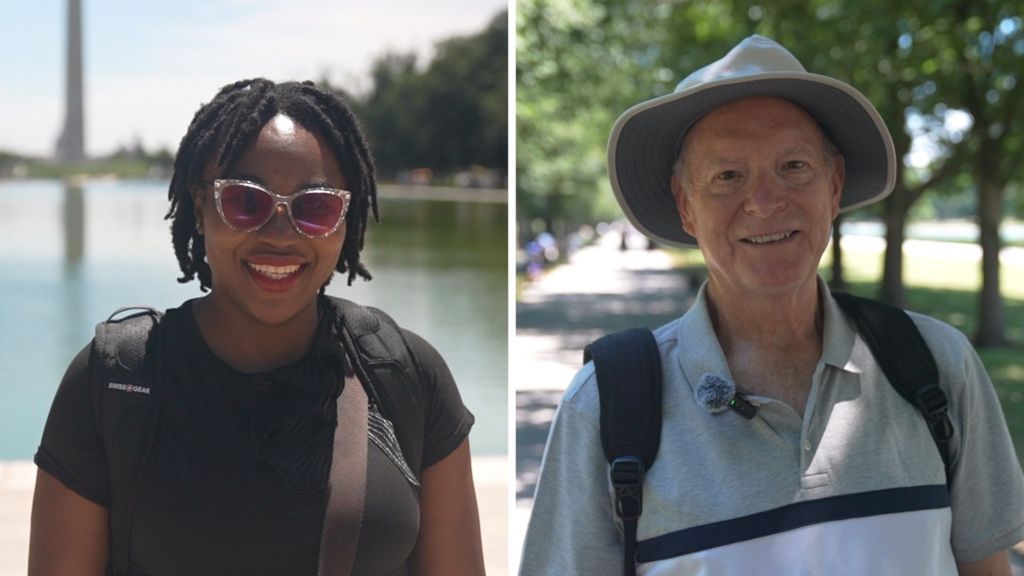
    Just days after officials completed a major renovation project and refilled the iconic Reflecting Pool with fresh water, an unexpected algae bloom has turned the national landmark murky, drawing sharp criticism from visitors and triggering an urgent cleanup operation. The BBC traveled to the site to speak with both tourists who traveled from across the United States to see the landmark and local residents who frequent the National Mall area, capturing a range of unfiltered reactions to the unseemly problem.

    Many who came to photograph the newly renovated pool and enjoy the iconic view of the Washington Monument and Lincoln Memorial left disappointed. Multiple visitors described the water as visibly dirty, with a greenish film spreading across large sections of the pool’s surface just 72 hours after refilling work wrapped up. One tourist from Ohio told reporters that the condition of the pool was undercutting what was supposed to be a memorable visit to the nation’s capital, noting that they had planned their trip months in advance to see the completed renovation.

    Local residents expressed similar frustration, pointing out that public funds had been allocated to the renovation project to address longstanding issues with the pool’s water quality. Crews have already moved in to begin the process of removing the algal growth, though it remains unclear how long the cleanup will take or what caused the rapid bloom to develop so soon after the pool was refilled. As work continues, visitors are still accessing the surrounding areas of the National Mall, but many are choosing to avoid the poolside walkways until the issue is fully resolved.

  • ‘Warning fire went up’: Couple on board yacht describe encounter with Russian warship

    ‘Warning fire went up’: Couple on board yacht describe encounter with Russian warship

    A routine yachting trip in the English Channel turned into a terrifying ordeal for a retired British couple, who have spoken publicly about their unexpected and dangerous run-in with a Russian warship that ended with the vessel firing warning shots close to their small leisure craft.

    The pair, who were enjoying time on board their private yacht in one of the world’s busiest shipping lanes, suddenly found themselves in an escalating confrontation when the Russian frigate approached their position. In their first public account of the incident, the couple described the moment the situation escalated dramatically, with warning shots being fired from the warship as the yacht remained in the nearby area.

    “We saw the warship approach, and then the warning fire went up,” the couple stated in interviews with media outlets, describing the shock and fear that gripped them as the military interaction unfolded near their civilian vessel. The incident has drawn fresh attention to military activity in the English Channel, a key strategic waterway that connects the North Sea to the Atlantic Ocean and sees constant civilian and military traffic from nations across the globe.

    Defense analysts note that encounters between civilian vessels and foreign military craft in international waters are not unheard of, but the firing of warning shots near an unarmed leisure yacht marks a rare and alarming escalation that has raised questions about maritime safety protocols and the current state of military navigation in the channel. As details of the encounter continue to emerge, authorities on both sides have not yet issued full formal comments on the context that led to the frigate’s decision to fire warning shots close to the civilian boat.

  • Some ‘Lost Canadians’ told to surrender new citizenship certificates

    Some ‘Lost Canadians’ told to surrender new citizenship certificates

    Hundreds of people who successfully secured Canadian citizenship under a landmark law designed to resolve the decades-long ‘Lost Canadians’ issue are now facing sudden uncertainty, after immigration authorities ordered dozens of approved applicants to surrender their newly issued citizenship certificates pending a fresh case review.

    The policy controversy centers on the 2024 Canadian law passed to grant citizenship to descendants of Canadian citizens who were stripped of their nationality through generations of outdated legislation, a group long known as the Lost Canadians. The law allows people with a verifiable ancestral tie to Canada to claim citizenship, even if they did not qualify under previous rules. Since the law entered into force last December, immigration data shows more than 12,000 people submitted applications in just the first six weeks, with a majority of applications coming from the United States, followed by smaller groups from Mexico and the United Kingdom.

    But in recent weeks, dozens of applicants who already received formal approval and physical citizenship certificates have been sent formal letters from the Office of the Registrar of Canadian Citizenship, stating they “may not be entitled” to the citizenship they were already granted and ordering them to return the documents for re-evaluation. Immigration authorities have confirmed only that a “limited number of files” are under review, but have declined to release the exact number of people affected by the sudden review.

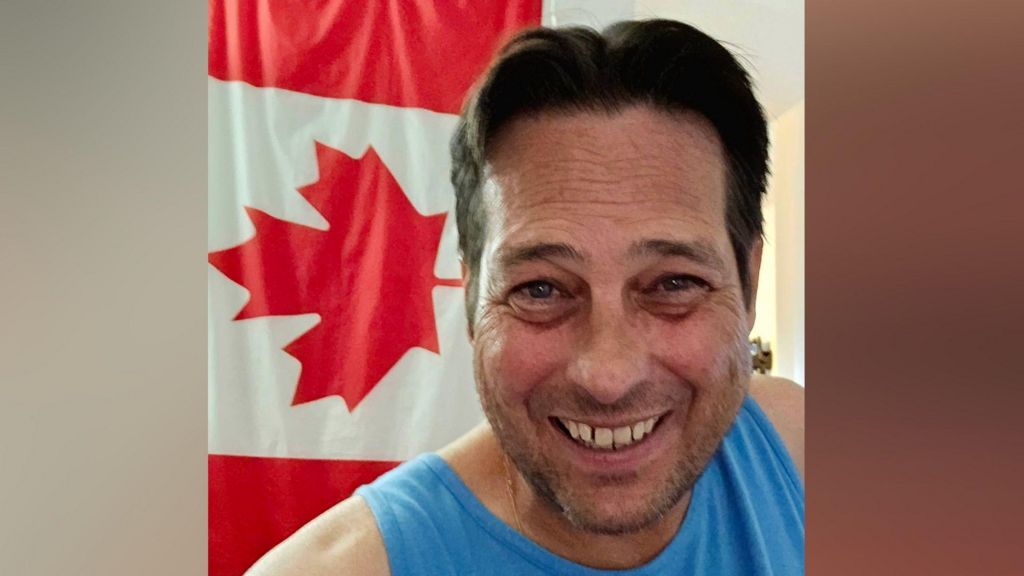
    For affected applicants, the order has upended long-held plans and created deep emotional distress. Shawn Davis Mooney, who permanently relocated from California to Victoria, British Columbia, with his husband earlier this year after securing citizenship approval, called the notice devastating. Mooney, who applied after the new law passed, submitted 114 pages of documentation proving his great-great-grandparent was born in New Brunswick, and received urgent approval and his citizenship certificate in February. When he received the surrender letter signed by Registrar Peggy Sun, which claimed he had failed to submit sufficient qualifying documentation, he said he was left disoriented. “I had to read it three times, I couldn’t understand it,” Mooney told reporters. “The worst part is it’s making us feel like frauds, or we’ve done something wrong. Now I have no clear idea what my legal status in this country actually is.”

    Another affected applicant, Rana Charron of Cleveland, Ohio, described the notice as one of the biggest disappointments of her life. Charron used available census records to prove her great-great-grandmother was a French-Canadian born in Quebec, since 19th century birth and baptismal records for her ancestor were no longer accessible. Her application was approved, and she received her physical citizenship certificate earlier this month, before being ordered to return it. “I was very excited to be formally Canadian,” Charron said. “Growing up, my family was very aware of our Canadian heritage… it mattered a lot to me. Now the experience has left me distrustful of the entire process. If they can just yank that back, what’s going to stop them from doing it two years from now, or 10 years from now, when people have really settled down and put roots?” Charron added that she still plans to fight to retain her citizenship, but the uncertainty has left her future plans in limbo.

    Immigration lawyers say the situation is unprecedented and damaging to Canada’s reputation as a welcoming country for new citizens. Lisa Middlemiss, a Montreal-based immigration lawyer who represents several affected applicants, noted that Canadian law only allows citizenship revocation in very rare, exceptional circumstances, such as cases of proven fraud. All the people now receiving surrender letters, she emphasized, completed every step of the application process as required by current immigration law, and had already passed official review to receive their certificates. “This sends such a bad message for Canada,” Middlemiss said.

    In a statement provided to the BBC, a spokesperson for Immigration, Refugees and Citizenship Canada defended the ongoing review, saying that the process is intended to guarantee all cases are evaluated consistently and in compliance with current law. The spokesperson confirmed that all applications were initially reviewed by trained immigration officers before certificates were issued, and that applicants who received surrender requests will have the opportunity to submit additional evidence to support their claim. If the review confirms an applicant is entitled to citizenship, the spokesperson noted, the certificate will be returned.

    Still, for affected applicants like Mooney and Charron, the damage of the uncertainty has already been done, leaving their plans for work, family, and permanent residency hanging in the balance while they wait for a final decision on their status.

  • London’s Met Police not investigating Great Israeli Real Estate Event

    London’s Met Police not investigating Great Israeli Real Estate Event

    A diplomatic and legal controversy has erupted in the United Kingdom after London’s Metropolitan Police confirmed it will not launch a domestic investigation into a Sunday real estate event that advertised properties in illegally occupied Israeli settlements, according to exclusive reporting from independent outlet Middle East Eye (MEE).

    The confirmation of the police’s position comes just days after British Foreign Secretary Yvette Cooper announced that government ministers had referred the event, hosted at London’s Edgware United Synagogue, to the UK’s Advertising Standards Authority (ASA) for formal investigation. The controversy first gained public traction this Monday, when MEE published first-hand details of the event’s promotional materials, which explicitly listed properties located in Israeli settlements in the occupied West Bank—territory deemed illegal under international law.

    MEE has since confirmed that the Metropolitan Police did receive a formal referral over the event, but has added it to the broader set of submissions the force has categorized as connected to the ongoing Israel-Hamas conflict. A spokesperson for Counter Terrorism Policing (CTP), which houses the national War Crimes Team responsible for reviewing such referrals, clarified the force’s current stance in a public statement. “The Counter Terrorism Policing War Crimes Team has received around 240 referrals relating to the ongoing Israel-Hamas conflict since 7 October 2023,” the spokesperson said. “At this time, there is no UK-based investigation into any matters relating to this particular conflict.”

    The spokesperson declined to comment on the specific details of individual referrals, noting that all submissions are reviewed in line with joint War Crimes/Crimes Against Humanity Referral Guidelines agreed upon by UK police and the Crown Prosecution Service.

    The event sparked widespread cross-party criticism well before the police’s confirmation. Last Friday, London Mayor Sadiq Khan publicly stated his opposition to the gathering, saying: “I share concerns about the Great Israeli Real Estate Event taking place in our city, which I oppose, and that’s why I’ve discussed this directly with the Met Police. I’m informed that any allegations of criminality relating to the potentially unlawful sale of property at the event would be assessed by the Met with a view to investigation.”

    On the same day MEE published its initial reporting, the International Centre of Justice for Palestinians (ICJP), a UK-based legal advocacy organization, submitted physical evidence—including photographs of promotional brochures and leaflets advertising illegal settlement properties—to the Metropolitan Police. Orlaith Roe, the ICJP’s public affairs and communications officer, criticized both Israeli policy and the UK government’s response to the event. “This is a question not only about political will but also about the blatant disregard of international law, not only by Israel via promoting the purchase of properties in illegal settlements as part of their sovereign territory, but also by the UK government which positions itself time and again as a champion of international law,” Roe said.

    The debate moved to UK Parliament this Tuesday, where Green Party Member of Parliament Ellie Chowns pressed the Foreign Secretary over the government’s inaction. Chowns told parliament that Cooper had been notified of the planned event the previous week and had promised to review the issue. “That event took place. At that event, properties in illegal settlements were being marketed on British territory,” Chowns said. “The government has been sent the evidence about this. How is it that this government fails even to prevent the marketing of illegal property in this country and still fails to take action?”

    In her response, Cooper reaffirmed the government’s opposition to commercial activity tied to illegal settlements, saying: “we have been very clear that not only should no businesses be engaging in trade and marketing around the illegal settlements, they certainly should not be doing so on UK soil. And that is why my colleague, the minister for the Middle East and North Africa, and also the Department for Digital, Culture, Media & Sport, have raised this directly with the advertising standards agency because we take this so seriously. We have asked them now to urgently look into this and to reassure us that if there is any evidence of the advertising or promotion of property in illegal settlements at this or any other events, they will uphold the law, regulations and guidance that apply.”

  • Watch: Why is Trump furious with Netanyahu over strikes on Lebanon?

    Watch: Why is Trump furious with Netanyahu over strikes on Lebanon?

    A new public rift has emerged between former U.S. President Donald Trump and Israeli Prime Minister Benjamin Netanyahu, centering on a recent wave of airstrikes carried out by Israeli forces in Lebanon that has left Trump openly furious. In public comments, Trump has labeled the strikes as “vicious”, drawing sharp attention to the unexpected fracture in what has long been framed as a close political alliance between the two leaders. The BBC’s senior Middle East correspondent Tom Bateman has unpacked the context behind the U.S. politician’s sharp reaction, digging into the strategic and political calculations that may be driving Trump’s unusual public rebuke of the Israeli leadership. Regional observers note that the escalation of hostilities between Israel and Hezbollah along the Lebanese border has sparked growing international concern, with major global powers pushing for de-escalation to prevent a full-scale regional conflict. For Trump, who positioned his presidency around brokering historic Middle East deals and avoiding new foreign conflicts, the current escalation runs counter to the foreign policy legacy he has sought to build. This public criticism also comes amid shifting dynamics in U.S. domestic politics, where Trump is navigating competing viewpoints within his base on Middle East policy, making his reaction as much a domestic political calculation as a response to the military actions themselves. Bateman’s reporting breaks down the overlapping layers of geopolitics and domestic politics that have led to this rare public show of anger from Trump toward one of his most prominent international allies, highlighting how the ongoing instability in the Middle East continues to roil politics both in the region and beyond.

  • Partey misled Canadian officials over previous arrest

    Partey misled Canadian officials over previous arrest

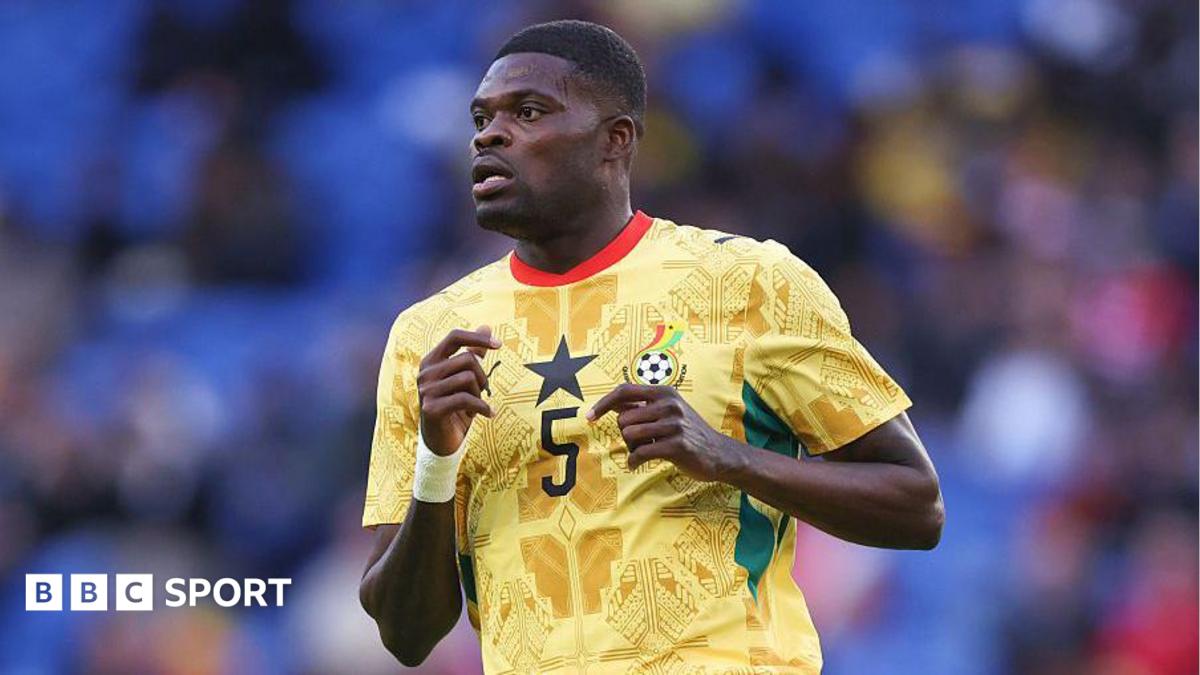
    A high-profile pre-tournament controversy has disrupted Ghana’s 2026 FIFA World Cup campaign, as experienced midfielder Thomas Partey has been barred from entering Canada, forcing him to miss the Black Stars’ opening group stage match against Panama. The 33-year-old Villarreal player, who previously earned 50+ caps for Ghana and featured at the 2022 Qatar World Cup, was denied entry ahead of Wednesday’s Toronto fixture due to ongoing criminal proceedings in the United Kingdom that he failed to disclose on his immigration application.

    Partey currently faces seven counts of rape and one count of sexual assault, linked to allegations from four separate women dating between 201 and 2022. He has pleaded not guilty to all charges, and his trial is scheduled to begin next year in the UK. When Partey applied for entry to Canada for the World Cup, he falsely declared that he had never been arrested or charged with a criminal offense, a misrepresentation that triggered the initial entry refusal.

    The Ghanaian government launched an emergency appeal to the federal court in Ottawa, asking for a special exemption to allow Partey to enter the country temporarily just to compete in the opening match. However, the court rejected the appeal, ruling that there were “no serious issues” with the underlying entry refusal, and explicitly noted that Partey had failed to disclose his status as a defendant in multiple sexual violence charges.

    In a statement to BBC Sport, department Immigration, Refugees and Citizenship Canada reaffirmed its consistent policy that even hosting a global event like the World Cup does not override the country’s immigration regulations. “Every person seeking to come to Canada is assessed individually, based on the facts available and the law that applies,” the department said.

    Partey’s exclusion comes even after Ghana’s head coach Carlos Queiroz publicly defended his decision to include the player in the World Cup squad ahead of the tournament. When asked about the situation on Tuesday, ahead of the ruling, Queiroz told reporters: “My business is to play with the cards that I have in front of me. We are waiting for a decision. When the decision arrives, we are ready.”

    Beyond the opening match against Panama, Ghana is scheduled to face England in Boston on June 23 and Croatia in Philadelphia on June 26 as part of their Group L fixtures. If the Black Stars finish as runners-up in the group, they could return to Canada for a knockout stage match in the round of 32, a path that remains open even without Partey’s participation in the opening fixture.

  • More than a dozen horses killed in New York barn fire

    More than a dozen horses killed in New York barn fire

    A devastating overnight barn fire at a harness racing facility in Saratoga Springs, New York — a city globally renowned as the heart of American thoroughbred and harness racing — has claimed the lives of at least 17 horses, local emergency officials confirmed this week.

    The inferno broke out at approximately 2:30 a.m. local time on Tuesday at the Saratoga Casino Hotel’s harness racing track, according to Saratoga fire department representatives. The single barn, which was completely leveled by the flames, housed 18 horses at the time of the incident. Miraculously, one animal managed to flee the burning structure, and only sustained minor injuries. No personnel on or near the property were hurt during the blaze, but investigators have not yet determined what sparked the fire, and the probe into the cause remains active.

    Witnesses from the horseracing community shared that staff were just arriving for their morning shifts — to feed the horses and muck out stalls — when they first spotted smoke and flames. The fundraising page organizers noted that the fire spread with alarming speed, outpacing any attempts to evacuate all the horses trapped inside.

    In a statement released after the tragedy, the Saratoga Harness Horseperson’s Association called the incident a devastating loss for the entire regional racing community, saying, “This is a sobering day in our industry, a horseperson’s worst nightmare.”

    Community support has poured in rapidly for the horsemen and women affected by the fire, who lost their animals, training equipment, and in many cases, core parts of their livelihoods. By Tuesday afternoon, a community fundraising effort had already pulled in more than $30,000 (approximately £22,000) in donations to support impacted families and operations.

    In response to the tragedy, track management canceled all scheduled harness races for the remainder of Tuesday, and announced plans to hold a public memorial service to honor the horses that died. Full details of the memorial will be released in the coming days as planning is finalized.

    Saratoga Casino Hotel is one of the area’s most prominent racing venues, hosting live harness racing on its historic half-mile track, where spectators can gather to watch events and place wagers. Saratoga Springs itself has been closely tied to professional horse racing since the 1840s, and today stands as one of the most prestigious racing destinations in the United States.