博客

  • Trump to wrap G7 summit facing skepticism at home and jitters overseas over his plan to end Iran war

    Trump to wrap G7 summit facing skepticism at home and jitters overseas over his plan to end Iran war

    EVIAN-LES-BAINS, France — On Wednesday, U.S. President Donald Trump concluded formal working sessions of the Group of Seven summit at the scenic Alpine lakeside resort, capping off days of diplomatic talks dominated by his push to win global backing for a still-unseen tentative nuclear agreement with Iran. Even as allied leaders and domestic stakeholders openly question the pact’s lack of detail, Trump has framed the unsigned deal as a historic breakthrough that will permanently block Iran from developing or acquiring a nuclear weapon.

    The G7 gathering of the world’s leading industrialized nations wrapped up its formal agenda with focused discussions on two pressing global priorities: the long-term governance of artificial intelligence and strategies to stimulate sustained inclusive economic growth across major economies. Before departing for Washington D.C., Trump is set to attend a lavish one-on-one dinner hosted by French President Emmanuel Macron at the Palace of Versailles outside Paris, an honor marking the upcoming 250th anniversary of American independence that Trump has openly welcomed.

    The core controversy overshadowing Trump’s final summit day remains the Iran deal. Neither the White House nor Iranian officials have publicly released the full text of the agreement, which is scheduled for a formal signing ceremony this Friday at a luxury resort on Switzerland’s Lake Lucerne. Despite the lack of transparency, Trump lauded the still-unpublished memorandum to reporters, saying “It’s a great document. Here’s what it says: Iran will never have a nuclear weapon. It won’t have one to buy, to develop — it will not have a nuclear weapon. And I would say that’s about 99.9% of what I wanted.”

    Skepticism runs deep on multiple fronts. Key U.S. ally Israel has openly expressed unease over the terms of the agreement, while Republican lawmakers in Trump’s own party have raised doubts that the deal goes far enough to curb Iran’s nuclear ambitions. The international community is also waiting for concrete proof that the pact will deliver on a critical secondary promise: reopening and permanently securing the Strait of Hormuz, the vital maritime chokepoint that Iran has effectively closed to commercial oil traffic since the outbreak of the recent conflict. Before the war, roughly 20% of the world’s traded oil and natural gas passed through the strait.

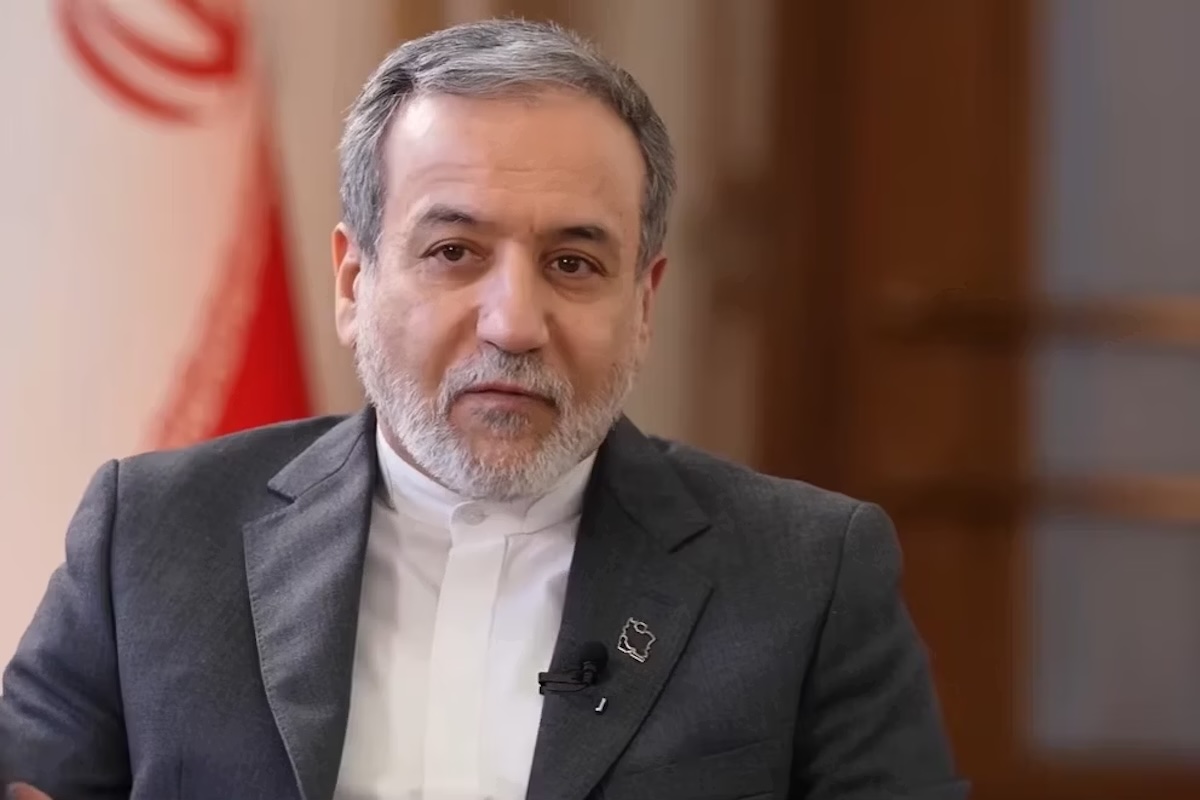
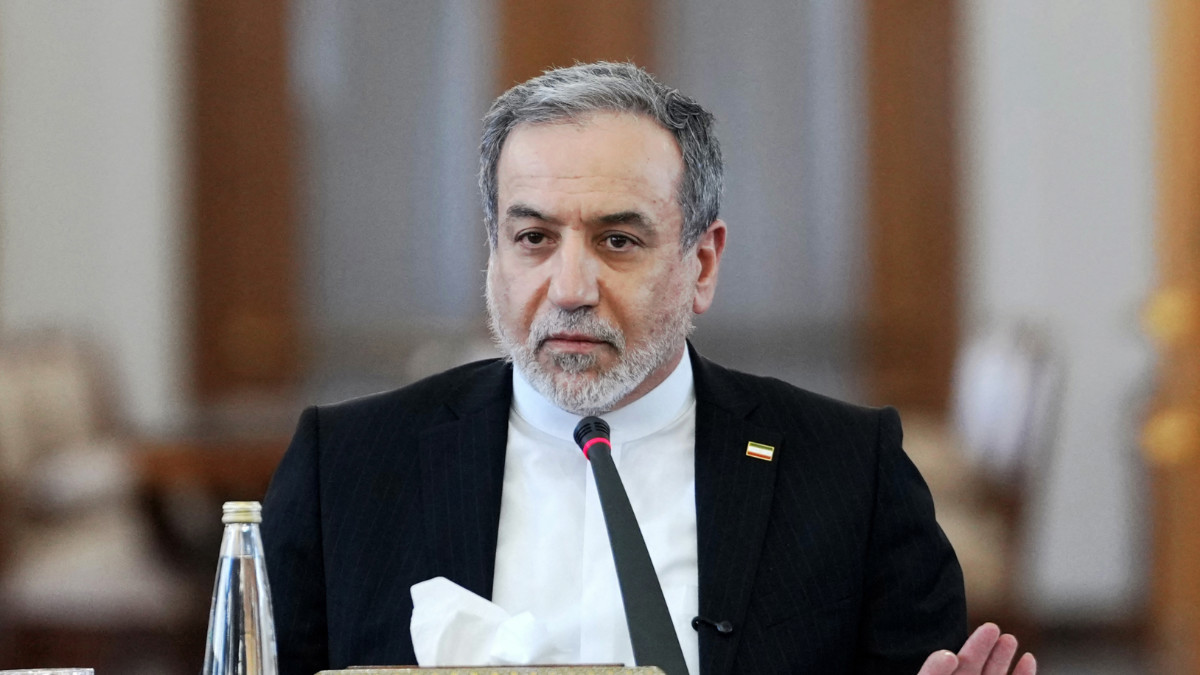
    Complicating the agreement further, U.S. and Iranian officials have publicly offered conflicting interpretations of the deal’s terms. Iranian Foreign Minister Abbas Araghchi has stated that Israel’s ongoing military presence in southern Lebanon, where Israeli forces have been targeting Iran-backed Hezbollah militants, would count as a violation of the pact. “Without the withdrawal of Israeli forces from the territories they occupied during this war, the war has not fully come to an end,” Araghchi said. For his part, Trump acknowledged Tuesday that an Israeli strike on Hezbollah would not automatically derail the deal, but criticized Israel’s prolonged military campaign, noting “Israel’s fighting Hezbollah too long, and too many people are being killed.” Israeli strikes in Lebanon have killed nearly 4,000 people, hundreds of whom are civilians, and forced more than 1 million people to flee their homes since March 2.

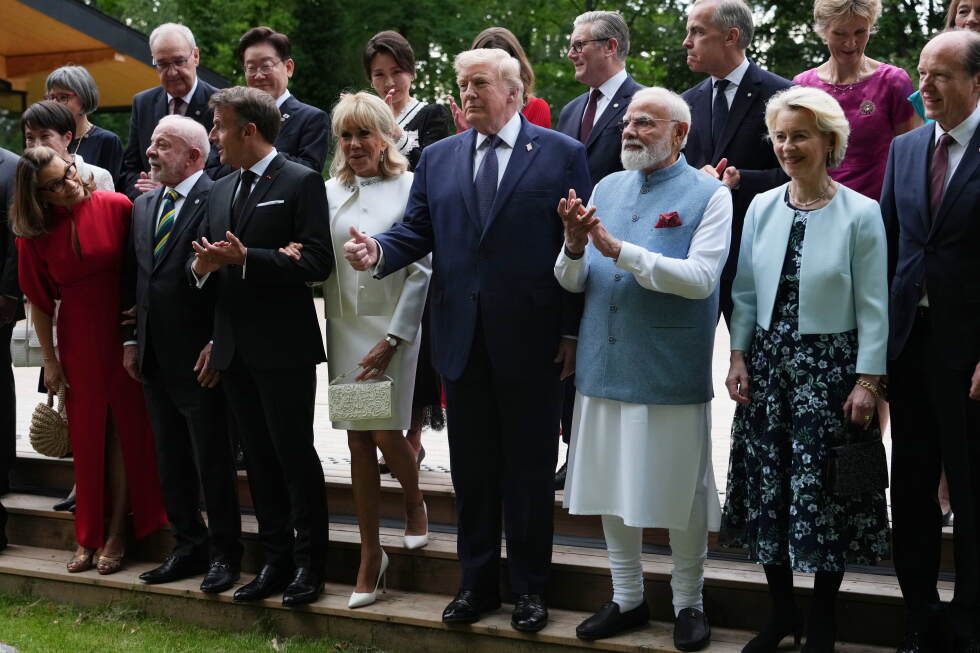
    Beyond the Iran nuclear debate, Trump scheduled a series of key bilateral meetings on his final G7 day, including a sit-down with Indian Prime Minister Narendra Modi that comes at a fraught moment for U.S.-India ties. Tensions have risen in recent weeks after three Indian sailors were killed in a U.S. military strike on a commercial tanker in the Gulf of Oman, carried out as part of Washington’s blockade of Iranian oil shipments. New Delhi has formally protested the incident, and relations have already been complicated by Trump’s back-and-forth tariffs on Indian goods over India’s continued purchases of discounted Russian oil, as well as Indian concerns that Trump’s recent trade truce negotiations with China could weaken India’s position as a rival manufacturing hub. The two leaders enjoyed a close relationship during Trump’s first term in office, but the dynamic has shifted significantly since his return to the White House.

    Trump also planned to hold one-on-one talks with Egyptian President Abdel-Fattah el-Sissi, one of three Middle Eastern leaders invited to the summit by host Macron. On Tuesday, G7 leaders held a working lunch with el-Sissi, Qatar’s ruling emir, and the president of the United Arab Emirates focused on developing alternative energy supply routes that bypass the Strait of Hormuz. French Foreign Ministry spokesperson Pascal Confavreux explained that discussions centered on planning and financing overland infrastructure to redirect Gulf energy exports away from the closed chokepoint.

    For Trump, the high-profile Versailles dinner is a particularly anticipated stop. The U.S. president openly shared his excitement for the event, saying that the opulent historic venue, the former royal residence of French kings from Louis XIV to Louis XVI, was enough to convince him to extend his post-summit stay in France. “I’m a fan of beautiful places, and I was leaving in the afternoon, and then the French president who happens to be a very nice man, invited me to dinner at Versailles,” Trump said. “And Versailles is not gold leaf — Versailles is the real deal. And I said I’d like to do it.”

    The reporting was contributed by AP correspondents based in Evian-les-Bains, Geneva and Washington, with original reporting from Madhani in Geneva.
  • Germany and Poland to sign a new defense deal as balance of power in Europe shifts

    Germany and Poland to sign a new defense deal as balance of power in Europe shifts

    Against a backdrop of rising Russian aggression on Europe’s eastern frontier and growing global uncertainty over long-term United States military commitment to the continent, Germany and Poland are preparing to sign a landmark bilateral defense agreement on Wednesday, marking a new era of pragmatic security cooperation between two neighbors with a long and fraught shared history.

    Shifting regional dynamics have reshaped the relationship between Berlin and Warsaw in recent years. After Russia launched its full-scale invasion of Ukraine in 2022, and Poland’s liberal-led government took office in 2023 replacing the nationalist Law and Justice administration, bilateral ties have moved beyond historical friction to focus on shared security priorities. With Washington weighing a partial drawdown of its troop presence in Europe, Poland has pushed for leading European powers to take greater responsibility for defending NATO’s eastern flank. For its part, Germany is working to revitalize the Bundeswehr, its long-neglected military, with the explicit goal of building the most powerful conventional land force on NATO’s European side, positioning Berlin as a central backbone of European defense in the coming decade.

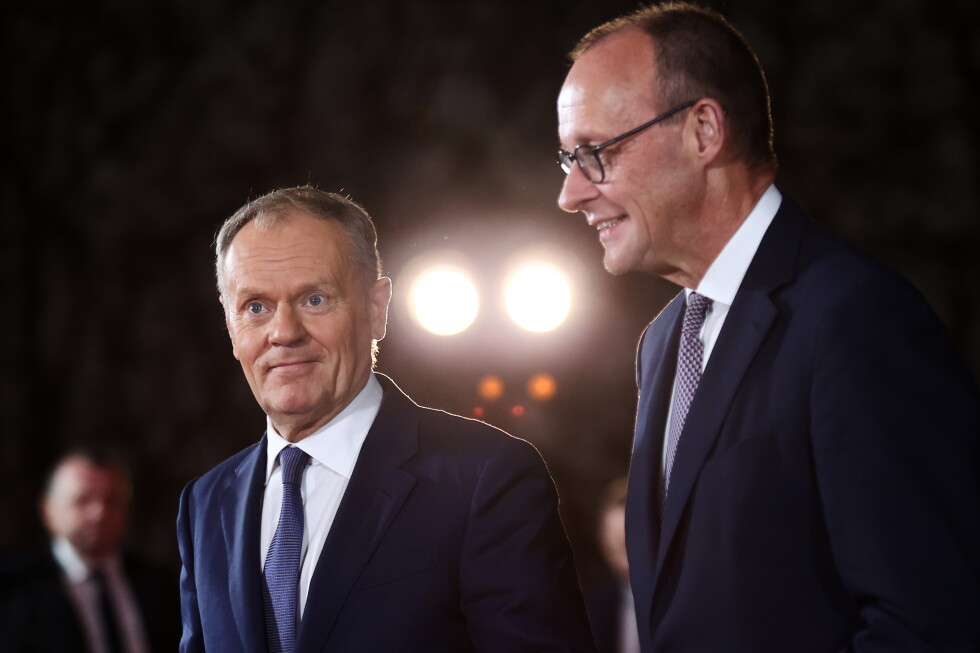
    Poland’s strategic importance has grown exponentially since the start of the war in Ukraine: the country has emerged as a critical logistics and supply hub for Kyiv, while its rapidly expanding economy and massive increases in defense spending have made it an indispensable partner for Germany and other core European allies. “We Germans need a strong Poland as an equal partner,” German Chancellor Friedrich Merz stated following a December meeting with Polish Prime Minister Donald Tusk in Berlin, adding that this partnership is a fundamental German national interest.

    The upcoming defense agreement will outline concrete cooperative frameworks across multiple key security domains, including joint protection infrastructure for the Baltic Sea region, coordinated military mobility and cross-border infrastructure projects, cyber defense collaboration, and joint development of new defense technologies. Justyna Gotkowska, deputy director of the Warsaw-based Center for Eastern Studies think tank, noted that NATO’s collective defense plans permanently bind Germany to the security of Central and Eastern Europe, assigning Berlin a core role in defending the Baltic region alongside Poland and other neighboring states. “Germany is largely responsible for the defense of the Baltic states, and without cooperation with Poland, that will not happen,” Gotkowska explained. Military analysts widely view the Baltic states as the most probable target for a Russian attack on NATO territory in any future conflict.

    While the agreement will reaffirm both nations’ existing mutual defense obligations under NATO and EU treaties, it differs from recent bilateral defense pacts each country has signed with France and the United Kingdom. Instead of including formal political mutual defense declarations, the German-Polish deal is an inter-ministerial agreement focused exclusively on practical military coordination. This structure was chosen to overcome lingering domestic political obstacles in Poland: when asked in June why Poland would not sign a full political treaty with Germany, Polish Foreign Minister Radosław Sikorski explained that Polish President Karol Nawrocki, who was elevated to office with support from the nationalist Law and Justice party, would never approve such an agreement. Sikorski noted “hell would break loose here” if a full political treaty moved forward.

    Historical tensions remain a persistent stumbling block. During its time in government, Law and Justice demanded $1.3 trillion in World War II reparations from Germany for Nazi Germany’s occupation of Poland, a claim Berlin has repeatedly rejected. The reparations issue is expected to reemerge as a polarizing political topic ahead of Poland’s 2025 general election, forcing Tusk to walk a fine line: the prime minister has already demanded Germany speed up compensation payments for surviving occupation victims, and he cannot afford to be seen by Polish voters as soft on Germany or aligned with Berlin’s interests at Poland’s expense.

    Even as security cooperation deepens, questions remain about Poland’s place in Europe’s core security decision-making. To date, Germany has prioritized closed-door negotiations on Ukraine policy and other major security issues with its traditional Western European partners France and the United Kingdom, often excluding Warsaw from key talks. After the June 2024 London summit that brought Ukrainian President Volodymyr Zelenskyy together with leaders from Germany, France, and the UK to discuss potential future peace negotiations with Russia, Tusk publicly confirmed he had complained to Merz about Poland’s exclusion. “Any arrangements made without our participation will not be respected or binding for us,” Tusk told reporters in Warsaw.

    Still, many foreign policy analysts agree the shifting balance of power in Europe demands a new approach to the bilateral relationship. Rolf Nikel, former German ambassador to Poland and vice president of the German Council on Foreign Relations, argued that Poland’s role and influence within Europe and NATO have grown dramatically in recent years. “So Poland must be taken more seriously today, and, above all, must be respected more than we have seen in the past,” Nikel said. Gotkowska added that Germany must acknowledge the changing economic and military landscape: while Germany’s economy has stagnated in recent years, Poland’s economy and military capacity have expanded rapidly. “The balance of power has changed in Europe in recent years,” Gotkowska said.

  • US refused to share Iran deal text with Israel: Report

    US refused to share Iran deal text with Israel: Report

    Rising diplomatic friction has emerged between long-time allies the United States and Israel after Washington turned down Jerusalem’s formal request to obtain the full text of a newly signed bilateral agreement between the US and Iran, multiple US and Israeli media outlets have confirmed.

    ABC News reported Tuesday that while senior Israeli officials have received a general verbal briefing on the contents of the 60-day ceasefire memorandum of understanding (MOU), the full written document has not been shared with Israeli authorities. The MOU, which was signed digitally by representatives of both Tehran and Washington this past Sunday, mandates a 60-day extension of a fragile ceasefire between the two nations and secures the reopening of the strategic Strait of Hormuz, a critical chokepoint for global oil shipments. To date, the full fine print of the agreement remains undisclosed to the public and many key regional stakeholders.

    Top US officials, including Vice President JD Vance, have already appeared on major broadcast networks to defend the new diplomatic deal. During his televised remarks, Vance emphasized that the most promising outcome of this new diplomatic outreach is the reestablishment of direct bilateral dialogue between Washington and Tehran after years of frozen communications.

    This new MOU comes nearly a decade after the 2015 Joint Comprehensive Plan of Action (JCPOA), the landmark nuclear deal negotiated between Iran and the US under then-President Barack Obama following months of intensive high-level negotiations. That framework collapsed in 2018, when then-President Donald Trump — who currently holds the Oval Office again — ordered a unilateral US withdrawal from the agreement and rolled out a harsh “maximum pressure” campaign that imposed crippling economic sanctions on Iran.

    Speaking to reporters on the sidelines of the G-7 Summit in France on Tuesday, Trump announced plans to transmit the full text of the new MOU to Congress for review and release it publicly. A formal in-person signing ceremony for the agreement is currently scheduled to take place in Geneva, Switzerland this coming Friday.

    “I never thought about sending it… but I will. I will send it to Congress,” Trump told assembled journalists. He added that he plans to share every detail of the document with the public, saying: “I will probably have a press conference and read it to you word by word so that the press covers it accurately.”

    Despite the president’s promise of transparency, the fact that Israel has been denied full access to the text has reinforced deep existing concerns across the Middle East that the agreement disproportionately benefits Iran and fails to deliver on core war goals shared by both the US and Israel. Leading Israeli outlet Yediot Aharonot already labeled the MOU a “Bad Deal” in its coverage this week.

    Avigdor Liberman, a prominent right-wing Israeli political figure and former defense minister, criticized the agreement during an interview with Israel’s 103FM radio. “This agreement definitely turns Iran into a nuclear power,” Liberman argued. Even so, he acknowledged that Israel has no leverage to reject any deal the US negotiates, noting: “We need to live with this. I have no complaints against the Americans. There are people here who expect the US to act according to Israeli interests, but no. I thank the US for what they have done.”

    Trump has pushed back forcefully against any criticism of the deal from Israeli leaders. During his appearance at the G-7 conference, seated alongside the ruler of Qatar, Trump issued a sharp rebuke: “If it weren’t for the United States of America…Israel would not exist right now. Israel would have been blown off the face of the earth.”

  • Colombia leans on James Rodríguez’s World Cup magic as it opens vs. Uzbekistan

    Colombia leans on James Rodríguez’s World Cup magic as it opens vs. Uzbekistan

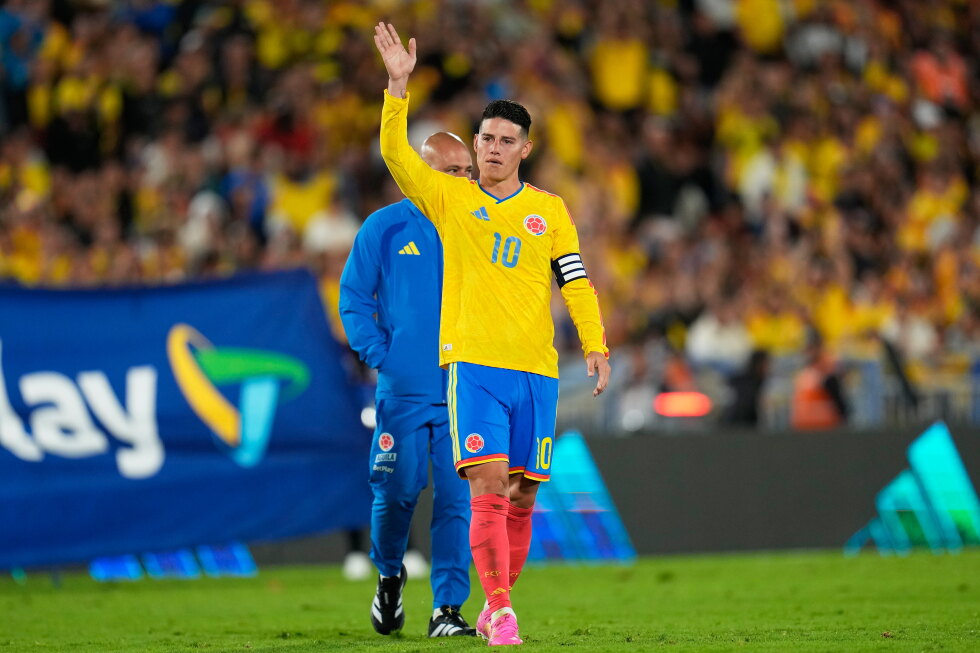
    For Colombia’s James Rodríguez, the yellow national team jersey has always brought out the best in his decades-long football career, and the 34-year-old veteran midfielder is poised to conjure up his trademark magic on one of the sport’s biggest stages: the 2026 FIFA World Cup.

    Rodríguez and Los Cafeteros will kick off their 2026 World Cup campaign on Wednesday against Uzbekistan at Mexico’s iconic Estadio Azteca. Though Rodríguez has had a low-profile stint so far with Major League Soccer’s Minnesota United this season, his national team’s coaching staff and young teammates are unanimous that the veteran remains a game-changing difference-maker for the Colombian side.

    “James is in good shape, he has been improving physically and of course his talent and his attributes also make him a player who, sometimes without running as much as others, defines things and brings clarity to the game,” Colombia head coach Néstor Lorenzo told reporters ahead of the opening match.

    This tournament marks Rodríguez’s third World Cup appearance, tying the all-time Colombian record previously set by national football legends Carlos Valderrama and Freddy Rincón. For young first-time World Cup players like 23-year-old forward Carlos Gómez, sharing a squad with the veteran icon is a surreal, exciting opportunity.

    “He’s very important for us debutants because he’s played in every World Cup; he’s a global icon,” Gómez said. “He has quality and a lot of experience. I watched him from home in 2014 and celebrated his goals; it’s very exciting for me to be with him.”

    A pattern has long defined Rodríguez’s career: while he often fills a rotational role at the club level, he transforms into an unmissable star when he pulls on Colombia’s national jersey. Heading into the 2026 tournament, he arrives surprisingly fresh, having logged only 284 minutes across eight appearances for Minnesota in the first half of the 2026 MLS season. A lack of club minutes has never held him back on the international stage, however, as Rodríguez has consistently proven to be a talisman for Colombia in short-format knockout tournaments.

    Most recently, Rodríguez led Colombia to a surprise run to the 2024 Copa América final, earning tournament MVP honors for his standout play. His legendary international breakthrough came 12 years earlier at the 2014 World Cup in Brazil, where he claimed the Golden Boot with six tournament goals and pushed Colombia to a historic quarterfinal finish — still the best World Cup result in the nation’s history. That breakout performance earned him a high-profile transfer to La Liga powerhouse Real Madrid, where he won two domestic titles over four seasons before launching a globe-trotting club career that has taken him to Bayern Munich, Everton, Al-Rayyan, Olympiacos, São Paulo, Rayo Vallecano, Club León and ultimately Minnesota United.

    Teammates say Rodríguez’s ability to elevate his play for the national side is unmatched. “James, ever since we’ve seen him, or I since I was little, representing the country, it’s like he transforms when he puts on the jersey,” Colombian striker Luis Suárez said. “He’s a source of pride as an athlete and a teammate, not only for me but for many others. It’s a dream to be sharing the locker room with him.”

    For Colombia as a whole, the 2026 World Cup carries extra meaning: the nation missed out on qualification for the 2022 Qatar tournament, and is returning to football’s grandest stage hungry for redemption. The side’s last World Cup appearance came in 2018 in Russia, where it advanced to the knockout round before falling to England in a tense penalty shootout.

    “The message is to enjoy it, to be grateful, and to give their all for the Colombian jersey,” Lorenzo said. “Thank God we’re back at this tournament after eight years. We’re excited and eager to do things right.”

  • Messi has his first World Cup hat trick as defending champion Argentina beats Algeria 3-0 in opener

    Messi has his first World Cup hat trick as defending champion Argentina beats Algeria 3-0 in opener

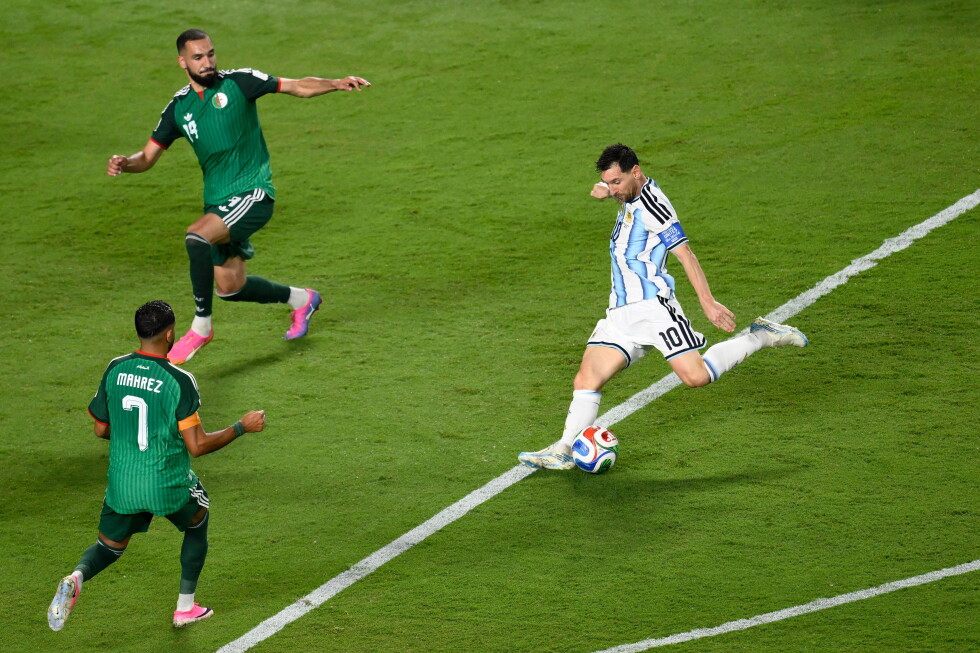
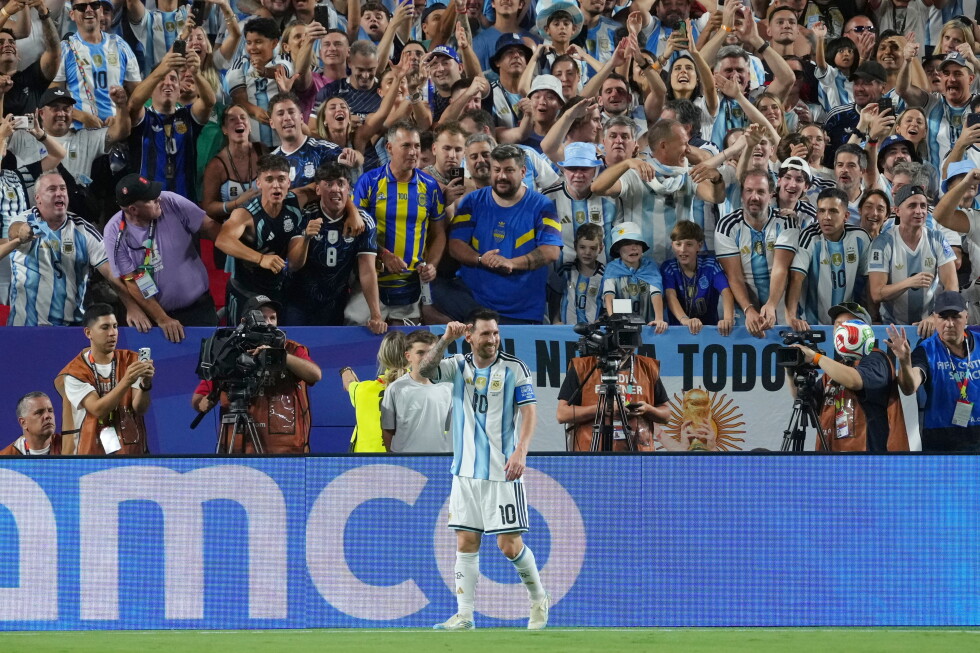
    KANSAS CITY, Mo. — On a picture-perfect evening at Arrowhead Stadium, soccer icon Lionel Messi etched his name deeper into World Cup history Tuesday, securing his first-ever tournament hat trick and drawing level with the competition’s all-time career scoring record to power defending champion Argentina to a commanding 3-0 win over Algeria in their opening Group J match.

    Messi, who is set to turn 39 next week and is competing in a record sixth World Cup, opened the scoring just minutes into the contest, finishing a crisp, well-timed pass from his Inter Miami and Argentina teammate Rodrigo De Paul. The second goal came early in the second half, as Messi pounced on a loose rebound in the penalty area. Shortly after, he slotted home his third from the top of the 18-yard box before being substituted to a thunderous standing ovation from a crowd heavily dominated by pro-Argentina supporters.

    The three goals pushed Messi’s career World Cup tally to 16, tying the long-standing record set by Germany’s Miroslav Klose. The milestone also makes him just the second men’s player in history, alongside Portugal’s Cristiano Ronaldo, to score in five separate World Cup tournaments. What makes the feat even more notable: it came exactly 20 years to the day after Messi’s World Cup debut, where he also found the back of the net against Serbia and Montenegro in 2004.

    Algeria head coach Vladimir Petkovic acknowledged his side’s costly errors that cleared Messi’s path to the historic hat trick. “Unfortunately we afforded him the opportunity with the first and second goal, and we actually made it easier for him,” Petkovic said. “But Messi, with his clear thinking in crucial stages of the game, is able to do things that much more easily.”

    Algeria star Riyad Mahrez echoed that sentiment, noting the irreplaceable impact of Messi on any match. “Argentina have a special player who can change a game on his own,” Mahrez said.

    The strong opening result is a stark reversal of Argentina’s rocky start to the 2022 Qatar World Cup, where the defending champions stumbled to a shocking opening defeat to Saudi Arabia before rallying to claim their third World Cup title. Argentina head coach Lionel Scaloni emphasized the importance of a strong start this time around. “We had stumbled in the last World Cup and we needed to have a good debut today,” Scaloni said.

    Messi showed no lingering effects from the mild hamstring injury that sparked concern among fans and analysts in the weeks leading up to the tournament. He nearly added two more goals to his tally: one finish was ruled out by the narrowest of offside calls, and a second long-range strike skimmed just over the crossbar. Beyond his offensive dominance, Messi also contributed to Argentina’s solid defensive shape, helping the side shut down an overmatched Algeria attack.

    Algeria’s only clear goalscoring opportunity came minutes before Messi’s opener, when a Fares Chaibi strike was overturned by VAR review for offside. From that point, the match belonged entirely to Argentina and its captain.

    Messi, who says he has carried a passion for the game since childhood, remained focused on the bigger picture after the historic win. “The first matches at the World Cup are always tough, and we’re seeing that nobody’s giving anything away,” Messi said. “When I’m in good shape, I give it my all.”

    Tuesday’s match at Arrowhead Stadium fulfilled a decades-long dream held by late sports pioneer Lamar Hunt, who founded the NFL’s Kansas City Chiefs and was a foundational figure in growing soccer in the U.S. from the 1960s through the early 2000s. Hunt was instrumental in bringing the 1994 World Cup to the U.S., and his sons Clark and Dan have continued that work for this year’s tournament. Among the celebrity spectators in attendance was Kansas City Chiefs quarterback Patrick Mahomes, who attended alongside his wife Brittany, trading his game-day football uniform for casual Argentina-themed attire.

    Looking ahead, Argentina will continue group play next with a match against Austria in Arlington, Texas on Monday, before closing out the group stage against Jordan on June 27. Algeria will face Jordan Monday in Santa Clara, California, before wrapping up Group J play against Austria back in Kansas City on June 27. De Paul summed up Argentina’s ambitions for the tournament, saying: “The goal is always to arrive on the first day and leave on the last.”

  • New Zealand’s Tyler Bindon and mom Jenny are the first mother-son duo to play in the World Cup

    New Zealand’s Tyler Bindon and mom Jenny are the first mother-son duo to play in the World Cup

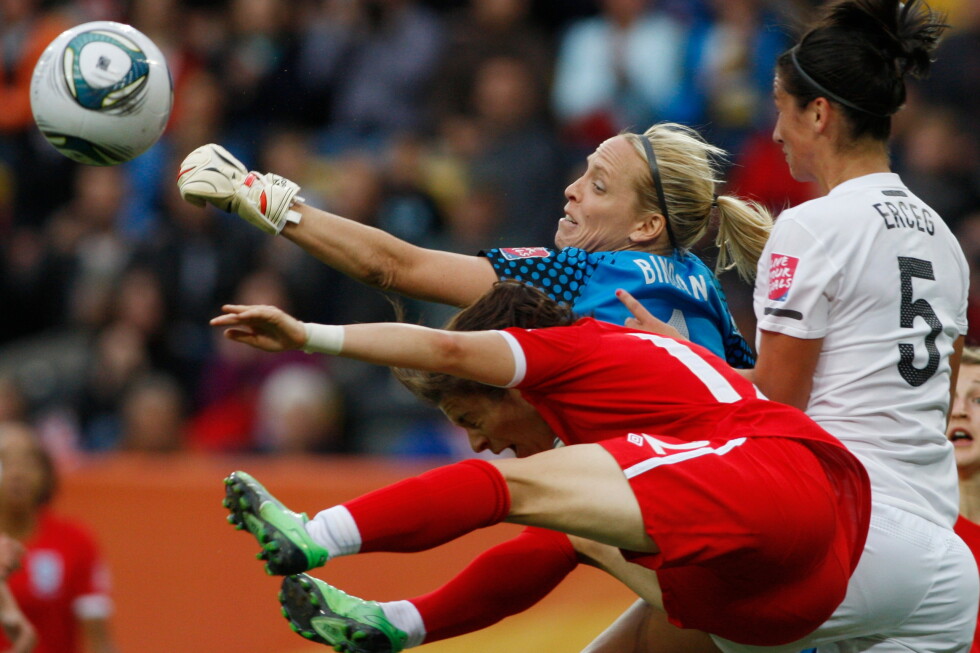
    The FIFA Men’s World Cup has witnessed a groundbreaking new milestone this tournament, as 21-year-old New Zealand defender Tyler Bindon etched his name into the record books alongside his mother Jenny, becoming the first mother-son combination to both play at the World Cup in the event’s history.

    Tyler, a young center back who plies his trade with England’s Nottingham Forest in the Premier League, entered the match as a late second-half substitute during the All Whites’ opening Group B clash against Iran on Monday night. The hard-fought fixture ended in a 2-2 draw at the venue in Inglewood, California, where both of Tyler’s parents were on hand in the stands to cheer on their son, watching him make his major tournament debut in person.

    Athleticism runs deep in the Bindon family. Tyler’s mother Jenny is no stranger to elite international football competition: a decorated goalkeeper who represented New Zealand’s women’s national team from 2004 through 2014, she competed at two editions of the FIFA Women’s World Cup in 2007 and 2011, and also earned caps at the 2008 and 2012 Olympic Games. His father Grant, meanwhile, previously served as captain of New Zealand’s men’s national volleyball team.

    More than a decade ago, when Tyler was 12 years old, the Bindon family relocated to Southern California after Jenny accepted an assistant coaching position with UCLA’s women’s soccer team. The move set Tyler on a path through the youth development system of Major League Soccer side Los Angeles FC, where he honed the skills that earned him his move to the Premier League and ultimately his spot on New Zealand’s World Cup roster.

    Jenny has long opened up about the rush of emotions she experiences watching her son compete at the highest level. In a social media post last year, she shared that watching Tyler play was far more nerve-wracking than lacing up her own cleats for matches. “I get more nervous, but he is an absolute joy — an amazing human being,” she wrote.

    While the mother-son milestone is a first for World Cup history, it is not the first time a parent-child pair has competed at the tournament. Men’s World Cup records already include more than two dozen father-son combinations who have both graced the World Cup pitch. Prominent recent examples include Claudio Reyna, a former United States men’s national team captain, and his son Gio, who scored for the U.S. in their opening win over Paraguay last Friday. Another well-known pairing is Alf-Inge Haaland, who featured for Norway at the 1994 World Cup, and his son Erling Haaland, one of the top strikers in the world today.

    Looking ahead, New Zealand will face their second group stage match against Egypt this coming Sunday in Vancouver, British Columbia. Egypt opened their tournament campaign with a 1-1 draw against Belgium on Monday, setting the stage for a competitive second round of group fixtures.

    (This story is part of AP’s ongoing full coverage of the 202X FIFA World Cup, available at https://apnews.com/fifa-world-cup)

  • Iran: Israeli refusal to leave Lebanon would violate peace deal

    Iran: Israeli refusal to leave Lebanon would violate peace deal

    U.S. President Donald Trump currently confronts an unenviable strategic dilemma: he can either advance a long-sought end to the ongoing war with Iran — a conflict that has dragged down his public approval ratings and put increasing strain on the U.S. economy — or continue his longstanding pattern of deferring to Israeli policy priorities. On Tuesday, Iranian Foreign Minister Abbas Araghchi made clear that Washington cannot have both outcomes.

    Araghchi’s statement came one day after senior Israeli leaders publicly rejected any requirement to withdraw from occupied Lebanese territory as part of a U.S.-Iran agreement. Reiterating the explicit terms of the virtual memorandum of understanding (MoU) signed by U.S. and Iranian negotiators, Araghchi emphasized the deal requires an immediate end to all hostilities across every front, including Lebanon.

    “The conflicts in Lebanon, driven by Israeli aggression against southern Lebanon, and the wider war on Iran are inextricably linked,” Araghchi explained. “An end to the war requires an end to the occupation. Without a full retreat and withdrawal from all occupied Lebanese territories, there can be no end to hostilities.”

    He added: “Any new military attack by the Zionist entity against Lebanon will never be accepted, and the continued Israeli occupation of Lebanese territories constitutes a direct violation of the memorandum of understanding.”

    The Iranian foreign minister’s remarks marked a clear warning to Washington, coming after Israeli Prime Minister Benjamin Netanyahu insisted Monday that Israeli forces would remain in occupied Lebanese territory “for as long as necessary,” regardless of the terms of any U.S.-Iran deal. Netanyahu has overseen Israel’s occupation of roughly 230 square miles of southern Lebanese territory, where Israeli forces have forcibly expelled more than 1 million Lebanese civilians and systematically destroyed dozens of villages. “We established deep security zones around the state of Israel,” Netanyahu said. “I want to make it clear: We will remain in these security zones … to protect our country.”

    Other senior Israeli officials went even further in rejecting U.S. authority over the agreement. “Trump’s agreement does not bind us. Israel is not subordinate to the United States. We are an independent and sovereign country,” Israeli Security Minister Itamar Ben-Gvir stated flatly. Defense Minister Israel Katz echoed the sentiment, confirming the occupation would continue “without any time limit,” that villages would remain “cleared of local residents,” and that Israel would refuse to withdraw “despite all the existing pressures” from the U.S. “We are committed only to our citizens and to the security of the state of Israel,” Katz added.

    Trump has a long track record of aligning with Israeli preferences and backing Netanyahu, even when the Israeli prime minister derailed previous ceasefire negotiations with Iran. But during a Tuesday press conference at the Group of Seven summit held in France, the U.S. president struck a noticeably harsher tone toward his once-closely allied partner.

    Trump said he “didn’t like” a recent attack Netanyahu ordered against the southern suburbs of Beirut Sunday, where Israeli warplanes bombed a five-story residential apartment building, killing three civilian people. “I saw that attack. I saw where that bomb went,” Trump said, describing the strike as “vicious” and “too much.”

    “You don’t need to knock down an apartment every time you’re looking for somebody,” he said, in what marked one of the most forceful public criticisms any U.S. president has leveled at Israel’s repeated targeting of civilian infrastructure. He went on to suggest that if Israel cannot carry out its operations without mass civilian casualties, “Syria should do the job” of countering Hezbollah.

    “Without the United States, there would be no Israel,” Trump asserted. “Without me, there would be no Israel, because no other president was willing to do what I did.”

    Acknowledging his longstanding positive relationship with Netanyahu, Trump added: “I’ve had a great relationship with Bibi, but now Bibi has to be more responsible with respect to Lebanon. The ongoing invasion throws a negative light on the big deal, and that’s the deal with Iran.”

    Despite the unusually sharp public criticism, policy analysts note that public friction between U.S. presidents and Netanyahu is not new, and rarely results in tangible changes to U.S. policy toward Israel. Kenneth Roth, former executive director of Human Rights Watch, pointed to Trump’s previous description of Netanyahu as a “very difficult guy” after the Israeli leader attempted to derail ceasefire talks just days earlier. “The question is: why does Trump facilitate this obstruction by continuing to provide Israel with arms and military aid?” Roth asked.

    Mehdi Hasan, editor of Zeteo News, argued that Trump’s shifting rhetoric reflects the president’s well-documented erratic approach to foreign policy. “Such is the madly erratic nature of Trump, that he can go from sounding like the most hawkish, pro-Israel president one day, to the most dovish, anti-Israel president the next day,” Hasan said. “Which is why listening to Trump is pointless; what matters is paying attention to what he does.”

  • Argentina is defending its World Cup title, and its fans are more obsessed than ever

    Argentina is defending its World Cup title, and its fans are more obsessed than ever

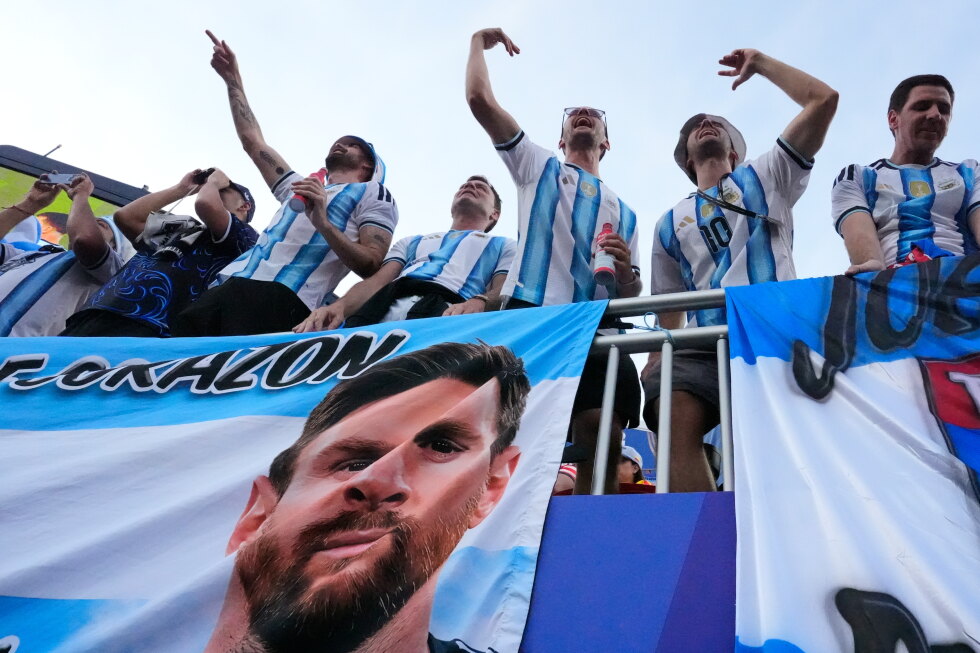
    KANSAS CITY, Mo. — When the reigning three-time FIFA World Cup champions Argentina kicked off their 2026 title defense against Algeria on Tuesday, the energy surrounding Arrowhead Stadium wasn’t just noise — it was a testament to the unparalleled passion of the Albiceleste’s global fanbase. For supporters of the South American side, no journey is too arduous, no expense too steep, especially as legend Lionel Messi, set to turn 39 next week, is widely expected to compete in his final World Cup.

    Across the region, stories of fan dedication abound. Three diehard supporters completed a grueling 11,000-mile bicycle journey all the way from South America to Kansas City, arriving in time for the opening group match without even securing match tickets in hand. Another group drove 20 hours straight, surviving on inexpensive sandwiches to cut travel costs, just to catch a glimpse of their beloved team.

    For 73-year-old Daniel Otero, attending his seventh World Cup, this tournament is worth every dollar. He has dropped roughly $100,000 to cover all expenses for himself and his two sons to follow Argentina through the coming weeks of competition. “We are crazy for Argentina,” Otero explained. “That’s why we spend so much money to see our country, our national team.” Even for high-profile matches with sky-high resale ticket prices, fans have proven unwilling to miss the historic moment. Otero alone spent $40,000 just on match tickets for his party.

    The global pull of this Argentina side, anchored by Messi, has drawn comparisons to one of sports’ most iconic dynasties. “Argentina now is like the Chicago Bulls with Michael Jordan,” said 43-year-old Juan Martin, a fan traveling from Buenos Aires. “In his prime, he had fans around the world. Argentina has fans around the world with Messi.” Martin and his girlfriend Agostina Gomez Uvia plan to follow the team across the United States for a full month, an adventure they estimate will cost each of them $20,000.

    Even local U.S. fans have caught Messi mania, a sight that has surprised even traveling Argentinian supporters. Franco Otero, Daniel’s 27-year-old son, marveled at seeing American families wearing Argentina jerseys printed with Messi’s name and number. “I can’t remember an Argentinian team without Messi,” he said. That sentiment is echoed by fans across generations. Manuel Valdes, a 29-year-old engineer from Corrientes, Argentina, who traveled to the match with his father and younger brother, noted Messi’s transformative impact on global football: “He changed the game. There’s a before and after in football.”

    Outside the stadium, even fans who lacked formal tickets turned the pre-match tailgate into a celebration of the team and their captain. Eleven-year-old Andre Cornuz, a Miami native with Argentine roots, helped his father mount an Argentina flag atop their family van. Nearby, the fan collective Los Sin Entradas — “Those Without Tickets” — set up drums and a large banner reading “Lio Te Quiero” (“I love you, Lio”) alongside a giant portrait of Messi, drawing passing fans to stop for photos. “I have been raised with Messi,” Andre said. “I am very connected to the land.” The collective will follow Argentina to its next match in Dallas, and then to whatever city the team advances to, he added.

    Organizers say the outpouring of support from Argentina fans has exceeded all expectations. Pam Kramer, chief executive of the Kansas City local organizing committee, highlighted the story of the three cycling fans who arrived ticketless: local supporters from Johnson County, Kansas stepped up immediately to ensure they got access to a match. “Nobody is doing it for show,” Kramer said. “We want people to see what we see, that this place is pretty special.”

    Hours before kickoff, thousands of fans were already lined up at stadium gates, buzzing with excitement. Jorgelina Skorput, a 34-year-old Argentine-born New Yorker who moved to the U.S. at age 9, drove two days with friends to reach Kansas City. To keep costs down, the group skipped expensive downtown hotels, staying at an Airbnb an hour outside the city and sticking to cheap snacks on the road. All told, Skorput estimates her trip will cost around $2,000, including an $800 match ticket. “I felt like this is the only time, the only opportunity I’m going to get to see the World Cup,” she said. “We’re the last champions.”

  • Lionel Messi ties the World Cup goals record with an incredible hat trick as Argentina tops Algeria

    Lionel Messi ties the World Cup goals record with an incredible hat trick as Argentina tops Algeria

    On a crisp matchday in Kansas City, Missouri, where a sea of 69,045 fans packed the NFL Chiefs’ home stadium draped in Argentina’s sky blue and white, Lionel Messi turned the opening game of the World Cup into a historic milestone that will go down in soccer lore.

    After slotting home his first goal of the night in the opening minutes off a clever pass from his Inter Miami teammate Rodrigo De Paul, the normally unflappable Argentine captain let his emotions spill over, pressing his sweat-soaked jersey to his face to wipe away tears. He would go on to add two more strikes: an opportunistic rebound finish early in the second half, and a clinical, sharp strike just before he exited the pitch to a full standing ovation from the crowd, which was overwhelmingly tilted in Argentina’s favor. The 3-0 win over Algeria cemented a historic hat trick, and pulled Messi level with Germany’s Miroslav Klose for the most career goals in men’s World Cup history.

    The landmark achievement carried extra weight: it came exactly 20 years to the day that Messi made his own World Cup debut against Serbia and Montenegro, where he also scored as a teenage prospect. With the three goals, he also became only the second player ever to score in five different World Cup tournaments, a feat matched only by Portugal’s Cristiano Ronaldo. This opening match also marked Messi’s 200th senior international cap for Argentina, dating back to his first call-up in 2005 at 18 years old — putting him third on the all-time list for most men’s international appearances, behind only Ronaldo and Kuwait’s Bader al-Mutawa.

    In the lead-up to the tournament, questions lingered over a minor hamstring injury that had sidelined Messi slightly during his club season with Inter Miami, as well as whether the 36-year-old (who turns 39 next week) could lead Argentina to become only the third men’s team to win consecutive World Cup titles. Those questions were fully answered on the pitch. After the match, Messi opened up briefly about his emotional reaction to the opening goal, noting that the outpouring came after a stretch of difficult personal days unrelated to football, before thanking his teammates and staff for their support.

    “It makes me very happy to have lived through everything that came my way. What I’m living though now is the cherry on top,” Messi said in his post-match press conference. “I’m very happy and grateful for this wonderful group. I enjoy it so much.”

    Messi’s historic night even overshadowed standout performances from two of the sport’s other biggest global stars on the same day. Kylian Mbappé of France notched a brace in France’s 3-1 win over Senegal to climb to 14 career World Cup goals, while Erling Haaland scored twice in Norway’s 4-1 victory over Iraq. Even Haaland, one of the top young strikers in the game, took to social media during Argentina’s match to pay tribute, writing simply: “Messi is a madman.”

    Argentina head coach Lionel Scaloni could barely find words to describe his captain’s performance. “At a loss for words about Leo. What can I say? He’s incredible,” Scaloni said.

    Algeria’s manager Vladimir Petkovic echoed that praise, highlighting Messi’s enduring class after two decades at the top of the sport. “Class is permanent,” Petkovic said. “He’s fortunate to have the privilege that the entire Argentina team works for him, and supports him, and for a number of years now — decades — he’s done incredible things.”

    De Paul, who set up Messi’s opening goal, emphasized that the Argentine captain’s greatest strength goes far beyond individual scoring, noting that he prioritizes the team’s success over personal milestones. “It’s an advantage to have Leo because of how he handles the group and pushes it forward. Because of who he is,” De Paul said. “He doesn’t care about individual records. He prioritizes the group, and for us it’s incredible.”

    Messi-mania has gripped the Kansas City metro ever since Argentina set up their World Cup base camp in the region two weeks ago, with thousands of fans trekking to the match wearing Messi’s iconic number 10 jersey to catch a glimpse of the player widely considered soccer’s greatest of all time, nicknamed the GOAT. Even a pre-match watch party downtown included a lighthearted moment where a goat wearing an Argentina jersey appeared on stage alongside former NFL quarterback Jameis Winston — a fitting joke that foreshadowed Messi’s career-defining performance just an hour later.

    With 16 career World Cup goals already, Klose’s all-time record looks set to fall to Messi in the coming weeks of the tournament. The hat trick was Messi’s first ever in World Cup play, his 11th for the Argentine national team, and the 61st of his entire professional career. It also extended his streak to five consecutive World Cup matches with at least one goal, further cementing his unmatched legacy on soccer’s biggest stage.

  • Giant World Cup ball whips through streets in wild weather

    Giant World Cup ball whips through streets in wild weather

    Amid unruly, gusty weather that swept across El Salvador’s capital city of San Salvador, an unexpected viral moment unfolded when a massive inflatable promotional World Cup football broke free from its mooring. A quick-thinking bystander on the scene was able to capture the entire chaotic sequence on their personal device, turning a routine outdoor display mishap into a widely shared viral event across social media platforms.

    Eyewitness accounts describe sudden, intense wind gusts that overwhelmed the anchoring system holding the large promotional sphere in place. Once freed from its fixed position, the oversize ball began rolling and bouncing uncontrolled through downtown city streets, startling pedestrians and forcing motorists to swerve to avoid the unexpected obstacle. Unlike dangerous debris that can cause severe damage during severe weather events, the giant inflatable ultimately caused only minor disruptions to local traffic and no reported injuries to bystanders or motorists before it came to a rest against a roadside barrier.

    The raw footage, which spread rapidly across TikTok, Twitter/X, and other social platforms after being uploaded, has drawn thousands of comments from viewers around the world, many finding humor in the unexpected runaway sports promotion amid this year’s global World Cup excitement. Local event organizers later confirmed that the display was part of a nationwide campaign to build local fan enthusiasm for the international tournament, and they have reported no significant damage from the incident beyond the need to resecure the inflatable for future display.