博客

  • Can Renard revive Tunisia’s World Cup campaign?

    Can Renard revive Tunisia’s World Cup campaign?

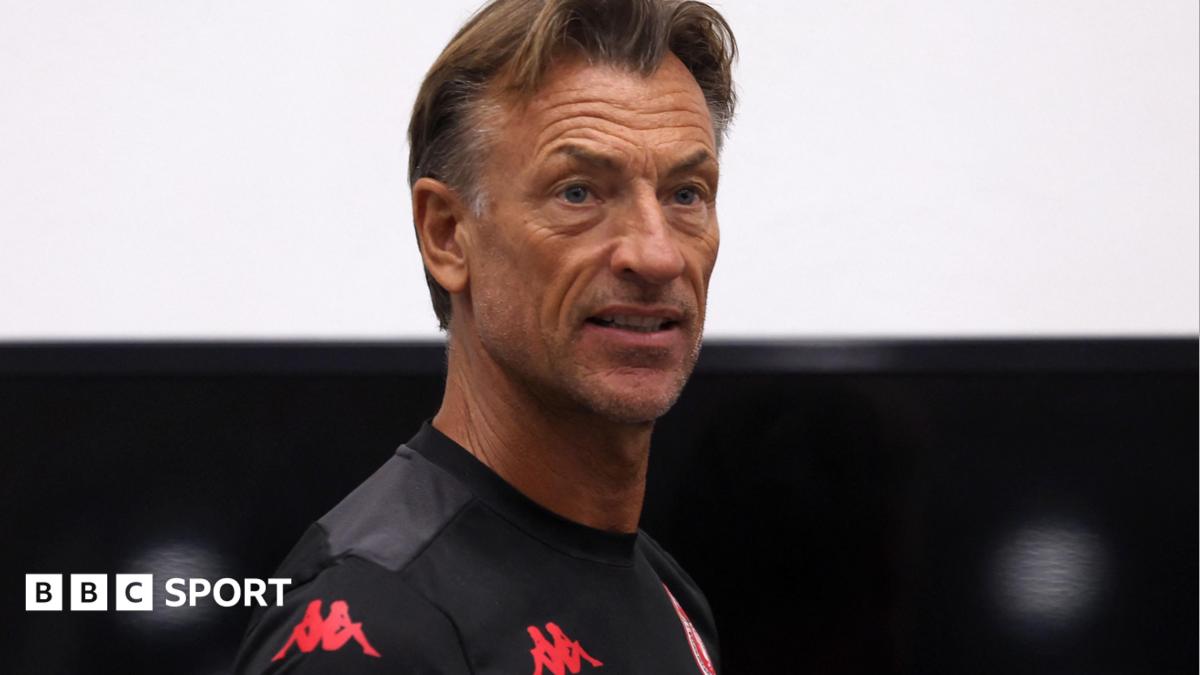
    Tunisia has turned to the charismatic French football manager Herve Renard in a urgent push to rescue their 2026 FIFA World Cup hopes, just days after a humiliating opening match defeat forced the Carthage Eagles to make historic coaching change.

    The North African side moved quickly to part ways with former manager Sabri Lamouchi following a lopsided 1-5 loss to Sweden on Monday, making Tunisia the first nation in World Cup history to dismiss a head coach after just one group stage match. In the expanded 48-team tournament format, Tunisia still holds a narrow path to advance out of Group F, but Renard will have zero room for error when he makes his dugout debut against Japan on Sunday.

    At 57, Renard joins an exclusive club of elite managers to lead three different nations at consecutive World Cup finals, following his stints with Morocco in 2018 and Saudi Arabia in 2022. It was in Qatar 2022 where Renard cemented his reputation for giant-killing, masterminding a iconic group stage upset over eventual champions Argentina, despite Argentina and Lionel Messi taking an early lead in the match.

    When approached by the Tunisian Football Federation about the vacancy, Renard did not hesitate to accept the high-stakes role. “It’s a challenge that isn’t easy, but it’s a motivating challenge,” the manager stated following his official appointment on Tuesday.

    Beyond the famous crisp white shirts he wears while pacing the touchline, Renard’s path to top-level international management has been defined by hard-won experience and humble beginnings. Before his rise to global prominence, he balanced early coaching work with overnight cleaning shifts to make ends meet, a chapter of his career he credits with shaping his relentless work ethic.

    “I woke up at 2:30 in the morning, finished around noon and then left at 5pm for training at Draguignan. That was my rhythm of life for eight years,” Renard told BBC Sport Africa in a 2019 interview. While working his cleaning shift, Renard also studied to earn his coaching qualifications, and he says that grueling period gave him a grounded perspective on his career. “It’s the best schooling I could have had. You have to go through some failures and difficult times but it makes you stronger,” he added.

    Renard’s coaching resume is one of the most varied in international football, including stints with club sides across France, England, Vietnam and Algeria, plus leadership roles with six different senior national teams. He remains the only manager in history to claim the Africa Cup of Nations (Afcon) title with two separate nations: he delivered a fairy-tale 2012 triumph for Zambia against Ivory Coast, then guided the Ivory Coast side to the same trophy just three years later.

    Longtime Zambian sports journalist Nkweto Tembwe describes Renard as a relentless workaholic and master tactician, whose attention to opponent scouting sets him apart from other managers. “He does a lot of reading to make sure he keeps up with the trends that are going on. He [studies] opponents like he’s studying for an exam,” Tembwe told BBC Sport Africa, adding that Renard’s pre-match motivational speeches were the key to Zambia’s unexpected 2012 Afcon run. “If you listen to Herve’s pep talk in the semi-final against Ghana, you realise that Zambia won that match in the dressing room,” Tembwe said. “He described every player there and told the Zambia players what to do [and] especially what not to do. The famous white shirt delivered.”

    While Renard’s African success is unparalleled, his recent career has brought mixed results. He failed to advance past the knockout stages in Afcon tournaments with Morocco, then coached France’s women’s national team to quarter-final finishes at both the 2023 Women’s World Cup and 2024 Olympics. He returned to lead Saudi Arabia in October 2024 and guided the nation to qualification for the 2026 World Cup, but was surprisingly dismissed in April this year, opening the door for Tunisia’s approach.

    Renard has long been the first choice for many African national teams seeking a new manager, but his high salary demands and contract commitments have often blocked potential deals. During the 2023 Afcon hosted by Ivory Coast, the nation attempted to rehire Renard after sacking Jean-Louis Gasset, but the French Football Federation refused to release him from his contract with the French women’s side. A Nigerian football official even described Renard’s financial demands as “practically outrageous” when the Super Eagles attempted to recruit him in late 2024.

    For Tunisia, this appointment marks Renard’s fifth leadership role with an African national side, following his earlier stints with Zambia, Angola, Ivory Coast and Morocco. Beyond the historic milestone of managing three different countries at consecutive World Cups (a feat only achieved by a handful of managers including Bora Milutinovic, Carlos Alberto Parreira and Guus Hiddink), Renard is also chasing a personal milestone: he has never advanced past the group stage of a men’s World Cup finals.

    Renard’s immediate priority is fixing Tunisia’s leaky defensive structure, which conceded five goals to Sweden just days after allowing five in a pre-tournament warm-up loss to Belgium. The French manager, known for his strict disciplinary approach, has already called on his new squad to put the opening defeat behind them and refocus on their upcoming matches against Japan and the Netherlands. “I just told them we have to hold our heads high… you’re here to represent the country, Tunisia. It’s an honour, it’s a duty,” Renard said. “We owe it to ourselves to do much better.”

    Renard already has prior experience facing Japan during World Cup qualifying with Saudi Arabia, and he will draw on that knowledge to push for Tunisia’s first ever knockout stage appearance at a World Cup. If he can pull off the comeback and secure Tunisia a spot in the round of 32, it will add yet another legendary entry to Renard’s already remarkable coaching career.
  • US-Iran talks in Switzerland postponed as fighting in Lebanon intensifies

    US-Iran talks in Switzerland postponed as fighting in Lebanon intensifies

    In a late Thursday announcement, the White House confirmed that U.S. Vice President JD Vance has scrapped his scheduled trip to Switzerland, triggering a last-minute postponement of a critical new round of direct U.S.-Iran negotiations meant to flesh out this week’s landmark bilateral deal.

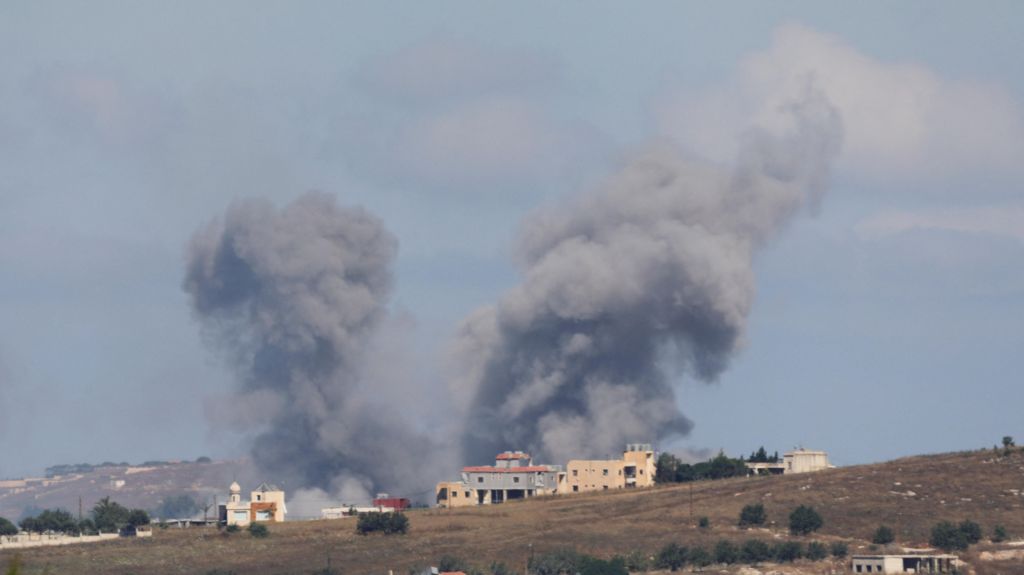
    The cancellation comes just 24 hours after the United States lifted its naval blockade of Iran under the terms of the new 14-point Memorandum of Understanding, a sweeping agreement designed to end open conflict between the two nations. But even as negotiators prepared for technical discussions at the luxury Burgenstock resort overlooking Lake Lucerne, renewed violence in southern Lebanon has thrown the entire diplomatic process into disarray.

    Hours before the White House confirmed Vance’s withdrawal, Hezbollah-aligned Lebanese media had already reported the talks would be suspended over ongoing Israeli air operations in Lebanon. White House officials emphasized that logistical planning for the high-stakes meeting had never proven “simple or predictable,” and stressed that Washington had not yet finalized formal arrangements for the gathering. Administration officials added that the U.S. remains eager to launch the scheduled technical discussions at the earliest possible opportunity.

    Switzerland’s Federal Department of Foreign Affairs later corroborated the postponement, noting that pre-negotiation preparations are still moving forward despite the schedule change. Security forces, including Swiss military personnel and police, had already deployed to the secluded mountain resort, and a dedicated media center had been constructed to accommodate international journalists covering the talks. The negotiations were expected to focus on rolling out the terms of the new MOU and opening preliminary discussions on long-standing sticking points, most notably Iran’s nuclear program.

    The 14-point agreement signed earlier this week includes landmark provisions: the reopening of the strategic Strait of Hormuz, a formal Iranian commitment to never develop nuclear weapons, a $300 billion international reconstruction plan for the Iranian economy, and the full termination of all U.S. sanctions on Iran. The deal also requires both parties to reach a comprehensive final agreement within 60 days, a timeline that can be extended if both sides give their mutual consent.

    Iran’s Supreme Leader Mojtaba Khamenei confirmed he had approved the deal despite holding personal “different views” on the agreement, claiming former President and current U.S. leader Donald Trump leveraged extreme pressure to force the deal out of desperation. Khamenei emphasized that future in-person talks between Tehran and Washington do not equate to acceptance of what Iran frames as U.S. aggression, stating “this will not mean acceptance of the enemy’s position.” Trump for his part has said he expects a full ceasefire to take hold across all active conflict zones, including the border between Israel and Hezbollah in Lebanon, a requirement explicitly written into the agreement’s text.

    Yet violence has continued unabated in southern Lebanon even after the deal was announced. Early Friday, Lebanese health authorities confirmed that new Israeli air strikes overnight killed at least 18 people and wounded 33 more, with multiple civilian buildings damaged in the bombardment. Lebanon’s state news agency described the overnight attack as one of the most intense of the entire conflict. The Israel Defense Forces (IDF) said its strikes targeted Hezbollah infrastructure and operatives, the Iran-backed militia that has operated out of southern Lebanon for decades. Four IDF soldiers were also killed in retaliatory Hezbollah attacks this week.

    The deadly violence has sparked fierce rhetoric from Israeli hardliners. Far-right Israeli National Security Minister Itamar Ben-Gvir wrote on social media platform X that “all of Lebanon must burn,” adding, “With all due respect to the Americans, Israel must make it clear to the entire world that the blood of our sons and the security of our citizens are not up for bargaining.” Vance had publicly pushed back against hardline Israeli cabinet members including Ben-Gvir earlier Thursday, telling reporters Israel should “wake up and smell the reality” of the current diplomatic opening.

    Lebanon was drawn into the broader U.S.-Iran conflict shortly after it began, when Hezbollah launched rocket strikes into northern Israel in retaliation for an Israeli strike that killed Iran’s previous supreme leader. Israel responded with a massive cross-border bombing campaign and a ground incursion into southern Lebanon, launched to push Hezbollah fighters back from Israel’s northern border. To date, Lebanese health authorities report that more than 3,900 people, including large numbers of women and children, have been killed in Israeli attacks across the country. Israeli officials confirm at least 30 soldiers and four civilians have been killed on the Israeli side of the border during the same period.

  • Vietnamese man deported from U.S. to South Sudan is repatriated after months in detention

    Vietnamese man deported from U.S. to South Sudan is repatriated after months in detention

    JUBA, South Sudan – More than a year after being transferred to South Sudan as part of the former Trump administration’s divisive third-country deportation initiative, a Vietnamese national has finally returned to his home country, shedding new light on the opaque and widely criticized program that resettles non-U.S. citizens with completed criminal sentences in third-party African nations.

    Forty-four-year-old Tuan Phan, who moved to the United States as a child in 1991, was formally repatriated to Vietnam on Friday, South Sudan’s Ministry of Foreign Affairs confirmed during a weekly press briefing. Spokesperson Agok Anyar noted that throughout his more than 12 months in South Sudanese custody, Phan maintained good conduct and remained in stable health, for which the ministry expressed gratitude.

    Phan’s journey to Juba was tangled in legal dispute from the start. He and seven other male deportees were first rerouted to a U.S. military base in Djibouti in May 2025, after a federal judge paused their flight to South Sudan over documented procedural violations in their deportation orders. It was not until a Supreme Court ruling cleared the way for their removal that the group finally arrived in South Sudan’s capital aboard a U.S. military aircraft two months later.

    All eight men had already served full prison sentences for U.S. criminal convictions when Immigration and Customs Enforcement took them into immigration custody last year. Phan’s conviction dates back to 2000, shortly after he turned 18, when he was sentenced to 25 years in prison for a fatal shooting during a gang altercation. His deportation was first ordered in 2009, and he was taken directly into ICE custody upon his release from prison in March 2025.

    The third-country deportation program, negotiated by the Trump administration, has secured agreements from at least seven African nations to accept deportees who are not their native citizens, in exchange for millions of dollars in U.S. financial assistance. Monitoring group Third Country Deportation Watch estimates that more than 180 people have been transferred to these participating nations to date.

    The decision to place deportees in South Sudan has drawn particularly sharp condemnation from human rights groups, due to the country’s well-documented poor human rights record, systemic widespread corruption, and escalating political instability. United Nations data confirms that ongoing armed conflict in South Sudan displaced over half a million people in 2025 alone, creating a fragile humanitarian crisis across much of the country.

    A U.S. Senate investigation into the conditions of the South Sudan transfers found that the eight deportees were held in a walled, gated residential compound under constant armed guard. The report also documented that for months, no independent observers outside of South Sudanese government officials had access to the group, with a congressional aide becoming the first external visitor during a trip to Juba late last year.

    Michael Bochenek, senior counsel for global human rights nonprofit Human Rights Watch, emphasized that the lack of independent access creates dangerous gaps in oversight. “There’s been no independent check on people’s treatment and conditions of confinement, and this raises serious questions about South Sudan’s compliance with human rights norms and essential safeguards against abuses in detention,” Bochenek explained.

    Unlike publicized agreements with other participating African nations, the full terms of the U.S. deal with South Sudan remain undisclosed. Declassified State Department records do show that South Sudan submitted specific requests to U.S. officials after agreeing to accept the deportees, including demands for sanctions relief for a former senior government official and U.S. support for the prosecution of a high-profile opposition leader. It remains unclear what financial or other concessions the U.S. provided to South Sudan’s government in exchange for accepting the group.

    Phan is the second member of the eight-person group to leave South Sudan for repatriation. Jesus Munõz-Gutierrez, a Mexican national in the group, was returned to Mexico in September. Dian Peter Domach, the only South Sudanese citizen among the eight, was released from custody immediately upon arrival. The four remaining deportees are nationals of Cuba, Myanmar, and Laos, and their future status remains unclear.

  • Andy Burnham is the ‘King of the North’ with his eyes on 10 Downing Street

    Andy Burnham is the ‘King of the North’ with his eyes on 10 Downing Street

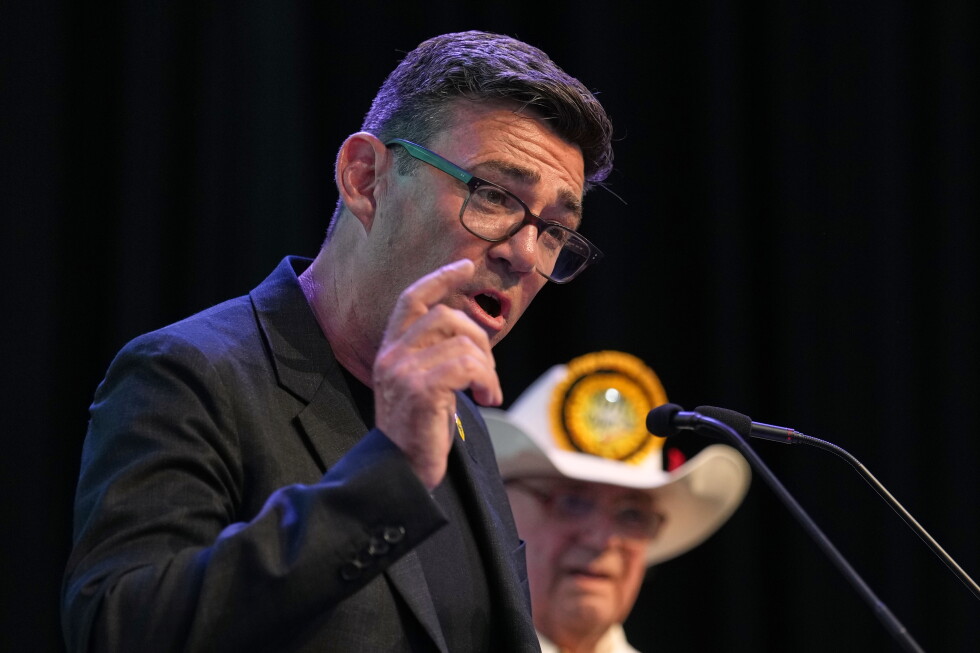
    LONDON — After a decades-long political career that has taken him from junior Parliament member to the widely popular mayor of Britain’s northern industrial powerhouse, Andy Burnham has cleared the final hurdle to mount a challenge for leadership of the Labour Party and the office of British prime minister, positioning himself as a populist alternative to incumbent Keir Starmer.

  • Zimbabwe MPs pass bill to extend president’s time in power

    Zimbabwe MPs pass bill to extend president’s time in power

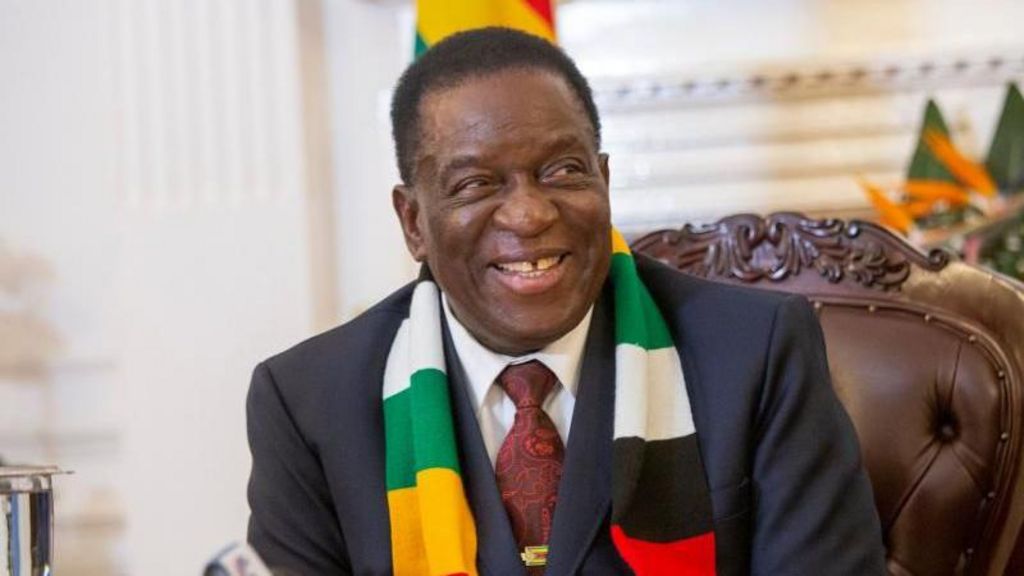
    Zimbabwe’s political landscape has been thrown into sharp debate after the country’s lower house of parliament passed a sweeping constitutional amendment that will extend presidential terms from five to seven years and allow 83-year-old incumbent President Emmerson Mnangagwa to stay in office until 2030, two years beyond his previously scheduled departure.

    The vote held on Thursday delivered a decisive victory for ruling party Zanu-PF, which has held continuous power since Zimbabwe gained independence in 1980. Final tallies showed 216 lawmakers backing the amendment, easily clearing the constitutionally required two-thirds majority threshold of 187 votes needed to change the nation’s founding charter. Only 42 parliamentarians cast votes against the controversial proposal.

    Beyond extending Mnangagwa’s current term, the amendment carries far-reaching changes to Zimbabwe’s political system. It scraps direct public presidential elections, a system that has been in place since 1990, and transfers the power to select the head of state to parliament itself. It also extends parliamentary terms from five to seven years and pushes the next scheduled parliamentary election, originally planned for 2028, back to 2030.

    The proposal is the end result of a months-long push by Zanu-PF, which secured cabinet backing for the constitutional amendment plan back in February. The bill will now move to Zimbabwe’s senate for a final vote, where political observers widely predict it will pass, before heading to Mnangagwa to be signed into law.

    This development marks a striking reversal for the president, who has previously positioned himself as a committed constitutionalist and publicly pledged to respect the existing two-term limit that was set to see him step down in 2028. Mnangagwa first rose to the presidency in 2017, when he ousted long-time authoritarian ruler Robert Mugabe in a military-backed takeover. He subsequently won contested national elections in both 2018 and 2023, results that have faced widespread scrutiny from international observers and opposition groups.

    Opposition voices, civil society organizations, and constitutional legal experts have united in criticism of the amendment process, arguing that such a fundamental restructuring of Zimbabwe’s political system requires approval via a national public referendum, rather than a vote solely by sitting lawmakers. Their criticism draws on the text of the 2013 constitution, which currently states that any change to presidential term limits must be approved by voters in a public referendum, and that a sitting president cannot personally benefit from an extension without explicit voter approval in a second public vote.

    A last-ditch legal challenge to block the bill was heard and dismissed by Zimbabwe’s Constitutional Court just one day before the lower house vote, clearing the way for Thursday’s proceeding.

    When Mnangagwa first took office, many observers and domestic supporters hoped he would usher in a new era of democratic reform and economic recovery for the struggling southern African nation. Instead, his tenure has been defined by persistent severe economic crises, repeated disputed electoral contests, and growing international and domestic concern over steady democratic backsliding.

    The amendment has intensified long-simmering tensions over Zimbabwe’s political trajectory. Opponents warn that the changes will drastically weaken democratic accountability and consolidate one-party control, while proponents of the amendment argue the longer terms and shifted election process are necessary to deliver political continuity and national stability as the country works to address its deep economic challenges.

  • Iran to lodge complaint over travel restrictions

    Iran to lodge complaint over travel restrictions

    The 2026 FIFA World Cup, co-hosted by the United States, Canada and Mexico, has become wrapped in fresh controversy as the Iranian national football team prepares to submit a formal grievance to global football’s governing body over discriminatory travel and entry restrictions imposed by US authorities.

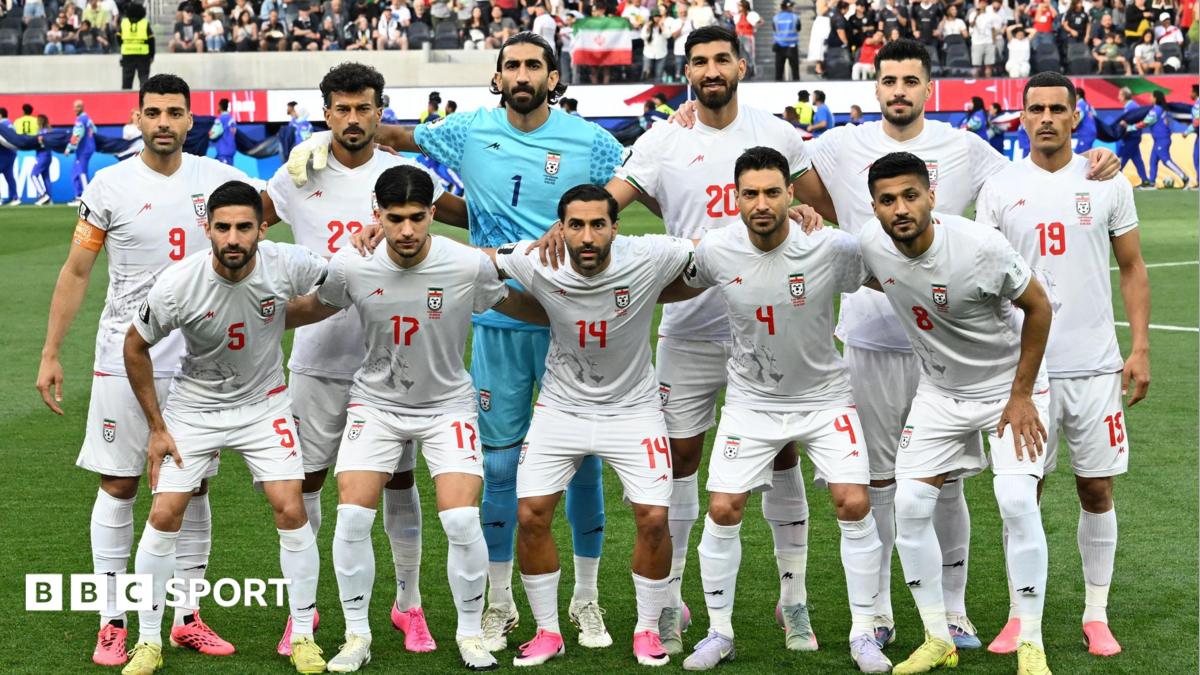
    Iran’s campaign got off to a dramatic start on the pitch with a 2-2 opening draw against New Zealand in Los Angeles, but off the field, the team has faced a cascade of logistical and bureaucratic hurdles that have overshadowed their tournament participation. Under the terms of the visas granted to the Iranian delegation, the squad is only permitted to enter US territory 24 hours before each scheduled match and is required to depart the country the same day the game concludes. This strict regime has left the squad with almost no time to acclimate to local conditions, complete focused training sessions, or physically prepare for competition, according to team and federation officials.

    Speaking after the opening draw against New Zealand, Iran head coach Amir Ghalenoei did not mince words, describing his side as the “most oppressed” team competing at the 2026 tournament. The Football Federation of the Islamic Republic of Iran (FFIRI) doubled down on that criticism in an official statement, arguing that the imposed travel constraints directly violate FIFA’s core principle of guaranteeing equal competitive conditions for all participating nations. The federation emphasized that the restrictive rules create unnecessary disruptions that materially harm the team’s preparation process, and confirmed it would pursue an official complaint through FIFA’s formal channels.

    This is not the first setback Iran has encountered during the 2026 World Cup. Long-running political tensions between Washington and Tehran, amplified by ongoing conflict in the Middle East and related US security concerns, have plagued Iran’s tournament participation from the start. Multiple key members of Iran’s backroom coaching and support staff were already denied entry visas to the United States ahead of the tournament, and thousands of match tickets allocated to the Iranian federation were abruptly revoked just days before the competition kicked off. In response to these earlier issues, the FFIRI has called on FIFA to uphold its commitment to the fundamental principles of sporting neutrality, fair play, and established tournament regulations. Following Iran’s opening match against New Zealand, FIFA president Gianni Infantino personally visited the Iranian squad in their dressing room, a move that underscores the severity of ongoing tensions around the team’s participation.

    In the lead-up to Iran’s second group stage match against Belgium, scheduled for 21 June in Los Angeles, the FFIRI confirmed that the same restrictive travel policy remains in place. The federation had formally requested permission to bring the squad into Los Angeles two days before the Belgium clash, explaining that an earlier arrival would allow players to adjust to the local time zone, climate, and venue, and complete critical final training preparations. This request was especially urgent given the match is scheduled to kick off at 12:00pm local time, a time that adds extra physical demand for players without proper acclimation. Despite the clear technical and logistical justifications for the request, US authorities once again rejected the proposal.

    Iran already moved their primary base camp from Arizona in the United States to Tijuana, Mexico following the escalation of Middle East conflict earlier this year, but the team still has two remaining group stage matches, both of which are scheduled to be played on US soil. After facing Belgium in Los Angeles, Iran is set to take on Egypt in Seattle on 27 June.

    When asked to respond to Ghalenoei’s earlier criticism that the team was being treated unfairly, a spokesperson for the US Department of Homeland Security confirmed that the Iranian national team had agreed to the imposed visa terms, though the FFIRA has pushed back on this framing. The BBC has requested further comment from the DHS on Iran’s plans to file a formal complaint, but no additional response has been issued to date.

    Andrew Giuliani, executive director of the White House FIFA Task Force, defended the US policy in comments to CBS News, noting that Iranian officials were aware of the entry rules before the tournament began. He confirmed the policy would remain unchanged for upcoming matches: the team will be allowed to enter one day before each match and must depart the same evening after the final whistle, even for the upcoming Los Angeles clash with Belgium. This standoff comes even as the leaders of both the United States and Iran recently signed an initial peace deal aimed at de-escalating conflict in the region, leaving football caught in the middle of ongoing geopolitical friction.

  • Police charge a third suspect in a Melbourne synagogue arson allegedly directed by Iran

    Police charge a third suspect in a Melbourne synagogue arson allegedly directed by Iran

    In a major development in an antisemitic terror investigation, Australian law enforcement announced Friday that a third suspect has been charged in connection with a devastating late 2024 arson attack on a prominent Melbourne synagogue, an attack Australian authorities allege was orchestrated by Iran.

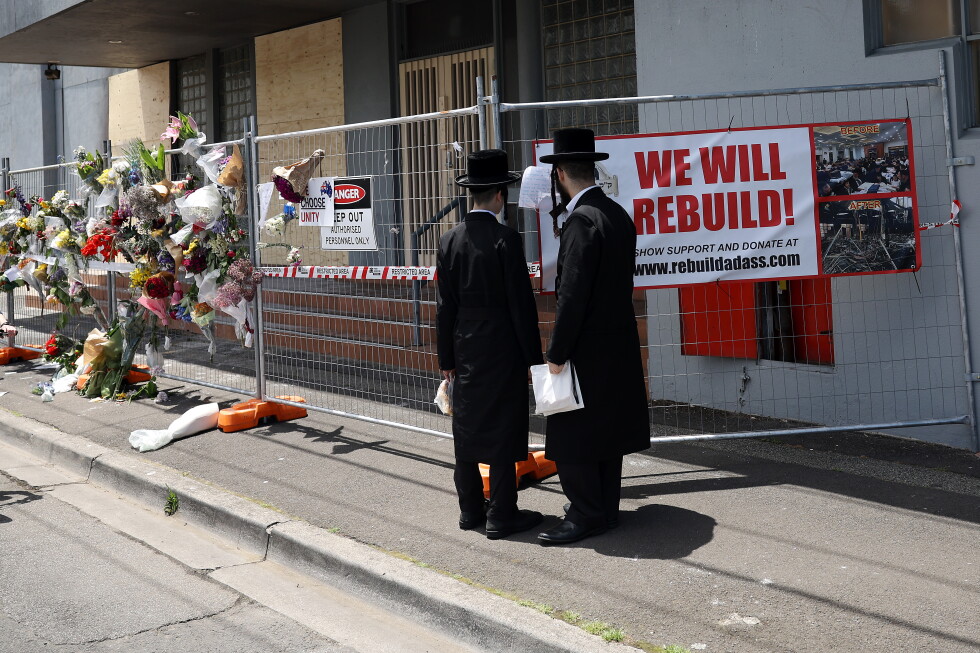
    According to official statements from the Victorian Joint Counter Terrorism Team — a specialized unit combining resources from federal police, state law enforcement, and Australia’s primary domestic intelligence service — the 20-year-old suspect is accused of being one of three masked assailants who forced their way into the Adass Israel Synagogue in the early hours of December 6, 2024. The offenders allegedly doused the interior of the sacred space with flammable liquid before igniting the blaze, which left the building with widespread structural and interior damage. One worshipper who was at the site suffered minor physical injuries during the incident.

    The newly charged suspect was already in custody at a Melbourne correctional facility facing unrelated, undisclosed charges, and police have not released his name to the public. He joins two previously arrested co-accused: 21-year-old Giovanni Laulu, taken into custody in July 2024, and 20-year-old Younes Ali Younes, who was arrested one month later. He is scheduled to make his first court appearance on the new arson and terrorism-related charges next week.

    Australian Prime Minister Anthony Albanese publicly accused Iran’s Islamic Revolutionary Guard Corps (IRGC) of directing not just this synagogue attack, but a second arson that targeted a kosher restaurant, Lewis’ Continental Kitchen, in Sydney two months prior to the synagogue incident. Mike Burgess, director-general of the Australian Security Intelligence Organisation (ASIO), confirmed that the IRGC leveraged an intricate network of proxies to conceal its direct role in both antisemitic attacks, which have shaken Australia’s Jewish community.

    In response to these allegations, the Australian government expelled Iran’s ambassador to Canberra and three additional Iranian diplomatic staff. The Iranian government has repeatedly and vehemently denied any involvement in the attacks.

    Australian Federal Police Assistant Commissioner Peter Crozier told reporters Friday that the investigation remains active, with investigators collaborating closely with international partner agencies to unpack the full scope of the plot. A key ongoing line of inquiry, Crozier noted, is determining whether the three accused arsonists knew the identities of the individuals who ordered the attack. “They may not actually be aware of the people who are directing or the principals of these operations. That remains a key line of inquiry for us,” Crozier said.

    Victoria Police Acting Assistant Commissioner Paul O’Halloran added that authorities prioritized notifying the local Jewish community of the third arrest before making the news public, to avoid causing unnecessary surprise or alarm. “Our heart goes out to them. Again, this brings back this terrible incident,” O’Halloran said. “People deserve the right to feel safe and be safe in their community and particularly at their place of worship. Today’s charges are a strong testament to this.”

    The arrest comes as Australia confronts a documented rise in antisemitic violence across the country. In response to the growing threat, the federal government has launched a public inquiry to examine the surge in hate crimes, which includes a deadly December shooting at a Sydney Hanukkah celebration that left 15 people dead.

  • Meet Merlin the Duck: Mexico’s World Cup ‘ambassador’

    Meet Merlin the Duck: Mexico’s World Cup ‘ambassador’

    In the buzz of World Cup excitement that swept across Mexico City, one unlikely celebrity has risen to capture the hearts of thousands of soccer fans, turning an ordinary pet duck into the nation’s most talked-about unofficial ambassador. That star is Merlin, a domestic duck whose casual daily waddles through the busy streets of the capital, decked out in a tiny, perfectly fitted jersey emblazoned with the Mexican national team’s colors and crest, have sparked a viral social media frenzy that drew massive crowds of adoring fans eager to catch a glimpse of the feathered icon.

    BBC correspondent Will Grant was on the ground amid the throngs of supporters that flocked to meet Merlin, documenting the chaos and joy that surrounded the duck’s sudden rise to fame. What started as a simple, charming quirk from Merlin’s owner—dressing the pet up to support the team during the tournament—quickly exploded beyond the small neighborhood where Merlin lives, as clips and photos of the duck strolling past sidewalk cafes, city parks, and busy intersections spread like wildfire across TikTok, Instagram, and Twitter.

    Unlike many manufactured viral sensations, Merlin’s appeal comes from his effortless, unscripted charm. Fans have latched onto the duck as a lighthearted, unifying symbol of national pride amid the high-stakes tension of international soccer, turning casual meet-and-greets into impromptu street celebrations. What began as a pet owner’s bit of fun has now cemented Merlin’s place as a beloved unofficial World Cup ambassador, a reminder that the most memorable moments of major sporting events often come from the most unexpected places.

  • NYCFC teammates Freese, O’Neill and Trewin to clash in crucial World Cup group match

    NYCFC teammates Freese, O’Neill and Trewin to clash in crucial World Cup group match

    SEATTLE – For up-and-coming professional footballers, few opportunities can compare to stepping onto the world’s biggest sporting stage at the 2026 FIFA World Cup. For Australian midfielder Aiden O’Neill, that very opportunity was the deciding factor that pushed him to leave his European club in Belgium to join Major League Soccer’s New York City FC during the 2025 MLS season, while still in the peak of his playing career.

    O’Neill’s move to the United States put him in the same locker room as an eclectic mix of talent: compatriot Kai Trewin, a fellow Australian defender, and United States international goalkeeper Matt Freese, among others. What started as a fruitful club partnership over a season and a half has now evolved into a high-stakes rivalry: on Friday, O’Neill will line up for Australia while Freese starts for the USMNT, bringing their club bond to a head in a critical Group D matchup.

    “We’re excited to play against each other,” O’Neill told reporters ahead of the clash. “It’d be good to get one up on him, that’s for sure.”

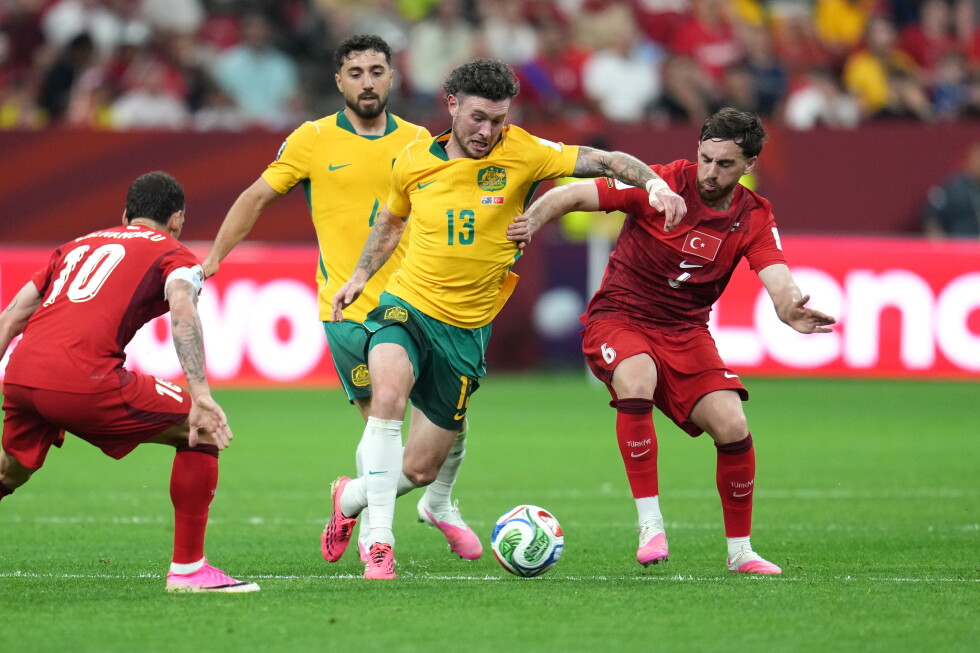
    Both men have already defied expectations to emerge as key players for their nations in this tournament, after surprising selection calls from their managers. Australia head coach Tony Popovic made a bold call to leave experienced veterans Mathew Ryan and Jackson Irvine out of the starting lineup for the Socceroos’ opening group match against Turkey. The shake-up catapulted O’Neill straight into the anchor role of Australia’s four-man midfield, where he has stepped up to lead the side unexpectedly early in his international career. Across the dressing room, Freese earned his first ever World Cup start in the United States’ opening fixture against Paraguay.

    The pair did not just show up on their big debuts—they delivered. Both O’Neill and Freese put in standout performances that guided their respective nations to opening wins, putting both teams in strong position to advance out of the group. Now, Friday’s head-to-head between their national sides is far more than just a friendly inter-club grudge match: the result is almost certain to decide which team tops Group D heading into the knockout stage.

    Trewin, the third NYCFC player on site, who joined the club from Australia ahead of the 2026 season and earned a spot on Australia’s World Cup squad despite not featuring in the 2-0 opening win over Turkey, says he has never been more motivated for a fixture. “I’ve never wanted to win a game more than this one,” he added.

    Off the international pitch, the trio has already helped deliver consistent results for their MLS side. Back in 2025, O’Neill and Freese held down starting spots as NYCFC marched all the way to the MLS Cup Playoff semifinals. With Trewin slotting into the starting lineup this year, the club remains comfortably in playoff position heading into the league break for the World Cup. But for all three, Friday’s matchup is shaping up to be the highest-stakes game of their professional careers to date.

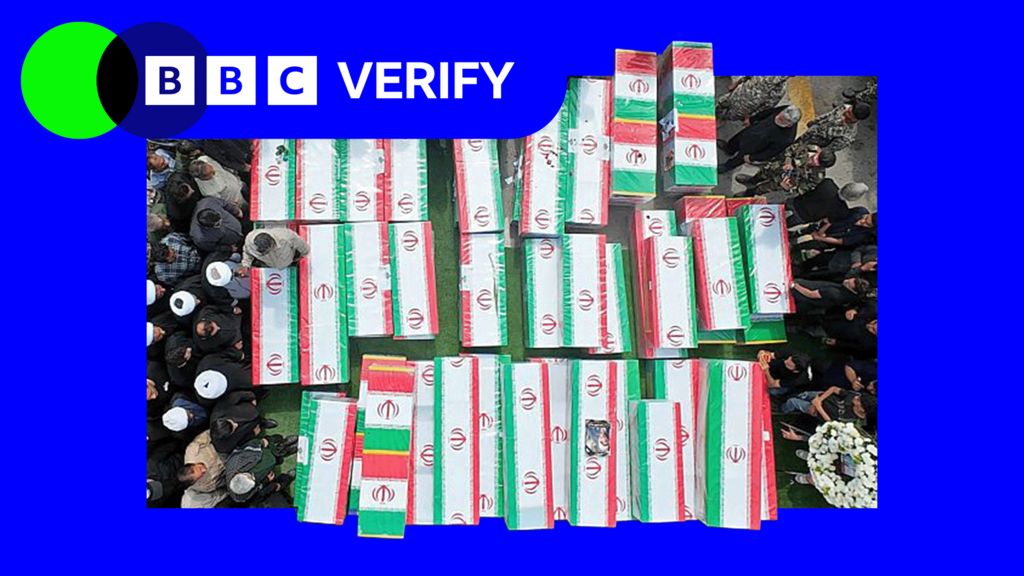
  • Thousands killed in US-Israeli war on Iran – but experts say true total may never be known

    Thousands killed in US-Israeli war on Iran – but experts say true total may never be known

    Four months after the outbreak of open conflict between a US-Israeli coalition and Iran across the Middle East that left thousands dead, international mediators have secured a formal agreement to end hostilities. But even with the war coming to a close, researchers and analysts warn that the full human cost of the conflict may never be accurately known, with multiple barriers blocking transparent casualty reporting across the battle zone.

    Official government data from Iran and Lebanon alone puts the confirmed death toll at more than 7,300 since fighting began on February 28, a count that already includes hundreds of children and dozens of medical workers. Additional fatalities have been recorded across neighboring Gulf states, Iraq, Israel, and among international military personnel and commercial sailors, pushing the total confirmed death toll well above 7,500. However, nearly all independent observers agree this number is a drastic undercount, hobbled by internet blackouts, government information restrictions, limited access to conflict zones, and the fragmented control of territory by armed groups that makes systematic counting impossible.

    “When conflict spreads across multiple sovereign states and non-state controlled areas, casualty records are often incomplete, delayed, or impossible to cross-check independently,” explained Dr. Iain Overton, executive director of the UK-based non-profit Action on Armed Violence. Dr. Overton, who has studied conflict casualty reporting across the Middle East for decades, added that “the final death toll will likely remain contested for years after the final shot is fired, matching patterns seen in past wars in Iraq and Syria where undercounting ran into the thousands.”

    In Iran, official government figures released April 26 by state news agency IRNA put the national death toll at 3,468, split between 1,460 civilian residents and 2,008 military personnel, including 499 women. But the US-based independent monitoring group Human Rights Activists News Agency (HRANA) puts the confirmed death toll substantially higher at 3,636, with 1,701 civilians among the dead — 307 of them children. HRANA’s May 18 report emphasizes that even this higher number is an absolute minimum, as data collection has been crippled by restricted access to strike sites, government-mandated internet shutdowns, and political pressure that leads both authorities and families to withhold information about conflict deaths.

    “Authorities routinely hide casualty data, and many families face direct pressure not to speak publicly about how their loved ones died,” said Skylar Thompson, HRANA’s deputy director.

    Iranian officials have repeatedly accused US and Israeli forces of deliberately targeting civilian infrastructure across the country. Multiple independent inquiries have confirmed that a US missile strike on the first day of the war hit a public school in the southern Iranian town of Minab. Iranian authorities say the attack killed 168 people, 110 of them children, and the US military has confirmed it is conducting an internal investigation into the incident. Days later, a missile strike on a girls’ volleyball match in a Lamerd town sports hall killed 20 people, according to Iranian officials. While the US has denied responsibility for the attack, analysis for BBC Verify by independent arms experts found the weapon used was likely a US-made Precision Strike Missile (PrSM).

    The conflict expanded rapidly beyond Iran’s borders when Hezbollah, the Iran-aligned Lebanese armed group, launched a rocket barrage into Israel on March 2 in retaliation for the killing of Iran’s supreme leader in the opening days of the war. Israel responded with a sustained air campaign and a full ground invasion of southern Lebanon, which has produced the highest single national death toll of any country in the conflict.

    Lebanese government health data confirms 3,912 people have been killed in Israeli strikes across the country, including 366 women and 247 children. The Lebanese health ministry has not clarified how many of the dead are active Hezbollah fighters, and the group has not released its own official casualty counts. Israeli Prime Minister Benjamin Netanyahu claimed last month that roughly 3,000 Hezbollah fighters had been killed since the war began.

    Controversy has followed multiple high-profile Israeli strikes in Lebanon. In early March, an Israeli air and ground operation in the eastern Bekaa Valley killed 41 people, according to Lebanese officials. The Israel Defense Forces (IDF) said the operation was intended to recover the remains of an Israeli airman who went missing in a 1980s conflict in Lebanon, but Lebanese authorities confirmed three of their own troops, plus dozens of civilians and children, were among the dead. On April 8, a massive coordinated wave of Israeli strikes killed 361 people across Lebanon in just 10 minutes, Lebanese officials reported. The IDF said all 361 killed were Hezbollah operatives targeted in planned raids, a claim the Lebanese health ministry has rejected, saying the vast majority of fatalities were civilians. Seven UN peacekeepers deployed to Lebanon have also been killed in cross conflict violence, with the most recent death recorded on June 4.

    The high number of civilian casualties in Lebanon has drawn widespread international condemnation of the IDF’s campaign. In a rare public rebuke of key ally Israel by a US president, former President Donald Trump sharply criticized Israeli military tactics during a June appearance at the G7 summit in Paris. “Too many people have been killed in these strikes,” Trump said. “You don’t have to destroy an entire apartment building every time you go after one person — most of the people living there aren’t Hezbollah.”

    On the Israeli side, government data provided to the BBC confirms 60 people have been killed in the country as of June 18, most in Iranian missile strikes and Hezbollah cross-border fighting. Twenty-nine of the dead are civilians, 21 of whom were killed in Iranian missile attacks, while 31 IDF soldiers died in combat operations. One additional fatality was recorded as accidental friendly fire. Israel has repeatedly accused Iran of deploying banned cluster munitions against Israeli population centers. In one documented incident, an elderly couple in their 70s was killed while traveling to an air raid shelter in the town of Ramat Gan when cluster bomb submunitions hit their vehicle. Human Rights Watch (HRW) released a report in March accusing Iran of committing war crimes through the use of cluster munitions against civilian areas.

    “Cluster munitions scatter explosive submunitions across huge areas, making them inherently indiscriminate and a violation of international laws of war,” explained Patrick Thompson, a HRW crisis and arms researcher.

    In the opening weeks of the conflict, Iran launched retaliatory missile and drone strikes against US military bases located across eight neighboring regional states: Saudi Arabia, the United Arab Emirates (UAE), Qatar, Kuwait, Iraq, Jordan, Bahrain and Oman. Many of these strikes hit civilian infrastructure including airports, energy facilities and commercial ports, and falling debris from intercepted missiles often landed in residential areas, causing additional civilian casualties. The strikes sparked fierce backlash from Iran’s Arab neighbors. “Your war is not with your neighbors, and this escalation only confirms the narrative of those who see Iran as the primary source of instability and danger in this region,” wrote Dr. Anwar Gargash, senior adviser to the UAE’s president, on social media.

    Building a complete picture of total conflict fatalities across the entire Middle East remains a major challenge, as many affected states have not published full cumulative casualty data. What data is available confirms additional deaths across the region: the UAE’s defense ministry has confirmed 13 people killed in Iranian strikes, while Al Jazeera and Agence France Presse have recorded more than 100 deaths in Iraq, at least 80 of them members of the Iran-aligned Popular Mobilisation Forces paramilitary killed in US and Israeli strikes. The Pentagon has confirmed 13 US military personnel based in the region have been killed, seven in Iranian attacks and six in a refueling plane crash in Iraq. The International Maritime Organisation has recorded 14 civilian sailors of multiple nationalities killed in attacks on commercial shipping in the Strait of Hormuz and other regional waterways.

    Dr. Overton reiterated that systemic barriers to reporting have suppressed casualty numbers across the region. “Access restrictions, destroyed civilian infrastructure, and political sensitivities have all limited transparent counting, in some cases suppressing entire casualty tolls,” he said. “Historical experience from conflicts across this region makes clear that the final death toll will stay contested, and could end up being far higher than the numbers we have access to today.”