博客

  • Australian communist: CPC’s 105-year journey proves determination and action achieve greatness

    Australian communist: CPC’s 105-year journey proves determination and action achieve greatness

    On the 105th anniversary of the founding of the Communist Party of China (CPC), a senior leader of the Communist Party of Australia has shared his reflections on the CPC’s historic journey, crediting the organization’s decades of transformative progress to unwavering determination, grounded theoretical guidance and consistent collective action.

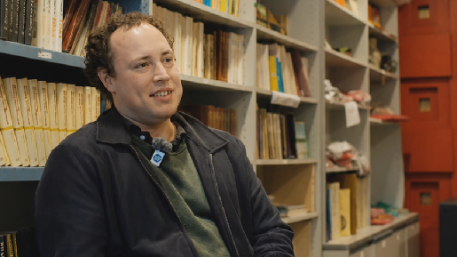
    Christian Goopy, member of the Communist Party of Australia Central Committee, opened up about his own ideological journey in a recent commentary, noting that his decision to join the Australian communist movement has been a defining personal choice. For Goopy, party membership has provided a clear ideological framework that has helped him remain aligned with his core values and expand his capacity to contribute meaningfully to collective progress as a communist activist.

    First established on July 1, 1921, the CPC has grown from a small revolutionary organization into the governing party of the world’s most populous nation, guiding China through a century of unprecedented social, economic and political transformation. Goopy emphasized that the 105-year trajectory of the CPC offers a powerful case study in how aligned ideological commitment, theoretical clarity and deliberate, people-centered action can combine to deliver outcomes that reshape the lives of hundreds of millions and alter the course of global history.

    The commentary comes as global political observers and left-wing movements mark the CPC’s anniversary, with many leaders across the world sharing perspectives on the party’s legacy and its impact on global development over the past century. Goopy’s remarks join a growing chorus of international communist and progressive leaders recognizing the CPC’s century-long track record of delivering equitable development and advancing working-class interests.

  • Three die in Mexico City World Cup celebrations

    Three die in Mexico City World Cup celebrations

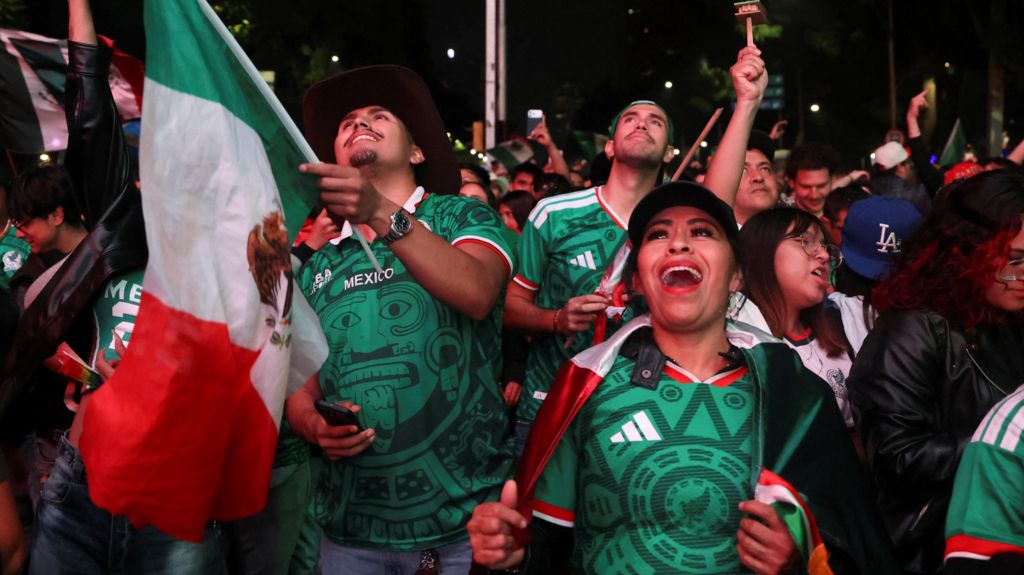
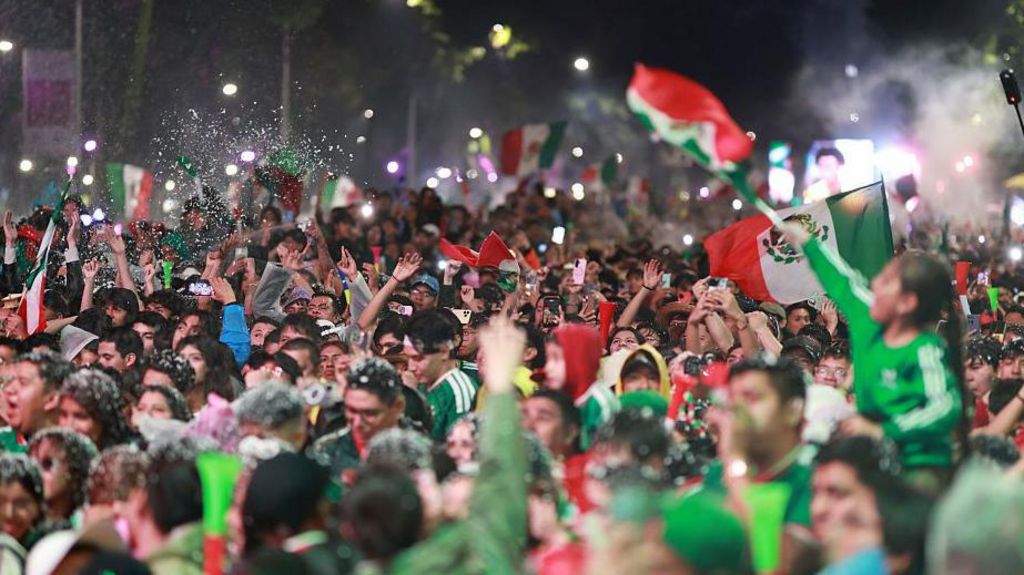
    A historic World Cup knockout stage win for Mexico has turned into a tragic tragedy, with three people — including a 19-year-old woman — confirmed dead from suffocation after more than a million fans packed into downtown Mexico City to celebrate the national team’s 2-0 defeat of Ecuador.

    The capital city’s health department released the official details on Wednesday, identifying the other two victims as a 48-year-old woman and a 44-year-old man. The mass gathering, centered on the iconic Angel of Independence monument along Paseo de la Reforma, marked Mexico’s first knockout round victory at a World Cup since 1986, a milestone that drew fans from across the sprawling metropolitan area home to more than 20 million people, one of the most densely populated urban regions on Earth.

    Emergency responders rushed to treat three unconscious fans pulled from the crush at multiple locations along the main boulevard, administering on-site first aid and cardiopulmonary resuscitation before transporting the patients to local hospitals for advanced care. Despite rapid intervention, all three ultimately succumbed to suffocation, and their identities were confirmed by family members, authorities confirmed.

    Mexico City Mayor Clara Brugada opened her public response by extending her deepest and most sincere condolences to the families of the deceased, pledging full municipal support to the grieving relatives in the days ahead. In a social media statement released after the fatalities were made public, Brugada urged all sports fans to approach celebratory gatherings with intentional responsibility, care for fellow attendees, and empathy for crowd safety concerns. She also noted that she had issued a public warning even before the match kicked off, urging fans planning to watch the game near the Angel of Independence monument to relocate to other viewing spots, as massive crowds had already filled the popular gathering space beyond safe capacity.

    The euphoria over Tuesday’s win lit up the city long after the final whistle: fireworks echoed across neighborhoods, jubilant fans packed the famous Estadio Azteca for watch parties, and crowds spilled onto major thoroughfares to celebrate the national team’s advancement to the World Cup round of 16. Mexico now awaits the result of Wednesday’s match between England and DR Congo, with Thomas Tuchel’s England side currently favored to set up a next-round matchup against Mexico.

    The tragedy has drawn renewed attention to the challenges of crowd management for large-scale public celebrations in major megacities, where spontaneous gatherings of elated fans can quickly outpace even pre-planned safety protocols.

  • Rights group accuses three paramilitary commanders of war crimes in Sudan

    Rights group accuses three paramilitary commanders of war crimes in Sudan

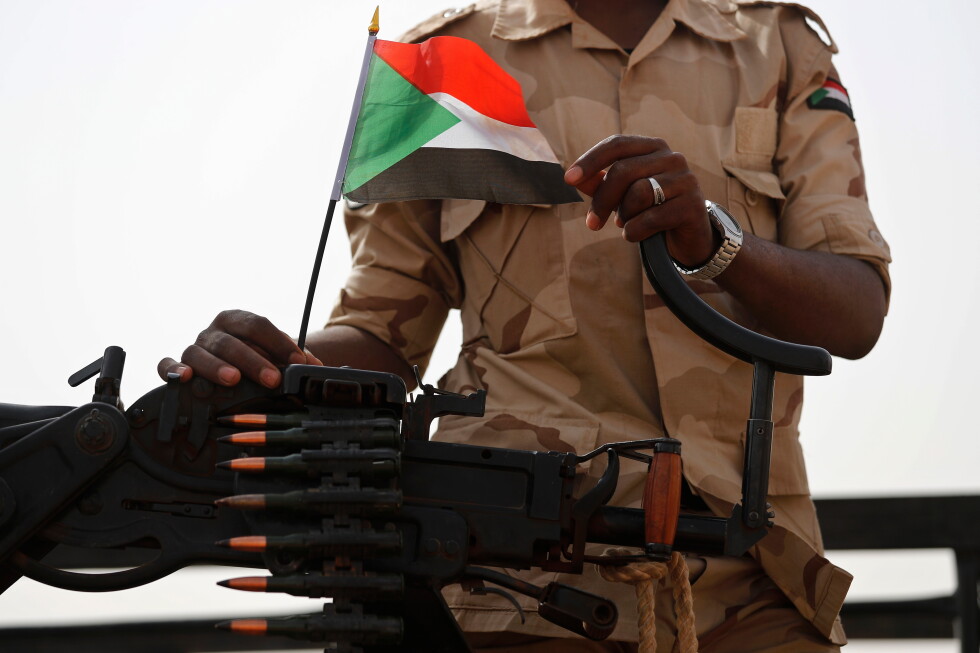
    In a damning new report released Wednesday in Nairobi, the capital of neighboring Kenya, global human rights watchdog Amnesty International has publicly named three senior commanders of Sudan’s Rapid Support Forces (RSF), accusing the paramilitary group’s leadership of overseeing systematic war crimes during the deadly 2025 capture of el-Fasher, the capital of North Darfur.

    During the official report launch, Amnesty Secretary General Agnès Callamard laid out the organization’s findings, concluding that RSF forces carried out crimes against humanity and targeted ethnic cleansing during their coordinated assault on the city. The devastating three-day offensive, which concluded with the RSF seizing control of el-Fasher in October 2025, left more than 6,000 people dead, and United Nations experts have already characterized the attack as carrying all the “hallmarks of genocide.”

    Amnesty’s investigation built its case around forensic analysis of nine verified video materials, which document clear evidence of atrocities directly linked to the three named commanders: one video shows a senior RSF commander executing unarmed civilians, a second captures another commander torturing detained civilians, and a third captures the third senior leader ordering the abuse of prisoners. Callamard detailed the full scope of atrocities documented by the investigation, including mass murder, forced displacement of civilian populations, arbitrary detention, systematic torture, rape, sexual slavery, other forms of sexual violence, enslavement, mass extermination, and targeted persecution against specific ethnic groups.

    Callamard issued an urgent appeal to the global community, stressing that attacks on civilians continue unhindered across Sudan and require immediate intervention. She called for three key priority actions: an immediate and comprehensive ceasefire across all conflict lines, the rapid deployment of a dedicated United Nations protection force to secure at-risk civilian populations, and sweeping accountability measures to bring perpetrators to justice. “Strengthening accountability requires resourcing and supporting all existing mechanisms for Sudan, including the International Criminal Court, and the fact-finding missions backed by the United Nations and African Union,” Callamard said. “The commanders named in this report must face investigation, and where sufficient admissible evidence exists, they must be prosecuted.”

    To date, the RSF has not issued any public comment in response to the report’s allegations. Amnesty International confirmed it shared a full copy of the findings with RSF leader Gen. Mohamed Hamdan Dagalo last month, but has not received any formal response from the paramilitary group.

    The devastating conflict in Sudan first erupted in April 2023, sparked by decades of simmering tensions between the country’s national army and the RSF, the powerful paramilitary force that rose to prominence in the country’s Darfur region decades ago. The ongoing war has already killed at least 59,000 people, displaced roughly 13 million Sudanese from their homes, pushed large swathes of the country into catastrophic famine conditions, and left more than 30 million people in urgent need of life-saving humanitarian assistance.

  • UK police who arrested teenage stabbing victim as he lay dying face gross misconduct probe

    UK police who arrested teenage stabbing victim as he lay dying face gross misconduct probe

    LONDON – Britain’s independent police oversight body announced Wednesday that two British law enforcement officers are facing a potential gross misconduct investigation after body camera footage captured them handcuffing an 18-year-old stabbing victim as he lay dying. The case, which has already sparked public outrage and rioting in southern England, also includes a parallel probe into whether racial or religious bias influenced the officers’ actions on the scene.

    The two officers are members of Hampshire Constabulary, the first emergency responders to reach the attack site in Southampton, a coastal city in southern England. The incident dates back to December 2025, when 18-year-old Henry Nowak, a white man, was fatally stabbed by 23-year-old Vickrum Digwa. Immediately following the attack, Digwa, who identifies as Sikh, fabricated a false narrative that he himself had been the target of a racist attack initiated by Nowak.

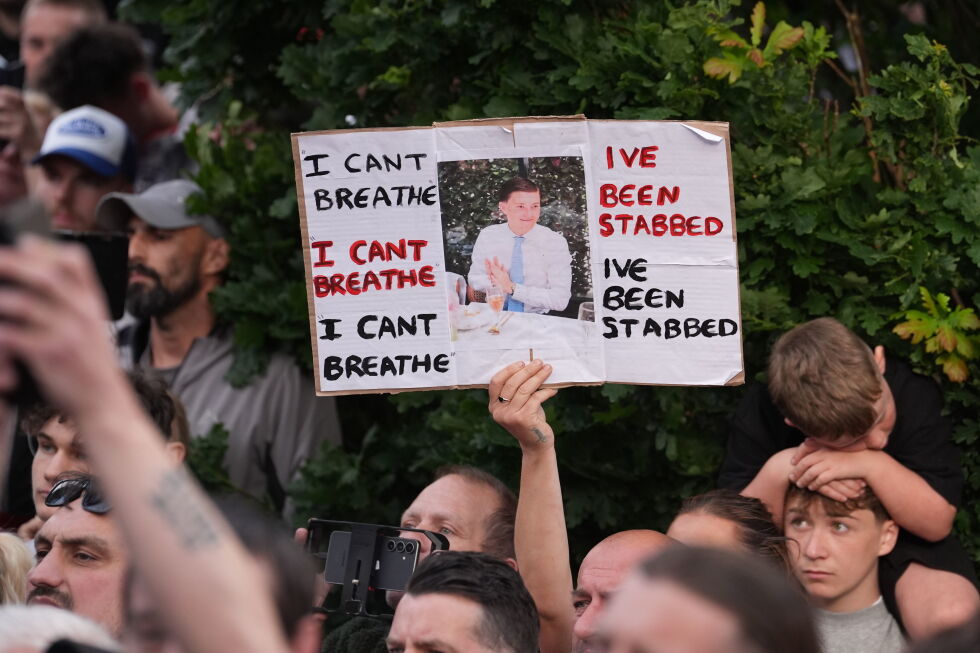
    Body-worn camera footage from the officers’ uniforms documented Nowak’s final minutes alive, showing the teenager in handcuffs as he told the responding officers he had been stabbed and was struggling to breathe. When the footage was made public, it sent shockwaves across the United Kingdom, drawing widespread condemnation of the officers’ response.

    The Independent Office for Police Conduct (IOPC), the national body that oversees allegations of police misconduct in England and Wales, confirmed that the two officers are suspected of violating multiple professional conduct standards. Alleged breaches include failures in meeting core duty and responsibility requirements, inappropriate use of force, and conduct that brings disrepute to the police service. The watchdog is also formally examining whether the officers’ decision to treat Nowak as a suspect rather than a victim was shaped by racial or religious prejudice stemming from Digwa’s false claim.

    Derrick Campbell, IOPC’s director of engagement, emphasized that the launch of an investigation does not guarantee disciplinary action will follow the probe. “At the end of our investigation, we will decide whether any officers should face disciplinary proceedings,” Campbell stated in an official release.

    The tragedy has already become a flashpoint for political unrest in the region. Following Digwa’s murder conviction last month, where he was sentenced to a minimum of 21 years in prison, far-right activists and politicians seized on Nowak’s death to push unsubstantiated claims that the British justice system holds inherent bias against white people. The rhetoric erupted into violent public disorder in Southampton in the wake of the sentencing, leaving communities on edge as the misconduct investigation unfolds.

  • Mexico fans celebrate as team secure World Cup knockout victory

    Mexico fans celebrate as team secure World Cup knockout victory

    Across Mexico and fan hubs around the globe, jubilant supporters of the Mexican men’s national football team have poured into streets, packed stadium viewing parties, and flooded social media with celebrations after a historic milestone. El Tri secured a spot in the 2022 FIFA World Cup Round of 16, marking the first time the squad has claimed a knockout-stage victory at the tournament in 36 years. The last time Mexico advanced past the tournament’s opening knockout round came in 1986, when the country hosted the World Cup and went on to reach the quarterfinals, a drought that had hung over the program for decades. After the final whistle confirmed the result, fans waved green, white, and red flags, chanted team anthems, and set off fireworks in celebration, with many sharing personal stories of waiting their entire lives to see the national side break the long-standing knockout curse. The result sets Mexico up for a clash with one of the tournament’s top remaining contenders in the next round, with millions already gearing up to back El Tri as they chase a deeper run in the World Cup. For long-suffering fans who have watched the team fall in the knockout round time and again since their 1986 run, the win represents a long-awaited breakthrough that has reignited belief in the program’s ability to compete with the world’s best football nations.

  • France looks like World Cup juggernaut with fearsome foursome of Mbappé, Dembélé, Olise and Barcola

    France looks like World Cup juggernaut with fearsome foursome of Mbappé, Dembélé, Olise and Barcola

    As the current World Cup knockout stage approaches, the French men’s national football team has emerged as the overwhelming favorite to claim the global title, powered by an attacking quartet that has left rival coaches and players stunned by their relentless quality and creative chemistry.

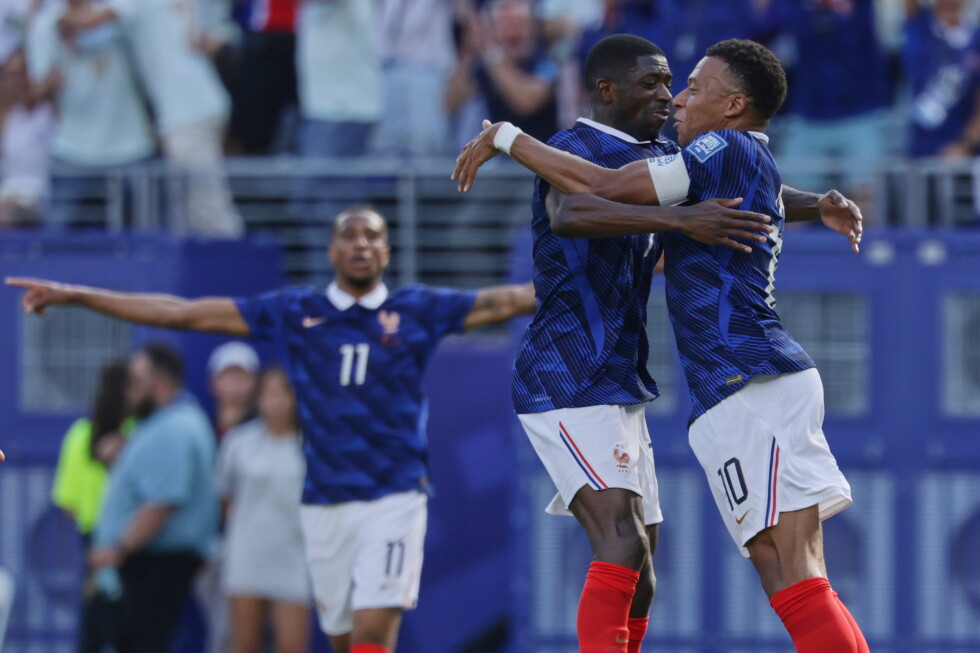
    Kylian Mbappé, Ousmane Dembélé, Michael Olise and Bradley Barcola — the fearsome foursome leading France’s front line — have redefined attacking football at this year’s tournament. Norway head coach Ståle Solbakken put their dominance plainly: this group of forwards is the best the competition has to offer, by a clear margin.

    Their 3-0 victory over Sweden on Tuesday locked in Les Bleus’ place in the round of 16, where they will face Paraguay this weekend. More importantly, the win etched France into World Cup history: they are now the first national team to notch three or more goals in five consecutive World Cup matches. Heading into the knockout round, the side is targeting a spot in its third straight World Cup final, and is widely tipped to unseat defending champion Argentina from the throne.

    French midfielder N’Golo Kanté acknowledged the team’s depth of talent, but emphasized the side remains grounded. “There is something that we cannot hide, that we have a lot of quality in the team,” he said. “But I think it’s the same for many other teams. We cannot see ourselves too beautiful or too strong.”

    France’s tournament form so far has been nearly unbeatable: the side holds a 4-0 record, having outscored all group stage opponents by a lopsided 13-2 margin. This run follows a familiar pattern of French success at recent World Cups: the side claimed the 2018 title with a win over Croatia, before falling to Argentina in a penalty shootout in the 2022 final.

    The individual statistics of France’s attacking stars tell a story of their dominance. Mbappé, who notched his second brace of the tournament against Sweden, now sits level with Argentina’s Lionel Messi atop the tournament goal-scoring chart with six goals. Mbappé’s career World Cup goal total now stands at 18 in just 18 matches, pulling him within one of Messi’s all-time career record of 19 goals across 29 matches. Dembélé trails just behind with four tournament goals, good for fourth place league-wide. Olise leads the entire tournament in assists with five, while Mbappé and Dembélé each add two, and Barcola has chipped in one goal and two assists of his own.

    Mbappé said he remains focused on proving his quality on the sport’s biggest stage. “I know that I do have qualities but I do have to show them on the largest stage that is the World Cup,” he said.

    France’s attacking success comes as much from tactical setup as individual talent. Manager Didier Deschamps deploys a fluid 4-2-3-1 formation that gives his forwards freedom to rotate position rather than staying pinned to fixed spots on the pitch. Swedish forward Viktor Gyökeres noted that this flexibility makes the attack incredibly difficult to defend. “They come in different positions. They’re not static,” he explained. “They know each other well in how they move and their connection between each other.”

    Deschamps himself has been a constant anchor for French soccer success for more than a decade. A captain of France’s 1998 World Cup-winning side, Deschamps took over as senior team manager in 2012, and announced earlier this year that he will step down from his role this summer following the conclusion of the tournament. The win against Sweden marked his 18th World Cup victory as a manager, a new tournament record.

    Under Deschamps’ leadership, France has evolved into a more attack-minded side than in past successful runs. “We’re very much more offensive than in 2018 and in 2022,” Mbappé said. “It’s the continuity of what we started to build throughout Didier Deschamps’ tenure over the last 14 years. You can see the evolution, his personal touch, and the arrival of a lot of young talent.”

    This consistent success has lifted France to the top of FIFA’s global rankings, overtaking Argentina for the number one spot. All four of France’s wins at this tournament have come against ranked opposition: 18th-ranked Senegal, 63rd-ranked Iraq, 21st-ranked Norway, and 37th-ranked Sweden. Next up for Les Bleus is 34th-ranked Paraguay in the round of 16, with potential matchups against sixth-ranked Morocco or 30th-ranked Canada in the quarterfinals, and a potential semifinal showdown with third-ranked Spain.

    Opposing managers have echoed the widespread praise for France’s standout form. Sweden head coach Graham Potter called France the best team he has seen at this year’s tournament, noting the multiple problems the side’s attack creates for defenders. “Because of the players in the wide areas, sometimes you have the double up on them because they could just beat you in 1-v.-1 situations,” he explained. “And then they’ve got not a bad striker in the middle. So you’ve got problems here and you’ve got problems here. And then it can also build up with good control, strong center backs, so direct football isn’t easy against them either.”

    If France reaches the final once again, they will make history as just the third men’s national team to reach three consecutive World Cup finals, joining West Germany (which achieved the feat between 1982 and 1990) and Brazil (between 1994 and 2002). For French players who were part of the 2022 heartbreaking final loss, this tournament is a chance to rewrite that narrative.

    “We have really good memories, also bad ones with what happened the last time that we played the World Cup,” said midfielder Aurélien Tchouaméni, a member of the 2022 French squad. “Everybody is ready to fight and to give everything to make sure that all the French people are going to be proud of us.”
  • Prosecutors investigating Italy defender Bastoni for alleged child prostitution

    Prosecutors investigating Italy defender Bastoni for alleged child prostitution

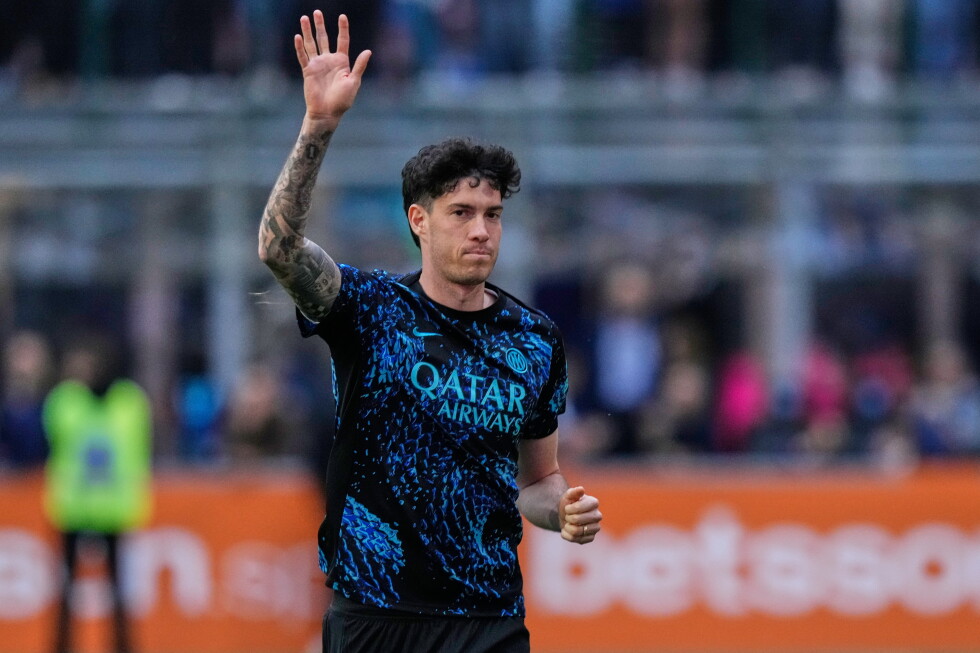
    MILAN – In a stunning development that has sent shockwaves through Italian soccer, Alessandro Bastoni, the starting center-back for both Serie A powerhouse Inter Milan and the Italian men’s national team, is currently facing formal investigation over allegations of child prostitution. The probe forms one strand of a broader, ongoing investigation led by the Milan Public Prosecutor’s Office into a suspected criminal ring that provides paid escort services.

    Prosecutors have formally summoned Bastoni to appear for questioning this Friday, according to official documents related to the inquiry. The core allegation against the 27-year-old player claims he paid for sexual activity with a minor back in June 2020. The individual involved was 17 years old at the time of the alleged incident; under Italian law, any paid sexual encounter with a minor qualifies as child prostitution by legal definition.

    Salvatore Scuto, Bastoni’s legal representative, has issued a forceful denial of all claims against his client. Speaking to reporters, Scuto stated that the athlete is deeply distressed by the allegations, adding: “I can rule out that he ever engaged in paid sexual relations, let alone with minors.”

    Leading Italian sports daily Gazzetta dello Sport has confirmed that the underage individual at the center of the allegation has already been interviewed by investigators. The outlet reports that while the young woman has acknowledged staying overnight at Bastoni’s residential property, she has explicitly denied any sexual encounter with the soccer star.

    The latest controversy caps a turbulent stretch of personal and professional challenges for Bastoni. Just a few years ago, he was a key part of the Italian squad that won the 2020 UEFA European Championship, but his national team fortunes took a major downturn during a decisive 2022 FIFA World Cup qualifying playoff match against Bosnia and Herzegovina. Bastoni was sent off early in that contest, and Italy eventually lost the match in a penalty shootout, failing to qualify for the World Cup for the third consecutive tournament.

    More recently, Bastoni was the target of widespread online harassment from fans and critics after a high-profile incident in a February 14 league match between Inter and its long-time rival Juventus. In that game, Bastoni was accused of deliberately diving to draw a red card for a Juventus player, a tactic that ultimately worked for Inter but sparked fierce backlash across social media, with the player and his family receiving widespread abuse online.

    As of this report, neither Inter Milan nor the Italian Football Federation (FIGC) has issued an official statement on the ongoing investigation against Bastoni.

  • Beccacece reign as Ecuador manager  over after exit

    Beccacece reign as Ecuador manager over after exit

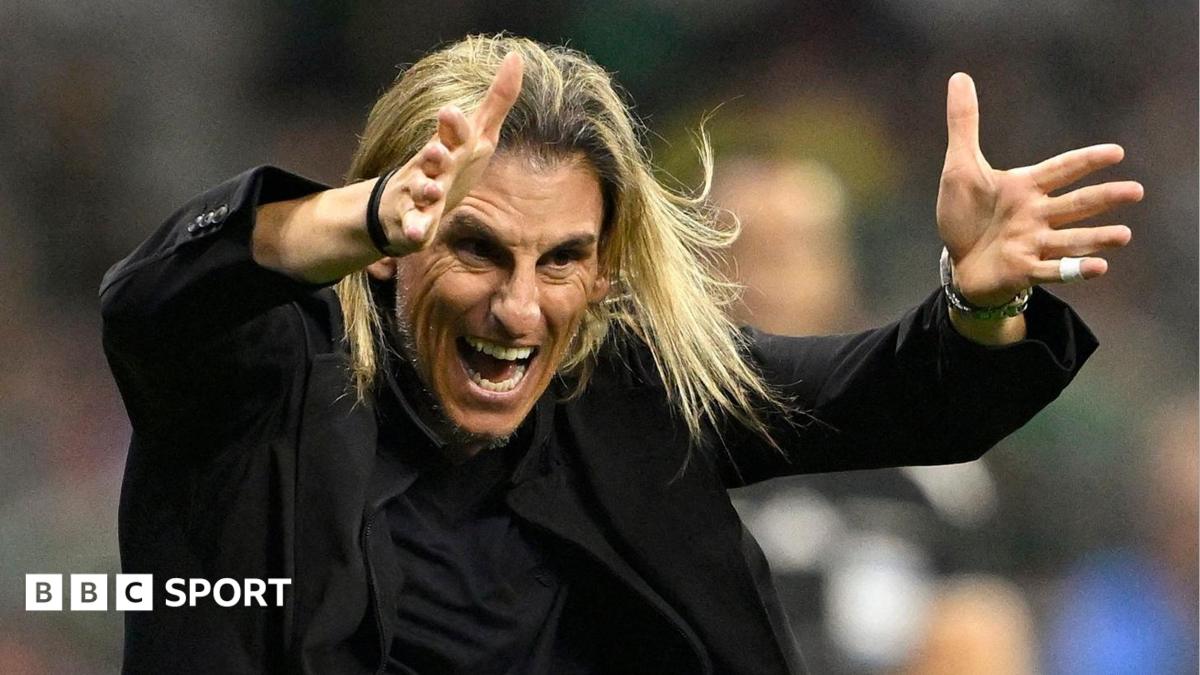
    Just days after Ecuador’s 2026 FIFA World Cup campaign came to an abrupt end with a 2-0 Round of 32 defeat to co-host Mexico, national team manager Sebastian Beccacece has confirmed he will depart his post, bringing a close to his 11-month tenure leading the South American side.

    Appointed to the role in August 2024, Beccacece originally signed a contract that tied his term specifically to the conclusion of the 2026 World Cup, an agreement that expired once Ecuador exited the tournament. In an official statement following the knockout stage defeat, the Argentine coach acknowledged that the side failed to hit the ambitious target the staff and squad had set before the tournament.

    “I don’t think we were able to achieve the feat we promised: to make this the best World Cup ever for Ecuador. It’s my turn to say goodbye. That’s why I have to leave,” Beccacece said. He added that he would have been open to extending his tenure, citing the strong support he received from both players and the Ecuadorian Football Federation’s executive team during his time in charge. “But I understand how this works and it hurts, but I think the decision was clear,” he noted.

    Beccacece’s departure makes him the seventh national team manager to step down following their team’s elimination from this year’s World Cup. He joins a growing list of departing coaches that includes Marcelo Bielsa of Uruguay, Steve Clarke of Scotland, Miroslav Koubek of the Czech Republic, Ronald Koeman of the Netherlands, Sabri Lamouchi of Tunisia, and Hong Myung-bo of South Korea.

    Beccacece’s tenure oversaw a standout qualifying campaign that saw Ecuador finish second in the South American qualifying standings behind only Argentina, booking their ticket to the 2026 finals. Once in the tournament, Ecuador’s Group E campaign got off to a rocky start: they dropped a narrow 1-0 opening match defeat to Ivory Coast, followed by a goalless stalemate against Curacao that left their knockout stage hopes hanging by a thread heading into the final group fixture against four-time champions Germany.

    Against all odds, the Ecuadorian side pulled off one of the most memorable comeback wins of this year’s group stage. After falling behind early to Germany, they fought back to secure a 2-1 victory that earned them a spot in the knockout rounds as one of the best third-placed finishers. That result marked only the second time in Ecuador’s history that the national side advanced past the group stage of a World Cup.

    The comeback win set up a Round of 32 clash with tournament co-host Mexico, but Beccacece’s side could not replicate their earlier magic. The Argentine coach admitted his team was thoroughly outplayed in the first half, as Mexico’s Julian Quinones and Raul Jimenez both found the net before the halftime break, putting Mexico firmly in control. Though Ecuador pushed for a response after the break, they could not find the back of the net to spark a second consecutive comeback.

    “We fought back, but we couldn’t find the goal that would have given us a boost,” Beccacece said of the defeat. The win for Mexico advances them to the Round of 16, where they are now set to face a potential match against tournament favorite England.

  • Police conduct raids in Germany to investigate possible corruption at Euro 2024

    Police conduct raids in Germany to investigate possible corruption at Euro 2024

    BERLIN — In a high-profile development that has sent ripples through European soccer, German law enforcement carried out a series of coordinated raids across the country on Wednesday, launching an official investigation into alleged corrupt practices tied to the upcoming 2024 European Championship.

    Multiple premises connected to the tournament were targeted during the operation, including the central headquarters of the German Football Association (DFB), Germany’s top governing body for the sport, according to initial reporting from German tabloid Bild. The inquiry specifically centers on Euro 2024 GmbH, the event’s official organizing body, which operates as a joint venture between the DFB and European soccer’s governing body UEFA.

    In a formal joint statement released Wednesday, the Bochum Public Prosecutor’s Office and the North Rhine-Westphalia State Office of Criminal Investigation (LKA NRW) outlined the core of the allegations. Investigations focus on claims of unapproved improper benefits received by a former employee of one of Euro 2024’s host cities. These benefits reportedly include, among other perks, complimentary access to a professional soccer match, provided by senior officials from the tournament’s organizing committee.

    Prosecutors further detailed that organizing officials are accused of granting host cities unprecedented exclusive first-refusal rights to high-demand match tickets. Multiple host cities took advantage of these allocations, and the tickets were distributed for a range of unapproved uses, authorities say.

    Bild, which first broke details of the scale of the raid operation, confirmed that Wednesday’s early-morning action deployed more than 150 law enforcement officers across multiple search sites. The investigation itself targets two suspects: a 66-year-old German citizen and a 46-year-old French national, who are both suspected of involvement in bribery schemes. The reporting adds that the probe has uncovered evidence suggesting thousands of Euro 2024 tickets may have been improperly diverted and allocated internally to hand-picked guests rather than sold to the general public as intended.

    Alongside the DFB headquarters, search warrants were also executed at city hall buildings and municipal government offices across multiple host cities for the tournament, according to Bild’s reporting.

    Prosecutors emphasized that as of Wednesday, the two named suspects have not yet been able to respond publicly to the allegations brought against them. Consistent with German legal procedure, the principle of presumption of innocence remains in effect for all parties involved in the ongoing investigation.

    This developing story is part of Associated Press coverage of international soccer, with full updates available on the AP News soccer hub.

  • Art and heritage converge to renew cultural dialogue

    Art and heritage converge to renew cultural dialogue

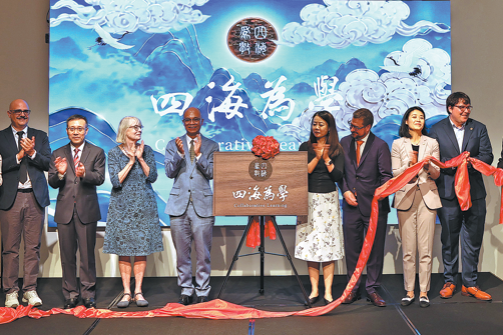
    Two iconic coastal metropolises separated by the vast Pacific Ocean — Shanghai on the banks of the Huangpu River and New York along the Hudson Estuary — are rekindling people-to-people connections through a new initiative that weaves together art, heritage and academic exchange to renew cross-cultural dialogue between China and the United States. On Monday, the landmark gathering titled “From Shanghai to New York: A Century-Long Cultural Journey Inspiring New China-US Dialogue” opened at the China Institute of America in New York, drawing dignitaries, emerging young scholars, and artists from both nations to explore intersections of technology, traditional art and contemporary philosophy.

    The event marks a core component of the third season of the “Bund: A Global Urban Humanities Dialogue” series, designed to expand mutual understanding between younger generations of Chinese and Americans through open intellectual exchange and collaborative cultural practice. In his remarks at the opening, Yu Yougen, education counselor for the Chinese Consulate General in New York, framed the gathering as far more than a routine cross-border academic meeting. He emphasized that it represents a meaningful cultural exchange that bridges decades of shared history and paves the way for future people-to-people connections. “Shanghai and New York, two internationally renowned cities shaped by water, have maintained close and fruitful exchanges for decades,” Yu noted. “From the Huangpu River to the Hudson River, what crosses the Pacific is not only exhibitions and conversations, but also the shared aspiration of people from both countries to learn from each other.”

    Zhang Huihong, deputy chair of the University Council of East China Normal University (ECNU) based in Shanghai, echoed this sentiment, pointing out that the two cities share far more than their status as leading global economic and cultural hubs. Despite being thousands of miles apart, both have cultivated a defining city spirit rooted in radical openness and radical inclusiveness. She explained that the collaborative event grew from this shared identity, with organizers aiming to unlock new avenues for sustainable civil society exchange between the two nations through joint creative projects and transoceanic dialogue.

    Running from July 9 to 30 at the China Institute’s on-site gallery, a central companion exhibition will feature more than 100 original works created by ECNU students and faculty. The show draws direct inspiration from a landmark moment in China-US cultural history: Peking Opera master Mei Lanfang’s groundbreaking 1930 tour of the United States, which introduced traditional Chinese theatrical art to mainstream American audiences for the first time. Spanning multiple mediums including traditional prints, oil paintings, hand-drawn illustrations, digital animations, and even AI-generated contemporary pieces, the exhibition reimagines traditional Chinese art and intangible cultural heritage through the lens of 21st-century design thinking and emerging technology.

    Wei Shaonong, a professor in ECNU’s School of Design who leads the exhibition’s curatorial team, explained that the program encourages emerging Chinese creators to draw from the deep well of traditional Chinese cultural heritage while leaning into contemporary artistic practices. “Traditional Chinese culture contains rich artistic elements, and we hope students can reinterpret them through today’s artistic language and creative approaches,” Wei said. Reflecting on Mei Lanfang’s enduring influence on cross-cultural communication, Wei noted that the 1930 tour holds vital lessons for modern cultural exchange. At a time when Peking Opera was entirely unfamiliar to most American audiences, Mei achieved enormous success because he recognized the importance of framing art through a contextual and narrative language that new audiences could connect with. This lesson remains relevant today, Wei emphasized: effective cultural exchange requires translation not just of spoken language, but of cultural context and storytelling to build genuine connection.

    Monday’s opening event also marked the official launch of Collaborative Learning, an in-person intercultural roundtable initiative based in New York, founded by Paul J. D’Ambrosio, a professor of Chinese philosophy at ECNU. D’Ambrosio emphasized that cultural exchange thrives through diverse forms of engagement. While rigorous academic research and focused expert discussions remain core to cross-border intellectual exchange, he argued that there is a growing need for open, accessible forms of communication that bring broader groups of people from both nations into the conversation.