博客

  • Watch: Two people climb to highest point of Empire State Building

    Watch: Two people climb to highest point of Empire State Building

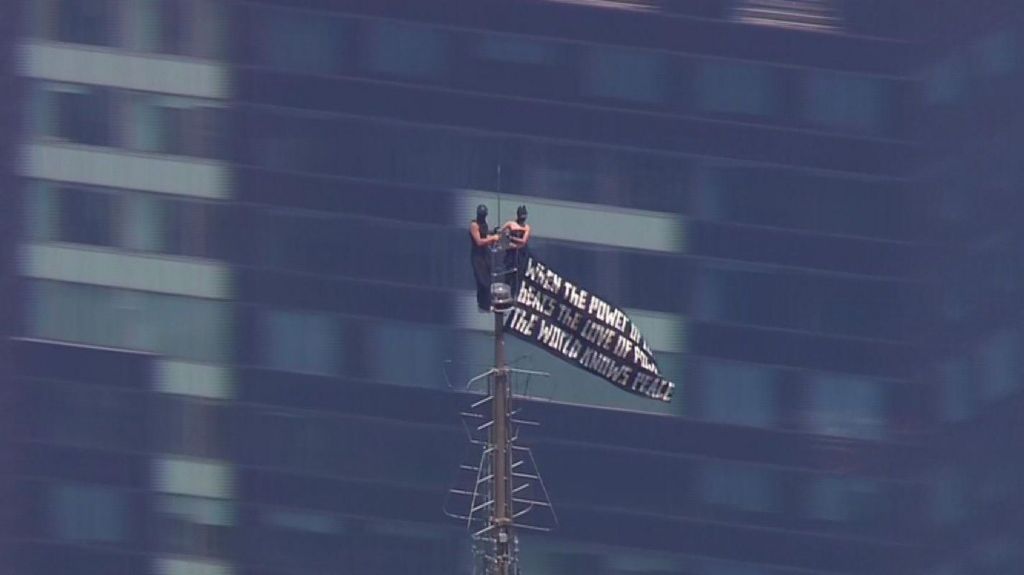
    In an incident that has drawn widespread public attention, two unauthorized climbers successfully reached the 1,454-foot (443-meter) summit of the iconic Empire State Building, one of New York City’s most recognizable landmarks. According to on-site observations, the pair remained at the highest point of the skyscraper for a minimum of 10 minutes, during which they unfurled a large banner to display their message. After completing their demonstration, the climbers voluntarily made their way back down the structure.

    Local law enforcement and building management have not yet released additional details about the identity of the two individuals, the full content of the banner they displayed, or what prompted the unsanctioned climb. The Empire State Building, a 102-story Art Deco icon that draws millions of tourists from across the globe every year, has strict security protocols in place to prevent unauthorized access to its upper spire and outdoor observation areas. This unapproved ascent has already sparked discussions around urban exploration culture and landmark security measures in major metropolitan centers.

  • Two people climb to top of NYC’s Empire State Building

    Two people climb to top of NYC’s Empire State Building

    In an audacious and unexpected stunt that stunned onlookers in New York City on Wednesday, two individuals pulled off one of the most high-profile unsanctioned climbs in recent memory, ascending all the way to the peak of Manhattan’s iconic Empire State Building. Upon reaching the top of the 1,454-foot landmark, the pair immediately unfurled a massive cloth banner emblazoned with a pacifist message: “When the power of love beats the love of power the world knows peace”.

    After posing together at the highest point of the building’s spire, the two climbers made their way down to a smaller observation platform just below the peak. It was there that witnesses and captured footage show one person dropping to one knee in a clear gesture of marriage proposal to the other. Following the proposal, the couple shared a kiss before continuing their controlled descent down the building’s exterior.

    Authorities confirmed the pair remained at the top of the 102-story skyscraper for no less than 10 minutes before beginning their climb down. As of this report, the New York Police Department has declined to release any additional details about the incident, the identities of the two climbers, or any potential charges that may be filed, when reached for comment by the BBC. The incident has already sparked widespread discussion online about the audacity of the stunt, as well as questions about security protocols at one of New York City’s most visited tourist landmarks.

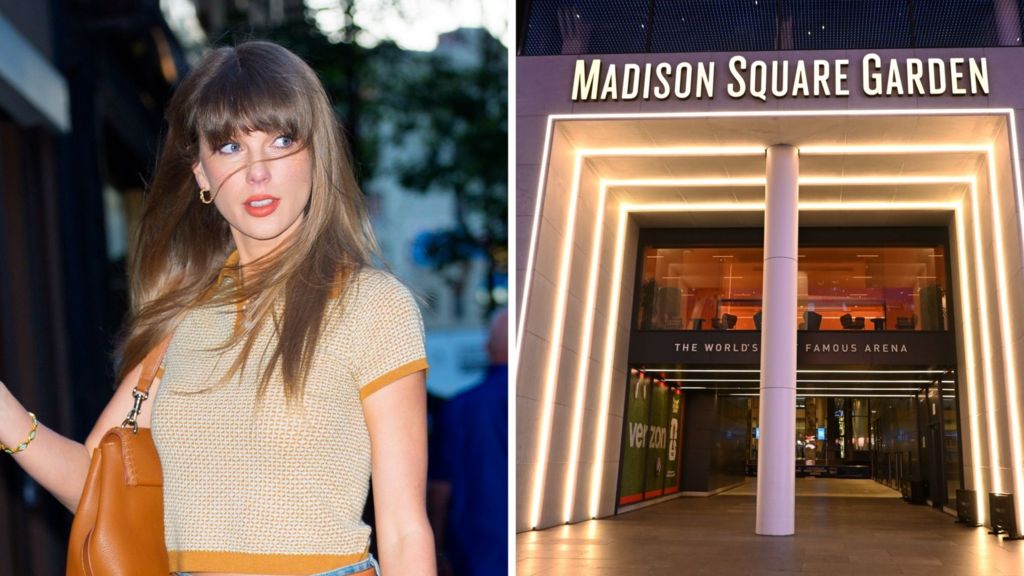
  • Is Taylor Swift really getting married at Madison Square Garden?

    Is Taylor Swift really getting married at Madison Square Garden?

    Speculation has erupted across social media and entertainment circles this week surrounding a potential high-profile wedding between pop superstar Taylor Swift and NFL star Travis Kelce, with the iconic Madison Square Garden in Manhattan named as the rumored venue. Unconfirmed reports have pointed to a possible ceremony taking place over the upcoming Fourth of July holiday weekend, a timing that has sent fans and celebrity gossip outlets scrambling for more details.

    As of press time, neither Swift’s representatives nor Kelce’s team have issued an official statement confirming or denying the engagement or wedding plans. The long-running arena, which has hosted countless of Swift’s record-breaking tour stops over her career, would mark a fittingly grand location for a wedding between two of the biggest names in American entertainment. The pair have been linked romantically since last year, with their relationship drawing consistent media attention from both entertainment and sports audiences.

    Fans have already taken to social platforms to share theories, reaction memes, and hopeful messages for the couple, while entertainment journalists continue to pursue confirmation from insider sources. Until an official announcement is made, the rumor remains unsubstantiated, but that has not slowed the wave of public interest in the potential celebrity event.

  • Musk remaking the world like Ford – but far more dangerously

    Musk remaking the world like Ford – but far more dangerously

    Elon Musk, a figure who briefly claimed the title of the world’s first trillionaire before returning to mere billionaire status, has built a career defined by exceptionality. Unlike most industry leaders, he has not one but two globally transformative pioneering technology companies — Tesla and SpaceX — and has openly discussed plans to establish a permanent human settlement on Mars since two decades ago. He also upends standard CEO communication norms, posting multiple times daily to his own social platform X. In 2025, he drew widespread controversy for a public gesture widely interpreted as a Nazi salute in Washington D.C., and that same year, he took a high-level role in the U.S. federal government with no prior formal political experience, all while continuing to expand his sprawling business empire.

    During his short, turbulent tenure leading the newly created Department of Government Efficiency (DOGE), Musk framed governance as a technical problem of data aggregation and pattern recognition, focused on generating algorithmically optimized policy outcomes. Critics argue this approach overlooked a fundamental reality: millions of real people, entitled to equal treatment and due process, were profoundly impacted by his top-down, desk-bound decisions.

    Musk’s outsize influence has made him a global household name and one of the most powerful individuals on Earth, leading many observers — including journalist Cory Doctorow — to question whether he has become uniquely dangerous, and where he fits alongside other widely criticized West Coast tech billionaires, often labeled “broligarchs,” such as Amazon’s Jeff Bezos, Palantir’s Alexander Karp, and Meta’s Mark Zuckerberg. A new carefully researched, thought-provoking book from Canadian political economist Quinn Slobodian and technology journalist Ben Tarnoff, titled *Muskism: A Guide for the Perplexed*, sets out to answer these questions by dissecting both Musk’s personal background and the vast systemic power he has accumulated.

    The term “Muskism” draws a deliberate parallel to “Fordism,” the socioeconomic model named for early 20th century industrialist Henry Ford, whose mass production system reshaped American government and society for 40 years starting in the 1930s. Slobodian and Tarnoff argue that Musk, alongside other leading tech titans, is constructing a sweeping new industrial framework that is reshaping modern society in a fundamentally different direction than Fordism. While Ford’s industrial model formed the foundation for mass employment, living wages, robust social safety nets, and widespread consumer prosperity in post-World War II America, Musk’s corporate empire aims to build an entirely new socioeconomic order: one that is hyper-connected, pervasively surveilled, anti-liberal, and insular.

    Under Muskism, the authors contend, unelected tech oligarchs collaborate with national governments to deploy advanced technology to erode democratic institutions, deepen social divisions, entrench rigid hierarchical power structures, and insulate elite actors from accountability. To understand the ideological roots of this system, they trace it back to Musk’s formative upbringing.

    “To understand the world that Musk aims to build, we have to understand the worlds that built Musk,” the authors write. The first and most formative of these worlds was 1970s South Africa, where Musk was born and raised in a wealthy white family during the final years of the apartheid regime. The authors argue that “South Africa was the cradle of Muskism,” teaching Musk the core ideology of “fortress futurism”: the belief that technology can be used to entrench individual and elite self-reliance in an inherently hostile world. The systemic racism that structured every layer of apartheid society, where state and private business colluded to entrench white privilege through complex bureaucratic rules and discriminatory legislation despite international condemnation, shaped Musk’s worldview long before he left the country.

    A bookish early adopter of video games, science fiction, and emerging technology, Musk emigrated to Canada in 1989 at age 17 to avoid mandatory military service in the apartheid military. Contrary to popular narratives that he left his apartheid-era beliefs behind, the authors argue he carried those ideological core assumptions with him. By 1992, Musk had moved to the United States to study physics and economics at the University of Pennsylvania, and by 1995 he had settled in Palo Alto to launch his first tech startup, Zip2. He went on to found X.com, which later merged with Peter Thiel’s PayPal to form the digital payment giant. By 2002, he had amassed his first fortune and founded SpaceX; he joined Tesla as an early investor and lead figure in 2004, helped found OpenAI in 2015, co-founded brain-computer interface firm Neuralink in 2016, launched tunneling venture the Boring Company in 2017, acquired Twitter and rebranded it as X in 2022, launched AI firm xAI with its Grok chatbot in 2023, and took the helm of DOGE in 2025 before splitting with then-President Donald Trump. All of these achievements came before Musk turned 55, marking an extraordinary pace of expansion that has left a white South African immigrant at the pinnacle of American political and economic power, with influence spanning the globe.

    Unlike existing biographies of Musk — ranging from the celebratory authorized accounts to Walter Isaacson’s widely cited 2023 definitive biography and Jacob Silverman’s 2025 critical work *Gilded Rage: Elon Musk and the Radicalization of Silicon Valley* — Slobodian and Tarnoff frame Musk as a distinct figure among big tech leaders, shaped by his unique apartheid-era South African upbringing that allowed him to accumulate social power in ways unmatched by his peers. “He sells the fantasy that, in an increasingly unstable world, both states and individuals can fortify their self-reliance by plugging into his infrastructures,” the authors write. “The paradox is that, in doing so, you become reliant on him.”

    They define Muskism as a cohesive system that blends proven commercial technologies, aspirational technological prophecies, cozy public-private partnerships, and viral online messaging designed to market and legitimize Musk’s sprawling empire. Together, these elements advance a project the authors call “tech-sovereignty”: a framework where cutting-edge technology developed by private corporations allows national governments and their favored demographic groups to project power globally while reducing vulnerability to external shocks or perceived rivals. This system secures American economic dominance in a post-free-trade era where China, Russia, and Iran are framed as systemic threats, and it operates largely out of public view even as it reshapes the lives of people around the world.

    At the core of Musk’s empire are three interconnected assets: SpaceX, Tesla, and X. SpaceX and Tesla pioneered new commercial technologies in the U.S. private sector — reusable rockets, low-orbit satellite networks, and mass-market electric vehicles — with Musk driving relentless innovation while raising massive capital through skillful hype and what the authors call “future fabulation.” He built vertically integrated conglomerates to reduce dependence on external suppliers; for example, Tesla now manufactures not just vehicles but also large-scale batteries and renewable energy storage systems, resembling the large Fordist conglomerates of the mid-20th century, but without the presence of large unionized workforces that defined the earlier era.

    Musk’s willingness to partner closely with the U.S. national government is most visible in SpaceX, which has become a preferred federal supplier, contractor, and partner with almost no competitors. Most notably, the U.S. military now relies on SpaceX’s Starlink low-orbit satellite internet system for frontline operations, pointing to a far more intimate integration of government and big tech than existed during Ford’s era. “State symbiosis,” rather than open market competition, is Musk’s preferred operating model when he can secure it. For Tesla, the Obama administration’s concerns about Chinese economic competition and climate change allowed Musk to secure massive federal subsidies after the 2008 financial crisis, giving him a decisive advantage over legacy American automakers that had barely entered the electric vehicle market at the time.

    From 2017 onward, Musk became increasingly active on what was then Twitter, using the platform first to promote his companies and later to broadcast his increasingly right-wing political views, which have aligned closely with the resurgence of global right-wing populism. After acquiring Twitter and rebranding it as X in 2022, he began spreading rhetoric about a so-called “woke mind virus” and has since posted repeated incendiary comments targeting immigrants, LGBTQIA+ people, and promoting false claims about declining white birth rates and the supposed collapse of Western civilization.

    The book devotes specific analysis to Neuralink, Musk’s brain-computer interface venture, and xAI, his artificial intelligence firm, framing these projects as core to Musk’s long-term vision. In a 2016 conversation with OpenAI CEO Sam Altman, Musk argued that merging humans and AI into a single symbiotic system would eliminate the risk of rogue AI, because “we are the AI collectively.” Musk envisions a future where digital and biological systems merge, raising critical unanswered questions about who will control the resulting cognitive and informational ecosystem. While this vision can sound like a fanciful, villainous plot straight out of a spy film, Slobodian and Tarnoff emphasize that Musk’s proven business acumen and access to state support have allowed him to turn this specific ideological vision into a concrete, functioning system that already shapes global society.

    In computer science terms, Musk is building an all-encompassing “superset” of interlocking infrastructure, spanning energy, transportation, space, communication, and artificial intelligence. Unlike other tech leaders such as Bill Gates, Alexander Karp, and Peter Thiel, Musk has never published a formal manifesto laying out his ideological vision, but his consistent pattern of expansion makes clear he is driven by a clear mission. It remains unclear how much more power Musk will accumulate, or what new technologies he will bring to market with continued state backing, but critic Nick Srnicek argues that the apparatus of Muskism is already a formidable, influential force.

    This new book offers critical insight into how one individual is working to reshape the world in his own image, without any input or consent from the vast majority of people affected by his decisions. It makes a clear case that no democratic society should allow a small handful of unelected individuals to accumulate the level of power that Musk currently holds. Just as the global community rejects the idea that millions should be left to die of deprivation, the authors argue, we must oppose the idea that unelected oligarchs get unilaterally to determine the future of global society. This commentary is adapted from an article by Noel Castree, Adjunct Professor of Society & Environment at the University of Technology Sydney, republished from The Conversation under a Creative Commons license.
  • Monaco authorities detain then release a person in their probe of this week’s explosion

    Monaco authorities detain then release a person in their probe of this week’s explosion

    Monaco, the tiny Mediterranean principality famed for its affluent population and low-profile luxury, is at the center of an escalating international investigation after a late-Monday explosion at a residential building entrance that authorities have labeled an attempted assassination. The blast wounded three members of a targeted family, including a high-profile Ukrainian construction tycoon with documented ties to Russia, leaving one victim in critical condition and prompting cross-border law enforcement cooperation.

    In an official update Wednesday, Monaco’s prosecutor general’s office confirmed that one foreign national suspect had been taken into custody earlier that morning for additional investigative checks. The detainee was released by the afternoon, however, with authorities offering no further details on the individual’s identity or the specific grounds for their initial detention. The investigation itself remains active and progressing “very actively,” according to the official statement.

    Monaco authorities have not publicly confirmed the identities of the three injured victims, but multiple independent media reports have named Vadym Yermolaiev as the adult male hurt in the blast. Yermolaiev, who renounced his Ukrainian citizenship nearly 10 years ago, was hit with new Ukrainian sanctions in 2023 over his ongoing business and political links to Russia. Alongside the tycoon, a woman and a young child were also wounded in the explosion.

    As of Wednesday’s update, the child victim has already been questioned by investigators in neighboring France, where the child is receiving medical care. Both Yermolaiev and the second adult victim remain unfit for interview, with one victim in critical condition and still fighting for their life, authorities confirmed. French law enforcement agencies are already supporting the Monegasque investigation, with forensic experts currently conducting detailed analysis of the remaining explosive components to trace the device’s origin and manufacturer. The identity of the person who planned and carried out the attack remains undisclosed.

    To date, there is no definitive information on what motivated the attack or which group or individual ordered the targeting of the family. The incident has however sparked global speculation, given the ongoing geopolitical fallout from Russia’s 2022 full-scale invasion of Ukraine. Western intelligence officials have repeatedly warned that Russia has escalated a long-standing campaign of targeted killings and assassinations of its opponents outside Russian borders since the invasion began. While Ukraine has also carried out targeted attacks against pro-Russian figures during the war, most of these operations have been limited to territory controlled by either Russia or Ukraine.

    The brazen attack has sent shockwaves through Monaco, a small sovereign state that has long prided itself on its safety and status as a haven for global high-net-worth individuals. Monaco’s ruling monarch, Prince Albert II, publicly condemned the incident, calling it “an odious act” and confirming that all of the principality’s public security and emergency services have been fully mobilized to prevent further incidents and support the investigation.

  • Why are World Cup refs giving red cards to players covering their mouths when confronting opponents?

    Why are World Cup refs giving red cards to players covering their mouths when confronting opponents?

    As the World Cup knockout stage unfolds, a landmark new FIFA rule designed to curb hidden on-pitch abuse has already claimed two high-profile victims, just weeks after it was formally implemented for the global tournament. All participating players received clear advance notice of the regulation before kickoff: any athlete who covers their mouth during a verbal confrontation with an opponent will face an immediate red card and ejection from the match, and match officials have been instructed to enforce the change rigorously.

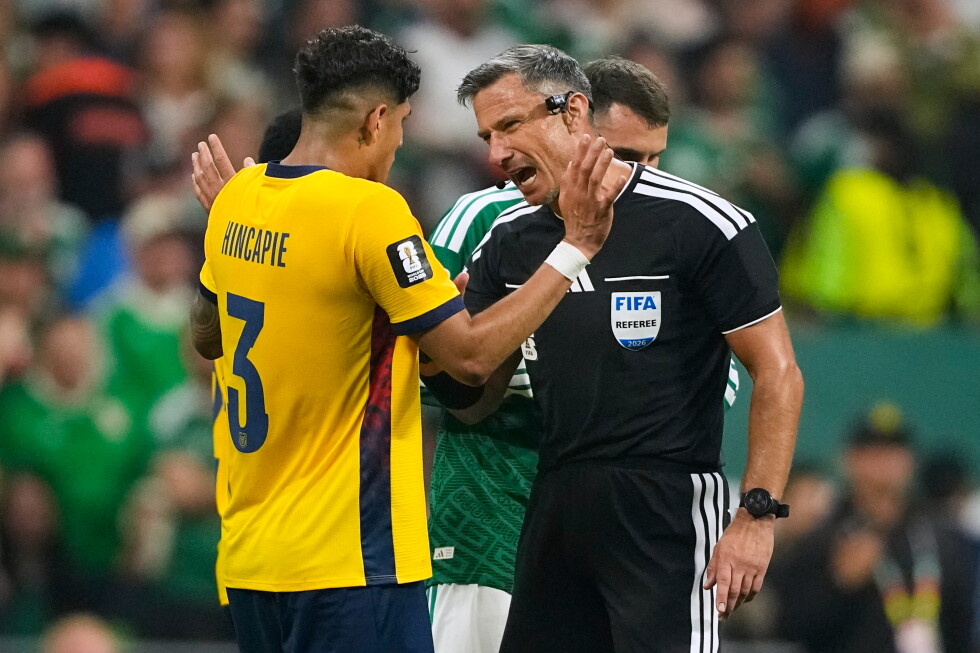
    The most recent violation was recorded on Tuesday night, during Ecuador’s round of 32 clash with Mexico. With the match deep into second-half stoppage time and Mexico already holding a 2-0 lead that would ultimately seal its progression to the next round, Ecuadorian center-back Piero Hincapié was shown a straight red after a verbal altercation with Mexican forward Santi Giménez. The dismissal came too late in the game to alter the final outcome, with the full-time whistle blowing mere moments after Hincapié left the pitch.

    The new rule, widely nicknamed the “Prestianni Law” after the incident that sparked its creation, was created to eliminate the longstanding loophole that allowed players to hurl abusive, discriminatory or offensive language at opponents without being caught on camera or identified by match officials. The push for reform gained momentum after a high-profile controversial incident in a 2024 Champions League fixture, when Benfica winger Gianluca Prestianni was accused of directing a racially charged slur at Real Madrid star Vinícius Júnior while pulling up his jersey to cover his mouth during the confrontation. The accusation was backed by Prestianni’s then-Real Madrid opponent Kylian Mbappé, prompting FIFA president Gianni Infantino to prioritize a rule change to address the issue.

    The International Football Association Board (IFAB), soccer’s global governing body for the Laws of the Game, approved the new regulation during a special emergency meeting held ahead of this year’s FIFA Congress. The change passed with unanimous support from IFAB members, which include senior FIFA officials and representatives from soccer’s four founding British federations. Unlike core mandatory rules of the sport, this new provision grants tournament organizers the autonomy to adopt it at their own discretion, a flexibility that allowed FIFA to roll it out specifically for this World Cup.

    Hincapié is not the first player to fall foul of the new regulation during the tournament. The first red card under the rule was issued to Paraguay midfielder Miguel Almirón during a group stage fixture against Turkey. Almirón was ejected after covering his mouth during a heated confrontation with Turkish defender Mert Mulder. Despite Paraguay securing a 1-0 victory in the match, Almirón was forced to serve a mandatory one-game suspension that ruled him out of the nation’s final group stage match against Australia, and FIFA confirmed the original decision was not eligible for appeal.

    Under standard World Cup regulations, any player who receives a red card is immediately removed from the ongoing match, requires their team to play the remainder of the fixture with 10 players, and must serve a one-match suspension for their team’s next competitive game in the tournament. While the reduced player number puts the affected team at a significant tactical disadvantage for the rest of the current match, the squad can return to a full 11-player starting lineup for the following fixture, barring the suspended athlete.

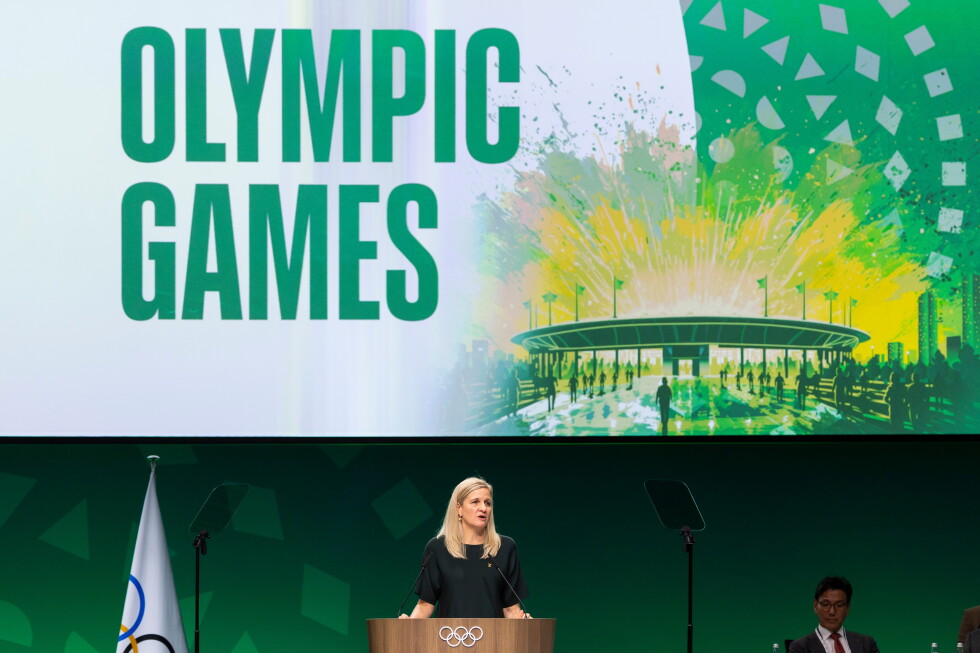
  • IOC says it will not give Olympic team status to Greenland and Faroe Islands

    IOC says it will not give Olympic team status to Greenland and Faroe Islands

    LAUSANNE, Switzerland — The International Olympic Committee announced Wednesday that it will deny a push from Denmark’s national parliament to grant separate, independent Olympic team status to two semi-autonomous Danish territories, Greenland and the Faroe Islands.

    For three decades, the Olympic Charter has held a clear, unchanging requirement for entities seeking official national team recognition: a prospective member must be an independent sovereign state that has received formal recognition from the broader international community. Greenland and the Faroe Islands, which hold broad self-governance powers but remain part of the Kingdom of Denmark, fail to meet this core eligibility threshold, the IOC confirmed in an official statement.

    The IOC noted that this long-standing stance has already been communicated repeatedly and explicitly to all relevant parties over the course of many years. The formal request from Denmark’s parliament was submitted just two weeks ago, and was made public this Tuesday.

    The bid comes on the heels of a recent shift in Danish politics, coming weeks after Danish Prime Minister Mette Frederiksen established a new coalition government following national elections. During her election campaign, Frederiksen made a high-profile pledge to stand with Greenland against a controversial proposal from former U.S. President Donald Trump, who publicly expressed interest in purchasing the Arctic island from Denmark.

    For the upcoming 2028 Summer Olympic Games in Los Angeles, where Trump is set to deliver the official opening declaration, athletes from both Greenland and the Faroe Islands will remain eligible to compete as part of the Danish national Olympic team. Denmark is currently one of the 206 national Olympic committees officially recognized by the IOC.

  • First T20 between England and India abandoned because of rain after Sooryavanshi left out again

    First T20 between England and India abandoned because of rain after Sooryavanshi left out again

    The opening match of a five-match men’s T20 international series between England and India in Chester-le-Street, England, was called off due to persistent rain on Wednesday, robbing spectators of a full contest before the host side could even begin its run chase.

    After winning the pre-match toss and electing to take the batting crease first, India recovered from an early top-order collapse to post a competitive total of 189 runs for seven wickets. Captain Shreyas Iyer led the charge with a 68-run knock, while opening batter Abhishek Sharma contributed a steady half-century of 59 runs. All-rounder Shivam Dube delivered a late, explosive hitting spree, scoring 42 runs off just 21 deliveries including three sixes and two fours to push India close to the 200-run mark. For England, pace bowler Saqib Mahmood turned in the strongest bowling performance, claiming three wickets for 33 runs, including the early dismissal of Indian opener Sanju Samson for just 1 run. India’s innings got off to a rocky start, with Ishan Kishan run out for a duck to leave the side reeling at 6 runs for the loss of two wickets before the middle order rallied to build a commanding total.

    By the time India’s 20 overs concluded, heavy rain had moved into the Durham venue, and the downpour never let up enough to allow England to start its innings. Match officials formally abandoned play at approximately 8:15 p.m. local time. The second fixture of the five-match series is scheduled to kick off in Manchester this Saturday.

    The match carried extra off-field attention surrounding 15-year-old Indian batting prodigy Vaibhav Sooryavanshi, who was left out of the playing XI for a second consecutive tour stop, extending his wait for a senior international debut. Fresh off a dominant 2026 Indian Premier League campaign that saw him score 776 runs across 16 innings and earn the league’s Most Valuable Player award, Sooryavanshi earned a call-up to India’s touring squad for Ireland and England. However, he has not yet been able to unseat established openers Samson and Sharma in the starting lineup.

    India’s decision to hold the teenager out comes on the heels of an unexpected 2-0 series defeat to Ireland, a result that left many fans calling for the dynamic young prospect to get an early opportunity at the senior level. If Sooryavanshi does make his debut later in the England series at his current age of 15 years and 96 days, he will break the record for the youngest player to feature in a top-tier men’s T20 international. The existing mark is held by Ireland’s Joshua Little, who was 16 years and 309 days old when he made his T20 debut. He would also become the youngest player to ever represent India’s senior men’s international team, surpassing the legendary Sachin Tendulkar, who was 16 years and 205 days old when he made his Test debut in 1989. The record for the youngest player in the history of men’s international cricket across all formats still belongs to Pakistan’s Hasan Raza, who was 14 years and 227 days old when he made his Test debut in 1996.

  • Controversial bishops ordained as Pope warns of ‘schism’ in Catholic Church

    Controversial bishops ordained as Pope warns of ‘schism’ in Catholic Church

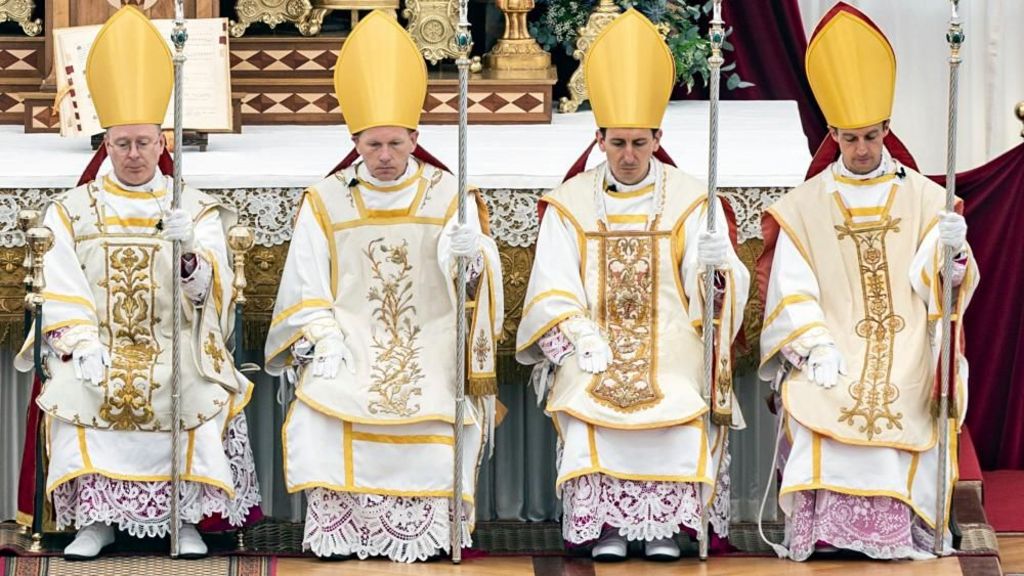
    In the shadow of the snow-dusted Swiss Alps, thousands of pilgrims and worshippers crowded into the tiny village of Écône on Wednesday to witness a dramatic act of ecclesiastical defiance, as the conservative Society of Saint Pius X (SSPX) ordained four new bishops against an explicit, last-minute appeal from Pope Leo XIV.

    The four new bishops — one from the United States, one from Switzerland, and two from France — have long been core members of the SSPX, a traditionalist faction more commonly known as the Lefebvrites, named after the group’s controversial founder, French Archbishop Marcel Lefebvre. For more than half a century, the SSPX has stood in open opposition to the sweeping modernizing reforms enacted by the Vatican during the Second Vatican Council in the 1960s and 1970s, rejecting changes ranging from allowing Mass to be celebrated in local congregational languages (instead of exclusively Latin) to the adoption of more egalitarian, accessible practices within the Church.

    Earlier this week, Pope Leo issued an urgent public appeal to SSPX leadership calling on them to abandon the ordination, warning that proceeding with the ceremony would constitute a deliberate “schismatic act” capable of “tearing the seamless garment of Christ”. Despite the Pope’s warning — which carries profound spiritual weight for the world’s 1.4 billion Catholics, who recognize the Pope as God’s earthly representative — the ceremony moved forward as planned beneath overcast Alpine skies.

    Roughly 15,000 attendees gathered to watch hundreds of robed clergy, bearing candles and wooden crosses and trailing plumes of incense, process through Écône’s narrow village streets to an open pasture where a massive ceremonial tent had been erected. Inside the space, the four bishop candidates prostrated themselves before an altar, their heads resting on red velvet cushions, as traditional organ music filled the tent. All ordination vows were recited in Latin, in keeping with the SSPX’s long-held traditions.

    The standoff marks the latest escalation of a decades-long rift between the SSPX and the Vatican. The group’s last unauthorized episcopal ordination, held in 1988, resulted in immediate excommunication for all four new bishops. While Pope Benedict XVI lifted those excommunications in 2009 as part of an unsuccessful bid to reconcile the faction with the mainstream Church, religious observers widely expect Pope Leo XIV to formally exclude the newly ordained bishops from the Catholic Church in the coming days.

    For many outside observers, the Vatican’s firm opposition may appear disproportionate, but theological experts note that ordaining bishops without papal approval is considered one of the most severe violations of Catholic Church unity, a core tenet of the faith. The rift extends far beyond the debate over Latin-language Mass: the SSPX, founded in 1970 by Lefebvre, rejects nearly all of the Vatican’s modern reforms, including outreach to other faith traditions, formal recognition of religious freedom for non-Catholics, and updated social policy stances. The group even retains the medieval practice of having priests celebrate Mass facing the altar (with their backs to the congregation) rather than facing worshippers, a change the Vatican mandated decades ago.

    In remarks to the gathered crowd in Écône, SSPX Superior General Davide Pagliarani pushed back against accusations that the ordination was intended to widen the schism, arguing that the act was rooted in devotion to the papacy. “We do this precisely because we love the Pope as the vicar of Christ, as the head of the Church,” Pagliarani said. “We don’t want to see the Pope humiliated any longer, standing alongside false shepherds who represent false religions.”

    The open defiance presents a tricky early test for Pope Leo, who has only recently taken the papal throne. While the SSPX remains a small faction globally, counting roughly 600,000 followers across dozens of countries, it maintains an enthusiastic and well-funded base, including a prominent following in the U.S. state of Kansas. The group demonstrated its organizational and financial capacity for Wednesday’s event, live-streaming the ordination on YouTube in seven languages and selling commemorative merchandise to attendees, including branded “Écône 2026” baseball caps and $92 gift packs of labeled Swiss wine, each bottle emblazoned with an illustration of a bishop’s mitre.

    For now, Pope Leo has made his position clear: he considers the new bishops illegitimate, and their ordination a direct attack on Church unity. But analysts suggest the new pontiff may avoid harsher further action, wary that aggressive crackdown could galvanize support for the SSPX and turn a long-running rift into a formal, permanent schism within the global Church.

  • ‘Time for him to pay’ – Carroll calls on Trump to pay $5m after president’s appeal fails

    ‘Time for him to pay’ – Carroll calls on Trump to pay $5m after president’s appeal fails

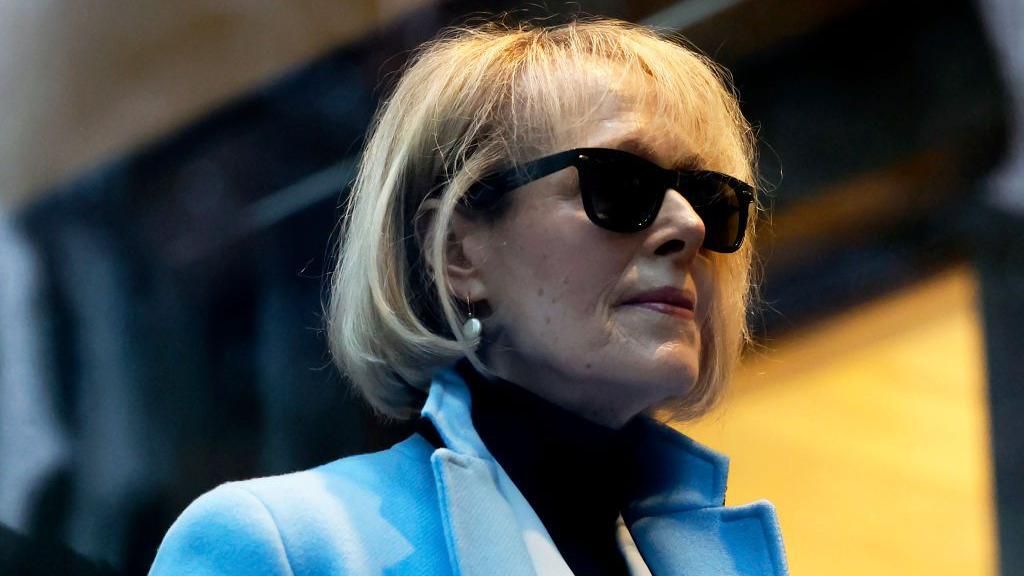
    A years-long legal battle between former advice columnist E. Jean Carroll and former U.S. President Donald Trump has reached a new turning point, after the U.S. Supreme Court rejected Trump’s bid to overturn a civil jury verdict that found him liable for sexual abuse and defamation, prompting Carroll’s legal team to demand immediate payment of the nearly $5.8 million in awarded damages.

    The core of the dispute stretches back to the mid-1990s, when Carroll, now 80, accused Trump of sexually assaulting her inside a fitting room at the luxury Bergdorf Goodman department store in Manhattan. The case moved forward decades later, culminating in a 2023 civil trial in New York, where a jury reached a verdict that Trump was responsible for the abuse, and additionally found him liable for defamation after he publicly labeled Carroll’s accusations a fabricated hoax on his social platform Truth Social. The jury initially awarded Carroll $5 million in compensatory and punitive damages.

    Trump immediately launched a series of appeals to challenge the verdict, arguing that the trial judge, Lewis Kaplan, had incorrectly permitted damaging evidence to be presented to the jury that unfairly skewed the panel’s perception of him. His appeal was rejected by a federal appeals court last year, which ruled that Kaplan had not committed any legal errors that would justify overturning the jury’s decision or ordering a new trial. On Monday this week, the nation’s highest court declined to take up Trump’s appeal for review, closing off this final avenue of appeal for the former president in this specific case.

    Following the Supreme Court’s ruling, Carroll’s legal team filed a new court motion on Tuesday asking a judge to compel Trump to release the full damages payment. With accumulated interest added to the original award, the total sum owed now stands at roughly $5.8 million. In the motion, Carroll’s attorneys noted that they had granted all of Trump’s prior requests to delay payment throughout the appeals process, but that cooperation would end now that all legal challenges had been exhausted. “Given the extraordinary lengths he has taken to avoid such payments and that each of those efforts has been denied in full, that cooperation ends today,” the filing read. “It is time for him to pay Carroll.”

    Carroll’s legal team also added a new piece of evidence to their filing: a Truth Social post Trump published on Monday immediately after the Supreme Court’s decision, in which he repeated his claim that the entire case was a “fake” brought against him through partisan “lawfare.” “Surprisingly, the Supreme Court declined to ‘review’ a fake case brought against me,” Trump wrote, adding that he would continue to fight the “weaponization and lawfare case” including “the ridiculous claim of defamation, with all of my power and strength.”

    This is not the only defamation case Trump has lost to Carroll. In a separate 2024 civil trial, another jury found Trump liable for a second instance of defamation related to additional comments he made about Carroll, awarding her nearly $84 million in damages. Trump also appealed that ruling, but a panel of federal judges rejected his appeal last year.

    The BBC has reached out to Trump’s legal team for a response to Carroll’s latest motion, and has not yet received a comment.

    This legal confrontation comes as Trump, the frontrunner for the 2024 Republican presidential nomination, faces a string of ongoing criminal and civil legal challenges across the country, many of which he has repeatedly labeled as politically motivated witch hunts.