博客

  • Mexico’s legendary rescue brigade heads to Venezuela as earthquakes death toll tops 2,200

    Mexico’s legendary rescue brigade heads to Venezuela as earthquakes death toll tops 2,200

    MEXICO CITY – At Mexico City’s Benito Juárez International Airport, a 39-year-old man clad head-to-toe in vivid orange gear carefully loads 12 cardboard boxes onto a luggage cart. He is no ordinary passenger, and these boxes hold far more than personal belongings: inside are dozens of body bags, preparation for a grim, life-saving mission to one of the worst natural disasters Venezuela has faced in modern history.

    That man is Germán Bello, a volunteer with Brigada Internacional de Rescate Topos Azteca, Mexico’s most celebrated civilian search-and-rescue nonprofit. Born from the rubble of the catastrophic 1985 Mexico City earthquake that killed thousands, the independent organization has built a global reputation for rapid deployment to disaster zones across the world, answering calls no matter the risk.

    Nearly a full week has passed since two powerful earthquakes tore through Venezuela’s Caribbean coastline, leaving a trail of death and destruction. By Wednesday, official government reports put the confirmed death toll above 2,200, with more than 11,000 people injured across the hardest-hit region of La Guaira. As rescue teams from around the world continue to comb through the wreckage of collapsed apartment blocks and family homes, the slim window to find trapped survivors is rapidly closing, and the operation has increasingly shifted toward recovery of the deceased.
    Bello, an electrical engineer who owns a small auto repair shop, declines to say when he will return to Mexico. Along with standard rescue equipment, he carries the body bags to handle the grim aftermath of the quakes. Within the brigade, he goes by the nickname “La Secre” – short for secretary – as he serves as the close second-in-command to the group’s founder, 80-year-old veteran rescuer Héctor “El Chino” Méndez, who is already on the ground in La Guaira leading search efforts for any remaining survivors. Méndez first cut his teeth in disaster response organizing spontaneous civilian rescue efforts after the 1985 Mexico City quake, and has led Topos missions across six continents for nearly 40 years.

    “The hardest part is telling someone that their loved one has died,” Bello shared ahead of his departure, a sentiment that underscores the emotional weight of the work rescuers take on.

    For Topos volunteers, emotional discipline is non-negotiable. In a disaster zone, a single lapse in focus can mean the difference between life and death, both for trapped victims and the rescuers themselves. Merry Valencia, a 14-year veteran of the brigade, recited the group’s core code of conduct to explain the mindset: “There is no hunger, no heat, no sleep. There is no fear.”

    Once teams arrive on site and assess the structural stability of collapsed buildings, they split into small groups assigned to different sections of the debris field. They crawl through narrow gaps and empty spaces beneath pancaked concrete floors – a dangerous work style that earned the group their name “Topos”, Spanish for moles. To detect signs of life, they rely on thermal imaging cameras, sensitive listening devices, and years of honed instinct. Working with simple tools like shovels and hand hammers, they remove rubble inch by inch, taking extreme care to avoid triggering secondary collapses that could bury anyone still trapped.

    One of the group’s most iconic contributions to global search-and-rescue practice is the silence protocol, a technique first developed during the 1985 Mexico City earthquake that is now used by rescue teams worldwide. As a Mexican Army rescuer demonstrated while searching a collapsed La Guaira building Saturday, after announcing the team’s presence and asking any trapped people to make noise, the rescuer raises a clenched fist. The signal spreads instantly across the entire search area: every rescuer, soldier, volunteer and journalist stops talking immediately. For several seconds, the only sound is the wind over the rubble. Rescuers then wait, holding their breath, listening for any sign of life through microphones, pressed against concrete, or scanning with cameras for the faintest movement or tap.

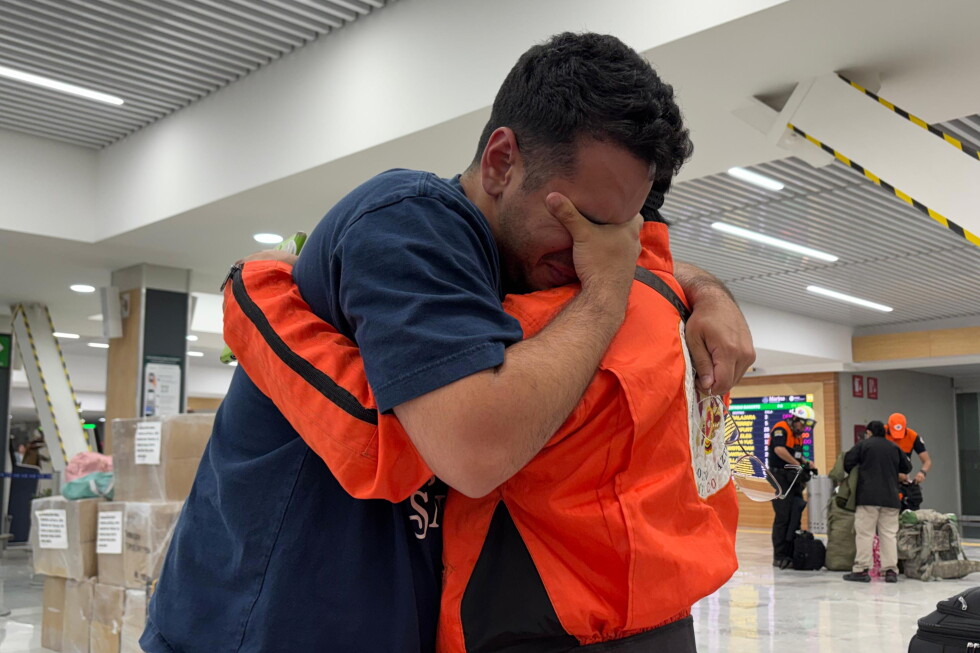
    Back at the Mexico City airport, the human cost of the disaster came into sharp focus as Bello prepared to leave. A young Venezuelan engineer living in Mexico, Diego Bejarano, recognized Bello’s gear and approached to ask if he was part of the rescue mission. When Bello confirmed he was heading to the disaster zone where Bejarano’s entire family lives in Caracas, Bejarano broke down in tears.
    Bello pulled him into a tight hug, a small moment of connection that he says fuels his years of volunteer work. After Bejarano left, Bello wiped tears from his own eyes and explained what keeps him returning to disaster zones again and again: “That’s my reward. Being able to give someone a little hope.”


  • ‘Board of Peace’ to launch ‘Hamas-free’ camps as Israel tightens grip on Gaza

    ‘Board of Peace’ to launch ‘Hamas-free’ camps as Israel tightens grip on Gaza

    A controversial proposal to establish so-called “Hamas-free humanitarian zones” in the Gaza Strip, led by a U.S.-backed initiative led by former U.S. President Donald Trump, has emerged in recent Israeli media reports, as the Israeli military continues to consolidate its hold over more than two-thirds of the besieged territory.

    According to reporting from Israeli national newspaper Israel Hayom, the first of these controlled humanitarian zones is scheduled to open within the next several weeks at Tel Sultan, a location situated on the outskirts of Rafah in southern Gaza. The site is intended to house Palestinian civilians who have been vetted and confirmed to have no weapon holdings or organizational ties to Hamas, the report says.

    Security and order within the designated zones will be maintained by a newly assembled multinational contingent called the International Stabilisation Force (ISF). The force will be outfitted exclusively with non-lethal weaponry, operating out of Israel’s Amitai Camp located near the Gaza border and falling under the direct command of Trump’s Board of Peace – the body launched in January this year at the former U.S. president’s explicit order to advance a negotiated settlement for the Gaza conflict.

    While the plan promises basic humanitarian support including temporary shelter and aid deliveries to residents of the zones, Board of Peace officials have made a firm commitment to ban the import of concrete into Gaza, a restriction that will heavily limit infrastructure reconstruction amid widespread destruction across the territory. The board is also moving forward with plans to develop large-scale logistics warehouses to support the management of the humanitarian shelters, with site scouting already underway in communities adjacent to Gaza’s border fence, per the report.

    Parallel to these humanitarian planning efforts, the Israeli military is continuing its incremental expansion of territorial control beyond the so-called “Yellow Line”, an existing boundary that was meant to serve as a temporary holding area for Israeli forces during the first phase of an earlier ceasefire agreement. Under the terms of that deal, Israel was required to withdraw from the area during the second phase of the agreement, but Israel has refused to relinquish control, as the second phase has never been implemented. Today, this expanded buffer zone controlled by Israel encompasses approximately 70 percent of Gaza’s total land area.

    An unnamed senior Israeli official speaking to Israel Hayom outlined the country’s current strategic approach: “We are manoeuvring within the American constraints, increasing the pace of targeted killings while remaining below the threshold of international criticism – and this will continue as long as Hamas is unwilling to disarm.”

    In a recent public update posted to the social platform X, the Board of Peace confirmed that the first batch of tactical vehicles has already arrived at the ISF’s base in the Logistics Support Area codenamed Endurance, alongside photographs documenting the delivery.

    Reaction to the plan from Hamas has been cautiously measured. Hazem Qassem, a spokesperson for the group, said Hamas holds out hope that the initiative will mark “the beginning of implementing the tasks assigned to them”, including separating Palestinian communities in Gaza from Israeli military forces and working to put a stop to ongoing Israeli violations against Palestinian civilians. “We call on the Board of Peace to begin the actual implementation of the provisions of the plan to end the war on Gaza,” Qassem added.

    The plan for a concentrated humanitarian enclave near Rafah is not a new proposal. As far back as July of last year, Israeli Defence Minister Israel Katz first announced plans to corral the entire population of Gaza into a consolidated “humanitarian city” near Rafah, where all residents would undergo mandatory security screenings and be barred from leaving the designated area. Earlier satellite imagery analysis conducted by research group Forensic Architecture and reported by Drop Site News in January of this year already revealed that Israeli forces had carried out large-scale land clearing and ground compaction work in the Tel Sultan area of Rafah, a level of preparatory construction activity unmatched anywhere else east of the Yellow Line.

  • Ukrainian charged in Germany over Nord Stream blasts

    Ukrainian charged in Germany over Nord Stream blasts

    Nearly two years after mysterious explosions crippled three of the four Nord Stream natural gas pipelines beneath the Baltic Sea, German law enforcement has formally brought criminal charges against a Ukrainian national accused of masterminding the sabotage attack.

    German media reports identify the suspect only as Serhii K, in compliance with the country’s strict privacy regulations. Prosecutors allege he organized and led the coordinated operation to destroy the multi-billion-dollar energy infrastructure, which was built to carry Russian natural gas to consumers across Western Europe. According to Germany’s public broadcaster DW, the suspect is accused of directing a cell of six additional accomplices in the plot, and faces charges including sabotage of civilian energy infrastructure, unauthorized detonation of explosives, and large-scale property destruction.

    The accused is the same individual taken into custody by Italian law enforcement in summer 2023 and extradited to Germany last November. He has repeatedly denied any connection to the 2022 blasts, and his Berlin-based legal representation at Menaker law firm confirmed to Reuters that the indictment was officially served to the defendant on Wednesday. Neither the legal team nor federal prosecutors have released further details on the specific charges contained in the court document. Federal prosecutors later confirmed the pending charges to AFP, offering no additional comment on the ongoing investigation.

    A second Ukrainian suspect was arrested just one month after Serhii K’s extradition, detained at his residence near Warsaw, Poland’s capital, under a separate German arrest warrant. That suspect has not been publicly charged as of this reporting.

    The Nord Stream pipeline network was one of the largest subsea energy projects in European history, spanning 1,200 kilometers across the Baltic seabed from the Russian coast to northeastern Germany. While Nord Stream 2 was never brought online after Berlin froze its approval process just weeks before Russia’s full-scale invasion of Ukraine in February 2022, Nord Stream 1 had supplied consistent volumes of Russian natural gas to Western Europe for years before Russia shut down operations months before the blasts, citing technical maintenance issues. On September 26, 2022, multiple underwater explosions ripped through three of the four lines, leaving the entire network inoperable and releasing what has been recorded as one of the largest single methane emission events in human history, causing significant environmental harm to the Baltic Sea ecosystem.

    For nearly two years, the perpetrators of the attack have remained unconfirmed, leaving a cloud of geopolitical uncertainty hanging over transatlantic and European relations. Western governments initially pointed suspicion toward Russia, while Moscow has repeatedly accused the United States and United Kingdom of orchestrating the sabotage. To date, no conclusive evidence has emerged linking any state actor to the attack.

    The charges have introduced unexpected friction between Germany and Ukraine, a key diplomatic and military alliance for Berlin amid the ongoing war in Ukraine. Germany is the single largest contributor of military aid to Kyiv from European nations, and many within Ukraine view the destruction of Nord Stream as a major strategic blow to Russia’s energy export revenue, which funds its war machine. Many ordinary Ukrainians have expressed confusion over why German authorities are moving forward with the prosecution of a Ukrainian citizen for an attack that materially weakened Moscow’s war capacity.

  • Starmer’s legacy: Labour has a mountain to climb to recover its Muslim voters

    Starmer’s legacy: Labour has a mountain to climb to recover its Muslim voters

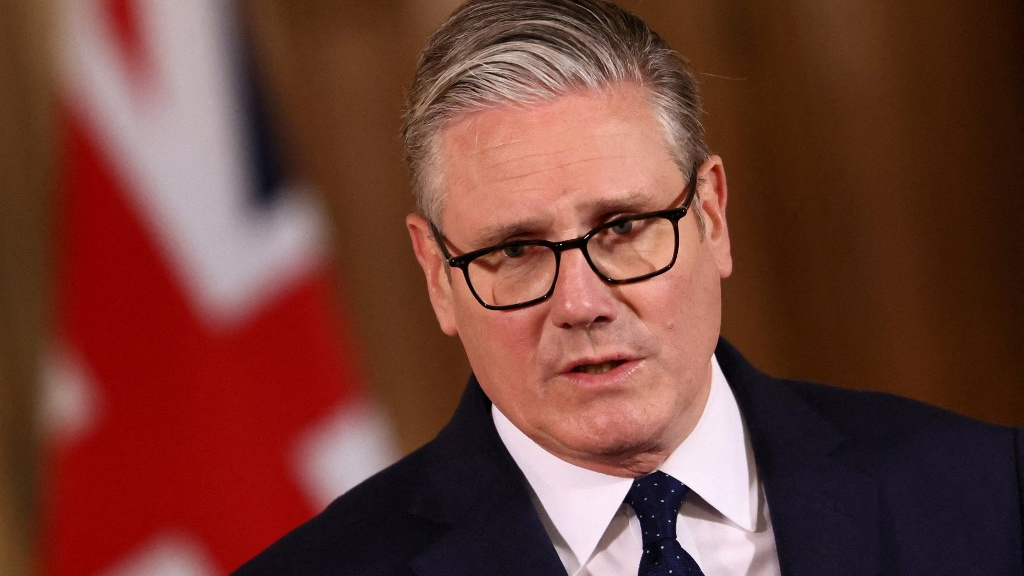
    In October 2023, as Israel launched its military campaign in Gaza, Keir Starmer — then leader of the UK opposition — faced a pivotal question during a live interview with LBC’s Nick Ferrari. When asked about Israel’s deliberate use of starvation as a tool of conflict against Palestinian civilians in Gaza, Starmer’s response would reshape the future of the Labour Party: he stated he believed Israel held a legitimate “right” to cut off electricity and water supplies to Gaza’s civilian population, a move widely classified as a war crime under international humanitarian law. What Starmer did not anticipate in that moment was the lasting damage his words would inflict on Labour’s standing with its core supporters, particularly the UK’s Muslim community.

    Historically, Labour has positioned itself as more sympathetic to the Palestinian cause and more open to Palestinian advocacy than the ruling Conservative Party. So Starmer’s remarks triggered an immediate wave of backlash from voices both inside and outside the party. Within just a few weeks, more than 150 Muslim Labour councillors penned an open letter to party leadership, demanding an immediate ceasefire in Gaza. The plea was brushed aside, and the first cracks in the long-standing alliance between the Muslim community and Labour quickly grew into a major political rupture.

    Though Labour had held a consistent lead in national opinion polls since December 2021, translating to a landslide victory in the 2024 general election that delivered a majority government, the election exposed deep, costly rifts within the party. Starmer’s government took power with the lowest popular vote share for any UK ruling party in modern history, and the party lost multiple parliamentary constituencies with large Muslim populations. One of the most high-profile losses was the newly created Dewsbury and Batley constituency in West Yorkshire, a seat where 43% of the population identifies as Muslim.

    Warning signs of this backlash had already emerged in the May 2024 local elections, when thousands of disaffected Labour voters threw their support behind independent candidates across the country. This trend held strong in the most recent round of 2026 local elections, particularly in the Kirklees metropolitan borough that covers Dewsbury and Batley. Yusra Hussain, a local councillor who defected from Labour to run as an independent, and who won a full term in Batley West alongside two other independent candidates, summed up the sentiment of many defectors: “I did not leave because my values changed. I left because I believe the party’s direction has changed.”

    To understand Labour’s current unrest, observers say it is impossible to separate the Gaza backlash from the broader ideological shift the party has undergone over the past decade. Under Jeremy Corbyn’s leadership, Labour advanced a clear platform of radical left-wing policies centered on renationalization of key industries, massive public investment, and expanded social rights. It was on this platform of Corbyn’s “10 pledges” that Starmer won the 2020 Labour leadership contest — but within months of taking power, Starmer abandoned each pledge one by one, steering the party sharply to the right, further even than the centrist New Labour government of Tony Blair.

    This ideological shift left Labour vulnerable in marginal seats with large Muslim populations. In the 2021 Batley and Spen by-election, for example, then-incumbent Labour candidate Tracy Brabin — now Mayor of West Yorkshire — saw her majority whittled down to just 323 votes, after prominent Palestine advocate George Galloway ran as a spoiler candidate and drew thousands of left-leaning pro-Palestine voters away from Labour. That same lack of a coherent, progressive appeal, paired with the party’s hard turn toward pro-Israel policy, cost Starmer the newly created Dewsbury and Batley seat in 2024.

    Iqbal Mohamed, the independent MP who now holds the Dewsbury and Batley seat, explained the coalition that brought him to power: “What united so many voters was a firm belief that this country is — in a myriad of ways — failing the vast majority of people, their basic needs and their human rights, be that at home or abroad. Along with the abandonment of traditional centre-left viewpoints, moving the party towards a pro-Israel ideology was a devastating shift in this constituency.”

    This electoral backlash is not limited to West Yorkshire. Independents also claimed key seats from Labour in Blackburn and Birmingham Perry Barr, both constituencies with even larger British Asian populations than Dewsbury and Batley. Political analysts note that Starmer’s abandonment of the party’s longstanding pro-Palestine position has proven even more disruptive to Labour’s voter base than his broader shift to the right. For decades, successive Labour leaders had backed Palestinian statehood: Ed Miliband oversaw a parliamentary vote in 2014 where the party voted in favor of recognizing Palestinian statehood, and Corbyn remained a consistent advocate for Palestinian rights throughout his leadership. Though Starmer eventually relented and recognized Palestinian statehood late last year alongside Canada and France, political analysts say the damage to Labour’s reputation among core supporters was already irreversible.

    Post-election polling from 2026 confirms that the backlash extends far beyond the Muslim community. More than half of Labour’s former voters — across demographic groups — now cite the party’s inaction on the Gaza conflict as a key reason they switched their support to the Greens, Scottish National Party, Plaid Cymru, Liberal Democrats, or independent candidates. Beyond the Gaza issue, Labour has also lost much of its historic left-wing base after the ousting of Jeremy Corbyn, who has since reemerged as a prominent independent left voice. Many political analysts compare this sustained net loss of support to the collapse of other traditional center-left parties across Western Europe in the wake of the 2008 global financial crisis.

    The Green Party has emerged as the primary beneficiary of this exodus, with a 2026 YouGov poll finding that more than one in five former Labour voters have now switched their allegiance to the Greens. The party’s new viability was on full display in the 2026 Gorton and Denton by-election in Manchester, where the Greens came within a hair’s breadth of taking the seat from Labour.

    In Dewsbury and Batley, the impact of this political realignment is impossible to miss. The most recent Kirklees Council elections returned a minority administration led by the right-wing Reform UK party, whose incoming leader drew widespread public mockery for demonstrating a clear lack of understanding of basic parliamentary procedure. The council remains deadlocked without a permanent leader, with a new vote scheduled for later this month to break the impasse. Across the 16 wards covering Batley and Dewsbury, voters elected 11 pro-Palestine independent councillors and five Reform candidates — and not a single Labour candidate won a seat.

    Mohamed, the independent MP for the area, argues that the result makes clear voters have rejected the UK’s longstanding two-party system entirely. “They deserted en masse a Labour Party that has for too long treated residents with contempt, taken their vote for granted, and aided and abetted the Israeli apartheid, occupation and genocide of the Palestinian people,” he said.

    The original analysis, published by Middle East Eye editor and journalist Joe Gill in a 2026 opinion video, challenges Starmer’s core narrative that he rescued a party left morally, financially, and politically bankrupt by Corbyn. For analysts, the path to repairing Labour’s broken trust with voters will require decisive action to shift the party’s direction on both domestic and foreign policy — a change that has not yet materialized under Starmer’s leadership.

  • Greek politician’s mother dies of wounds after arson attack

    Greek politician’s mother dies of wounds after arson attack

    In a shocking series of coordinated attacks targeting senior members of Greece’s ruling New Democracy party in the northern city of Thessaloniki, a 72-year-old woman has become the first fatality after succumbing to severe burn injuries sustained in an early Wednesday incendiary assault.

    Vagia Nestora, mother of New Democracy parliamentary candidate Afroditi Nestora, was caught in the blast and fire that tore through the apartment building where her daughter resides. Hospital officials confirmed that Nestora arrived at the medical facility in critical condition with burns covering nearly 80% of her total body surface. Despite aggressive, round-the-clock intensive care intervention, she developed multiple organ failure and passed away shortly after admission.

    Her daughter Afroditi, who is running as a party candidate in upcoming elections, also suffered second-degree burns and severe smoke inhalation, and remains hospitalized in stable condition as of the latest updates. Afroditi’s father, who lives with the family and has pre-existing chronic health conditions, alongside two other residents of the multi-story building, were also admitted for observation after experiencing respiratory distress from smoke exposure.

    Authorities confirm the attack on the Nestora family’s building was one of three synchronized improvised incendiary attacks that unfolded within 17 minutes across Thessaloniki. The first explosion was recorded at 4:18 a.m. local time, followed by two more blasts at 4:23 a.m. and 4:35 a.m. respectively. The two additional attacks targeted the private residences of Zisis Ioakeimovits, chair of New Democracy’s Thessaloniki regional administrative committee, and Savvas Anastasiadis, a former New Democracy member of parliament. No injuries were reported in these two incidents, though minor property damage was recorded at both locations.

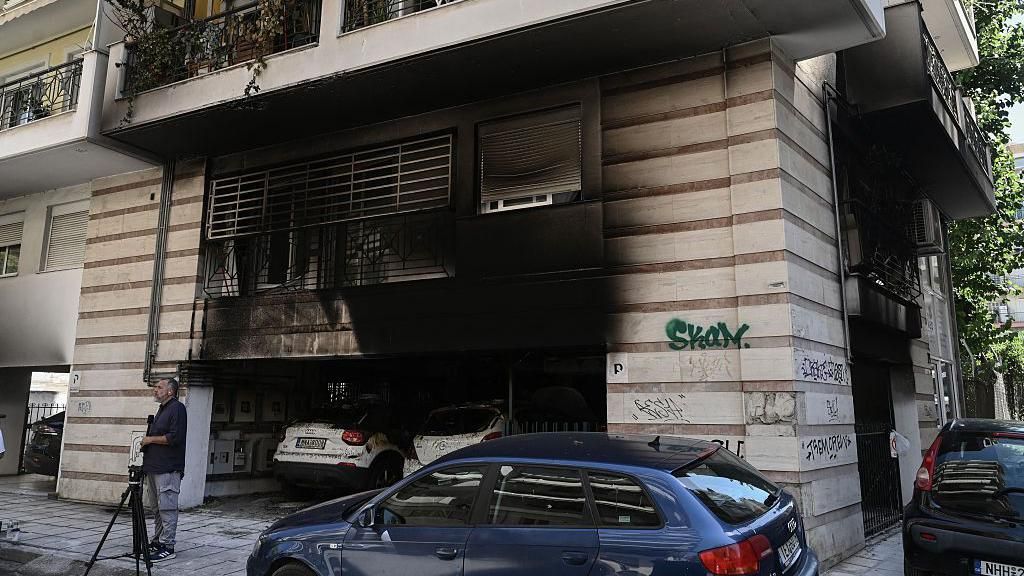
    Investigators say the attackers placed homemade petrol-based incendiary devices outside the targeted apartment buildings. At the Nestora residence, the blast completely destroyed two parked passenger cars, damaged multiple nearby motorcycles, and caused significant structural damage to the building’s ground floor and entryway.

    Greek Prime Minister Kyriakos Mitsotakis traveled directly to Thessaloniki’s main hospital immediately after the attacks to meet with victims’ families and oversee the initial law enforcement response. Speaking to reporters shortly before Vagia Nestora’s death was announced, Mitsotakis condemned the attackers in strong terms, rejecting any attempt to frame the violence as a legitimate form of political or social protest. “Those who carry out these attacks under the guise of social struggle are nothing more than criminals, and they will be treated as such,” the prime minister said. He added that violence has no place in a functioning democratic society, and vowed that all those responsible would be apprehended and held fully accountable under Greek law.

    The Greek Counter-Terrorism Service has taken over lead investigative responsibility for the case, and is currently working to confirm whether the three attacks were fully coordinated by a single group or network. Investigators are reviewing hundreds of hours of closed-circuit television footage from nearby businesses and public spaces to identify suspects, and have not yet announced any arrests in connection with the assaults. As of Thursday morning, no domestic or extremist group has issued a claim of responsibility for the attacks.

  • How Israeli president’s advisor worked to set up Reform Friends of Israel group

    How Israeli president’s advisor worked to set up Reform Friends of Israel group

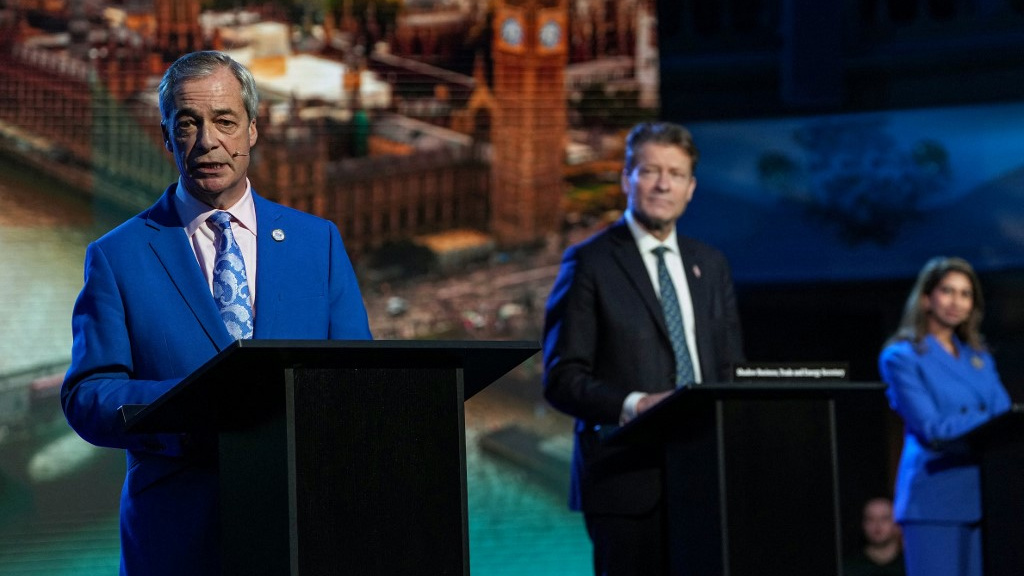
    Calls for greater transparency over foreign lobbying in British politics have reignited after a heated parliamentary debate last week, with Nigel Farage’s Reform UK facing fresh scrutiny over its undisclosed links to Israeli lobbying networks. The Westminster Hall debate was convened to discuss a public petition calling for a formal public inquiry into pro-Israel influence over UK politics and democratic institutions. During the debate, Reform UK deputy leader Richard Tice delivered a fierce rejection of the petition, labeling its core motivation fundamentally antisemitic and calling for it to be thrown out entirely.

    What has thrown Tice’s comments into question, however, is the record of official trips that senior Reform figures have taken to Israel, all funded by pro-Israel groups tied to the Israeli government. Just six months before the debate, in September 2024, Tice himself traveled to Israel for meetings with senior Israeli ministers, with the trip fully financed by Reform Friends of Israel (RFI), a little-known pro-Israel lobby group founded to coordinate ties between the party and the Israeli government. A separate trip by a delegation of senior Reform party figures in November 2024, which included a stop in the Israeli-occupied Golan Heights, was funded directly by the Israeli foreign ministry, investigative journalism outlet Declassified UK revealed this week.

    Against this backdrop, questions are mounting over the leadership, funding and objectives of RFI, a group that has never publicly disclosed its donor list. The founding driving force behind RFI is British-born political strategist Jason Pearlman, a figure with deep decades-long ties to both British politics and Israeli official circles. Until December 2024, Pearlman served as international media advisor to Israeli President Isaac Herzog, and he continued to work to secure funding for RFI while holding that official Israeli government role. When Pearlman departed his post with Herzog, the Israeli president praised him for guiding the presidency through some of Israel’s most challenging periods with the global press.

    Pearlman has since confirmed he has stepped back from his role leading RFI, telling Middle East Eye in a recent interview that he left the group after relocating to Israel for personal reasons, and that he was honored to have helped launch the organization. He has repeatedly refused to name the group’s financial backers, though he denied claims that RFI has ever received funding from the Israeli government or any other foreign state, and claimed there was never any overlap between his work for the Israeli presidency and his work setting up RFI.

    Pearlman’s long career in pro-Israel advocacy stretches back decades. Raised in Sunderland, northeast England, Pearlman has deep family roots in the global Zionist movement, with a great-grandmother who famously sat alongside Theodor Herzl, the founder of political Zionism, at the 1903 Sixth Zionist Congress. After working as media director for the Board of Deputies of British Jews and later in the public affairs department of the Israeli embassy in London, he relocated to Israel in 2006, taking up a role as foreign press liaison for the Israeli government press office a year later. He returned to the UK in 2010 to serve as deputy director of the Henry Jackson Society (HJS), a Westminster-based neoconservative think tank with a long record of strongly pro-Israel advocacy.

    HJS’s current director, Alan Mendoza, is another key figure connected to both Reform UK and pro-Israel lobbying circles in the UK. Mendoza serves as a senior foreign affairs advisor to Reform leader Nigel Farage, and also holds the role of president of the UK branch of the Jewish National Fund (JNF), an organization that has faced widespread international criticism for its role in facilitating the displacement of Palestinian people. JNF UK has donated £1 million ($1.36 million) to what has been described as “Israel’s largest militia”, and counts Israeli Prime Minister Benjamin Netanyahu—who faces an arrest warrant for alleged war crimes from the International Criminal Court—as an honorary patron. A former Westminster Conservative councillor, Mendoza defected to Reform UK last year and lost his council seat in the May 2025 UK local elections.

    Under Mendoza’s leadership, HJS has exerted significant influence over counter-terrorism policy during successive Conservative UK governments, while maintaining an unapologetically pro-Israel stance. The think tank has faced harsh criticism even from former insiders: co-founder Matthew Jamison later denounced it as a “monstrous animal” and a “deeply anti-Muslim racist organisation”, while former member Marko Atilla Hoare described it as an “abrasively right-wing forum with an anti-Muslim tinge” that publishes superficial, polemical content from aspiring commentators. Last year, Mendoza publicly opposed the UK government’s plan to allow family dependants of Palestinian students from Gaza to enter the UK, telling TalkTV that “we don’t know what they believe. We don’t know what their tendencies are. We don’t know whether they mean us well or ill.”

    Efforts by Israeli lobbying groups to court Reform UK have ramped up significantly since the second half of 2024. Pearlman previously told Declassified UK that he attended a dinner with Farage and key potential donors while still working for President Herzog, to discuss seed funding for RFI. While he would not name RFI’s current backers, he acknowledged that he expects many donors are overlapping with the groups that fund the long-established pro-Israel lobby groups Conservative Friends of Israel (CFI) and Labour Friends of Israel (LFI). Pearlman is an open, vocal defender of Israeli military actions in Gaza, having written a op-ed for UK outlet LBC earlier this year supporting the US-Israeli attack on Iran and criticizing the current Labour government for failing to offer stronger backing for the strike. He has also repeatedly denied that Israeli forces have committed war crimes in Gaza.

    During his September 2024 funded trip to Israel, Tice met with Israeli Foreign Minister Gideon Saar, and later wrote that with the current Labour government openly declaring pro-Palestinian positions from the prime minister down, it falls to other parties in UK parliament to stand with Israel as an ally. He added that during the trip he visited an Israeli border crossing into Gaza, and claimed that widespread reports of famine in Gaza pushed by the United Nations were false, saying his own observations and conversations with what he called “credible top people” convinced him the famine claims were untrue.

    Tice’s labeling of the transparency petition as antisemitic during last week’s debate has drawn sharp pushback from the petition’s creator, Andy Kalil. The debate saw most participating MPs who are affiliated with pro-Israel groups echo Tice’s claim that the petition was antisemitic, while a small number of MPs who supported the call for an inquiry raised detailed questions about lobbying and transparency that went unanswered. Kalil has since submitted a formal complaint to Deputy Speaker Nusrat Ghani, obtained by Middle East Eye, arguing that the repeated labeling of the petition, its 118,000 public signatories, and supporting MPs as antisemitic amounts to an sustained attack on a legitimate call for greater transparency and accountability, rather than a serious engagement with the substantive issues raised. Kalil added that the debate failed to address core questions about foreign lobbying, political donations, publicly funded parliamentary trips, and foreign influence, and has called for the debate to be rerun.

    Newly unearthed Israeli government data obtained by Berlin-based journalist Yossi Bartel confirms that the Israeli foreign ministry paid more than £50,000 to a Jerusalem-based events firm called Conexión Israel to organize the November 2024 trip for the Reform UK delegation. The delegation included then-Reform chairman David Bull, Lancashire County Council leader Stephen Atkinson, London Assembly member Alex Wilson, and party board member Gawain Towler. During the trip, the group visited sites of the 7 October 2023 Hamas attacks, including the site of the Nova music festival massacre. After the trip, Bull called it “life changing”, and said the group had discussed issues including visa overstayers and asylum seekers with the deputy mayor of Tel Aviv. Towler said in a statement after the trip that Israel’s fight is “in many ways, our fight” as a shared struggle for “enlightenment ideals, international norms, democracy and the rest.”

    In addition to its deepening ties with pro-Israel lobbying networks, Reform UK has also built formal connections with the United Arab Emirates, with Farage meeting senior Emirati ministers earlier this year. Abu Dhabi has reportedly found common ground with Reform over their shared opposition to political Islam, and last September Farage pledged that a Reform government would ban the Muslim Brotherhood, following the lead of multiple Gulf states.

    Middle East Eye, which first reported on many of these connections, provides independent, in-depth coverage of the Middle East, North Africa and surrounding regions. Requests for comment from Reform UK have not yet received a response.

  • Nigeria to seek compensation for property abandoned by citizens fleeing South Africa

    Nigeria to seek compensation for property abandoned by citizens fleeing South Africa

    A spreading wave of anti-undocumented migrant sentiment in South Africa has triggered a mass exodus of thousands of African foreign nationals, with Nigeria formally preparing to seek diplomatic redress and financial compensation for its affected citizens.

    Recent weeks have seen South Africa swept by organized protests led by anti-migrant groups, which called on the national government to tighten border controls and crack down on unauthorized migration. Demonstrators issued a 30 June deadline for undocumented foreigners to leave the country, and staged widespread marches that drew thousands of participants on 30 June. While most of the protests remained largely peaceful, isolated outbreaks of targeted violence against foreign residents have sparked widespread panic across migrant communities. South African law enforcement officials confirmed that roughly 900 people have been taken into custody, with most arrests linked to immigration violations and looting connected to the unrest.

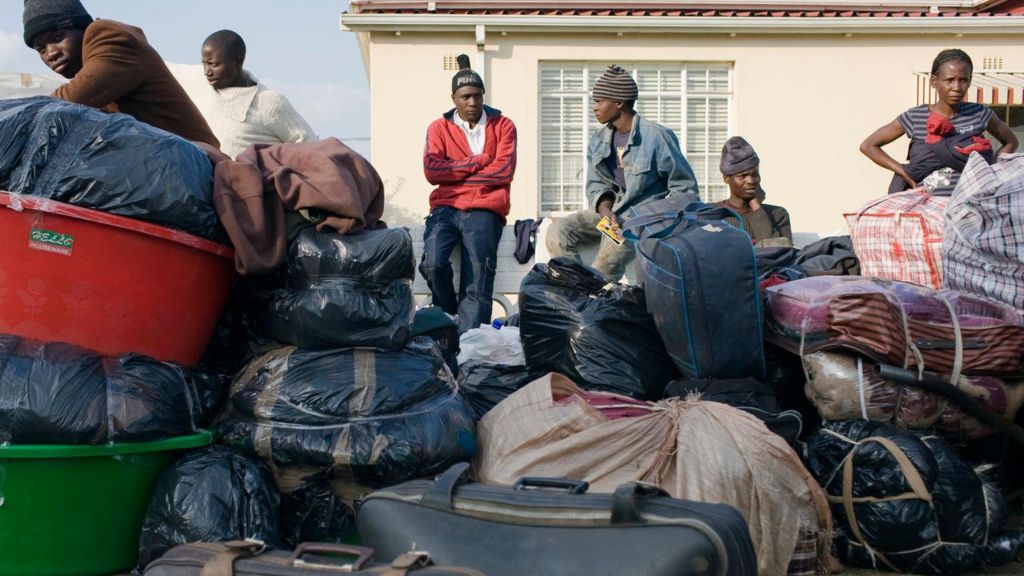
    By official estimates, approximately 25,000 African migrants have fled South Africa since the unrest began. For Nigeria alone, more than 600 citizens have already been repatriated on government-organized flights, with hundreds more still waiting for evacuation near the Nigerian High Commission in Pretoria, the South African capital.

    Nigerian officials have confirmed they will pursue compensation through diplomatic channels with South Africa, with discussions planned between the two countries’ top leadership. “We have not severed ties with South Africa, we are still engaging them at the highest level, we will sort those details using our usual diplomatic channels,” Kimiebi Imomotimi Ebienfa, spokesperson for Nigeria’s foreign ministry, told the BBC. Acting Nigerian High Commissioner Alexander Ajayi told local South African media that authorities have already started the process of cataloging abandoned assets, including businesses, vehicles and both movable and immovable property left behind by fleeing Nigerians. All claims will be fully verified before a formal compensation demand is submitted, Ebienfa added.

    One of the evacuees waiting for repatriation, 32-year-old Nigerian trader Oghodero Erejor Wilson, shared his experience of abandoning nearly a decade of life built in South Africa. Wilson, who ran a successful clothing shop in Centurion, Gauteng province, told the BBC he closed his business and fled to Pretoria after threats left him fearing for his personal safety. His residency permit expired in 2021, and he was unable to renew it, leaving him in an undocumented status. Wilson estimates he lost roughly 16,000 rand ($975) worth of inventory and abandoned all his personal belongings, including his clothing and furniture. He told reporters he holds little hope of receiving compensation, saying: “If South Africa government can compensate it, it will be nice, but I know they won’t.” Wilson is scheduled to board the next repatriation flight to Nigeria on Friday.

    South African authorities have stated that all repatriated Nigerian citizens were in the country illegally, a claim Nigerian officials have publicly disputed. The BBC has requested comment from the South African government on Nigeria’s upcoming compensation demand, and no response had been issued at the time of reporting.

  • Bibles, Home Alone and perfume: Six surprising ways Trump made money in 2025

    Bibles, Home Alone and perfume: Six surprising ways Trump made money in 2025

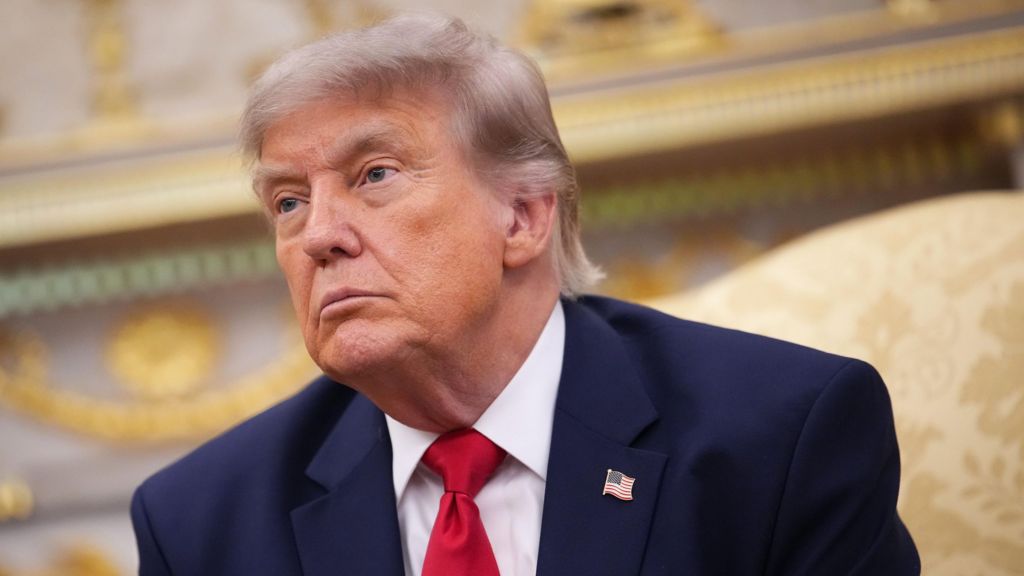
    In a recent release from the U.S. Office of Government Ethics, a sprawling 927-page financial disclosure document detailing President Donald Trump’s personal and business finances during his first year of his second term in the White House has been made public. The massive filing, which dwarfs the disclosures of other top U.S. officials, offers an unprecedented look into the income streams, investments and business dealings of the sitting president. For context, Vice President JD Vance’s 2025 disclosure clocks in at just 17 pages, while former President Joe Biden’s final 2024 disclosure was only 11 pages long. After combing through the thousands of lines of financial data, six of the most noteworthy findings have emerged.

    First, Trump’s famous personal brand remains a powerful moneymaker. The president pulled in millions of dollars in 2025 from licensing his name to a wide range of branded products. His coffee-table book *Save America* generated $1.8 million (£1.38 million) in revenue alone. A Trump-branded Bible added $208,000 to his total income, while a line of signature footwear and fragrances – including the women’s Victory 47 perfume, which retails for $249 per bottle – brought in an additional $67,000. Even limited-edition MAGA-themed merchandise turned a profit: sales of the “American Eagle” collector’s guitar netted roughly $36,000.

    Second, First Lady Melania Trump recorded substantial personal income in 2025, led by her eponymous documentary produced by Amazon. The streaming giant invested $40 million into the film, which followed the First Lady in the months leading up to her husband’s second inauguration. The documentary pulled in $7 million at the box office last year, and Melania, credited as both producer and the documentary’s subject, earned $10.7 million from the project. Beyond the film, she added $6 million in income from non-fungible token (NFT) sales and another $520,000 from her memoir, also titled *Melania*.

    Third, the disclosure reveals a staggering volume of investment activity from Trump: more than 21,285 separate share trades across hundreds of public companies in 2025. Among the most high-profile holdings was stock in AI chip giant Nvidia, a company that made major headlines last year for its $5 trillion market valuation and its central role in U.S.-China trade tensions over advanced semiconductor technology. Last summer, Nvidia struck an agreement with the Trump White House to invest billions of dollars in domestic U.S. chip manufacturing, a move that sent the company’s share price climbing rapidly. In August, the administration announced a deal requiring Nvidia to pay the U.S. government 15% of all revenue generated from sales of one of its key AI chip models to China. Later that same month, investment managers acting on Trump’s behalf acquired between $5 million and $25 million worth of Nvidia stock. When asked about the potential conflict of interest this week, Trump maintained that all of his personal investments are managed on a strict arms-length basis. “I don’t get involved in my personal [finances], we have funds that run my money,” he said. “I’ve made a lot of money before I became president, and they invest my money, and I don’t talk to them.”

    Fourth, the sitting president collects a six-figure annual pension from the U.S. entertainment industry’s leading labor union. Trump holds two separate pension plans with SAG-AFTRA, the union representing film and television performers, stemming from his decades of on-screen cameos and hosting work. The pensions paid out a combined $86,532 in 2025. Trump’s entertainment credits include a cameo in *Home Alone 2: Lost in New York*, a multi-season run as host of *The Apprentice*, and a guest appearance on *The Fresh Prince of Bel-Air*. The two separate plans date back to before the 2012 merger of the original film actors’ union SAG and the television performers’ union AFTRA. Though Trump resigned from the union in 2021, shortly before the union was set to vote on expelling him over his role in the January 6 Capitol riot, his pension benefits remained fully intact.

    Finally, a series of legal settlements against major media and technology companies netted Trump $86.5 million in 2025. The largest single payout came from Meta, the parent company of Facebook and Instagram, which paid $24.5 million to settle a lawsuit brought by Trump over the suspension of his social media accounts in the wake of the 2021 Capitol riot. Lawsuits against Paramount (owner of CBS News) and ABC News each resulted in $16 million settlements. Per the disclosure, net proceeds from these three settlements will be donated to the Trump presidential library. YouTube paid $22 million to settle a similar account suspension lawsuit, with that sum earmarked for the trust that manages Washington D.C.’s National Mall. Former Twitter co-founder Jack Dorsey also paid $8 million to settle a related claim against Trump after his 2021 ban from the platform (now known as X); the disclosure does not specify how these funds will be used.

    Beyond these highlights, the filing also confirms that Trump earned more than $1 billion in total from cryptocurrency-related business dealings in 2025, underscoring the breadth of his ongoing business interests while serving as U.S. president.

  • Businessman goes on trial over murder of Maltese journalist

    Businessman goes on trial over murder of Maltese journalist

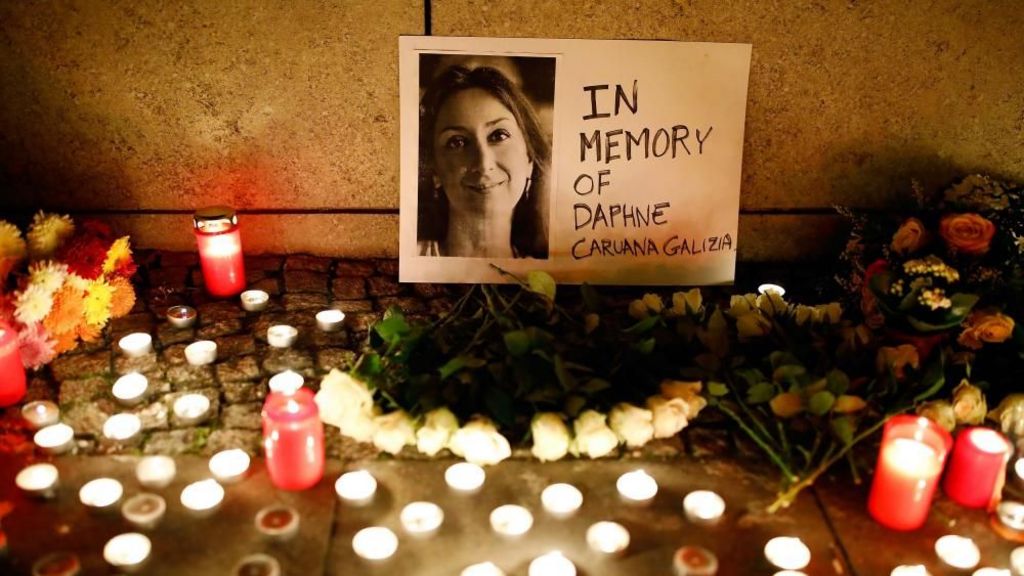
    Nearly nine years after a car bomb killed one of Malta’s most fearless anti-corruption journalists, the final high-profile chapter of the case has begun in the capital city of Valletta, where 44-year-old Maltese entrepreneur Yorgen Fenech has stood trial on charges of orchestrating the 2017 assassination of Daphne Caruana Galizia.

    Daphne Caruana Galizia, an investigative reporter whose work exposed deep-seated government-linked corruption networks across Malta and beyond, was killed instantly when a bomb detonated in her vehicle in October 2017. Her murder sparked widespread public outrage across the island nation and drew global condemnation from press freedom advocates and world leaders alike, shaking Malta’s political establishment to its core.

    Fenech, the key remaining defendant in the case, has been charged with complicity in the intentional homicide of Caruana Galizia and participation in a criminal conspiracy formed to carry out her murder. He has formally denied all charges brought against him, rejecting any allegation of involvement in the journalist’s killing.

    The trial opened on Wednesday with the swearing in of a jury for the public proceedings, a milestone that comes after years of prior legal action that has already secured convictions against four other co-conspirators. In 2022, brothers George and Alfred Degiorgio, who admitted to carrying out the car bombing, were sentenced to 40 years in prison for their role in the killing. Three years later, in 2025, Robert Agius and Jamie Vella received life sentences for supplying the explosive device used in the attack. A fifth co-defendant, Vincent Muscat, was granted a full pardon in exchange for cooperating with prosecutors and providing key testimony against the other co-accused.

    Members of Caruana Galizia’s immediate family, including her three sons, were present in the Valletta courthouse to observe the opening of Fenech’s trial. As of the first day of proceedings, no on-the-record statements from Fenech have been released publicly. Legal observers project that the trial will stretch over multiple weeks as prosecutors present evidence and the defense builds its case.

  • Israeli settler group calls for seizing crops in occupied Syrian land

    Israeli settler group calls for seizing crops in occupied Syrian land

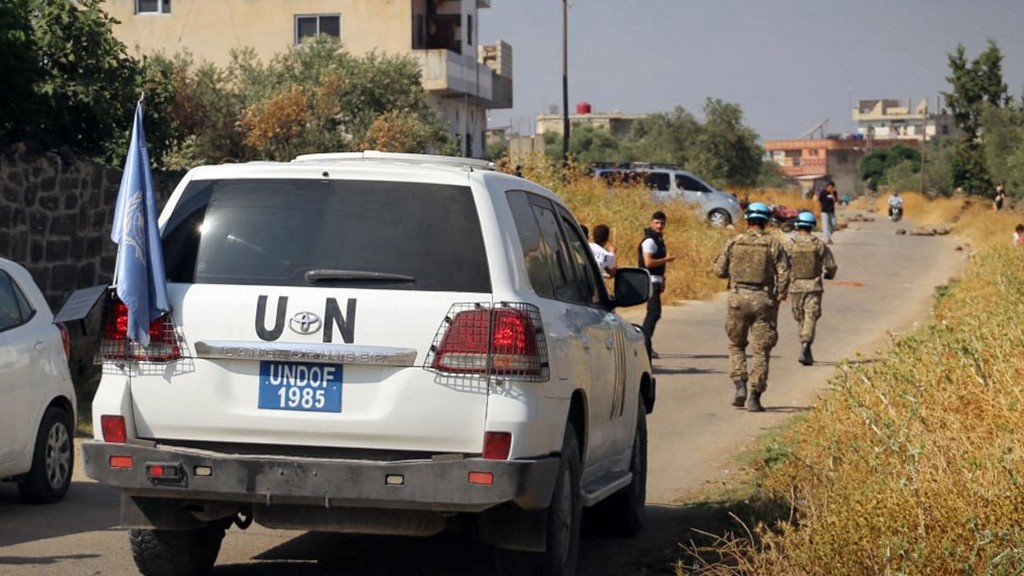
    Tensions along the Israeli-Syrian frontier have spiked in recent weeks following the collapse of the former Assad government, as a newly formed Israeli settler advocacy group has publicly called for the systematic cultivation and commercial sale of agricultural produce grown on seized Syrian land in the southern regions of the country.

    Pioneers of Bashan, the organization pushing for permanent Israeli settlement expansion into newly occupied Syrian territories, launched its call to action targeting the fertile lands held by Israel in Daraa and Quneitra governorates. In a public post shared on the social platform X, the group highlighted that roughly 2,000 tons of wheat had already been harvested this year from lands within the small Quneitra District alone. The statement went on to make a controversial, inflammatory claim that the fertile region would produce far higher yields when worked by what the group called “pioneering Jews” rather than the Sunni communities that currently inhabit the area, falsely alleging those communities support Hamas.

    Founded only in April 2025, Pioneers of Bashan emerged just four months after armed opposition groups overthrew the government of former Syrian President Bashar al-Assad in December 2024. That collapse of central state authority, which brought Ahmed al-Sharaa’s transitional government to power, created a power vacuum that Israel exploited to expand its long-standing occupation of Syrian territory beyond the Golan Heights — a region Israel has held illegally since the 1967 Six-Day War. The group has repeatedly framed its settlement advocacy through religious framing, citing ancient Biblical texts as flawed justification for seizing additional Syrian land for Jewish settlement.

    Escalating Israeli ground incursions have already uprooted local communities in the region. Just this past Sunday, Israeli military convoys advanced into the village of Abidin in Daraa governorate, where local residents gathered to block the entry route by stacking stones across the road. According to official Syrian state media, Israeli forces responded to the nonviolent protest with heavy artillery fire, forcing the entire village population to flee to safer neighboring settlements overnight.

    Syria’s Ministry of Foreign Affairs issued an official formal statement condemning the violation of its sovereignty. “We condemn in the strongest terms the ongoing Israeli attacks, represented by repeated incursions into Syrian territory in Quneitra and Daraa provinces and the deliberate targeting of civilian populated areas with artillery shelling. This is a blatant violation of Syrian sovereignty and territorial integrity that violates all international law and UN resolutions,” the statement read.

    Israeli government officials, particularly far-right members of the current governing coalition, have ramped up warmongering rhetoric in recent weeks, openly framing the new Syrian leadership as an imminent threat to justify further military escalation. Diaspora Affairs Minister Amichai Chikli, a prominent far-right figure in Prime Minister Benjamin Netanyahu’s government, laid out his aggressive stance in a series of recent radio interviews, labeling al-Sharaa’s transitional government as part of what he inaccurately called a “radical Sunni axis of evil” across the Middle East.

    Chikli argued that what he described as a jihadist regime rooted in the ideologies of the Islamic State and al-Qaeda, which he claimed holds aspirations to claim Jerusalem, could never coexist peacefully alongside the state of Israel. In an additional interview with Israel’s Army Radio last Thursday, Chikli claimed a new anti-Israel alliance has formed between Pakistan, Turkey and Qatar — a bloc he claimed poses a far greater threat to Israeli security than Iran, even amid Tehran’s recent ceasefire agreement with the United States.