博客

  • FAST reveals insights into cosmic signals

    FAST reveals insights into cosmic signals

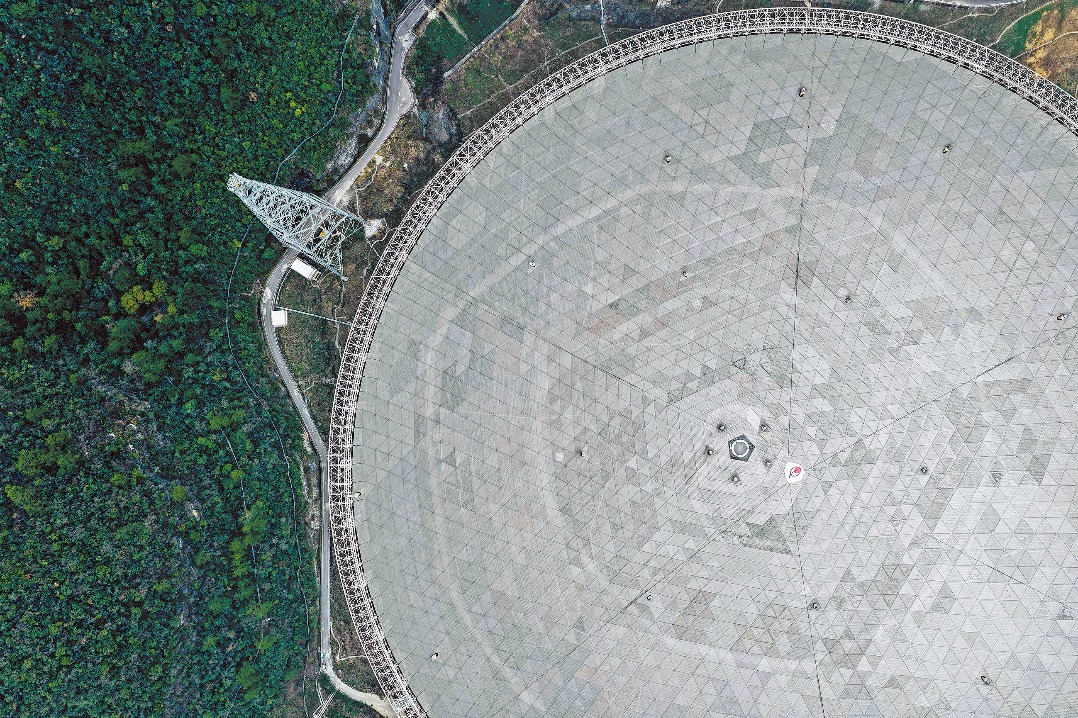
    In a groundbreaking astronomical discovery, China’s Five-hundred-meter Aperture Spherical radio Telescope (FAST) has provided compelling evidence illuminating the origin of mysterious cosmic phenomena known as fast radio bursts. An international research team has determined that at least some of these powerful energy emissions stem from compact binary star systems, resolving a long-standing cosmic enigma that has puzzled astronomers since 2007.

    The research, published in the prestigious journal Science, documents unprecedented observations of repeating fast radio burst FRB 20220529 over a 26-month monitoring period from June 2022 through August 2024. This marks the first time scientists have captured the complete evolutionary process of such a burst, offering critical insights into their generation mechanisms.

    Fast radio bursts represent among the most energetic transient events in the universe—millisecond-duration flashes that release energy equivalent to our sun’s output over an entire week. Despite detecting thousands of these events, astronomers have struggled to pinpoint their precise origins, with theories predominantly suggesting extreme stellar remnants like neutron stars as potential sources.

    Led by astronomers from the Chinese Academy of Science’s Purple Mountain Observatory, the research team utilized FAST’s unparalleled sensitivity to detect clear magnetic environment fluctuations described as ‘surge and recovery’ patterns—a phenomenon never before observed in such detail.

    Duncan Lorimer, the West Virginia University astrophysicist who first discovered fast radio bursts, praised the findings as “an amazing result” that demonstrates “the power of FAST in China to make these monitoring observations.” He emphasized how coupling FAST’s capabilities with survey instruments like the Canadian Hydrogen Intensity Mapping Experiment continues to transform understanding of these cosmic phenomena.

    Since becoming fully operational in 2020, FAST has established itself as a premier facility for pulsar studies, galactic structure mapping, and gravitational wave research. China now plans a significant upgrade to the facility, adding dozens of medium-aperture antennas around the main dish to create the world’s only mixed synthetic aperture array centered on a giant single-dish radio telescope. This enhancement would dramatically improve precision in locating fast radio burst sources.

    Senior engineer Sun Jinghai of the National Astronomical Observatories noted that continued observations may ultimately solve one of astronomy’s most persistent puzzles: what exactly produces these cosmic flashes and why certain variants repeat their brilliant performances across the cosmic stage.
  • Year’s first private rocket mission takes off

    Year’s first private rocket mission takes off

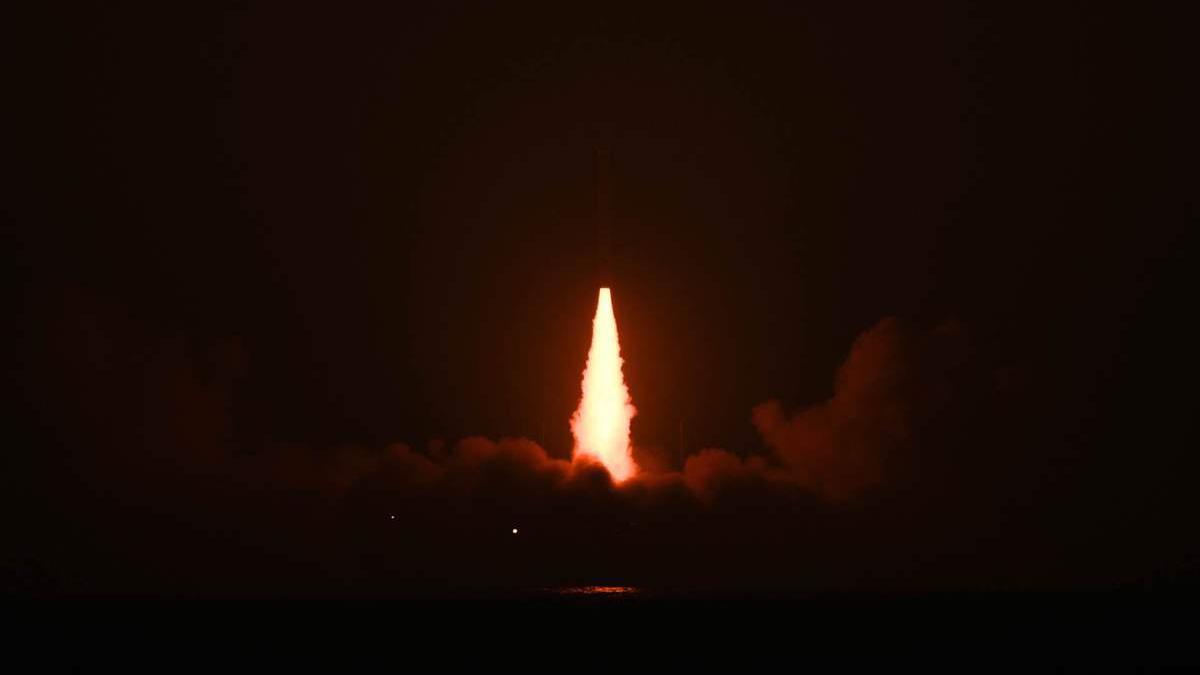
    Beijing-based Galactic Energy has successfully launched the year’s first private space mission, marking a significant milestone for China’s commercial aerospace sector. The company’s Ceres 1 solid-propellant rocket blasted off at 4:10 am Friday from a mobile sea platform in the Yellow Sea near Shandong province, deploying four satellites into low-Earth orbit approximately 850 kilometers above the planet.

    The mission represents the sixth sea-based launch for Galactic Energy’s Ceres 1 model and demonstrates the growing capabilities of China’s private space industry. The deployed satellites, manufactured by Beijing satellite operator Guodian Gaoke, will join the expanding Tianqi network which now comprises 41 satellites providing global coverage for Internet of Things applications.

    According to Galactic Energy, the Tianqi constellation supports critical data collection across multiple sectors including forestry management, agricultural monitoring, tourism services, power generation infrastructure, and environmental protection initiatives. The successful launch continues the remarkable track record of the Ceres 1 rocket, which has now completed 23 flights with 21 successful missions, placing 89 commercial satellites into orbit since its maiden flight in November 2020.

    The Ceres 1 stands approximately 20 meters tall with a diameter of 1.4 meters, boasting a liftoff weight of 33 metric tons. The vehicle can deliver payloads of up to 300 kilograms to sun-synchronous orbits at 500 kilometers altitude or carry 350-kilogram payloads to low-Earth orbits at 200 kilometers.

    Looking ahead, Galactic Energy is preparing for the inaugural flight of its larger Ceres 2 solid-propellant rocket from the Jiuquan Satellite Launch Center. This development occurs alongside other Chinese private aerospace companies advancing their launch capabilities, including Orienspace with its Gravity 2 rocket, Deep Blue Aerospace’s Nebula 1, and Space Pioneer’s TL 3 vehicle.

    In a separate government space achievement, China launched a Long March 2C rocket on Thursday afternoon from Jiuquan, successfully deploying Algeria’s AlSat-3A remote-sensing satellite. Developed by the China Academy of Space Technology, the satellite will provide critical data for land-use planning and disaster management under a bilateral agreement signed in July 2023, marking another milestone in Sino-Algerian space cooperation following the 2017 launch of the Alcomsat-1 communications satellite.

  • Uganda opposition leader cut off from communications after polls

    Uganda opposition leader cut off from communications after polls

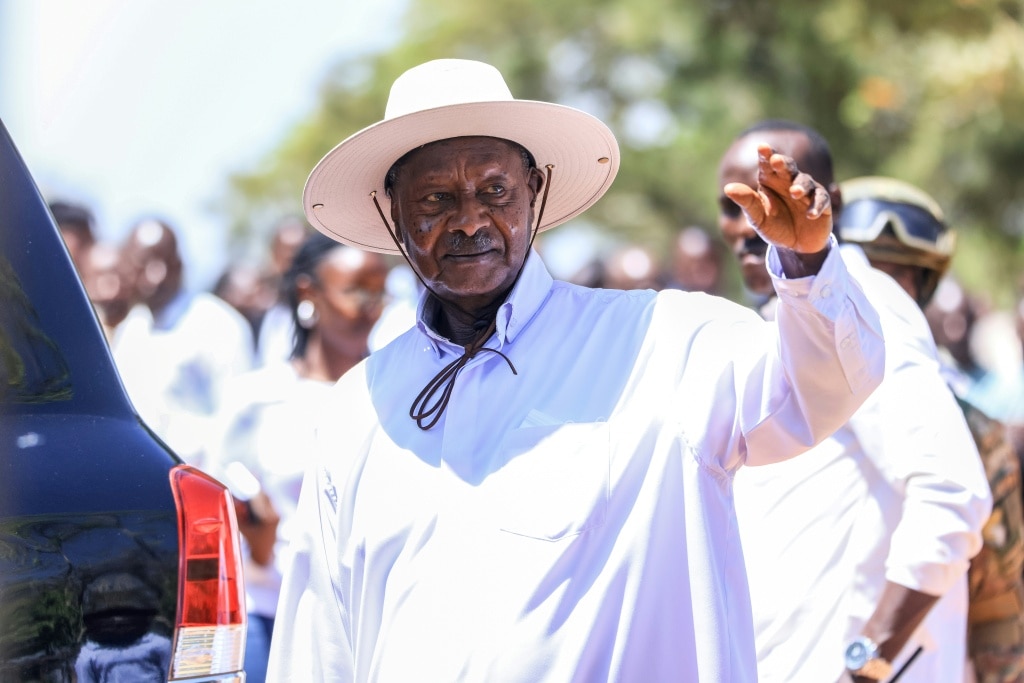
    Uganda’s political landscape remains in a state of heightened tension as opposition leader Bobi Wine faces a complete communications blackout following a police raid on his residence. The security operation, which occurred on Saturday, effectively isolated the prominent challenger to President Yoweri Museveni’s longstanding administration just as election results were being finalized.

    With more than 90% of votes counted, Uganda’s Electoral Commission reported President Museveni maintaining a commanding lead of 71.9% against Wine’s 24.5%. The 81-year-old incumbent, who seized power in 1986 as a former guerrilla fighter, appears poised to extend his four-decade rule amid widespread reports of electoral irregularities and suppression tactics.

    The election period has been characterized by significant unrest, including an ongoing nationwide internet blackout implemented ahead of Thursday’s polls. According to opposition accounts, security personnel clad in black attire scaled the walls of Wine’s compound, confiscating communication devices and effectively cutting off all contact with the outside world.

    Conflicting reports emerged regarding Wine’s whereabouts, with his party initially claiming he had been forcibly removed by military helicopter—an assertion later deleted and denied by army officials as ‘absurd’ and designed to ‘incite his supporters.’ Local residents reported hearing drones and helicopters near the opposition leader’s residence throughout Friday night, with many fleeing the area due to security concerns.

    Police spokesman Kituuma Rusoke defended the security measures, stating authorities had ‘controlled access in areas we feel are security hotspots’ to prevent gatherings that might ‘incite violence.’

    The electoral process itself faced substantial challenges, with malfunctioning biometric verification machines and delayed ballot deliveries in multiple regions. Beyond the capital, reports emerged of violent confrontations, including claims from opposition parliament member Muwanga Kivumbi that security forces had killed ten campaign agents in Butambala after storming his home.

    Police provided an alternative account, stating an ‘unspecified number’ of people had been ‘put out of action’ when opposition members allegedly planned to attack a local tally center and police station.

    The United Nations human rights office had previously warned that the elections were occurring in an environment of ‘widespread repression and intimidation’ against opposition voices, though many of the allegations remain difficult to verify independently due to communication restrictions and limited media access.

  • Adaptability key for businesses amid challenges

    Adaptability key for businesses amid challenges

    At its annual gala in New York on Thursday, the China General Chamber of Commerce-USA (CGCC) convened approximately 300 senior executives, government officials, and business leaders to address navigating ongoing trade complexities between the world’s two largest economies. The event, themed “Together We Gallop Toward the Future,” served as a platform to emphasize resilience and the critical need for sustained dialogue.

    CGCC Chairman Hu Wei, who also serves as President and CEO of Bank of China USA, outlined the significant challenges member companies currently face. These include escalating operational costs, persistent supply chain disruptions, and increasing regulatory hurdles in cross-border commerce. Despite these headwinds, Hu highlighted the remarkable adaptability demonstrated by Chinese businesses operating in the US. He issued a call to action for policymakers in both nations to heed the business community’s perspective, stating, “I have witnessed firsthand the power of dialogue and engagement… real progress is made through steady relationship and is in action.”

    Chinese Ambassador to the US Xie Feng delivered a keynote address reinforcing China’s commitment to high-quality development and high-standard opening-up, irrespective of the external environment. He pointed to burgeoning industrial clusters in strategic sectors like new energy, advanced materials, aviation, aerospace, and the low-altitude economy as sources of future multi-trillion-yuan markets. Ambassador Xie also announced plans to expand pilot programs opening value-added telecommunications, biotechnology, and wholly foreign-owned hospitals to foreign investment. While urging deeper cooperation, he called on American officials to foster a more open, fair, and non-discriminatory environment for Chinese enterprises, including providing visa and border entry facilitation.

    The gala also recognized standout corporate achievements. Vornado Realty Trust received the “Outstanding Partner of the Year” award for its long-standing professional collaborations with CGCC members. Michael Franco, President and CFO of Vornado, celebrated these relationships built on “mutual respect and confidence,” and announced that Chinese pop culture brand Pop Mart would open a new flagship store in its Times Square retail space. Pop Mart, alongside construction machinery giant Sany Group and Sunon Furniture LLC, were honored as “Brands of the Year” for embodying creativity, resilience, and a future-driven spirit. Sany North America President Xiang Fei encapsulated the evening’s sentiment, remarking, “Success is not just about revenue and size. It’s about delivering our values,” and reaffirming a commitment to strengthening US-China cooperation through long-term investment.

  • S. Korean former leader gets 5-year jail

    S. Korean former leader gets 5-year jail

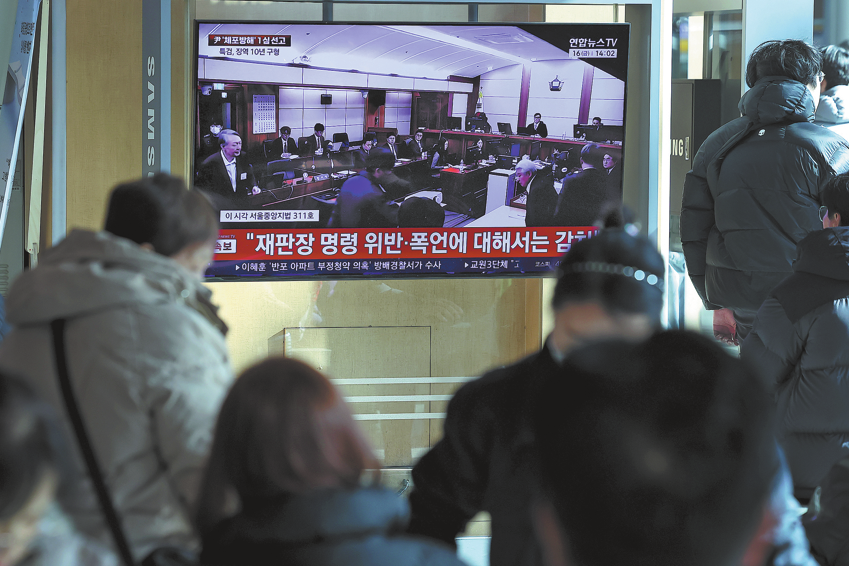
    In a landmark judicial ruling, former South Korean President Yoon Suk-yeol has been convicted and sentenced to five years imprisonment for his attempted imposition of martial law in late 2024. The Seoul Central District Court delivered the verdict on Friday, marking the first resolution among eight ongoing cases against the former leader.

    Presiding Judge Baek Dae-hyun found Yoon guilty on multiple charges including obstruction of justice, abuse of authority, and document destruction. The court determined that on January 3, 2024, Yoon mobilized presidential security personnel to block arrest attempts by the Corruption Investigation Office for High-ranking Officials. The ruling also convicted him of violating ministers’ constitutional rights regarding martial law deliberation procedures.

    “The nature of these crimes is extremely serious given the circumstances and specific details of the offenses,” stated Judge Baek during the televised proceedings. The judge noted Yoon had demonstrated no remorse for actions that threatened democratic institutions.

    The controversial martial law declaration occurred on December 3, 2024, when Yoon cited protection from “anti-state” forces including opposition lawmakers. The decree collapsed within six hours following a National Assembly revocation vote, ultimately leading to Yoon’s impeachment and removal from office in April 2025.

    While special prosecutors had sought a 10-year sentence last month, Yoon’s legal team immediately announced plans to appeal, claiming the verdict contained “significant legal errors” and exhibited political bias. Meanwhile, ruling Democratic Party leader Jung Chung-rae declared this sentencing merely begins the “eradication of insurrection,” advocating for zero tolerance against rebellion.

    The former president faces additional serious charges including insurrection, with prosecutors recently demanding the death penalty in a separate case scheduled for adjudication on February 19.

  • Kashgar area of Xinjiang Pilot FTZ sees robust growth over past two years

    Kashgar area of Xinjiang Pilot FTZ sees robust growth over past two years

    The Kashgar area within China’s Xinjiang Pilot Free Trade Zone has demonstrated remarkable economic expansion since its establishment in November 2023, establishing itself as a thriving hub for regional commerce and cross-border trade. Over the past two years, this strategic northwestern region has achieved unprecedented growth metrics through comprehensive institutional reforms and business climate optimization.

    Positioned as China’s gateway to Central and Western Asia, the Kashgar FTZ has leveraged its geographical advantages to create a dynamic ecosystem for international trade and investment. The zone’s success stems from pioneering administrative simplifications, streamlined customs procedures, and innovative financial services specifically designed to facilitate cross-border commerce.

    Key performance indicators reveal substantial progress across multiple sectors. Trade volumes have increased exponentially, with particular strength in agricultural exports, textile manufacturing, and renewable energy technologies. The zone has attracted significant foreign direct investment through competitive tax incentives and specialized industrial parks catering to various sectors including logistics, e-commerce, and high-value processing.

    Infrastructure development has kept pace with economic expansion, with enhanced transportation networks connecting Kashgar to major international markets through road, rail, and air corridors. Digital transformation initiatives have implemented smart customs systems and blockchain-based documentation processes, significantly reducing administrative processing times.

    The zone’s unique positioning has enabled it to serve as a critical bridge for China’s Belt and Road Initiative, facilitating economic cooperation with neighboring countries including Pakistan, Afghanistan, and Central Asian republics. Specialized cross-border e-commerce platforms have emerged as particularly successful, handling growing volumes of international transactions.

    Looking forward, Kashgar FTZ authorities plan to expand into new areas including digital trade, green energy partnerships, and specialized financial services. The continued development of this economic zone represents a significant component of China’s broader strategy to stimulate economic development in its western regions while strengthening international trade connections across Eurasia.

  • China curbs high-frequency trading to de-risk markets

    China curbs high-frequency trading to de-risk markets

    China’s financial markets are experiencing significant turbulence as regulatory authorities escalate their campaign against high-frequency trading (HFT) practices. This strategic move represents a fundamental shift in market oversight philosophy, prioritizing stability and retail investor protection over ultra-rapid trading advantages.

    The Shanghai Composite Index witnessed a notable decline of approximately 2.1% from its recent peak, dropping from 4,188 to 4,101 between January 14-16. Similarly, the Shenzhen Component Index decreased by 1.2% to 14,281, while the CSI 500 Index fell 1.5% to 8,232 during the same period.

    Regulatory intervention has taken concrete form through directives requiring brokers to relocate client servers from exchange-operated data centers. This measure effectively eliminates the ultra-low-latency access crucial for HFT strategies. The Shanghai Futures Exchange has implemented staggered deadlines, with high-speed trading clients required to complete server removal by February’s end, while other participants have until April 30.

    Further regulatory measures include preliminary plans to impose additional two-millisecond latency on connections routed through third-party data centers. This deliberate delay compounds the inherent lag from server relocation, substantially diminishing the speed advantages that define high-frequency trading.

    The crackdown impacts both domestic HFT firms and international market makers operating in China. Prominent global entities including Citadel Securities, Jane Street Group, and Jump Trading are among those facing restricted access to exchange-linked servers.

    According to China Securities Regulatory Commission (CSRC) data, HFT accounts declined by approximately 20% in 2024, totaling about 1,600 as of June 30. Chinese exchanges formally classify high-frequency trading as activity involving more than 300 orders or cancellations per second through a single account, or exceeding 20,000 daily order requests.

    Financial expert Lin Yixiang of Tianxiang Investment Advisory criticized the arbitrary nature of this threshold, noting that while human traders might manage three transactions per second, machine-enabled hundreds create fundamentally different market dynamics. He emphasized that frequent order submission and withdrawal can generate artificial volumes and distorted prices, ultimately disrupting market integrity.

    In parallel developments, the CSRC has tightened margin financing requirements, raising the minimum margin for new trades to 100% from the previous 80% effective January 19. This policy reversal marks a return to full coverage requirements last seen in 2015, significantly reducing maximum leverage available to investors.

    Market analysts have characterized these coordinated measures as part of a broader regulatory effort to cool overheated trading conditions and protect retail investors from sophisticated algorithmic strategies that increasingly incorporate artificial intelligence to exploit market sentiment and social media trends.

  • Activists launch global campaign for Palestinian prisoners held by Israel

    Activists launch global campaign for Palestinian prisoners held by Israel

    A significant international advocacy movement has been initiated, calling for the immediate liberation of Palestinian detainees incarcerated by Israeli authorities. This mobilization follows recent United Nations criticism of proposed Israeli laws that would permit capital punishment for Palestinian prisoners through hanging.

    The Red Ribbons Campaign, originating in London two months prior, has now evolved into a worldwide endeavor. Activists have strategically placed red ribbons and portraits of imprisoned individuals in prominent public areas to maintain visibility for their cause. The campaign asserts that Israeli detention facilities currently hold approximately 9,000 Palestinians under unlawful circumstances, including more than 400 minors and at least 150 healthcare professionals from Gaza and the West Bank.

    This development occurs alongside growing international concern regarding newly proposed Israeli legislation that would substantially expand prison authorities’ powers. These expanded capabilities would include authorization to prolong detention periods, block the release of prisoners who have completed their sentences, and implement death penalty provisions that would disproportionately affect Palestinian detainees.

    Adnan Hmidan, the campaign’s founder, characterized the imprisoned Palestinians as ‘the real hostages’ in this conflict. He stated, ‘The situation within Israeli prisons has transcended isolated incidents of abuse and evolved into a comprehensive system of humiliation and methodical torture that is now being legalized through explicitly discriminatory laws.’

    Palestinian rights organizations have consistently documented allegations of systematic torture, physical and sexual violence, extended solitary confinement, and deliberate medical negligence within Israeli detention facilities. These reports have intensified since the beginning of Israel’s military operations in Gaza, with particular concerns regarding overcrowding, starvation-level food provisions, and custodial deaths among Gazan detainees.

    The campaign specifically highlighted the case of Dr. Hussam Abu Safiya, a pediatrician apprehended by Israeli forces during a December 2024 raid on Kamal Adwan Hospital. Despite his medical status, Dr. Safiya has been detained without formal charges under suspicion of ‘potential involvement in terrorist activity.’ Legal representatives report he has lost over thirty percent of his body weight while incarcerated at Ofer prison, endured severe beatings, and been systematically denied medical attention.

    Approximately 3,300 Palestinians remain in administrative detention—imprisonment without charge or trial based on undisclosed evidence—as documented by HaMoked, an Israeli human rights organization. This practice has been widely condemned by international human rights groups as an instrument of collective punishment.

    The United Nations Office of the High Commissioner for Human Rights recently urged Israel to abandon its proposed death penalty legislation, noting the ‘unacceptable risk of executing innocent people’ within a system already criticized for its discriminatory treatment of Palestinians. UN Human Rights Chief Volker Türk emphasized that the proposal ‘raises profound human dignity concerns’ and appears ‘exclusively applicable to Palestinians.’

    Hmidan concluded that the campaign aims to ‘shatter international silence, mobilize global public opinion, and pressure relevant institutions’ to address Israel’s detention practices, which he described as continuing despite ‘genocide in Gaza, annexation efforts in the West Bank, and escalating violations across occupied Palestinian territories.’

  • Nobel Peace Prize inseparable from laureate, award body says after Trump gets medal from Machado

    Nobel Peace Prize inseparable from laureate, award body says after Trump gets medal from Machado

    The Norwegian Nobel Committee has issued a formal statement addressing the inseparable connection between the Nobel Peace Prize and its designated laureate. This declaration comes in response to Venezuelan opposition leader Maria Corina Machado’s presentation of her 2025 Peace Prize medal to former U.S. President Donald Trump during a January 15th meeting at the Oval Office.

    The Committee emphasized that while laureates maintain full autonomy over the physical components of the award—including the medal, diploma, and monetary prize—the historical recognition remains exclusively with the original recipient. “Regardless of what may happen to the medal, the diploma, or the prize money, it is and remains the original laureate who is recorded in history as the recipient of the prize,” the statement clarified.

    The unusual transfer occurred during Machado’s high-profile visit to Washington, where she presented Trump with the gold medal displayed in an elaborate frame. White House officials confirmed the former president intends to retain the medal despite the Committee’s position that such transfers do not alter the official record of achievement.

    The Nobel Foundation’s statutes contain no restrictions regarding laureates’ disposition of their award components, permitting recipients to “keep, give away, sell, or donate these items” according to their discretion. Machado’s complete award package included not only the medal but also the official diploma and 11 million Swedish crowns (approximately $1.19 million).

    The Committee’s unusual public statement serves both as clarification of protocol and reaffirmation of the award’s institutional integrity amid international attention surrounding the medal’s transfer between two controversial political figures.

  • ‘Should not have taken place’: How a single tunnel test triggered an eight-metre sinkhole in Melbourne

    ‘Should not have taken place’: How a single tunnel test triggered an eight-metre sinkhole in Melbourne

    A government investigation has concluded that a massive sinkhole that appeared at a popular Melbourne sporting ground earlier this year resulted from a preventable pressure test conducted by tunnel workers. The eight-meter chasm emerged at AJ Burkitt Oval in Heidelberg, located near one of Victoria’s largest tunnel infrastructure projects, causing significant community concern and requiring immediate safety fencing.

    Paul Roth, Interim CEO of VIDA Roads—the government body overseeing major projects including the North East Link and West Gate Tunnel—stated that the pressure test performed by tunnel boring machine operators destabilized geologically complex ground conditions. Despite having comprehensive geological data indicating the challenging subsurface environment, workers proceeded with the test which ultimately triggered the collapse.

    “This is a very serious incident, and we’ve taken it very seriously,” Roth told media on Friday following the conclusion of investigations. “We are exceptionally disappointed and share the community’s disappointment and frustration.” He explicitly acknowledged that the test “should not have taken place” and confirmed the incident was preventable.

    Authorities report that North East Link boring machines were operating directly beneath AJ Burkitt Reserve when the incident occurred. While workers had successfully navigated through the complex geological zone as planned, the subsequent pressure test caused the ground collapse. Despite the significant incident, Roth confirmed the $26 billion tunnel project would not experience delays or additional costs due to the sinkhole.

    Remediation work has already commenced, with crews filling the massive hole with concrete. Restoration efforts including returfing the affected area are expected to be completed by March. WorkSafe continues to monitor the situation as repair operations progress.