博客

  • Martyn was given ’50/50′ chance of survival

    Martyn was given ’50/50′ chance of survival

    Former Australian cricket star Damien Martyn has revealed he was given only a 50% chance of survival after contracting a severe case of meningitis that required an eight-day induced coma in late December 2025. The 54-year-old Test veteran shared his harrowing health ordeal through a public statement accompanied by a beachside recovery photo.

    Martyn described how his life was suddenly ‘taken out of my hands’ on December 27th when meningitis aggressively attacked his brain. Medical professionals at Gold Coast University Hospital made the critical decision to place him in a paralyzed coma to combat what he termed ‘this awful disease.’ Against statistical predictions, Martyn emerged from the coma after eight days, initially unable to walk or speak.

    In what he characterizes as a remarkable recovery, the cricketer-turned-survivor regained both mobility and speech within just four days of waking, astonishing his medical team. His discharge from hospital marked the beginning of an ongoing rehabilitation journey that now includes symbolic moments of gratitude, such as walking on the beach near his home.

    Meningitis, the infection responsible for Martyn’s critical condition, attacks the protective membranes surrounding the brain and spinal cord. The disease can prove fatal within hours if not treated promptly, making Martyn’s recovery particularly notable.

    The cricket legend expressed profound appreciation for the emergency responders from Mermaid Waters Ambulance, hospital staff, and countless supporters who reached out during his ordeal. ‘This experience has reminded me of how fragile life is,’ Martyn reflected, emphasizing the preciousness of time and the generosity of strangers.

    Martyn’s distinguished cricket career included 67 Test matches between 1992-2006, during which he accumulated 4,406 runs including 13 centuries. His international achievements encompassed two ODI World Cup victories, notably his courageous 88 not out in the 2003 final played with a broken finger against India.

  • Ugandan leader to extend 40-year rule after being declared winner of contested poll

    Ugandan leader to extend 40-year rule after being declared winner of contested poll

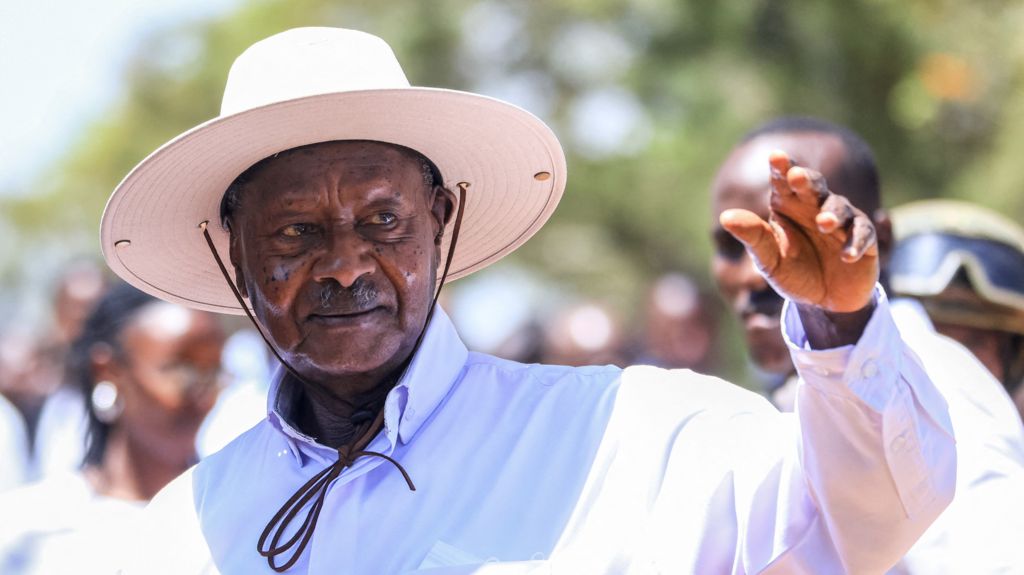
    Ugandan President Yoweri Museveni has secured a seventh electoral victory, extending his four-decade rule for another five-year term following Thursday’s contentious presidential election. According to official results from Uganda’s electoral commission, the 81-year-old incumbent captured 72% of the vote, while his primary challenger, former pop star turned opposition leader Bobi Wine, garnered 25%.

    Wine, whose legal name is Robert Kyagulanyi, immediately denounced the outcome as fraudulent, urging citizens to engage in peaceful demonstrations against what he characterized as ‘fabricated results.’ The 43-year-old opposition leader reported that at least 21 fatalities had occurred during electoral violence, though authorities have only confirmed seven deaths.

    The election process was overshadowed by an unprecedented nationwide internet shutdown implemented since Tuesday, severely hampering information verification capabilities. Government officials defended the digital blackout as a necessary measure to combat misinformation, electoral fraud, and potential incitement to violence. However, the United Nations human rights office condemned the internet suspension as ‘deeply concerning,’ while Wine demanded immediate restoration of digital connectivity.

    Museveni first assumed power in 1986 as a rebel leader and has since maintained control through a series of electoral victories that opposition groups and international observers have frequently questioned. The latest electoral process has drawn heightened scrutiny due to the combination of violence allegations, communication restrictions, and disputed results that characterize Uganda’s political landscape.

  • Saudi Arabia clarifies viral video on murder ‘not true’

    Saudi Arabia clarifies viral video on murder ‘not true’

    Saudi Arabian authorities have officially discredited a widely circulated video alleging a murder occurred in Hafar Al Batin, labeling the footage as entirely fabricated. The nation’s Ministry of Interior issued a formal clarification through social media channels, with the official media spokesperson for the Eastern Region Police confirming the viral content’s inaccuracy.

    According to the government statement, the incident referenced in the video actually stemmed from previously resolved family disputes. The authorities emphasized that all necessary legal procedures had been properly administered regarding the actual domestic matter, which differed significantly from the violent narrative portrayed in the viral content.

    The individual responsible for recording and disseminating the misleading video has been detained under Saudi Arabia’s stringent Anti-Cybercrime Law. This legislation empowers judicial authorities to impose severe penalties on violators, including imprisonment for up to five years and financial penalties reaching 3 million Saudi Riyals (approximately $800,000).

    This incident highlights Saudi Arabia’s ongoing efforts to combat misinformation and maintain social stability through robust digital governance frameworks. The prompt response demonstrates the government’s commitment to addressing both domestic disputes and the spread of false information through official channels.

  • Egypt: 5 siblings suffocate to death after gas leak at home

    Egypt: 5 siblings suffocate to death after gas leak at home

    The rural community of Mit Asim in Egypt’s Qalyubia governorate is reeling from a devastating household accident that resulted in the tragic suffocation of five young siblings. The incident occurred during the early hours of Friday when a catastrophic gas leak filled the family home with toxic fumes.

    Victims of the tragedy included four sisters and one brother, whose ages spanned from eight to eighteen years old. Emergency responders arrived at the scene with multiple fire trucks and ambulances, but despite their rapid deployment, the siblings had already succumbed to gas inhalation before rescue teams could intervene.

    Local authorities, including the head of Banha’s Criminal Investigation Branch and the Banha Police Station Investigation Unit, immediately secured the premises. Preliminary examinations confirmed that the concentrated gas dispersion throughout the residential structure caused the fatal asphyxiation.

    Following standard procedural protocols, the victims’ remains were transported to medical facilities under official supervision. Forensic specialists completed postmortem examinations, after which the Public Prosecutor’s Office authorized burial proceedings while simultaneously initiating a comprehensive investigation into the circumstances surrounding the gas leak.

  • Horses leap through flames and pets go to church in Spanish animal rituals honoring St. Anthony

    Horses leap through flames and pets go to church in Spanish animal rituals honoring St. Anthony

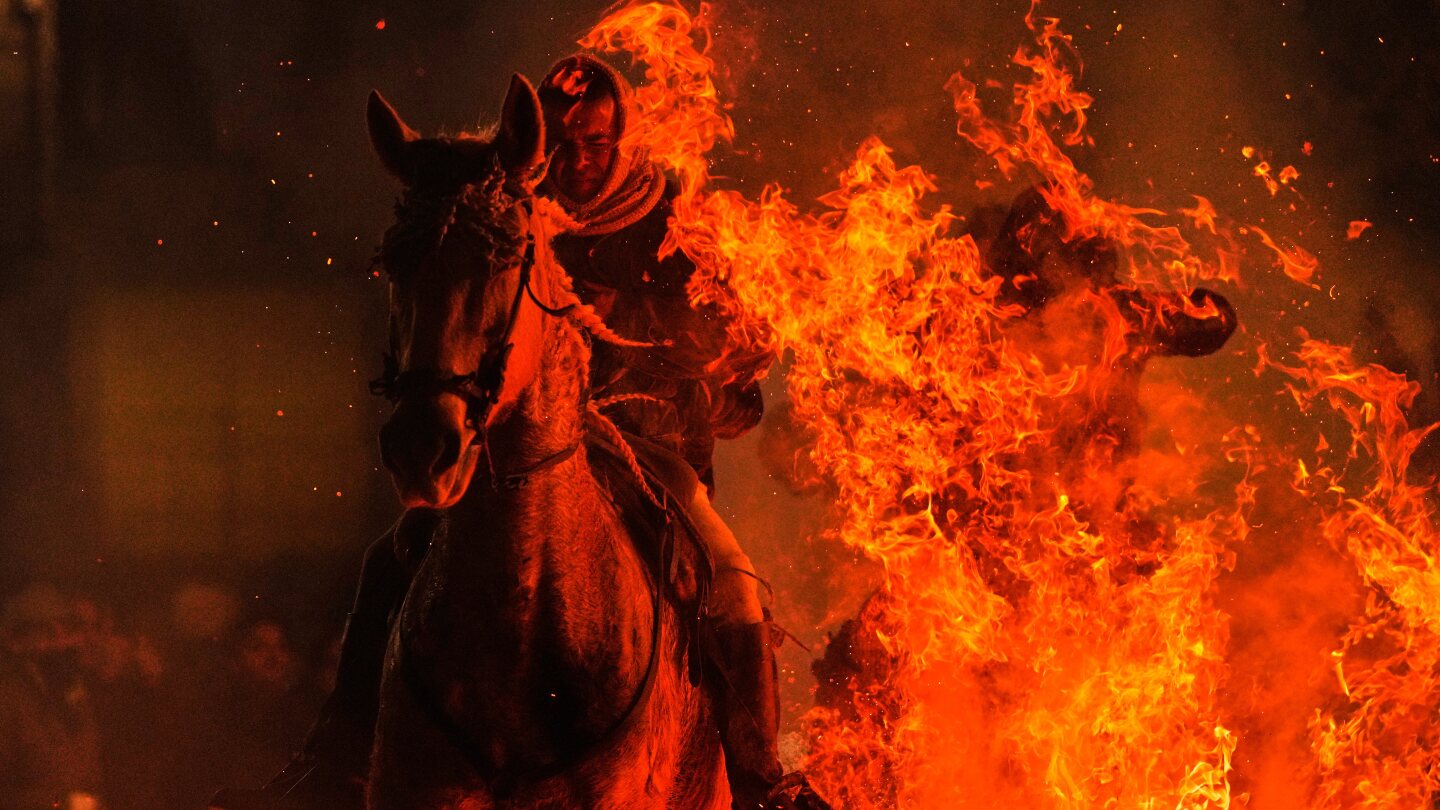
    In the small Spanish village of San Bartolome de Pinares, an extraordinary centuries-old tradition unfolded as riders guided horses through roaring bonfires during the annual Las Luminarias festival. Meanwhile, in Madrid, pet owners gathered with their dogs and cats for a more tranquil blessing ceremony at St. Anthony’s Church. Both events honor St. Anthony the Abbott, patron saint of domestic animals, occurring every January in contrasting yet parallel celebrations.

    The fiery spectacle in the rural village (population approximately 500), located 100 kilometers from Madrid, involves riders preparing their horses with fire-resistant tape on tails and protective glazes on manes before navigating through strategically placed bonfires. Local attendees like 62-year-old Antonio Patricio explain the historical context: “This tradition originated from the belief that smoke and branches could bless and heal farm animals, preventing illness and ensuring their continued fieldwork capacity.”

    Despite ongoing criticism from animal rights organizations, festival participants maintain that injuries to horses are exceptionally rare. The event begins with community gatherings featuring shared wine, beer, and sweets before the dramatic fire-jumping ceremony that continues into the early hours.

    Conversely, Madrid’s urban celebration involves priests sprinkling holy water on pets brought by owners seeking annual blessings for their animals’ health and protection. The visibly calmer ceremony featured dogs in winter vests and somewhat bewildered-looking cats, with attendees like Rosa Gomez expressing appreciation for the tradition while holding her adopted dog Kia.

    These rituals reflect Spain’s deep cultural connections to animal husbandry traditions, particularly in rural areas experiencing population decline. The smoke purification practice reportedly originated centuries ago when a mysterious illness affected village animals, leading to the belief in smoke’s healing properties. Today, the tradition serves not only as spiritual practice but also as cultural preservation, bringing families and visitors together in Spain’s gradually emptying countryside.

  • UAE: Female-led travel grows by 18% as momcations, solo trips rise

    UAE: Female-led travel grows by 18% as momcations, solo trips rise

    The United Arab Emirates is experiencing a significant transformation in its travel sector, with female-led tourism expanding by 18% as innovative travel concepts gain popularity. Industry analysts report substantial growth in women-only excursions and specially curated tour packages, reflecting evolving travel preferences among Emirati women.

    Travel industry executives attribute this remarkable growth to increasing female workforce participation and greater financial independence. Rashida Zahid, Vice President of Operations at musafir.com, noted that these socioeconomic factors have empowered women to travel with heightened confidence for both professional and leisure purposes.

    Market analysis reveals distinct patterns within this expansion. While solo female travel represents less than 10% of the overall growth, women-only group travel has emerged as the fastest-growing segment, particularly among millennial and Gen Z demographics. The trend demonstrates a preference for socially connected yet independent travel experiences.

    Emerging travel patterns show women increasingly selecting thoughtfully designed journeys that emphasize meaningful experiences. Wellness and self-care oriented travel has gained substantial traction, alongside growing demand for ‘quiet luxury’ destinations that prioritize comfort, safety, and tranquil environments over crowded tourist itineraries.

    Innovative travel concepts such as ‘momcations’ have gained significant popularity. These specialized breaks enable mothers to vacation with their children while enjoying personal downtime, spa treatments, and wellness activities without extended family separation. Additionally, ‘bleisure’ travel—extending business trips for leisure purposes—has become increasingly common among female professionals.

    Destination preferences reveal that safety, cultural richness, and wellness opportunities significantly influence female travel decisions. Japan ranks highly for solo travelers due to its exceptional safety standards, reliable public transportation, and low crime rates. Other Asian destinations including Thailand, Indonesia (particularly Bali), South Korea, and Vietnam continue growing in popularity due to their affordable cultural experiences.

    European destinations remain favored for their walkability, reliable public transport, and cultural offerings, with Italy, France, Spain, Switzerland, and Greece receiving particular attention. Nordic countries including Finland, Denmark, and Norway attract travelers seeking safety, sustainability, nature-based experiences, and solo-friendly environments.

    The UAE itself, along with Saudi Arabia and Oman, has become an increasingly popular destination for international female travelers, recognized for exceptional safety standards and hospitality offerings. Growing interest in heritage tourism, wellness retreats, and evolving tourism ecosystems specifically designed for women has contributed to this trend.

    The travel industry has responded proactively to these changing demographics. Hotels, tour operators, and destinations increasingly develop products specifically catering to solo female travelers. Enhanced offerings include female tour guides, local hosts, security-enhanced accommodation options, and women-focused amenities. Experience providers now design specialized wellness retreats, cultural tours, and lifestyle-driven itineraries that balance independence with guided support, ensuring travelers enjoy freedom without feeling overwhelmed.

  • Benavides rides to smallest Dakar Rally win margin and Al-Attiyah confirms sixth car title

    Benavides rides to smallest Dakar Rally win margin and Al-Attiyah confirms sixth car title

    YANBU, Saudi Arabia — The 2024 Dakar Rally concluded with one of the most dramatic finishes in motorsport history as Argentine rider Luciano Benavides captured his first motorbike title by a mere two seconds following a catastrophic navigational error by American rival Ricky Brabec just kilometers from the finish. This marks the narrowest victory margin ever recorded in the event’s storied history.

    Meanwhile, Qatari driver Nasser Al-Attiyah secured his sixth car category title with a calculated performance on the 13th and final stage, a 105-kilometer sprint along Saudi Arabia’s Red Sea coast to Yanbu.

    The motorbike competition appeared destined for Brabec’s third Dakar victory as the Honda rider entered the final stage with a commanding 3-minute, 20-second advantage over Benavides’ KTM. Brabec was collecting valuable time bonuses for opening the route while maintaining a strong pace.

    The race dynamics shifted irrevocably when Brabec made a critical wrong turn approximately seven kilometers from the finish line. Benavides, maintaining his trajectory, witnessed his rival’s error in real-time. “I saw a headlight turn around and slowed to see who it was,” Benavides recounted. “When I realized it was Ricky, I knew the almost impossible was suddenly possible.”

    The Argentine rider capitalized on the opportunity, finishing second on the stage to teammate Edgar Canet while Brabec arrived 3 minutes and 22 seconds later. The stunning reversal triggered emotional celebrations from Benavides’ team, who hoisted their champion while chanting his name.

    “It’s unreal,” an elated Benavides stated. “Two seconds after two weeks and almost 8,000 kilometers is something that is hard to understand.” The previous closest margin of victory stood at 43 seconds, achieved by Benavides’ brother Kevin in 2023.

    Brabec’s Honda teammate Tosha Schareina completed the podium in a distant third position.

    Benavides’ victory appears particularly remarkable considering he began his ninth Dakar attempt without any prior podium finishes and just three months after sustaining serious knee ligament injuries during the Moroccan Rally. Even during the event’s second week, he rode in the shadow of defending champion and teammate Daniel Sanders, who dominated until crashing on Wednesday and sustaining broken collarbone and sternum injuries.

    In the car category, Al-Attiyah secured his historic sixth title with a conservative final drive, finishing nearly nine minutes behind stage winner Mattias Ekström. The Qatari driver ultimately defeated second-place finisher Nani Roma by 9 minutes and 42 seconds, marking his first victory with manufacturer Dacia. Al-Attiyah has now won Dakar with four different manufacturers across his illustrious career.

    Roma, the 2014 champion, earned his first podium finish since 2019, while Ekström’s Ford edged Sébastien Loeb’s Dacia by 37 seconds for third place overall.

  • Judge urges US grant visa to college student deported due to ‘mistake’

    Judge urges US grant visa to college student deported due to ‘mistake’

    A federal judge has delivered a stern rebuke to the Trump administration, mandating corrective action within 21 days for the wrongful deportation of a Honduran college student. U.S. District Judge Richard Stearns in Boston characterized the incident as a “tragic and preventable mistake” that violated a standing court order.

    The case involves Any Lucia Lopez Belloza, a 19-year-old Babson College freshman who was apprehended at Boston’s Logan International Airport on November 20 while preparing to travel home to Texas for Thanksgiving. Despite a judicial order issued on November 21 that explicitly prohibited her deportation or transfer from Massachusetts for 72 hours, immigration authorities had already moved Lopez Belloza to Texas. She was subsequently deported to Honduras on November 22.

    Lopez Belloza’s complex immigration history reveals she originally entered the United States at age eight with her mother while seeking asylum. She maintains she was unaware of any existing removal order against her.

    In his Friday ruling, Judge Stearns proposed two potential remedies: either the U.S. Department of State issues her a student visa, or the administration facilitates her return to the United States. The judge emphasized that the “simplest solution” would be visa issuance, while acknowledging jurisdiction limitations since Lopez Belloza was outside Massachusetts when legal proceedings began.

    Government attorneys previously apologized for what they described as an “amalgam of errors,” specifically noting that an Immigration and Customs Enforcement officer failed to properly flag the court order, mistakenly believing it no longer applied once she left Massachusetts.

    Lopez Belloza’s attorney, Todd Pomerleau, welcomed the judicial intervention as a positive step toward negotiating his client’s return. The Justice Department has declined to comment on the ongoing proceedings. Lopez Belloza currently remains in Honduras with her grandparents.

  • Trump offers Egypt to mediate on Ethiopia dam to resolve ‘The Nile Water Sharing’

    Trump offers Egypt to mediate on Ethiopia dam to resolve ‘The Nile Water Sharing’

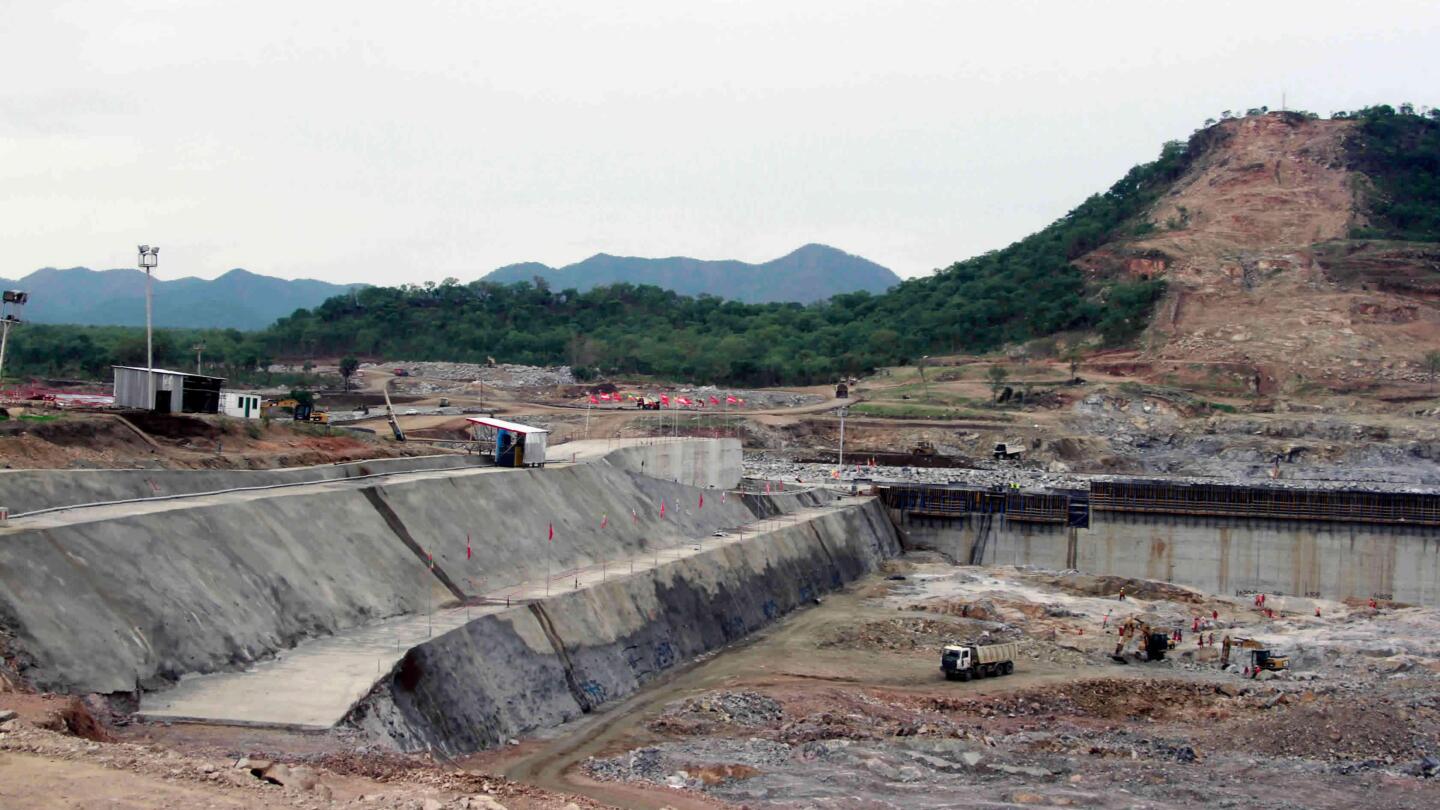
    In a significant diplomatic development, former U.S. President Donald Trump has formally offered to reactivate American mediation efforts between Egypt and Ethiopia concerning the contentious Grand Ethiopian Renaissance Dam (GERD) project on the Nile River. The proposal came through an official letter to Egyptian President Abdel Fattah al-Sisi, publicly shared by the White House on social media platforms.

    The communication emerges against the backdrop of longstanding tensions between the two African nations regarding water allocation from the Nile, which represents approximately 97% of Egypt’s freshwater supply. President Sisi has repeatedly characterized the Ethiopian hydroelectric project as an existential threat to his nation’s water security.

    Trump’s letter explicitly stated: “I am ready to restart US mediation between Egypt and Ethiopia to responsibly resolve the question of ‘The Nile Water Sharing’ once and for all.” He further emphasized that “no state in this region should unilaterally control the precious resources of the Nile and disadvantage its neighbours in the process,” positioning the GERD dispute as a priority matter for his potential administration.

    The proposed framework envisions a negotiated settlement that would ensure predictable water supplies for downstream nations Egypt and Sudan, while simultaneously allowing Ethiopia to either sell or distribute electricity generated from the $4 billion infrastructure project. The GERD, Africa’s largest hydropower initiative inaugurated by Prime Minister Abiy Ahmed in September, promises to more than double Ethiopia’s current electricity capacity upon completion.

    Historical context reveals this isn’t Trump’s first intervention in the matter. During his previous term, he sparked controversy by suggesting Egypt might resort to military action against the dam, remarks that prompted diplomatic summons from both nations and heightened regional tensions. Previous mediation attempts involving the United States, World Bank, Russia, United Arab Emirates, and African Union have consistently failed to produce a lasting resolution over the past decade.

    The dam has evolved into a powerful symbol of national pride and development aspiration in Ethiopia, while simultaneously representing a water security crisis in Egypt. Trump’s relationship with President Sisi, a former general who assumed power in 2013 and has since governed with authoritarian measures, has remained notably warm throughout both leaders’ political careers.

  • Egypt and Sudan welcome Trump’s offer to mediate Nile River dam dispute

    Egypt and Sudan welcome Trump’s offer to mediate Nile River dam dispute

    Egypt and Sudan have expressed approval of former President Donald Trump’s proposal to restart American mediation efforts concerning the contentious Grand Ethiopian Renaissance Dam (GERD) on the Nile River. The diplomatic overture comes amid ongoing tensions between the Nile Basin nations over Africa’s largest hydroelectric project.

    Egyptian President Abdel-Fattah el-Sissi acknowledged Trump’s engagement with what Cairo considers a matter of national survival, stating his country remains committed to “serious and constructive cooperation with the Nile Basin countries, based on the principles of international law.” Simultaneously, Sudan’s military leader Gen. Abdel-Fattah Burhan characterized Trump’s initiative as a positive step toward achieving sustainable solutions that protect all parties’ rights.

    The $5 billion GERD project, inaugurated by Ethiopia last fall, represents a monumental infrastructure development with the capacity to generate over 5,000 megawatts of electricity—effectively doubling Ethiopia’s power generation capabilities. However, downstream nations Egypt and Sudan view the dam’s operation as potentially catastrophic to their water security.

    Egypt, whose 110 million population depends overwhelmingly on Nile waters, fears the dam could significantly reduce water flow, threatening agricultural sustainability and other vital sectors. Sudan has emphasized the need for coordinated reservoir management to prevent adverse effects on its own dams.

    The core disagreement revolves around establishing binding agreements regarding the dam’s filling procedures, water release protocols during droughts, and dispute resolution mechanisms. Previous U.S.-mediated negotiations initiated during Trump’s presidency stalled in 2020 when Ethiopia withdrew from talks, though discussions continued under African Union auspices without resolution.

    Ethiopia maintains that the dam is crucial for national development, noting that most of its population lacks reliable electricity access. As of this reporting, Ethiopian officials had not publicly responded to Trump’s renewed mediation offer.