博客

  • Shanghai international student choir celebrates new year

    Shanghai international student choir celebrates new year

    A diverse ensemble of international students from Shanghai University captivated audiences with a culturally resonant performance at the institution’s recent New Year concert. The choir’s carefully curated repertoire demonstrated music’s unique capacity to transcend linguistic and cultural barriers through two distinct musical pieces.

    The performance featured an innovative adaptation of the classical Chinese composition ‘Green Jade Cup — The Lantern Festival Night,’ drawing inspiration from the poetic works of Song Dynasty luminary Xin Qiji (960-1279). This traditional piece was thoughtfully paired with the Ben E King rhythm and blues classic ‘Stand By Me,’ creating a dialogue between Eastern and Western musical traditions.

    Malaysian journalism student Yew Yu Ying Kimberley reflected on the cultural significance of their performance: ‘Through the Chinese piece, we conveyed the profound Eastern sentiment of seeking connection amidst countless faces. The Western classic served as a universal bridge, allowing us to establish an immediate rapport with our audience.’

    Thai participant Klinsukhon Phichada emphasized the meticulous preparation process: ‘Our rehearsals involved deep engagement with both compositions. The refined elegance of Song Dynasty poetry provided me with profound insights into the enduring appeal of Chinese cultural heritage.’

    Bangladeshi student Md Ali Emam highlighted the broader philosophical implications of their collaborative effort: ‘This experience transcended musical performance. We discovered that true harmony emerges not from volume but from mutual understanding, empathy, and shared purpose. Our diverse backgrounds transformed the choir into a microcosm of global cooperation, where every voice contributes to a richer collective sound.’

    The concert exemplified how educational institutions serve as vital platforms for cross-cultural exchange, particularly during traditional celebrations that emphasize unity and new beginnings.
  • China’s wetland area ranks first in Asia, 4th globally

    China’s wetland area ranks first in Asia, 4th globally

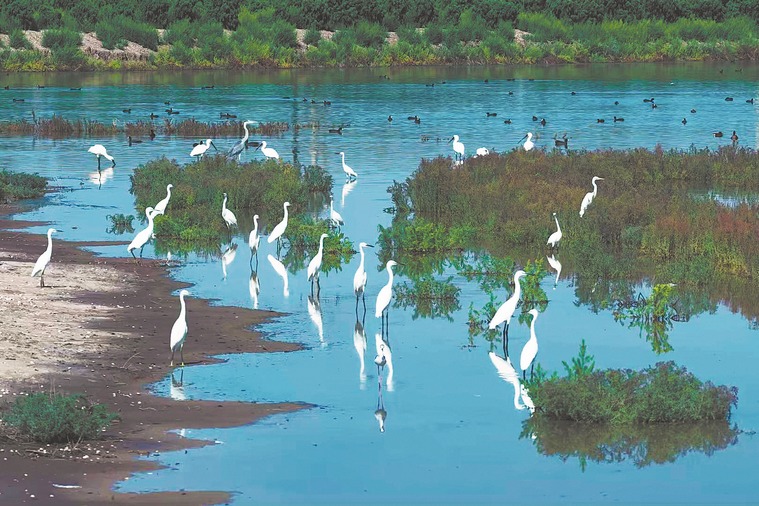
    China has achieved a landmark position in global wetland conservation, now boasting the largest wetland area in Asia and ranking fourth worldwide according to the National Forestry and Grassland Administration. The announcement, made on World Wetlands Day (February 2, 2026), highlights China’s decades-long commitment to ecological restoration and environmental governance.

    The country’s comprehensive approach to wetland preservation includes robust legal frameworks, with 21 provincial-level regions having established specific wetland protection regulations. China’s tiered management system currently encompasses 82 internationally significant wetlands, 80 nationally important sites, and 1,208 provincially designated wetland areas.

    China’s conservation success is further demonstrated by its world-leading 22 accredited international wetland cities and the establishment of 903 national wetland parks. These protected areas welcome approximately 320 million visitors annually, with about 90% offering free public access, significantly enhancing environmental education and eco-tourism.

    Looking ahead, China’s 15th Five-Year Plan (2026-2030) outlines ambitious measures to strengthen wetland monitoring systems, enhance legal protections, and develop innovative mechanisms for valuing wetland ecological products. This strategic direction positions China as a key global player in sustainable ecosystem management and biodiversity conservation.

  • Shanghai’s political advisory body opens annual session

    Shanghai’s political advisory body opens annual session

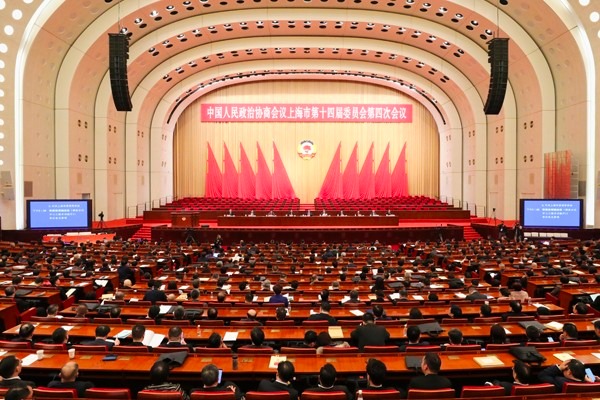
    The 14th Shanghai Municipal Committee of the Chinese People’s Political Consultative Conference (CPPCC) commenced its fourth annual session on Monday, highlighting significant advancements in the city’s governance model and policy advisory functions.

    Chairman Hu Wenrong, delivering the keynote work report, revealed that Shanghai’s pioneering practice sites for whole-process people’s democracy have substantially expanded their operational scope throughout 2025. These democratic innovation hubs attracted considerable international attention, hosting 440 foreign delegates who expressed admiration for Shanghai’s distinctive approach to democratic governance. Many international observers noted the potential applicability of Shanghai’s model as a reference for other nations exploring democratic innovations.

    The advisory body’s operational metrics demonstrate robust engagement: 143 specialized consultative meetings were organized across the network, featuring participation from CPPCC members at national, municipal, and district levels, accounting for 3,861 individual engagements. The initiative further extended to educational outreach, welcoming 274 domestic groups and 948 students from diverse academic backgrounds.

    Economic stabilization emerged as the cornerstone of the committee’s policy focus throughout the past year. Nine dedicated research teams conducted comprehensive analyses across 12 critical sectors, including high-end manufacturing, real estate markets, and foreign investment frameworks. The research initiative encompassed 173 enterprise visits to gather firsthand operational insights, with findings systematically channeled to party and government authorities to facilitate responsive policy adjustments.

    The committee’s proposal mechanism demonstrated exceptional productivity, receiving 1,269 formal submissions with 1,046 proposals achieving formal acceptance after rigorous review. These vetted proposals provided substantively constructive, precisely targeted, and operationally feasible recommendations aimed at accelerating reform initiatives and advancing Shanghai’s comprehensive modernization agenda.

  • Watch: Punxsutawney Phil emerges for Groundhog Day

    Watch: Punxsutawney Phil emerges for Groundhog Day

    For over 135 years, the small Pennsylvania town of Punxsutawney has maintained an unusual meteorological tradition each February 2nd. Crowds gather before dawn at Gobbler’s Knob to witness the ceremonial extraction of a groundhog named Punxsutawney Phil from his temporary burrow. According to folklore dating back to 1887, if the rodent sees his shadow upon emergence, six additional weeks of winter weather will follow. Should no shadow appear, the prediction indicates an early arrival of spring.

    The spectacle represents one of America’s most enduring cultural traditions, drawing thousands of attendees annually and generating significant media attention. The event incorporates elements of theater, with Phil’s handlers—members of the Punxsutawney Groundhog Club’s Inner Circle—claiming the same groundhog has been making predictions for over a century through a mysterious “elixir of life.”

    Scientific analysis from the National Oceanic and Atmospheric Administration (NOAA) reveals substantial discrepancies between Phil’s predictions and actual weather patterns. Data compiled over the past two decades indicates the groundhog’s forecasts have demonstrated approximately 35% accuracy—a success rate barely exceeding random chance. Meteorological scientists emphasize that seasonal transitions depend on complex atmospheric conditions rather than rodent behavior.

    Despite its questionable reliability, the tradition continues to thrive as a cultural phenomenon that blends folklore, community celebration, and tourism economics. The event has gained additional prominence through its depiction in the 1993 film “Groundhog Day,” which introduced the tradition to international audiences and embedded the phrase “Groundhog Day” in the cultural lexicon as a metaphor for repetitive experiences.

  • ‘Pay and smile’ – Rome visitors face Trevi Fountain charge

    ‘Pay and smile’ – Rome visitors face Trevi Fountain charge

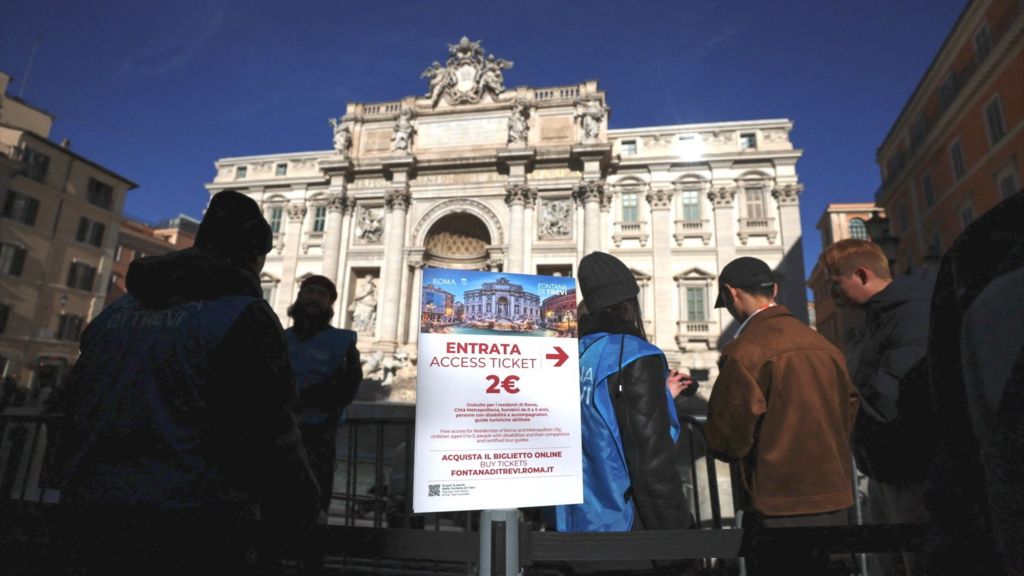
    Visitors to the Eternal City will now encounter a revised experience at one of its most celebrated landmarks. The municipal government of Rome has officially instituted a €2 admission charge for entry to the primary viewing platform of the Trevi Fountain, marking a significant shift in accessibility policy for the monument. This Baroque masterpiece, immortalized in cinematic history and renowned for its coin-tossing tradition, had previously remained freely accessible to the public throughout its history.

    The implementation follows growing concerns regarding overcrowding, maintenance costs, and site preservation. Municipal authorities indicate the nominal fee will serve dual purposes: regulating visitor flow during peak hours and generating dedicated funds for the fountain’s ongoing conservation and security operations. The measure represents part of a broader municipal strategy to manage tourism infrastructure more sustainably while protecting cultural heritage sites from excessive wear.

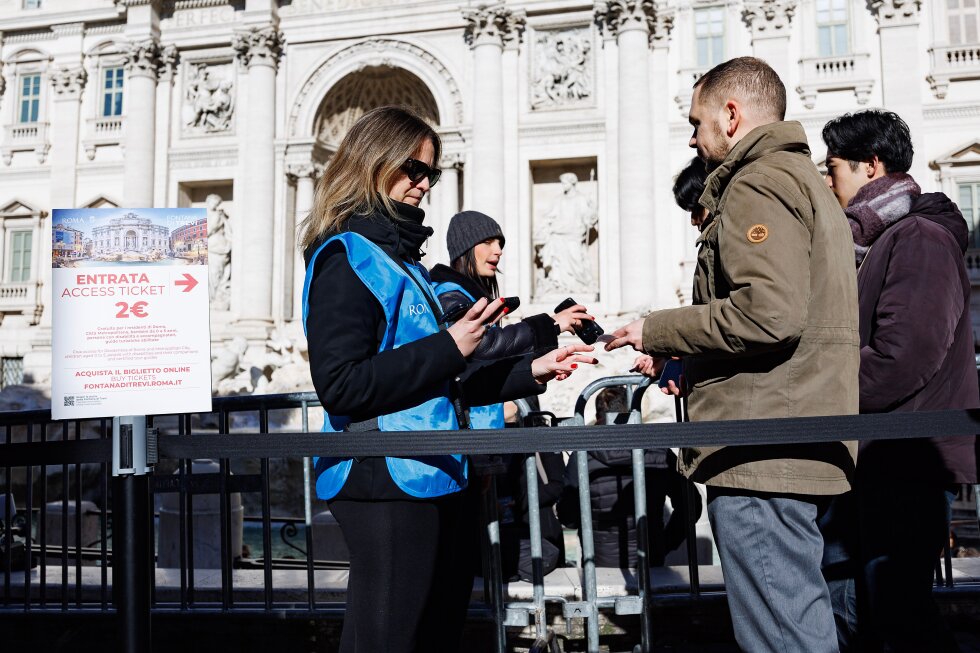
    Tourist reactions have been mixed, with some visitors acknowledging the necessity of preservation efforts while others express disappointment at the monetization of previously public spaces. Local business operators near the monument are monitoring potential impacts on foot traffic and commerce. The city has established clear signage and designated payment stations to facilitate the new system, which operates during daytime visiting hours.

    This policy aligns Rome with other European cities implementing similar tourist management measures at cultural sites. The initiative reflects ongoing global conversations about balancing open access to cultural treasures with the practical realities of their maintenance and preservation in high-tourism environments.

  • ‘Brave’ boy, 13, swims 4km to save family stranded off Australia coast

    ‘Brave’ boy, 13, swims 4km to save family stranded off Australia coast

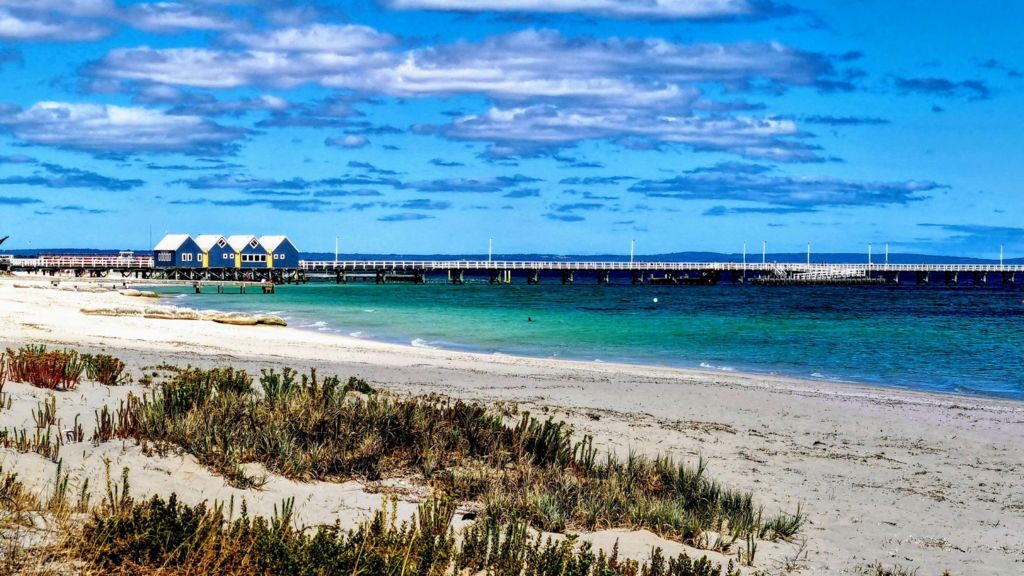
    A remarkable display of courage and resilience unfolded in Western Australia’s Geographe Bay as a 13-year-old boy executed a daring rescue mission to save his stranded family members. The incident occurred last Friday when strong winds unexpectedly swept the family’s inflatable watercraft approximately 4 kilometers offshore during what began as a routine paddleboarding and kayaking excursion.

    Facing deteriorating light conditions and challenging ocean swells, the teenager initiated what would become an extraordinary four-hour swimming ordeal. After his kayak began taking on water, the determined youth made the critical decision to continue toward shore without flotation assistance, abandoning his life jacket during the latter portion of his marathon swim to increase mobility.

    His successful arrival at approximately 18:00 local time triggered an immediate multi-agency search operation involving the Naturaliste Volunteer Marine Rescue Group and police resources. Rescue crews located the remaining family members—a 47-year-old mother, her 12-year-old son, and 8-year-old daughter—clinging to a paddleboard approximately 14 kilometers from shore around 20:30 that evening.

    Rescue commander Paul Bresland characterized the teenager’s effort as “superhuman,” noting the exceptional physical and mental fortitude required to complete such a demanding swim under dangerous conditions. Maritime officials confirmed that all three rescued individuals were properly wearing life jackets, which significantly contributed to their survival during the extended wait for assistance.

    Following medical evaluation at a nearby hospital, the family has been discharged and subsequently visited their rescuers to express gratitude personally. Police Inspector James Bradley emphasized that this incident serves as a crucial reminder of how rapidly ocean conditions can change, while acknowledging that the teenager’s determination ultimately prevented a tragic outcome.

  • British politician Peter Mandelson faces pressure to quit House of Lords over Jeffrey Epstein ties

    British politician Peter Mandelson faces pressure to quit House of Lords over Jeffrey Epstein ties

    LONDON — Peter Mandelson, the former British ambassador to Washington and prominent Labour Party figure, has resigned from his political affiliations following explosive new revelations about his connections to convicted sex offender Jeffrey Epstein. The development marks another dramatic turn in the career of one of Britain’s most skilled yet controversial political operators.

    Mandelson’s resignation from the governing Labour Party on Sunday came in response to allegations contained within over 3 million documents recently released by the U.S. Department of Justice. These documents reportedly indicate that Mandelson received substantial payments totaling $75,000 from Epstein accounts two decades ago. While Mandelson has questioned the authenticity of bank records and denies recollection of receiving these funds, he stated he was stepping aside to prevent “further embarrassment” to the party.

    The released correspondence reveals extensive communication between Mandelson and Epstein, including emails from 2009 suggesting Mandelson, then a UK government minister, offered to lobby officials regarding banking bonus taxes. One particularly compromising photograph shows Mandelson in his underwear near an unidentified woman in a bathrobe.

    Prime Minister Keir Starmer, who previously dismissed Mandelson from his ambassadorial position over earlier Epstein revelations, now faces mounting pressure to ensure Mandelson testifies in U.S. investigations. Starmer has additionally called for Mandelson’s resignation from the House of Lords, Parliament’s unelected upper chamber where Mandelson holds lifetime membership and the title Lord Mandelson since 2008.

    Cabinet minister Steve Reed emphasized that Mandelson, like Prince Andrew, bears a “moral obligation” to assist Epstein’s victims. “If anybody has information or evidence that they can share that might help to understand what’s gone on and bring justice for those victims, then they should share it,” Reed stated.

    The situation presents complex constitutional challenges, as removing Mandelson from the Lords would require parliamentary legislation—a process last undertaken over a century ago. A spokesman for Starmer acknowledged that while the Prime Minister believes Mandelson should not remain in the Lords, he lacks the direct authority to remove him.

    This development represents the latest chapter in Mandelson’s turbulent political journey. The architect of Labour’s centrist “New Labour” transformation under Tony Blair, Mandelson previously resigned twice from government over financial and ethical allegations before remarkably returning to high office. His recent appointment as Washington ambassador capitalized on his trade expertise and connections with wealth circles, but ultimately proved unsustainable as Epstein connections continued to surface.

    Epstein died by suicide in 2019 while awaiting trial on federal charges of sexually abusing dozens of girls, having previously avoided prosecution through a controversial plea deal in Florida.

  • Dubai gold prices drop further, down over Dh100 per gram since last week’s peak

    Dubai gold prices drop further, down over Dh100 per gram since last week’s peak

    Dubai’s gold market witnessed a significant downturn on Monday as prices continued their sharp decline from last week’s historic highs. The precious metal’s value experienced a substantial drop, with 24K gold falling by Dh26.25 per gram at market opening, settling at Dh563.25 per gram according to Dubai Jewellery Group data.

    This recent decline marks a dramatic reversal from Thursday’s peak of Dh666 per gram, representing a total decrease of Dh102.75 per gram within days. All gold variants in the Dubai market now trade below the Dh600 threshold, with 22K, 21K, 18K and 14K gold dropping to Dh521.5, Dh500.0, Dh428.75 and Dh334.25 per gram respectively.

    The price correction triggered a wave of selling activity among UAE residents and investors who rushed to liquidate their gold and silver holdings. Market participants moved quickly to capitalize on the recent rally, believing the precious metals had reached their peak valuation.

    International spot gold mirrored this trend, trading at $4,651.34 per ounce with a nearly five percent decline as the US dollar strengthened in global markets. This represents the first time since last month that Dubai’s gold prices have retreated below the Dh600 per gram level after previously surpassing this milestone for both 24K and 22K variants.

    Market analyst Rania Gule of XS.com Mena attributed the selling pressure to a complex interplay of psychological factors and macroeconomic variables. “In phases that follow the achievement of record highs, markets are rarely driven by a single factor; rather, investor decisions are shaped by fears of losing accumulated gains, the rapid flow of news, and shifts in broader macroeconomic expectations,” she explained.

    The current market behavior reflects typical profit-taking activity following exceptional price performance, with investors reassessing their positions amid changing market conditions and currency fluctuations.

  • Over 4,500 runners from 71 countries sprint for cancer in UAE, set world record

    Over 4,500 runners from 71 countries sprint for cancer in UAE, set world record

    ABU DHABI – In an extraordinary display of global solidarity, Hudayriyat Island witnessed a historic gathering as 4,500 participants from 71 nations converged for the Abu Dhabi Cancer Run 2026, shattering the Guinness World Record for the most nationalities in a cancer awareness running event. The previous benchmark of 50 nationalities was dramatically surpassed in this vibrant demonstration of cross-cultural unity against a universal health challenge.

    The event, orchestrated by Plan B Group and presented by Cleveland Clinic Abu Dhabi, transcended athletic competition to become a powerful testament to communal support. This year’s edition placed particular emphasis on the crucial role of family networks in cancer journeys, highlighting how the disease impacts entire support systems beyond individual patients.

    Among the participants was Dr. Sonia Haboub, a cancer survivor and university professor whose personal narrative embodies the event’s spirit. Diagnosed with uterine cancer at 25 during what she believed was a routine London check-up, Dr. Haboub discovered running as psychological salvation during her recovery. “Running saved my life—especially mentally,” she revealed to Khaleej Times. “It helped me navigate post-trauma, depression, and profoundly difficult moments. Lacing up your shoes makes you realize you can overcome anything.”

    Dr. Harmeek Singh, Founder and Chairman of Plan B Group, shared his motivation stemming from his mother’s cancer experience eighteen years ago. “This platform strengthens our collective voice,” he stated. “While medical advancements continue, early detection remains our most powerful weapon. Annual check-ups are absolutely essential for saving lives.”

    The record was officially validated by Guinness World Records adjudicator Hanane Spiers, who conducted rigorous on-site verification of participants’ nationalities. Although organizers anticipated 78 nationalities, the confirmed count of 71 still represented a significant achievement. Spiers praised the event as “the pinnacle of record-breaking” for its community-building purpose.

    Dr. Stephen Grobmyer, Institute Chief of Cleveland Clinic Abu Dhabi’s Cancer Institute, noted the symbolic resonance between the UAE’s diverse population and cancer’s indiscriminate nature. “Cancer affects people of all nationalities,” he observed. “Celebrating diversity while supporting patients and families reflects our commitment to inclusive healthcare.”

    The event created an electrifying atmosphere with Kenyan drum performances, mascots, and live DJs, generating what participant Mungai Kirogoi described as unprecedented energy and positivity. For Dr. Haboub, watching thousands run together provided profound emotional security: “Sometimes it’s harder for the people around us than for the person who had cancer. When you see this solidarity, it reminds you that you’re not alone.”

  • Trevi Fountain fee goes into effect as Rome seeks to manage tourist flow at celebrated water feature

    Trevi Fountain fee goes into effect as Rome seeks to manage tourist flow at celebrated water feature

    ROME — The Eternal City has initiated a new €2 ($2.35) access fee for tourists seeking close proximity to the iconic Trevi Fountain, marking a significant shift in urban tourism management. Implemented on Monday, this measure aims to generate essential revenue while regulating visitor density at one of the world’s most celebrated Baroque monuments.

    The innovative pricing strategy emerged from successful crowd management experiments conducted throughout the previous year. Visitors now experience structured pathways and controlled entry systems, fundamentally transforming the accessibility dynamics around the fountain’s basin. Initial reactions from international tourists have been overwhelmingly positive, with many acknowledging the nominal fee as reasonable compensation for enhanced visitation quality.

    Simultaneously, Rome introduced a complementary €5 museum access ticket for specific cultural institutions. Both initiatives exempt registered city residents, with additional revenue streams designated to expand free museum access for locals. Municipal authorities project approximately €6.5 million in annual revenue that will directly support preservation efforts for Rome’s extensive cultural heritage.

    Tourism Assessor Alessandro Onorato emphasized the symbolic value of the modest charge: ‘Considering the Trevi Fountain’s global significance, this token amount demonstrates Rome’s commitment to balancing accessibility with conservation.’ The system permits advanced online bookings for prime daylight access, while maintaining free viewing from the surrounding piazza and during non-ticketed hours.

    This approach aligns with broader Italian tourism management strategies, including Venice’s day-tripper tax and the Pantheon’s ticketing system. However, it contrasts sharply with recent Louvre Museum price increases reaching €32 for non-European visitors. The Trevi Fountain continues to captivate visitors with its mythological grandeur—featuring Oceanus surrounded by cascading waters—and enduring cinematic legacy from Fellini’s ‘La Dolce Vita.’ While recreational bathing remains prohibited, the tradition of coin-tossing for ensured return to Rome persists under the new managed access system.