博客

  • Australia’s richest gain $600,000 a day as inequality deepens, new report reveals

    Australia’s richest gain $600,000 a day as inequality deepens, new report reveals

    A stark economic divergence emerged in Australia during 2025 as the nation’s wealthiest individuals experienced unprecedented financial growth while millions faced severe economic hardship. According to Oxfam’s latest inequality assessment, Australia’s 48 billionaires collectively control more wealth than the bottom 11 million citizens combined, highlighting one of the most pronounced wealth disparities in the nation’s history.

    The comprehensive report reveals that each Australian billionaire accumulated over $600,000 daily throughout 2025, exceeding the annual income of approximately 2,000 average workers. This wealth concentration has accelerated dramatically since the pandemic, with Australia adding eight new billionaires to its ultra-wealthy cohort.

    Globally, billionaire fortunes expanded by 16 percent in 2025—three times faster than the five-year average—reaching an unprecedented $27.7 trillion across approximately 3,000 billionaires worldwide. Elon Musk became the first individual to surpass the half-trillion dollar milestone, exemplifying this extraordinary wealth accumulation trend.

    Oxfam Australia CEO Jennifer Tierney attributes this growing inequality to systemic advantages within tax structures. “Current frameworks enable exponential billionaire wealth growth without appropriate taxation mechanisms,” Tierney explained. “There exists no effective limitation on personal wealth accumulation while essential public services remain underfunded.”

    The organization’s analysis indicates billionaires are 4,000 times more likely to hold political office than ordinary citizens, enabling direct influence over policy-making. This political engagement includes substantial electoral investments, exemplified by mining magnate Clive Palmer’s $250 million expenditure across five federal elections.

    Concurrently, Australia faces mounting social challenges with 3.7 million citizens living in poverty—including 757,000 children under 15—while one-third of the population experienced food insecurity during the past year.

    Oxfam proposes implementing a global 5 percent wealth tax on billionaires, which would have generated $17.4 billion from Australian billionaires alone in 2025. This revenue could fund universal childcare, extend energy bill relief programs for two years, or increase humanitarian funding nearly sevenfold.

    The report specifically criticizes tax concessions like negative gearing and capital gains discounts that disproportionately benefit wealthy Australians, estimating these policies cost the national treasury approximately $20 billion annually while exacerbating housing affordability crises.
  • Chile: At least 15 killed, emergency declared due to wildfires

    Chile: At least 15 killed, emergency declared due to wildfires

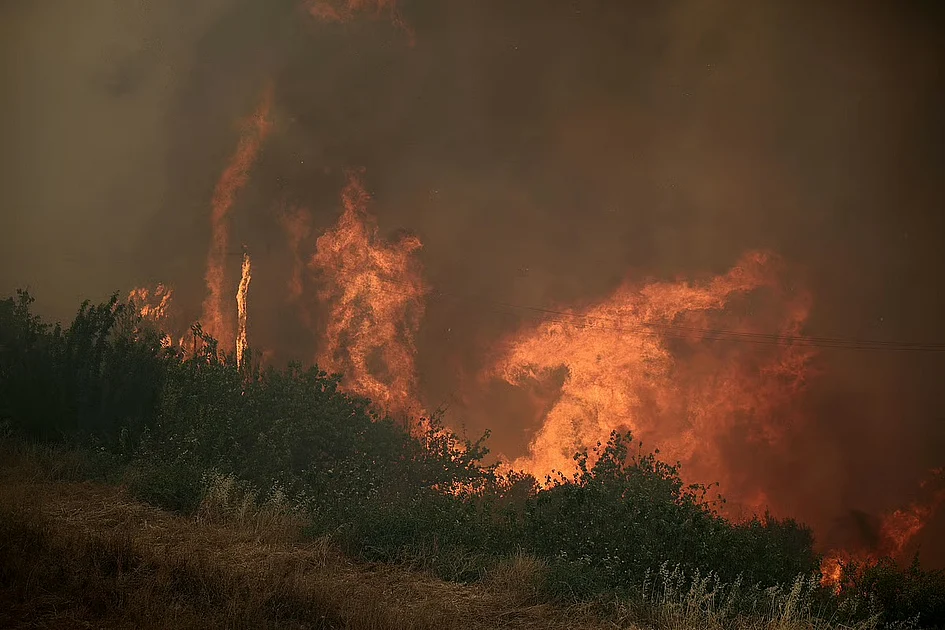
    Chilean authorities have declared a state of emergency in southern regions as devastating wildfires continue to rage, resulting in at least 15 fatalities and the evacuation of over 50,000 residents. The catastrophic blazes, primarily concentrated in the Nuble and Biobio regions approximately 500 kilometers south of Santiago, have been fueled by intense summer heat and powerful winds characteristic of the Southern Hemisphere’s current season.

    Security Minister Luis Cordero confirmed the death toll Sunday as firefighting crews battled nearly two dozen separate infernos across the affected areas. Interior Minister Alvaro Elizalde characterized the situation as ‘complicated,’ emphasizing the severity of the crisis unfolding in the south-central territories.

    President Gabriel Boric activated emergency protocols through a social media announcement, mobilizing all available national resources including military assistance. The declaration enables armed forces deployment to support fire containment and evacuation efforts amid the escalating disaster.

    National Service for Disaster Prevention and Response director Alicia Cebrian reported that the majority of evacuations occurred in the Biobio cities of Penco and Lirquen, with a combined population of approximately 60,000 inhabitants. Local television broadcasts depicted harrowing scenes of streets filled with charred vehicles and neighborhoods engulfed in flames.

    This tragedy echoes previous wildfire catastrophes that have plagued Chile’s south-central regions in recent years. In February 2024, simultaneous fires near Viña del Mar resulted in 138 fatalities and affected approximately 16,000 residents, according to official records from the public prosecutor’s office.

  • Chile declares state of catastrophe in two regions after wildfires kill 16

    Chile declares state of catastrophe in two regions after wildfires kill 16

    Chilean President Gabriel Boric has enacted a state of catastrophe across the Nuble and Biobio regions following devastating wildfires that have resulted in at least 16 fatalities. The emergency declaration, announced Sunday via the president’s official social media channel, mobilizes all available national resources to combat the escalating crisis.

    According to Chile’s National Forestry Corporation, 24 active fires were burning across the country as of Sunday morning, with the most severe concentration in Nuble where nine separate blazes are raging. The most extensive fire has consumed approximately 2,200 hectares in the city of Ranquil within the Nuble region.

    The scale of displacement is substantial, with National Disaster Prevention and Response Service director Alicia Cebrian reporting that approximately 30,000 residents have been evacuated from the severely impacted communities around Penco in Biobio. Comprehensive assessment of residential damage remains ongoing as emergency crews battle the spreading flames.

    This tragedy evokes memories of Chile’s devastating 2024 wildfire season, when infernos swept through the central Valparaiso region claiming 138 lives and destroying tens of thousands of homes. The current emergency declaration enables military deployment and unlocks federal emergency funding to support firefighting operations and victim assistance.

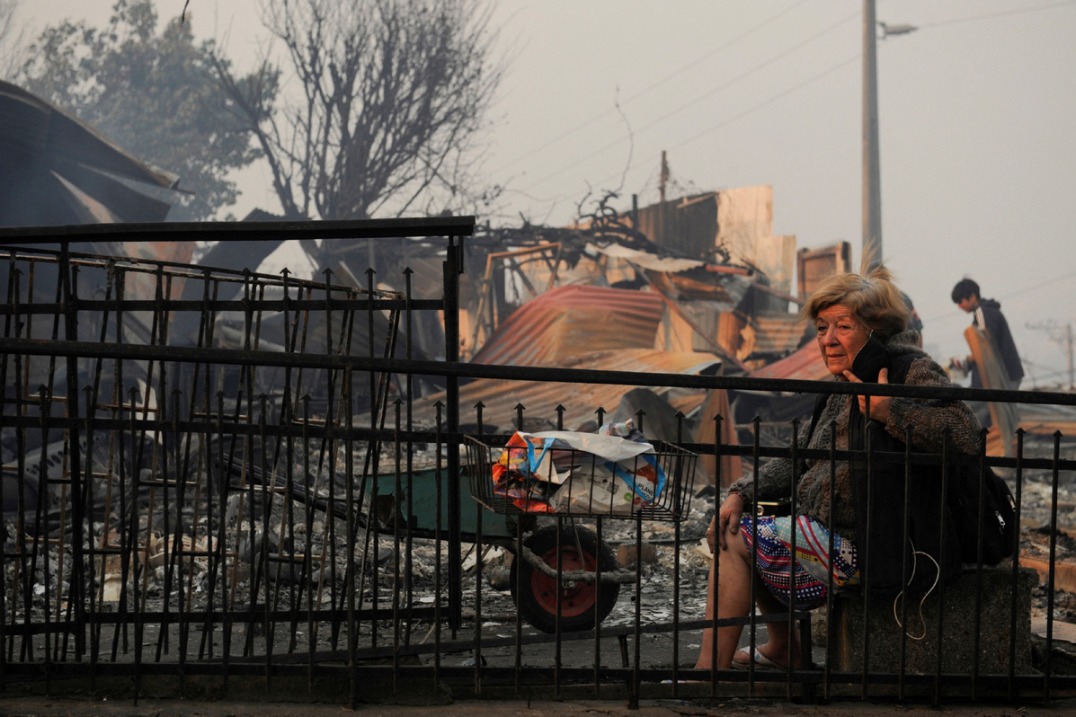
    Photographic evidence from affected areas shows residents surveying the charred remnants of their communities, with buildings reduced to rubble and landscapes transformed into ash-covered wastelands. The declaration of catastrophe status reflects the severity of what officials are describing as one of Chile’s most significant wildfire events in recent years.

  • World markets face fresh jolt as Trump vows tariffs on Europe over Greenland

    World markets face fresh jolt as Trump vows tariffs on Europe over Greenland

    Global financial markets are bracing for significant turbulence following President Donald Trump’s unexpected declaration of punitive tariffs against eight European nations. The unprecedented trade measure, linked to the United States’ pursuit of acquiring Greenland, marks a dramatic escalation in transatlantic trade tensions.

    Effective February 1st, the administration will impose an immediate 10% tariff increase on imports from Denmark, Norway, Sweden, France, Germany, the Netherlands, Finland, and Britain. These levies are scheduled to escalate to 25% by June 1st should diplomatic negotiations fail to produce a resolution regarding Greenland’s status.

    The collective European response emerged swiftly, with affected nations issuing a unified statement reaffirming their support for Greenland’s territorial integrity. Irish Taoiseach Leo Varadkar indicated the European Union stands prepared to implement retaliatory measures should the U.S. proceed with its tariff implementation.

    Financial analysts express concern that this development shatters the recent period of trade stability. Berenberg Chief Economist Holger Schmieding noted, ‘Optimism that tariff tensions had subsided for the foreseeable future has been abruptly dismantled. We now confront a scenario reminiscent of last spring’s volatility.’

    Market projections suggest the euro will face immediate pressure during Asian trading sessions, potentially extending its recent decline against the dollar. Meanwhile, European defense equities are anticipated to benefit from heightened geopolitical uncertainties, having already surged approximately 15% this month amid growing international tensions.

    Denmark’s currency mechanism will face particular scrutiny as the krone maintains its peg to the euro amidst mounting pressure. Geopolitical strategist Tina Fordham observed, ‘The U.S.-EU trade conflict has dramatically reignited,’ highlighting the irony of this development coinciding with the EU’s signing of a new free trade agreement with Mercosur nations.

    Beyond immediate market impacts, this confrontation raises fundamental questions about NATO alliance cohesion and the durability of recent trade agreements. The World Economic Forum’s latest risk assessment has elevated economic confrontation between nations to its primary concern, surpassing armed conflict for the first time.

    Investors are expected to adopt a risk-averse stance, potentially boosting traditional safe-haven assets including gold, which continues trading near record highs. However, market resilience demonstrated during previous geopolitical crises suggests a tempered reaction may emerge as participants weigh the probability of implemented policies versus rhetorical threats.

  • Patriots and Rams reach Conference Championship games

    Patriots and Rams reach Conference Championship games

    In a dramatic NFL Divisional Round showdown, the Los Angeles Rams clinched a heart-stopping 20-17 overtime victory against the Chicago Bears amidst frigid conditions at Soldier Field. The win propels the Rams into the NFC Championship game against the Seattle Seahawks.

    The contest, played in temperatures dipping to -8°C (-13°C wind chill), saw the Rams’ offense struggle for much of the game. After a 10-10 halftime deadlock, running back Kyren Williams broke through with a 5-yard touchdown run in the fourth quarter, putting Los Angeles ahead.

    Chicago quarterback Caleb Williams, the 2024 number one draft pick nicknamed ‘the Iceman’ for his clutch performances, lived up to his reputation by launching a miraculous 40-yard touchdown pass to tight end Cole Kmet with just 18 seconds remaining, sending the game into overtime. The Bears had set an NFL record with seven comeback victories when trailing in the final two minutes this season.

    However, in the extra period, Williams threw his third interception of the game. The Rams capitalized on the turnover, with kicker Harrison Mevis securing the win with a decisive 42-yard field goal.

    In the AFC, the New England Patriots continued their remarkable resurgence by defeating the Houston Texans 28-16 in snowy conditions. Second-year quarterback Drake Maye, who posted the league’s best completion rate (72%) during the regular season, threw three touchdown passes despite three turnovers. His fourth-quarter 32-yard deep shot to Kayshon Boutte, who made a spectacular one-handed catch, sealed the victory.

    The Patriots’ dramatic turnaround from 4-13 in 2024 to 14-3 this season ties for the biggest single-season improvement in NFL history. They will face the Denver Broncos in the AFC Championship game, where Maye will duel against Jarrett Stidham, who briefly succeeded Tom Brady in New England before finding success in Denver.

    The winners of next Sunday’s conference championships will meet in Super Bowl 60 on February 8th at Levi’s Stadium in Santa Clara, California.

  • China factory explosion kills two, injures 66: Media report

    China factory explosion kills two, injures 66: Media report

    A catastrophic explosion rocked a steel manufacturing facility in northern China on Sunday afternoon, resulting in multiple casualties and widespread damage. The incident occurred at approximately 3:00 PM local time at the Baogang United Steel plate plant located in Baotou City within Inner Mongolia Autonomous Region.

    According to official reports from state media, the industrial accident has confirmed two fatalities with five individuals currently unaccounted for. Medical facilities have received 66 injured personnel, including three patients classified as being in critical condition. Emergency response teams including fire rescue units and local emergency management authorities have been conducting continuous operations at the disaster site since the explosion occurred.

    Eyewitness accounts and social media footage depict extensive structural damage with collapsed ceilings and substantial debris throughout the facility. Visual evidence shows massive smoke plumes rising above the plant and what appears to be large cylindrical metal components scattered among the wreckage. The force of the detonation was sufficiently powerful to affect residential areas kilometers from the explosion epicenter, with numerous residents reporting structural vibrations and shattered windows in their homes.

    While the precise cause remains under formal investigation by authorities, this incident highlights ongoing concerns regarding industrial safety protocols in Chinese manufacturing facilities. The Baotou steel plant explosion represents the latest in a series of industrial accidents that have plagued China’s manufacturing sector despite repeated safety initiatives.

    Historical context indicates similar tragedies have occurred throughout China’s industrial regions, including a fireworks factory explosion in Hunan province that claimed nine lives in June of this year, and the devastating 2015 Tianjin chemical warehouse explosions that resulted in over 170 fatalities.

  • Damien O’Brien faces court for allegedly planting pipe-bombs in Belconnen, ACT

    Damien O’Brien faces court for allegedly planting pipe-bombs in Belconnen, ACT

    A 41-year-old Canberra man has been formally charged following allegations of constructing and deploying multiple pipe bomb devices in the city’s northern suburbs. Damien O’Brien appeared before the ACT Magistrates Court on Monday, facing serious charges related to the unauthorized manufacture of prohibited dangerous substances and possession of illegal weaponry.

    Court documents reveal that the explosive devices were allegedly assembled using components sourced from Bunnings Warehouse in Belconnen. According to Magistrate Ian Temby, the materials included 11 galvanized pipes and 22 matching end caps, with a total reported value of $127. Police investigations indicate that some items were allegedly stolen from the store while others were purchased normally.

    The discovery of multiple pipe bombs near Lake Ginninderra prompted an intensive police investigation last week. Authorities confirmed that several devices had detonated prior to discovery, though fortunately no injuries were reported. The investigation culminated in a weekend raid on O’Brien’s Belconnen residence, where police reportedly discovered additional materials consistent with explosive device assembly.

    O’Brien, who appeared in court using crutches, remained silent throughout proceedings and did not apply for bail. He faces three primary charges from January 18, plus an additional charge from December for failure to appear in court. The defendant was remanded in custody and is scheduled to reappear in court on February 10 for further proceedings.

  • Pentagon readies 1,500 troops for potential Minnesota deployment, US officials say

    Pentagon readies 1,500 troops for potential Minnesota deployment, US officials say

    The Pentagon has initiated prepare-to-deploy orders for approximately 1,500 active-duty soldiers from Alaska-based units amid escalating tensions in Minnesota, according to senior U.S. officials. The mobilization preparation comes as federal immigration enforcement operations have sparked widespread protests and confrontations in the Midwestern state.

    The strategic positioning of cold-weather specialized troops from the 11th Airborne Division’s infantry battalions follows President Donald Trump’s Thursday threat to invoke the Insurrection Act if state officials fail to curb protests targeting Immigration and Customs Enforcement personnel. While deployment remains uncertain, the move represents the administration’s latest escalation in responding to domestic civil disturbances.

    This development occurs against the backdrop of intensified federal immigration enforcement in Minneapolis, where tensions dramatically increased after an ICE agent fatally shot Renee Good, a U.S. citizen and mother of three, during a January 7th encounter. The incident has galvanized opposition to the nearly 3,000 federal agents deployed to the Minneapolis-St. Paul area since last week.

    The Trump administration maintains that military deployment would protect federal property and personnel, citing previous deployments in Los Angeles where Marines were dispatched under similar justification. Legal complexities surround potential deployment, as presidents possess authority to deploy active-duty forces for specific domestic purposes without invoking the Insurrection Act.

    Minnesota Governor Tim Walz has mobilized the state’s National Guard while facing a Justice Department criminal investigation. Local leaders have consistently accused the administration of federal overreach and exaggerating isolated violence to justify military intervention. The administration has particularly focused on Minnesota’s Somali immigrant community in its rationale for increased enforcement.

    The Pentagon and White House have not publicly commented on the deployment preparations, which were first reported by ABC News. The situation continues to evolve as both protest activity and federal enforcement operations persist in the region.

  • Trump tests boundaries of his power as Minnesota pushes back

    Trump tests boundaries of his power as Minnesota pushes back

    Minnesota has become the epicenter of a mounting constitutional crisis as federal immigration enforcement operations trigger widespread civil unrest and prompt military deployment preparations. The state faces unprecedented tensions with approximately 1,500 troops reportedly standing ready for deployment amid escalating protests against President Trump’s aggressive immigration enforcement campaign.

    In the Twin Cities of Minneapolis and St. Paul, civilian monitoring groups have organized to track and document the activities of U.S. Immigration and Customs Enforcement (ICE) agents. One activist, operating under the pseudonym ‘Sunshine’ due to safety concerns, explained her daily routine of tracking unmarked ICE vehicles through city streets. ‘We have the legal right to observe [ICE agents], but they seem to have forgotten that,’ she stated while navigating the icy roads of St. Paul.

    The conflict reached a critical juncture following the January 7th fatal shooting of 37-year-old Minneapolis resident Renée Good by an ICE agent. The circumstances remain fiercely contested, with federal authorities claiming self-defense while local officials maintain the victim posed no danger. This incident has galvanized community resistance and intensified protests outside federal buildings, despite freezing temperatures.

    Federal judicial intervention has attempted to de-escalate tensions. U.S. District Judge Katherine Menendez issued a restraining order prohibiting ICE agents from arresting or using pepper spray against peaceful demonstrators monitoring immigration enforcement activities. However, clashes persist, with authorities deploying tear gas and pepper balls to disperse crowds.

    The Department of Homeland Security maintains that operations target ‘the worst of the worst,’ but documentation reveals numerous instances of non-criminal immigrants and even U.S. citizens being detained. The administration’s approach has proven particularly controversial in Minnesota, home to America’s largest Somali immigrant community, whom President Trump previously described as ‘garbage’ and suggested should ‘return to where they came from.’

    The political dimension has intensified with the Justice Department opening criminal investigations against Minnesota Governor Tim Walz and Minneapolis Mayor Jacob Frey, accusing them of obstructing federal immigration operations. Governor Walz, who recently abandoned his re-election bid amid unrelated fraud scandals, condemned the probes as ‘weaponizing the justice system against your opponents.’

    President Trump has threatened to invoke the Insurrection Act—a 19th-century statute permitting domestic military deployment—to quell resistance to his immigration campaign. Meanwhile, counter-protests have emerged, including attempts by pardoned January 6th participant Jake Lang to organize pro-ICE rallies, though these have been overwhelmingly outnumbered by opposing demonstrators.

    As temperatures plummet and tensions escalate, Minneapolis residents like ‘Sunshine’ continue their vigilante monitoring efforts, despite reporting intimidation tactics from federal agents. ‘If they’re doing this with me, they’re not putting their hands on someone,’ she remarked, acknowledging the personal cost in time and resources. ‘I think that I’m doing what I’m doing because I love my neighbors.’

  • Senegal stun hosts Morocco to win AFCON title after final walk-off protest

    Senegal stun hosts Morocco to win AFCON title after final walk-off protest

    In a stunning conclusion to the Africa Cup of Nations, Senegal secured a dramatic 1-0 victory over host nation Morocco during extra time, capturing their second continental title in three years. The match, however, was overshadowed by unprecedented scenes of controversy that culminated in Senegal’s temporary walk-off from the pitch.

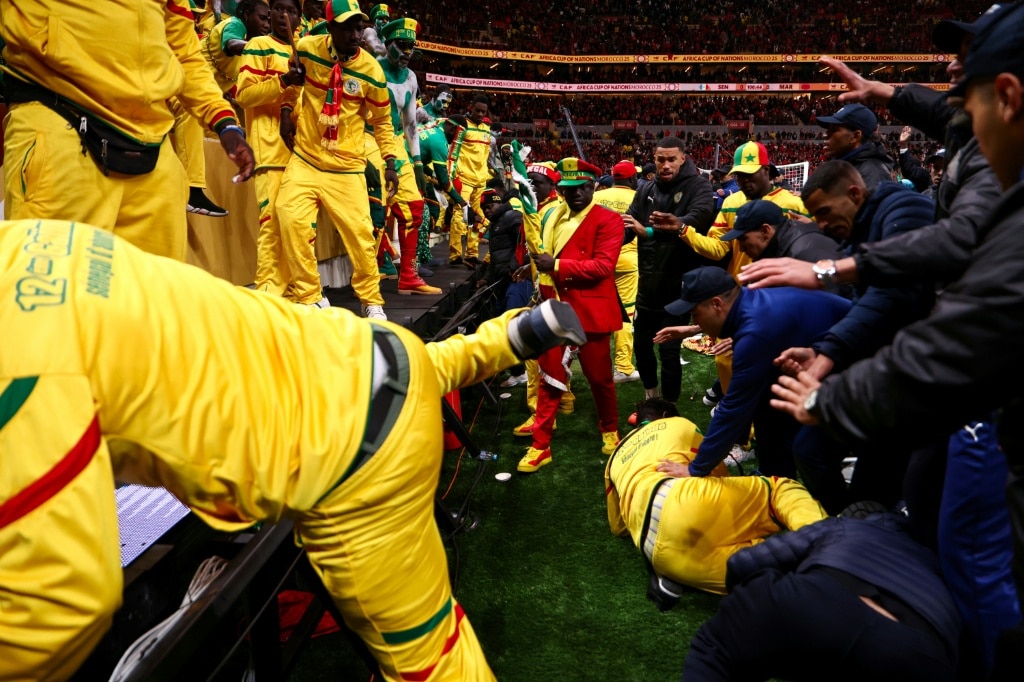
    The tension reached its peak in the 24th minute of added time when Congolese referee Jean-Jacques Ndala awarded Morocco a penalty following a VAR review for a challenge on Brahim Díaz. The decision triggered immediate outrage from the Senegalese camp, with players staging a prolonged protest and eventually leaving the field in defiance. The situation escalated further as segments of Senegalese supporters engaged in violent clashes with security personnel, throwing objects and attempting to breach the playing area.

    Real Madrid winger Díaz had the opportunity to clinch victory for the hosts but delivered a poorly executed ‘Panenka’ chip that was comfortably saved by Senegal goalkeeper Edouard Mendy. The missed penalty proved costly as Pape Gueye emerged as the match-winner just four minutes into extra time, unleashing a spectacular strike into the top corner after receiving a precise pass from Idrissa Gana Gueye.

    The victory marks Senegal’s successful defense of their AFCON title, achieved despite their historical struggle in tournament finals. Remarkably, Gueye’s goal represented Senegal’s first-ever goal in an AFCON final after failing to score in their three previous appearances.

    For Morocco, the defeat represents a heartbreaking conclusion to their campaign, extending their wait for a second African championship to fifty years. Coach Walid Regragui expressed disappointment with the match’s proceedings, stating: ‘Congratulations to Senegal, but the image we gave of African football is disappointing.’

    The tournament concluded amid questions regarding spectator management and on-field discipline, with investigations likely to focus on the conduct of both teams and organizational protocols during the critical final moments.