博客

  • What to expect as Trump and Petro meet at White House after months of tension and insults

    What to expect as Trump and Petro meet at White House after months of tension and insults

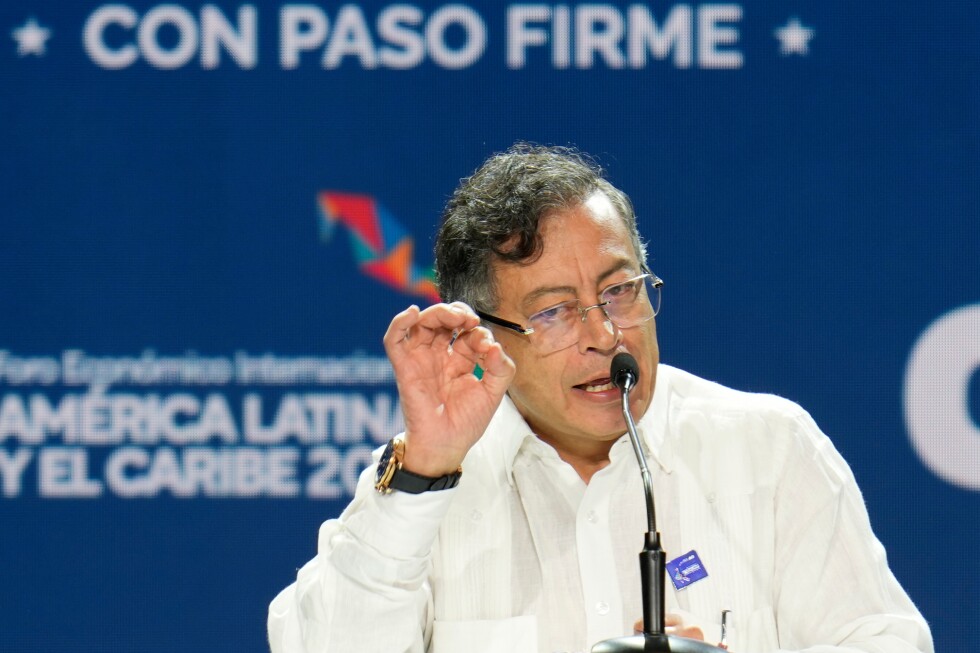
    WASHINGTON — In a remarkable diplomatic pivot, U.S. President Donald Trump is preparing to welcome Colombian President Gustavo Petro to the White House, marking a dramatic de-escalation following months of heightened tensions between the two nations. This high-stakes encounter comes after a period of extraordinary public friction that included personal insults, economic threats, and fundamental policy disagreements.

    The relationship between these two leaders reached a breaking point when Petro characterized Trump as an ‘accomplice to genocide’ in Gaza, while the U.S. president retaliated by labeling Petro a ‘drug lord.’ This verbal warfare escalated into concrete actions: the imposition of U.S. sanctions against Colombia, withdrawal of financial assistance, threats of reciprocal tariffs, and even implied military action.

    A critical turning point emerged in early January when Trump accepted a diplomatic overture from Petro, subsequently describing their conversation as a ‘great honor.’ This phone discussion, focused on addressing drug trafficking concerns and other bilateral disagreements, established the foundation for Tuesday’s anticipated summit.

    At the core of the discussions will be contrasting approaches to narcotics enforcement. The United States maintains its traditional emphasis on aggressive eradication and supply-side control strategies. Conversely, the Petro administration advocates for interdiction efforts, demand reduction initiatives, and creating economic alternatives for small-scale coca farmers.

    This philosophical divergence culminated in 2025 with the U.S. formally designating Colombia as non-cooperative in anti-drug efforts—the first such classification in three decades. Despite Petro’s emphasis on record drug seizures and claims of stabilized coca cultivation, United Nations data reveals a 65% surge in potential cocaine production during his administration, exceeding 3,000 metric tons annually.

    The Venezuela situation further complicated bilateral relations. Petro vehemently condemned the January 3rd U.S. operation in Caracas that captured President Nicolás Maduro and his wife, denouncing it as an ‘act of aggression’ and comparing it to Nazi Germany’s bombing of Guernica. However, his subsequent hour-long discussion with Trump significantly softened his tone, creating diplomatic space for reconciliation.

    According to Gimena Sánchez-Garzoli of the Washington Office on Latin America, Trump’s engagement with Petro served to address growing regional concerns about U.S. operations in Venezuela. Both leaders are expected to explore collaborative actions against drug trafficking networks and coordinated efforts against the National Liberation Army (ELN) guerrilla group operating along the Venezuela-Colombia border.

    Signaling improved relations ahead of the summit, Colombia’s Foreign Ministry announced the resumption of deportation repatriation flights from the United States—a stark reversal from last year’s near trade war triggered by Colombia’s refusal of U.S. military deportation flights. This conflict was only resolved after Trump threatened substantial tariffs and visa cancellations.

    Elizabeth Dickinson of the International Crisis Group noted, ‘There’s significant potential for mutual cooperation and shared success.’ She added that the optimal outcome would be ‘a cordial, pragmatic relationship where both countries return to their historical pattern of quiet, effective cooperation on shared security threats. The less noise surrounding this relationship, the better.’

  • Man City won’t surrender in title race, says Guardiola

    Man City won’t surrender in title race, says Guardiola

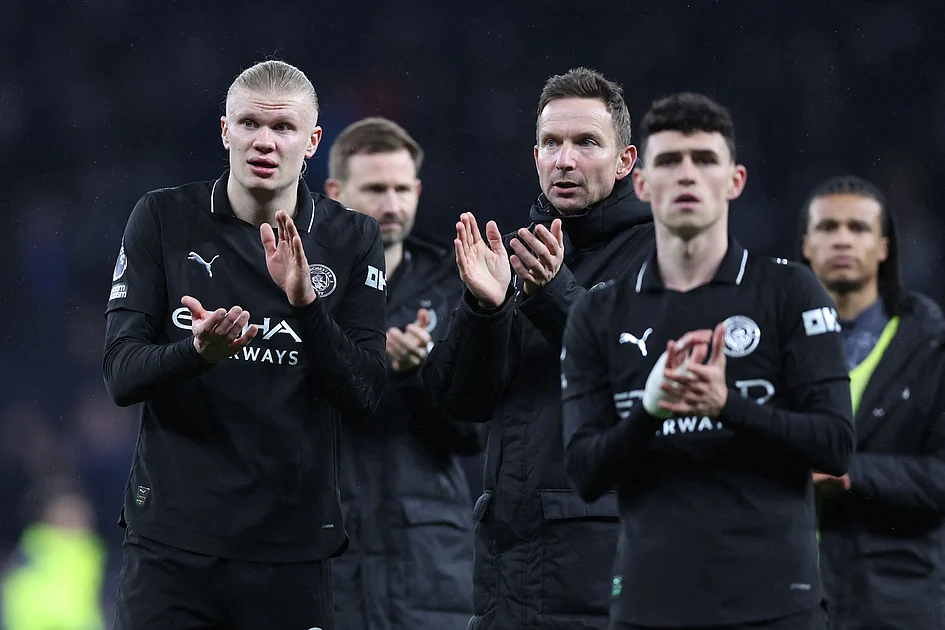
    Pep Guardiola has emphatically declared Manchester City’s continued pursuit of the Premier League title despite suffering a devastating blow in a 2-2 draw against Tottenham Hotspur on Sunday. The Citizens appeared destined for victory after establishing a commanding first-half lead through goals from Rayan Cherki and Antoine Semenyo at Tottenham Hotspur Stadium.

    The match underwent a dramatic transformation following the interval as Tottenham mounted an impressive comeback. Dominic Solanke initiated the revival with a controversial close-range finish that survived VAR review despite appearing to make contact with City defender Marc Guehi. The equalizer arrived through a moment of pure brilliance as Solanke executed an extraordinary scorpion kick from Conor Gallagher’s cross, leaving the City defense astonished.

    This result leaves second-placed Manchester City trailing leaders Arsenal by six points after the Gunners’ comprehensive 4-0 victory over Leeds United on Saturday. Guardiola expressed particular frustration with the decision to allow Tottenham’s first goal, stating: “When a central defender commits that challenge on a striker, it’s invariably penalized as a foul. The emotional impact of that refereeing decision shifted the momentum dramatically.”

    The City manager received a yellow card for his persistent protests during the match. Despite winning just once in their last six league appearances, Guardiola remains defiant about his team’s championship prospects: “With fourteen matches remaining? While the opportunity exists, our hopes persist. I witnessed exceptional spirit from our players despite recent injury challenges.”

    Meanwhile, Tottenham manager Thomas Frank celebrated his team’s resilient performance amid significant injury problems that left eleven players unavailable. Frank praised his squad’s character: “I’m extremely proud of our response to adversity. This team continues to demonstrate remarkable resilience despite numerous injury setbacks, showing tremendous growth in our collective mentality.”

  • 19 people jailed over deadly 2023 Beijing hospital fire

    19 people jailed over deadly 2023 Beijing hospital fire

    A Beijing court has delivered significant prison sentences to 19 individuals held responsible for catastrophic safety failures that resulted in a deadly hospital fire in 2023. The sentencing, announced on Monday, reflects the gravity of the violations that led to the tragic incident.

    The convicted parties received prison terms ranging from 2 to 6.5 years for their roles in the preventable disaster. The sentences stem from comprehensive investigations that revealed multiple layers of safety negligence and regulatory non-compliance within the hospital’s operational framework.

    Judicial authorities emphasized that the ruling demonstrates China’s strengthened commitment to enforcing workplace safety standards and holding individuals accountable for violations that endanger public welfare. The verdict sends a clear message about the serious consequences of disregarding safety protocols in medical facilities and other public institutions.

    The 2023 hospital fire exposed critical gaps in safety management systems and emergency preparedness within healthcare facilities. Since the incident, regulatory bodies have implemented more rigorous inspection regimes and enhanced safety requirements for medical institutions nationwide.

    This case represents one of the most significant applications of criminal liability for safety violations in China’s healthcare sector, setting a precedent for future enforcement actions and highlighting the increased scrutiny on institutional safety compliance.

  • Ukraine hails ‘real results’ after Musk restricts Russian Starlink use

    Ukraine hails ‘real results’ after Musk restricts Russian Starlink use

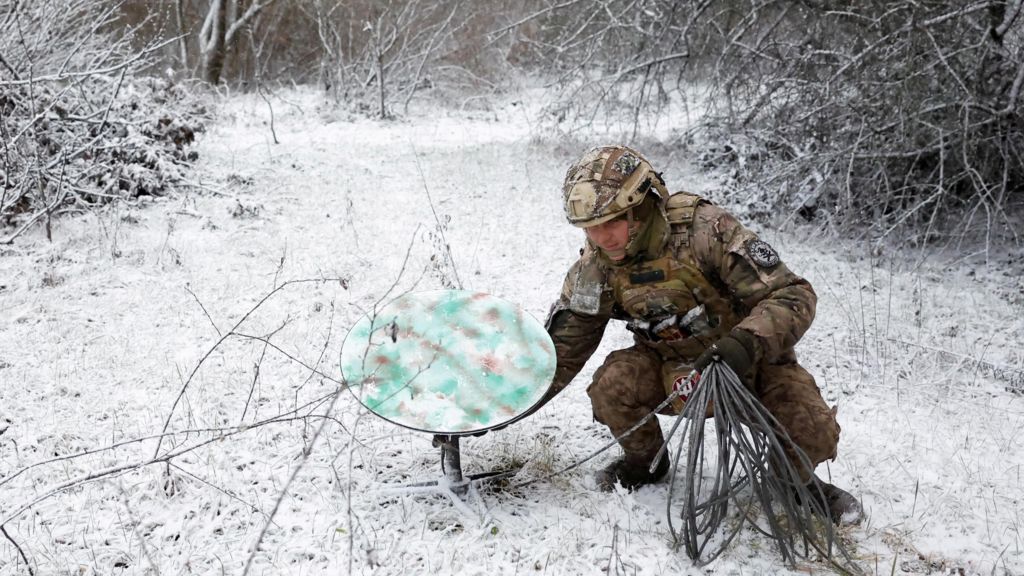
    SpaceX’s decisive intervention has effectively neutralized Russia’s illicit utilization of Starlink satellite technology for combat operations in Ukraine, according to official statements from Kyiv. Ukrainian Defense Minister Mykhailo Fedorov publicly acknowledged Elon Musk’s pivotal role in addressing this critical security vulnerability, hailing the SpaceX founder as “a true champion of freedom and a genuine friend of the Ukrainian people.”

    The breakthrough came after Ukrainian authorities alerted SpaceX to confirmed instances of Russian forces employing Starlink-connected drones to conduct precision attacks. These kamikaze drones, specifically the low-cost Molniya-2 models equipped with Starlink terminals, had demonstrated dramatically enhanced battlefield capabilities according to analyses from the Institute for the Study of War.

    While neither Fedorov nor Musk disclosed specific technical details, defense ministry reports indicate SpaceX implemented a strategic speed restriction limiting terminal functionality to 75 kilometers per hour within Ukrainian territory. This calculated measure effectively neutralizes Russian drone operations since their aircraft exceed this velocity threshold, preventing real-time operator control essential for combat effectiveness.

    Beyond immediate drone countermeasures, Ukraine is collaborating with SpaceX to establish a comprehensive white list system that will exclusively authorize registered Starlink terminals operating within national borders. All unauthorized devices will be systematically disconnected from the satellite network, creating an additional layer of security against technological appropriation.

    The development marks a significant chapter in the complex relationship between Musk and Ukraine. Despite previous tensions regarding Starlink access restrictions in Crimea and Musk’s criticisms of Western military aid to Ukraine, the technology magnate has consistently maintained that Starlink would remain operational for Ukrainian defense purposes. Fedorov recently reaffirmed the system’s critical importance, noting that Starlink constitutes “the backbone of the Ukrainian army” and remains essential for national stability.

    This cybersecurity success story exemplifies Ukraine’s data-driven defense strategy under Fedorov’s leadership, highlighting increased collaboration with Silicon Valley entities to strengthen national security infrastructure through technological innovation.

  • ‘The Devil Wears Prada 2’ trailer: Meryl Streep, Anne Hathaway, Emily Blunt are back in a showdown

    ‘The Devil Wears Prada 2’ trailer: Meryl Streep, Anne Hathaway, Emily Blunt are back in a showdown

    Two decades after revolutionizing fashion cinema, the iconic trio of Miranda Priestly’s world is poised for a dramatic return. 20th Century Studios has unveiled the inaugural trailer for ‘The Devil Wears Prada 2,’ confirming the highly anticipated reunion of Meryl Streep, Anne Hathaway, and Emily Blunt in a sequel scheduled for theatrical debut on May 1, 2026.

    The narrative thrusts Streep’s formidable Miranda Priestly into the turbulent waters of modern media, where the venerable Runway magazine editor confronts the precipitous decline of print journalism. This installment captures Priestly at her most vulnerable yet determined, battling to preserve both relevance and financial solvency within an industry undergoing radical digital transformation.

    Adding compelling tension to the storyline, Emily Blunt reemerges as Emily Charlton—formerly Priestly’s assistant, now transformed into a powerful executive at a luxury conglomerate. Anne Hathaway simultaneously reprises her career-defining role as Andrea Sachs, though her current professional standing remains strategically shrouded in mystery, preserving narrative intrigue.

    The creative architecture remains firmly rooted in the original’s success, with director David Frankel and screenwriter Aline Brosh McKenna reuniting alongside producer Wendy Finerman. The ensemble expands significantly with both returning favorites and prestigious newcomers, including Stanley Tucci, Kenneth Branagh, and musical icon Lady Gaga in unspecified roles.

    This sequel builds upon extraordinary foundations: the 2006 original achieved monumental success with $326 million in global box office revenue while establishing itself as an enduring cultural benchmark. The forthcoming chapter promises to explore evolving power dynamics, generational shifts in the fashion industry, and the complex relationships that made the initial film resonate across audiences worldwide.

  • ‘Pretty disgraceful’: Shashi Tharoor on Pakistan’s decision to boycott match against India

    ‘Pretty disgraceful’: Shashi Tharoor on Pakistan’s decision to boycott match against India

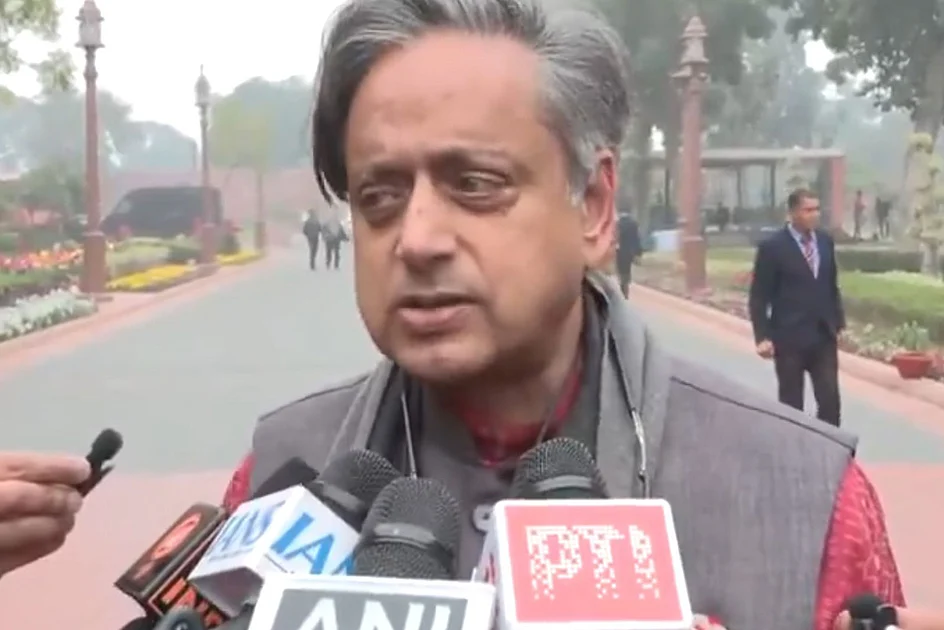
    The cricketing world faces unprecedented diplomatic turmoil as Pakistan’s threatened boycott of its T20 World Cup match against India draws severe criticism from Indian opposition leader Shashi Tharoor, who labeled the politicization of sports “pretty disgraceful.” The escalating crisis now threatens the integrity of the upcoming global tournament scheduled to commence on February 7, 2026.

    Tharoor, speaking to reporters, condemned the cross-border political interference affecting cricket, particularly referencing Pakistan’s solidarity with Bangladesh following the controversial denial of Bangladeshi pacer Mustafizur Rahman’s IPL contract with Kolkata Knight Riders. “It is pretty disgraceful that sport has been politicized in this way on both sides,” Tharoor stated, characterizing the situation as “spiraling out of control” despite cricket’s potential to unite nations.

    The Congress MP issued an urgent appeal for emergency negotiations between cricket boards, suggesting the International Cricket Council (ICC) serve as mediator to resolve what he termed “this nonsense.” Tharoor emphasized that cricket’s profound cultural significance across South Asia should transcend political divisions, particularly on the playing field.

    Pakistan’s proposed boycott carries significant competitive consequences, including automatic forfeiture of two points if they refuse to play India. Additional complications arise regarding potential knockout-stage encounters between the arch-rivals. The ICC has expressed concern over Pakistan’s “selective participation” stance, noting that while respecting governmental authority in national policy matters, such decisions undermine global cricket and disadvantage fans worldwide, including millions in Pakistan.

    This confrontation continues strained India-Pakistan relations that nearly escalated into full-scale military conflict last year. Bilateral cricket remains suspended between the nuclear-armed neighbors, with ICC previously brokering neutral-venue arrangements for their tournament meetings.

    The current impasse mirrors previous geopolitical tensions affecting cricket, including Bangladesh’s withdrawal from the tournament over safety concerns in India (replaced by Scotland) and last year’s Asia Cup controversy where Indian players declined handshakes with Pakistani opponents and refused the trophy from Pakistan’s interior minister Mohsin Naqvi, who also chairs the Pakistan Cricket Board.

    PCB supported Bangladesh’s unsuccessful request to relocate matches to Sri Lanka, which ICC rejected while affirming security assurances for Bangladeshi players and fans. Naqvi nevertheless extended best wishes to Pakistan’s squad, expressing hope they would “return with the T20 World Cup trophy” despite the brewing controversy.

  • Gold rebounds after historic plunge as Dubai market braces for fresh volatility

    Gold rebounds after historic plunge as Dubai market braces for fresh volatility

    Global precious metals markets experienced dramatic volatility as gold and silver prices staged a significant recovery after their most severe single-day collapse in over a decade. The rebound occurred during early Asian trading sessions, with spot gold climbing approximately 1% following a nearly 4% decline in the previous session, while silver demonstrated even more pronounced swings with an 8% surge after briefly plummeting almost 12%.

    This market turbulence follows an extraordinary rally that had previously driven both metals to unprecedented record highs, fueled by multiple factors including escalating geopolitical tensions, concerns about currency devaluation, and substantial speculative positioning by investors. The remarkable price surge saw gold exceeding $5,500 per ounce and silver surpassing $120 before the sharp correction emerged.

    In Dubai’s bustling bullion market, international spot gold trading between $4,650 to $4,750 per ounce translates to approximately Dh17,000 to Dh17,450 locally. Retail prices remain elevated with pure gold trading near Dh17,400 to Dh17,800 per ounce after dealer premiums. Silver, known for its heightened volatility due to industrial applications, has been fluctuating between $75 to $85 per ounce (Dh275 to Dh315 locally).

    Dubai’s retail gold market reflects these global dynamics with 24-carat gold trading between Dh560 to Dh590 per gram, 22-carat at Dh520 to Dh545, and 21-carat hovering near Dh500 to Dh525 per gram. This elevated pricing environment has subdued jewelry demand as consumers await clearer market signals.

    The recent sell-off was primarily triggered by a strengthening US dollar, which typically pressures dollar-denominated commodities by making them more expensive for international buyers. Additional contributing factors included broad weakness across global equity markets and renewed uncertainty regarding US monetary policy, prompting investors to unwind leveraged positions in derivatives markets.

    Market dynamics have been further complicated by recent US inflation data showing producer prices rising at their fastest pace in five months, reinforcing expectations of persistent price pressures. This development provides the Federal Reserve with justification to maintain current interest rates in the near term, though markets continue to anticipate at least two rate cuts later this year—a scenario that traditionally supports gold prices despite its non-yield-bearing nature.

    Analysts note that derivatives trading has significantly amplified price movements. Goldman Sachs analysts observed that extensive call-option buying mechanically reinforced the rally as option sellers hedged their exposure by purchasing underlying assets, creating a feedback loop that accelerated both gains and subsequent losses when market sentiment reversed.

    Despite current volatility, gold’s longer-term fundamentals remain robust with continued central bank accumulation, geopolitical uncertainty, and institutional hedging demand providing structural support. Silver’s outlook appears more complex due to its dual role as both precious and industrial metal, making it more sensitive to global economic indicators, manufacturing demand, and changes in futures margin requirements.

    Dubai traders report cautious buyer behavior with many investors opting for staggered purchases rather than lump-sum allocations to average costs amid unpredictable price swings. Physical jewelry demand has softened compared to peak seasons as households monitor global markets before committing to significant purchases.

    Market attention now turns to upcoming economic data releases, including manufacturing PMI figures from China, Europe, and the United States, which may provide fresh insights into industrial demand and broader economic momentum. Any renewed geopolitical developments or sharp dollar movements are expected to have substantial impact on precious metals pricing.

    Traders caution that the current rebound offers limited relief following one of the most dramatic sell-offs in decades. Dubai’s gold market, where investment flows and consumer demand intersect, anticipates continued choppy conditions with elevated prices, high volatility, and finely balanced market sentiment prevailing in the near term.

  • Shanghai launches first Pudong new year cultural festival

    Shanghai launches first Pudong new year cultural festival

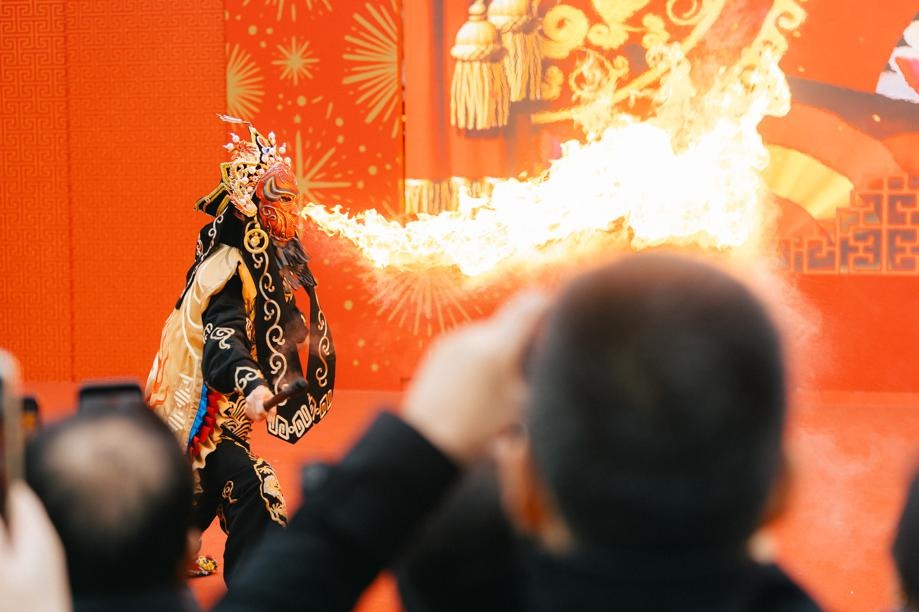
    Shanghai’s Pudong district has launched its inaugural Chinese New Year Cultural Festival, transforming the Lujiazui riverside into a vibrant celebration venue from January 31 through February 9, 2026. The festival’s centerpiece featured the breathtaking ancient art of datiehua (iron striking ceremony) from Chongqing’s Tongliang district, marking its first-ever presentation in Shanghai.

    The opening ceremony on Saturday witnessed molten iron being cast skyward, creating a spectacular display of golden sparks that illuminated against the backdrop of Shanghai’s iconic skyline. This mesmerizing fusion of traditional craftsmanship and modern urban landscape captivated attendees, offering a unique cultural experience that bridges China’s rich heritage with contemporary metropolitan life.

    Beyond the iron striking ceremony, the festival encompasses a diverse program of cultural activities and traditional performances designed to celebrate the Lunar New Year spirit. The event aims to provide both residents and visitors with an immersive experience that honors Chinese cultural traditions while creating new memories against one of the world’s most recognizable cityscapes.

    The festival’s strategic location along the Lujiazui riverside allows for maximum visibility and accessibility, positioning it as a major cultural attraction during the Spring Festival period. This initiative represents Shanghai’s ongoing commitment to preserving traditional arts while innovating in their presentation to modern audiences.

    Organizers have curated the event to appeal to all age groups, with additional programming that includes traditional music, dance performances, and interactive cultural workshops throughout the ten-day celebration. The festival serves as both a tourist attraction and a community gathering space, reinforcing the importance of cultural continuity during China’s most significant annual celebration.

  • Laura Fernandez claims victory in Costa Rica’s presidential election

    Laura Fernandez claims victory in Costa Rica’s presidential election

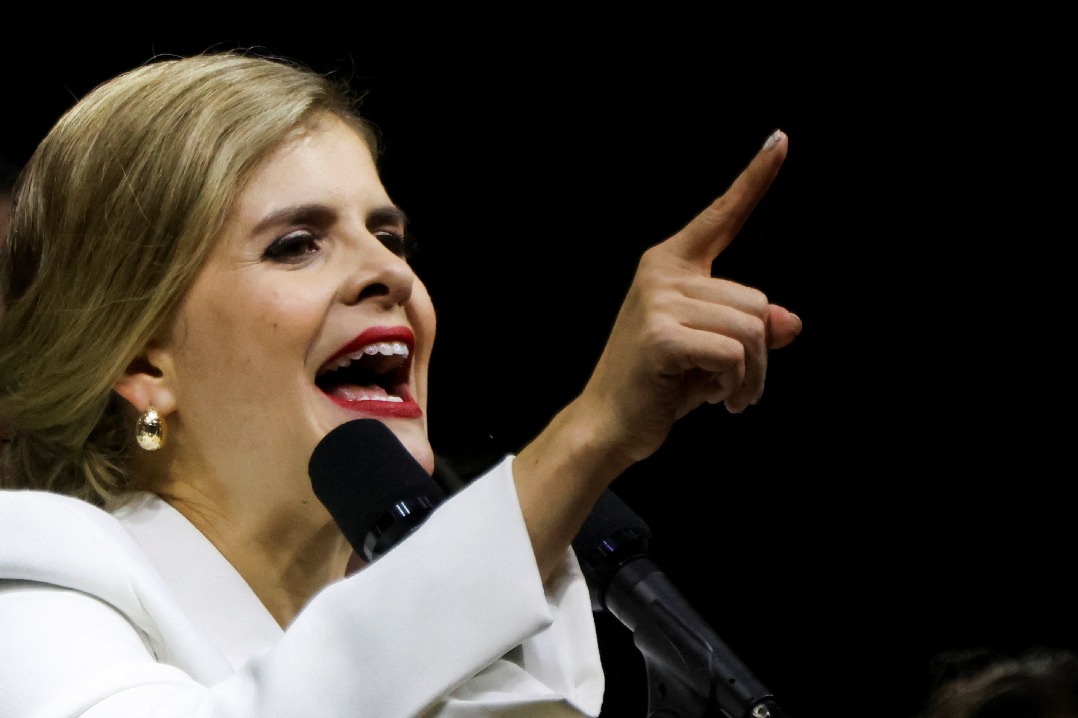
    SAN JOSE — Laura Fernandez of the ruling Sovereign People Party has secured a decisive victory in Costa Rica’s presidential election, capturing 48.3% of the vote and avoiding a runoff election. The political scientist and former government minister celebrated with supporters in the capital Sunday evening, outlining her vision for what she termed “the Third Republic”—a new chapter in the nation’s history.

    With 93.8% of polling stations reporting, official data from the Supreme Electoral Tribunal confirmed Fernandez’s substantial margin over opponents Alvaro Ramos of the National Liberation Party (33.4%) and Claudia Dobles of the Citizen Agenda Coalition (4.9%). Under Costa Rican electoral law, candidates exceeding 40% support in the first round claim outright victory.

    The president-elect has already received congratulatory calls from both outgoing Costa Rican President Rodrigo Chaves and Salvadoran President Nayib Bukele. In her victory address, Fernandez emphasized continuity with the current administration’s transformation agenda while pledging to strengthen democratic institutions.

    “Costa Rica has voted for the continuity of change—a change aimed solely at rescuing and perfecting our democratic institutions and returning them to you, the sovereign people,” Fernandez declared, acknowledging both the excitement and immense responsibility of her mandate.

    The 39-year-old leader, who previously served as Minister of National Planning and Minister of the Presidency under Chaves, has committed to prioritizing national dialogue while urging constructive engagement from opposition parties. Both Ramos and Dobles conceded defeat while vowing to uphold democratic principles through their legislative representatives.

    Key policy priorities include addressing national security through emergency measures to reclaim criminal-controlled territories and utilizing a new prison facility currently under construction. Economically, Fernandez proposes expanded public-private partnerships for infrastructure development, streamlined bureaucracy, and enhanced foreign investment attraction.

  • Argentina fires ravage pristine Patagonia forests, fueling criticism of Milei’s austerity

    Argentina fires ravage pristine Patagonia forests, fueling criticism of Milei’s austerity

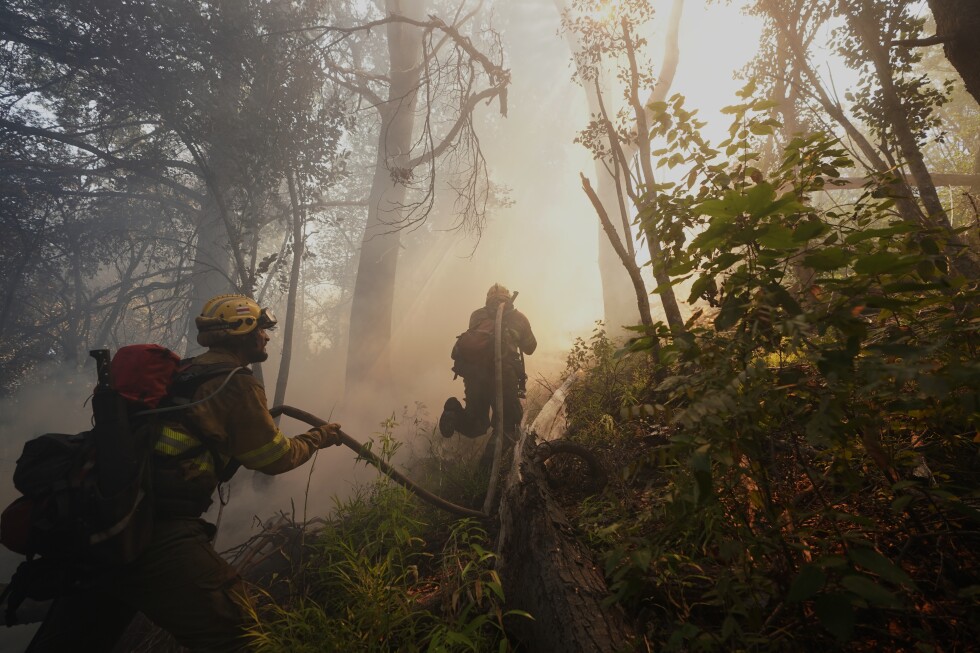
    LOS ALERCES NATIONAL PARK, Argentina — Argentina’s iconic Patagonian wilderness, a landscape immortalized by generations of writers and adventurers, now resembles a conflict zone. Towering plumes of smoke rise like artillery fire while nocturnal flames cast an apocalyptic orange glow across mountainsides, transforming this UNESCO World Heritage site into a haunting spectacle.

    The devastating wildfires ravaging drought-stricken Patagonia represent the region’s most severe blazes in decades, having consumed over 45,000 hectares of native forest in recent weeks. The inferno has forced thousands of residents and tourists to evacuate as flames continue spreading through Los Alerces National Park, home to ancient trees dating back 2,600 years.

    This ecological catastrophe has ignited fierce criticism against President Javier Milei’s administration, whose radical austerity measures have dramatically reduced funding for fire prevention and response agencies. Since taking office promising economic rescue from decades of debt, Milei has implemented an 80% budget reduction to the National Fire Management Service compared to the previous year, severely hampering brigades, aircraft maintenance, and equipment procurement.

    According to analysis by the Environment and Natural Resources Foundation (FARN), the agency faces an additional 71% funding cut in the upcoming budget cycle. These reductions coincide with increasingly frequent extreme weather events linked to climate change, creating perfect conditions for catastrophic wildfires.

    Firefighter Hernán Mondino, his face streaked with sweat and soot after grueling shifts, stated: “Climate change is undeniable. This is us living it. But we see no sign that the government is concerned about our situation.”

    The crisis has exposed structural weaknesses in Argentina’s environmental protection framework. The Ministry of Security, which assumed firefighting oversight after Milei downgraded the Environment Ministry, declined to comment on the situation.

    Milei’s economic policies have achieved some success, reducing annual inflation from 117% to 31%—the lowest rate in eight years. However, his alignment with former U.S. President Donald Trump’s approach to governance has extended to environmental policy. After Trump announced U.S. withdrawal from the Paris climate agreement, Milei threatened to follow suit, dismissing human-caused climate change as a “socialist lie”—a position that enrages many Argentinians experiencing record-breaking heat and dryness firsthand.

    Local resident Lucas Panak expressed growing public frustration: “There’s a lot of anger building up. People here are very uncomfortable with our country’s politics.”

    Experts argue the fundamental issue isn’t fire response but prevention. Andrés Nápoli, director of FARN, explained: “Fires are not something you only fight once they exist. They must be addressed beforehand through planning, infrastructure and forecasting. Prevention has essentially been abandoned.”

    The National Park Administration has suffered similar cuts, resulting in hundreds of rangers, firefighters, and administrative staff departing. Current staffing stands at 391 firefighters against a recommended minimum of 700, with many remaining personnel relying on secondhand equipment and donations.

    The human toll on responders is severe. Patagonian firefighters earn approximately $600 monthly, forcing many to seek additional work as gardeners and farmhands. “From the outside it looks like everything still functions,” said Mondino, “but our bodies bear the cost.”

    Political tensions escalated when Milei delayed addressing the crisis publicly while participating in public dancing events. After mounting pressure, he eventually declared a state of emergency, releasing $70 million for volunteer firefighters and announcing “a historic fight against fire” via social media.

    At base camps where exhausted firefighters recuperate, volunteer Mariana Rivas summarized the collective sentiment: “It hurts because it’s not just a beautiful landscape, it’s our home. There’s anger about what could have been avoided, and anger because every year it gets worse.”