博客

  • US Congress targets Clintons in Epstein contempt fight

    US Congress targets Clintons in Epstein contempt fight

    The U.S. House Oversight Committee has initiated a significant political confrontation by advancing contempt proceedings against former President Bill Clinton and former Secretary of State Hillary Clinton. The Republican-majority committee voted Wednesday to pursue charges after the Clintons declined to comply with subpoenas for in-person testimony regarding their connections to convicted sex offender Jeffrey Epstein.

    The committee’s action represents an escalation in the long-running investigation into how authorities handled previous Epstein investigations. The contempt resolutions now proceed to the full House of Representatives, where Republican leadership must decide whether to formally cite the Clintons for defiance of congressional authority and refer them to the Justice Department for potential criminal prosecution.

    This development highlights how the Epstein scandal continues to reverberate through Washington’s power structures, implicating prominent figures across the political spectrum. The investigation has become intensely polarized, with Democrats characterizing it as a politically motivated effort to target President Trump’s opponents while ignoring Trump’s own documented associations with Epstein.

    Committee Chairman James Comer rejected what he termed a ‘ridiculous offer’ from Bill Clinton’s representatives that would have limited questioning to a single lawmaker in New York without producing an official transcript. The Clintons maintain that the subpoenas lack legitimate legislative purpose and have instead provided sworn written statements detailing their limited interactions with Epstein.

    In their submitted declarations, Bill Clinton acknowledged using Epstein’s aircraft for humanitarian work in the early 2000s but denied visiting his private island. Hillary Clinton stated she had no meaningful interactions with Epstein whatsoever. The controversy has exposed divisions within the Democratic Party regarding how to respond to Republican investigative tactics while maintaining consistency with previous positions on accountability for Epstein’s crimes.

    The proceedings occur against the backdrop of ongoing criticism regarding the Trump administration’s delayed release of Epstein-related case files, which Democrats have characterized as a cover-up. Neither Trump nor the Clintons have been accused of criminal wrongdoing related to Epstein, but the investigation continues to expose the deep political fractures surrounding one of the most notorious criminal cases in recent memory.
  • In Dubai, everybody wants everyone to succeed, says Sheikha Latifa

    In Dubai, everybody wants everyone to succeed, says Sheikha Latifa

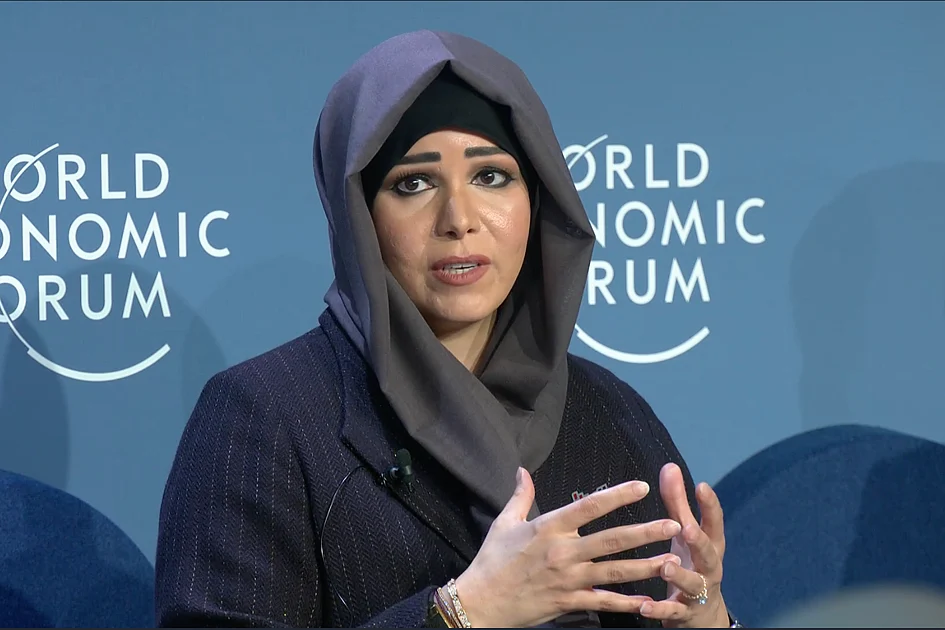
    At the World Economic Forum in Davos, Sheikha Latifa bint Mohammed bin Rashid Al Maktoum, Chairperson of Dubai Culture and Arts Authority, articulated the unique social fabric that underpins Dubai’s remarkable development. She characterized the emirate as a thriving mosaic where collective advancement and cultural preservation coexist harmoniously.

    Sheikha Latifa emphasized that Dubai’s fundamental ethos revolves around mutual success, where individual achievements create positive ripple effects throughout society. “The connecting theme in Dubai is that everybody wants everyone to succeed,” she stated during a panel discussion, highlighting the collaborative spirit that defines the city’s social contract.

    Despite its reputation as a forward-thinking, innovative, and progressive global hub, Sheikha Latifa noted that Emirati society remains deeply rooted in traditional values. These cultural foundations manifest daily through clothing choices, interpersonal interactions, and the enduring practices of hospitality, respect, and strong moral conduct.

    The cultural authority chairperson underscored Dubai’s extraordinary diversity, noting the emirate is home to 195 distinct cultures and backgrounds. What makes this diversity remarkable, she explained, is how these communities maintain their cultural and religious practices while contributing to a cohesive, open society.

    Sheikha Latifa presented a compelling vision for cultural coexistence: “We believe in openness beyond merely connecting through similarities. We must celebrate our differences. A world where everyone looked, spoke, and operated identically would be profoundly boring. The true beauty of our world lies in its diversity.”

    Addressing governance, Sheikha Latifa revealed the leadership’s rigorous approach to promise-keeping. “Dubai’s leadership maintains strict accountability regarding delivery on commitments. Whenever we launch a strategy or initiative, we are obligated to fulfill these promises,” she explained.

    This results-driven approach involves comprehensive stakeholder engagement. Before implementing any new strategy, Dubai’s authorities consult extensively with affected communities, listening to challenges, proposed solutions, and identifying industry gaps to enable collaborative problem-solving.

  • UAE contributes $5 million to support emergency humanitarian response in Sudan

    UAE contributes $5 million to support emergency humanitarian response in Sudan

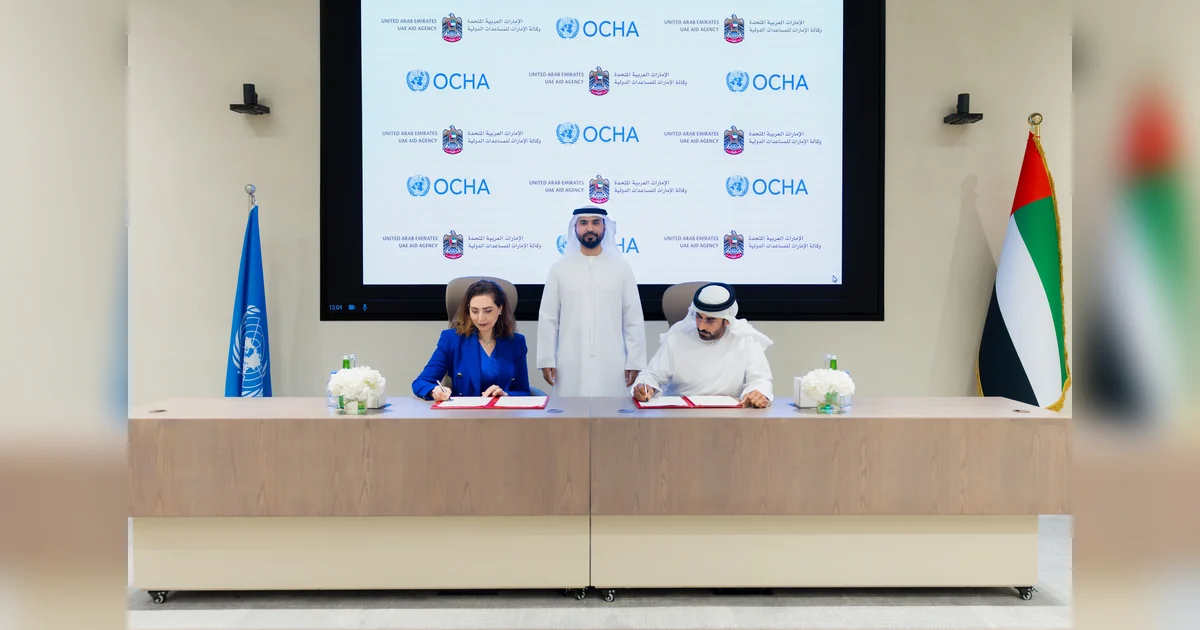
    The United Arab Emirates has formally pledged $5 million in humanitarian assistance to Sudan through a newly signed agreement with the United Nations Office for the Coordination of Humanitarian Affairs (OCHA). The contribution, channeled through the Sudan Humanitarian Fund, aims to bolster emergency response capabilities and address critical needs among conflict-affected populations.

    Dr. Tareq Ahmed Al Ameri, Chairman of the UAE Aid Agency, emphasized the nation’s ongoing commitment to supporting international relief efforts amid Sudan’s devastating civil war. “The UAE continues its urgent humanitarian response and stands in solidarity with those affected by this tragic conflict,” stated Dr. Al Ameri, highlighting the worsening displacement crisis that has forced thousands into neighboring Chad, South Sudan, Uganda, and Ethiopia.

    The agreement was formally executed by Rashid Salem Al Shamsi, Executive Director of Logistics Support at the UAE Aid Agency, and Sajeda Al Shawa, Head of OCHA’s UAE office. Al Shawa expressed profound appreciation for the contribution, noting that “this significant funding will enhance collective efforts led by the United Nations to reach vulnerable communities in Sudan and support timely delivery of life-saving assistance.”

    This latest commitment reinforces the UAE’s decade-long humanitarian engagement with Sudan, totaling $4.24 billion in assistance between 2015 and 2025. Since the current crisis erupted in 2023, the Emirates has allocated $784 million specifically for humanitarian aid. The UAE has concurrently advocated for a humanitarian ceasefire to ensure civilian protection and facilitate unimpeded aid delivery, underscoring the necessity of collaborative action with regional and international partners to achieve stability and peace for the Sudanese people.

  • Catholicism shrinks in Latin America while more are religiously unaffiliated, Pew surveys find

    Catholicism shrinks in Latin America while more are religiously unaffiliated, Pew surveys find

    A profound religious transformation is underway across Latin America as Catholicism experiences significant decline while religiously unaffiliated populations surge, according to a comprehensive Pew Research Center study released Wednesday. The report, based on extensive surveys conducted in early 2024 across six major Latin American nations—Argentina, Brazil, Chile, Colombia, Mexico, and Peru—reveals a dramatic shift in spiritual identity across the region that represents approximately 75% of Latin America’s total population.

    The research documents that Catholic affiliation has diminished by at least 9 percentage points in each country over the past decade, while religiously unaffiliated adults—identifying as atheist, agnostic, or ‘nothing in particular’—have increased by 7 percentage points or more. This trend has resulted in religiously unaffiliated populations now outnumbering Protestants in Argentina, Chile, Colombia, and Mexico—a remarkable development in a region historically dominated by Catholic tradition.

    Kirsten Lesage, Pew research associate and lead author of the report, emphasized the significance of these findings: ‘Our analysis found that the Catholic share of the population in these six nations has significantly declined since 2013-14, while a growing share of adults in the region are religiously unaffiliated.’

    Despite these shifting affiliations, the study reveals that Latin Americans maintain strong spiritual inclinations. Approximately 90% or more adults across all surveyed countries affirm belief in God, with about half or more in Brazil, Colombia, Mexico, and Peru considering religion ‘very important’ in their lives. Majorities in Brazil, Colombia, and Peru report praying at least daily.

    Experts attribute the Catholic Church’s diminishing influence to multiple factors, including clergy sex abuse scandals and opposition to the institution’s conservative positions on abortion and LGBTQ+ rights. Many Latin Americans now seek spiritual fulfillment beyond traditional religious structures, exploring alternatives such as yoga, tarot, astrology, and personalized belief systems.

    The survey, which polled 6,234 adults from January to April 2024 with a margin of error ranging from ±4.0 to 4.5 percentage points, indicates that Protestantism has remained relatively stable across the region during this period of transformation.

  • Loved ones of victims reeling after high-speed rail crash in southern Spain

    Loved ones of victims reeling after high-speed rail crash in southern Spain

    Spain’s railway infrastructure faces intense scrutiny following two catastrophic derailments within 72 hours, claiming at least 43 lives and leaving dozens injured in the country’s worst rail disaster in over a decade.

    The initial tragedy struck Sunday evening near Córdoba when two high-speed trains collided in dense woodland 36 miles from the city. Emergency services responded to what doctors describe as ‘unprecedented carnage.’ Dr. Eduardo Morán of Córdoba’s Reina Sofía Hospital recounted the chaotic scene: ‘We prepared every department – emergency room, intensive care, surgical theaters. The injuries ranged from minor scratches to traumatic amputations.’ Despite the influx of casualties, hospital staff maintained control through rigorous triage protocols.

    Investigators are focusing on a potential track gap in the straight section where the collision occurred. Sniffer dogs continue searching through twisted metal and shattered glass as forensic teams work to identify victims.

    The tragedy became personal for countless families. Mari Carmen Abril Vega, a teacher returning from a surprise 50th birthday celebration in Córdoba, was among those confirmed dead. Her friend Jose Manuel Muñoz described the emotional whiplash: ‘We spent Saturday celebrating life, then endured two days of uncertainty before receiving confirmation of her death.’

    Before the nation could process the first disaster, a second derailment occurred near Barcelona during heavy rainfall, though without fatalities. This incident prompted Spain’s train drivers’ union to announce strikes against what they term ‘unacceptable constant deterioration of railway infrastructure.’

    At Córdoba’s Civic Center, families of the missing provide DNA samples under makeshift tents. Yamilei, whose brother-in-law Victor Luis Terán perished due to a last-minute travel change, expressed the collective anguish: ‘We need answers. We cannot continue like this.’

    Official calls for patience contrast with growing public demand for accountability as Spain’s rail network faces its most severe safety crisis in modern history.

  • Meteorologists blame a stretched polar vortex, moisture, lack of sea ice for dangerous winter blast

    Meteorologists blame a stretched polar vortex, moisture, lack of sea ice for dangerous winter blast

    Meteorological experts are warning of an unprecedented winter catastrophe poised to engulf the eastern two-thirds of the United States, with climate change paradoxically intensifying the severity of approaching Arctic conditions. A destabilized polar vortex—typically confined to northern latitudes—is now elongating due to warmer Arctic waters interacting with frigid continental air masses, creating a perfect storm scenario that will deliver prolonged subzero temperatures, crippling ice accumulations, and heavy snowfall across multiple regions.

    According to atmospheric scientists including former NOAA chief scientist Ryan Maue, this developing system represents a weather event with potential damage equivalent to major hurricanes. The phenomenon originates from dramatic Arctic warming and record-low sea ice extent, particularly in the Barents and Kara seas, which disrupts normal atmospheric patterns. These conditions, combined with heavy Siberian snowfall observed since October 2025, have created ideal circumstances for polar vortex stretching that drives extreme winter weather southward.

    MIT researcher Judah Cohen, who co-authored a July 2025 study on this phenomenon, confirms that warming-induced sea ice loss has increased the frequency of stretched polar vortex events over the past decade. The current event will position its core above Duluth, Minnesota by Friday, generating temperatures plunging to -30°F (-34°C) in northern regions. National Weather Service meteorologist Zack Taylor warns of catastrophic ice accumulations capable of widespread power outages and tree damage across southern plains through the Carolinas, while significant snowfall will impact the Ozarks, Tennessee Valley, and Appalachian regions.

    The exceptional cold pattern is expected to persist through early February, with potential freezing of Lakes Erie and Ontario that may slightly reduce lake-effect snow but extend the duration of frozen conditions. Meteorologists emphasize that this represents a hemispheric pattern affecting both North America and Eurasia, with the Arctic warming paradoxamplifying winter severity across continental landmasses.

  • Israel’s Netanyahu accepts invitation to join Trump’s Board of Peace

    Israel’s Netanyahu accepts invitation to join Trump’s Board of Peace

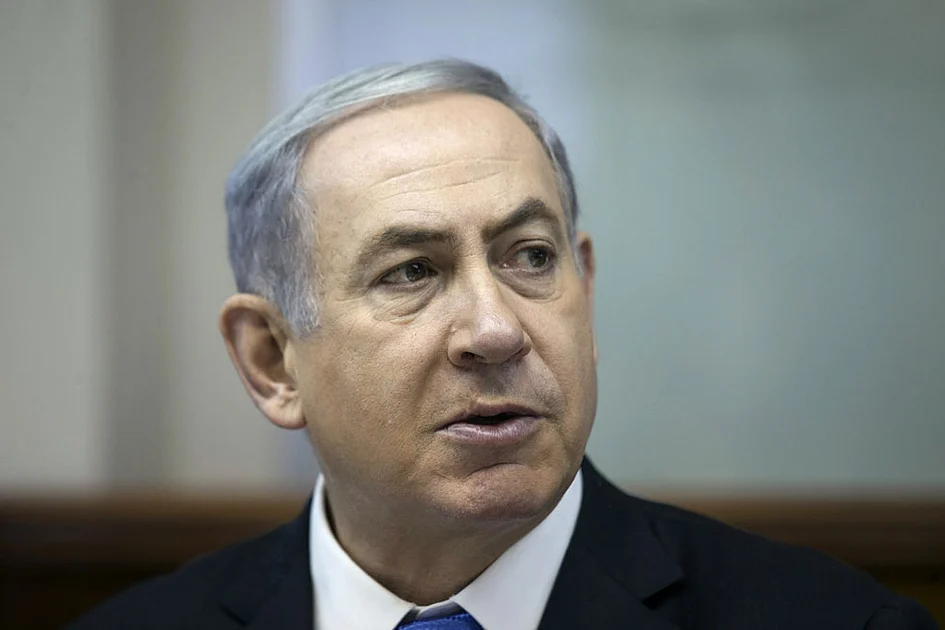
    In a significant diplomatic development, Israeli Prime Minister Benjamin Netanyahu has formally accepted an invitation from former U.S. President Donald Trump to participate in a newly established international mediation body dubbed the “Board of Peace.” The announcement was made through an official statement posted on the Prime Minister’s social media account on Wednesday, January 21, 2026.

    The primary and immediate objective of this initiative is to broker a sustainable cessation of hostilities in the Gaza Strip. The framework, however, is designed with broader ambitions. Should initial efforts in Gaza prove successful, the board intends to expand its mandate to address and mediate other protracted international conflicts around the globe.

    This move marks a notable re-entry of Donald Trump into the arena of international diplomacy and underscores the continuing strategic partnership between the Israeli government and the former U.S. president. The establishment of the board represents an unconventional approach to peacemaking, operating outside traditional diplomatic channels. The involvement of a high-profile leader like Netanyahu lends considerable geopolitical weight to the initiative, though its structure, specific membership, and operational methodology remain to be fully detailed. The international community is observing these developments closely, assessing the potential implications for one of the world’s most enduring and complex conflicts.

  • Ukraine endures a bitter winter after Russian attacks as peace efforts overshadowed

    Ukraine endures a bitter winter after Russian attacks as peace efforts overshadowed

    KYIV, Ukraine — Ukrainian President Volodymyr Zelenskyy reported Wednesday that approximately 4,000 buildings in Kyiv remain without heating and nearly 60% of the capital faces power outages following sustained Russian attacks on Ukraine’s energy infrastructure. The crisis emerges during one of the most severe winters in recent years, with temperatures plunging to -20°C (-4°F), exacerbating humanitarian challenges nearly four years into Russia’s full-scale invasion.

    While the physical conflict intensifies, diplomatic efforts continue behind the scenes. U.S. special envoy Steve Witkoff confirmed plans to discuss peace proposals with Russian President Vladimir Putin and engage with Ukrainian delegates. Speaking at the World Economic Forum in Davos, Switzerland, Witkoff emphasized the urgent need for peace, though discussions on Ukraine’s defense appeared overshadowed by other transatlantic issues.

    Ukrainian authorities are implementing emergency measures to address the energy crisis. The Cabinet of Ministers has allocated 2.56 billion hryvnias (approximately $60 million) from reserve funds to purchase generators, according to Prime Minister Yuliia Svyrydenko.

    NATO Secretary-General Mark Rutte issued a compelling appeal to the alliance’s military chiefs, urging them to leverage their influence with national governments to supply critically needed air defense systems to Ukraine. “Please use your influence to help your political masters to do even more,” Rutte stated in a video message from NATO’s Brussels headquarters. “Look deep into your stockpiles to see what more you can give to Ukraine, particularly air defense interceptors. The time really is now.”

    The military situation remains volatile. Overnight, Russia launched 97 drones and a ballistic missile at Ukraine, according to the Ukrainian air force. Attacks in the central Dnipropetrovsk region resulted in the deaths of a 77-year-old man and a 72-year-old woman, confirmed Oleksandr Hanzha, head of the regional military administration.

    Russia’s Defense Ministry reported intercepting 75 Ukrainian drones over several regions, while the international airports of Krasnodar, Sochi, Gelendzhik and Saratov temporarily suspended operations due to drone activity. In Adygea, more than 200 kilometers from the Ukrainian border, a Ukrainian drone strike caused an apartment building fire that injured 11 people, including two children, according to regional governor Murat Kumpilov.

  • Marine Le Pen admits ‘mistake’ in EU embezzlement trial as she fights to save political career

    Marine Le Pen admits ‘mistake’ in EU embezzlement trial as she fights to save political career

    PARIS — French far-right leader Marine Le Pen confronted potentially career-altering allegations during a high-stakes appeals trial this week, where she admitted to procedural errors while vehemently denying systematic fraud in the European Parliament funds case that threatens her 2027 presidential aspirations.

    The 57-year-old political figure is challenging a March 2025 conviction that found her guilty of misappropriating EU legislative funds between 2004 and 2016. The original ruling imposed a five-year ban from elected office, two years of electronic monitoring house arrest, and an additional two-year suspended sentence for violating the 27-nation bloc’s financial regulations.

    Before a three-judge appellate panel, Le Pen acknowledged that some parliamentary aides compensated through EU channels had occasionally performed work for her National Front party (now renamed National Rally). “The mistake lies here: there were certainly some aides who must have worked either marginally, more substantially, or entirely for the benefit of the party,” she testified, maintaining this represented isolated incidents rather than organized misconduct.

    The Paris court’s initial determination described an elaborate “fraudulent system” that allegedly diverted €2.9 million ($3.4 million) in EU funds, characterizing the scheme as “a democratic bypass” that created unfair competitive advantages. Prosecutors argue Le Pen personally authorized hiring contracts while aware of their improper nature.

    During intense judicial questioning, Le Pen remained composed while rejecting the existence of any coordinated scheme to fund party operations with European money. “I wouldn’t say we did everything perfectly. Some criticism can be made about us,” she conceded, while insisting her party “acted in complete good faith.”

    The five-week appellate proceedings, which commenced last week, could dramatically reshape France’s political landscape. The court’s decision, expected before summer, will determine whether Le Pen can pursue the presidency or must transfer her political ambitions to protégé Jordan Bardella, the 30-year-old she has designated as potential successor.

    Judge Michèle Agi challenged Le Pen’s claims of ignorance regarding contractual obligations, noting her dual roles as European Parliament member and party president made her directly responsible for approvals. “You are a lawyer, you know the law — inevitably, a signature, a contract are notions that have a meaning for you,” Agi asserted.

    Le Pen countered that European Parliament authorities failed to provide adequate guidance about hiring violations, while defending unusual arrangements including her personal bodyguard’s parliamentary aide contract as responding to “exceptional” security needs.

  • China needs to invest bigger at home to sustain prosperity

    China needs to invest bigger at home to sustain prosperity

    China’s economy achieved its official growth target of 5% in 2025, according to official GDP figures, but this headline accomplishment conceals significant underlying vulnerabilities. While exports surged to a record-breaking $1.2 trillion trade surplus despite ongoing trade tensions with the United States, the economy faces mounting domestic challenges that threaten sustainable growth.

    The export sector’s remarkable performance, driven by successful diversification to Southeast Asian, South American, European, and African markets, offset concerning weaknesses in domestic consumption. December retail sales grew at a meager 0.9% year-on-year—the slowest pace since late 2022—highlighting persistent consumer reluctance to spend. This consumption weakness appears structural rather than temporary, rooted in high savings rates, property market uncertainties, and concerns about job security.

    Simultaneously, China confronts demographic headwinds as its population declined for the fourth consecutive year in 2025, with birth rates hitting record lows. This accelerating aging population presents long-term economic challenges that require substantial productivity gains to overcome.

    Fiscal constraints further complicate the economic landscape. Local governments face mounting debt burdens, reduced revenues from land sales, and increasing social program obligations, limiting their capacity for stimulus spending. Investment in fixed assets declined by 3.8% in 2025, with property investment plummeting approximately 17%.

    The fundamental challenge lies in redirecting China’s substantial national savings—which reached 43.4% of GDP in 2024—toward productive domestic investment rather than export surpluses that fuel international trade tensions. The transition toward a more capital- and knowledge-intensive growth model, particularly in technology services and high-value manufacturing, appears essential for navigating these structural challenges.