博客

  • UAE weather tomorrow: Rough sea alert issued, mercury to dip further

    UAE weather tomorrow: Rough sea alert issued, mercury to dip further

    The United Arab Emirates is bracing for significant weather developments as meteorological authorities issue comprehensive advisories for residents and mariners. The National Center of Meteorology has activated rough sea alerts across coastal regions, particularly highlighting dangerous conditions in the Oman Sea where wave heights are anticipated to reach six feet.

    Weather patterns for January 22 indicate partly cloudy conditions with low cloud formations expected along coastal and northern territories. A notable temperature decline continues across the emirates, with Dubai, Sharjah, and Abu Dhabi experiencing maximum temperatures of 23°C. Minimum temperatures will vary significantly between urban centers and mountainous regions, with Jais Mountain in Ras Al Khaimah recording an early morning low of 4.7°C.

    Wind patterns will feature moderate to fresh northwesterly and northeasterly currents, occasionally intensifying to 45 km/h during morning hours over maritime zones. These atmospheric conditions will likely cause blowing dust and sand across terrestrial areas, reducing visibility and creating challenging travel conditions.

    The Arabian Gulf will experience very rough to rough sea states during daylight hours, gradually moderating overnight. Mariners are advised to exercise extreme caution due to strong northwesterly winds reaching 40 km/h, particularly between Wednesday morning and Thursday evening.

    Humidity levels are forecasted to increase substantially during overnight and early morning periods, with mist formation probable in western regions. This combination of temperature fluctuations, wind activity, and maritime disturbances characterizes a complex weather system affecting the UAE region.

    Authorities continue to monitor developments closely and recommend that residents stay updated through official channels for the latest weather advisories and safety recommendations.

  • Israeli strike kills three Gaza journalists including AFP freelancer

    Israeli strike kills three Gaza journalists including AFP freelancer

    An Israeli military strike in Gaza’s Al-Zahra district has resulted in the deaths of three Palestinian journalists, including AFP freelance contributor Abdul Raouf Shaat. The incident occurred Wednesday while the journalists were documenting humanitarian aid distribution operations.

    According to Gaza’s civil defence agency, the casualties included Mohammed Salah Qashta, Abdul Raouf Shaat, and Anas Ghneim. Shaat had established himself as a regular contributor to AFP through his photojournalism and videography work, though he was not on assignment for the agency at the time of the strike.

    The Israeli military released a statement indicating its forces had targeted “suspects” operating a drone allegedly affiliated with Hamas, claiming the device posed a threat to troops. Military representatives stated the details remained under review but maintained the strike was conducted with precision.

    Eyewitness accounts and statements from the Egyptian Relief Committee contradict this narrative, reporting that the journalists were using a drone to capture images of aid distribution when their accompanying vehicle was struck. Mohammed Mansour, spokesperson for the Egyptian Relief Committee in Gaza, emphasized that all committee vehicles bear clear identifying logos and described the targeting as “criminal.

    AFP leadership expressed profound grief over Shaat’s death, remembering him as a “kind-hearted colleague with a gentle sense of humour” and a “deeply committed journalist.” The news agency has called for a comprehensive and transparent investigation into the circumstances surrounding his death.

    Media watchdogs responded with strong condemnation. Reporters Without Borders (RSF) expressed “deep anger” at the incident, with crisis desk head Martin Roux suggesting the strike “could indicate targeting and constitute a war crime.” The Committee to Protect Journalists similarly stated it was “appalled” by the event, with Middle East coordinator Sara Qudah noting Israel’s advanced surveillance technology makes “any claims of misidentification implausible.

    This incident occurs against the backdrop of a fragile US-sponsored ceasefire that took effect October 10, with both sides alleging frequent violations. According to Gaza’s health ministry, Israeli forces have killed at least 466 Palestinians since the ceasefire began, while the Israeli military reports three soldier fatalities from militant attacks during the same period.

    RSF data reveals a alarming pattern: nearly 220 journalists have been killed by Israeli forces since the conflict began in October 2023, making Gaza the world’s most dangerous location for media professionals. The organization documented at least 29 Palestinian journalist fatalities in Gaza between December 2024 and December 2025 alone.

  • Greenlanders doubtful over Trump resolution

    Greenlanders doubtful over Trump resolution

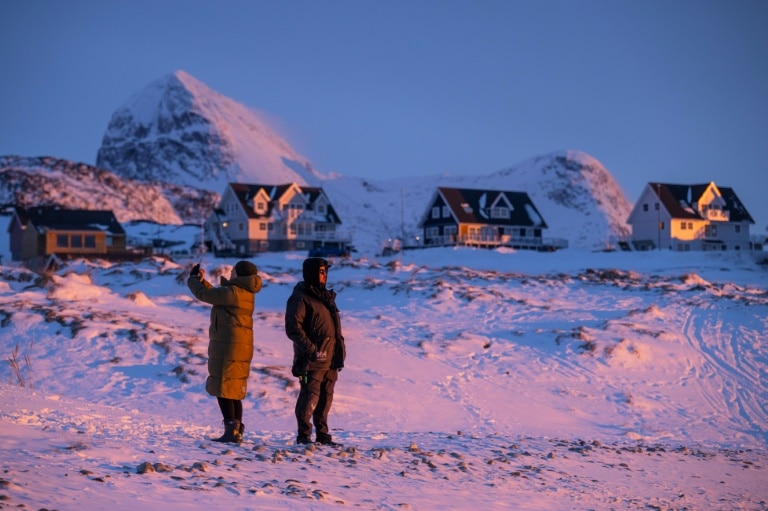
    Residents of Greenland have responded with profound skepticism to U.S. President Donald Trump’s recent declaration regarding the future status of the autonomous Danish territory. Speaking at the World Economic Forum in Davos, Trump announced he had established a satisfactory framework agreement concerning Greenland’s geopolitical position, though he provided no substantive details to support this claim.

    The announcement follows weeks of increasingly confrontational rhetoric from the American president regarding his administration’s interest in acquiring strategic control over the Arctic island. Despite Trump’s assertion that he reached this understanding during discussions with NATO Secretary General Mark Rutte, Greenlanders remain largely unconvinced.

    In interviews conducted in Nuuk, the capital of Greenland, residents expressed overwhelming doubt about the validity of Trump’s statements. Mickel Nielsen, a 47-year-old technician, characterized the announcement as ‘quite simply a lie,’ adding, ‘I don’t believe a word he says, and I don’t think I’m the only one.’

    This sentiment was echoed by Anak, a 64-year-old care worker, who stated unequivocally, ‘Trump? I don’t believe him. Greenland belongs to the Greenlanders.’ Another resident, identifying themselves as Miki, noted the inconsistency of Trump’s declarations, observing that ‘he can say something and two minutes later he says completely the opposite.’

    According to NATO spokesperson Allison Hart, the discussion between Trump and Rutte was ‘very productive,’ with allies prepared to examine a framework addressing U.S. security concerns about potential Russian and Chinese influence in Greenland. Hart indicated that subsequent negotiations would involve Denmark, Greenland, and the United States with the stated objective of preventing economic or military footholds by rival powers.

    However, Greenlandic political representatives have challenged the legitimacy of these discussions. Aaja Chenmitz, a Greenlandic member of the Danish parliament, emphasized that ‘NATO has absolutely no right to negotiate anything without us, Greenland. Nothing about us without us.’ She further characterized the idea of NATO influencing decisions about Greenland’s territory and mineral resources as ‘completely insane.’

    These developments occur against the backdrop of overwhelming public opposition to integration with the United States. A January 2025 poll revealed that 85% of Greenlanders oppose joining the United States, with only 6% expressing support for such a move.

  • Real Madrid top football rich list as Liverpool surge

    Real Madrid top football rich list as Liverpool surge

    Real Madrid has solidified its position as football’s financial powerhouse, maintaining the top spot in Deloitte’s annual Money League rankings with unprecedented revenue generation during the 2024/25 season. The Spanish giants amassed approximately €1.2 billion ($1.4 billion) despite failing to secure major silverware, demonstrating the club’s remarkable commercial resilience.

    The comprehensive redevelopment of Santiago Bernabeu Stadium has emerged as a transformative revenue driver, with commercial operations alone generating €594 million – sufficient to secure a top-ten position independently. Barcelona ascended to second position with €975 million, achieving this milestone while playing their entire season away from Camp Nou due to ongoing redevelopment delays.

    German champions Bayern Munich claimed third position with €861 million, narrowly surpassing Paris Saint-Germain whose Champions League victory provided significant financial impetus. The Premier League’s representation remained robust, with Liverpool leading English clubs for the first time following stadium expansion, Champions League participation, and domestic league triumph that collectively boosted revenues to €836 million.

    Notable shifts occurred in the rankings as Manchester City descended from second to sixth position following early European elimination and third-place domestic finish. Manchester United fell to eighth behind Arsenal after missing Champions League qualification and finishing 15th in Premier League competition.

    Collectively, Europe’s top 20 revenue-generating clubs achieved an 11% revenue increase to €12.4 billion. Deloitte Sports Business Group lead partner Tim Bridge observed: “The ranking’s upper echelon reflects strategic emphasis on commercial revenue development as domestic broadcast rights stabilize. Clubs are fundamentally transforming their business models through brand optimization and stadium asset maximization.”

    The emerging trend of multifunctional stadium facilities – incorporating breweries, hotels, and restaurants – demonstrates strategic diversification toward year-round entertainment destinations. The inaugural 32-team Club World Cup significantly influenced rankings, propelling Bayern into top-three positioning for the first time since 2020/21.

    In women’s football, Arsenal emerged as highest-earning club for the first time following their Champions League victory, generating €25.6 million to surpass London rivals Chelsea and Barcelona.

  • ‘One Battle After Another,’ ‘Sinners’ tipped to top Oscar noms

    ‘One Battle After Another,’ ‘Sinners’ tipped to top Oscar noms

    The film industry stands on the precipice of a historic Oscar nomination announcement, with Warner Bros’ cinematic juggernauts “One Battle After Another” and “Sinners” positioned to dominate the awards landscape. Industry analysts project both films could achieve an unprecedented nomination count, potentially challenging the longstanding record of 14 nominations jointly held by “All About Eve,” “Titanic” and “La La Land.”

    Paul Thomas Anderson’s revolutionary thriller “One Battle After Another” has generated exceptional momentum throughout awards season, already securing the record for most nominations from Hollywood’s actors guild. The film features Leonardo DiCaprio in a performance that virtually guarantees his seventh Academy acting nomination, portraying a retired revolutionary navigating a complex web of radical violence and white supremacists while searching for his missing daughter.

    Meanwhile, Ryan Coogler’s blues-infused period horror “Sinners” has emerged as a groundbreaking force in Oscar politics. The film’s exploration of racial tensions in 1930s Mississippi, featuring Michael B. Jordan in a dual role as twins combating vampires and racists, has been described by Variety’s Clayton Davis as entering “a statistical stratosphere no filmmaker has ever touched.”

    The Warner Bros dominance comes during a potentially transformative period for the studio, which remains the target of an intense bidding war between Paramount Skydance and Netflix. This corporate uncertainty adds dramatic subtext to what might represent the studio’s final independent distribution year.

    Netflix maintains its own formidable contenders including Guillermo del Toro’s “Frankenstein,” the pioneering Western drama “Train Dreams,” and animated musical phenomenon “KPop Demon Hunters.” The streaming giant faces competition from international cinema, with three non-English language films—Norway’s “Sentimental Value,” Palme d’Or winner “It Was Just An Accident,” and Brazil’s “The Secret Agent”—potentially disrupting the best picture category.

    This year introduces the groundbreaking best casting Oscar, creating speculation about voting criteria for this inaugural honor. The nominations announcement, scheduled for Thursday at 5:30 AM PST in Los Angeles, will set the stage for the 98th Academy Awards ceremony on March 15th.

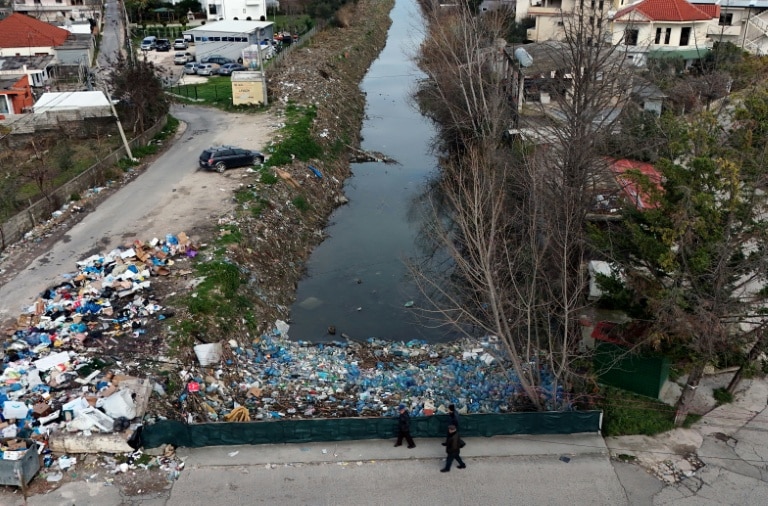
  • Plastics everywhere, and the myth that made it possible

    Plastics everywhere, and the myth that made it possible

    In her groundbreaking work ‘The Problem with Plastics,’ former Obama-era environmental official Judith Enck delivers a powerful exposé on the plastic pollution crisis that has come to define modern existence. From microplastics found in newborn stool to airborne particles infiltrating our atmosphere, plastic contamination has reached unprecedented levels, with half of all plastic ever manufactured produced since the 2007 iPhone debut.

    Enck systematically dismantles what she identifies as the plastic industry’s most damaging fabrication: the myth of effective recycling. Contrary to popular belief, only 5-6% of plastics in the United States actually undergo recycling processes. This abysmal rate stems from fundamental technical challenges—consumer plastics comprise thousands of distinct polymer types, rendering large-scale recycling economically unfeasible compared to materials like glass or metal.

    The environmental advocate reveals how industry campaigns have strategically shifted responsibility onto consumers through terminology like ‘litterbug’ while promoting chemically dubious ‘solutions.’ Recent analysis from Enck’s Beyond Plastics organization demonstrates that chemical recycling facilities handle merely 1% of U.S. plastic waste, with several operations already shuttered.

    This plastic proliferation carries devastating ecological consequences. Approximately 33 billion pounds of plastic enter oceans annually—equivalent to two garbage trucks dumping payloads every minute. Marine ecosystems suffer catastrophic damage from microplastics and nanoplastics, which subsequently infiltrate human food chains. Emerging medical research indicates alarming health correlations, including a 2024 study linking arterial microplastics to elevated risks of heart attacks, strokes, and premature mortality.

    Environmental justice emerges as a critical theme, with petrochemical expansion disproportionately affecting marginalized communities. Louisiana’s ‘Cancer Alley’ exemplifies this disparity, where residents experience cancer rates seven times the national average. ‘Our zip code dictates our health,’ Enck emphasizes, highlighting how plastic production becomes an environmental justice issue affecting predominantly low-income and minority populations.

    The recent plastic production surge connects directly to hydraulic fracturing developments since the mid-2000s, creating a gas glut that industry seeks to monetize through plastic manufacturing—simultaneously exacerbating climate change.

    Despite these challenges, Enck maintains cautious optimism. She points to grassroots momentum exemplified by legislation like New Jersey’s ‘Skip the Stuff’ law, requiring restaurants to provide single-use cutlery only upon request. Her approach combines personal responsibility with systemic change, advocating for legislative action rather than consumer shaming. ‘We need new laws that require less plastic,’ she asserts, providing practical guidance for community organizing and policy advancement in her comprehensive publication.

  • Brook feels lucky to be England captain after nightclub brawl in NZ

    Brook feels lucky to be England captain after nightclub brawl in NZ

    England’s white-ball cricket captain Harry Brook has expressed profound relief at retaining his leadership role following a physical confrontation with security personnel at a New Zealand nightclub last October. The 26-year-old batsman acknowledged his behavior fell short of expected standards for a national team representative, particularly one holding a captaincy position.

    According to a Daily Telegraph investigation, the incident occurred on October 31st when Brook was refused entry to an establishment and subsequently struck by a bouncer. While specific details remain undisclosed, the confrontation prompted Brook to issue immediate apologies to both teammates and cricket authorities.

    Facing media scrutiny ahead of England’s limited-overs series against Sri Lanka, Brook revealed he had mentally prepared for potential dismissal from captaincy duties. “That possibility definitely played through my mind,” the cricketer confessed. “I entrusted that decision to the governing hierarchy. Had they decided to remove me as captain, I would have accepted it willingly provided I could continue representing England on the field.”

    When directly questioned whether he considered himself fortunate to maintain the leadership, Brook responded: “Probably slightly, yes. However, I would have fully acknowledged my error had I been relieved of captaincy responsibilities.”

    The Yorkshire-born player emphasized his commitment to rebuilding trust within the squad, stating he personally apologized to teammates upon arriving in Sri Lanka. “Regaining player confidence requires conscious effort following my actions,” Brook noted. “Such behavior proves unacceptable for any player, but particularly for a captain. I unequivocally accept responsibility.”

    England’s tour comprises three One-Day Internationals and three Twenty20 matches against Sri Lanka, serving as crucial preparation for the upcoming T20 World Cup scheduled for next month across India and Sri Lanka.

  • Trump credit card plan would be a ‘disaster’, JP Morgan boss warns

    Trump credit card plan would be a ‘disaster’, JP Morgan boss warns

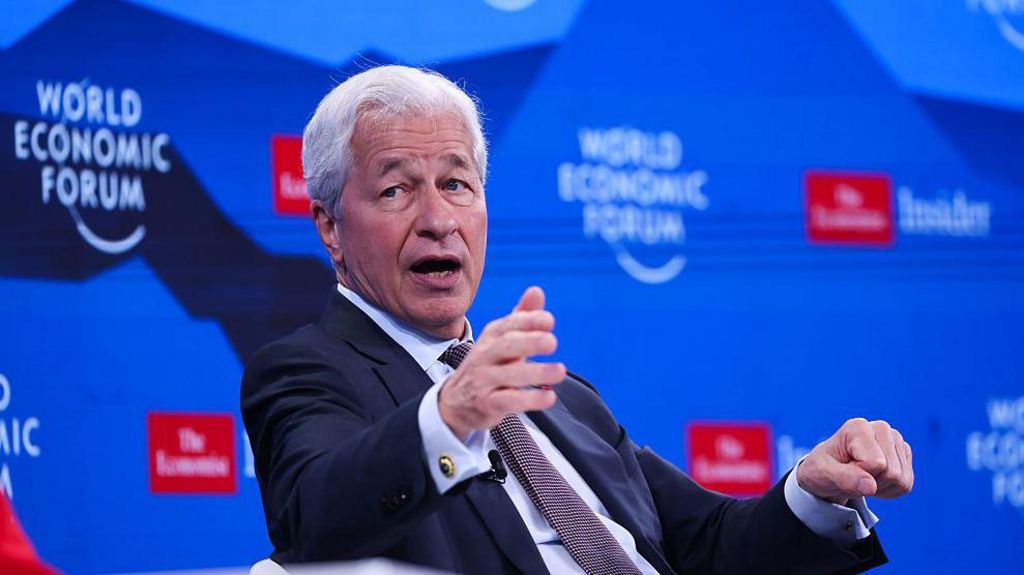
    JPMorgan Chase CEO Jamie Dimon has issued a stark warning against former President Donald Trump’s proposal to cap credit card interest rates at 10%, characterizing the measure as potentially catastrophic for the U.S. economy. Speaking at the World Economic Forum in Davos, Dimon asserted that such a cap would drastically reduce credit access for approximately 80% of Americans and negatively impact multiple sectors including restaurants, retailers, travel companies, and educational institutions.

    The controversial proposal, which Trump initially floated during his 2024 presidential campaign and recently reaffirmed via Truth Social on January 13, calls for a one-year interest rate limitation effective from January 20, 2026. The former president framed the measure as protection for consumers against what he described as predatory practices by credit card companies. However, the mechanism for implementation and its legal enforceability remain unspecified.

    Dimon challenged the proposal’s feasibility, suggesting that if proponents like Senators Bernie Sanders and Elizabeth Warren support the concept, it should first be tested in their home states of Vermont and Massachusetts. The banking executive emphasized that the most severe consequences would not be borne by financial institutions but rather by small businesses and municipalities as consumers struggle to meet payment obligations.

    The financial industry has united in opposition to the concept, with banking associations warning that rate caps would ultimately restrict credit access and prove devastating to families and small businesses. Market reactions were immediately observable following Trump’s social media announcement, with shares of major credit card companies including American Express, Visa, Mastercard, and Barclays experiencing declines.

    Currently, the average credit card interest rate in the United States stands at approximately 20%, significantly higher than the proposed cap. While positioned as consumer protection, economists and financial experts caution that artificial rate limitations could constrict credit availability particularly for higher-risk borrowers, potentially exacerbating rather than alleviating financial pressures on American consumers.

  • Watch: Russian cosmonaut captures stunning aurora from space

    Watch: Russian cosmonaut captures stunning aurora from space

    Russian cosmonaut Sergey Kud-Sverchkov has documented one of space’s most breathtaking phenomena from the unique vantage point of the International Space Station. His recently released footage showcases an intense auroral display dancing across Earth’s atmosphere during what scientists have identified as the most significant solar storm event in over two decades.

    The spectacular visual records were captured as our planet experienced heightened geomagnetic activity resulting from powerful solar eruptions. These celestial disturbances created ideal conditions for the vibrant aurora borealis, typically visible only in polar regions, to extend to unusually low latitudes.

    From his orbital perspective 400 kilometers above Earth, Kud-Sverchkov’s imagery provides unprecedented detail of the luminous phenomenon. The footage reveals the full spectral dimension of the aurora, with shimmering green ribbons intertwined with rare crimson hues, creating an otherworldly corona effect around our planet’s curvature.

    Space weather experts at NASA and Roscosmos confirm this event represents a G4-class geomagnetic storm, ranking as ‘severe’ on the space weather scale. Such intense solar activity originates from coronal mass ejections – massive expulsions of plasma and magnetic field from the Sun’s corona that travel through interplanetary space before interacting with Earth’s magnetosphere.

    The scientific community emphasizes that while these storms create visual marvels, they also demonstrate the importance of monitoring space weather due to potential impacts on satellite operations, communication systems, and power grids. Kud-Sverchkov’s documentation contributes valuable observational data to ongoing research in heliophysics and atmospheric sciences.

  • Ex-intelligence officer in Austria’s biggest spy trial for years

    Ex-intelligence officer in Austria’s biggest spy trial for years

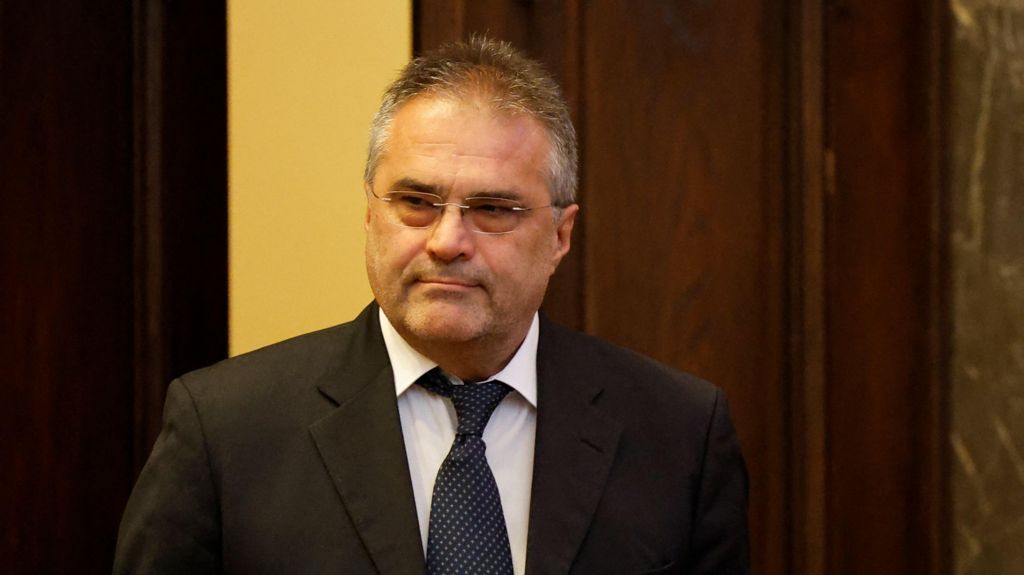
    Vienna witnessed the commencement of a landmark espionage trial on Thursday, as former Austrian intelligence operative Egisto Ott faced charges of conducting extensive espionage activities for Russian intelligence services. The 63-year-old defendant stands accused of systematically compromising national security through unauthorized data collection and transmission to foreign agents.

    The prosecution alleges that between 2015 and 2021, Ott exploited his official authority to harvest substantial volumes of sensitive information, including vehicle registration details, travel patterns, and personal data. This intelligence was reportedly funneled to both Russian intelligence operatives and Jan Marsalek, the fugitive former Wirecard executive currently believed to be residing in Moscow under Russian protection.

    Court documents reveal Ott allegedly received financial compensation for supplying classified information extracted from national and international police databases. In a particularly serious allegation from 2022, prosecutors claim Marsalek commissioned Ott to acquire a specialized EU government laptop containing electronic security hardware for secure communications, which was subsequently delivered to Russian intelligence.

    One extraordinary incident involves Ott allegedly recovering official phones belonging to senior Interior Ministry officials that accidentally fell into the Danube River during a boating excursion. Rather than returning the devices intact, Ott is accused of copying their contents and transferring the data to Marsalek and ultimately Moscow.

    The case has triggered significant political repercussions, with former Chancellor Karl Nehammer characterizing the allegations as constituting ‘a threat to democracy and our country’s national security’ following Ott’s 2024 arrest. Ott maintains his innocence against all charges, which carry potential imprisonment of up to five years.

    In a parallel development, Austrian prosecutors have charged former far-right Freedom Party (FPÖ) parliament member Thomas Schellenbacher with facilitating Marsalek’s escape to Belarus following Wirecard’s spectacular collapse in 2020. The FPÖ has vigorously denied allegations of functioning as ‘an extension of Russia’s arm’ in Austria.

    Marsalek himself remains an international fugitive, wanted by German authorities for alleged fraud and embezzlement connected to Wirecard’s missing €1.9 billion. Recent evidence from related espionage trials in London suggests Marsalek has undergone cosmetic surgery to alter his appearance and has been actively studying Russian while evading capture, reportedly boasting about needing to ‘outperform James Bond’ in his new role as a fugitive.