博客

  • Diving to discover details of distant past dependant on weather

    Diving to discover details of distant past dependant on weather

    For underwater archaeologist Tseung Pak-long, the ocean’s surface tranquility often masks the volatile conditions that determine the success or failure of his missions. Recently traveling nearly eight hours from Hong Kong to Pingtan Island in Fujian province, Tseung arrived to assist with specialized diving training despite an approaching typhoon threatening to disrupt operations.

    The delicate dance between archaeology and meteorology becomes most apparent during typhoon season, which spans May through November with peak intensity from July to September. Paradoxically, this period of heightened weather risk offers the most favorable underwater conditions for archaeological work. ‘Temperature and seabed conditions reach their optimal state during these months,’ Tseung explained, highlighting the profession’s inherent contradictions.

    As Typhoon Wipha prompted Hong Kong’s highest hurricane warning, Tseung maintained hope that Fujian’s distance from the storm’s eye might spare their operations. This optimism proved short-lived as powerful gusts greeted his arrival, signaling the challenging conditions ahead.

    The following day brought deceptive sunshine, but Tseung’s experience told a different story. ‘Favorable conditions for underwater work aren’t about surface weather,’ he clarified. ‘Everything depends on current intensity and subaquatic visibility.’

    Underwater archaeology operates under stringent safety protocols that prioritize diver security above all discoveries. The discipline mandates buddy systems, strict time limitations, defined operational ranges, and precise workflows. Tseung gestured toward the seemingly calm sea, noting its appearance belied the turbulent currents churning beneath—the aftermath of the passing typhoon creating dangerous and murky conditions.

    Accustomed to weather-related disappointments, Tseung philosophically compared underwater excavation to ‘opening a mystery box’ where even reaching a shipwreck site doesn’t guarantee significant findings. This unpredictability makes every successful dive particularly valuable.

    The expedition’s fate was sealed by evening when rough seas forced all vessels to designated safe zones, canceling the next day’s planned operations. Accepting nature’s authority with equanimity, Tseung reflected that being at mercy of the elements simply represents the norm in his profession.

  • Nation’s underwater archeology uncovered

    Nation’s underwater archeology uncovered

    On the coastal frontier of Pingtan Island in Fujian province, where terrestrial landscapes merge with oceanic expanses, an unassuming four-story crimson structure houses China’s premier Underwater Archaeology Training Base. This facility represents the vanguard of the nation’s systematic efforts to reclaim its submerged cultural heritage from oceanic depths.

    The discipline of underwater archaeology has evolved from specialized pursuit to established scientific practice in China, with veteran practitioners like retired archaeologist Cui Yong—among the nation’s pioneering figures in submerged cultural exploration—witnessing its transformative journey. As former deputy director of the Guangdong Institute of Cultural Relics and Archaeology, Cui embodies the dedication driving China’s maritime preservation initiatives.

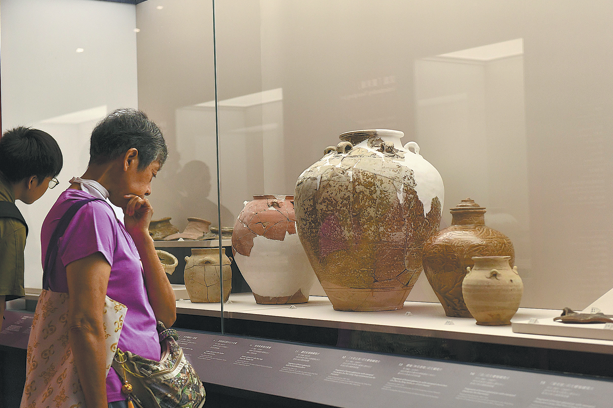
    Recent exhibitions, including the display of salvaged relics from the renowned Nanhai One shipwreck at Hong Kong’s Heritage Discovery Centre in August 2024, demonstrate the growing public engagement with these archaeological recoveries. The fourteenth-century merchant vessel, discovered in 1987 and meticulously excavated from the South China Sea, has become a symbolic representation of China’s maritime historical legacy, yielding over 180,000 cultural artifacts that illuminate ancient trade networks.

    China’s methodological approach combines advanced sonar mapping, remotely operated vehicles, and specialized diver training to investigate shipwrecks spanning from the Song Dynasty (960-1279) to the Qing Dynasty (1644-1911). These scientific endeavors not only recover physical artifacts but reconstruct historical narratives of maritime commerce, technological exchange, and cultural interaction along ancient trade routes.

    The national investment in underwater archaeology reflects broader recognition of oceanic heritage as an integral component of cultural preservation, with training programs developing new generations of archaeologists equipped to handle the unique challenges of submerged excavation and conservation.

  • South African police not yet able to defeat gangs, minister says

    South African police not yet able to defeat gangs, minister says

    South Africa’s Police Minister Firoz Cachalia has delivered a sobering assessment of the nation’s security capabilities, acknowledging that law enforcement lacks adequate resources to combat increasingly sophisticated criminal gangs. This admission comes amid escalating violence that has plagued multiple provinces, particularly the Eastern Cape and Western Cape regions.

    Minister Cachalia characterized gang violence as a ‘grave problem throughout the country’ during a press conference Wednesday, noting that criminal cartels ‘wield significant wealth and power’ that continues to undermine public safety. His comments followed a visit to Nelson Mandela Bay in Eastern Cape, where he described gangs as being on a ‘killing spree’ that has persisted into the new year.

    Statistical evidence underscores the severity of the crisis. Official police data reveals an average of 63 daily homicides between April and September last year, while local prevention groups documented 118 deaths in Nelson Mandela Bay alone from August to December. The violence has continued unabated in 2026, with approximately 40 fatalities reported across the region in January.

    The proliferation of illegal firearms exacerbates the situation. According to statistics cited by Gideon Joubert of the South African Gunowners’ Association, the country’s 63 million citizens possess approximately 3 million legally registered firearms—matched by an equal number of unlicensed weapons in circulation.

    Recent months have witnessed several high-profile incidents highlighting the crisis. These include a mass shooting near Johannesburg that claimed 11 lives in connection with illegal mining turf wars, a hostel attack in Pretoria that killed 11 people including a three-year-old child, and a tavern shooting in Durban that left eight patrons dead.

    Despite the establishment of a specialized anti-gang unit in 2019, Minister Cachalia indicated that traditional policing approaches have proven insufficient. He criticized ad hoc responses to the growing problem, emphasizing that ‘establishing gang units from time to time’ represents an inadequate solution to deeply entrenched organized crime.

    President Cyril Ramaphosa has pledged strengthened law enforcement measures and increased police deployments to address the violence. However, Minister Cachalia’s assessment suggests that without significant resource allocation and strategic overhaul, South Africa’s security forces remain outmatched by well-funded criminal networks.

  • Three dead in shooting in Australia’s New South Wales

    Three dead in shooting in Australia’s New South Wales

    A tranquil afternoon in the rural community of Lake Cargelligo was shattered by violence on Tuesday when a shooting incident claimed three lives and left another individual hospitalized. According to New South Wales Police, the tragedy unfolded at approximately 4:40 PM local time (05:40 GMT) in the Walker Street area near Yelkin Street, prompting immediate deployment of emergency services.

    The victims, identified as two women and one man, succumbed to their injuries at the scene. A fourth individual was transported to a medical facility and remains in serious but stable condition. Preliminary investigations suggest the incident may be connected to domestic violence, though authorities continue to pursue all lines of inquiry.

    Law enforcement officials have confirmed the suspected perpetrator remains at large, potentially having fled the scene in a vehicle belonging to the local council. In response, heavily armed tactical police units have been deployed throughout the region as the manhunt intensifies.

    Local residents have been advised to shelter in place while authorities urge the public to avoid the affected area entirely. The community of approximately 1,500 people, located in central New South Wales, now faces its second major gun-related tragedy in recent months, following December’s mass shooting at Sydney’s Bondi Beach that resulted in 15 fatalities.

    The incident has reignited national conversations about gun control and domestic violence prevention measures across Australia. Police continue their investigation while maintaining a significant presence in Lake Cargelligo as search operations continue.

  • Danish leader says kingdom can’t negotiate sovereignty after Trump’s Greenland about-turn

    Danish leader says kingdom can’t negotiate sovereignty after Trump’s Greenland about-turn

    COPENHAGEN, Denmark — Danish Prime Minister Mette Frederiksen has firmly asserted her nation’s sovereign rights over Greenland following controversial statements by U.S. President Donald Trump regarding Arctic security arrangements. The diplomatic clarification comes after Trump’s abrupt withdrawal of threatened tariffs on eight European nations—a coercive measure initially deployed to pressure Denmark into relinquishing control over the semiautonomous Arctic territory.

    President Trump had previously announced reaching a “framework of a future deal” on Arctic security with NATO leadership, specifically referencing the Golden Dome missile defense program—a $175 billion multilayered system that would potentially position U.S. weapons in space for the first time. However, Frederiksen stated she had received confirmation that no such agreement involving Danish sovereignty had been negotiated.

    The Danish leader emphasized that while Arctic security represents a legitimate concern for all NATO members, and that discussions between the U.S. president and NATO Secretary General Mark Rutte were “good and natural,” Denmark’s sovereignty remains non-negotiable. Frederiksen confirmed ongoing communications with Rutte surrounding his meeting with Trump in Davos.

    NATO leadership has been made fully aware of Denmark’s position that while political, security, and economic matters remain open for discussion, national sovereignty cannot be compromised. Frederiksen reiterated that only Denmark and Greenland possess the authority to make determinations concerning their bilateral relations and territorial integrity.

    The Prime Minister expressed Denmark’s willingness to engage in constructive dialogue regarding Arctic security enhancement, including potential collaboration on the Golden Dome program, provided such cooperation respects Danish territorial sovereignty. Meanwhile, NATO’s Rutte clarified in a Fox News interview that the future status of Greenland within the Danish kingdom had not been part of his discussions with Trump, noting the president’s primary focus remained on countering increased Chinese and Russian activity in the rapidly changing Arctic region.

  • Austrian ex-agent to go on trial in Russia spying case

    Austrian ex-agent to go on trial in Russia spying case

    A high-profile espionage trial commenced Thursday in Vienna’s criminal court against Egisto Ott, a former Austrian intelligence official accused of systematically leaking state secrets to Russia. The 63-year-old ex-agent faces multiple charges including abuse of office, corruption, and espionage activities allegedly conducted between 2015 and 2022.

    The case centers on Ott’s purported collaboration with Jan Marsalek, an Austrian executive of the collapsed German payment firm Wirecard, who remains a fugitive wanted for fraud and suspected ties to Russia’s FSB intelligence service. Prosecutors allege Ott received over €80,000 in payments for providing sensitive devices and confidential information that compromised Austria’s national security.

    According to the indictment, Ott’s actions risked inflicting “serious damage” to Austria’s reputation among allied intelligence services. His alleged activities included exploiting European databases and submitting assistance requests to Italy and Britain that inadvertently advanced Moscow’s interests.

    The prosecution details how Ott supposedly handed over interior ministry officials’ cell phones, exposing thousands of contacts and endangering Ukrainian and Chechen refugees in Austria. Most alarmingly, he allegedly provided Russia with an encrypted laptop containing secure communication hardware, which was subsequently transferred to Iran.

    Investigators discovered Ott had compiled what prosecutors termed an “assassination manual” following the 2019 Berlin murder of a Georgian-Chechen individual by Russian agents. The document allegedly provided instructions for conducting future assassinations within EU territory.

    The trial represents the latest development in Austria’s ongoing reckoning with Russian espionage activities, challenging the nation’s historical identity as a bridge between Moscow and the West. Ott, who was suspended in 2017 and briefly arrested in 2021, faces up to five years imprisonment if convicted.

  • Nuclear reactor owned by Fukushima plant operator TEPCO suspends hours-old restart

    Nuclear reactor owned by Fukushima plant operator TEPCO suspends hours-old restart

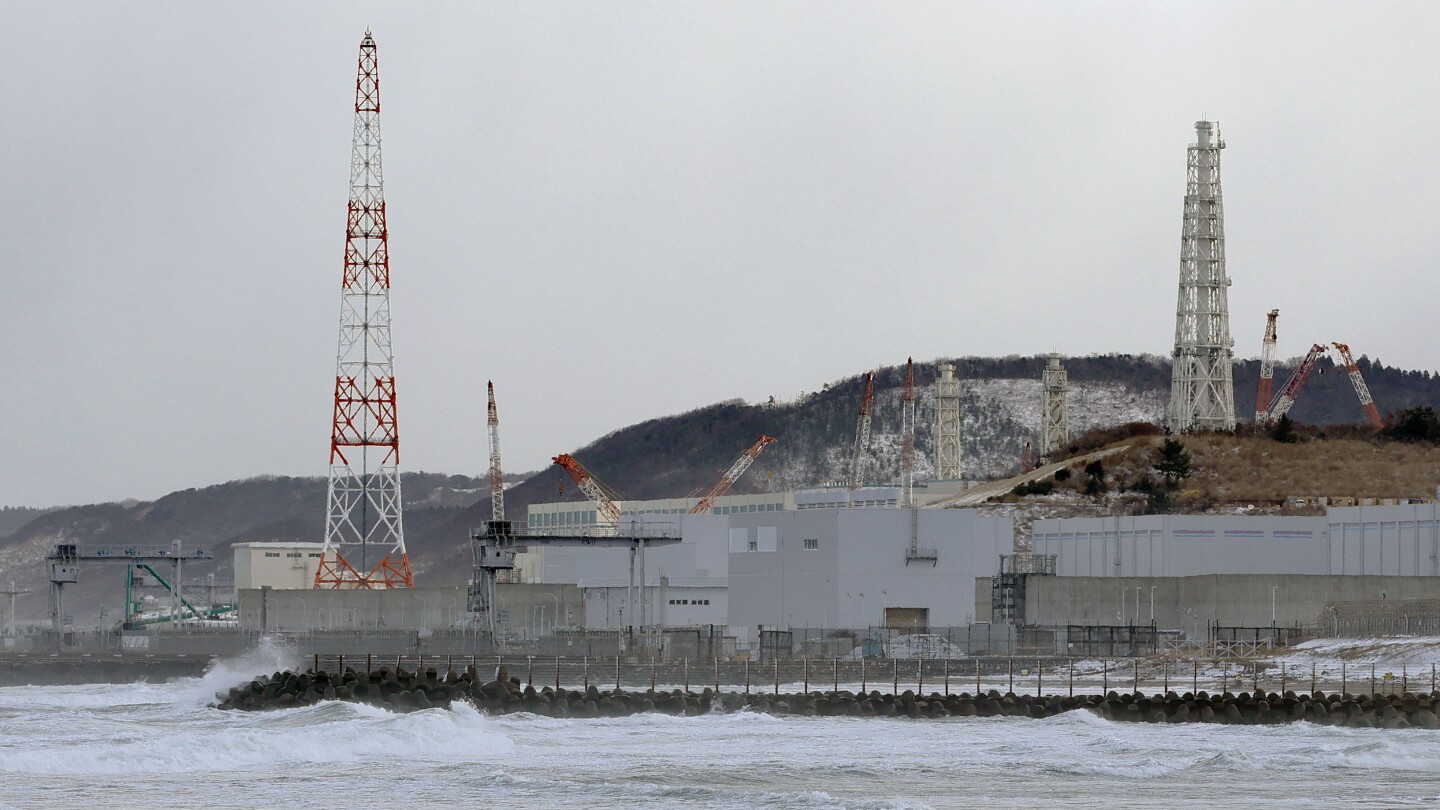
    Japan’s ambitious nuclear energy revival faced an unexpected setback Thursday when the restart of the Kashiwazaki-Kariwa nuclear power plant—the world’s largest such facility—was abruptly suspended mere hours after commencing operations. This marked the first attempted reactivation since the catastrophic 2011 Fukushima nuclear disaster.

    The suspension resulted from a technical anomaly involving control rods, critical components responsible for the safe initiation and shutdown of nuclear reactors. Tokyo Electric Power Company Holdings (TEPCO), the plant’s operator, confirmed the interruption while emphasizing that no safety compromises occurred. Company officials are conducting thorough investigations to determine the cause, with no definitive timeline provided for resuming the restart process.

    This development carries profound significance as TEPCO simultaneously manages the ongoing Fukushima cleanup—a project estimated at 22 trillion yen ($139 billion)—while working to restore its operational credibility. Both governmental and independent investigations had previously attributed the Fukushima catastrophe to TEPCO’s deficient safety protocols and inappropriate collusion with regulatory bodies.

    The Kashiwazaki-Kariwa facility, located approximately 220 kilometers northwest of Tokyo, represents TEPCO’s inaugural return to nuclear power generation since the 2011 disaster. While fourteen other reactors across Japan have successfully resumed operations during this period, this particular restart symbolizes a critical milestone in Japan’s broader energy strategy. The nation, resource-deficient and facing escalating electricity demands, is actively accelerating atomic power utilization to ensure energy security.

    The No. 6 reactor, once operational, promises to generate 1.35 million kilowatts of electricity—sufficient to power over one million households in the capital region. Despite the plant’s total capacity reaching 8 million kilowatts across seven reactors, TEPCO currently plans to recommission only two units in the foreseeable future. All seven reactors have remained inactive since 2012, following radiation contamination that rendered extensive areas surrounding Fukushima uninhabitable.

  • Dog weddings — how new industry laps up puppy love

    Dog weddings — how new industry laps up puppy love

    A remarkable social phenomenon is emerging across urban centers in China, where extravagant wedding ceremonies for pets are rapidly evolving into a sophisticated industry. This trend reflects the deepening emotional bonds between pet owners and their animal companions, transforming conventional pet care into elaborate celebrations of companionship.

    The market for pet weddings has witnessed exponential growth, with specialized event companies now offering comprehensive packages including venue decoration, custom attire, professional photography, and gourmet pet-friendly catering. These events typically range from intimate gatherings to lavish productions costing thousands of dollars, demonstrating the significant economic potential of this niche market.

    Shanghai resident Sun Yongning exemplifies this trend, having recently organized a wedding ceremony for her poodle Alice, who ‘married’ Max, a canine companion belonging to family friends. “Their meeting was extraordinarily dramatic—we encountered Max and his owners at a pet gathering, and the two dogs immediately developed a special connection,” Sun recounted. The subsequent discovery that the dogs shared familial ties through pedigree certificates added an unexpected dimension to their relationship, creating what Sun described as “a narrative worthy of literary fiction.”

    Industry analysts attribute this phenomenon to several socioeconomic factors: rising disposable incomes, changing family structures, and the increasing treatment of pets as family members. Urban professionals, particularly younger generations and middle-aged empty nesters, are driving demand for premium pet services that acknowledge the emotional significance of their animal companions.

    Beyond the ceremonial aspects, these events facilitate social networking among pet owners, creating communities centered around shared interests in animal welfare and luxury pet care. The trend has also stimulated adjacent market sectors including pet fashion, specialized confectionery, and event planning services specifically tailored for animal celebrations.

    While some critics question the extravagance of such ceremonies, proponents argue they represent meaningful expressions of companionship in increasingly digital and isolated urban environments. The industry shows no signs of slowing, with market researchers predicting continued expansion into related services and experiences that celebrate the human-animal bond.

  • Efficient medical care draws foreigners

    Efficient medical care draws foreigners

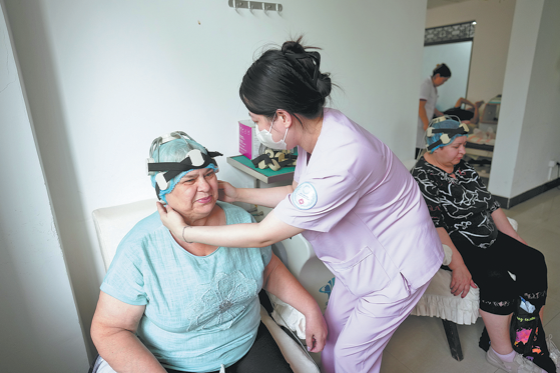
    A growing number of international patients are bypassing lengthy wait times in their home countries by seeking medical treatment in China, where they report receiving high-quality, efficient care at significantly lower costs. This emerging trend, highlighted by the experience of a British content creator named Amie, demonstrates China’s evolving position in the global healthcare landscape.

    Amie’s case exemplifies this phenomenon. Facing a two-week wait for a general practitioner consultation in Britain for persistent stomach pain, she instead booked a flight to Beijing. Within five days of arrival, she consulted a gastroenterologist at Beijing Tsinghua Changgung Hospital, completed comprehensive diagnostic tests including a sedated endoscopy, and received a definitive diagnosis of chronic gastritis with prescribed medication. The entire process cost approximately £300 for medical services—just one-tenth of what she would have paid through Britain’s National Health Service.

    Even including £1,500 in travel expenses, Amie reported the overall experience remained cost-effective while providing exceptional efficiency. “It feels like a well-oiled machine here. The efficiency and quality of care are outstanding,” she noted in social media posts that garnered significant attention.

    This medical tourism trend primarily attracts expatriates and former long-term residents familiar with China’s healthcare system. While China’s visa-free policy doesn’t specifically cover medical visits, many foreigners arrange treatment during permitted stays for tourism or business. Currently, travelers from 55 countries can utilize China’s 240-hour visa-free transit policy at 65 entry ports.

    Medical experts attribute China’s healthcare efficiency to sophisticated interdepartmental coordination and digital integration. “When a gastroenterologist orders a procedure, the lab quickly runs blood tests, the cardiology department performs an electrocardiogram, and anesthesiology handles preoperative assessment. The whole process is seamlessly integrated,” explained Lin Siyong, head of medical affairs management at Beijing Tsinghua Changgung Hospital.

    Foreign patients typically seek care at either private hospitals or international medicine departments within public hospitals. Wang Yiqun, deputy director of Beijing Tsinghua Changgung Hospital’s international medicine department, emphasized that while public hospitals prioritize domestic patients’ basic healthcare needs, they’ve established international divisions to support Beijing’s development as a global exchange hub. National guidelines cap international medical services at approximately 10% of total capacity.

    The trend extends beyond Beijing to other major cities. Di Yue, an ophthalmologist at Shanghai Children’s Hospital, has noticed a significant increase in overseas patients, particularly overseas Chinese from Canada, Singapore, Malaysia, and Australia. Specializing in treating trachomatous trichiasis, he notes that even including travel and accommodation expenses, treatment in China often proves more cost-effective than abroad.

    This influx of international patients not only provides revenue for hospitals but also reflects China’s growing medical capabilities. With the expansion of telemedicine and social media, healthcare professionals anticipate continued growth in medical tourism to China.

  • Arrival of Losar brings joy, good fortune to Tibetans

    Arrival of Losar brings joy, good fortune to Tibetans

    Across the high-altitude landscapes of Xizang Autonomous Region, vibrant celebrations for Losar—the traditional Tibetan New Year—are unfolding with profound cultural significance and communal joy. The festival, marked by intricate rituals and symbolic preparations, demonstrates the enduring preservation of Tibetan heritage amidst modern development.

    In Lhasa’s historic Barkhor district, a sprawling seasonal market operating from January 14 to February 16 has become the epicenter of festive commerce. Two hundred forty stalls offer specialized goods ranging from ceremonial barley sprouts and artisanal dairy products to regional delicacies from Qinghai and Xinjiang. The market embodies a fusion of traditional practices with contemporary convenience, creating a comprehensive shopping experience for residents preparing for the celebrations.

    Cultural symbolism permeates every aspect of Losar preparations. The Chemar Box, containing sacred tsampa (roasted barley flour), represents aspirations for abundance and prosperity. Elaborately painted barley ear decorations (Losar metok) and vibrant door curtains serve as traditional talismans believed to invite warmth and good fortune into households.

    This year’s astronomical alignment creates a rare temporal proximity between Losar and the Spring Festival, with merely one day separating the two celebrations. Tibetan calendrical expert Tobgayl explains that this synchronization results from complex lunar calculations, with the festivals sometimes coinciding or occurring weeks apart depending on annual celestial variations.

    Regional diversity characterizes Losar observances across Xizang. While most communities celebrate on the first day of the Tibetan calendar’s first month, residents of Shigatse and Nagchu traditionally observe the holiday at the commencement of the twelfth month—a distinction reflecting local agricultural cycles and geographical conditions.

    Perhaps most poignant are the celebrations in Tsakhor village, where residents displaced by last year’s 6.8 magnitude earthquake are now observing Losar in newly constructed Tibetan-style homes. “We are finally celebrating in our new homes without worries,” expressed villager Pema Chungdak, capturing the collective resilience of communities rebuilding amidst preservation of cultural traditions.

    From urban markets to rural villages, the pervasive spirit of renewal and cultural continuity defines this year’s celebrations, demonstrating how ancient traditions continue to shape contemporary life across the Tibetan plateau.