博客

  • China expects record-breaking inter-regional trips in Spring Festival travel rush

    China expects record-breaking inter-regional trips in Spring Festival travel rush

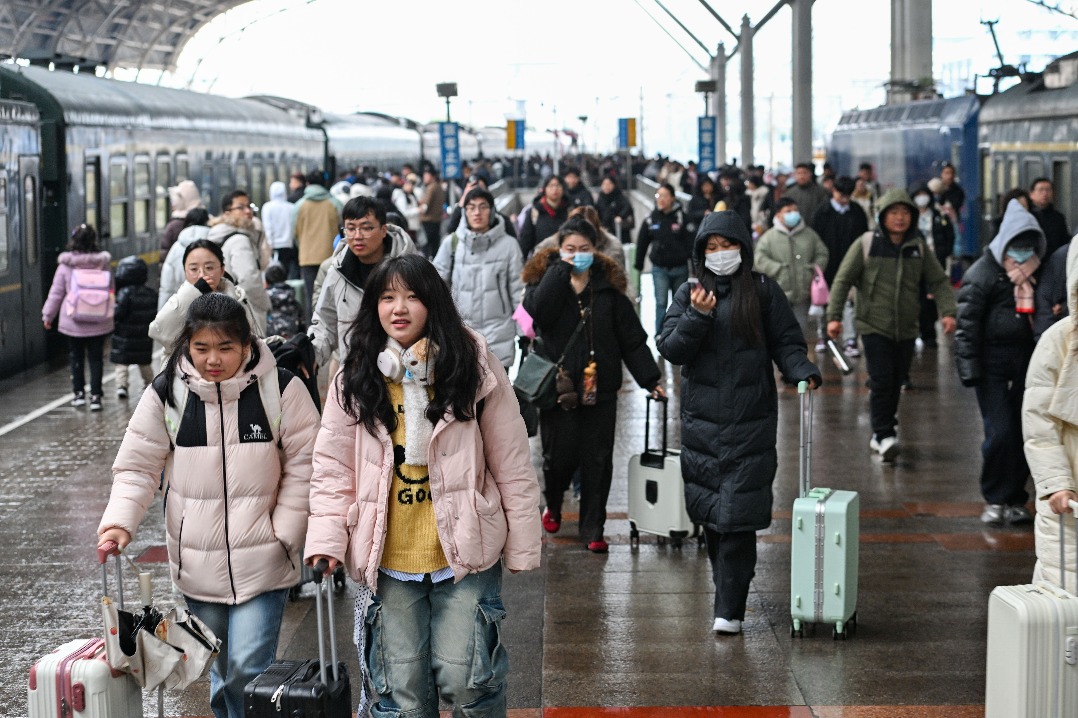
    China is preparing for an unprecedented transportation challenge as officials project record-breaking passenger volumes during the upcoming 2026 Spring Festival travel period. The massive annual migration, known locally as chunyun, will span 40 days from February 2 to March 13, testing the nation’s transportation infrastructure at an unprecedented scale.

    According to data released by China State Railway Group Co., Ltd., the national railway network is anticipated to handle approximately 539 million passenger trips during this period, marking a 5% increase compared to the 2025 Spring Festival travel rush. This substantial growth reflects both recovering travel enthusiasm and expanding transportation capacity across China’s rapidly developing rail network.

    Simultaneously, the civil aviation sector is poised to achieve its own milestone, with the Civil Aviation Administration of China forecasting a record 95 million air passenger journeys. This dual surge in both rail and air travel demonstrates the massive scale of China’s internal migration patterns during traditional holiday periods.

    Transportation authorities have identified road travel as the dominant mode of transportation for the upcoming chunyun season. Officials emphasized the implementation of comprehensive measures to ensure traffic fluidity, maintain safety protocols, and address potential disruptions caused by extreme weather conditions. The coordinated approach across multiple transportation sectors highlights China’s systematic preparation for one of the world’s largest periodic human migrations.

    The Spring Festival travel rush represents not only a transportation challenge but also a cultural phenomenon deeply rooted in Chinese tradition, where families reunite across vast distances to celebrate the Lunar New Year together.

  • Trump drops tariff threat on EU countries after striking framework for a deal over Greenland in Davos

    Trump drops tariff threat on EU countries after striking framework for a deal over Greenland in Davos

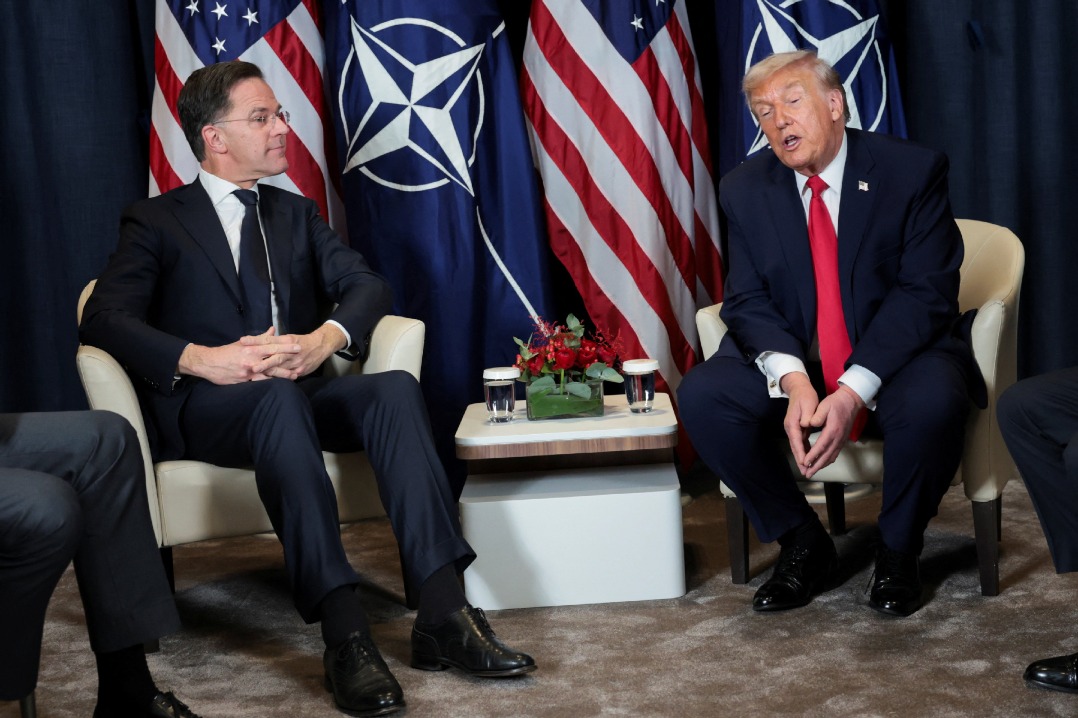
    In a significant diplomatic development at the World Economic Forum in Davos, President Donald Trump announced the suspension of threatened tariffs against eight European nations following the establishment of a preliminary agreement concerning Greenland and Arctic security. The breakthrough came during bilateral discussions with NATO Secretary General Mark Rutte on January 21, 2026.

    The agreement, described by Trump as ‘the ultimate long-term deal,’ effectively cancels planned 10% tariffs on goods from the United Kingdom, Denmark, Norway, Sweden, France, Germany, Netherlands, and Finland that were scheduled to commence February 1. Additionally, the administration withdrew the threat of escalating these tariffs to 25% beginning June 1.

    While specific details remain limited, the framework reportedly addresses US strategic interests in the Arctic region, including enhanced military presence opportunities and mineral resource access. Trump characterized the arrangement as providing the United States with ‘everything it wanted’ regarding Greenland while creating benefits for all NATO member nations.

    Political science expert Professor Michael A. Allen of Boise State University noted the agreement would enable the US to ‘increase its military presence in Greenland and work with NATO partners to achieve its goals.’

    European leaders expressed relief at the de-escalation of tensions. Danish Foreign Minister Lars Lokke Rasmussen stated, ‘The day is ending on a better note than it began,’ emphasizing the importance of addressing American security concerns while respecting Denmark’s territorial integrity.

    The negotiation process will be overseen by US Secretary of State Marco Rubio and Special Envoy Steve Witkoff, who will report directly to the president. Preliminary discussions suggest the possibility of limited territorial concessions for military infrastructure, though no official confirmation has been provided.

    Notably, President Trump explicitly ruled out military force to acquire Greenland during his Davos address, stating: ‘I don’t have to use force. I don’t want to use force. I won’t use force.’

  • People celebrate farmers’ New Year in Shigatse, China’s Xizang

    People celebrate farmers’ New Year in Shigatse, China’s Xizang

    The ancient agricultural communities of Tibet’s Shigatse region erupted in colorful festivities on January 20, 2026, as residents celebrated the traditional Farmers’ New Year. This significant cultural event, observed on the first day of the twelfth month according to the Tibetan calendar, transforms Chusong village in Nyarixung township into a vibrant tapestry of traditional customs and communal joy.

    Amidst the breathtaking Himalayan backdrop, villagers gathered in traditional attire to honor their agricultural heritage and welcome the upcoming planting season. The celebrations featured time-honored rituals that have been passed down through generations, reflecting the deep connection between Tibetan farmers and their land. Elaborate ceremonies expressed gratitude for past harvests while invoking blessings for agricultural prosperity in the coming year.

    The Farmers’ New Year represents more than mere festivity—it embodies the preservation of Tibet’s rich cultural identity and agricultural traditions. As modernization continues across China, such celebrations demonstrate the enduring vitality of regional customs and the importance of maintaining cultural heritage. The event provided a captivating glimpse into the unique seasonal rhythms that continue to shape rural life in Xizang Autonomous Region.

    Photographic documentation captured villagers participating in traditional dances, sharing ceremonial meals, and engaging in rituals that symbolize the harmonious relationship between humanity and nature. These observances highlight how Tibetan agricultural communities maintain their distinctive cultural practices while being part of China’s diverse ethnic tapestry.

  • US forces seize 7th oil tanker in Caribbean

    US forces seize 7th oil tanker in Caribbean

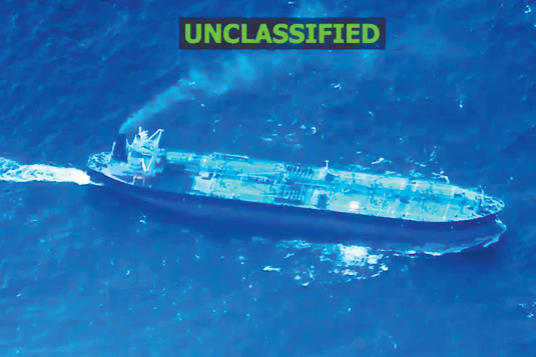
    The United States Southern Command has conducted its seventh interception of a Venezuela-associated oil tanker in the Caribbean Sea, escalating its month-long maritime enforcement operation. The motor vessel Sagitta was apprehended without resistance on Tuesday as part of Washington’s comprehensive strategy to control Venezuela’s petroleum exports.

    This latest seizure occurs within the framework of President Donald Trump’s December-declared ‘total and complete blockade’ targeting sanctioned vessels transiting to and from Venezuelan waters. The Southern Command affirmed its determination to ensure that “the only oil leaving Venezuela will be oil that is coordinated properly and lawfully.”

    The geopolitical confrontation intensified significantly following a January 3rd military operation where US forces attempted to capture Venezuelan President Nicolas Maduro and his wife. This unprecedented action drew widespread international criticism regarding violations of national sovereignty.

    Concurrently, Acting Venezuelan President Delcy Rodriguez announced receipt of $300 million from US-controlled sales of Venezuelan crude oil, representing a portion of an estimated $500 million total revenue. Rodriguez stated these funds would be channeled through public and private banking institutions, in coordination with the Central Bank of Venezuela, to stabilize foreign exchange markets.

    Despite Trump’s assertion that the US has extracted 50 million barrels of Venezuelan oil, maritime transport records indicate these volumes have not yet been exported. The administration simultaneously contemplates a $100 billion reconstruction plan for Venezuela’s deteriorated oil infrastructure.

    Tensions further escalated when Venezuela’s Ministry of the Interior denounced an artificially generated map circulating on Trump’s social media that depicted Venezuela, Canada, and Greenland as US territories. The ministry vehemently reaffirmed the nation’s sovereignty as the Bolivarian Republic of Venezuela.

    Adding another dimension to the complex situation, Trump revealed potential involvement for Venezuelan opposition figure Maria Corina Machado, though specific responsibilities remain undefined. This development follows Machado’s presentation of her Nobel Peace Prize to the US president during their recent meeting.

  • China seeks support to fight crimes against humanity

    China seeks support to fight crimes against humanity

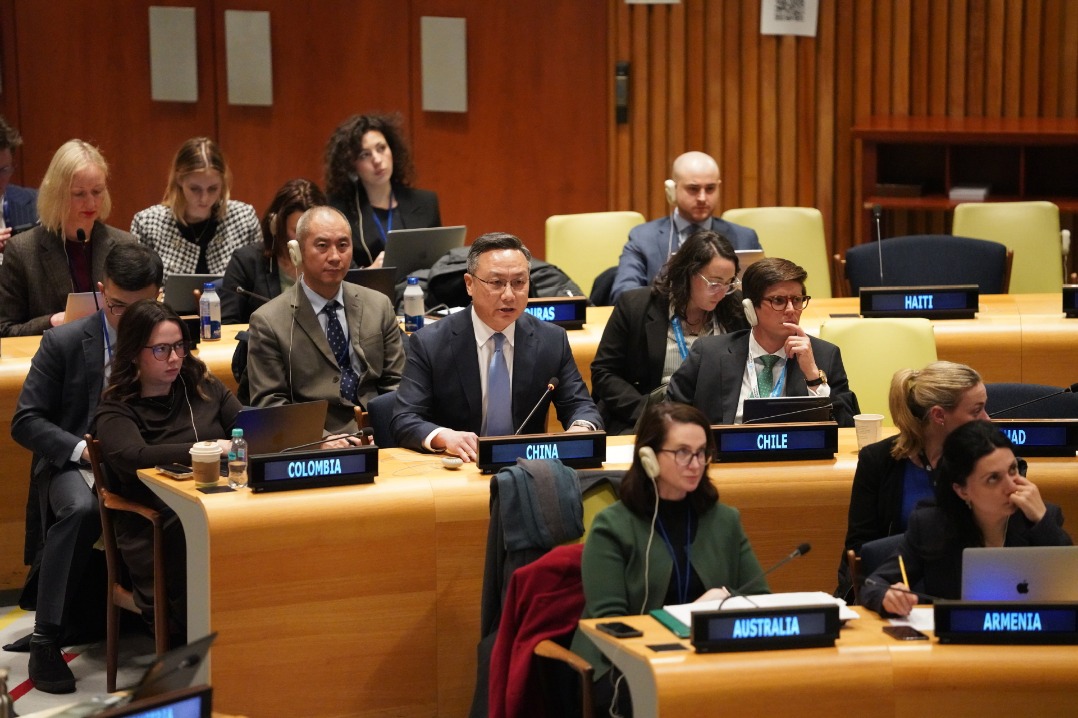
    At the inaugural session of the UN Preparatory Committee for the Conference on Crimes Against Humanity, Chinese envoy Sun Lei delivered a powerful address calling for enhanced international collaboration to prevent and penalize atrocities constituting crimes against humanity. The senior diplomat, serving as charge d’affaires of China’s permanent mission to the UN, emphasized the critical importance of upholding international legal standards and preserving historical justice during Monday’s proceedings.

    The committee’s establishment follows UN General Assembly Resolution 79/122 adopted in 2024, which initiated the process toward drafting a comprehensive global convention addressing these severe offenses. Sun characterized crimes against humanity as grave violations that fundamentally threaten international peace and security, tracing their legal conceptualization to the post-World War II Nuremberg and Tokyo tribunals.

    Speaking on the 80th anniversary of the International Military Tribunal for the Far East, Sun highlighted how Japanese militarism inflicted profound suffering across China, Asia, and the global community. He described the Tokyo trials as historically irrefutable evidence of Japan’s aggression crimes, noting their pioneering role in developing international criminal jurisprudence while serving as a enduring clarion call for peace.

    The diplomat urged the international community to collectively safeguard the outcomes of WWII victory, maintain the international legal order, and prevent the resurgence of militarism. His remarks emerged amid escalating Sino-Japanese tensions following controversial November statements by Japanese Prime Minister Sanae Takaichi regarding potential intervention in Taiwan Strait scenarios, which China has vehemently opposed through formal diplomatic channels.

    Sun emphasized that in today’s complex global landscape marked by regional conflicts and geopolitical turbulence, strengthening mechanisms against crimes against humanity carries particular urgency and significance. China has consistently supported lawful punishment of such crimes and constructively participated in UN Sixth Committee discussions, submitting official government comments in late 2023.

    The Chinese representative concluded that combating these crimes must strictly adhere to the UN Charter and universally recognized international law principles, warning against recent politicization of humanitarian issues where certain states allegedly manipulate concepts of criminal accountability and human rights protection to interfere in sovereign nations’ internal affairs and justify armed aggression.

  • Death toll from shopping mall fire in Pakistan’s Karachi rises to 60

    Death toll from shopping mall fire in Pakistan’s Karachi rises to 60

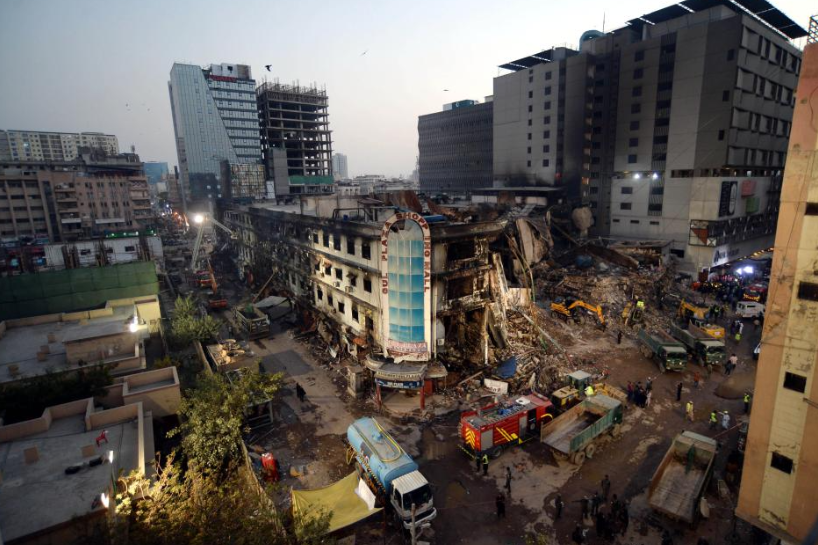
    A devastating fire at a multi-story shopping complex in Karachi, Pakistan’s largest port city, has resulted in a tragic death toll of 60 people, with rescue operations continuing into Wednesday. The catastrophic blaze, which engulfed the commercial building on January 21, 2026, represents one of the deadliest urban fire incidents in Pakistan’s recent history.

    Senior police official Syed Asad Raza confirmed to media that at least 30 victims were recovered from a single shop on the mezzanine floor of the devastated shopping mall. Rescue teams equipped with advanced machinery are working tirelessly to remove debris from collapsed sections of the structure, though operations have been hampered by persistent smoke and intense residual heat within the damaged building.

    Commissioner Syed Hassan Naqvi announced that authorities have initiated a comprehensive investigation into the disaster, examining multiple potential causes of the fire. The rescue operation has been complicated by the structural instability of the building, with officials reporting that one section has been cleared while two remaining portions continue to be searched for possible survivors and victims.

    The tragedy has highlighted ongoing concerns about fire safety regulations and emergency preparedness in Pakistan’s urban centers. As recovery efforts continue, officials acknowledge that several individuals remain unaccounted for, suggesting the final death toll may still rise as operations progress.

  • Trump threatens 200% tariff on French wine over backing for Gaza peace board

    Trump threatens 200% tariff on French wine over backing for Gaza peace board

    In a dramatic escalation of diplomatic tensions, former US President Donald Trump has issued an ultimatum to France, threatening to impose staggering 200% tariffs on French wine and champagne exports. The economic threat comes in direct response to French President Emmanuel Macron’s refusal to participate in Trump’s proposed ‘Board of Peace’ initiative aimed at addressing global conflicts, including the ongoing situation in Gaza.

    The confrontation emerged when Trump, reacting to Macron’s decision to abstain from joining the international peacekeeping board, declared: ‘Nobody wants him because he will be out of office very soon. I’ll put a 200% tariff on his wines and champagnes, and he’ll join, but he doesn’t have to join.’ This statement underscores Trump’s unconventional approach to international diplomacy, using economic leverage to compel political cooperation.

    Trump’s Board of Peace concept, initially proposed in September as a mechanism to resolve the Gaza conflict, has since expanded into a broader global initiative. Approximately 60 nations have received draft charters outlining membership requirements, including a substantial $1 billion contribution for extended participation beyond three years. The former president aims to finalize the board’s structure during the upcoming World Economic Forum in Davos, Switzerland.

    The tariff threat represents the latest chapter in ongoing trade tensions between Trump and European allies. Just days earlier, Trump had warned of imposing 10-25% tariffs on European nations unless they supported his controversial plan to purchase Greenland. French officials have characterized these tactics as diplomatic blackmail, with Agriculture Minister Annie Genevard condemning the approach as ‘shocking because it’s brutal, it’s done to force compliance.’

    The United States stands as the world’s largest importer of sparkling wines, purchasing approximately $1.75 billion worth in 2023. Such aggressive tariffs would devastate France’s champagne industry, recalling similar threats made in March during previous EU trade disputes. While those tariffs were never implemented, the renewed warning has sent shockwaves through European diplomatic and trade circles, raising concerns about the future of transatlantic relations should Trump return to power.

  • Two dead and several missing as New Zealand reels from deadly landslides

    Two dead and several missing as New Zealand reels from deadly landslides

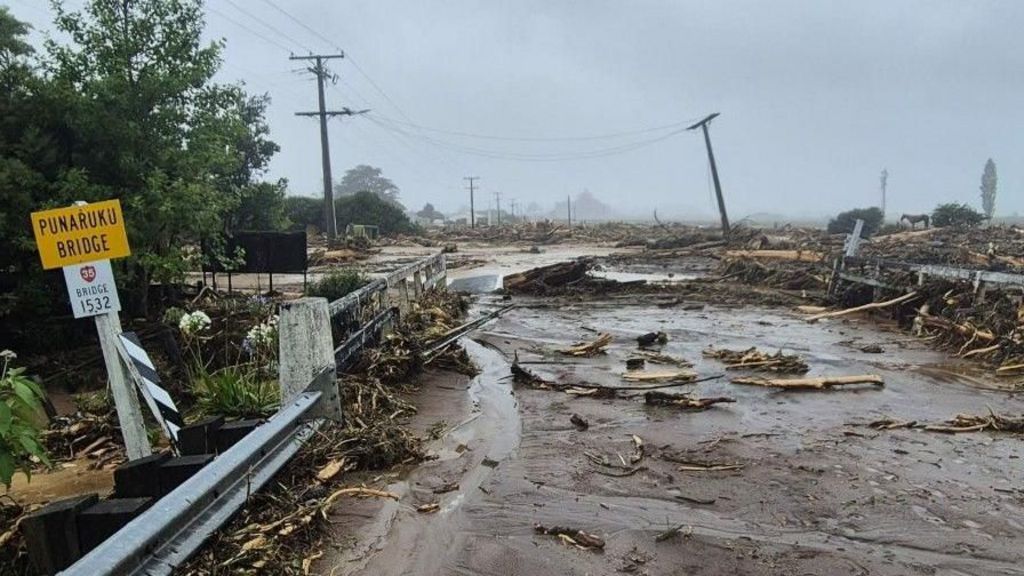
    New Zealand’s North Island confronts a devastating natural disaster as catastrophic landslides triggered by unprecedented rainfall have claimed multiple lives, with several individuals still unaccounted for. The tragedy unfolded at two primary locations: Welcome Bay, where two fatalities were confirmed, and the popular Mount Maunganui campground, where rescue teams continue searching through debris with specialized equipment and sniffer dogs.

    Authorities describe the campground search operation as occurring in a ‘complex and high-risk environment,’ with Urban Search and Rescue deputy commander Megan Stiffler emphasizing their commitment to achieving the ‘best possible outcome while keeping everyone safe.’ Despite continuous efforts through the night, officials report no signs of life detected in the rubble.

    The geological instability at Mount Maunganui—an extinct volcano considered sacred by Māori people and frequently described as a ‘slice of paradise’—has been exacerbated by extreme weather conditions. The region received approximately three months’ worth of precipitation within a single day, resulting in widespread flooding, power outages affecting thousands, and additional evacuations due to fears of further landslides.

    Eyewitness accounts paint a harrowing picture of the disaster’s immediate aftermath. Australian tourist Sonny Worrall recounted to TVNZ: ‘I heard this huge tree crack and all this dirt come off, and then I looked behind me and there’s this huge landslide coming down… I’m still shaking from it now.’ Local hiker Mark Tangney described hearing desperate screams from beneath the rubble that persisted for approximately thirty minutes before falling silent.

    Prime Minister Christopher Luxon characterized the event as a ‘profound tragedy’ that has left the nation ‘heavy with grief.’ Emergency Management Minister Mark Mitchell noted the event impacted ‘almost our entire eastern seaboard of the North Island,’ drawing comparisons to a ‘war zone’ in its devastation.

    The catastrophe occurs against a backdrop of increasing severe weather events in New Zealand, with scientists noting a pattern of intensifying storms during what are traditionally the sunnier months of December through February. The current disaster follows February 2023’s Cyclone Gabrielle, which remains the Southern Hemisphere’s costliest cyclone with damages exceeding NZ$13.5 billion.

    As recovery efforts continue, individual stories of tragedy and resilience emerge, including that of a Kiribati fisherman who sacrificed his own safety to ensure his nephew’s survival when their vehicle was swept into the Mahurangi River.

  • BRI activity hits record high in 2025

    BRI activity hits record high in 2025

    The Belt and Road Initiative achieved unprecedented momentum in 2025, reaching a record $214 billion in global engagement according to a comprehensive study by Fudan University’s Green Finance & Development Center and Australia’s Griffith Asia Institute. This remarkable growth represents China’s most active year since the initiative’s 2013 launch, driven primarily by massive renewable energy investments and strategic infrastructure development.

    Construction contracts accounted for $128.4 billion while investments exceeded $85 billion, with energy sector engagement surging to $94 billion—more than double the 2024 figures and the highest in BRI history. The scale of individual projects expanded dramatically, with investment deals over $100 million reaching $939 million and average construction project sizes nearly doubling to $964 million.

    Africa emerged as the primary beneficiary of construction activities, with Nigeria leading at approximately $25 billion, followed by the Republic of Congo at $23 billion. Middle Eastern nations also received significant attention, while Central Asia became the top investment destination with Southeast Asia and Africa following at $21 billion and $19 billion respectively.

    The renewable energy transition proved particularly noteworthy, with green energy investments hitting their highest level since 2013. Wind, solar, and waste-to-energy projects attracted over $18 billion, complemented by $3 billion in hydropower investments, bringing total green energy engagement to more than $21 billion.

    Aly-Khan Satchu, a prominent Kenyan investment banker, emphasized Africa’s strategic importance to China, noting that “China has been the cheerleader for Africa’s infrastructure investments—whether railways, roads or digital infrastructure—without which no jobs will be created.”

    However, experts caution that future growth may face constraints. Frederick Otieno, a China-Africa relations scholar, noted that financial risks, geopolitical concerns, and stricter lending regulations are prompting Chinese lenders to adopt more selective approaches. “BRI engagement might remain considerable but is likely to level off into a selective, risk-aware pattern,” he observed.

    The report anticipates continued Chinese engagement in energy, mining, and emerging technologies throughout 2026, though potentially with fewer megadeals as global trade volatility and supply chain considerations shape more targeted investment strategies.

  • UN condemns Israeli demolition of office

    UN condemns Israeli demolition of office

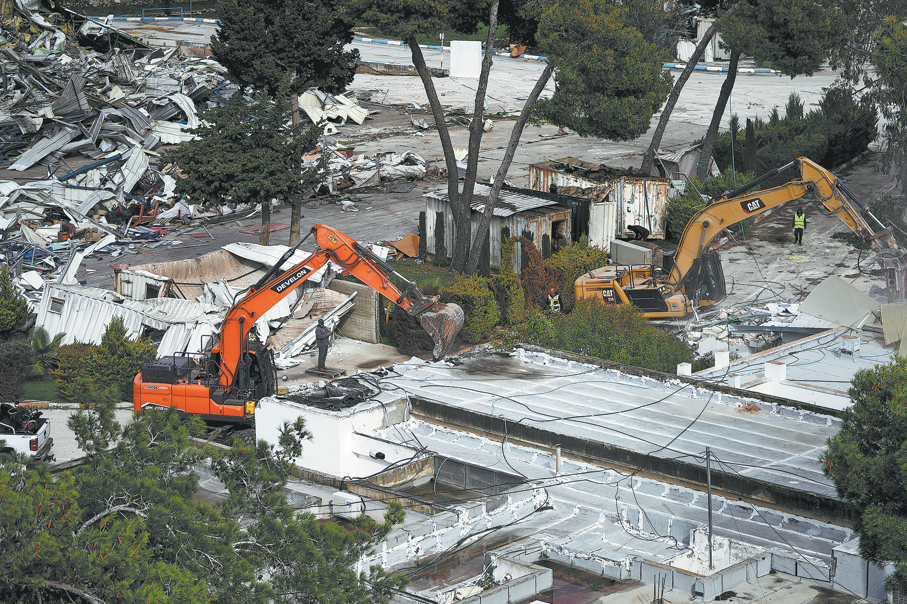
    United Nations Secretary-General Antonio Guterres has issued a forceful condemnation of Israel’s demolition of the United Nations Relief and Works Agency (UNRWA) headquarters in East Jerusalem’s Sheikh Jarrah neighborhood. The Tuesday operation, conducted by Israeli bulldozers, targeted the compound belonging to the UN agency responsible for Palestinian refugee assistance.

    Guterres characterized the demolition as “escalatory actions” that directly contravene Israel’s obligations under international law, including the UN Charter and the Convention on the Privileges and Immunities of the United Nations. The Secretary-General emphasized that UN premises remain “inviolable and immune from any form of interference” and demanded immediate restoration of the compound to UN control.

    UNRWA Commissioner-General Philippe Lazzarini clarified that contrary to Israeli claims, the government holds no legal rights to the property housing the agency’s East Jerusalem compound. The incident has drawn sharp international criticism, with Saudi Arabia, Qatar, and Jordan jointly denouncing the action as a “perilous escalation and brazen breach of international law.”

    The demolition occurs against the backdrop of ongoing tensions in Gaza, where Hamas has submitted a political memorandum to mediators highlighting continued violations of the ceasefire agreement enacted October 10. According to the document, 483 Palestinians have been killed since the truce began, including 169 children and 64 women.

    Analyst Arhama Siddiqa of Pakistan’s Institute of Strategic Studies Islamabad noted the concerning timing of these developments alongside Israeli Prime Minister Benjamin Netanyahu’s acceptance of a position on former US President Donald Trump’s Board of Peace. Siddiqa warned that “unilateral measures continue to reshape facts on the ground faster than diplomacy can respond,” potentially undermining prospects for a viable political solution to the Palestinian conflict.