
A sudden geological collapse has disrupted a prime stretch of Malibu coastline, after a sinkhole opened up and swallowed most of the driveway leading to a beachfront home widely reported to belong to Hollywood star Nicolas Cage. Local law enforcement and public works officials confirmed the incident unfolded early Tuesday morning, when the pavement under the residential access road gave way without warning, leaving a large, gaping cavity in its place. No injuries have been reported in connection with the collapse, as the sinkhole formed far enough from the main residential structure to avoid immediate damage to the home itself. Coastal geologists note that Malibu’s eroding cliffside and beachfront terrain has long been at heightened risk of sudden ground collapse, particularly as shifting sand and soil under developed properties are weakened by tidal erosion and seasonal weather shifts. Local authorities have cordoned off the area around the sinkhole to prevent trespassing and assess the full extent of the ground instability, with geotechnical teams expected to conduct a full site survey this week to determine next steps for repairs and mitigation. As of Wednesday, representatives for Cage have not yet issued a public comment confirming ownership of the property or addressing the impact of the sinkhole collapse.
博客
-

Nicolas Cage’s driveway collapses as sinkhole opens up at his Malibu home
A massive 30-foot by 30-foot sinkhole has swallowed the driveway of a Malibu property owned by Academy Award-winning actor Nicolas Cage, marking one of the most visible aftermaths of Tropical Storm Marie’s destructive pass along Southern California’s coastline.
Local eyewitness accounts reveal that the ground began showing signs of instability as early as Monday, when an 8-foot depression was first spotted on the property. Nearby residents told local media that at the initial stage, the property’s owners did not view the issue as overly serious, anticipating a quick, straightforward repair. But that mild concern quickly escalated into a full-scale emergency when the ground gave way entirely in the early hours of Tuesday, expanding the small depression into a gaping 30-foot crater that engulfed most of the paved driveway.
The collapse triggered an emergency response after a gas line was damaged in the shift. First responders arrived quickly to contain the incident, and Southern California Gas Company (SoCalGas) later confirmed that the leak had been fully secured. No injuries have been reported from the incident, according to initial official reports.
The sinkhole, which sits on a coastal stretch of Malibu, has already been impacted by ongoing coastal erosion: AFP reporters on the scene noted that ocean waves now lap directly into the crater, flowing in and out beneath the support stanchions that hold up the hillside home. Traffic control cones have been placed around the unstable site to keep bystanders away.
The damage comes on the heels of days of heavy rain and powerful high surf driven by Tropical Storm Marie, which weakened from hurricane status as it moved along the Southern California coast. Though the storm remained well offshore, it still dumped significant rainfall and sent damaging waves pounding against erodible coastal bluffs in Malibu. Local city officials have since declared at least five homes on the same street unsafe for occupancy, warning that the widespread ground collapse has severely restricted emergency access and left large sections of the roadway impassable.
The property, purchased by Cage in 2024 shortly after the original sale was finalized, per reporting from the *New York Times*, is one of the actor’s Southern California residences. Cage, a 1996 Academy Award winner for his leading role in *Leaving Las Vegas*, is renowned for his decades-long career spanning iconic films including *Face/Off*, *Gone in 60 Seconds*, *Con Air*, and more recent critically acclaimed projects like *Pig* and *The Unbearable Weight of Massive Talent*. The BBC has reached out to Cage’s representatives for additional comment on the incident, and no statement has been released as of yet.
-
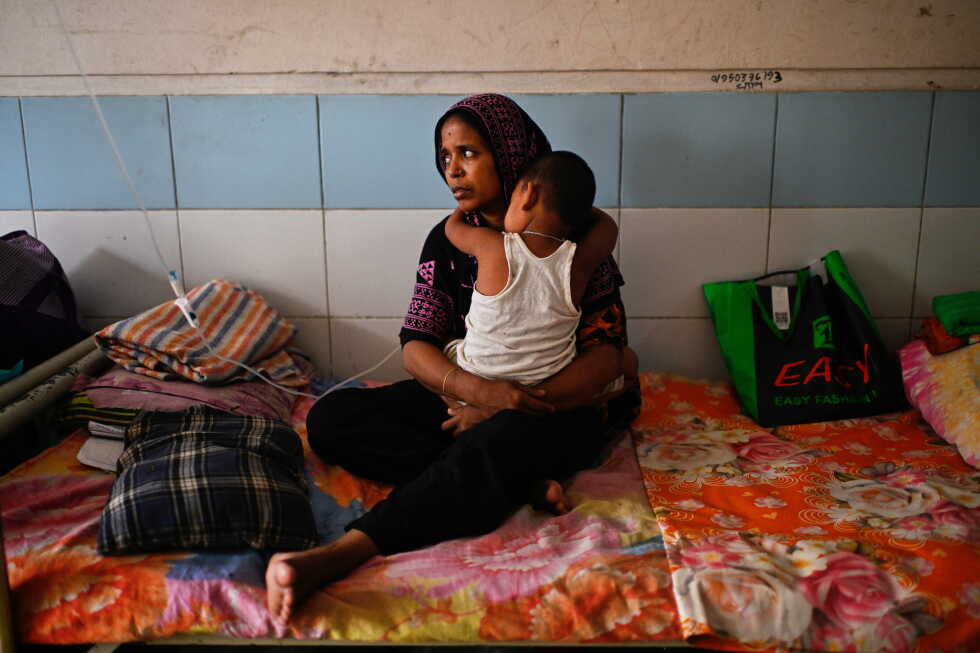
Suspected measles cases kill nearly 1,000 as Bangladesh struggles to contain outbreak
In a overcrowded pediatric ward in Dhaka, the capital of Bangladesh, 8-month-old Rojatun Jannat Ramisa fights for every breath, her small body wracked by the effects of measles. Beside her bed, her helpless parents watch, their hopes pinned on scarce medical care after traveling hundreds of kilometers for specialized treatment. Ramisa is far from alone: she is one of tens of thousands of children falling ill during a catastrophic measles outbreak that has claimed hundreds of young lives, after years of disruptions to the nation’s routine childhood immunization efforts left a large gap in population protection.
Ramisa’s mother, Ranu Akhter, recalled the alarming scale of the crisis she witnessed at her local district hospital before being referred to Dhaka Shishu Hospital, the country’s leading specialized children’s facility. “Fourteen days ago, when we were at the district hospital, every other child being treated alongside my daughter had the same telltale signs: red rashes covering their bodies, painful sores in their mouths, and raging fevers,” Akhter told the Associated Press. “It was then I understood just how far this outbreak has spread.”
As of this week, the crisis has grown steadily worse: official data from Bangladesh’s Directorate General of Health Services puts the death toll from suspected measles cases at 999 since January 1, 2025. Since the outbreak began accelerating in March, the Ministry of Health has recorded more than 166,000 suspected infections across the country, with just under 20,000 cases confirmed by laboratory testing. The outbreak first triggered alarm in March, when more than 100 children died in less than four weeks, prompting authorities to launch an emergency response.
In partnership with the World Health Organization (WHO), the United Nations Children’s Fund (UNICEF), and the Gavi vaccine alliance, the Bangladeshi government rolled out a mass emergency vaccination campaign starting in March. The effort initially targeted children between 6 months and 5 years of age, the group most vulnerable to severe measles complications, before expanding in phased stages to cover all at-risk communities nationwide.
Public health experts emphasize that measles is an extremely contagious airborne pathogen that causes high fever, respiratory distress, and a distinctive full-body rash. While many cases are mild, the disease can trigger life-threatening complications including pneumonia, brain swelling, and organ damage, particularly in infants and young children. Two doses of the measles vaccine provide robust, long-lasting protection, but public health protocols require 95% of a population to be fully immunized to achieve herd immunity — a threshold that stops transmission and protects people who cannot be vaccinated, including infants too young for the shot and immunocompromised individuals.
Just a few years ago, Bangladesh had effectively controlled measles through a decades-old routine immunization program that successfully protected generations of children from a range of preventable diseases including tuberculosis, diphtheria, whooping cough, polio, and measles. After reporting 2,410 cases in 2020, the nation saw annual cases drop to just 100 to 300 between 2021 and 2024, a public health success story that has now been upended by successive disruptions to immunization services.
Two major events created the gap in vaccination coverage that allowed the current outbreak to take hold. First, widespread lockdowns and disruptions to healthcare access during the COVID-19 pandemic left many children without their routine scheduled shots. Then, political upheaval in 2024 derailed the nation’s quadrennial mass measles vaccination campaign, a routine effort that had previously kept coverage high.
Atiqul Islam, a leading neonatal and child specialist at Dhaka Shishu Hospital and Institute, explained that the missed doses have created a large susceptible population of young children. “During 2021 and 2022, at the height of pandemic disruptions, many families were unable or afraid to bring their children in for routine vaccinations,” Islam said. “So now, children who are four or five years old have largely missed their required doses. That created a critical immunity gap. Even after the pandemic, during the previous interim government, many local vaccination centers reported consistent vaccine shortages that left the gap unaddressed.”
The crisis has also become a flashpoint for political blame-games between rival factions. Bangladesh’s current elected government, led by Prime Minister Tarique Rahman, argues that systemic planning failures under ousted former Prime Minister Sheikh Hasina and interim leader Muhammad Yunus left the country with depleted vaccine stockpiles and far below target immunization coverage. The 2024 mass vaccination campaign was directly disrupted by the mass political uprising that led to Hasina’s ouster from power in August 2024. Hasina fled into exile in India, and Yunus took over as head of an interim administration that oversaw a February 2025 election that transferred power to the current elected government. From her exile in India, Hasina has pushed back, blaming the Yunus-led interim government for the public health disaster.
At Dhaka Shishu Hospital, where frontline clinicians have been working nonstop for six months to treat infected children, Islam says the emergency response has led to modest improvements, but progress remains far too slow to stem the death toll. Many children arrive at the hospital already suffering from severe complications including pneumonia, severe diarrhea, and encephalitis — swelling of the brain that can cause permanent damage or death. “For the past six months, we have been treating measles patients continuously, without a break,” Islam said. “Our entire team is exhausted.”
-

German far-right party taunts chancellor after its election triumph. He says it won’t win a majority
BERLIN – A historic electoral upset by Germany’s far-right Alternative for Germany (AfD) has escalated into a fierce public confrontation in the federal parliament, deepening political turbulence just weeks ahead of two more key regional votes.
Last Sunday, the AfD secured its largest-ever electoral victory in the eastern German state of Saxony-Anhalt, delivering a crippling blow to Chancellor Friedrich Merz’s center-right Christian Democratic Union (CDU), which saw its voter support cut roughly in half. The outcome has cemented the AfD’s rising momentum across eastern Germany, exposing widespread public discontent with Germany’s struggling national coalition government and its failure to reverse years of sluggish economic growth. Unlike the party’s early focus centered almost exclusively on restricting immigration, analysts note the AfD has successfully broadened its appeal to tap into voter anger over a wide range of unaddressed policy failures.
Opening the annual federal budget debate on Wednesday, AfD co-leader Alice Weidel used the upset victory to openly taunt Merz, declaring that Saxony-Anhalt’s voters did not merely punish the CDU – they “pulverized” the party. Weidel argued that Merz’s administration had completely failed to grasp the message sent by voters, adding that “your time has run out anyway. Citizens want a change of policy and they will get it.” She predicted upcoming national elections would deliver a clear governing mandate to the AfD, and pushed back against Merz’s criticism of the party’s Russia and Ukraine stance, accusing the chancellor of escalating unnecessary confrontation with Moscow to distract from his own government’s poor performance.
A combative Merz pushed back sharply against Weidel’s taunts, acknowledging the AfD’s “remarkable” result but noting the party fell just short of the absolute majority it had campaigned for in Saxony-Anhalt. The chancellor insisted the far-right party would never secure a national governing majority, dismissing it as a “destructive force” that poses a fundamental threat to Germany’s democratic and foreign policy commitments.
Merz zeroed in on the AfD’s longstanding opposition to military and humanitarian aid for Ukraine, and its call to lift international sanctions on Russia. He accused the party of a “grotesque inversion of perpetrator and victim” in the war, noting it openly aligns with Russia even after German authorities blamed Moscow for a recent attempted drone attack on Leipzig/Halle Airport. The chancellor also condemned the AfD’s inflammatory “remigration” policy, which calls for mass deportations of foreign-born residents. Merz argued the term is nothing less than a coded reference to ethnic cleansing based on ancestry and skin color, warning that implementing the policy would collapse critical sectors of Germany’s economy including healthcare, hospitality and elder care. While Merz confirmed his governing coalition supports expanding deportations for undocumented residents with no legal right to stay, he drew a clear line between that policy and the AfD’s blanket call for forced expulsion.
The AfD’s landmark victory has already drawn international attention and praise from far-right actors across the globe. Far-right nationalist parties across Europe have celebrated the result, and former U.S. President Donald Trump highlighted the upset in a post Tuesday to his Truth Social platform. Though he did not name the AfD explicitly, Trump wrote that “the Populist Party in Germany just had a really big night. They finally got tired of the absolutely horrible Immigration rules and regulations which have hurt Germany so badly. THEY ARE ON THE RISE, and not going to take it anymore!”
The political showdown comes as Germany prepares for two more regional elections on September 20, to be held in Berlin and the eastern state of Mecklenburg-Western Pomerania. Polling has long shown the CDU is deeply unpopular in Mecklenburg-Western Pomerania, while the AfD already holds strong support in the state, raising fears among mainstream parties of another far-right upset that would further erode the CDU’s standing nationally.
-

Airlines scramble to dig out from tech problems that canceled 1,750 flights in the UK
LONDON — Days of travel chaos have hit the United Kingdom’s aviation sector after an unexpected technical failure at Britain’s national air traffic management provider forced mass flight cancellations, leaving thousands of passengers stranded and triggering growing political pressure over systemic vulnerabilities.
The disruption first emerged on Monday, August 28, when a glitch in the core flight processing system of National Air Traffic Services (NATS) — the public-private body that oversees all UK air traffic control operations — brought flight schedules across the country to a standstill. By Wednesday, the total number of canceled flights across UK airports had surpassed 1,750, with the ripple effects of the outage expected to extend through the rest of the week as airlines work to untangle the massive backlog.
Thousands of travelers were stuck for hours on airport tarmacos and packed into overcrowded terminal buildings on Tuesday, with many unable to reach their destinations for planned work trips, holidays, or family visits. Even after NATS confirmed it had fully resolved the technical fault late Tuesday, airlines have faced a mammoth task to reposition hundreds of aircraft that were left stranded at incorrect airports after the mass cancellations, and rebook hundreds of thousands of displaced passengers. Delays continued to ripple across UK and European flight schedules through Wednesday.
In the wake of the disruption, top political and industry figures have demanded accountability. UK Transport Secretary Heidi Alexander announced Wednesday that she had summoned NATS Chief Executive Martin Rolfe to a face-to-face meeting to demand answers and assurances over future system resilience.
“I am seeking assurances that lessons will be learned and systems that support aviation are up to the job,” Alexander stated in a public post on social platform X, making clear that the government expects full transparency over what caused the outage and how future failures will be prevented.
Two of Europe’s biggest budget airlines, Ryanair and Wizz Air, have gone further, calling for Rolfe to step down. The outage marks the second major failure of the UK air traffic control system in just three years, a track record that carriers say signals unacceptable mismanagement of critical national infrastructure.
Rolfe responded to the criticism Wednesday, issuing a full public apology to travelers who faced disruption while defending the overall safety and performance of the UK’s air traffic network.
“Our job is also to make sure that people stay safe,” Rolfe told the BBC. “We never do this lightly. We only ever do it when there is an issue that cannot be resolved quickly, and we have to take action to make sure those who are flying, who are in the air at that time, are safe. And when we can restore these incredibly complex systems we do so as quickly as we can.”
He reiterated that the UK air traffic control system remains one of the safest and most efficient in the world, even as the sector continues to deal with the aftermath of the failure. As of Wednesday afternoon, airlines were still working to clear the backlog of stranded passengers, with many travelers facing waits of 48 hours or more for rebooked flights.
-
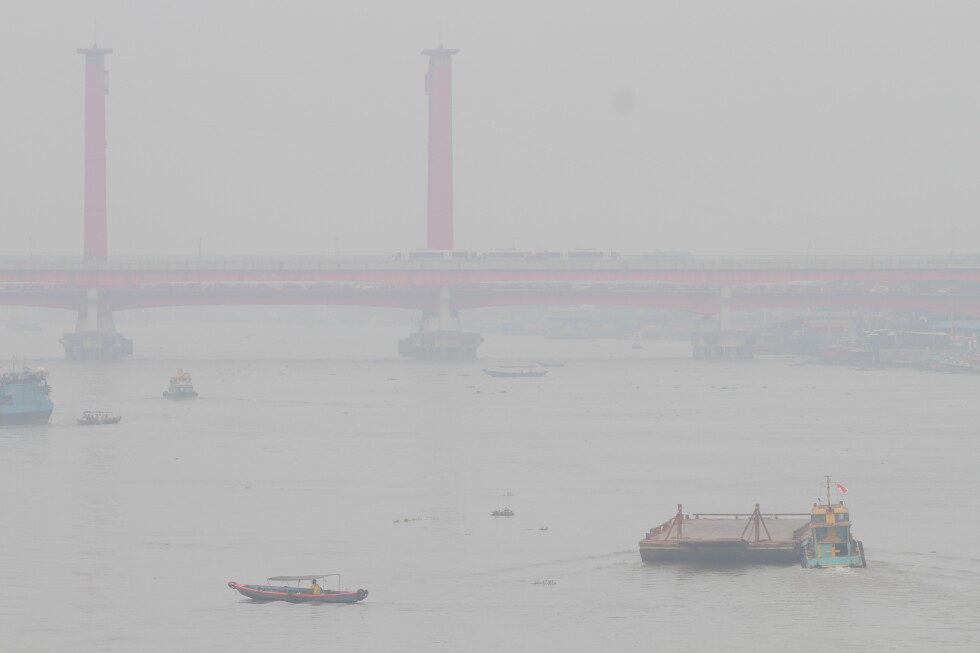
More schools close in Indonesia due to worsening haze from forest fires
A growing environmental emergency is unfolding across Indonesia as intensifying forest and peatland wildfires, supercharged by an extreme El Nino pattern and an extended dry season, have pushed dangerous air pollution across the country and spilled into neighboring Southeast Asian nations. This crisis has forced widespread school closures and a shift to remote learning, disrupting the education of more than 1.4 million Indonesian children, with authorities scrambling to contain the spreading blazes.
On Wednesday, the capital of South Sumatra province, Palembang, became the latest region to enact emergency education measures, ordering all schools from kindergarten through junior high to transition to fully online instruction. The move impacts more than 250,000 students across 1,030 local institutions, with city officials citing the severe health risks that thick toxic haze poses to young people, including elevated rates of acute respiratory infections. “Students’ health and safety remained the government’s priority,” Palembang Mayor Ratu Dewa told reporters, noting that the policy will be reassessed continuously and in-person learning will resume as soon as air quality improves. He also added that teachers have been instructed to avoid assigning excessive schoolwork during the remote learning period to prevent unnecessary student burden.
Decades of recurring annual fire seasons have plagued Indonesia, but 2024’s crisis has been among the most severe on record, driven by climate-fueled extreme weather. The dry, hot conditions have allowed blazes to spread rapidly across peatlands and old-growth forests, releasing massive plumes of toxic smoke that have drifted hundreds of kilometers beyond Indonesia’s borders. As of this week, haze has reached as far north as the Philippines, more than 800 kilometers from the fire hot spots, and pushed air pollution in parts of Malaysia past emergency thresholds. Last week, Malaysian authorities declared a state of emergency in a Sarawak state town on Borneo Island, marking a major escalation of what is now a regional public health crisis.
Government data shows that the disaster is concentrated largely on Indonesia’s half of Borneo (called Kalimantan) and the island of Sumatra, with thousands of hectares of land burned across both regions. Satellite data released Wednesday by Indonesia’s Environment Ministry mapped 2,459 active fire hot spots in Central Kalimantan, the country’s worst-affected area. South Sumatra followed with 1,445 detected hot spots, the second-highest total nationwide, while West Kalimantan recorded 928 hot spots to rank third. In total, more than 202,000 hectares of land have burned across Indonesia between January and July — an area nearly three times the entire size of Singapore. Across Sumatra and Borneo alone, roughly 12,800 schools remain closed due to unsafe air quality, according to official counts.
International child welfare organization Save the Children has warned that the crisis goes far beyond environmental and public health, framing it as a violation of children’s basic rights. “The Earth, our home, is on fire, and children, including here in Asia, are being left to bear the consequences,” said Arshad Malik, Save the Children’s Asia regional director. The organization confirmed that more than 1.4 million students across affected Indonesian regions have been pushed into remote learning due to the haze.
Indonesian authorities have ramped up large-scale firefighting operations across multiple affected provinces, drawing on international support to contain the blazes. Multiple countries across Southeast Asia and beyond have dispatched aircraft to assist with water bombing and containment efforts, including Japan, the United States, Russia, Australia, Canada and Ukraine.
-

Asia’s Strait of Hormuz oil cushion is running out
For months, Asian economies have weathered growing turbulence in the Strait of Hormuz, drawing on accumulated policy buffers and fiscal reserves to shield consumers from runaway energy costs. That long-held resilience is now running out, analysts and policymakers warn, as a once-manageable supply risk threatens to turn into a full-blown economic shock that the region has little capacity left to absorb.
Policymakers across the region, from Tokyo to Jakarta, are monitoring crude oil’s steady march back toward the $100 per barrel threshold, with investment bank Goldman Sachs flagging the risk of prices spiking as high as $120 if attacks on commercial shipping through the Strait of Hormuz and the Red Sea continue to intensify. Daan Struyven, a Goldman Sachs economist, noted that supply chain disruptions linked to the conflict are not only spreading but growing more severe, amplifying upside pressure on energy costs.
Not all analysts see the recent escalation of tensions between the U.S. and Iran as a permanent turning point, however. Jorge León, an energy analyst at Rystad Energy, has cast doubt on claims that either side is pursuing meaningful escalation, arguing that market conditions have not shifted materially over the past two weeks.
Even so, the conflict that former U.S. President Donald Trump once predicted would end in mere weeks is now approaching its seventh month, and persistently tight global oil supplies pose an existential threat to Asia’s import-dependent growth models. Compounding this risk is the fact that the region’s policy toolkit for absorbing another Middle East oil shock is far more depleted than it was during previous crises.
Through most of 2026, Asian governments and market participants bet the Iran war would be short-lived, with widespread expectations that diplomatic de-escalation would cool tensions between Washington and Tehran. Those hopes have yet to materialize.
For Trump, who faces a November congressional election as the war drags into what many observers see as a quagmire, pressure to find an exit is mounting rapidly. The president’s approval ratings have slumped into the low 30s, with even Republican voters growing increasingly uneasy about the protracted conflict and shaky domestic economic conditions. The slump marks a striking reversal for Trump, who campaigned on a promise to withdraw the U.S. from endless foreign conflicts, only to launch a war that many analysts now agree the U.S. cannot win.
As oil prices climb back toward triple-digit territory, Asian governments are already grappling with subsidy budgets stretched thin by the first phase of the crisis. Major emerging economies including India, Indonesia, and the Philippines spent heavily over the past six months to defend their currencies and protect consumers from fuel price spikes. Bangladesh is already facing severe nationwide power shortages, and across the region, there is simply no remaining fiscal space to absorb another major oil shock — especially if shipping disruptions worsen with no end to the conflict in sight.
A resurgently strong U.S. dollar is adding further strain to the region, as its appreciation amplifies inflation risks across Asia by pulling down the value of local currencies. The entire region is now bracing for the release of U.S. consumer price index (CPI) data, which is widely expected to clear the way for a Federal Reserve interest rate hike at the central bank’s upcoming policy meeting.
“A hotter-than-expected CPI print would all but lock in a September rate hike and push the U.S. dollar even higher,” explained Elias Haddad, global head of markets strategy at Brown Brothers Harriman. “A cooler inflation reading would strengthen the case for holding rates steady, leaving the dollar vulnerable to a dovish repricing by markets.” For now, both markets and governments across Asia are preparing for the more hawkish, hotter outcome.
The regional economic picture is more nuanced than a simple oil shock narrative, however. Until recently, China’s unexpected economic resilience has masked underlying weakness across other Asian economies. China’s exports surged 25% year-over-year in August alone, marking a fifth consecutive month of growth in U.S.-bound shipments even amid ongoing tariffs, which have reached an annualized 6.1% for 2026 to date.
“We expect this trade resilience to persist, supporting our above-consensus forecast for regional export growth this year and next,” said Sheana Yue, an economist at Oxford Economics.
Even so, China’s K-shaped recovery — defined by booming export activity paired with persistently weak domestic demand — leaves its role as Asia’s primary growth engine far more fragile than headline indicators suggest. Trump’s latest round of tariffs, which now extend to Canada as well as China, combined with surging oil prices, could dampen global demand for Chinese goods and put new strain on China’s $20 trillion economy. If overseas appetite for China’s technology and AI-related exports fades, the ripple effects would slow growth across virtually every Asian economy.
Rising global bond yields, particularly in Japan and the U.S., add a further layer of systemic risk. In Tokyo, volatile movements in the Japanese yen have put markets on edge ahead of next week’s Bank of Japan policy meeting, with the currency strengthening on expectations of a September 18 rate hike and speculation that the Ministry of Finance could intervene to support the currency before the meeting.
The more consequential shift, however, is playing out in Japan’s government bond market, where 10-year yields have hit three-decade highs near 3%. With the highest debt-to-GDP ratio of any major advanced economy — roughly 260% — paired with a rapidly shrinking population, Japan is ill-equipped to navigate today’s higher-inflation environment. Add Prime Minister Sanae Takaichi’s plans for expanded government spending and broad tax cuts, and investors have ample reason to offload Japanese government bonds (JGBs).
“Higher JGB yields have been driven by a combination of growing fiscal sustainability concerns tied to the government’s growth-focused spending plans and inflationary pressures imported from the Middle East energy shock,” explained Koichi Sugisaki, an economist at Morgan Stanley MUFG. He warned that rising long-term interest rates will push up Japan’s government debt-servicing costs, creating a negative feedback loop that further erodes confidence in the country’s fiscal position. Sugisaki added that the Takaichi administration is now increasingly focused on containing upward pressure on long-term yields, particularly to curb inflation driven by a weakening yen.
Global markets are acutely aware of how sharp yen volatility can spill over into global asset markets, a dynamic that explains why U.S. Treasury Secretary Scott Bessent recently coordinated a joint yen-supporting intervention with Japanese authorities — the first such coordinated action since 1998. The intervention was designed to discourage Japan from selling off its large holdings of U.S. Treasuries to fund yen defense, a move that would roil global bond markets.
Stabilizing the $32 trillion U.S. Treasury market may prove far more difficult, however. With U.S. national debt now topping $40 trillion and Trump pursuing efforts to curb the Federal Reserve’s institutional independence, growing fears of a run on Treasuries have already prompted Bessent to launch a large-scale Treasury buyback program designed to cap rising yields.
The largest systemic risks, analysts agree, stem directly from policy choices coming out of the White House. Trump’s protracted war in Iran, his expanding global tariffs, and his efforts to exert political control over Fed policy are eroding long-standing market trust in the U.S. dollar and U.S. government debt, and this week’s oil price surge could be the most destabilizing factor to date.
Asia’s largest oil importers — Japan, South Korea, India, and most ASEAN member states — are all heavily dependent on crude transported through the Strait of Hormuz, and now face overlapping exposure to multiple risks at once. These include soaring maritime insurance costs for ships transiting the region, higher input costs for domestic refiners even before crude prices climb further, and widespread downward growth downgrades across the region.
While developing Asia is not facing an imminent 1997-style financial crisis, analysts agree the region is far more exposed to these overlapping shocks than current market pricing suggests. If supply disruptions deepen, the next hit to Asian growth will be far harder to absorb than the first.
China’s ability to prevent Gulf shipping disruptions from pushing crude prices to $150 or even $200 a barrel is also fading, analysts warn. Earlier this year, a sharp pullback in Chinese crude imports surprised markets and helped keep global prices in check. Société Générale analyst Mike Haigh explained that the pullback was driven by strategic inventory releases, growing renewable energy adoption, and rising output from Brazil and Venezuela — factors that together averted a repeat of the 1970s-style oil crisis.
“That combination represented one of the largest offsets to the Middle East supply shock, second only to Saudi Arabia’s adjusted flow routing and larger than coordinated strategic petroleum reserve releases from the U.S., Europe, and Japan,” Haigh noted.
The International Monetary Fund has warned that another major shock would hit China — and by extension the entire Asian region — from multiple directions. “The region entered 2026 on solid footing, but the war in the Middle East and the ensuing energy supply shock are raising inflation, weakening external balances, and narrowing policy options, underscoring the region’s deep dependence on imported oil and gas,” said IMF economist Andrea Pescatori. He added that these combined headwinds “will test Asia’s resilience to the limit.”
The core problem is that the Trump administration’s war shows little sign of reaching a negotiated end any time soon. Former U.S. Defense Secretary Leon Panetta argues the White House is in denial about the endless war it has created, telling The Guardian that the U.S. and Iran are locked in a stalemate with few viable paths to resolution — a stalemate that could drag on for another six months at minimum.
For Southeast Asia, which sources roughly half of its total crude imports from the Middle East, fiscal policy alone cannot offset the coming fallout, according to Ambiyah Abdullah, senior economist at the ASEAN Centre for Energy. Rising oil import costs will widen regional trade deficits, put additional downward pressure on local exchange rates, and force central banks to push interest rates higher. Left unaddressed, these risks could lead to long-term currency depreciation across the bloc. Abdullah argues that exchange rate management is the most critical priority for ASEAN monetary policy, given its direct impact on trade balances, inflation, and regional financial markets, and says further monetary tightening will be needed to offset the latest inflation shock.
With no clear end to shipping disruptions in sight, Abdullah concludes that the region urgently needs “a coordinated and flexible mix of fiscal and monetary policies,” ranging from near-term inflation management to long-term redirection of investment toward energy transition, cross-border power grid interconnection, and greater energy supply diversification.
Implementing that coordinated policy agenda is far easier said than done, particularly because the core uncertainty — the future trajectory of the Middle East conflict — remains completely unresolved. In the meantime, oil markets will continue to swing sharply with every new development from the region, leaving Asian economies hostage to ongoing uncertainty over how long vital energy supplies will remain constrained.
-

Tycoon to pay ex-wife $1.87bn in record South Korea divorce settlement
A South Korean court has delivered a landmark ruling in a high-profile divorce case, ordering Smilegate founder Kwon Hyuk-bin — one of the nation’s wealthiest business magnates — to transfer over 2.55 trillion won ($1.87 billion) in assets to his ex-wife Lee Hwa-jin, setting a new record for the largest divorce settlement in the country’s history.
Kwon, who built South Korea’s third-largest video game developer from the ground up, had held full ownership of Smilegate until Wednesday’s court decision. The ruling requires Kwon to transfer a 35% stake in the gaming firm, valued at roughly 2.5 trillion won, to Lee, alongside an additional 65 billion won in cash compensation. Bloomberg estimates Kwon’s total current net worth at approximately $3 billion.
The massive settlement more than doubles the previous national record of 944 billion won, which was set earlier this year when SK Group chairman Chey Tae-won was ordered to pay his ex-wife. That ruling has since been sent back for lower court review by South Korea’s Supreme Court, which flagged an error in asset valuation that incorrectly inflated the couple’s combined assets.
The legal battle between Kwon and Lee stems from conflicting claims over Lee’s contributions to the gaming company’s early growth. The pair married in 2001, just 12 months before Kwon launched Smilegate, the studio behind global hit titles including the first-person shooter *CrossFire* and action role-playing game *Lost Ark*.
Lee originally sought a 50% stake in Smilegate as part of the divorce settlement. According to reporting from Bloomberg, her legal team argued she provided critical financial support to help Kwon launch the company during its founding phase. She also emphasized that she dedicated more than two decades to raising the couple’s children and managing their household, contributions she says enabled Kwon to focus on growing his business.
Kwon has repeatedly disputed these claims, maintaining that Lee never invested in the company nor contributed to its operations. Earlier this year, Smilegate released an official statement asserting all initial startup capital came from Kwon personally. A company spokesperson declined to elaborate on the personal legal matters of its major shareholder following the ruling, telling South Korea’s *The Chosun Daily* that the business would continue normal operations as usual.
Both sides retain the right to appeal the court’s latest ruling, meaning the legal process may not yet be final.
-
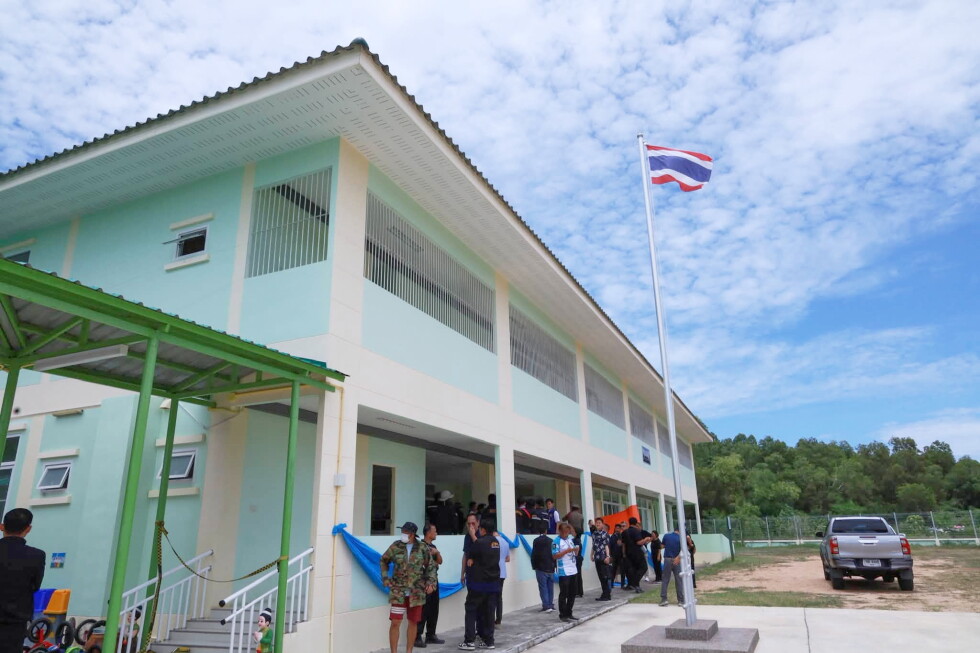
Gunman shoots and kills a teacher at a kindergarten in eastern Thailand
BANGKOK – A fatal shooting at a public kindergarten in eastern Thailand has left one female educator dead, prompting renewed public and policy scrutiny of the country’s persistent gun violence crisis just months after a deadly mass shooting at a secondary school. The attack unfolded shortly before 11 a.m. local time Wednesday at Nongplalai Municipal Kindergarten, located in Chonburi province roughly 93 miles southeast of Thailand’s capital, Bangkok.
Local law enforcement and provincial authorities confirmed that all 44 children enrolled at the facility and three other members of the teaching staff escaped the incident unharmed, and were immediately evacuated from the school grounds to safe locations following the shooting.
Investigative sources told reporters the suspected gunman is the ex-husband of the slain teacher, who fled the premises immediately after carrying out the attack. As of Wednesday afternoon, security forces had established a cordon around the suspect’s residential address as they prepare to take him into custody.
In response to the incident, Chonburi provincial governor Narit Niramaiwong issued an official order closing the kindergarten indefinitely to allow the investigation to proceed and to give students and staff time to process the trauma. His office also confirmed that licensed mental health counselors have been deployed to provide free counseling support for anyone affected by the shooting.
Wednesday’s attack is the latest in a string of school-related gun incidents that have put Thailand’s lax enforcement of existing gun laws under growing national pressure. Back in August, a 14-year-old student carried out a mass shooting at his high school and family home, leaving eight people dead and more than 20 others wounded before dying by suicide. Earlier this month, another 14-year-old student was taken into police custody after firing multiple rounds from a gun on a school campus in Kamphaeng Phet province, roughly 200 kilometers north of Bangkok; no injuries were reported in that incident.
These consecutive events have amplified long-simmering public calls for stricter national gun regulation. In response, Thailand’s federal government has initiated a comprehensive review of the country’s existing gun laws, including a temporary suspension on the approval of new firearm purchase permits and a full audit of all currently active permits.
Data on gun ownership puts Thailand among the Asian countries with the highest rates of civilian gun ownership, a stark contrast to the country’s nominally restrictive written gun laws. While large-scale mass shootings remain relatively uncommon, the country has recorded a clear increase in high-profile, public gun attacks over the past decade.
-

Baby orangutans found in Indian forest spark trafficking inquiry
In a startling discovery that has spotlighted the persistent global crisis of endangered wildlife trafficking, five infant orangutans— a species classified as critically endangered and not indigenous to India—have been found in a sparse casuarina forest in India’s eastern state of Odisha, thousands of kilometers away from their only native range in the rainforests of Indonesia and Malaysia. Local residents first spotted the young apes, which are estimated to be between one and two years old, gathering on the forest floor and feeding on bananas in Ranakata, a proposed reserve forest in Bhogarai block of Balasore district, near Odisha’s border with West Bengal. After locals alerted authorities early Tuesday, forest rescue teams launched an immediate operation to extract the animals, who were given emergency first aid before being transported to Nandankanan Zoological Park in Bhubaneswar, the state capital, where they are currently undergoing mandatory quarantine and round-the-clock health monitoring.
Officials leading the probe have ruled out any possibility that the orangutans reached Odisha through natural migration, noting that their location just off a major state highway aligns with suspicions that the apes were trafficked into India by an international smuggling ring and abandoned mid-transit. “These animals could never have reached this region on their own,” Pratik Prakash Indalkar, Balasore District Forest Officer, told reporters. “The site is near a highway, which suggests they were transported here by road before being left behind.” An initial search of the surrounding forest area turned up no additional orangutans or direct evidence linking to the smuggling operation, and forest officials estimate the apes had only been in the area for two to three days before their discovery.
The unusual find has drawn alarm from wildlife conservation experts, who point to the vulnerable age of the rescued orangutans as an indicator of the cruelty of the illegal exotic pet trade. Young orangutans normally stay with their mothers for the first several years of life, learning critical survival skills, and female orangutans only produce offspring once every eight years on average, making every young individual vital to the species’ survival. All three recognized living orangutan species—Bornean, Sumatran, and Tapanuli—are listed as critically endangered by the International Union for Conservation of Nature (IUCN), with wild populations plummeting over the past decades due to widespread deforestation, habitat destruction, and poaching.
International commercial trade of orangutans is completely banned under the Convention on International Trade in Endangered Species of Wild Fauna and Flora (CITES), the global regulatory agreement for endangered wildlife, and the apes are also fully protected under India’s domestic wildlife protection laws. Even with these strict regulations, demand from private collectors for orangutans as exotic pets continues to drive widespread trafficking networks that operate across Southeast Asia and South Asia. This discovery is not an isolated incident in India: in 2022, two other baby orangutans were found abandoned at a border checkpoint between Assam and Mizoram, with investigators suspecting the apes had been trafficked into the country from neighboring Myanmar.
To expand the ongoing investigation, the Odisha state government has formally requested support from India’s national Wildlife Crime Control Bureau, with local police, forest department officials, and a special anti-trafficking task force all participating in the probe to trace the smuggling network responsible for the illegal shipment.