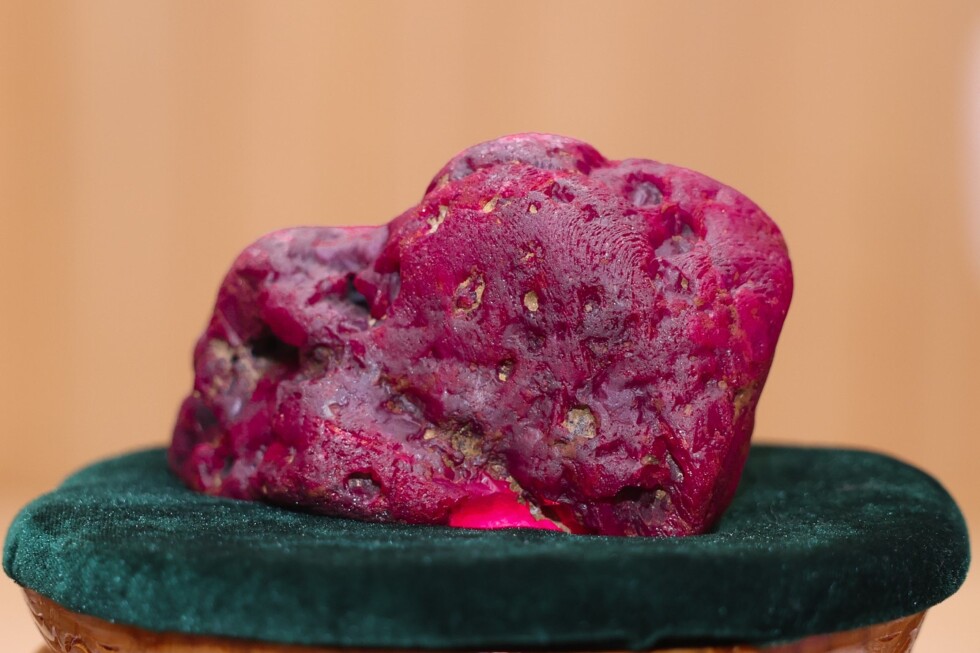
BANGKOK, Associated Press – A massive, exceptionally rare ruby has been uncovered by miners in Myanmar, marking the second-largest rough ruby ever extracted from the conflict-plagued Southeast Asian nation, according to official state media reports released Friday. Weighing in at 11,000 carats – equal to 2.2 kilograms or roughly 4.8 pounds – the gem was pulled from the ground near the famed mining town of Mogok, located in Myanmar’s upper Mandalay region. This area is the undisputed heart of the country’s multi-billion-dollar gem mining industry, which has been swept up in the intense ongoing civil war that has torn through Myanmar since the 2021 military coup.
State-owned publication *Global New Light of Myanmar* confirmed the large ruby was discovered in mid-April, just days after the country’s annual traditional New Year celebration. While the newly unearthed stone is only around half the weight of the 21,450-carat record-holding ruby found in Myanmar back in 1996, industry assessments place its market value far higher thanks to its exceptional color profile and crystalline quality. Gem experts describe the stone as having a vivid purplish-red base hue with subtle warm yellow undertones, a top-tier color grading, moderate natural transparency, and a highly reflective surface that signals premium quality.
Myanmar dominates the global ruby supply chain, producing an estimated 90% of all natural rubies traded worldwide, with most output coming from the Mogok and Mong Hsu mining regions. For decades, gemstones – whether traded through legal channels or smuggled across unregulated borders – have been one of the largest sources of state revenue in Myanmar. However, human rights advocacy groups including London-based research and policy organization Global Witness have long campaigned for international jewelers to boycott all gem imports from Myanmar, arguing that profits from the gem trade have propped up repressive military governments for generations.
The context of this discovery comes amid ongoing political and military upheaval in Myanmar. Earlier this year, the ruling military installed a new nominally civilian government following general elections that were widely dismissed as fraudulent by independent human rights organizations and domestic opposition groups. The election confirmed the continued grip on power of President Min Aung Hlaing, the army chief who led the 2021 coup that ousted the elected civilian government. In recent weeks, Min Aung Hlaing and his cabinet held a formal inspection of the giant ruby at the presidential office in the national capital of Naypyitaw.
Beyond funding the national military, gem mining revenue also acts as a core funding stream for the numerous ethnic armed groups that have waged campaigns for regional autonomy across Myanmar for more than half a century, a dynamic that has perpetuated the country’s long-running cycles of internal conflict. Security conditions across major mining regions remain deeply unstable. Mogok, the town where the new ruby was found, was captured in July 2024 by the Ta’ang National Liberation Army (TNLA), a guerrilla group representing the Palaung ethnic minority. Though the TNLA initially took control of and began operating the region’s mines, authority over the area was eventually transferred back to Myanmar’s national military under the terms of a China-brokered ceasefire deal reached in late 2024.