博客

  • With minutes to flee, Spain fire evacuees grab what they can

    With minutes to flee, Spain fire evacuees grab what they can

    A catastrophic wildfire burning through central Spain has become the largest blaze in the nation’s recent history, scorching tens of thousands of hectares of land and forcing thousands of rural residents to flee their homes with only minutes to grab their most precious belongings.

    Evacuation orders dropped with little warning as flames advanced rapidly across dry terrain, leaving local communities scrambling to prioritize what to save and what to leave behind as emergency services closed off entire affected regions. For many, the rushed evacuation meant abandoning cherished possessions, beloved pets, and critical daily items that they would only later recover through brief, closely monitored return trips.

    On a highway cordoned off by police blocking access to her locked-down commune of Robledo de Chavela, 50-year-old Olga Congacha described the chaotic fear that gripped the village as the evacuation order came through. “Everyone had to get out of the village quickly — it was a critical situation and people were scared,” she told Agence France-Presse. She and her husband only managed to grab their most vital legal documents and a small stack of clothing before fleeing. It was not until Sunday that authorities allowed her a short trip back to her home to retrieve medication required for an upcoming surgery, where she discovered her property already coated in a thick layer of wildfire ash.

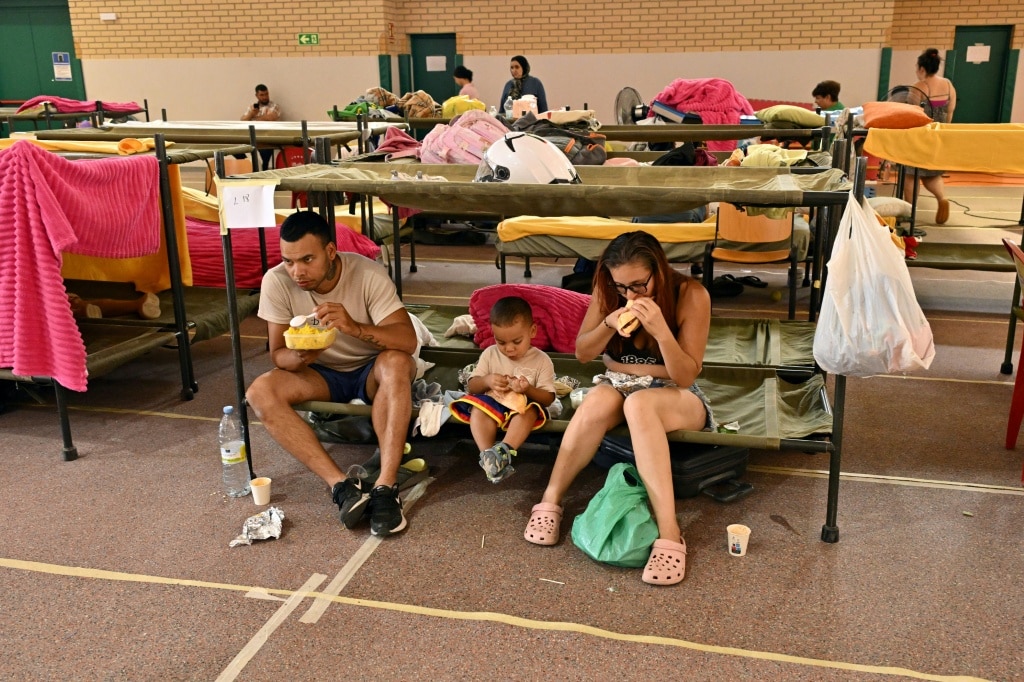
    At an emergency evacuation centre set up inside a sports hall north of Madrid, 84-year-old Roberto Velasco recounted his split-second decision of what to save from his Navalagamella home. After living in Spain for 50 years, he brought only a small suitcase and a single hard drive loaded with digital copies of decades of old family letters and heirloom mementos from his relatives in Chile. “I didn’t know what to bring. I thought the whole house was going to burn,” he explained, sitting weary on a temporary camp bed in a stained grey t-shirt. He had initially planned to pack his favourite books and a collection of music, but in the rush, he left even those behind – and forgot to pack so much as a towel.

    West of Madrid, at another shelter in Villamanta, 81-year-old Jose Luis (who requested his full name not be published to protect his privacy amid the crisis) can now monitor his abandoned Aldea del Fresno home remotely via smart cameras installed around his property. When the evacuation alert blared on his phone, he and his wife fled in minutes, leaving almost everything behind. Authorities later granted them a 30-minute window to return for essential medication, and the couple took the opportunity to leave extra food for their pet canary, Pavarotti, whom they were forced to leave behind. “He has the voice of an angel,” Jose Luis said of the bird. “When you put music on for him he won’t stop singing — bachata, rock ‘n’ roll, anything noisy.” During his quick return, he also watered his houseplants and grabbed his electric razor, the only other item he had space to take.

    For 56-year-old Rosa, also a resident of Robledo de Chavela, abandoning her two rescued feral cats was a heartbreaking choice she tried desperately to avoid. “They are feral — you can’t pick them up without a net,” she explained. She reached out to local animal protection groups for help, but rescuers were not permitted to enter the restricted fire zone. Police eventually had to compel her to evacuate, and she was one of the final residents to leave as flames reached the village edge. “They kind of tricked me, saying they were going to get the cats out, so I said OK. But of course, they had no intention of getting the cats out. They came for me,” she said. Still, she holds out hope her pets are unharmed: “The cats are alright — they are in the house and have things to eat. I left it all for them. The only thing that will be wrong is the floor will be dirty.”

    At the Villamanta sports hall shelter, 70-year-old Margarita has worn the same stained t-shirt for four straight days, after she and her 45-year-old daughter Helena fled with nothing more than the clothes on their backs. The pair assumed they would be able to return home within 24 hours, so they packed nothing extra. Margarita also suffered a swollen ankle after a fall at the evacuation centre, but the pair say emergency workers have provided adequate care, including regular meals and access to paracetamol for pain. On Sunday, Spain’s King Felipe VI and Queen Letizia visited the shelter to meet with evacuees from Aldea del Fresno. “The queen came to say hello to us — and I was wearing this dirty thing,” Margarita laughed.

    Ecology Minister Sara Aagesen confirmed Sunday that the wildfire burning near the capital Madrid is the largest recorded in Spain in recent memory, highlighting the growing severity of wildfire risk across southern Europe amid rising global temperatures and prolonged summer droughts.


  • ‘Positive and productive meeting’: Adam Doueihi set to return to Tigers training on Tuesday after messy disagreement

    ‘Positive and productive meeting’: Adam Doueihi set to return to Tigers training on Tuesday after messy disagreement

    An 11th-hour resolution has ended a public standoff between star Wests Tigers playmaker Adam Doueihi and club leadership, with the disgruntled halfback confirmed to resume team training on Tuesday following productive negotiations held Monday morning. The outcome has quashed widespread speculation that Doueihi had turned out his last match for the struggling NRL side, after he was sidelined for the club’s lopsided 56-10 defeat to Canberra over the weekend.

    The conflict erupted after reports emerged that Doueihi, the Lebanese international who has been the Tigers’ standout performer throughout the 2024 season, refused to take the field when asked to shift from his usual halfback position to play lock or come off the interchange bench. The unrest prompted an urgent sit-down between Doueihi, his agent Isaac Moses, head coach Benji Marshall, and senior club officials at the Tigers’ Concord headquarters. The closed-door meeting wrapped up in less than an hour, with no details of internal discussions released to the public.

    Following the negotiations, Wests Tigers chief executive Shaun Mielekamp released a brief, upbeat statement confirming the positive outcome. “It was a very positive and productive meeting,” Mielekamp told reporters. “Adam will be at training tomorrow, which is a very good sign. What’s really important is that what was said in that meeting stays in that room. That’s important for us as a club. We’re all doing what’s best for the club. I’ve got no further comment, thank you.”

    The resolution comes amid one of the most turbulent stretches in the Tigers’ recent history, a stretch that has seen the club plummet to 16th place on the NRL ladder — far outside finals contention, with the club’s last post-season appearance dating all the way back to 2011. The side got off to a promising start to the 2024 campaign, but a cascade of key injury blows and off-contract drama has sent their form into a nosedive. The unrest has been compounded by star playmaker Jarome Luai’s high-profile decision to sign with the PNG Chiefs starting in 2028, ending his planned tenure with the Tigers beyond 2026; Luai is now set to join rivals Parramatta for the 2027 season.

    The Doueihi drama dominated headlines this week, overshadowing the NRL debut of young Tigers prospect Javon Andrews, who made his first senior appearance in Canberra. All attention now turns to how Marshall will adjust his halves combination ahead of this weekend’s match against Parramatta, where Doueihi is now in line to return to the side.

    Speaking after the Canberra defeat before the meeting, Marshall acknowledged the situation had been a difficult unexpected challenge for the first-year head coach, who has openly described this current slump as the hardest period of his coaching career to date. “That situation was a tough one to deal with this week, unexpected to be honest,” Marshall said. “As a coach, I always try to make decisions on what I think is best for the team… for Adam, I can understand his disappointment, we asked him to play a different role and he just wasn’t in a good headspace to play this week, you have to respect that. We’ll try and get to a resolution next week some stage and put the noise to bed.” That resolution has now come to fruition, bringing a temporary end to off-field turmoil at the struggling club.

  • All Blacks add three new caps for ‘greatest rivalry’ rugby tour to South Africa

    All Blacks add three new caps for ‘greatest rivalry’ rugby tour to South Africa

    WELLINGTON, New Zealand — New Zealand All Blacks head coach Dave Rennie has unveiled an expanded 44-player roster for an upcoming grueling eight-match tour that features a four-test showdown against world number one and defending Rugby World Cup champion South Africa Springboks, bringing a return to the classic multi-match touring format that defined rugby before the professional era.

    Rennie added 10 new players to the original 34-strong Nations Championship squad, retaining every member of the group that notched test victories over France, Italy and Ireland earlier this year to bulk up the roster for the demanding schedule. Three rookie players earn their first call-up to the senior national side: Hurricanes prop Siale Lauaki, Moana Pasifika backrower Semisi Tupou Ta’eiloa and Chiefs flyhalf Josh Jacomb. The other seven additions to the touring group are prop Ollie Norris, hooker George Bell, lock Fabian Holland, backrower Ethan Blackadder, centers Timoci Tavatavanawai and Rieko Ioane, and winger Emoni Narawa.

    The tour, which kicks off next month, will see the All Blacks play four non-test matches against South Africa’s top domestic franchises alongside four tests: three in South Africa and one final test in Baltimore, United States. The full schedule opens with a clash against the Stormers in Cape Town on August 8, followed by matches against the Sharks in Durban (August 12), Bulls in Pretoria (August 16), the first test against the Springboks in Johannesburg (August 23), a match against the Lions in Johannesburg (August 26), a second test in Cape Town (August 30), a third test in Johannesburg (September 6), and the final test in Baltimore on September 13.

    This tour revives the traditional pre-professional model of rugby touring, which combined both weekend test matches and midweek franchise fixtures — a structure that was common before rugby union turned professional in 1995. Billed as a renewal of rugby’s most storied and intense rivalry, the series pits the world’s top two ranked men’s teams against one another: the Springboks hold the number one world ranking, while the All Blacks sit close behind at number two.

    With eight matches crammed into just six weeks of travel and competition, Rennie admitted this will go down as one of the most challenging tours in modern rugby history. “This tour will challenge us and demand the very best of us,” Rennie told reporters. “We have selected a squad that we know is up to the challenge. It’s a balanced blend of experienced test players and a cohort of younger players who will be keen to work hard and showcase their skillset on tour.”

    He added that the coaching staff is excited to give young prospects the chance to earn their first senior caps, while welcoming back players who had previously been out of the national squad fold.

    Historically, the All Blacks have struggled to win a test series on South African soil: the only New Zealand side to claim a series win in South Africa was the 1996 tour, after five unsuccessful attempts across the 20th century. Across 110 test meetings between the two nations, New Zealand holds the edge with 63 wins to South Africa’s 43, alongside four drawn matches.

    “This would have to be the toughest tour in rugby,” Rennie said. “Every player will be required to play their part across this tour, whether it’s preparing to play or helping their mates prepare. It will be an intense seven weeks of touring but an excellent opportunity for us to pit ourselves against the current benchmark team in world rugby and to build connections with each other in a way that only a tour of this scale can do. What we learn about ourselves on and off-field will set us up well for the Rugby World Cup in 2027.”

    On the leadership front, Ardie Savea will retain the captaincy for all four test matches, but will not join the squad in South Africa until shortly before the first test. Rennie explained that the decision to give Savea an extended break comes after the skipper carried a heavy playing workload over the past two years, and the rest will leave him fresh to lead the side through the test series. Other senior squad members will step in to captain the side for the four non-test franchise matches, with multiple leaders set to get an opportunity to take charge.

  • As Indonesia cuts methane emissions, life atop a mountain of garbage begins to change

    As Indonesia cuts methane emissions, life atop a mountain of garbage begins to change

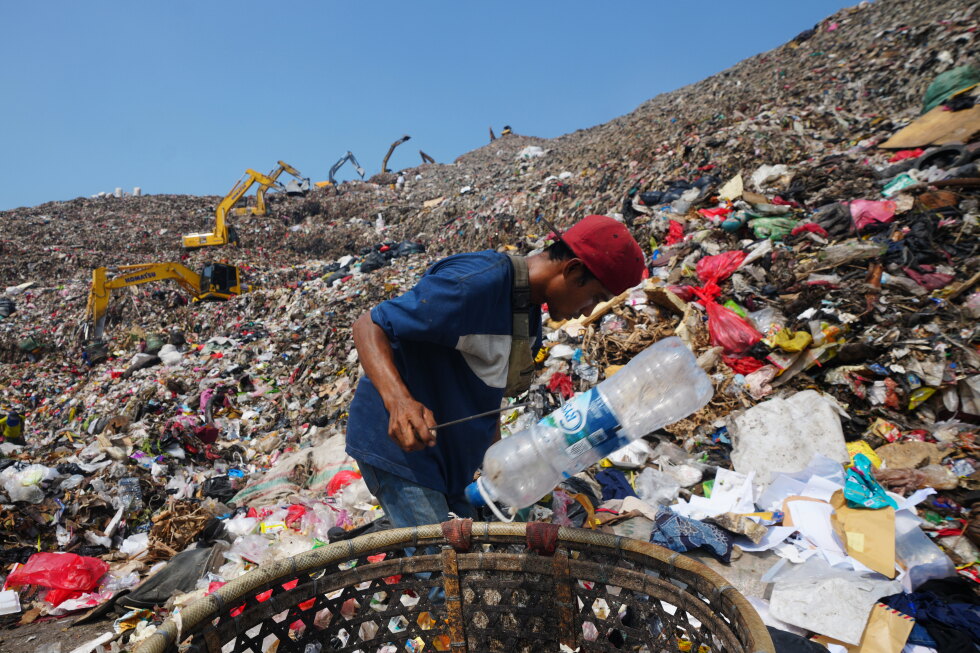
    In the pre-dawn darkness that hangs over Indonesia’s Bantargebang, the country’s largest landfill site on the eastern outskirts of Jakarta, thousands of waste pickers already scramble across towering heaps of garbage to hunt for recyclable and resalable materials before fresh waste buries their finds. Among them is 35-year-old Nur Wencih, a widow who has followed in her parents’ footsteps working at the site for 20 years. For Wencih, who lives alone in a small rented room near the landfill, sorting discarded cardboard, plastic bottles, and discarded toys has paid for daily food, rent, and the education of her two teenage daughters, who stay with relatives in a rural village. On a good day, she earns roughly $12, and occasional lucky finds of forgotten gold jewelry feel like winning the lottery, she told the Associated Press during a break from the sweltering July heat. But like thousands of her colleagues, Wencih now faces an uncertain future as Indonesia launches one of its most sweeping national waste management reforms in decades.

    Starting August 1, the Bantargebang site will end its current open dumping operations and transition to a controlled, sanitary landfill system. This shift is part of a national policy that will shut down open dumping at 343 of Indonesia’s 550 existing disposal sites nationwide. Under the new rules, all landfills will gradually shift to only accept non-recyclable, non-compostable residual waste — items such as soiled diapers, used paper towels, and adhesive stickers that cannot be processed for reuse. At the same time, Indonesian households will be required to sort organic and recyclable waste for separate processing, a large-scale practice that most of the population has never been trained to adopt.

    The core driver of this reform is climate action. Open, unmanaged landfills produce massive amounts of methane, a greenhouse gas that traps 80 times more heat in the atmosphere than carbon dioxide over its first 20 years, and is responsible for roughly one-third of current global warming. Cutting methane emissions is widely recognized by global climate leaders, including U.N. Secretary-General António Guterres, as one of the fastest, most effective ways to slow the pace of near-term global warming.

    Bantargebang itself has become a flashpoint for global methane reduction efforts. Originally opened in 1989 as a properly designed sanitary landfill with a working methane collection system, the site gradually shifted to full open dumping after a private sector management contract expired in 2016. Today, only 2 of its original 12 methane extraction wells still operate. Satellite data analyzed by UCLA’s STOP Methane initiative ranked Bantargebang as the world’s second-highest methane-emitting landfill in 2025, outranked only by a large site in Argentina. Covering 110 hectares (272 acres), the landfill has grown into a 60-meter-tall man-made mountain — as high as a 20-story building — that receives 7,500 tons of Jakarta’s waste every single day. In March, a landslide triggered by heavy rain at the site killed seven people, a tragedy that underscored the urgent risks of the site’s overloaded, unmanaged state. “Its carrying capacity is reaching, or even exceeding, its limits,” said Agung Pujo Winarko, head of the Bantargebang facility.

    Under the government’s rehabilitation plan, large sections of the Bantargebang site are already being covered with impermeable tarps to capture escaping methane, with the full overhaul estimated to cost up to $12 million. Dudi Gardesi Asikin, head of Jakarta’s Environment Agency, says the reform will deliver major public benefits: improved environmental health, reduced local pollution, and deep cuts in harmful methane emissions. It will also make daily work far safer for the people who sort waste here, he noted: currently, thousands of pickers race alongside heavy construction excavators to reach recyclable materials before they are buried, putting their lives at constant risk.

    But the reform also creates a pressing national dilemma: how to protect the livelihoods of roughly 600,000 informal waste pickers across Indonesia who depend on open dumps for their income. At Bantargebang alone, more than 4,000 registered waste pickers work the site every day, and their work supports an entire local ecosystem of recycling traders, rental housing, and food stalls that serve the worker community. “What worries me most is how I will feed my family,” Wencih said. Local community leader Bunin, a 53-year-old resident who lives near the site, added that while the landfill has brought severe pollution to the area, it has also created critical economic opportunities for low-income local families. “The landfill not only brings negative impacts, there are also economic benefits,” he said.

    Government officials say the reform will ultimately create better, more formal, safer jobs for waste pickers in the new recycling and composting sectors, and that pickers already receive basic social security and healthcare through national programs. But the transition remains fraught with uncertainty for the workers who have built their lives around Bantargebang, many of whom are third-generation waste pickers like Wencih, who hopes her own daughters will never have to work in the landfill.

    The success of the broader national reform also depends on changing decades-old waste habits across Jakarta, where residents have never been required to sort household waste before disposal. Many ordinary residents say the new rules have already created confusion, as public education campaigns have been slow to reach all communities. “All we know is to throw the trash in the bin, not to sort it,” said Rukasih Wanti, a resident of Central Jakarta. “The new rule is confusing us. It’s inconvenient, creates extra work and wastes our time.”

    Environmental advocates say the urgent need for this reform highlights decades of delay in updating Indonesia’s waste management infrastructure. Currently, only about 25 percent of the country’s daily waste is processed through formal waste systems, with the rest dumped, burned, or left unmanaged. David Sutasurya, executive director of Indonesian environmental organization YPBB, noted that up to 80 percent of Jakarta’s waste is either compostable or recyclable, meaning most waste currently going to landfills could be diverted with the right infrastructure. “We delayed transforming our waste-management system for too long, and only realized the problem when landfills were already close to full,” he said.

    Still, grassroots activists are working to build public support for the shift across the country. In a West Jakarta neighborhood, community organizer Monica T. Anggriani has spent more than a decade persuading neighbors to sort their household waste, building a community waste bank that now processes one ton of organic waste daily through composting, maggot cultivation, and urban farming. “Our generation was never taught to separate waste,” Anggriani said. “If we don’t start now, nothing will change in the future.”

  • Grounded Lonsdale sparks backlash after telling customers to switch off phones during AusAlert test

    Grounded Lonsdale sparks backlash after telling customers to switch off phones during AusAlert test

    A small Adelaide-based cafe has become the epicenter of a heated online debate after its anti-AusAlert policy pushed by conspiracy theories about the national emergency alert system ignited widespread public backlash.

  • Netanyahu accuses NYC Mayor Mamdani of ‘fomenting hate’ after arrest threat

    Netanyahu accuses NYC Mayor Mamdani of ‘fomenting hate’ after arrest threat

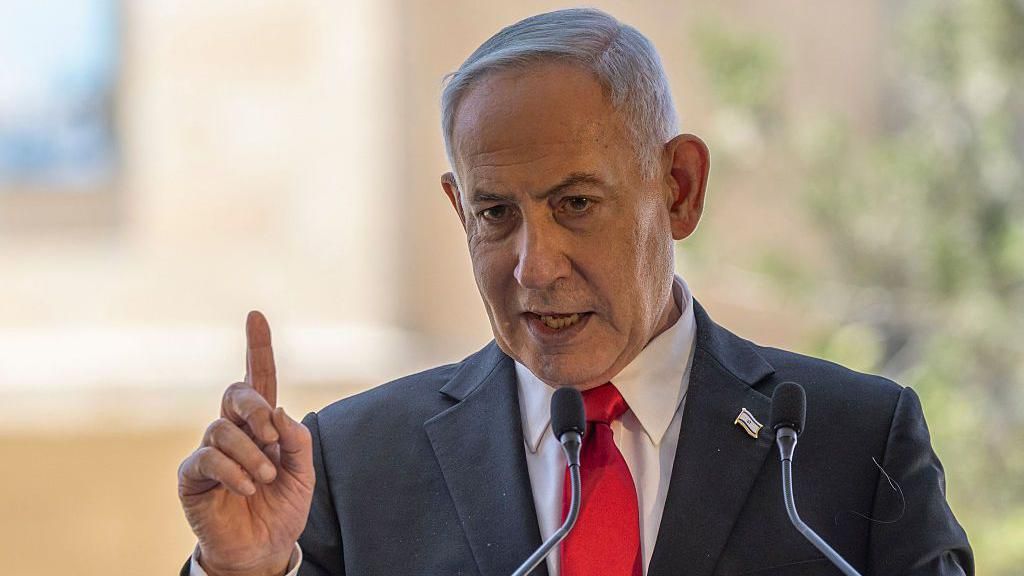
    Israeli Prime Minister Benjamin Netanyahu has confirmed he intends to travel to New York City this fall to participate in the annual United Nations General Assembly, brushing off earlier threats of arrest from the city’s mayor over an International Criminal Court (ICC) war crimes warrant. The high-stakes standoff has reignited tensions over the ongoing Gaza conflict and the role of international justice on U.S. soil.

    The controversy first emerged when New York Mayor Zohran Mamdani, a vocal advocate for Palestinian statehood who centered his 2025 campaign on opposition to Israel’s military operation in Gaza, pledged to use city law enforcement to arrest Netanyahu upon his arrival. The ICC issued an arrest warrant for Netanyahu in 2024, accusing him of perpetrating war crimes during the military campaign in Gaza that began in October 2023.

    Last week, however, Mamdani backed away from his pledge after a legal review by his administration concluded that the city of New York lacks independent legal authority to enforce an international arrest warrant. Mamdani still maintained that “Benjamin Netanyahu is not welcome in New York City”, and urged the U.S. federal government to act on the warrant and detain the Israeli prime minister during his planned visit. He has repeatedly labeled Netanyahu a war criminal for his leadership of the Gaza operation.

    Speaking to Fox News in an interview aired Sunday, Netanyahu said he is “not concerned” by Mamdani’s earlier threat, and accused the mayor of inciting intercommunal tension. “He’s supposed to be the mayor of all New Yorkers — Jews, Christians, Muslims, everyone — but he’s trying to turn one group against the other,” Netanyahu said.

    The Israeli prime minister tied Mamdani’s rhetoric to two recent targeted stabbings in New York that left a Jewish man and an Asian man injured. The attacks, carried out blocks apart just last Thursday, saw the suspect reportedly shout “Allahu akbar” during the assaults, according to responding law enforcement. The suspect has since been charged with hate crimes for both attacks, and both victims survived their injuries.

    The stabbings drew widespread condemnation from leaders of New York’s Jewish and Asian American communities, and Netanyahu argued that the climate of division fostered by anti-Israel rhetoric has left Jewish residents of the city frightened. “Jewish New Yorkers are afraid right now,” he said.

    As of Monday, Mamdani’s office had not issued a public response to Netanyahu’s comments, after declining an immediate request for comment over the weekend.

    The background to the current dispute stretches back to the October 7, 2023, attack on Israel by Hamas-led militants, which killed approximately 1,200 people and saw 251 others taken hostage into Gaza. In response, Israel launched its large-scale military incursion into the Gaza Strip, which has resulted in more than 73,000 Palestinian fatalities according to the Hamas-run Gaza Ministry of Health. The United Nations has characterized the ministry’s casualty figures as reliable, with more than 21,000 of those killed being children.

    Israel has categorically rejected the ICC’s war crimes allegations, with Netanyahu describing the charges against him as “bogus”. The planned UNGA visit, now set against the backdrop of the arrest threat controversy, is expected to draw massive protests and renewed global scrutiny of both Israel’s military campaign and U.S. policy toward the conflict.

  • AFL 2026: St Kilda captain Callum Wilkie on Max King’s return and early exit

    AFL 2026: St Kilda captain Callum Wilkie on Max King’s return and early exit

    It has been two full seasons since star St Kilda Saints forward Max King last graced the field at the top-tier Australian Football League (AFL) level, and his highly anticipated comeback against North Melbourne at Marvel Stadium on Sunday ended in sudden disappointment. Ruled out mid-match due to what the club has described as hamstring tightness, King left the venue early before the traditional post-match team song, and is scheduled to undergo medical scans on Monday to assess the full extent of the new issue. Now, St Kilda captain Callum Wilkie, who has been teammates with King for eight years after the pair entered the league via the same draft, has publicly backed the club’s decision to bring the forward back to the senior side, and offered public support to the injury-plagued athlete.

    Speaking to sports outlet SEN, Wilkie refuted any claims that King was rushed back into AFL action. He explained that King’s prior hamstring injury, sustained earlier this year during a comeback stint in the lower-tier Victorian Football League (VFL), was always managed with a deliberate, conservative approach. “It’s not like we rushed him back,” Wilkie noted. “He did the hammy 12 weeks ago and it wasn’t a 12-week hammy, it was about a four-five week hammy. They took a very conservative approach with it and built his training loads and conditioning up over the last 12 weeks, but especially the last month or so when he was hitting game loads at training.”

    As someone who trained directly alongside King in the lead-up to Sunday’s match, Wilkie said he saw first-hand that the forward was fully prepared to return to senior competition. “I was playing [against him in intra-club training] and saw what he can do, he was ready to come back and it was great have him back out there playing with us,” Wilkie said. “The fans loved it, we loved it as players and he’ll be back very soon I imagine.”

    In Sunday’s match, King started each of the first three quarters on the interchange bench, entering the game roughly eight minutes into each term. He finished the short outing with just two disposals: a misaligned shot on goal and a quick handball, having taken a mark and attempted a score in the second quarter. After the match, head coach Ross Lyon defended King and the club’s selection call in a tense press conference, noting he prioritized preparing for the win over collecting immediate medical updates.

    Wilkie reached out to King after the match after the 24-year-old left the stadium early, and told reporters he reassured King that the setback would not change his standing within the club. “Yeah, well he left early so didn’t get a chance to see him in the rooms after but, you know, (I) messaged him saying we love him and are right behind him,” Wilkie said. “Whatever this is doesn’t change who he is and what he means to our football club. But, hammy tightness like Ross said, he’ll get a scan today and then the club will release a statement to the extent of what that actually is.”

    Wilkie also addressed the enormous public pressure King has faced amid his well-documented history of injuries, which has kept him sidelined from AFL competition for two full years. “I’ve been with Maxy for eight years – we got drafted together – and he’s obviously had a storied injury career that the media and everyone has addressed thoroughly,” Wilkie said. “There’s so much pressure on that young man’s shoulders, what’s it been, two years since he played an AFL game? He would’ve been rightfully frustrated and devastated and the club made that call that he was allowed to go home and we live by that.”

  • Lucas Museum to display unseen ‘Star Wars’ pieces, curator says

    Lucas Museum to display unseen ‘Star Wars’ pieces, curator says

    When the long-awaited Lucas Museum of Narrative Art opens its doors to the public in Los Angeles on September 22, it will bring with it a trove of never-before-displayed treasures from the cultural phenomenon that is *Star Wars*, its lead curator has confirmed. Speaking exclusively to AFP on the sidelines of this year’s San Diego Comic-Con, curator Ryan Linkof shared new details about the institution, a passion project decades in the making from *Star Wars* creator George Lucas and his wife, business leader Mellody Hobson.

    Housed in a striking futuristic building spanning more than 9,200 square meters, the museum will distribute over 1,300 collected works across 33 dedicated galleries. While the institution’s collection spans the full breadth of narrative art — from iconic illustrations by Norman Rockwell, Jessie Willcox Smith, and N.C. Wyeth to fine art pieces by Frida Kahlo, Jacob Lawrence, Charles White, and Robert Colescott, and original cartoon works from legends including Winsor McCay, Jack Kirby, and Frank Frazetta — it is the unshown *Star Wars* material that is poised to captivate fans around the world.

    As the official home of the Lucas Archives and all Lucasfilm production materials, the museum will host a dedicated *Star Wars* exhibition featuring one-of-a-kind items that have never been put on public display before. Linkof noted that narrative art, the category the museum centers, is often overlooked by traditional cultural institutions, with few major art museums dedicating space to collecting or exhibiting this popular, accessible art form. As a result, much of the material set to go on display is extremely rare, making the museum a unique cultural destination.

    For many *Star Wars* fandom members, however, the Lucasfilm production archives will remain the crown jewel of the institution. Linkof also opened up about the challenges the project has faced over its decades-long development, including significant disruptions caused by the global COVID-19 pandemic. Despite these hurdles, the curator frames the museum as the culmination of Lucas’s celebrated 60-plus-year career, echoing Hobson’s framing that Lucas has two defining legacies: his first was creating *Star Wars*, and his second is building this museum to share his collection with the public.

    Now 82 years old, Lucas remains actively involved in every step of the project’s final preparations ahead of opening. Linkof confirmed that the legendary filmmaker is deeply pleased with how the institution has come together. Last year marked Lucas’s first ever visit to Comic-Con’s iconic Hall H, where he traveled specifically to share updates on the museum with pop culture fans. This year, Linkof took the stage at the convention alongside guests including actor Keke Palmer and DC Comics President Jim Lee to preview the coming attraction.

    Lee, who joined the museum’s panel at Comic-Con, shared his enthusiasm for the institution’s mission. “I think that if you go to this museum, you will see art that you will recognize and have seen your entire life, through commercials, through comic books, but you will see it in a different way that will hopefully enlighten and inspire you,” Lee said. “This is amazing art, we have it all around us, how lucky are we?”

  • UK’s Burnham to welcome Zelensky in first foreign leader visit

    UK’s Burnham to welcome Zelensky in first foreign leader visit

    Just one week after assuming office as the United Kingdom’s new prime minister, Andy Burnham is set to welcome Ukrainian President Volodymyr Zelensky to London on Monday, marking the first official meeting between Burnham and a foreign head of state since he took the role. This high-profile visit is designed to send a clear, unshakable message that London remains fully committed to its backing of Kyiv amid Russia’s ongoing full-scale invasion.

    Downing Street made the official announcement of the meeting late Sunday, outlining that the two leaders will travel together to a British naval facility. During the visit, they will meet with military personnel from both countries who have been leading the training of Ukrainian service members preparing for frontline combat operations.

    Burnham will use the summit to reaffirm that the deep, unbreakable partnership between the UK and Ukraine will remain unchanged, a position he first communicated to Zelensky in an introductory phone call last Monday, within hours of his succession to the premiership from Keir Starmer. In an official statement released ahead of the meeting, Burnham stressed: “Britain stands with Ukraine, shoulder to shoulder, and our support remains unwavering. Russia should be in no doubt of our resolve, and we will not back down until we achieve long-lasting and just peace for Ukraine.”

    Alongside the diplomatic commitment, the UK government has unveiled a new major defense support measure: London will transfer full intellectual property rights for an advanced, battle-proven electronic jamming system codenamed “Stone Cloak” to Ukraine. According to Downing Street, the compact device is roughly the size of a standard tablet computer, designed to be mounted on unmanned aerial vehicles. Its core function is to disrupt Russian air defense systems, preventing them from tracking and engaging Ukrainian drones mid-flight, a capability that has already proven critical to protecting Kyiv’s drone operations.

    Officials noted that the development of Stone Cloak is a direct product of the rapid collaborative innovation between the two allied nations, carried out under the 100-year UK-Ukraine partnership pact signed in January of last year. Thousands of these jamming devices have already been delivered to Ukrainian armed forces to help sustain their drone operations, and following the transfer of intellectual property, Ukraine will be able to begin mass domestic production of the technology. Additionally, the UK will integrate the Stone Cloak system into its own next-generation deep-strike military capabilities.

    “This is the best of homegrown British innovation, proven on the frontline, and it will be vital to protecting our security in both our countries,” Burnham said of the technology.

    During the Monday visit, Burnham and Zelensky will also meet with around 200 Ukrainian military trainees and sailors who have spent the past three weeks in the UK participating in specialized maritime security and counter-mine exercises. The training program is designed to prepare Ukrainian forces for upcoming operational missions in the Black Sea, a key theater of the ongoing conflict.

    Downing Street also released updated figures on the UK’s cumulative support for Ukraine, noting that total assistance has now reached £25 billion (equivalent to $33 billion) since Russia launched its full-scale invasion more than four years ago. Of that total, £16 billion is allocated to direct military aid, making the UK one of Ukraine’s largest bilateral military supporters in Europe.

    Following his stop in the UK, Zelensky will travel to Washington, D.C. on Tuesday for scheduled talks with U.S. President Donald Trump, as confirmed by a White House official last week. The Ukrainian president is also expected to attend the funeral of former U.S. Senator Lindsey Graham, a longstanding vocal supporter of Ukraine who passed away earlier this month.

  • Pogacar looking to enjoy ‘small things’ after 5th Tour de France win

    Pogacar looking to enjoy ‘small things’ after 5th Tour de France win

    The 2024 Tour de France wrapped up on Sunday with two historic moments that will be remembered for years in cycling: Slovenia’s Tadej Pogacar etched his name into the sport’s record books by securing his fifth overall title, while Dutch star Mathieu van der Poel pulled off a nail-biting victory on the iconic Champs-Élysées that capped a stunning turnaround for his team.

    Pogacar’s fifth Tour win puts him in an exclusive group of all-time cycling greats, joining legends Jacques Anquetil, Eddy Merckx, Bernard Hinault and Miguel Indurain as the only riders to claim five overall titles at cycling’s most prestigious Grand Tour. But rather than dwelling on his place in history, the 25-year-old Slovenian said he is ready to step away from the pressure of competitive racing and savor quiet life after three weeks of grueling competition across France.

    “Right now I just want to enjoy the moment of winning the Tour,” Pogacar told reporters after crossing the finish line in Paris. “If it’s the fifth or the first, it doesn’t matter — it’s unbelievable to wear the yellow jersey and to cross the line in Paris winning it. I will just enjoy this moment, not thinking about any history, not thinking about joining any club. I just want to live this moment, come back home, relax, enjoy the small things of life.”

    Pogacar added that each of his five Tour victories holds a unique place in his heart, saying: “I’m really happy and proud to win a fifth Tour. Every single one has a different story, a different meaning, different emotions. Each one of them feels incredible and unbelievable for me.”

    While Pogacar took home the overall yellow jersey, the final stage belonged to van der Poel, a cobbled classics specialist who achieved a long-held career dream with his dramatic win on Paris’s most famous avenue. The 31-year-old broke away from the peloton alongside Pogacar on the Montmartre climb, where thousands of cheering fans packed the route to create a electric atmosphere. The two riders held off a chasing group of sprinters for 10 kilometers, pushing all out to hold their lead to the line.

    In the final 700 meters, van der Poel surged ahead alone as a fatigued Pogacar was unable to match his acceleration. In the end, the Dutchman held off the chasing pack by the thinnest of margins, forcing a photo finish that confirmed his win. “It was no words, no communication, we just both rode to the death, to the final and I ran out of gas,” Pogacar said of the final sprint. “I knew that we had to go all out, he knew we had to go all out, we both committed and he took a beautiful victory.”

    Van der Poel admitted he never expected to hold off the chasers all the way to the line, saying he spent the final 500 meters bracing for a rider to pass him. His Alpecin-Deceuninck teammate Jasper Philipsen came the closest, with van der Poel only spotting the Belgian’s wheel alongside him in the final meters. “I thought we were going to get caught back, but then I was just thinking about this moment, and I just put my head down in the last 500 metres,” van der Poel said. “I just went as hard as I could, and I was just waiting until a wheel was coming past, and it didn’t happen… In the very end, I see a Pirelli tyre next to me, and it’s the one from Jasper.”

    The win marked a bright end to a difficult Tour for van der Poel and his team, a outcome he said proved the squad’s resilience. “It just shows that we never give up. Maybe the start of our Tour was not good, but I won on the Champs Elysees. I think it’s pretty good,” he said. When asked where he found the strength to hold on, van der Poel joked: “If there was one race I still wanted to win in my career, I have a few, of course, but this was one of them. We have a saying in Dutch that it has to come from your toes. I don’t know where this came from, but not from my toes!”

    Behind Pogacar in the overall classification, Olympic champion Remco Evenepoel secured the best result of his Tour de France career, finishing second overall with two stage wins including a victory in a high mountain stage. The performance silenced critics who had claimed Evenepoel, a renowned time trial specialist, was not built to contend for overall victory at three-week Grand Tours, even after he won the 2022 Vuelta a Espana. Evenepoel said the result proved he deserves to dream of winning the Tour one day.

    “Second place, for me was more like the fact to prove towards myself that I did well to not let go my dream of stepping on the podium of Grand Tours as much as possible and aiming to try to win them,” Evenepoel said. “Because that’s my career goal. After this result, I think I’ve shown towards myself, my team and also to the outside world that I deserve to dream and aim for that.”