博客

  • US, China once had rare-earth aces in the hole but the US folded

    US, China once had rare-earth aces in the hole but the US folded

    In 1992, during a visit to Baotou’s rare earth mines in Inner Mongolia, Deng Xiaoping made a prophetic declaration: ‘The Middle East has oil. China has rare earths.’ This statement, initially overlooked by the international community, would ultimately foreshadow China’s ascent as the undisputed global leader in critical mineral resources that underpin modern technology.

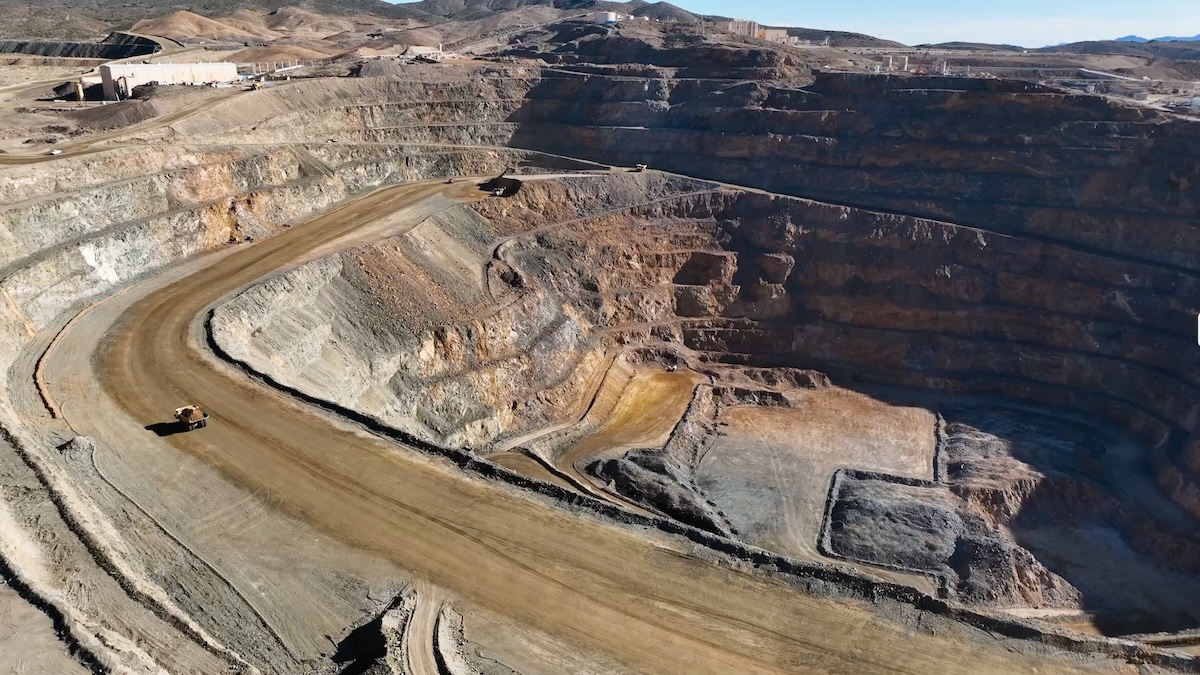
    Rare earth elements—17 metallic components from the periodic table—form the fundamental building blocks of contemporary technological advancement. These minerals enable functionality in smartphones, electric vehicles, wind turbines, military drones, and sophisticated aerospace systems including the F-35 fighter jet. Despite their name, these elements are relatively abundant in nature but occur in dispersed formations that require complex, environmentally challenging extraction processes.

    While the United States led global rare earth production throughout the 1980s, Western nations gradually offshored mining operations to China, attracted by lower environmental standards and reduced labor costs. Regulatory changes by the Nuclear Regulatory Commission and International Atomic Energy Agency further accelerated this transition by classifying rare earths as ‘source material,’ dramatically increasing compliance costs for domestic operations.

    China capitalized on this strategic opportunity, investing heavily in developing a comprehensive rare earth ecosystem despite environmental consequences. By 2024, China controlled 44 million metric tons of reserves (the world’s largest), 70% of global mining production, 85% of refining capacity, and 98% of processing capabilities. The nation further solidified its dominance through intellectual property control, holding 80% of rare earth patents while establishing 39 university programs specializing in rare earth studies and seven institutions focused exclusively on processing technologies.

    This strategic positioning granted China significant geopolitical leverage during the 2025 trade war. When the White House imposed 145% tariffs on Chinese goods, Beijing responded with export controls on seven critical rare earth types and magnets. Although representing a small percentage of overall exports, these materials proved essential to American defense manufacturing and technological innovation.

    A RAND Corporation study revealed that a 90-day supply disruption could halt production at 78% of U.S. defense contractors. This vulnerability extends beyond military applications to next-generation computing, robotics, medical devices, and quantum hardware—effectively giving China a ‘kill switch’ over American technological advancement.

    The United States now faces a monumental challenge in rebuilding its rare earth infrastructure. Estimates suggest requiring a decade and $10-15 billion to establish a self-sufficient supply chain. Even with successful mineral discovery in locations like Greenland’s Kanana region (containing rich deposits of dysprosium and terbium), developing complete extraction, refining, and application ecosystems remains extraordinarily complex.

    China’s four-decade investment has enabled unprecedented purity standards advancement from 98% to 99.9999%—a critical factor in cutting-edge technology applications. As the global economy transitions toward AI and automation, rare earth elements have supplanted oil as the fundamental resource shaping geopolitical power structures, with China positioned as the dominant force controlling innovation pace through supply chain management.
  • Icebreakers, the key tech to unlock Greenland, are only made by either US allies or adversaries

    Icebreakers, the key tech to unlock Greenland, are only made by either US allies or adversaries

    The United States’ strategic ambitions in Greenland and the broader Arctic region face a formidable natural barrier: immense ice formations that choke harbors, entomb mineral resources, and transform shorelines into navigational minefields year-round. This challenging environment necessitates specialized icebreaking vessels with reinforced hulls and powerful engines capable of cleaving through frozen seas.

    Despite former President Donald Trump’s expressed interest in securing Greenland for both security and economic reasons—including countering Russian and Chinese influence and accessing rare earth minerals—the U.S. possesses only three functional icebreakers, with one nearly inoperable. This deficiency creates a significant operational gap, leaving the nation unable to reliably access Arctic territories for extended periods.

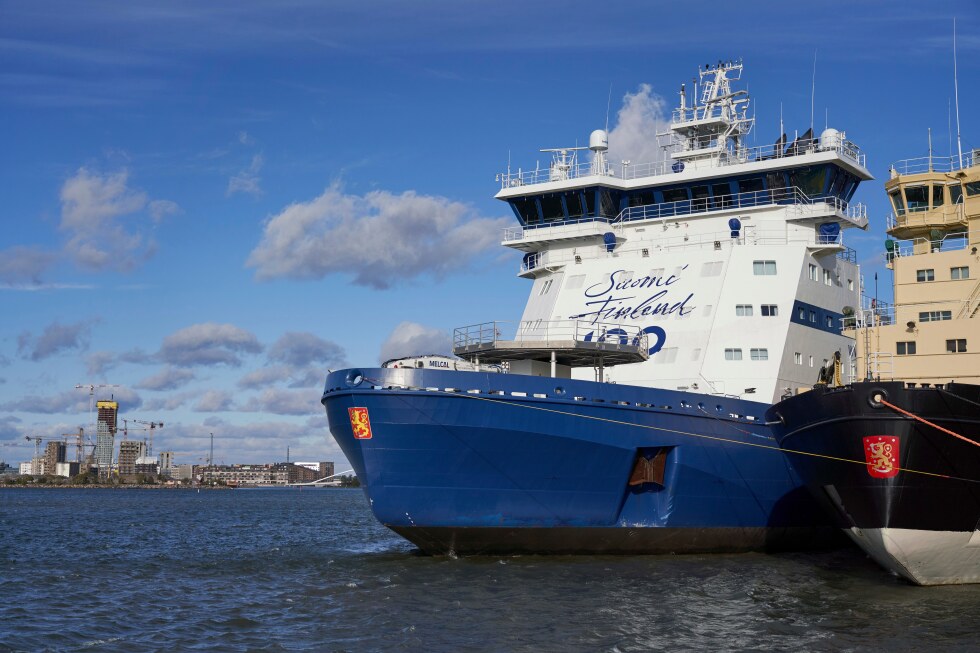
    Icebreaker construction requires highly specialized expertise predominantly found in northern nations with Arctic experience. Finland has designed approximately 60% of the world’s fleet of over 240 icebreakers and built the same percentage, while Russia maintains the largest fleet with about 100 vessels, including nuclear-powered ships. Canada ranks second and plans to double its fleet to approximately 50 icebreakers.

    The U.S. has entered agreements through the Ice PACT with Finland and Canada to obtain 11 new icebreakers. Four will be constructed in Finnish shipyards, while seven will be built in U.S. facilities under Canadian ownership and utilizing Finnish designs. This international cooperation highlights America’s current dependence on allied nations for Arctic capabilities.

    European Commission President Ursula von der Leyen emphasized this technological interdependence at the World Economic Forum, noting that Finland’s sale of icebreakers to the U.S. demonstrates European Arctic readiness. She stressed that Arctic security ultimately requires multinational cooperation, a sentiment echoed by Danish leadership which conditionally supports increased U.S. involvement provided territorial integrity is respected.

    Even with adequate icebreaking capability, establishing mining operations or defensive installations like the proposed $175 billion Golden Dome missile defense network would entail enormous costs and technical challenges in Greenland’s extreme environment, with investments potentially requiring decades to yield returns.

  • Chinese Coast Guard says 8 missing and 13 rescued after boat capsizes near disputed shoal

    Chinese Coast Guard says 8 missing and 13 rescued after boat capsizes near disputed shoal

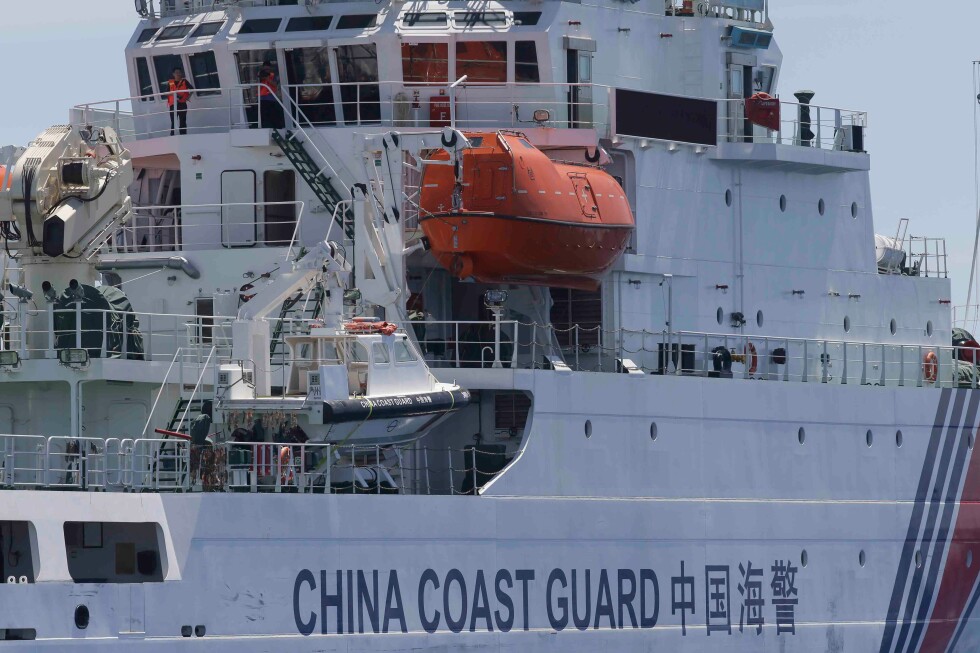
    Chinese maritime authorities reported a significant search and rescue operation in the South China Sea on Friday after a vessel carrying Filipino nationals capsized in highly contested waters. According to an official statement from China’s Coast Guard, the incident occurred approximately 55 nautical miles northwest of Scarborough Shoal, a region known for its geopolitical tensions.

    The maritime accident left eight individuals missing while emergency responders successfully rescued thirteen people from the water. Rescue operations continued throughout the day as multiple vessels participated in the search effort.

    The location of the capsizing represents one of the most politically sensitive areas in the South China Sea, where territorial claims overlap between multiple nations. China, the Philippines, Vietnam, Malaysia, Brunei, and Taiwan all maintain competing sovereignty claims over Scarborough Shoal and surrounding waters.

    This incident occurs against a backdrop of increasing maritime confrontations in the region. Just two months prior, in August, a Chinese naval vessel accidentally collided with a Chinese Coast Guard ship during operations to block a Philippine Coast Guard vessel near the same shoal. The frequency of such encounters has raised concerns among international observers about potential escalation in the strategically vital waterway.

  • Australian Open 2026: Daniil Medvedev speaks on his comeback win from two sets down

    Australian Open 2026: Daniil Medvedev speaks on his comeback win from two sets down

    In a stunning display of resilience and tactical brilliance, Russian tennis star Daniil Medvedev orchestrated a remarkable comeback at the Australian Open, overcoming a two-set deficit against Hungary’s Fabian Marozsan. The world No. 11 found himself trailing after losing the first two sets 6-7, 4-6 before launching an extraordinary turnaround that saw him claim victory with 7-5, 6-0, 6-3 in the subsequent sets.

    The match’s pivotal moment came during a mesmerizing 45-minute stretch where Medvedev won nine consecutive games without reply, demonstrating what he described as his ‘fight for the next game’ mentality. The fourth set proved particularly dominant, with Medvedev wrapping it up in just 19 minutes—a performance he attributes to his superior physical conditioning entering the tournament.

    Medvedev acknowledged the psychological challenge of overcoming past disappointments, referencing several matches in the previous year where he had similarly fought back from two sets down only to lose in the fifth. ‘The demons of those losses came knocking,’ Medvedev confessed, noting moments in the decider where he thought ‘Not again’ as Marozsan threatened a resurgence.

    The victory sets up an intriguing encounter with American prospect Learner Tien, with whom Medvedev has previously engaged in marathon matches. This hard-fought triumph not only advances Medvedev in the tournament but also serves as testament to his evolved mental toughness and strategic maturity on the court.

  • Dozens of sanctioned Russian tankers navigate Channel despite UK vow of ‘assertive’ action’

    Dozens of sanctioned Russian tankers navigate Channel despite UK vow of ‘assertive’ action’

    Despite the UK government’s pledge to take assertive action against Russian oil sanctions evasion, dozens of sanctioned tankers from Russia’s shadow fleet have continued to transit the English Channel throughout January. BBC Verify tracking data reveals that 42 sanctioned vessels passed through these strategic waters even after British defense officials received legal authorization to detain such ships under the Sanctions and Money Act 2018.

    The shadow fleet—comprising hundreds of aging tankers with obscured ownership—has become Russia’s primary mechanism for circumventing oil embargoes imposed since its full-scale invasion of Ukraine. Among the vessels that transited the Channel was the Sofos, sanctioned by the UK Foreign Office in May 2025. This tanker executed a complex route: loading oil in Russia mid-November, traveling to Turkey, then proceeding to Venezuela where it disabled its tracking system. Satellite imagery confirmed its presence at Venezuela’s Jose oil terminal in late December before reappearing near Russian waters.

    Another notable vessel, the Nasledie (formerly Blint), underwent identity transformation in November 2025 by changing its name and switching from a false Comoros registration to Russian registry. This 20-year-old tanker, carrying approximately 100,000 tonnes of Urals crude, entered the Channel just days after BBC reported on the UK’s new legal authority to intercept shadow vessels.

    While the UK has assisted allied forces in seizing tankers near Iceland and in the Mediterranean, British troops have yet to independently detain any shadow fleet vessels. This inaction persists despite BBC Verify identifying six tankers operating under false flags in Channel waters—a condition that legally classifies them as stateless vessels subject to seizure under international maritime law.

    Political figures have expressed frustration with this enforcement gap. Dame Emily Thornberry, chair of Parliament’s Foreign Affairs Select Committee, stated she was ‘very disappointed’ by the lack of interceptions. Liberal Democrat MP Mike Martin, a former British Army officer, questioned the reluctance to act independently given Royal Marines’ capability for such operations.

    Russia has responded to increased Western pressure with both diplomatic warnings and military escorts. The warship General Skobelev accompanied a sanctioned tanker through the Channel on January 20, while Russian foreign ministry spokeswoman Maria Zakharova declared any vessel detention would be viewed as ‘harming Russian interests’ and violating international law.

    The economic stakes remain substantial. According to the Center for Strategic and International Studies, shadow fleet tankers transport between $87-$100 billion worth of oil annually. Recent analysis indicates 68% of all Russian crude oil was carried on sanctioned tankers in December 2025, providing critical economic support for Russia’s military operations in Ukraine.

    Despite Ministry of Defense assertions that disrupting the shadow fleet remains a government priority, enforcement challenges persist. Tankers continue employing sophisticated evasion tactics including identity changes, tracking signal manipulation, and false location broadcasts—strategies that complicate monitoring efforts and enable continued sanctions circumvention.

  • Ukraine is battling to keep the lights on, this nuclear plant is vital in the fight

    Ukraine is battling to keep the lights on, this nuclear plant is vital in the fight

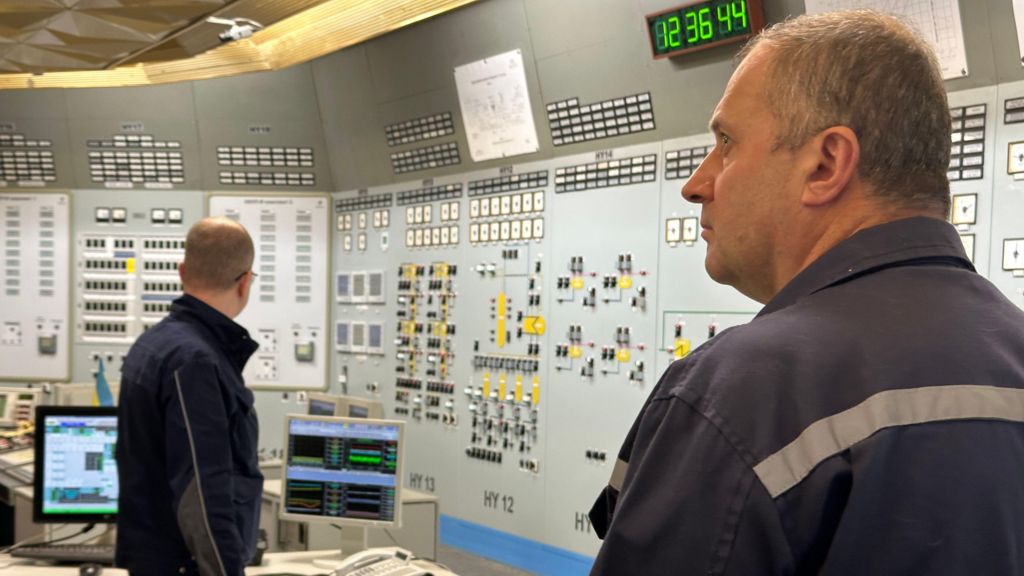
    Deep within the control room of Ukraine’s Khmelnytsky nuclear facility, a team of technicians maintains vigilant watch over a wall of monitoring systems. This western Ukrainian plant has emerged as a crucial bastion for national energy security amid relentless Russian assaults on critical infrastructure.

    With conventional power stations severely damaged by targeted airstrikes, nuclear energy now supplies approximately 60% of Ukraine’s electricity through three operational plants. Pavlo Kovtonyuk, director of Ukraine’s National Nuclear Energy Company Energoatom, confirms these installations face constant threat of attack. “Russia systematically targets substations connecting nuclear plants to the grid in acts of nuclear terrorism,” Kovtonyuk states, emphasizing that disrupting these connections jeopardizes safe reactor operation.

    The situation grows increasingly precarious at the Zaporizhzhia Nuclear Power Plant, Europe’s largest nuclear facility currently under Russian military control since March 2022. While in dormant mode, its reactors require continuous cooling and maintenance to prevent catastrophic failure. Ukrainian officials report concerning negligence in maintenance protocols and dangerously depleted cooling reservoirs under Russian management.

    Personal accounts from displaced plant workers reveal the human cost of the occupation. Technician Dariia Zhurba and engineer husband Ihor described their terrifying escape from Zaporizhzhia after weeks working under Russian control. “They scrutinized everything—our phones, social media, even ‘likes’—and interrogated us about military relatives,” Dariia recounted from their new modular home near Khmelnytskyi.

    International Atomic Energy Agency teams periodically inspect the occupied facility during temporary ceasefires, supervising critical repairs to damaged power lines and cooling systems. However, Ukrainian authorities warn that Zaporizhzhia’s American-designed fuel systems remain incompatible with Russian technical expertise, creating additional safety complications.

    The potential consequences transcend national borders. Energoatom director Kovtonyuk warns that any incident causing core meltdown could surpass the Chernobyl disaster in contamination scope, though potentially developing more gradually without explosive characteristics.

    As diplomatic discussions continue regarding the plant’s future operational status, evidence suggests Russia is already constructing power lines toward occupied territories, potentially redirecting Zaporizhzhia’s output should reactors restart under Moscow’s control—a scenario Ukrainian leaders vow to prevent given the facility’s vital role in national energy infrastructure and global safety concerns.

  • Fugitive Australian shooter on bail at time of alleged murders

    Fugitive Australian shooter on bail at time of alleged murders

    A massive police operation involving approximately 100 tactical officers is underway across rural New South Wales as authorities intensify their search for Julian Ingram, a 37-year-old man accused of perpetrating a deadly shooting spree that claimed three lives in the small town of Lake Cargelligo. The tragic incident occurred on Thursday afternoon in this remote community located approximately 450 kilometers west of Sydney, sending shockwaves through the region.

    Disturbing details have emerged that Ingram, who also goes by the surname Pierpoint, was out on bail for prior domestic violence offenses at the time of the shootings. According to police authorities, the victims all appear to have been personally connected to the alleged perpetrator, with the investigation focusing on these relationships.

    Among the deceased is 25-year-old Sophie Quinn, reportedly Ingram’s former partner who was seven months pregnant with their son, due in March. Local media, citing police sources, indicate that another victim was Quinn’s friend who was shot dead alongside her inside a vehicle. A relative of Quinn was killed in a subsequent shooting incident that occurred shortly after the initial attack. A fourth victim, a 19-year-old, remains in critical condition at a nearby hospital.

    Assistant Commissioner Andrew Holland of the NSW Police provided an update to reporters, confirming that the last confirmed sightings placed Ingram on a road leading out of Lake Cargelligo. Holland expressed particular concern about Ingram’s extensive knowledge of the local terrain, noting his employment with the local council would enable him to potentially evade detection for an extended period in the area.

    Authorities have revealed that Ingram never legally possessed a firearm license, raising serious questions about how he obtained the weapons used in the attacks. The investigation is actively pursuing this line of inquiry alongside the manhunt.

    The tight-knit community of Lake Cargelligo, with its population of approximately 1,500 residents, has been left reeling from the violence. Quinn’s mother, Cathy Quinn, remembered her daughter as someone who ‘did not have a mean bone in her body’ and described her as ‘a fun girl to be around.’ Assistant Commissioner Holland acknowledged that the families of the victims ‘were not doing well’ in the aftermath of the tragedy.

  • Goldman Sachs raises 2026-end gold price forecast by $500 to $5,400/oz

    Goldman Sachs raises 2026-end gold price forecast by $500 to $5,400/oz

    In a significant revision of its precious metals outlook, Goldman Sachs has elevated its gold price forecast for late 2026 to $5,400 per ounce, representing a substantial $500 increase from its previous projection of $4,900. This bullish adjustment comes as the investment bank observes robust patterns of institutional and central bank diversification into the traditional safe-haven asset.

    The current market trajectory supports this optimistic outlook, with spot gold reaching a notable peak of $4,887.82 per ounce mid-week. The precious metal has demonstrated remarkable strength throughout 2026, registering an impressive 11% year-to-date gain that builds upon last year’s extraordinary 64% surge.

    Goldman analysts attribute this sustained rally primarily to private sector entities utilizing gold holdings as strategic hedges against global policy uncertainties. In a research note released Wednesday, the brokerage emphasized that these diversification-driven purchases have consistently exceeded price expectations, effectively establishing a higher baseline for future valuations.

    Concurrently, the investment bank anticipates renewed interest from Western exchange-traded funds as monetary policy evolves. Goldman projects the U.S. Federal Reserve will implement approximately 50 basis points of interest rate reductions during 2026, potentially enhancing gold’s appeal relative to yield-bearing assets.

    Central bank activity remains another critical supportive factor, with emerging market institutions expected to maintain substantial gold acquisitions averaging 60 metric tons throughout 2026. This sustained official sector demand reflects ongoing efforts to diversify reserve portfolios away from traditional fiat currencies.

    Despite the overwhelmingly positive outlook, Goldman analysts caution that any substantial reduction in perceived global monetary policy risks could trigger liquidation of policy hedge positions, potentially creating downward pressure on gold valuations.

  • Inception, AppliedAI partner to build a unified advanced workflow platform for enterprises

    Inception, AppliedAI partner to build a unified advanced workflow platform for enterprises

    In a significant development for the artificial intelligence sector, Inception—a G42 subsidiary and regional leader in AI-powered enterprise solutions—has entered into a strategic partnership with AppliedAI, an Abu Dhabi-based technology firm renowned for its enterprise AI exports. The collaboration was formally established during the World Economic Forum in Davos, signaling a joint commitment to setting new global standards in AI-driven strategic decision-making and operational execution.

    AppliedAI brings to the partnership its flagship innovation, Opus—an AI-native workflow platform featuring the world’s first enterprise-scale Large Work Model (LWM) and Work Knowledge Graph (WKG). This technology enables organizations to design, automate, supervise, and audit structured, executable workflows, particularly within highly regulated industries. Combined with Inception’s expertise in developing and deploying secure, scalable AI products at both enterprise and national levels, the alliance aims to accelerate the adoption of intelligent, agent-driven operations in sensitive and mission-critical environments.

    The partnership addresses a pressing market need identified in McKinsey & Company’s State of AI in 2025 report, which reveals that nearly two-thirds of organizations have yet to scale AI across their enterprises. The report further highlights workflow redesign as the critical differentiator between high-performing AI implementations and less successful endeavors.

    Through this collaboration, the companies will deliver a unified platform powered by Opus that enables advanced enterprise workflow automation, decision intelligence, and large-scale execution. Designed to support national digital priorities and enterprise transformation initiatives, the platform represents a significant advancement in operational AI capabilities.

    Ashish Koshy, CEO of Inception, emphasized the transformative potential of the partnership: ‘Our collaboration with AppliedAI unlocks a new class of AI-driven enterprise solutions designed for real-world complexity and scale. With a platform that integrates intelligent agent orchestration with deep workflow and decision intelligence, organizations can transition from experimentation to operational AI that delivers measurable impact.’

    Arya Bolurfrushan, CEO of AppliedAI, added: ‘Enterprises and governments increasingly demand AI systems that not only inform decisions but execute work reliably, transparently, and at scale. Partnering with Inception allows Opus to extend this capability across new markets and the world’s most complex organizations. Together, we are turning strategic intent into operational reality.’

  • Trump sues JPMorgan Chase over accounts closure

    Trump sues JPMorgan Chase over accounts closure

    Former U.S. President Donald Trump has initiated legal proceedings against banking giant JPMorgan Chase and its Chief Executive Officer Jamie Dimon, alleging the institution terminated his financial accounts and those of associated entities for political motivations. The lawsuit, lodged in a Miami state court within Florida’s jurisdiction, seeks substantial civil compensation exceeding $5 billion, according to regional media coverage.

    The legal action stems from the bank’s decision in February 2021 to sever banking relationships with Trump-affiliated accounts. This development occurred shortly after the January 6 Capitol unrest, during which supporters of the former president stormed the legislative building. The court documents contend that JPMorgan Chase acted upon ‘political and social motivations’ and what it describes as ‘unsubstantiated, woke beliefs,’ suggesting the bank sought to distance itself from Trump’s conservative ideology amid shifting political currents.

    Additionally, the litigation accuses the financial institution of unlawfully publishing the names of Trump, the Trump Organization, its affiliated entities, and family members on a purported blacklist under Dimon’s directive. The allegations include claims of trade libel, breach of the implied covenant of good faith and fair dealing, and violations of Florida’s Unfair and Deceptive Trade Practices Act.

    In a formal rebuttal, JPMorgan Chase dismissed the lawsuit as without merit. Bank spokesperson Patricia Wexler emphasized that the institution does not close accounts based on political or religious affiliations. Instead, account terminations occur when accounts present legal or regulatory risks to the company. Wexler expressed regret over such necessary actions, citing compliance with rules and regulatory expectations, while simultaneously endorsing administrative efforts to prevent the weaponization of banking services.