博客

  • US Biathlon considers joining US Ski & Snowboard in rare merger of Olympic sport organizations

    US Biathlon considers joining US Ski & Snowboard in rare merger of Olympic sport organizations

    A rare proposed consolidation between two U.S. Olympic national governing bodies has thrown the future of American biathlon into question, as leaders of the U.S. Biathlon Association push to bring the sport under the umbrella of U.S. Ski & Snowboard (USSS) — a move backed by financial necessity according to supporters, but decried as an existential threat by long-time participants of the sport. The U.S. Biathlon board of directors is scheduled to cast its final vote on the integration plan this Wednesday, months after exploration of the proposal began in the wake of another medal-less performance by American biathletes at the 2022 Beijing Winter Olympics. Members of the association were first formally notified of the talks in May.

    U.S. Biathlon CEO Jack Gierhart told association members that shifting fiscal pressures left leadership with little choice but to explore the partnership: the U.S. Olympic and Paralympic Committee has cut the organization’s funding by 22%, and private corporate sponsors have reduced their commitments amid broader economic tightening. Integration with USSS, Gierhart argues, would open access to expanded funding streams, enhanced support services for competing athletes, and greater exposure to the larger cross-country skiing community to recruit new competitors to biathlon, a hybrid sport that combines cross-country skiing and precision rifle shooting. Sophie Goldschmidt, CEO of USSS, told the Associated Press that the larger governing body is well-positioned to elevate American biathlon to new competitive heights, saying “We feel that we can help take biathlon to the next level.”

    USSS is undeniably a powerhouse in American winter sports: it currently oversees 11 Olympic disciplines, counts 250 elite athletes among its ranks including global superstars like alpine skiing champion Mikaela Shiffrin and cross-country skiing gold medalist Jessie Diggins, holds a $70 million annual budget, and boasts 40,000 registered members. By comparison, U.S. Biathlon operates on just a $4 million annual budget and counts only 1,407 registered members. Though biathlon is a massively popular spectator and participation sport across much of Europe, it has never produced an Olympic medal for the United States, a long-standing performance gap that has contributed to its limited domestic funding and profile.

    Supporters of the merger argue the partnership would deliver mutual benefits for both organizations. Kikkan Randall, an Olympic cross-country skiing gold medalist and current USSS board member, noted that tapping into biathlon’s massive European popularity could open new marketing and sponsorship opportunities for the merged organization. “There’s a recognition of how big biathlon is in Europe. Being able to tap into that popularity and marketability is really intriguing,” Randall said. Under the proposed terms of the alliance, U.S. Biathlon would retain its own governing board (expanded to include USSS-appointed representatives) to manage sport-specific decisions, all existing U.S. Biathlon staff would transfer to the larger organization, and biathlon would secure two permanent seats on the USSS board. Gierhart emphasized that the additional resources from USSS would allow the organization to invest in grassroots growth: providing equipment to local clubs, expanding existing youth recruitment programs, and delivering much-needed support to underresourced community programs. “The long-term implications of what this could bring is really profound from a growing-the-sport perspective and pushing support out to the communities and clubs that need it,” Gierhart said.

    But the proposal has sparked fierce pushback from a large cohort of long-time biathlon athletes, coaches, and supporters, who have organized town halls, launched an opposition website, and filed formal ethics complaints against U.S. Biathlon board leadership. Critics argue the board has fast-tracked the merger without sufficient input from rank-and-file members, and warn that biathlon will be sidelined and eventually erased within the larger organization, overshadowed by more popular, high-revenue sports like alpine skiing and snowboarding. Many opponents fear the merger will lead to eventual funding cuts for the national biathlon team, pointing to USSS’s past cuts to funding for U.S. ski jumping in 2010 and Nordic combined in 2014 as a cautionary example.

    “I don’t want to see biathlon disappear into another organization,” said Art Stegen, author of *Unique and Unknown: The Story of Biathlon in the United States*, who is one of the most visible voices of opposition. Stegen, retired sports lawyer Ed Williams, and former Olympic biathlete Joan Wilder filed a formal ethics complaint with the U.S. Biathlon ethics committee last week, alleging that board chair Bob Hall violated organizational rules by holding closed merger discussions without notifying the full membership, and that board member Dexter Paine holds an unreported conflict of interest due to his concurrent seat on the USSS board. While the ethics committee acknowledged this month that “it appears there is merit to some of the allegations,” it dismissed the complaints entirely, noting it lacks the legal authority to remove a sitting board member.

    A 2024 analysis of the merger conducted by veteran biathletes Jon Schafer and Marc Sheppard concluded that any partnership with USSS should only be pursued as a “last resort.” The pair’s interviews with hundreds of members of the biathlon and cross-country skiing communities found that “The overwhelming consensus is that everyone is terrified of destroying the long-term future of the organization for possible short-term financial gain.” Opponents also argue that grassroots growth is already underway through existing programs, and that the sport can expand its revenue and membership without ceding control to a larger governing body.

    Beyond internal opposition, the proposal also faces a potential major legal obstacle under federal Olympic law. Steven Bank, a UCLA law professor specializing in sports law, explained that the 1978 Ted Stevens Olympic and Amateur Sports Act bars one national governing body from overseeing multiple sports that fall under separate international federations. Currently, USSS falls under the governance of the International Ski and Snowboard Federation, while biathlon is governed by the International Biathlon Union — a separation that could put the merger in conflict with the 46-year-old law, which was designed to prevent jurisdictional disputes over team selection, rule-setting, and competitive standards.

    This is not the first time USSS leadership has pursued expansion through acquisition: Goldschmidt launched a bid to take over USA Surfing last year, but abandoned the effort after widespread opposition from surfing community members. Goldschmidt confirmed to the AP that USSS is also currently in exploratory talks with USA Skateboarding about a potential future partnership, signaling that the biathlon merger is part of a broader push by the winter sports powerhouse to expand its footprint across Olympic sports.


  • Vietnam’s biggest company, Vingroup, expands overseas as its home market slows

    Vietnam’s biggest company, Vingroup, expands overseas as its home market slows

    Against a backdrop of cooling domestic growth and shifting national economic priorities, Vietnam’s largest private conglomerate Vingroup has launched an ambitious global expansion push, with nearly 24 planned projects across at least 15 countries spanning Central Asia, South Asia, Africa and Europe. This overseas pivot comes as the company’s core domestic profit driver — its flagship real estate division — faces mounting headwinds, and it seeks new revenue streams to fund its high-stakes ambitions in electric vehicles, artificial intelligence and advanced robotics, sectors that sit at the heart of Vietnam’s broader goal to emerge as Asia’s next high-growth tiger economy.

    For decades, Vingroup fueled its diversification from real estate into new manufacturing and technology sectors with profits from its booming domestic property market. But that model has broken down in recent years: Vietnam’s once red-hot property sector has cooled sharply, with unaffordable home prices in major urban centers and a glut of unsold units in secondary markets pushing the company’s Vinhomes division to halt domestic land bank expansion to focus on completing existing projects. At the same time, Vingroup’s loss-making electric vehicle subsidiary VinFast, which has struggled to gain traction in saturated Western markets after its 2023 U.S. launch and Nasdaq listing, posted a $3.87 billion net loss in 2025 and recently shifted its core growth focus to emerging markets.

    The expansion pushes Vingroup into a diverse range of projects tailored to local market needs. In Central Asia, where Uzbekistan has actively courted extra-regional foreign investment since loosening Soviet-era state controls in 2017, Vingroup signed a December agreement to build a mixed-use “Vietnam Town” in Tashkent, the country’s capital. Modeled after the conglomerate’s successful domestic developments, the project will integrate residential housing, retail centers, healthcare facilities, schools and electric vehicle charging infrastructure. This focus on Central Asia aligns with Vietnam’s own growing regional trade ties: bilateral trade between Vietnam and Uzbekistan grew 26.5% to $202 million in 2024, and Vietnam upgraded its partnership with Kazakhstan to a strategic partnership in 2025. Regional analysts note Central Asian nations are actively diversifying trade partners beyond Russia following its 2022 invasion of Ukraine, and are eager to balance growing Chinese investment with deeper ties to other dynamic Asian economies.

    In South Asia, Vingroup is building on rapidly growing bilateral ties between Vietnam and India, where total trade tripled from $5.4 billion in 2016 to a record $16.4 billion in 2025. The conglomerate’s Indian portfolio already includes a VinFast EV factory in Tamil Nadu, an electric taxi service launched in New Delhi in June, and signed agreements for smart city developments, hospitals, schools, a theme park and a zoo across multiple states. It has also expanded into Southeast Asia, with an EV factory under construction in Indonesia and an electric taxi service already operating in the Philippines.

    Across Africa, Vingroup is pursuing large-scale infrastructure and e-mobility projects to tap into fast-growing demand for zero-emission transport and urban development. In the Democratic Republic of Congo, the company has agreed to develop a 6,300-hectare riverfront smart city between the Congo River and Kinshasa’s international airport, while VinFast plans to supply hundreds of thousands of EVs and electric buses to support the DRC’s national plan to replace its fossil fuel vehicle fleet. In West Africa, Vingroup has partnered with Ghana’s Jospong Group to distribute VinFast’s electric cars, scooters, bicycles and buses across the region. Analysts point to Ghana as a particularly strategic market for VinFast, thanks to its eight-year EV tax incentive guarantee, 35-million-plus population, established car market and limited competition from Chinese EV manufacturers.

    In Europe, Vingroup’s plans include a facility to develop motors and moving components for industrial robotics in Germany, rounding out its global footprint across emerging and developed markets.

    Vingroup’s global push aligns with a broader shift in Vietnam’s national economic strategy. For decades, the country lifted millions out of poverty through an export-led growth model heavily dependent on a small number of key foreign markets, with the U.S. accounting for more than 30% of total Vietnamese exports. But that model came under severe strain after former U.S. President Donald Trump imposed sweeping tariffs on Chinese and Vietnamese goods, exposing the risks of over-reliance on a handful of export destinations. In a recent speech at the Shangri-La Dialogue, Communist Party General Secretary To Lam acknowledged the shift, noting that “growth is slowing. Public debt and the cost of capital are rising. Climate change is threatening the livelihoods of hundreds of millions. Disruptive technologies create immense opportunities, but also new divides.” Like China before it, Vietnam now aims to build homegrown globally competitive corporations that can drive the next phase of national economic growth.

    Vingroup’s leadership is betting that its tested domestic business model — starting with large-scale real estate development, then adding complementary community infrastructure such as hospitals, schools and retail before expanding into consumer goods like EVs — can be replicated in other developing economies at similar stages of growth. The company’s founder Pham Nhat Vuong first built his fortune manufacturing instant noodles in 1990s Ukraine before pivoting to large-scale housing development in Vietnam, growing the conglomerate into the country’s largest private sector player through this iterative integrated development strategy.

    Despite its ambitious plans, the expansion faces significant potential obstacles. Analysts note that many large megaprojects in the DRC never move beyond the initial agreement stage, and the country’s weak infrastructure, limited widespread smartphone penetration and lower average incomes may limit demand for the type of integrated urban development Vingroup plans to build. Even as VinFast has shifted to emerging markets, it will also face growing competition from established global and regional players as it scales up its operations across multiple continents.

  • US, Saudi forces strike Iran-backed groups in Iraq

    US, Saudi forces strike Iran-backed groups in Iraq

    A new wave of instability has swept through the Middle East after the United States and Saudi Arabia launched coordinated retaliatory airstrikes against Iran-aligned militant sites in eastern Iraq this Wednesday, ending a brief multi-day ceasefire between Washington and Tehran.

    According to statements from the US military, the joint air operation targeted weapons depots and logistics hubs belonging to what it described as “Iran-aligned terrorists”. Saudi Arabia’s defense ministry echoed the claim, confirming the strikes targeted militias linked to previous attacks on Saudi oil infrastructure. The resumption of hostilities came hours after the ceasefire collapsed late Tuesday, when US forces intercepted Iranian missiles fired at American military bases in the Persian Gulf.

    The escalation comes at a key diplomatic moment: US President Donald Trump hosted Israeli Prime Minister Benjamin Netanyahu at the White House for their first face-to-face meeting since the latest round of Middle East hostilities began in late February. The closed-door talks, which ran for roughly 90 minutes, aimed to bridge public disagreements between the two leaders over the ongoing regional conflict. Both leaders described the meeting in positive terms: Netanyahu called it “one of the best conversations I’ve ever had with the president of the United States”, while Trump simply noted the pair held a “very good meeting”. The core focus of the discussions, Netanyahu confirmed, was the shared priority of preventing Iran from acquiring nuclear weapons. While leaders had been expected to cover the stalled implementation of the US-brokered Israel-Lebanon framework deal and the deadlocked reconstruction of Gaza, no official confirmation has been given on whether those topics were addressed. Israel has not directly participated in the recent US-Iran hostilities that reignited earlier this month when an April ceasefire broke down.

    Fresh tensions over the strategic Strait of Hormuz, a critical global chokepoint for 20% of the world’s oil supplies, have amplified market volatility. On Wednesday, Iran’s Islamic Revolutionary Guard Corps (IRGC) announced it had intercepted and attacked three oil tankers that it accused of ignoring navigation warnings and using an unauthorized route through the waterway. Tehran has repeatedly asserted it maintains “full control” over the strait, a stance that puts it at direct odds with the international community’s demand for free navigation.

    Recent diplomatic moves around the strait have only deepened divisions. Earlier this week, Tehran held talks with neighboring Oman, which also borders the waterway, to agree on joint principles and operational mechanisms for shipping traffic. Back in June, the two nations discussed imposing service fees for transiting vessels, a proposal that the US has openly opposed. A recent rift emerged after Oman announced vessels could transit the strait through its territorial waters, a move that prompted Iran to respond with attacks on passing ships.

    The renewed conflict has already sent shockwaves through global energy markets: benchmark crude oil prices jumped more than 4% on Wednesday, as traders renewed fears that disrupted shipping through Hormuz could cut off global oil supplies. Three years after the outbreak of the Israel-Hamas war, the humanitarian situation in Gaza remains catastrophic, with Israel continuing to carry out regular operations targeting individuals it identifies as militants. Danny Danon, Israel’s ambassador to the United Nations, framed Netanyahu’s Washington visit as taking place at a “critical time for the Middle East”, arguing Iran continues “to choose terrorism over negotiations” by blocking access to the strait.

  • A 2:47 a.m. alert, a rabbit and 220,000 evacuees as France’s wildfire rages on

    A 2:47 a.m. alert, a rabbit and 220,000 evacuees as France’s wildfire rages on

    In the early hours of the morning, a jarring, high-pitched blare cut through the silence of a sleeping town in southwest France, popping up on every resident’s smartphone screen marked with an ominous “URGENT” header. The message was stark and uncompromising: *Evacuate immediately*.

  • Scented candle sold in coconut bowl recalled amid fire hazard warning

    Scented candle sold in coconut bowl recalled amid fire hazard warning

    A popular Australian home goods brand has issued a urgent recall of one of its best-selling scented candle products after regulators identified critical fire risks that violate national safety standards.

    Verve & Vibe, an Australia-based home fragrance brand, is pulling its scented candles housed in combined wooden and coconut bowl holders from the market, according to a notice from the Australian Competition and Consumer Commission (ACCC). The recall covers all units sold between September 1 of last year and the projected end of sales in February 2026, with distribution across three major retail channels: the brand’s official website, eBay, and global e-commerce platform Amazon.

    The hazard stems from the product’s design: the candle is held in a container made from combustible natural materials (wood and coconut shell) and also includes decorative dried flowers placed near the wick. When the candle burns, these flammable components can easily catch fire, turning a routine home fragrance product into an immediate danger for households. This design directly violates the ACCC’s existing ban on combustible candle holders, which was put in place to prevent exactly this kind of fire risk.

    Verve & Vibe Australia has moved quickly to notify consumers and address the safety issue. The company is urging every customer who has purchased this specific candle to stop using it immediately, and to store the product in a secure location far from any potential ignition sources until it can be disposed of or returned. To compensate affected consumers, the brand is offering two no-cost resolution options: a full refund of the purchase price, or a free replacement non-hazardous candle product.

    Household product safety regulators have repeatedly highlighted the danger of untested combustible container candles in recent years, noting that undetected fires from these products can spread quickly in residential spaces while residents are sleeping or away from home. Consumers who purchased the recalled Verve & Vibe candle are encouraged to reach out to the brand’s customer service team as soon as possible to process their refund or exchange.

  • Man killed in landslide at Solomon Islands gold mine, police say

    Man killed in landslide at Solomon Islands gold mine, police say

    In a tragic update on a landslide at a key Solomon Islands gold mine, authorities have confirmed the recovery of one person’s body, with search operations set to continue amid unconfirmed reports of additional unaccounted-for people at the site. The disaster struck Monday at the open-pit Gold Ridge mine, located on Guadalcanal island, just a short distance from the Solomon Islands’ capital Honiara, in the South Pacific.

    Police confirmed Tuesday that the recovered victim is Ashley Olo, though officials have not publicly confirmed whether Olo was an official employee of the mining operation. Acting Police Commissioner James Aitorea added that Olo’s remains have already been returned to his family for burial. The landslide left a 100-meter stretch of the mine’s main access road destroyed, according to official police statements.

    When the landslide first occurred, Prime Minister Matthew Wale told reporters that the government’s top priority would be determining the root cause of the disaster, particularly whether poor industry practices contributed to the tragedy. “Of interest to the government, of course, is to find out whether this was a result of poor mining practices and perhaps the need to strengthen regulations,” Wale said Monday, when no casualties or missing persons had yet been confirmed.

    In an initial statement released the day of the slide, the mine’s majority owner, China-headquartered and Hong Kong-listed Wanguo Gold Group Ltd, claimed that none of its official employees were injured or missing, and that no mining infrastructure had sustained damage. The company added that commercial mining operations had already resumed shortly after the incident.

    However, local media reports have raised questions about the presence of unregistered informal miners at the site, with multiple families reporting that their relatives who were working the mine illegally have not been contacted since the landslide. The Gold Ridge mine has a long history of controversy, dating back more than a decade. It was originally owned by an Australian mining firm, which sold off the asset in 2015 after public warnings that the site was at high risk of flooding and other geohazards. Since 2019, Wanguo Gold Group has held a majority stake in the operation, with local Solomon Islands landowners holding a small minority share. It remains the only large-scale commercial gold mine in the Solomon Islands. Past conflicts have already broken out at the site between local landowners, unregulated informal miners, and national law enforcement, long before Monday’s deadly landslide.

    Authorities have stressed that search and rescue efforts will continue at the site until all potential missing persons are accounted for, even after the recovery of Olo’s body. The cause of the landslide remains unconfirmed as of the latest updates, with the government set to launch a formal investigation into industry practices at the mine.

  • Name of bar contributes to closure after less than two years in Sydney precinct

    Name of bar contributes to closure after less than two years in Sydney precinct

    Sydney’s competitive hospitality industry is seeing another high-profile closure, as two inner-city food and drink venues will permanently cease operations by the end of August, just 20 months after opening their doors. European-inspired Bar Julius and Mexican rooftop restaurant Lottie, both located within The Eve Hotel Sydney in Redfern’s inner south, are owned by hospitality operator Liquid and Larder. Following their exit, well-known local hospitality brand The Apollo Group will add the two spaces to its expanding portfolio of premium dining and bar venues.

    The Apollo Group already has an established presence in the immediate area, running neighboring hit venues including Olympus Dining, The Apollo and Cho Cho San. The incoming takeover forms part of the ongoing development of Redfern’s $500 million Wunderlich Lane precinct, a mixed-use hub that already hosts a boutique hotel, independent grocer, and multiple popular dining outlets.

    Bar Julius first made the closure announcement public via a brief, warm Instagram post on Tuesday. “Bar Julius will be closing its doors at the end of August,” the post read. “We’d love to see you before last drinks.” The announcement caught many local regulars off guard, with dozens of commenters expressing surprise and asking for clarification on why the venue, which only launched in early 2025, would shut so soon after opening.

    In an interview with *The Sydney Morning Herald*, Liquid and Larder owner James Bradey, who owns both venues, confirmed the closure stemmed from a failure to meet required financial performance targets. “I’m really proud of what we’re doing, but we haven’t hit the heights financially (that) we’d like,” Bradey explained.

    Bradey also shared an unexpected contributing factor: the venue’s name itself. Bar Julius was positioned as an all-day dining spot that served breakfast to hotel guests, but the “bar” label led many potential customers to assume it only opened for evening trade. Bradey revealed the team had originally planned to name the venue Baptist, but another local business in the development claimed the name first. “It’s certainly more successful at night … maybe we should have called it Bistro Julius or just Julius,” he said.

    The closure is far from an isolated case in Australia’s current hospitality landscape. Amid a worsening national cost-of-living crisis that has pushed operating and supply costs sharply higher, dozens of beloved Sydney venues have closed their doors in recent months. One of the most high-profile losses was MoshPit Newtown, a iconic inner-west live music venue that announced plans to shut in November. The 9-year-old space, which launched in 2016 as a launching pad for emerging punk and alternative music acts, cited skyrocketing operating costs as the core driver of its decision, saying the announcement came with “truly heavy hearts” and left the local music community reeling.

  • Ryan Meuleman: Man injured in crash with Dan Andrews’ car in 2013 charged over alleged carjacking

    Ryan Meuleman: Man injured in crash with Dan Andrews’ car in 2013 charged over alleged carjacking

    A high-profile legal matter involving a 28-year-old man with a long-running dispute connected to former Victorian Premier Daniel Andrews has taken a new turn, after the man was arrested on alleged carjacking charges and is now fighting for release from custody.

    Police have laid out their case against Ryan Meuleman, accusing him of attempting to steal a vehicle with a woman and her young twin children in the backseat outside a laundromat in Pakenham, a suburb of Melbourne, on the evening of May 3. According to law enforcement testimony during a Wednesday bail hearing at the Melbourne Magistrates’ Court, the childrens’ father had stepped inside the laundromat around 9:40 p.m. to collect pre-washed laundry when Meuleman allegedly climbed into the car’s front driver’s seat and shifted the vehicle into drive.

    The children’s mother, who was already seated in the car, physically struggled with Meuleman over the gearshift and screamed to alert her husband, Detective Senior Constable Sean McIntyre told the court. The father immediately rushed back to the vehicle, punched Meuleman through the open driver’s window, dragged him out of the car onto the laundromat’s front sidewalk, and held him down until officers arrived to place him under arrest, the detective added.

    McIntyre told the court Meuleman appeared heavily impaired by drugs at the time of his arrest and gave police a false name, identifying himself as “Crew Thompson.” He was deemed unfit to participate in a police interview following his arrest. The court also heard Meuleman was already free on bail at the time of the alleged carjacking, awaiting trial on separate burglary and theft charges connected to a break-in at a commercial property.

    This new arrest comes 12 years after a collision that left Meuleman seriously injured, and which has sparked years of legal conflict. In January 2013, when Meuleman was 15 years old, he was hit while cycling by a Ford Territory driven by Catherine Andrews, wife of Daniel Andrews, who was then leader of Victoria’s Labor opposition. Daniel Andrews and the couple’s three children were passengers in the vehicle at the time. A post-crash investigation by Victoria Police resulted in no charges being filed against anyone in the Andrews family.

    Meuleman spent 11 days recovering in a hospital after the collision. He has long claimed the Andrews vehicle struck him as he cycled, while the Andrews family has consistently maintained that Meuleman crashed into their stationary car.

    Meuleman’s defense attorney, Tom Smedley, referenced the 2013 collision during the bail hearing, arguing the crash left his client with long-term, unresolved trauma that has severely impacted his mental health. “Ryan identified this period as a significant turning point in his life,” Smedley told the court. “He identifies his substance use has been a longstanding coping mechanism connected to unresolved psychological distress and trauma.”

    Smedley told the court Meuleman had already spent 87 days in pre-trial custody and was requesting bail so he could enroll in a 12-week inpatient rehabilitation program based in regional Victoria. Meuleman’s father, Peter, was present in the court gallery to support his son during the hearing.

    Magistrate Phillip Goldberg adjourned the bail application to a future hearing date after raising concerns about the rehabilitation facility’s security protocols, noting the center does not offer 24-hour on-site monitoring of patients. Smedley requested additional time to arrange alternative security measures, including fitting Meuleman with an electronic monitoring ankle bracelet, to address the magistrate’s concerns. The bail application will resume on August 5.

    The alleged carjacking is separate from an ongoing defamation lawsuit Meuleman filed against Daniel and Catherine Andrews last year. The defamation case stems from a 2013 injury compensation claim Meuleman filed over the collision. Earlier this year, Meuleman settled a separate lawsuit against his former legal team, Slater and Gordon, over claims the firm failed to properly represent him during negotiations for an $80,000 settlement with Victoria’s Transport Accident Commission. That case concluded in April 2025 with a confidential, out-of-court settlement that Meuleman’s current legal team described as “too good to refuse.”

    During the public proceedings around that lawsuit, the Andrewses released a joint media statement in September 2024 that noted they were not involved in the case against Slater and Gordon and repeated their assertion they “did nothing wrong” in the 2013 collision. Meuleman claims the statement falsely implies he lied about the details of the 2013 crash to seek undeserved financial compensation. The Andrewses have denied the defamation claim and are defending the lawsuit, which is scheduled to return to court later this year.

  • Wildfires are more extreme in Europe and North America, but global burning is oddly decreasing

    Wildfires are more extreme in Europe and North America, but global burning is oddly decreasing

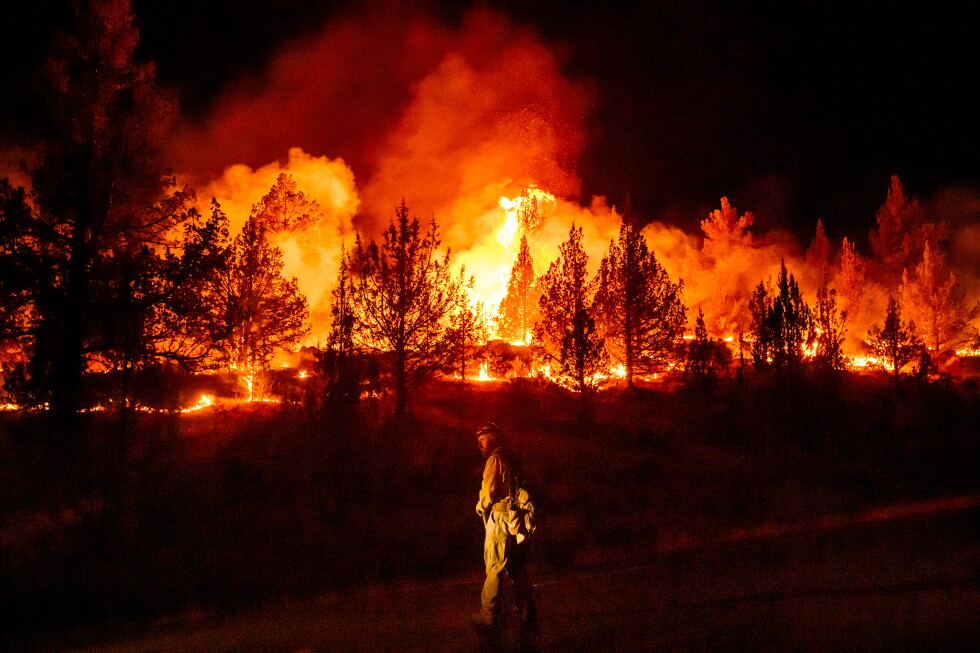
    This summer, headlines from across the Northern Hemisphere have painted a grim picture of out-of-control wildfires: Spain is battling its largest recorded blaze, Canadian and American wildfire seasons are far outpacing historical averages, and thick smoke has choked entire regions, creating hazardous air quality for millions. Yet hidden beneath these alarming regional events is a counterintuitive global trend: according to the European Union’s Copernicus Climate Change Service, total global wildfire carbon emissions hit a 25-year low in 2025, driven by dramatic declines in fire activity across Africa and Asia.

    Experts emphasize that these two opposing trends are not contradictory — both are rooted in human activity reshaping fire patterns across the planet. “It does seem like a paradox because we’re talking increases in fires, yet the global numbers have been going down and down. But they’re both true,” explained Mike Flannigan, a fire scientist at Canada’s Thompson Rivers University.

    Regional data bears out the growing severity of wildfires in wealthy Northern Hemisphere nations. Spain’s ongoing wildfire has already scorched more than 500 square kilometers (193 square miles), making it the largest in the country’s recorded history, while total area burned across Europe is just slightly below the all-time record set earlier this decade. In North America, data from national wildfire monitoring centers shows total burned land this summer is at least 25% higher than the 10-year average, and more than double the levels seen 30 years ago. Jennifer Balch, a fire scientist at the University of Colorado, noted that wildfires across these regions are growing more extreme in every measurable way: size, intensity, spread speed, and frequency. “Extreme wildfires are on the rise globally in different parts of the world. And that’s the piece that you know has us shaking in our boots,” Balch said.

    The global decline in total fire activity, by contrast, is driven by shifting human land and fire management practices across the world’s most fire-prone continents. Statistics from Copernicus show that Africa and Asia account for more than three-quarters of all global carbon emissions from vegetation burning, while North America and Europe contribute less than one-eighth. This means changes in African and Asian fire activity overwhelmingly shape global totals.

    “Africa dominates the global fire activity,” said Park Williams, a water and fire scientist at the University of California, Los Angeles. “So if there’s a trend in Africa, then that’s going to be the trend in the global fire activity. In sub-Saharan Africa, fire activity over the last 25 years has gone down pretty dramatically.”

    Traditionally, annual large-scale grassland fires swept across African savannas, contributing the single largest share of global burned area. But John Abatzaglou, a fire scientist at the University of California Merced, explained that expanding agriculture and residential development have reduced the scope of these traditional burns, while human-built barriers also limit the spread of any fires that do start. In Asia and the Amazon, where fire has long been used as a low-cost tool to clear forest for agricultural land, shifting demographic and land use patterns have also cut the number of intentional burns. “It really is all driven by human demographic change,” Williams said.

    For the worsening extreme wildfires seen in North America and Europe, scientists say the primary human driver is climate change. Burning fossil fuels for energy has raised global average temperatures, creating hotter, drier conditions that are ideal for large, intense wildfires to ignite and spread. Five separate experts interviewed by The Associated Press confirmed this link between human-caused warming and more extreme fire activity.

    Hotter temperatures don’t just dry out vegetation — they also eliminate the natural overnight recovery period that once allowed forests and firefighters to gain the upper hand on blazes. “Hotter temperatures mean humans ‘have our foot on the gas pedal’ for bigger fires, but we also have lost the brakes on fire’ because warmer and wetter nights don’t give forests — or firefighters — time to recover during darkness like they used to,” Balch said.
    Flannigan added that rising temperatures pull more moisture out of soil and vegetation, turning plant material into ready fuel for fires, and have extended the length of the wildfire season across North America, especially in northern boreal forests. Where once just a handful of days each year had conditions suitable for large wildfires, now entire months carry high fire risk. When more extreme fires hit densely populated regions, they also cause far greater economic and human harm, destroying higher-value property and displacing more communities, Flannigan noted.

    Abatzaglou added that while North America has a long history of successful aggressive fire suppression, climate change has made blazes so intense and frequent that traditional suppression strategies are no longer sufficient to keep them under control.

    Looking ahead, scientists warn that the developing strong El Niño event will likely worsen wildfire activity in coming months across tropical regions. El Niño, a cyclical weather pattern marked by warmer ocean surface temperatures in the central and eastern Pacific, typically creates drier, hotter conditions that favor more intense wildfires across tropical zones. “The most predictable outcome of El Niño is going to be more tropical fire, specifically tropical forests,” Williams said, noting that increased fire activity is likely in the Amazon, Southeast Asia, and the Western Pacific.

    While El Niño is expected to bring more rain and reduce the risk of large forest fires in the western United States, Abatzaglou noted that increased rainfall can also spur extra grass growth in arid desert regions, creating extra fuel that can ignite into devastating grass fires later — a pattern that contributed to major destructive blazes in Los Angeles in 2025 and Hawaii in 2023.

    Regardless of El Niño’s impact, scientists agree that communities across North America and Europe will need to improve long-term wildfire planning and adaptation to address the worsening trend of extreme blazes. Key strategies include intentional prescribed burns to reduce excess built-up vegetation that can fuel large out-of-control fires. “It’s not a question of whether our landscapes are going to burn, it’s the question of when they’re going to burn,” Balch said.

    This reporting on climate and wildfires from The Associated Press receives financial support from multiple private foundations, with AP retaining full editorial control over all content.

  • AFL reveals final rounds fixtures with huge double-headers to decide finals race

    AFL reveals final rounds fixtures with huge double-headers to decide finals race

    With the 2026 Toyota AFL home-and-away season drawing to its closing stages, the Australian Football League has officially confirmed the full match schedules for the penultimate and final rounds of regular season play, headlined by a rare historic event that has only taken place three other times in the competition’s 150-plus year history.

    The action for Round 23 will get underway on a prime Friday night slot at Perth’s Optus Stadium, where the competition’s current ladder leaders, the Fremantle Dockers, will go head-to-head with the resilient Adelaide Crows. The following Saturday brings a packed slate of matches with direct, high-stakes implications for teams still vying for a spot in the upcoming finals series. Geelong Cats will travel to Melbourne’s Marvel Stadium to take on North Melbourne, while the Brisbane Lions will host the Gold Coast Suns at Brisbane’s iconic Gabba ground.

    The standout highlight of Round 23 is a men’s double-header hosted at the Melbourne Cricket Ground, widely known as the sport’s Victorian colosseum. This rare back-to-back match event will mark just the fourth time such a scheduling arrangement has occurred in AFL history. Opening the MCG’s Saturday matchday at 12:35 pm, Richmond will face off against St Kilda, with the nightcap kicking off at 7:40 pm between Hawthorn and traditional powerhouse Collingwood.

    Moving into Round 24, the final round of the home-and-away season, play will kick off on Thursday night at Marvel Stadium, where St Kilda will play host to the Gold Coast Suns. The round’s marquee Friday night fixture at the MCG will serve as a highly anticipated rematch of the 2023 AFL Grand Final, pitting Collingwood against the Brisbane Lions.

    Saturday of Round 24 brings a full day of consequential matches that will all impact the final ladder standings and which teams will earn the critical advantage of home finals during the September playoffs. Carlton will face Fremantle at Marvel Stadium, reigning premiers Melbourne will take on the Western Bulldogs at the MCG, Geelong will host Richmond at GMHBA Stadium, and Adelaide will meet Greater Western Sydney at Adelaide Oval. Every result across these matches will reshape the final ladder and change the trajectory of multiple teams’ finals campaigns.

    In an official statement following the fixture announcement, AFL Head of Strategy and Scheduling Josh Bowler emphasized that both closing rounds will play a defining role in determining which teams advance to the 2026 finals series. “A number of clubs are still competing for top-four positions, home finals and places in September,” Bowler said. “Fans can look forward to several marquee match-ups featuring some of the competition’s leading teams as the race to the 2026 Toyota AFL Finals Series reaches its conclusion.”