博客

  • Fire breaks out in Karachi building near site of recent blaze

    Fire breaks out in Karachi building near site of recent blaze

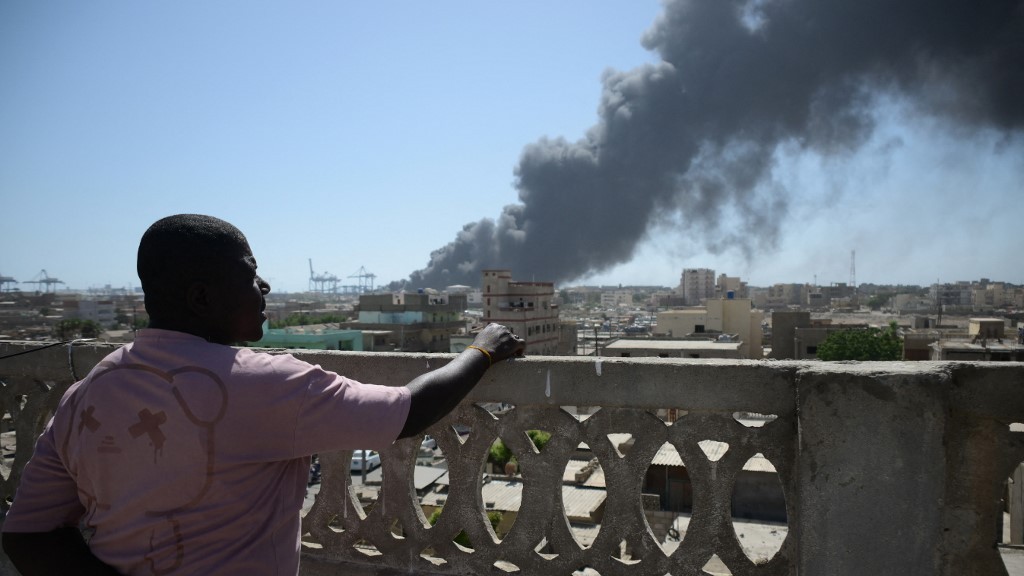
    Karachi, Pakistan – A significant fire erupted in a commercial structure within Pakistan’s largest metropolis on Monday, reigniting safety concerns as it occurred in proximity to the location of last month’s catastrophic blaze that claimed numerous lives. Provincial authorities confirmed emergency response teams were actively engaged in containment operations.

    Sukhdev Assardas Hemnani, the official spokesperson for the provincial government, communicated via text message that firefighting units were deployed to manage the rapidly spreading flames. The incident has triggered alarm among citizens and officials alike, given its unsettling geographical and temporal proximity to the Gul Plaza inferno that resulted in substantial casualties just weeks earlier.

    The latest fire emergency underscores persistent questions regarding fire safety protocols, building code enforcement, and emergency response capabilities in Pakistan’s densely populated urban centers. This developing situation occurs against the backdrop of ongoing recovery operations from the previous tragedy, where rescue workers continue to search for dozens still missing and feared deceased.

    While specific details regarding potential casualties or structural damage remain unconfirmed at this early stage, the incident has already prompted renewed calls for comprehensive reviews of commercial building safety standards throughout the city. Local authorities have yet to release official statements regarding the fire’s origin or the scale of destruction involved.
  • Egypt carrying out air strikes on RSF in Sudan from secret base

    Egypt carrying out air strikes on RSF in Sudan from secret base

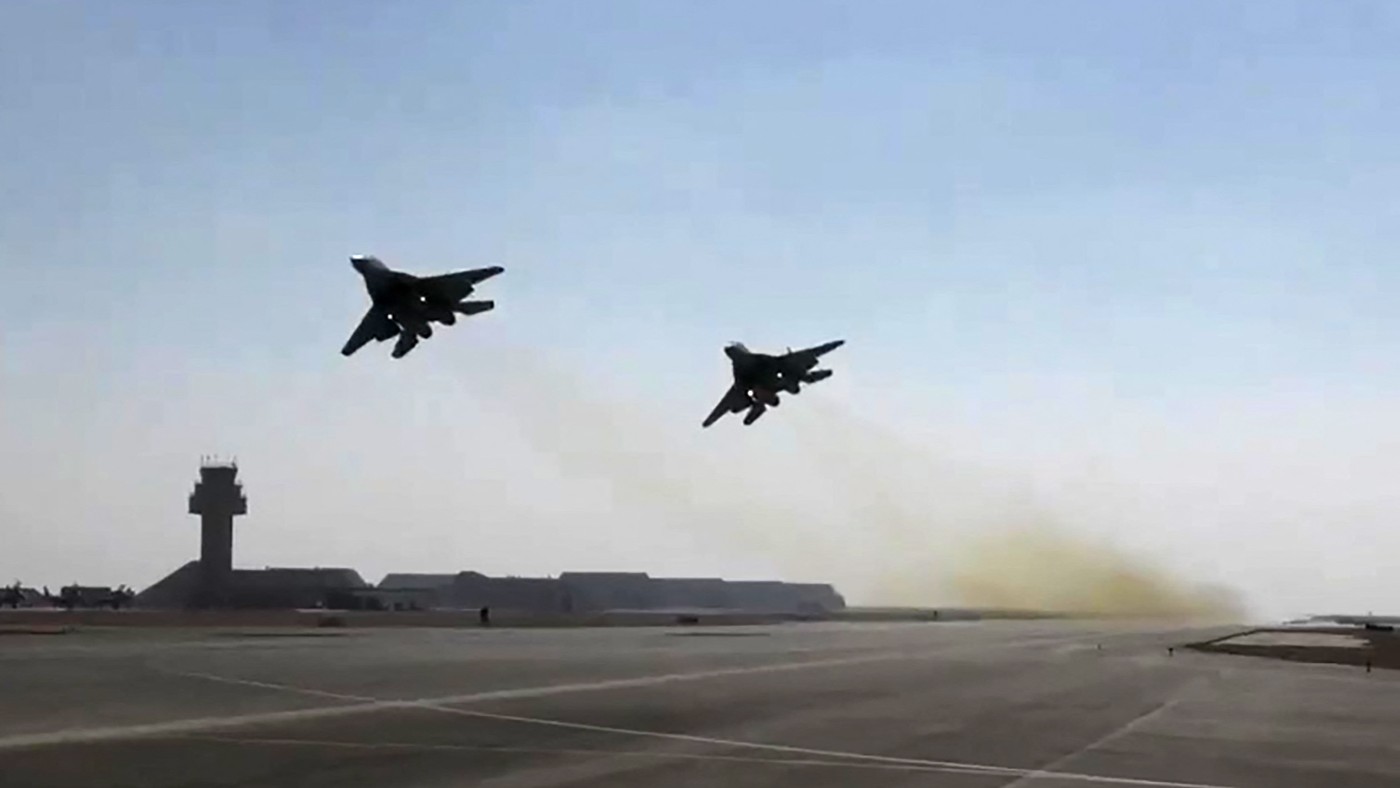
    Satellite imagery, aviation data, and intelligence sources have uncovered Egypt’s clandestine military involvement in Sudan’s civil conflict. A comprehensive investigation reveals that Cairo has been conducting sustained drone operations from a concealed desert airbase against the Rapid Support Forces (RSF) paramilitary group for at least six months.

    The secret facility, camouflaged within the expansive East Oweinat agricultural development project near the Sudanese border, represents a significant escalation in Egypt’s direct military engagement. This covert campaign marks a strategic shift from Cairo’s previously diplomatic approach to the Sudanese conflict, where it has consistently supported the official Sudanese Armed Forces (SAF).

    This military escalation follows the RSF’s capture of el-Fasher in North Darfur, where paramilitary forces have been accused of perpetrating mass atrocities against civilians. Egyptian President Abdel Fattah el-Sisi subsequently declared the situation in el-Fasher a “red line,” prompting intensified operations.

    The conflict has drawn in multiple regional powers, creating a complex geopolitical landscape. The United Arab Emirates stands accused of facilitating RSF operations, despite official denials, while Turkey, Qatar, and Saudi Arabia have increased support for the Sudanese military. Recent tensions between Saudi Arabia and the UAE have further complicated the situation, with Riyadh taking an increasingly assertive stance against Emirati regional policies.

    Ironically, the very agricultural project housing Egypt’s covert drone base has received substantial investment from Emirati companies, highlighting the intricate economic and military relationships characterizing the conflict.

    The RSF has acknowledged foreign drone attacks on its positions, vowing retaliation “at the appropriate time and place.” Meanwhile, humanitarian organization Doctors Without Borders recently described el-Fasher as “largely destroyed” and resembling a “ghost town” after months of intense fighting that has decimated the civilian population.

  • Egypt carrying out drone strikes on RSF in Sudan from secret base

    Egypt carrying out drone strikes on RSF in Sudan from secret base

    A comprehensive investigation utilizing satellite imagery, flight records, and intelligence sources has revealed Egypt’s covert military involvement in Sudan’s civil conflict. According to evidence compiled by The New York Times and Middle East Eye, Egypt has been conducting sustained drone operations from a clandestine airbase concealed within the vast East Oweinat agricultural reclamation project in Egypt’s western desert, approximately 65 kilometers from the Sudanese border.

    The operations, ongoing for at least six months, represent a significant escalation in Egypt’s engagement, transitioning from diplomatic efforts to direct military action against the Rapid Support Forces (RSF). This paramilitary group, accused of perpetrating genocide and massacring thousands of civilians in North Darfur’s el-Fasher, has gained substantial territory against the Sudanese Armed Forces (SAF), which Cairo officially supports.

    The conflict has evolved into a regional proxy war with complex international dimensions. The United Arab Emirates stands accused of facilitating support for the RSF, partially through Libyan eastern military commander Khalifa Haftar, who controls the strategic al-Kufra airbase. Conversely, Egypt has aligned with Saudi Arabia, Turkey, and Qatar in backing the Sudanese government forces.

    Recent weeks have witnessed unprecedented public tensions between traditional Gulf allies Saudi Arabia and the UAE, with Riyadh adopting an assertive stance against Emirati regional policies. Cairo has reportedly shared intelligence with Saudi Arabia regarding UAE activities in Yemen, where similar proxy dynamics have unfolded.

    Ironically, the very base from which Egyptian drones target RSF positions has received foreign investment from major Emirati agricultural companies, highlighting the complex economic and geopolitical interconnections.

    The RSF acknowledged in November that foreign-based drones were striking their forces and issued warnings of retaliation at “the appropriate time and place.” Meanwhile, humanitarian organization Doctors Without Borders (MSF) described el-Fasher as “largely destroyed” and “empty” following a January assessment, revealing the catastrophic human toll of the conflict.

  • Federal officers in Minneapolis to get body cameras ‘effective immediately’

    Federal officers in Minneapolis to get body cameras ‘effective immediately’

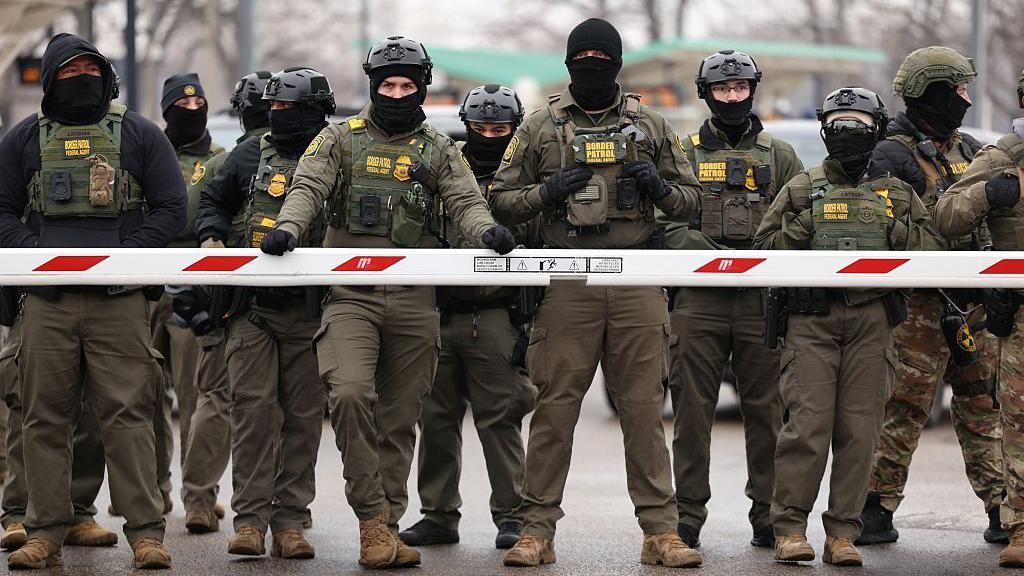
    The U.S. Department of Homeland Security (DHS) has announced the immediate deployment of body cameras to all federal immigration agents operating in Minneapolis, Minnesota. This policy shift follows escalating tensions over the January deaths of two American citizens, Alex Pretti and Renee Good, during heightened immigration enforcement operations in the region.

    DHS Secretary Kristi Noem confirmed the rollout via social media on Monday, coinciding with the Hennepin County Medical Examiner’s classification of Pretti’s January 24th death as a homicide. The examiner’s report specified Pretti sustained multiple gunshot wounds from one or more law enforcement officers before succumbing to injuries at Hennepin County Medical Center. While homicide denotes a human killing another, it does not automatically imply criminal wrongdoing.

    U.S. Customs and Border Protection disclosed that two agents involved in Pretti’s shooting were equipped with body cameras and have been placed on administrative leave. The U.S. Department of Justice has launched a civil rights investigation into the incident.

    Secretary Noem indicated plans to expand the body camera program nationally once funding becomes available. This commitment emerges amid a partial government shutdown, with Democrats insisting on immigration reforms—including universal body camera usage—as conditions for funding legislation.

    President Donald Trump endorsed the technology, stating body cameras ‘generally tend to be good for law enforcement because people can’t lie about what’s happening,’ estimating they’re ‘80% good for law enforcement.’

    In response to the shooting, the administration replaced Minneapolis-based U.S. Border Patrol Chief Gregory Bovino with former immigration official Tom Homan. Homan has met with local leaders including Governor Tim Walz and Minneapolis Mayor Michael Frey to address community tensions. Both officials have demanded complete withdrawal of federal agents from the capital region.

    Homan acknowledged authorities are developing plans to reduce federal presence in Minneapolis, though operational changes would depend on state and local cooperation with federal authorities. The administration has criticized Minneapolis’ sanctuary city policy prohibiting municipal employees from enforcing immigration laws.

    Mayor Frey emphasized prioritizing local police focus on community safety while maintaining selective cooperation with federal authorities. The ongoing deployment of over 3,000 federal immigration officers throughout Minnesota implements President Trump’s campaign promise to intensify immigration enforcement.

  • Watch: US and Canada at loggerheads after groundhogs disagree

    Watch: US and Canada at loggerheads after groundhogs disagree

    The annual trans-border meteorological tradition faced renewed diplomatic tension as North America’s foremost furry forecasters delivered conflicting predictions for the impending spring season. Pennsylvania’s Punxsutawney Phil, emerging from his slumber at Gobbler’s Knob, glimpsed his shadow amidst ceremonial proceedings – an omen traditionally signaling six additional weeks of wintery conditions. Concurrently, Nova Scotia’s Shubenacadie Sam, Canada’s representative rodent, failed to witness any shadow during his parallel prognostication ceremony, thereby forecasting an early spring arrival.

    This meteorological disagreement marks the second consecutive year of discord between the two animal oracles, reintroducing playful tensions between neighboring nations. The centuries-old tradition, rooted in European folklore and popularized in North America since 1887, continues to capture public imagination despite its questionable meteorological accuracy. Scientific analyses indicate the forecasts demonstrate approximately 39% reliability, yet the cultural phenomenon consistently generates international media coverage and public engagement.

    Municipalities surrounding both prediction sites have leveraged the tradition for tourism promotion and local economic stimulation. The event’s persistence highlights how lighthearted cultural practices can momentarily transcend international boundaries while simultaneously highlighting gentle international rivalries. Meteorological authorities from both nations maintain professional distance from the rodent predictions, instead emphasizing data-driven seasonal forecasting models.

  • Wallabies to open the 2027 Rugby World Cup against Hong Kong in Perth

    Wallabies to open the 2027 Rugby World Cup against Hong Kong in Perth

    SYDNEY (AP) — Rugby World Cup 2027 organizers have unveiled the complete tournament schedule, confirming Australia will commence their campaign against debutants Hong Kong in Perth on October 1. The championship final is scheduled for November 13 at Sydney’s Stadium Australia.

    The comprehensive schedule released Tuesday outlines 52 matches across 19 match days, utilizing eight venues throughout seven Australian cities. The tournament structure, determined during December’s draw ceremony in Sydney, features defending two-time champion South Africa opening against Italy on October 3 in Adelaide.

    A highlight of the pool stage will be ‘Super Sunday’ on October 17, 2027, featuring five simultaneous matches concluding group play: Italy versus Georgia, Ireland against Uruguay, Scotland facing Portugal, France taking on Samoa, and South Africa meeting Romania.

    The tournament will introduce a round of 16 knockout phase for the first time, hosted across Brisbane, Melbourne, Perth, and Sydney. Quarterfinals will follow in Brisbane and Sydney, with semifinals, bronze final, and championship final all concentrated in Sydney.

    Australia faces a formidable challenge in their second match, confronting rugby powerhouse New Zealand on October 9 in Sydney. This marks the first pool stage encounter between these trans-Tasman rivals in Rugby World Cup history.

    Wallabies captain Harry Wilson acknowledged the significance of both fixtures: ‘Initiating our campaign against Hong Kong will be particularly meaningful as they make their World Cup debut, and Perth has consistently provided tremendous support for our team. The subsequent match against New Zealand in Sydney will undoubtedly represent a monumental occasion in the tournament.’

  • SpaceX to take over Elon Musk’s AI firm

    SpaceX to take over Elon Musk’s AI firm

    In a strategic consolidation of his technological empire, billionaire entrepreneur Elon Musk has orchestrated the acquisition of artificial intelligence startup xAI by aerospace manufacturer SpaceX. The merger, formally announced through an official corporate memorandum on Monday, represents Musk’s latest effort to create synergistic connections between his diverse business interests.

    The integration positions xAI—recognized for developing the Grok conversational AI platform—within SpaceX’s operational structure, creating what Musk describes as a comprehensive ‘innovation engine.’ This combined entity will pursue advancements across multiple technological domains including artificial intelligence, rocket propulsion systems, satellite internet services, and media platforms.

    Financial specifics of the transaction remain undisclosed to the public. This development follows Tesla’s recent $2 billion investment in xAI, which Musk previously characterized as an ‘orchestra conductor’ for the electric vehicle company’s autonomous manufacturing robotics initiatives. That earlier investment faced shareholder resistance, with opposition votes and abstentions surpassing approvals during last year’s investor referendum.

    Musk’s vision extends beyond terrestrial applications, proposing that orbital infrastructure could address the substantial energy requirements of advanced AI systems. ‘In the long term, space-based AI is obviously the only way to scale,’ he stated in the memorandum, identifying Earth-launched AI satellites as the project’s immediate priority.

    The acquisition coincides with reports that SpaceX is preparing for a potential public listing, though the company has not confirmed these speculations. Musk’s ambitious roadmap suggests that revenue generated from space-based data processing centers could eventually fund extraterrestrial colonization efforts, including self-sustaining lunar installations and Martian settlements, ultimately supporting humanity’s expansion throughout the solar system.

  • Lewis Hamilton and Kim Kardashian spark dating rumours with secret UK getaway

    Lewis Hamilton and Kim Kardashian spark dating rumours with secret UK getaway

    Speculation mounts over a potential romantic connection between Formula 1 icon Lewis Hamilton and reality television mogul Kim Kardashian following their discreet joint retreat at a luxury English estate. The Sun reports the high-profile pair shared an intimate weekend at Oxfordshire’s exclusive Estelle Manor, where accommodations command over £1,000 per night.

    The 41-year-old Ferrari driver allegedly arrived via helicopter from London while the 45-year-old SKIMS founder traveled from Los Angeles aboard her £100 million private jet, accompanied by substantial security and luggage. Insider sources indicate the couple received privileged access to the property’s spa facilities, indulged in couples’ massages, and maintained complete privacy during dining experiences away from fellow guests.

    Despite their longstanding acquaintance through Kardashian’s former husband Kanye West, the two celebrities have never previously been romantically associated. Their deliberate avoidance of social media documentation throughout the weekend has further intensified curiosity about the nature of their relationship. The carefully orchestrated secrecy surrounding their movements, combined with the extravagant transportation arrangements, suggests a concerted effort to maintain privacy amid growing public interest.

  • Jordan says will not be ‘launching pad for any military action against Iran’

    Jordan says will not be ‘launching pad for any military action against Iran’

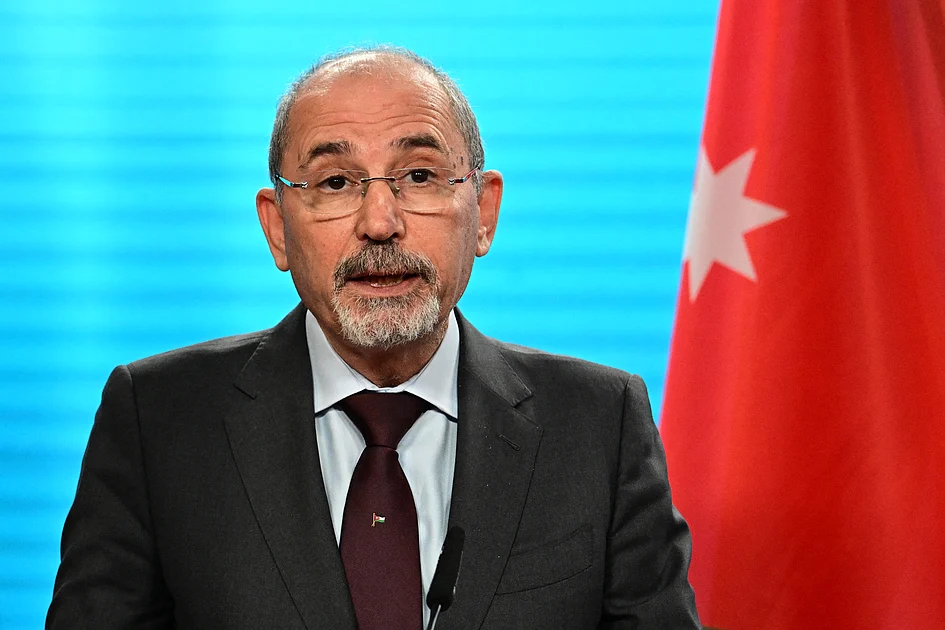
    Jordan has formally communicated to Iranian leadership that it will not permit its territory or airspace to be utilized for military operations against the Islamic Republic. The assurance came during a diplomatic phone conversation on Monday between Jordan’s Deputy Prime Minister Ayman Safadi and Iranian Foreign Minister Abbas Araghchi.

    Safadi, who concurrently serves as Minister of Foreign Affairs and Expatriates, explicitly stated that the Hashemite Kingdom would not function as ‘a battleground in any regional conflict or a launching pad for any military action against Iran.’ The declaration arrives amidst heightened regional tensions and reported U.S. threats of potential strikes against Iranian targets.

    The Jordanian diplomat further emphasized Amman’s commitment to national sovereignty, declaring that Jordan ‘will not permit any party to violate its airspace or threaten its security and the safety of its citizens.’ This position aligns with similar statements recently issued by other regional powers, including the United Arab Emirates and Saudi Arabia, who have likewise declared their unwillingness to facilitate military actions against Iran.

    The diplomatic exchange represents a significant development in Middle Eastern geopolitics, demonstrating Jordan’s cautious approach to navigating complex international relationships while maintaining its security interests. The kingdom’s stance reflects broader regional concerns about potential escalation and the destabilizing effects of military confrontation in the already volatile Middle East.

  • Iran weighs nuclear diplomacy with US to cool fears of war

    Iran weighs nuclear diplomacy with US to cool fears of war

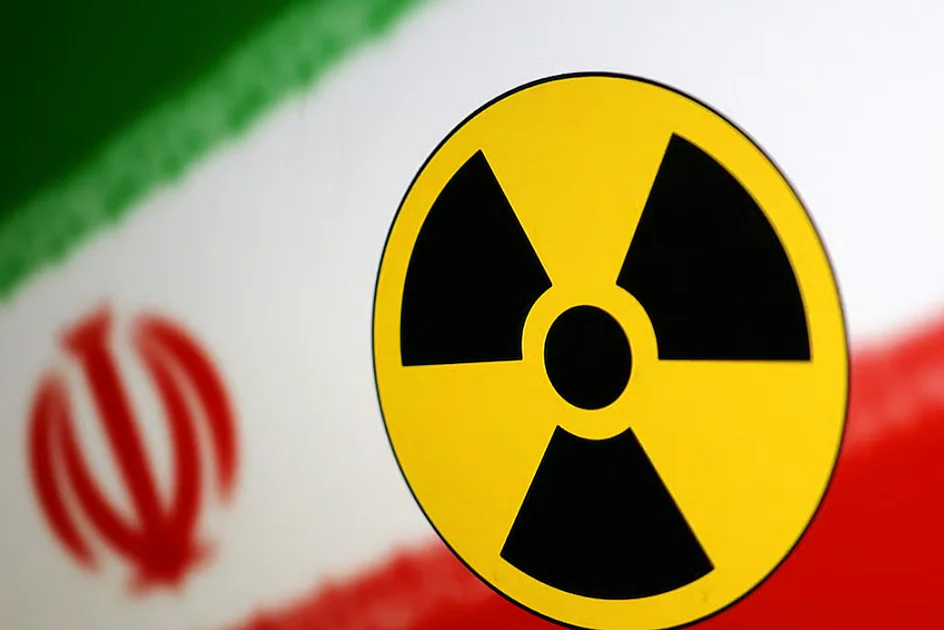
    Diplomatic channels between the United States and Iran show signs of reactivation as both nations demonstrate willingness to resume negotiations concerning Tehran’s nuclear program. According to a foreign ministry official speaking on Monday, Iranian authorities are currently evaluating the conditions for reengaging in dialogue with American representatives. This development emerges against a backdrop of escalating regional tensions, amplified by a substantial US naval presence near Iranian territorial waters following last month’s violent suppression of anti-government protests—the most severe domestic unrest since Iran’s 1979 revolution.

    Multiple sources indicate that US Special Envoy Steve Witkoff and Iranian Foreign Minister Abbas Araghchi may convene in Turkey within coming days, with Turkish officials reportedly facilitating de-escalation efforts. The potential meeting represents a significant diplomatic opening amid heightened military posturing from both sides. President Donald Trump, who previously abstained from direct intervention during Iran’s domestic crackdown, has subsequently intensified pressure on Tehran through both military deployments and demands for nuclear concessions.

    The negotiation framework remains contentious, with Washington historically insisting on three primary conditions: complete cessation of uranium enrichment, limitations on ballistic missile development, and termination of support for regional proxy forces. Iranian officials have consistently rejected these demands as violations of national sovereignty, though sources suggest Tehran might demonstrate flexibility regarding enrichment activities. Specifically, Iranian officials indicate readiness to transfer 400 kilograms of highly enriched uranium abroad and potentially accept zero enrichment under a consortium arrangement, provided the United States removes preconditions and reduces military assets near Iran’s borders.

    Satellite imagery analysis reveals preliminary reconstruction efforts at nuclear facilities in Isfahan and Natanz previously damaged during joint US-Israeli airstrikes in June last year. While new roofing appears on two destroyed structures, no comprehensive rebuilding is evident. The International Atomic Energy Agency continues seeking clarification regarding Iran’s current highly enriched uranium stockpiles, with Western nations expressing concern about potential weapons development—a claim Tehran consistently denies, maintaining its nuclear program serves exclusively peaceful purposes.

    The diplomatic impasse, stalled since May 2023 after five inconclusive negotiation rounds, centers on Iran’s insistence on maintaining domestic enrichment capabilities and retaining existing uranium stockpiles. Iranian sources suggest a potential compromise involving uranium shipment abroad and temporary enrichment pause in exchange for sanctions relief, indicating that ballistic missile programs rather than nuclear activities presently constitute the more significant negotiation obstacle.