博客

  • Saudi Arabia’s last major oil route comes under Houthi pressure

    Saudi Arabia’s last major oil route comes under Houthi pressure

    In a significant escalation of maritime hostilities against Saudi Arabia, the Houthi movement announced Wednesday it had launched ballistic missiles targeting the Saudi-flagged oil tanker NCC Wafaa off the coast of Yanbu, Saudi Arabia’s key northern Red Sea export hub. This assault marks the northernmost attack the Yemeni militant group has carried out since it declared a full blockade of Saudi shipping on July 22, a strategic shift that analysts warn could amplify economic pressure on Riyadh and disrupt critical global trade lanes.

    Prior to this strike, Houthi attacks on maritime traffic were almost entirely concentrated off Yemen’s own coast, spanning the southern Red Sea and Gulf of Aden. The group claims the NCC Wafaa violated blockade terms and ignored multiple pre-strike warnings before coming under fire.

    The attack comes amid a wider regional crisis triggered by the closure of the Strait of Hormuz earlier this year, which forced Saudi Arabia to reroute the vast majority of its oil exports through the Bab al-Mandab strait and Red Sea, en route to the Suez Canal for delivery to its primary Asian market. Ibrahim Jalal, a prominent Yemen-based analyst, framed the northern strike as a deliberate attempt to close off this alternative export corridor that Riyadh has become increasingly dependent on.

    Jalal outlined two core drivers behind the Houthi’s northward expansion: externally, the move bolsters Iran’s bargaining power in negotiations surrounding the Strait of Hormuz standoff; internally, it aims to reassert the group’s coercive leverage over the Saudi government.

    Maritime security analysts warn the situation has reached its most severe point since the crisis began. Matthew Wright, an analyst at leading ship-tracking firm Kpler, noted this week that threats to global crude trade have never been higher since the Houthi blockade was implemented. To date, the Houthis claim to have struck eight commercial tankers since July 22: five Saudi-flagged vessels and one Indian-flagged tanker that sank near Bab al-Mandab on August 4. Only four of these strikes have been independently verified by the United Kingdom Maritime Trade Operations Centre (UKMTO), the global authoritative body for maritime security incident reporting, and Saudi government officials have yet to publicly confirm any of the attacks.

    Houthi military spokesperson Yahya Saree claimed on August 5 that at least 29 Saudi commercial vessels have already diverted away from Bab al-Mandab in the first two weeks of the blockade. Framing the campaign as “blockade for blockade”, Saree reiterated the group’s commitment to matching any Saudi escalation with proportional counteraction.

    Salah Ali Salah, a security researcher at the Sanaa Centre, warned that the Houthi movement remains on a clear escalatory trajectory, and has not yet deployed the full scope of its maritime strike capabilities against Saudi shipping. As the threat grows, shipping operators are adapting in uneven ways: Bloomberg reports that while some Saudi tankers have chosen to take the far longer route around the Cape of Good Hope in southern Africa (six vessels took this alternative route this week alone), others have disabled their onboard transponders to cross Bab al-Mandab undetected.

    The strategic importance of this waterway can hardly be overstated: Saudi oil shipments typically make up roughly 66 percent of all commercial traffic passing through Bab al-Mandab, and the Red Sea as a whole carries 10 to 12 percent of all global traded goods.

    Ryan Bohl, senior Middle East and North Africa analyst at global risk intelligence firm RANE, noted that it is unlikely the Houthis can fully block all commercial traffic in the northern Red Sea. Instead, their strategy is to establish themselves as a credible persistent threat to shipping near Egypt and the Suez Canal, forcing Saudi shipping firms to adopt costly risk-mitigation measures that cut into their bottom line. These measures include disabling transponders, paying substantial hazard pay to crew members, and absorbing the full cost of war risk insurance for all transits.

    Rerouting around the Cape of Good Hope also introduces major logistical hurdles: tankers sailing for Asia must still pass through the Suez Canal to reach Yanbu, adding a minimum of four weeks to total voyage time. Furthermore, the Suez Canal’s limited depth restrictions prevent fully loaded Very Large Crude Carriers (VLCCs) – the standard vessel for Saudi crude exports, which carry roughly 2 million barrels of oil – from transiting fully loaded. Instead, Saudi exporters must use smaller Suezmax vessels (with 1 million barrel capacity) or sail VLCCs partially loaded, drastically reducing export efficiency. Bohl explained that this means more voyages are required to deliver the same total volume of crude, adding approximately $1.6 million in extra fuel costs plus a $1 million Suez Canal toll per transit.

    Salah emphasized that the core challenge for Saudi Arabia is not simply finding an alternative route for exports, but finding one that can match the scale, cost efficiency, and reliability of its pre-crisis export network. Partial workarounds do exist: the Egyptian Sumed pipeline allows exporters to offload part of a VLCC’s cargo in deep water off Egypt’s northern coast, transit the Suez Canal with a reduced load, then reload the cargo onto the same vessel on the other side, partially offsetting the capacity losses from Suez restrictions. Saudi Arabia also uses its domestic East-West pipeline to move crude from the Persian Gulf across the country to Red Sea export terminals, and Bloomberg data shows that export volumes out of Yanbu have tripled since the Strait of Hormuz closed.

    Some analysts warn the strike on the NCC Wafaa could signal a coming expansion of Houthi targeting beyond oil tankers to include non-tanker commercial vessels and import cargo, a shift that would set a dangerous precedent for wider regional maritime disruption. Bohl, however, argues that such a move would run counter to the Houthis’ own strategic interests, as it would likely trigger a major new Saudi offensive against Houthi-held territory in Yemen, specifically targeting Hodeidah – the group’s own critical Red Sea supply lifeline.

    To date, the Houthi blockade of Bab al-Mandab has had a less severe impact on Saudi oil exports than the March 4 closure of the Strait of Hormuz. After the Hormuz closure, Riyadh rapidly shifted almost all its export capacity to Red Sea terminals, leading to an eightfold increase in traffic through Bab al-Mandab, according to Kpler data. On August 1, Yanbu recorded one of its busiest single days on record, with five supertankers simultaneously positioned for loading.

    Despite the escalating threat, Saudi state oil giant Aramco reported a 33 percent surge in second-quarter profits this week, driven by elevated global energy prices tied to the regional crisis and the efficiency of Saudi Arabia’s pipeline network for rerouting exports. Aramco CEO Amin Nasser also confirmed that previous Houthi attacks on Aramco infrastructure in July had no material impact on the company’s operations or financial performance.

    This week, emerging hopes of an Iran-Oman agreement to reopen the Strait of Hormuz led Saudi Arabia to cut its official crude price for Asian buyers by between 50 cents and $2 per barrel, a signal that Riyadh does not currently view the Houthi Red Sea blockade as an existential threat to its export capacity. Still, Salah noted that even a reopening of the Strait of Hormuz would not resolve the underlying Houthi threat to Red Sea shipping, leaving continued uncertainty for global energy markets.

  • Japan’s remarks trigger alarm

    Japan’s remarks trigger alarm

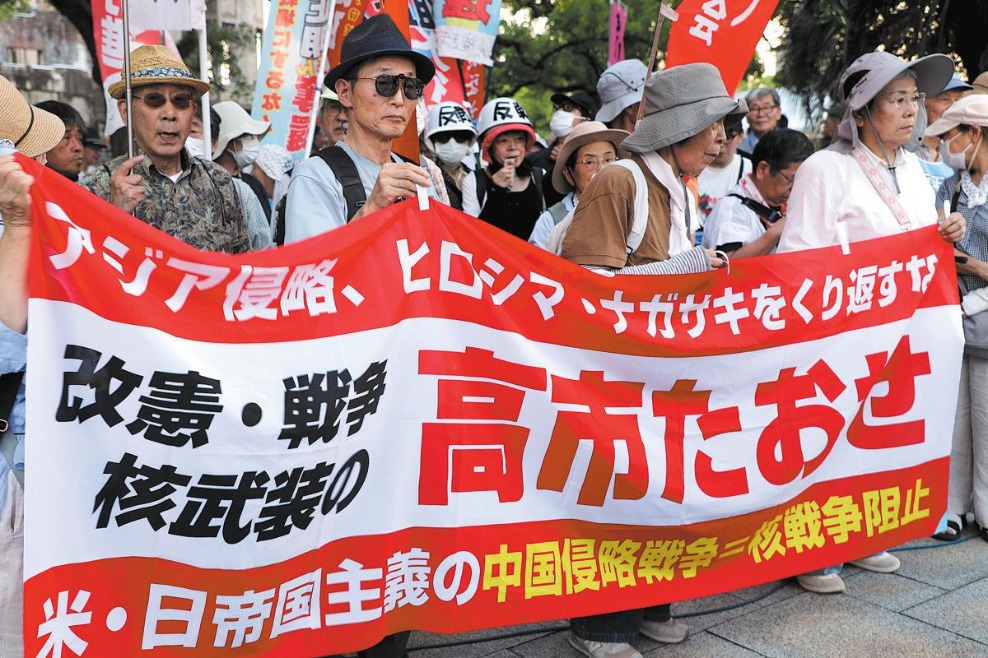
    As Japan gathered in Hiroshima on Thursday to mark 81 years since the 1945 U.S. atomic bombing, the somber commemoration was overshadowed by growing public and global pushback against controversial pro-nuclear remarks from senior Japanese government officials.

    Held at Hiroshima Peace Memorial Park, the annual memorial brought renewed attention to a dramatic shift in Japan’s long-standing post-war security posture, which has been anchored since 1971 by the Three Non-Nuclear Principles — a framework that bans Japan from possessing, manufacturing, or allowing the entry of nuclear weapons into its territory. In recent months, top ruling officials have broken decades of taboo to openly call for unrestricted debate over revising these principles, triggering widespread alarm.

    Japanese Prime Minister Sanae Takaichi, who attended the ceremony, struck a familiar public note, stating that as the only nation to have suffered wartime nuclear attacks, Japan bears a unique mission to work toward global nuclear disarmament. But when pressed by reporters on whether the Three Non-Nuclear Principles would be revised during this year’s update of the country’s three core national security documents, Takaichi refused to give a clear denial, telling *The Asahi Shimbun* that it would be inappropriate to prejudge the final wording of the documents. Neither Takaichi nor Hiroshima Mayor Kazumi Matsui — who used his address to highlight the catastrophic human cost of nuclear weapons and called for multilateral nonproliferation efforts — acknowledged the full historical context of the 1945 bombings that ended World War II.

    Political analysts say the incremental string of provocative nuclear-related statements from Japanese officials is a deliberate strategy to test public opinion and lay groundwork for abandoning the country’s post-war pacifist security commitments. “The government is gradually reshaping Japan’s deep-rooted domestic anti-nuclear sentiment through these small, repeated shifts in rhetoric,” explained Hiroshi Shiratori, a political science professor at Tokyo’s Hosei University. Last month, Japanese Defense Minister Shinjiro Koizumi went as far as stating that Japan should debate all aspects of nuclear policy “without taboos,” including a rewrite of the decades-old Non-Nuclear Principles. Late last year, a senior security and defense advisor to the Prime Minister’s Office publicly stated Japan should acquire its own nuclear weapons.

    Since taking office in October last year, the Takaichi administration has already advanced revisions to Japan’s core national security documents and repeatedly raised the prospect of rolling back the Three Non-Nuclear Principles’ “no introduction” rule. Proponents of the change argue it would strengthen the credibility of the U.S. nuclear “extended deterrence” arrangement, under which Washington commits to defending Japan using its full military arsenal, including nuclear weapons. But critics warn the shift puts Japan at greater, not reduced, risk. “Japan-U.S. consultations on nuclear deterrence do not lower Japan’s risk of nuclear attack,” said Ukeru Magosaki, a former Japanese foreign ministry official and current director of the Tokyo-based East Asian Community Institute. “Instead, these talks expand Washington’s nuclear strike options against other nuclear-armed states, which makes Japan far more likely to become a target itself.”

    The Takaichi administration’s increasingly assertive pro-nuclear security agenda stands in stark opposition to the strong anti-nuclear and anti-war sentiment held by the majority of the Japanese public. *The Tokyo Shimbun* reported that since Takaichi took office, at least 128 local assemblies across 36 of Japan’s prefectures have submitted formal written petitions to the national parliament urging the government to preserve the Three Non-Nuclear Principles — a record high for such advocacy. Magosaki added that upholding the principles is not just a symbolic commitment: it is the foundation of Japan’s own security, because a non-nuclear Japan poses no threat to neighboring countries, strengthening regional stability.

    The shift has also drawn sharp criticism from China, which condemned Japanese right-wing forces for exploiting the country’s status as a nuclear attack victim to gain international sympathy while advancing plans to acquire nuclear capabilities. “Japanese right-wing forces have long distorted historical fact and deliberately downplayed Japan’s wartime invasion, which killed and wounded tens of millions of people in neighboring Asian countries, all to escape accountability for their war crimes,” said Chinese Foreign Ministry spokesperson Lin Jian in an online statement Thursday. Lin added that the Japanese government has recently accelerated large-scale military buildup, sought enhanced nuclear protection from the U.S., and actively worked to break free from the constraints of the Three Non-Nuclear Principles. China urged Tokyo to honor its binding nuclear nonproliferation obligations under international law and abandon its moves to erode post-war security commitments.

    Shiratori added that the Takaichi administration’s broader policy shifts — including easing restrictions on arms exports under Japan’s Three Principles on Transfer of Defense Equipment and Technology — make clear that the current government no longer prioritizes Japan’s long-standing pacifist principles, signaling a historic break from the post-war order that has shaped East Asia for nearly 80 years.

  • Paul Curtis earns comparison to AFL legends after four-goal performance

    Paul Curtis earns comparison to AFL legends after four-goal performance

    On Thursday night at Melbourne’s Marvel Stadium, young North Melbourne forward Paul Curtis delivered a career-defining performance that will live long in the memory of Kangaroos supporters, producing a mark widely tipped as a contender for Mark of the Year, slotting four goals, and spearheading his side to a convincing 23-point victory over the Western Bulldogs.

    North Melbourne’s senior coach Alastair Clarkson could not hide his admiration for the 20-year-old’s breakout display, with only one playful criticism: the club only has one Paul Curtis. Curtis was everywhere on the ground, turning the game with his electrifying movement, and his standout individual play didn’t end with his four goals. His spectacular soaring mark over Bulldogs defender Michael Sellwood immediately drew gasps from the crowd and has dominated early conversations for the league’s annual Mark of the Year award.

    In a post-match press conference, Clarkson compared Curtis’ versatile game-changing ability to some of the biggest names in Australian Football League history, noting that the young talent has the rare flexibility to dominate both high up the ground and deep inside the forward 50. “When you have a special talent like this, you want to use him everywhere,” Clarkson explained. “If the Bulldogs had two Marcus Bontempellis, they’d play him both forward and in the midfield, just as Richmond did with Dustin Martin for years. We’ve already seen it with players like Kozzie Pickett, who made the jump from forward to elite midfield, and Zak Butters, who followed the same path to become one of the league’s best on-ballers. I expect Curtis will spend most of his career forward, but we saw tonight he has all the tools to go into the middle and produce magic when we need him to.”

    The win became even more impressive for North Melbourne after key defender Aidan Corr was forced off the ground halfway through the second quarter with a sudden back injury. Corr, who had been tasked with containing Bulldogs star spearhead Aaron Naughton, suffered a back spasm after an awkward landing during a marking contest. Clarkson confirmed that the injury is not believed to be serious, but the spasm left Corr unable to continue, as back spasms severely limit mobility at the elite level. “You ever had a sore back? They’re brutal,” Clarkson said. “It wasn’t critical long-term, but it never settled enough for him to get back out there. And when you’re going up against a player as big and strong as Naughton, you need every part of your body working 100%. It was really pleasing to see the group dig in when we went a man down and still find a way to get the win.”

    For the Western Bulldogs, the damaging loss has dealt a major blow to their already fragile finals hopes, with Bulldogs coach Bevo O’Connor offering no excuses for his side’s underperformance.

  • Airbnb grows bookings in key Aussie, UK markets, gains huge traction in India and Japan

    Airbnb grows bookings in key Aussie, UK markets, gains huge traction in India and Japan

    Against a backdrop of sweeping regulatory restrictions rolled out by state and local governments across Australia, home-sharing platform Airbnb has delivered surprisingly robust quarterly financial results, with domestic bookings and overall revenue both climbing well above expectations. The company published its second-quarter 2025 earnings to the Nasdaq exchange during Australian trading hours on Friday, reporting that strong, sustained global travel demand drove a 17% year-over-year rise in total revenue over the three-month period. Gross booking value, a key metric for platform-based hospitality services, also grew 12% to mark a 16% annual increase, outpacing many analysts’ projections.

    Beyond Australia, the platform’s expansion across key Asian markets has outperformed expectations. India recorded a dramatic 60% year-over-year surge in domestic bookings, while Japanese domestic bookings and overall Asia-Pacific regional growth both hit double-digit increases in the “high teens” percentage range, cementing Airbnb’s growing foothold in the fast-growing Asian travel market. “One of the most encouraging trends in Q2 was that we saw year-over-year growth accelerate not just in our expansion markets but in many of our largest core markets as well,” the company’s earnings report noted. The report added that net origin nights booked — a metric that counts total booked nights minus cancellations to measure where travelers originate, rather than their destination — grew at an accelerated pace in all of Airbnb’s four largest core markets: the United States, France, the United Kingdom, and Australia. The platform attributed this widespread growth to ongoing product innovation that continues to draw new users to the service.

    The strong domestic growth in Australia comes as no fewer than four state and local jurisdictions have rolled out new restrictions or crackdowns on short-term rental listings in a bid to free up more long-term housing for local residents struggling with sky-high rental prices and tight vacancy rates. In New South Wales, the state government already enforces a 180-day annual cap on short-term rentals, and the City of Sydney is currently investigating a potential ban on short-term stays in specific suburbs hit by critically low long-term rental vacancy rates. Councillors approved a research motion in April to develop a formal vacancy rate threshold that would trigger the local restrictions.

    In Victoria, the state government implemented a 7.5% levy on all short-term rental revenues starting January 1, 2025, projecting the new tax would raise approximately $75 million in its first full year. Final figures for the first year show the levy far outpaced projections, bringing in $85.8 million — $10 million more than official estimates. In Byron Bay, the local council introduced a stricter 60-day annual cap for unhosted short-term rental properties in 2024, a move Airbnb labeled as unprecedented. Independent research commissioned by Airbnb and using official state government data found that one year after the cap came into force, Byron Bay actually had fewer available long-term rentals than before the policy was implemented, and local long-term rents had hit a new all-time record high.

    In Queensland, Brisbane City councillors scrapped a controversial plan that would have effectively banned Airbnb and competing short-term rental platforms from low-density residential suburbs just hours before the federal 2025 budget was handed down in May. Unlike New South Wales and Victoria, Queensland has not adopted any statewide caps or taxes on short-term rentals.

    Looking ahead, Airbnb is already preparing for the 2026 FIFA World Cup in North America, launching an early host recruitment drive across 16 major host cities that has already signed up 150,000 new homeowners willing to list their properties for the massive international sporting event. The company’s latest earnings confirm that despite growing regulatory pressure across multiple mature markets, the short-term rental model continues to gain popularity with both hosts and travelers, defying predictions that restrictions would erode the platform’s growth.

  • Trump again tries to limit US birthright citizenship with new executive orders

    Trump again tries to limit US birthright citizenship with new executive orders

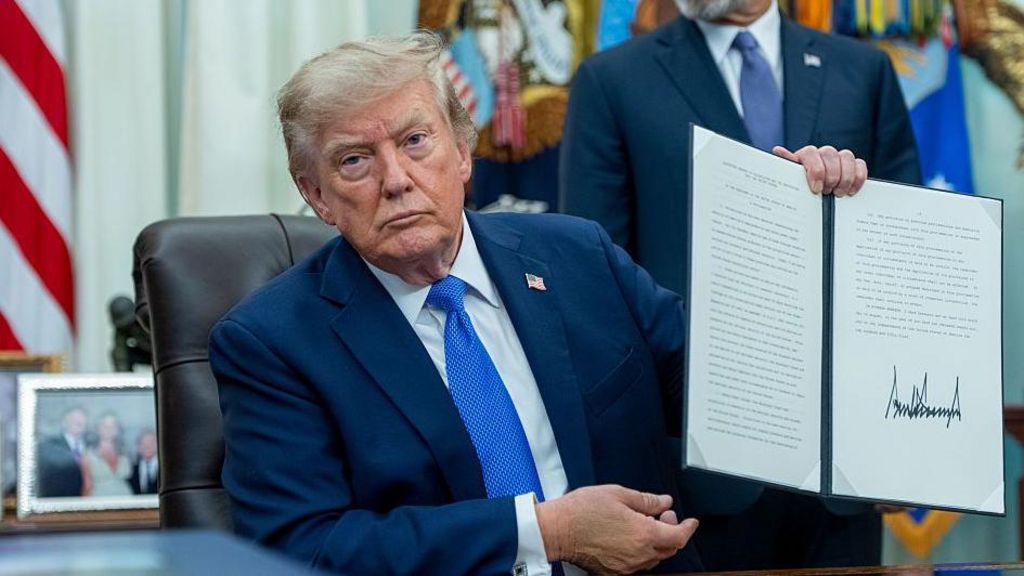
    Weeks after the U.S. Supreme Court blocked his first sweeping effort to eliminate longstanding birthright citizenship protections, former and current President Donald Trump has launched a new push to roll back the 150-year-old policy, signing two new executive actions focused on narrowing eligibility and cracking down on the controversial practice of birth tourism. The Thursday signing, held in the Oval Office, comes as the Trump administration continues its aggressive campaign to restrict immigration and rewrite the rules of citizenship for people born on U.S. soil.

    The first of the two orders expands existing legal carve-outs that deny birthright citizenship to children born in the U.S. to non-citizen parents. Under the new framework, any child born in the U.S. to two non-citizen parents will not receive automatic citizenship if one parent falls into specific high-risk categories: members of foreign terrorist organizations, employees of foreign governments, individuals who have previously attempted to obtain U.S. citizenship through fraudulent means, or people residing in U.S. territories where citizenship is not already mandated by federal statute. Currently, birthright citizenship for people born in U.S. territories including Puerto Rico is explicitly codified in federal law.

    The second executive order targets birth tourism, the practice where pregnant foreign nationals travel to the U.S. specifically to give birth, granting their children automatic U.S. citizenship under the longstanding interpretation of the 14th Amendment. Speaking at the signing, Trump defended the new restrictions, arguing that reform of birthright citizenship should have been enacted decades ago, and criticized the Supreme Court’s June ruling that struck down his earlier 2025 effort to end the policy entirely. He called the high court’s decision a “bad decision, very unfair decision” that harmed the U.S., noting that his administration is now pursuing its goals through a revised legal approach. “Our country suffers because of it, and we’re ending it in a different way,” Trump said.

    The text of the first executive order frames the new restrictions as a necessary safeguard against exploitation of U.S. immigration policy. “My Administration has guarded against the risks posed by malign foreign actors who attempt to swindle American citizens by taking advantage of the generosity of our Nation,” the order reads.

    Trump and senior White House officials have repeatedly targeted birth tourism in public remarks, repeatedly claiming that adversarial nations including Russia and China encourage the practice to let their citizens infiltrate the U.S. Trump claimed Thursday that hundreds of thousands of children are born in the U.S. through birth tourism each year, a figure that contradicts independent research from nonpartisan policy analysts. The nonpartisan Migration Policy Institute (MPI) estimates that even the most generous census-based calculations put the annual number of births from birth tourism between just 22,000 and 26,000. Government data analyzed by MPI puts the 2024 number even lower, at roughly 9,600 births to foreign women listing non-U.S. residential addresses.

    White House Deputy Chief of Staff for Policy and Homeland Security Advisor Stephen Miller, a key architect of the Trump administration’s restrictive immigration policies, joined the president for the announcement, arguing that birth tourism allows foreign visitors to exploit U.S. benefits systems. “The idea is that people come here pretending to be a tourist, pretending to be a visitor. But the real reason they’re here is to have a child, to make that child an automatic citizen, leave our country and then have a U.S. citizen child,” Miller said, adding that these children would then gain access to public welfare benefits, voting rights, and “all the other rights and privileges that belong solely to Americans.” Miller also asserted that the president holds clear legal authority to restrict birth tourism under the Immigration and Nationality Act, which grants the sitting president power to set entry exceptions and limitations for people seeking to enter the U.S.

    This latest effort follows a high-profile legal battle over Trump’s first executive order on birthright citizenship, which he signed just days into his 2025 second term. That order sought to end the birthright citizenship protections guaranteed by the 14th Amendment to the U.S. Constitution. Legal challenges quickly made their way to the Supreme Court, which ruled in June that Trump’s 2025 policy was unconstitutional, leaving the existing birthright citizenship framework intact. The ruling represented a major legal setback for the Trump administration’s broader goal of restricting immigration and reshaping citizenship eligibility for people entering or born in the U.S.

  • India is a nation of walkers – but its cities forgot them

    India is a nation of walkers – but its cities forgot them

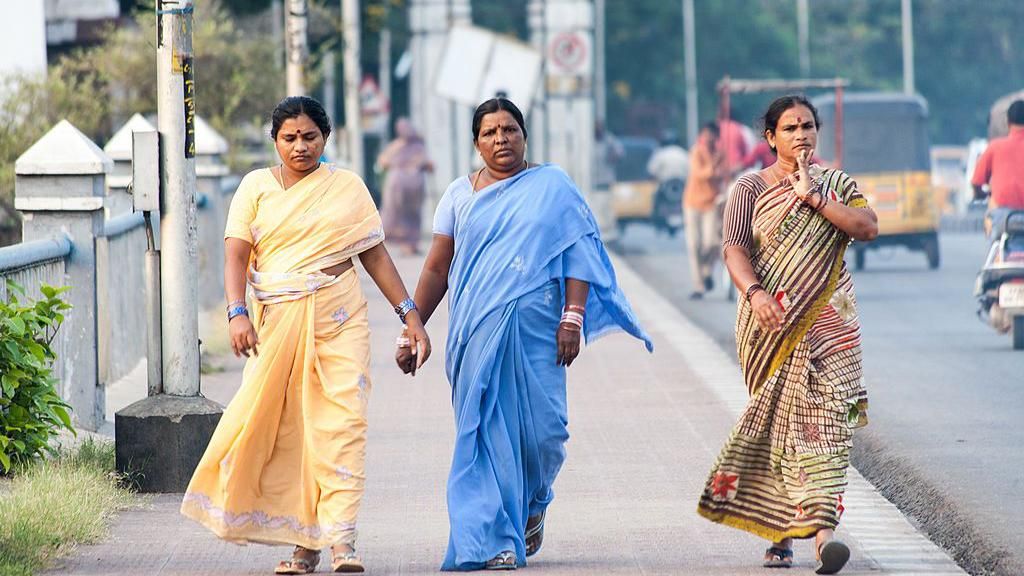
    For generations, navigating Indian cities on foot has never been a straightforward, guaranteed right—it has been a daily battle through a chaotic obstacle course. This personal experience, shared by millions across the country, frames a long-simmering crisis of urban planning that has only recently been thrust into the national spotlight by a landmark Supreme Court ruling.

    Growing up in Kolkata, the author navigated sidewalks swallowed entirely by rows of street vendors. A move to Delhi revealed a road network built almost exclusively for private motor vehicles. Now based in Gurugram, the pattern holds: footpaths are often reduced to rubble heaps and garbage dumps, blocked abruptly by parked cars or construction work, or built so high above street level that they are unusable for most people. It was against this backdrop that India’s Supreme Court ruled in June that the right to walk safely on designated footpaths qualifies as a fundamental right—a decision that felt less like overreach and more like common sense arriving 40 years too late.

    What makes this systemic neglect particularly striking is that India remains first and foremost a nation of walkers. Census-based estimates put the number of people who commute to work on foot at roughly 45 million, compared to just 5.4 million who travel in private cars, jeeps, or vans. Nearly one in three urban workers walks to their job, and every public transit journey—from bus to metro—begins and ends on foot. When including school trips, daily errands, and shopping runs, walking accounts for the majority of urban mobility: a 2019 survey of major Indian cities found that 63% of all daily journeys are made on foot, making pedestrians the single largest group of road users in the country.

    Most of these pedestrians are what researchers term “captive walkers”: people who do not choose to walk out of preference, but because they cannot afford any other mode of transport. Women, low-income workers, and young people are disproportionately dependent on walking, yet this group—who contribute the least to traffic congestion and urban air pollution—faces the highest risk of harm on India’s roads.

    The scale of unsafe infrastructure for pedestrians is sobering. Even when formal footpaths exist, they are often cracked, overly narrow, and completely inaccessible to older adults, children, and people with disabilities. They are routinely blocked by parked motorcycles, occupied by informal encroachments, or dug up for utility work with no temporary alternative route. Faded, poorly maintained zebra crossings are largely ignored by motorists, and elevated flyovers speed up car traffic while forcing pedestrians to take dangerous, circuitous detours at ground level.

    A landmark 2011 study of six major Indian cities confirmed what pedestrians have long known: India’s streets systematically fail walkers due to consistently poor and unsafe infrastructure. The *Walkability in Indian Cities* report, published by the Clean Air Initiative for Asian Cities (CAI-Asia), awarded surveyed cities a median walkability score of just 47 out of 100. The worst conditions were found around public transport hubs—ironically, the very locations where most walking trips begin and end.

    As Geetam Tiwari, a leading transport scholar at the Indian Institute of Technology (IIT) Delhi, puts it: pedestrians have been “pushed to the margins of the road networks”, forcing them to compete for limited space alongside fast-moving motor vehicles. This neglect has a deadly human cost. Official data records pedestrians as accounting for roughly one-fifth of all road deaths in India, but independent research cited by Tiwari puts the actual share closer to 30% to 40%. Pedestrians are already the second-largest group of road accident fatalities, behind only two-wheeler riders, and in major metro areas including Delhi and Mumbai, they make up more than half of all annual road deaths. A World Bank analysis estimates that road crashes cost India between 3% and 5% of its GDP every year, through lost productivity, emergency healthcare costs, and permanent disability.

    The Supreme Court case that led to the ruling grew out of an unthinkable tragedy: a five-year-old boy was crushed by a truck while walking to school alongside his father. In response, the court delivered an unusually impassioned judgment. “Walking is the simplest of the simple human activity, inextricably connected to life,” wrote Justice PS Narasimha. He added that the state carries a core duty to provide safe footpaths as part of its road network, declaring: “The fundamental right to walk on demarcated footpaths shall override the privilege of a motorised vehicle.”

    The judgment directly challenges decades of conventional urban planning in India, where progress has long been measured by the number of kilometers of new expressways, flyovers, and elevated corridors built. For generations, streets have been engineered to move motor vehicles as quickly as possible, while the pedestrian— a role every single citizen shares—has been largely erased from urban planning priorities. “People know about the latest cars, but walking has become invisible,” explains Rishi Aggarwal, a Mumbai-based activist who has spent more than a decade working to shift public and policy mindsets.

    Through his advocacy group the Walking Project, Aggarwal organizes community walks and public discussions to encourage city residents to re-examine the neglected spaces around them: broken sidewalks, blocked crossings, and unsafe junctions that have become normalized over time. “When people become apathetic, they stop observing the street,” he says. In Mumbai alone, an estimated 15 million walking trips happen every day, and Aggarwal argues that both the footpaths and the millions of dependent pedestrians have been rendered invisible by car-centric planning.

    For Rahul Goel, a transportation researcher at IIT Delhi, the root of the crisis lies in broken governance. “Are footpaths maintained and cleaned? Does the city ensure they aren’t encroached upon?” he asks, noting that even in Delhi where many roads are formally built with footpaths, poor upkeep and mismanagement leave most unusable. Poor design exacerbates the problem: cars parked perpendicular to the curb often block or conceal sidewalks, and parking directly on footpaths is a common sight across the country. Many footpaths are too narrow to accommodate peak pedestrian volumes, others are built too high above the road for people with limited mobility to access, and many end abruptly, forcing walkers out onto busy vehicle carriageways. “If the footpath is discontinuous, it’s simply more convenient to keep walking on the road,” Goel notes.

    The deeper issue, he argues, is a long-standing misalignment of policy priorities. “Urban transport governance is still centred on moving vehicles. Reducing congestion and maximising road space for motor traffic take precedence over pedestrians,” he says. Civic agencies are often reluctant to widen footpaths because they view existing vehicle lane space as untouchable, a mindset reinforced by public discourse that frames traffic jams as the top urban mobility crisis. Traffic congestion dominates newspaper headlines and social media conversation, pushing authorities to prioritize keeping vehicles moving at all costs. In Delhi, for example, many mid-block pedestrian crossings have been removed and replaced with U-turns to cut vehicle stoppages, forcing pedestrians to use narrow, often poorly maintained foot overbridges to cross the road. “People don’t just need to walk along a road,” says Goel. “They need to be able to cross it safely too.”

    This systemic bias has created stark urban inequality. In Gurugram, a high-speed arterial road cuts through dense residential neighborhoods with almost no safe pedestrian crossings, forcing domestic workers, daily wage laborers, and other low-income pedestrians to dodge speeding traffic. Dozens were killed before authorities finally approved construction of footbridges in response to public outcry. Across Indian cities, those who cannot afford private motor vehicles are forced to risk their lives on roads that barely accommodate walking, while car owners claim an ever-growing share of public road space. Walking has increasingly been rebranded as a leisure activity, confined to gated residential communities, urban parks, or gym treadmills—a shift that carries major public health consequences at a time when India is grappling with rising rates of obesity and lifestyle-related disease.

    It is clear that transforming walking from a fundamental right on paper to a safe daily reality will require far more than a single court order. “Walking as a fundamental right should lead to pedestrian-friendly cities, not just pedestrian-friendly streets,” Tiwari says. That means a complete rethink of how Indian cities are designed. Many high-income countries have adopted default urban speed limits of 30km/h (20mph) to protect pedestrians, a policy that requires redesigning streets to narrow traffic lanes, alter road surfaces, and add other traffic-calming measures. Tiwari also argues that walking infrastructure needs to accommodate more than just movement: it should include space for street vendors, shaded rest spots for older adults, and even small play areas for children.

    In its judgment, the Supreme Court also highlighted the unique cultural and historical role of walking in India, noting that it is far more than just a way to get from one place to another. It can be “necessity for the poor, meditation for some, an act of resistance for others and a path to discovery”. The court also noted that walking was central to India’s freedom struggle—a point echoed by writer Sumana Roy, who points out that India’s modern political history has often unfolded on foot, from Mahatma Gandhi’s iconic Salt March to Dandi to Subhas Chandra Bose’s “Delhi Chalo” movement and countless protest marches that shaped the nation.

    For decades, Indian cities have centered their planning around a single question: how do we move more vehicles, faster? The Supreme Court’s landmark ruling has forced urban leaders and residents to ask a far simpler, more fundamental question: how do we let people walk safely? For millions of captive pedestrians across the country, the ask is not extravagant: just an unbroken, usable footpath that can carry them from one end of the street to the other, without risking their lives.

  • Where is Jackie? Beloved live cam eagle in critical condition

    Where is Jackie? Beloved live cam eagle in critical condition

    Jackie, the beloved bald eagle that captured the hearts of millions of nature lovers across the globe as the star of a popular California nest live-stream, is now fighting for her health after being diagnosed with a serious case of anemia. For years, the 24/7 live camera focused on Jackie’s coastal nest has allowed armchair bird watchers and wildlife enthusiasts from every continent to follow her daily life, from mating rituals to hatching and raising new eaglets, building an enormous and passionate global fan base. The unexpected news of her critical health condition has sparked widespread concern among her many followers, who have tuned in for years to watch her navigate the challenges of wild life from the comfort of their screens. Wildlife rehabilitators that have cared for Jackie over the years are now working around the clock to stabilize her condition and identify the underlying cause of her anemia, with updates shared regularly with the concerned online community that has grown around her story. Many fans have taken to social media to share their well wishes and express how much Jackie’s presence has meant to them over the years, turning this local wildlife story into a global conversation about human connection to wild animals.

  • Israeli bulldozers uproot West Bank olive trees ahead of harvest season

    Israeli bulldozers uproot West Bank olive trees ahead of harvest season

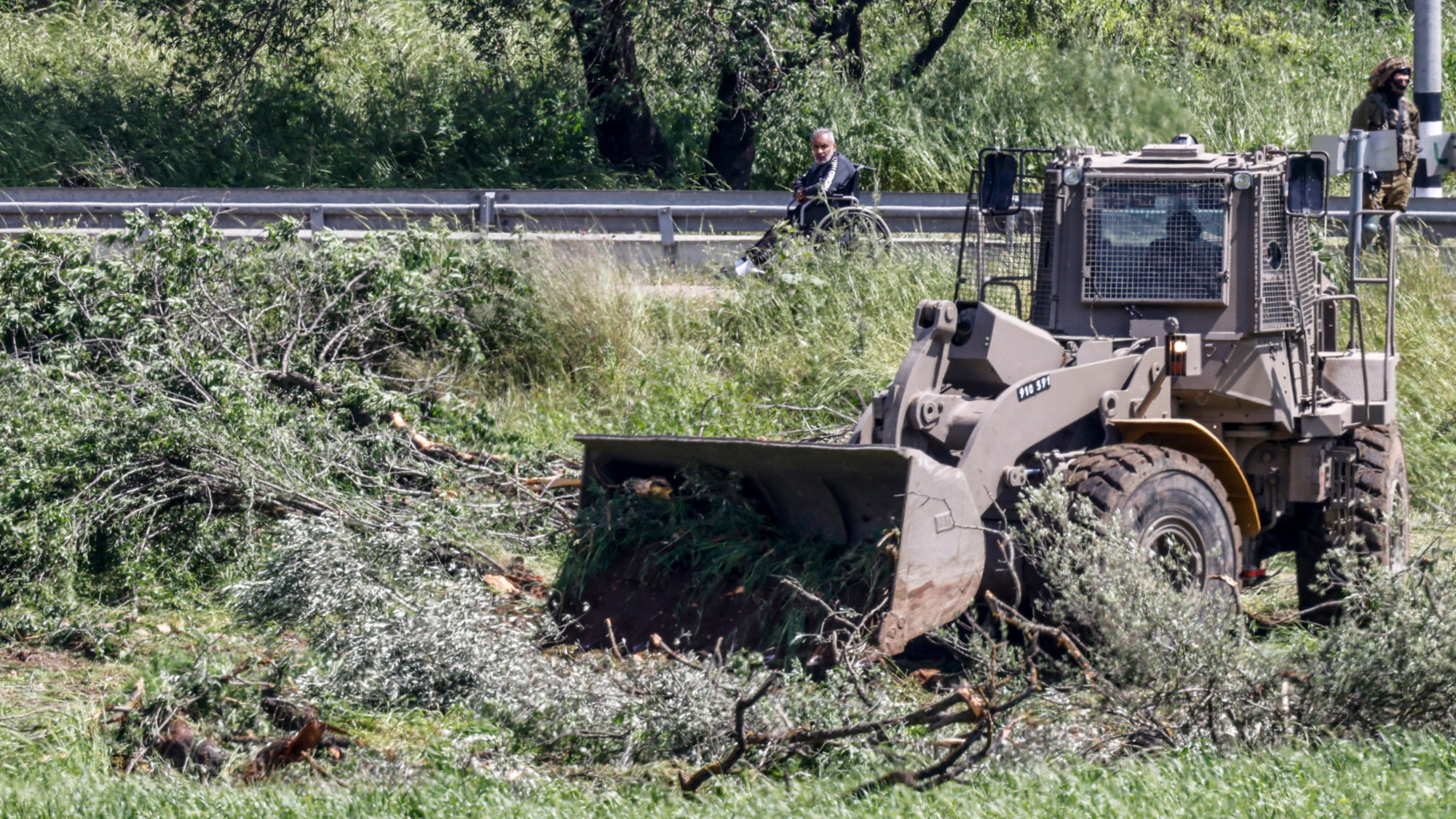
    On a Wednesday just weeks before Palestinian farmers were set to begin their annual olive harvest, Israeli bulldozers moved into two Palestinian villages near Jenin in the occupied West Bank, felling dozens of olive trees in a continuation of a widespread campaign to uproot cultivated groves across the territory.

    This latest round of destruction targeted agricultural plots in Ajjah and Zububa, two villages located in close proximity to Israel’s controversial separation barrier. For local families who have tended these lands for multiple generations, the destruction has delivered a devastating blow to both their livelihoods and cultural heritage.

    Zaki Jaradat, who leads Zubaba’s Village Council, confirmed that the incident on Wednesday is far from an isolated action. He reported that since the beginning of 2024, Israeli forces have already uprooted more than 2,950 olive trees across more than 300 dunams (nearly 75 acres) of prime Palestinian agricultural land in the area.

    Fuad Yahya Maqalda is one of the dozens of local farmers whose generational landholdings were destroyed in the latest operation. From the rooftop of his home, which overlooks his family’s olive groves, he was forced to watch helplessly as bulldozers cleared the land, unable to reach the site to stop the work.

    “We are unable to do anything,” Maqalda told reporters from Middle East Eye. “We cannot understand the intentions behind this uprooting. The occupation uprooted olive trees that have stood on our land since the time of our grandparents.”

    The timing of the destruction has compounded the grief for affected families, with the annual olive harvest – the most economically important event of the year for thousands of West Bank Palestinian households – mere weeks away. Maqalda detailed the full scope of his own loss: three generational family plots were targeted, with 111 trees destroyed on one plot and an additional 215 cleared from a second. “Every single one of those trees has been removed,” he said.

    Tareq Ighbariya, a spokesperson for the Palestinian Commission Against the Wall and Settlements in Jenin, explained that the actual damage on the ground frequently exceeds the limits set out in formal Israeli military orders authorizing land clearing.

    “Military orders may specify a certain area for tree uprooting or land clearing, but when they are carried out, the affected area is often much larger,” Ighbariya told Middle East Eye. “In some cases, bulldozers enter agricultural land and begin clearing it without any prior military order.”

    The mass clearing in Zububa is part of a broader pattern of encroachment on Palestinian agricultural land across the Jenin governorate. Ighbariya noted that the commission has documented similar destruction across roughly 300 dunams of farmland in recent months, adding that ongoing assessments mean the final count of damaged and cleared land may be even higher than current records show.

    For Palestinian communities in the occupied West Bank, the annual olive harvest holds meaning far beyond economic survival. While the crop provides a critical, steady source of income for thousands of families, it is also deeply woven into Palestinian cultural and social identity, with groves passed from parent to child over centuries.

    In recent years, the lead-up to and during harvest season has brought growing levels of disruption and risk for Palestinian farmers across the territory. Reports have surged of increased restrictions on access to farmland, particularly near Israeli settlements and designated military zones, alongside widespread incidents of settler violence, deliberate vandalism, crop theft, and targeted uprooting of olive groves. For many farming communities, what should be a vital annual harvest has now become a period of significant uncertainty, with families bracing for potential loss of land or attacks as they attempt to tend and collect their crops.

  • Should fans put their phones down at concerts? This K-pop band thinks so

    Should fans put their phones down at concerts? This K-pop band thinks so

    When rising K-pop boy band Cortis kicked off their debut global tour in Incheon, South Korea, on July 18, the five-member group made an opening statement that has divided their fanbase far beyond the packed stadium walls. Dressed in laid-back, street-style fits that leaned into their signature cool, unapologetic energy, one member stepped forward and shouted to the crowd: “Put your phone down.”

    Thousands of screaming fans responded with a sea of glowing phone screens held high, and a second, louder repetition only prompted a small portion of the audience to tuck their devices away. What could read as a lighthearted on-stage bit is actually the core mission of the tour, which bears the name *Put Your Phone Down*. After wrapping its initial stop in Incheon, the tour will travel to major North American cities including New York and Los Angeles before wrapping with a homecoming show in Seoul later this month.

    For Cortis, the message is nothing new: the group has long pushed for fans to trade viewing a show through a six-inch screen for immersive, in-the-moment connection with their performance. The stance, however, has clashed with the deeply ingrained norms of K-pop fan culture, where fan-recorded content functions as a valuable social and community currency.

    The divide is clear even among fans who attended the Incheon shows. For 22-year-old Park Ji-yeon, capturing every second of the performance was non-negotiable. She splurged on a rental of a high-end new smartphone for both days of the concert, motivated by the once-in-a-lifetime nature of the front-row spot she secured. “I don’t know if I’ll ever get this opportunity again,” Park explained in an interview with the BBC. “I usually film concerts because I know a lot of those memories will fade as soon as I leave the venue.”

    Other fans have embraced the group’s call to disconnect. Twenty-five-year-old Kim Ga-eun, who watched the shows from the venue’s amphitheater seating, noted that groups of fans in the standing section put down their phones to dance together, embodying exactly what the tour set out to achieve.

    Cortis, which debuted just over a year ago under BigHit Music — the same label that launched global supergroup BTS — has had a meteoric rise in the entertainment industry. Most of the group’s members are still teenagers, with the oldest, James, only 20 years old. Each of their music videos has racked up millions of views online, and just this past weekend, the group earned a major career milestone with a performance at Chicago’s iconic Lollapalooza music festival. The group’s name itself, derived from the phrase “colour outside the lines,” reflects their ethos of breaking convention — a value that clearly extends to their stance on concert phone use.

    Cortis is far from alone in this push. A growing number of high-profile artists across the globe have pushed for fans to put away their phones during live shows, taking increasingly bold stances. Singers Phoebe Bridgers and Alicia Keys have gone as far as requiring concertgoers to store their devices in sealed lock pouches for the entirety of a performance. In 2023, Welsh rock band Suede’s frontman Brett Anderson made headlines when he climbed over a stage barrier during a Singapore show to grab phones out of fans’ hands. Even Billie Eilish, who has acknowledged that filming helps fans hold onto memories after a show, has gently urged front-row audiences: “Put your phone down, I’m right here.” Back in the K-pop world, Cortis’ labelmates BTS have also made similar requests of their crowds, with member Jungkook once teasing an audience to stop staring at their screens and look at him directly.

    From an artist perspective, the push for phone-free shows centers on the value of live connection. “Interacting with fans is a really important part of performing, so I think they want people to focus more on that than on their phones,” Park said of Cortis’ request.

    But for K-pop fandoms, the practice of filming shows serves a purpose that extends far beyond personal memory. Fancams — close-up, individual clips focused on a single group member — are a cornerstone of online K-pop community life. Once shared, these clips are pored over by fans, who dissect choreography, hunt for tiny, unplanned moments of expression, and repurpose clips into fan-made content that keeps fan communities active long after a tour ends.

    This cultural context explains why Cortis’ repeated requests have left some fans frustrated. Disgruntled comments began circulating online immediately after the tour’s opening day, with many fans pointing to the exorbitant cost of attending live shows. Park, who spent more than 1 million won (roughly $700) to attend both days of the Incheon leg, noted: “I think a lot of fans spent similar amounts of money, so constantly hearing them asking us to put our phones down made some fans even more frustrated.”

    It appears the group heard these fan concerns, and softened their message by the second day of the Incheon run. Kim recalled that the framing shifted noticeably between the two shows: “On the first day, the message felt more like, ‘Let’s put our phones down and have fun together.’ On the second day, it changed slightly to, ‘We understand why you want to film, so let’s just make sure we enjoy ourselves together.’ They said filming was okay, but they wanted us to enjoy the concert together, and that ‘Put Your Phone Down’ was more of a mindset.”

  • Netanyahu’s ultra-Orthodox alliance shows signs of fracture before crucial election

    Netanyahu’s ultra-Orthodox alliance shows signs of fracture before crucial election

    For almost 30 years, Israeli Prime Minister Benjamin Netanyahu has anchored his political power on a foundational alliance with ultra-Orthodox Jewish political parties, a partnership that has kept him in office through multiple terms. But as he prepares for one of the most competitive elections of his decades-long career, that long-standing governing coalition faces unprecedented strain, with the decades-long dispute over mandatory military conscription for ultra-Orthodox men pushing the partnership to a breaking point. The escalating conflict has laid bare deep fissures within Netanyahu’s right-wing bloc, leaving political observers questioning whether his two most reliable allies—United Torah Judaism (UTJ) and Shas, partners since his first term as prime minister in 1996—could abandon his bloc to align with a rival government. “There is deep disappointment and anger across the ultra-Orthodox public about their current standing,” Pnina Pfeuffer, director general of the Ultra-Orthodox Public Organisation, a civil society group focused on the community, told Middle East Eye. Pfeuffer notes that the future political alignment of ultra-Orthodox parties is now so uncertain that a break from Netanyahu is no longer a far-fetched scenario—including a potential shift to a government led by Gadi Eisenkot, Netanyahu’s most formidable challenger in years. “Eisenkot is not viewed as anti-ultra-Orthodox by the community,” she explained, referencing the former Israel Defense Forces chief’s reputation among religious voters. Avi-ram Tzoreff, an Israeli historian and human rights activist specializing in Jewish cultural, political and religious history, says the growing rift between Netanyahu and his ultra-Orthodox allies has opened unexpected new pathways for Israel’s opposition. “There is clearly a rupture between the ultra-Orthodox community and the right-wing bloc,” Tzoreff told MEE. Echoing a common slogan chanted at anti-conscription protests, Tzoreff added: “The ultra-Orthodox as a political force have made their position clear: they would rather die than be drafted. The alliance between ultra-Orthodox parties and the right is no longer a foregone conclusion.” Tzoreff argues that an Eisenkot-led opposition bloc could leverage these internal divisions to break apart what he calls the Israeli right’s “unnatural political alliance” with the ultra-Orthodox. For opposition parties aiming to oust Netanyahu, he says, a full rethink of traditional coalition-building strategies is necessary. “Once political alliances are structured around the question of ultra-Orthodox military conscription, it becomes far harder to build broad, inclusive coalitions,” he explained. “If the centre-left wants to take power, it needs to redefine how it draws the boundaries of its political camp.” The long-running exemption of ultra-Orthodox men from compulsory military service has existed for decades, allowing the group to focus on full-time religious study at yeshivas. But the issue exploded into Israel’s most divisive political flashpoint after the launch of Israel’s war on Gaza, which has seen hundreds of thousands of reservists mobilized for active duty. The unprecedented demand for military manpower has massively intensified public pressure to end the long-standing exemption. Netanyahu’s governing coalition has repeatedly failed to pass new legislation to regulate ultra-Orthodox conscription, triggering mass protests organized and backed by UTJ and Shas, and leading to the detention of dozens of ultra-Orthodox men charged with draft evasion. Last year, lawmakers from both ultra-Orthodox parties resigned from their cabinet posts to protest the coalition’s failure to advance a draft law that met their demands, though they continued to cooperate with the government on core legislative priorities. The dispute has also split Netanyahu’s own Likud party, where multiple sitting lawmakers have characterized attempts to pass a new conscription law that preserves most exemptions for ultra-Orthodox communities as an unacceptable concession to the alliance partners. Dan Illouz, a Knesset member who left Likud last month over the issue, told Israeli outlet Ynet that the right-wing bloc “has become idolatry” that “undermines our ability to advance right-wing economic and security policy,” including guaranteeing the Israeli military has sufficient personnel to meet its operational needs. For their part, ultra-Orthodox leaders have openly questioned their decades-long partnership with Netanyahu in recent months. In May, Rabbi Dov Lando, the influential spiritual leader of Degel HaTorah—one of the two factions that make up UTJ—publicly declared that “we no longer have trust in Netanyahu,” adding that the party was no longer politically “committed to him.” Last month, a senior Degel HaTorah official told Israeli newspaper Ma’ariv that “there is no such thing as a right-wing bloc anymore,” noting the party would open coalition negotiations with any political bloc that agrees to meet its core demands on conscription. Beyond the immediate tensions within Netanyahu’s coalition, the conscription dispute has laid bare deep ideological rifts among Israel’s ultra-Orthodox leadership over the country’s military campaigns and the role of the secular state. While most opposition parties across the political spectrum agree that ultra-Orthodox men should be required to serve, analysts say the debate also reflects starkly diverging views on Israel’s war in Gaza and broader regional military engagement. Those differences were thrown into sharp relief last month, when 96-year-old Rabbi Lando delivered an unusually harsh rebuke of the Religious Zionist movement, whose supporters have played a high-profile role in both the Gaza war and the expansion of Israeli settlements in the occupied West Bank. “They wage wars not for the sake of rescue, only for the sake of the state’s honour,” Lando said, accusing Religious Zionists of being “evil” and murderers. His comments drew widespread condemnation from across Israel’s political landscape, including from Netanyahu, who called the remarks “awful” and rejected them outright. But Lando’s statements are consistent with his long-held ideological positions. Last year, he claimed Religious Zionists had “brought physical disasters, not only spiritual ones, upon the Jewish people,” arguing that Zionist actions had left Arabs hating Jews “like never before.” Pfeuffer argues that Lando’s remarks should not be read as a direct political challenge to Netanyahu’s coalition. “Rabbi Lando is expressing an ethics-based position on the situation, not a political one, and as evidence, he never demanded leaving the government over the war,” she told MEE. Instead, she says the comments reflect a long-standing ultra-Orthodox worldview that distances the community from the Israeli state’s core military ethos. “The ultra-Orthodox don’t perceive the war as their own,” Pfeuffer said, noting that over the course of the nearly 10-month conflict, “life continued fairly normally” in ultra-Orthodox communities across Israel and the occupied West Bank. Even without immediate political fallout, Pfeuffer says Lando’s intervention is significant because it offers a clear alternative to the dominant Israeli narrative surrounding the war. “It represents moderation and restraint, which stems from a perception that our place in this land is not guaranteed and that we need to live alongside our enemies,” she explained. Tzoreff echoes that analysis, noting that Lando’s comments stem from a deeply held theological position rather than a tactical political move. “If you send someone to kill in the name of the honour of the state, you’re actually elevating the theological status of the state at the expense of Torah study,” he said. “This isn’t just a random statement. It was released to the media, and even if it doesn’t currently have broad public traction, its purpose was to build support for this position over time.” Even so, Lando’s anti-war, anti-conscription position sits uneasily with a broader shift toward the right among parts of Israel’s ultra-Orthodox electorate. According to Pfeuffer, far-right National Security Minister Itamar Ben Gvir has made significant inroads among traditional Shas and UTJ voters, complicating the political calculations of ultra-Orthodox party leaders. “Part of Shas’s constituency aren’t classic Shas voters—they could vote for Ben Gvir or Likud, because they don’t live strictly ultra-Orthodox lives. Therefore, Shas needs to show that it is part of the right-wing bloc and aligned with Netanyahu,” she explained. While Pfeuffer notes that Shas remains far more committed to Netanyahu’s coalition than UTJ, Tzoreff says the party has steadily drifted toward the far right since the 2013 death of its founding spiritual leader, Rabbi Ovadia Yosef. Shas, he says, has “undergone a process of Ben Gvirization,” as hardline religious figures such as the late Rabbi Meir Mazuz have gained increasing influence over the party’s policy and ideological direction. “Rabbi Ovadia was a bulwark against moving rightward,” Tzoreff explained. “Since the revered spiritual leader’s death, Shas has been struggling to set clear red lines. The party’s leadership, similar to other parties, doesn’t act to lead public opinion, but acts to please it.” Tzoreff says this rightward shift extends beyond Shas, pointing to increasingly close ties between ultra-Orthodox communities and Israel’s settler movement, as well as the growing adoption of nationalist rhetoric within many ultra-Orthodox communities. He also notes the strengthening of links between settlers and ultra-Orthodox communities in the occupied West Bank, alongside the growing acceptance of the idea that Torah study itself contributes to Israel’s national security. “But on the other hand, there’s a strong movement against military conscription,” he added. For Israel’s opposition parties, Tzoreff argues, this internal contradiction within the ultra-Orthodox community creates a unique political opening. “The role of the centre-left is to divide and conquer within the right-wing bloc,” he said. Rather than automatically ruling out cooperation with ultra-Orthodox parties, he says Netanyahu’s opponents should pursue pragmatic engagement with the group. “They need to consider partnership with the UTJ and Shas not out of idealization of the ultra-Orthodox, but because there is a political opening that can be exploited,” he added.