博客

  • Venezuela’s political transition talks launch in Caracas

    Venezuela’s political transition talks launch in Caracas

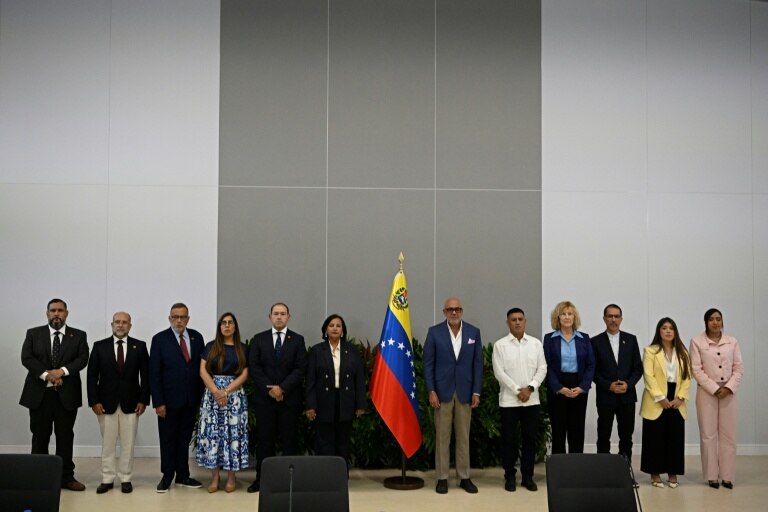
    The first in-person round of US-backed political transition negotiations between Venezuela’s interim government and opposition delegates officially launched Thursday in the capital Caracas, a confirmed on-the-ground report from an Agence France-Presse photographer confirmed.

    This diplomatic process comes seven months after United States military forces detained former Venezuelan president Nicolas Maduro, leaving interim head Delcy Rodriguez to lead the country under Washington’s oversight. Across the crisis-stricken South American nation, ordinary Venezuelans are holding onto cautious optimism that these talks will clear a path to long-awaited, free democratic elections that can pull the country out of years of political and economic turmoil.

    A notable absence from the negotiating table is Maria Corina Machado, the Nobel Peace Prize-winning opposition figure who remains in exile after being barred from joining the discussions. Stepping into the opposition’s role is Dinorah Figuera, a veteran opposition leader who touched down in Venezuela Wednesday after years living abroad. Figuera leads the political coalition that secured a supermajority in the 2015 National Assembly election, the last legislative contest widely recognized as free and fair by the global international community.

    Representing the interim government on the negotiating team is Jorge Rodriguez, president of the current National Assembly and brother of interim leader Delcy Rodriguez. Speaking to local broadcaster Televen shortly after arriving at Caracas’s international airport, Figuera outlined the core goal of the opposition’s participation: “We are focused on the official opening this week of this dialogue process, which seeks the restoration of democratic institutions.”

    Figuera has already made clear that top opposition priorities include sweeping reforms to Venezuela’s Supreme Court of Justice and National Electoral Council, two bodies that drew widespread international condemnation for formally certifying Maduro’s widely disputed 2024 re-election victory. Opposition parties rejected the 2024 result outright, claiming they won the popular vote and accusing Maduro’s government of orchestrating widespread systemic electoral fraud.

    The US State Department issued a formal statement welcoming Figuera’s delegation to the opening of the in-person negotiations, calling the direct talks “a unique opportunity” for progress. The statement urged all stakeholders to back the process to deliver “tangible results for Venezuelans” and emphasized that Washington’s end goal is “stabilization, economic recovery and political reconciliation, and a peaceful transition” to a permanent democratic government.

    The talks are being held at the La Carlota military base in central Caracas, with only press photographers granted on-site access to the opening session. According to the joint official agenda published by both negotiating teams, discussions will cover three core areas: emergency response and recovery for the twin earthquakes that struck the country on June 24, which claimed more than 6,000 lives, strengthening of democratic frameworks, and the expansion of political civil rights across the country.

    Despite being excluded from the talks, Machado has publicly stated she will not obstruct the transition process. In a post on X, the former presidential candidate wrote, “A democratic transition in Venezuela will restore our freedom and our prosperity,” adding that a new democratic government would become “a vital and reliable ally for the national security of the United States and regional stability.” Closing her message, Machado wrote, “The Venezuelan people are eager and ready!”

    Recent reports have claimed that former US president Donald Trump, who received Machado’s Nobel Peace Prize as a symbolic gift, personally vetoed Machado’s request to return to Venezuela, a claim Washington officials have repeatedly denied. Trump has publicly and privately expressed repeated satisfaction with the leadership of Delcy Rodriguez, whose interim administration has opened Venezuela’s lucrative mining, electricity, and oil sectors to foreign investment and domestic private competition, a policy shift aligned with US economic priorities for the region.

  • Watch: Nasa astronauts conduct 6.5-hour spacewalk outside ISS

    Watch: Nasa astronauts conduct 6.5-hour spacewalk outside ISS

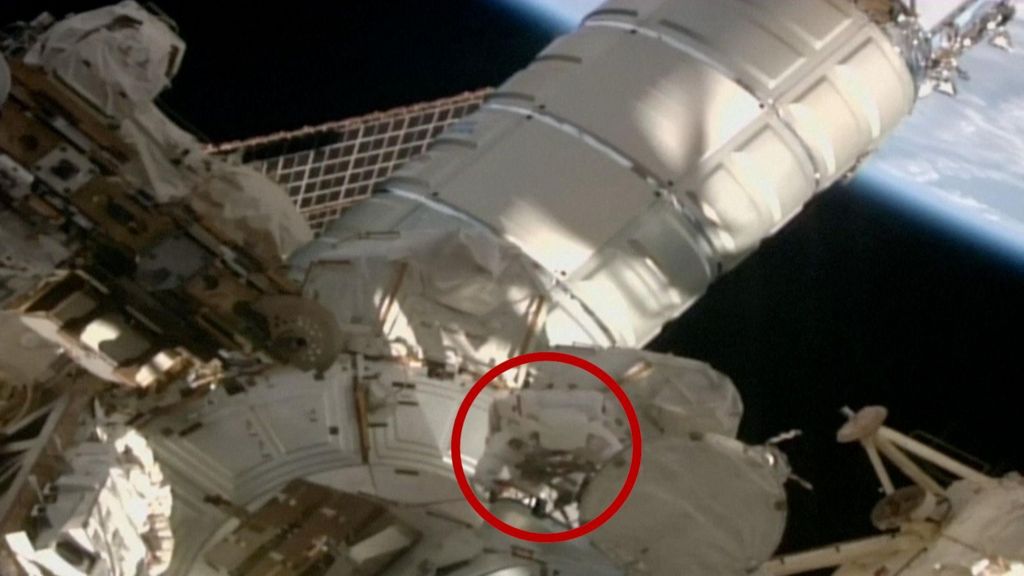
    On a recent mission to expand the power capabilities of the International Space Station (ISS), two NASA astronauts, Anil Menon and Jessica Meir, successfully carried out a 6.5-hour extravehicular activity (EVA), more commonly known as a spacewalk, outside the orbital outpost.

    The core objective of this extravehicular mission was to install specialized mounting hardware that will pave the way for the deployment of upgraded solar arrays in the near future. These new power-generation units are designed to boost the ISS’s overall electrical output, supporting the expanding range of scientific experiments, crew operations, and long-term habitation that take place aboard the station.

    Spacewalks represent one of the most demanding and high-risk activities human beings can undertake in the extreme environment of low Earth orbit. Astronauts must rely on their full pressure spacesuits for life support as they work in vacuum conditions, where temperatures can swing from hundreds of degrees above zero to hundreds of degrees below in a single orbit. This successful completion of the installation task marks a key milestone in the ongoing upgrade program for the ISS, which has hosted continuous human presence in space for more than two decades. NASA officials have noted that the new solar arrays, once installed, will extend the operational lifespan of the station and enable more cutting-edge research that benefits life on Earth.

  • Why Israel’s opposition no longer wants Palestinian parties in government

    Why Israel’s opposition no longer wants Palestinian parties in government

    As Israel prepares for its pivotal national election on October 27, a striking political shift is reshaping the country’s opposition landscape, with almost all anti-Netanyahu leaders moving to rule out power-sharing coalitions with Palestinian Arab parties – a reversal of the historic 2021 power-sharing arrangement that ended Benjamin Netanyahu’s 12-year tenure in office.

    Gadi Eisenkot, a retired Israeli general and leader of the Yashar party who has emerged as a key contender for prime minister, was the latest opposition figure to formalize this stance during a recent security conference hosted by Israeli outlet Yedioth Ahronoth and the Institute for National Security Studies. He announced his goal of forming a self-described “Zionist majority” government holding 63 to 64 parliamentary seats. If he cannot secure this threshold, he said he would pressure ultra-Orthodox parties to join his bloc, and would call for fresh elections rather than turn to Palestinian Arab parties for support.

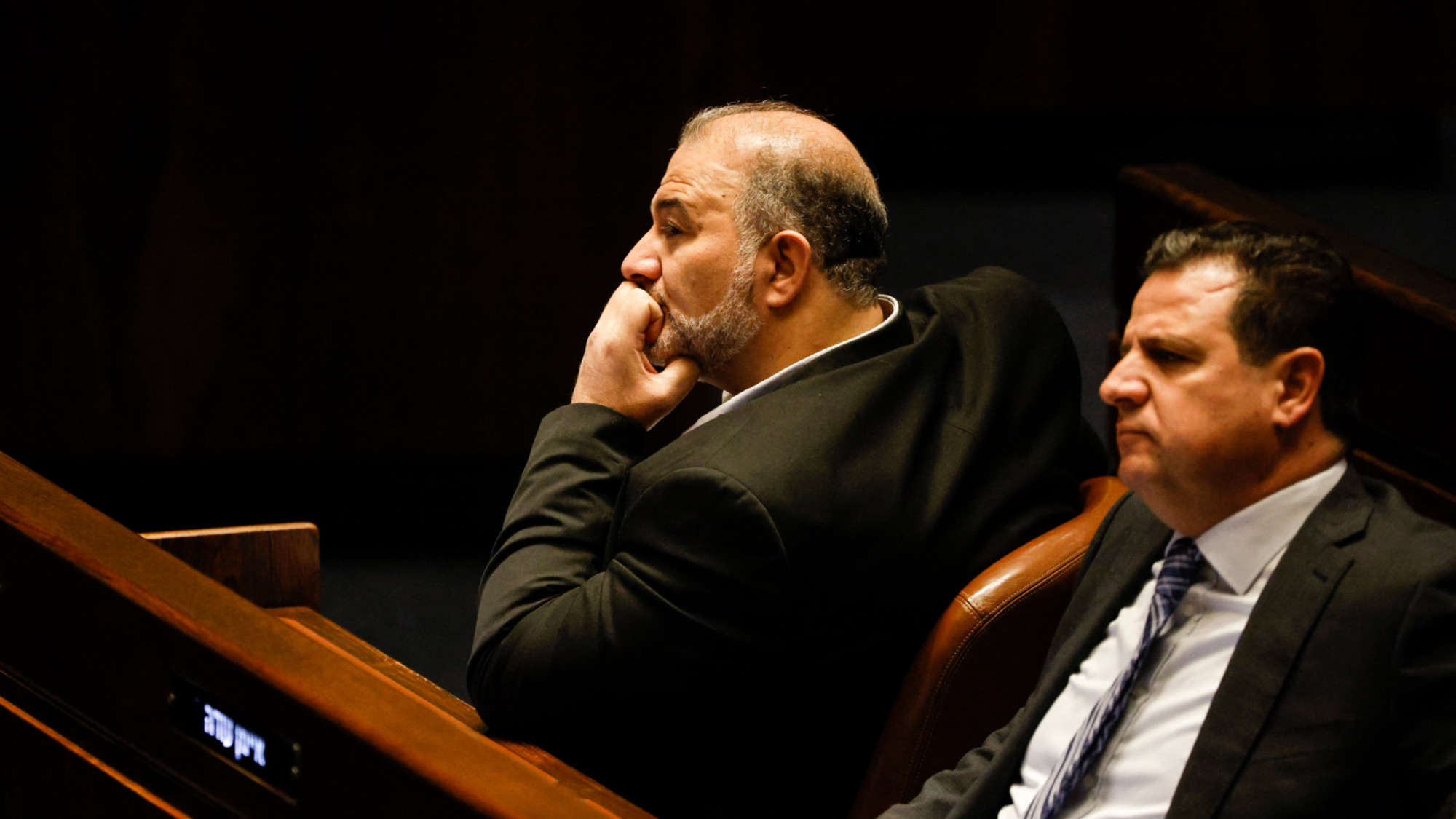
    Eisenkot’s position reflects a broader trend across the anti-Netanyahu camp. Former prime minister Yair Lapid and former alternate prime minister Naftali Bennett, who jointly partnered with the United Arab List (Ra’am) – a Palestinian Arab party – to oust Netanyahu in 2021 and defended that partnership as a necessary political experiment at the time, now echo Eisenkot’s refusal to collaborate with Palestinian Arab factions. This shift comes despite repeated public statements from Ra’am leader Mansour Abbas affirming his willingness to negotiate with any Jewish-majority bloc seeking to replace Netanyahu.

    Political analysts trace this sharp reversal directly to the post-7 October 2023 security and political context that has transformed Israeli public opinion. Following the Hamas-led attacks, cooperation with Palestinian Arab parties has been framed by right-wing factions as a compromise on both national security and the Jewish identity of the Israeli state. This framing has made any outreach politically toxic for opposition parties, even centrist blocs that previously supported inclusion. Data from the December 2025 Israel Democracy Institute Democracy Index underscores this shift: 71.5% of Jewish Israelis now oppose including Palestinian Arab parties in any governing coalition, and a separate 2025 Institute for National Security Studies survey found 57% of all Israelis reject the creation of a Palestinian state under any circumstances, reflecting a broad hardening of public sentiment.

    Palestinian political analyst Ehab Jabareen argues that Netanyahu and his right-wing bloc spent years weaponizing the question of collaboration with Palestinian Arab parties, successfully framing any cooperation as politically illegitimate. “Today, the political cost of being seen as close to Palestinian Arab parties has become very high,” Jabareen explained to Middle East Eye. While he notes that some opposition blocs may still quietly leave open the option of partnering with Palestinian Arab parties if parliamentary math leaves no other path to power, few are willing to state this publicly during the campaign: “They keep the back door open, but the front door is locked.”

    This new political landscape has forced Palestinian Arab parties – which represent the roughly 2 million Palestinian citizens of Israel, who make up 21% of the country’s total population – to rethink their electoral strategies. The community are descendants of Palestinians who remained on their land after the 1948 Nakba, when Zionist militias displaced an estimated 750,000 Palestinians to establish the state of Israel. After decades of systemic discrimination, Palestinian citizens formed political parties to advocate for civil equality, an end to the Israeli occupation of Palestinian territories, and recognition of Palestinian national rights. For decades, these parties remained on the margins of Israeli politics, as collaboration with governing coalitions was viewed as toxic by both most Jewish voters and many Palestinian citizens. That taboo was only broken in 2021, when Ra’am’s four seats provided the critical margin for Bennett and Lapid to form their narrow majority.

    Now that the taboo has reasserted itself, Ra’am’s Abbas has adopted a bold new approach to expand the party’s influence: Israeli media has confirmed that the party has reached a preliminary agreement to add former Yesh Atid lawmaker Yoav Segalovich, a Jewish politician, to its electoral list. A recent Channel 13 poll projects this move could boost Ra’am’s seat count from the currently projected five to an unprecedented seven seats.

    Jabareen argues that Abbas’ strategy is targeted at three distinct audiences. For Palestinian Arab voters, he positions himself as the only leader pursuing pragmatic, achievable political progress. For the fragmented anti-Netanyahu camp, he leaves open a pathway to secure his party’s support if they cannot form a majority without it. And for the Israeli political establishment, he signals that Ra’am remains a reliable, institutional negotiating partner. But the strategy carries clear risks: “He is signalling a willingness to negotiate with a side that publicly says it has no interest in negotiating with him,” Jabareen notes. “That creates an image of weakness because the balance of power is not in his favour.”

    Other Palestinian party leaders reject the framing that Palestinian Arab factions should prioritize joining governing coalitions. Aida Touma-Sliman, a Knesset member from the Palestinian-led party Hadash, argues that the refusal of Jewish opposition parties to collaborate with Palestinian factions is not just about electoral calculations – it reflects deep-rooted ideological bias. “The leaders of these parties know the Israeli public does not want any partnership with Palestinian Arab parties after years of incitement,” she said. “They lack the courage to present a genuine alternative to the current government’s policies. In reality, they also hold Zionist and discriminatory positions.”

    Touma-Sliman emphasized that Palestinian Arab representation in the Knesset has never been solely focused on joining ruling coalitions. Instead, it serves as a platform for political struggle: to represent Palestinian citizens, expose discriminatory government policies, and defend the community’s collective rights. Even as parliament becomes an increasingly hostile space, she argues that abandoning it would only erase Palestinian political influence at a critical moment: “our political weight is needed to confront fascism, even if that only means preventing the formation of another far-right government.”

    For Jabareen, the core challenge facing Palestinian Arab parties extends far beyond the current election cycle or coalition negotiations. After years of centering campaigns around the question of which bloc they might support to form a government, he argues it is time for a fundamental reset, amid a dramatically shifted Israeli political landscape. “The important question is no longer who will invite us into a coalition,” he said. “The real question is how we rebuild Palestinian political power inside Israel over the next decade in a way that makes ignoring us politically costly.”

    Current polling puts the Eisenkot-led anti-Netanyahu bloc and Netanyahu’s right-wing bloc in a dead heat. Some surveys suggest Eisenkot could secure a majority without support from Palestinian Arab parties, while others indicate neither bloc will be able to reach the required threshold without backing from Palestinian factions, leaving the final outcome of the October 27 election still deeply uncertain.

  • Hearing set to decide ‘terror sentencing’ of activists who targeted Barclays

    Hearing set to decide ‘terror sentencing’ of activists who targeted Barclays

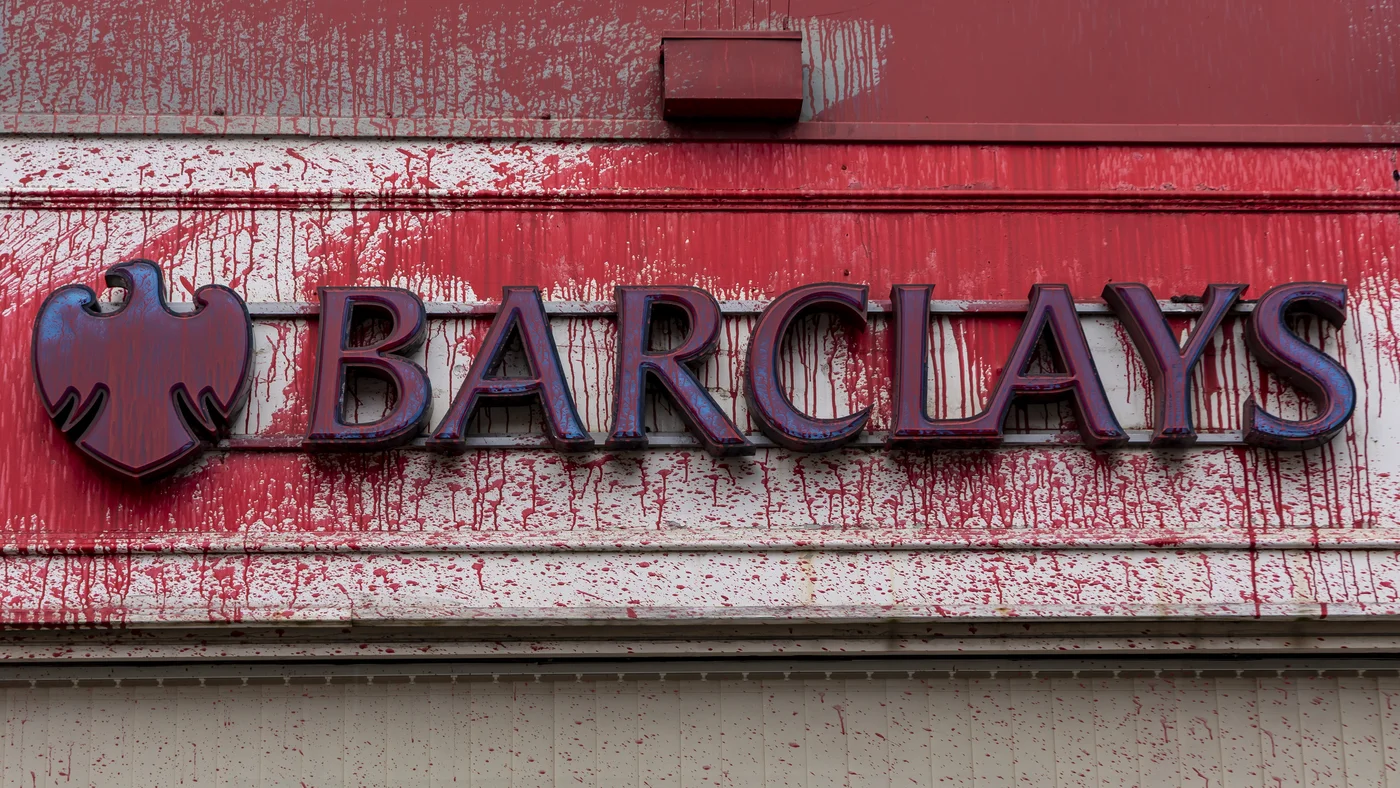
    A high-stakes upcoming hearing in the UK legal system will determine whether five Palestine Action activists, already convicted of felony criminal damage, will be subjected to exceptional terrorist sentencing, a move that has sparked fierce criticism over judicial process and overreach.

    The five defendants – Brendon O’Hagan, 28, Amanda Kelly, 31, Hmeera Atiqnisar, 31, Mohammed Malik, 28, and 70-year-old Alma Yaniv – were found guilty by a jury in June 2026 of causing more than £212,000 (equivalent to $283,000) in intentional damage to a Barclays bank location in Burnley back in August 2024. Notably, their direct action protest at the branch took place months before the UK government officially proscribed Palestine Action as a terrorist organization, and this specific incident is not included among the three group-related events the government has formally designated as terrorist activity – all of which are alleged to have caused more than £1 million in damage each.

    What has made this case unprecedented in legal procedure is that the question of terrorist sentencing was never raised to the jury during the entire trial process. After the guilty verdict was returned, the trial’s presiding judge, Phillip Parry, notified defense counsel that he would consider attaching a formal “terrorist connection” to the conviction, a designation that carries far harsher legal penalties. He then referred the sentencing decision to senior judge Robert Altham, who will hold a dedicated hearing on August 21 to rule on the terror designation, two weeks ahead of the formal sentencing scheduled for September 4.

    Judge Altham’s involvement in the case has already drawn significant scrutiny from activist and legal circles. A 2018 review by the UK Court of Appeal found that Altham had handed down “manifestly excessive” prison sentences to a group of anti-fracking activists convicted of public nuisance during a protest near Blackpool. The appellate court ruled the sentences were wholly inappropriate and ordered the immediate release of all activists. One of those activists, Simon Roscoe Blevins, who received a 16-month custodial sentence from Altham in 2018, has publicly criticized Altham’s role in the current case.

    “It is surely another gross overreach to add a terror connection to sentencing after failing to mention the possibility at any point before or during trial,” Blevins said. “And given his history, Judge Altham in particular cannot be trusted to make a fair ruling on this.”

    Criticism has also come directly from Palestine Action leadership. Huda Ammori, co-founder of the group, called Altham’s appointment to decide the terror designation “shocking.” Ammori noted that in both the current Barclays case and a separate high-profile Palestine Action case tried recently near Bristol, juries were given no indication that a criminal damage conviction could open the door to terrorist sentencing.

    “In both the Filton and the Barclays cases, the jury operated under the clear impression they were only deciding whether criminal damage occurred,” Ammori explained. “They had no idea that a conviction for this straightforward offense would effectively amount to convicting the defendants of terrorism.”

    The move to pursue terrorist designation follows a precedent set in the recent Filton case, where four activists convicted of criminal damage at an Elbit Systems facility were sentenced as terrorists despite only being convicted of non-terrorism criminal charges. Judge Parry circulated that ruling by Justice Johnson, the presiding judge in that case, to legal teams in the current Barclays trial after the conclusion of proceedings. The Crown Prosecution Service (CPS) has since formally backed applying the terror sentencing, even though it never raised the possibility during the trial itself.

  • Key details as boxer charged with Athens killing

    Key details as boxer charged with Athens killing

    Greek authorities have formally filed murder charges against Sharif Ahmadzai, an amateur boxer, in connection with the July killing of a woman identified as Elisabeth Ross, whose body was discovered inside a suitcase in the Greek capital Athens.

    The case first came to public attention when local residents stumbled upon the abandoned container in an unspecified neighborhood of Athens earlier this summer, prompting an immediate emergency response and homicide investigation. Forensic teams processed the scene and recovered the remains, which were later formally identified as those of Ross. Following weeks of investigative work, including witness interviews, forensic testing and surveillance analysis, law enforcement officers took Ahmadzai into custody and leveled the killing charge against him.

    As of the latest update, official details about the suspected motive for the killing, the relationship between the accused and the victim, and when Ahmadzai is scheduled to appear in court have not been released to the public. Local law enforcement has confirmed that the investigation remains ongoing as they continue to gather evidence to build their case against the accused.

  • ‘We’ve run out of earthly solutions’: Inside Libya’s electricity crisis

    ‘We’ve run out of earthly solutions’: Inside Libya’s electricity crisis

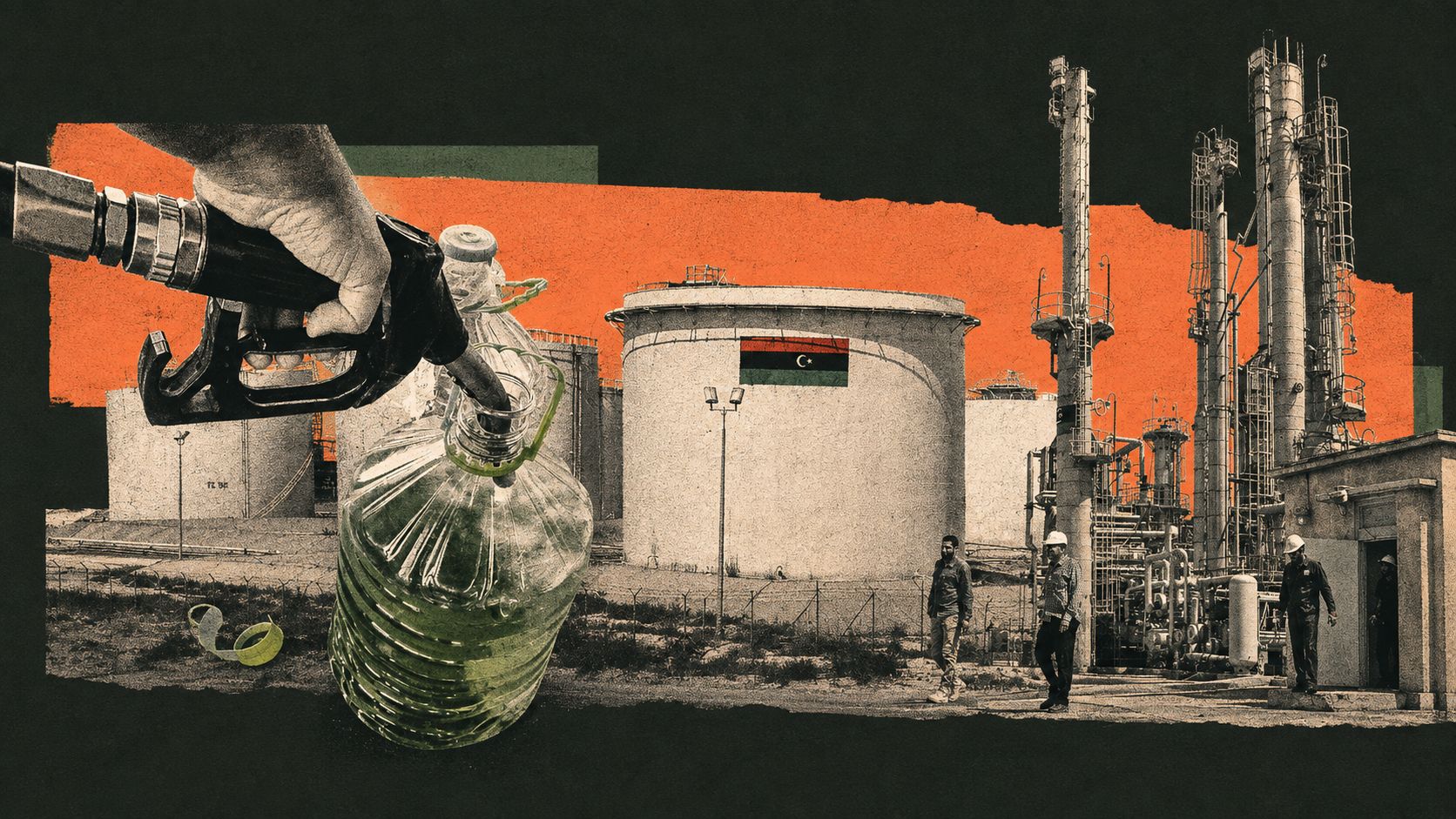
    This summer, a striking and surreal offer laid bare the depth of Libya’s ongoing energy catastrophe. Al Robyan, one of Tripoli’s most beloved coastal seafood restaurants, took to Facebook earlier this month to advertise a deal no local business would ever normally propose: a full spread of fresh seafood for anyone willing to trade the restaurant “some fuel for the generator”.

    In a raw, frustrated caption, the restaurant wrote, “We’ve run out of earthly solutions.” The post went viral, racking up thousands of comments, many from locals joking that a generator fuel tank would cost far more than the entire seafood spread the restaurant was offering.

    Al Robyan’s desperate gambit is just one small example of how widespread the crisis has become. Across Libya this summer, residents have faced near-daily power outages stretching between six and 10 hours each day. The situation is all the more baffling and infuriating for Libyans, given that their nation is one of the most hydrocarbon-rich countries on the continent: it pumps more than 1.3 million barrels of oil per day, and counts a total population of just over 7.5 million people.

    “Since these massive shortages started, every business in Libya has been affected,” explained Alaeddin Muntasser, a retired Tripoli-based businessman, who calls the current situation an “electricity disaster.” Speaking to Middle East Eye, Muntasser described the cascading impacts of extended blackouts, noting that one local water-bottling facility was knocked offline for weeks, leading to widespread drinking water shortages across parts of the capital. Without power to operate pumps and filtration systems, the plant could not produce bottled product, leaving communities without a reliable supply.

    Muntasser added that the crisis has already pushed countless small local eateries to close permanently. Only a small number of operations that can afford to purchase and fuel a private generator have managed to stay open. For ordinary households, the impact has been equally devastating: many families enduring the longest blackouts have lost all the perishable food stored in their refrigerators and freezers, adding unnecessary financial strain to already stretched household budgets.

    The crippling power shortages have already sparked mass public protests across multiple Libyan cities, including Tripoli, Zawiya, and Misrata. Demonstrators are not only demanding urgent action to restore a consistent power supply; they have also called for the resignation of Prime Minister Abdul Hamid Dbeibah, whose internationally recognized government controls western Libya.

    To understand why a nation with Africa’s largest proven oil reserves faces such constant power shortages requires looking at decades of structural collapse and political division. Libya generates roughly 70% of its electricity from domestic natural gas, with the remaining share coming from oil. This makes the national power grid extremely vulnerable to declining production and operational disruptions at gas fields and along pipeline networks, problems that have mounted for years.

    “The electricity crisis and related protests is one of those problems that will not go away until Libya’s government can implement a longer-term strategy that ensures a more reliable electricity supply, whether that be through refined fuels or renewable energy sources,” explained Hamish Kinnear, principal Middle East and North Africa analyst at risk intelligence firm Verisk Maplecroft, in an interview with Middle East Eye. Kinnear noted that while energy crises are not uncommon across the region, “for citizens of a country with the largest oil reserves and the fifth largest gas reserves in Africa, as well as significant solar power potential, blackouts are a particular source of frustration.”

    The roots of today’s crisis stretch back more than a decade, to the 2011 NATO-backed uprising that toppled and killed longtime leader Muammar Gaddafi and threw the country into years of chaotic division. In the years since the uprising, Libya has split into two rival governing blocs: the internationally recognized administration led by Dbeibah in the west, and a separate eastern government backed by military forces under General Khalifa Haftar and aligned with foreign powers.

    Years of systemic underinvestment in both gas production and power grid infrastructure, combined with this year’s record-breaking heatwave that pushed temperatures above 50°C, have combined to create the perfect storm that collapsed the system this summer.

    “Oil wealth only becomes reliable electricity when institutions can convert it, and Libya’s institutions have been fractured for over a decade,” said Karim Elgendy, executive director of the Carbon Institute, a think tank focused on energy and climate issues across the Middle East and North Africa. “Rival authorities issue competing decisions over the same grid and the utility recovers almost none of its costs. Years of deferred maintenance have left the network running on ageing equipment with no margin for error. So every summer becomes a stress test the grid is not ready for,” Elgendy told Middle East Eye.

    In a bid to ease the immediate shortfall this summer, Libya turned to its neighbor Egypt for emergency assistance. Earlier this year, the two nations signed a memorandum of understanding to deepen energy sector cooperation, with senior officials from both sides meeting in July to discuss expanding energy ties. Following July’s widespread blackouts, Egypt increased its electricity exports to Libya by around 43%, bringing total shipments to 100 megawatts. Even with this sharp increase, however, the additional supply meets only a small fraction of Libya’s total needs, covering less than 10% of the country’s current generation shortfall. Libya also settled $90 million in outstanding unpaid energy dues to Egypt as part of the agreement.

    On paper, energy cooperation between the two nations makes intuitive sense: Libya holds massive untapped hydrocarbon reserves, while Egypt has existing refining capacity, power generation infrastructure, and engineering contractors that could help Libya develop its resources. “The complementarity between the two economies is real: Libya has the hydrocarbons, Egypt has the refining, the generation fleet and the contractors,” Elgendy noted. But he added that “genuine integration begins when both sides commit to a long-term commercial framework with obligations running both ways,” a commitment that has yet to materialize.

    There is also a hidden risk to Libya relying on Egyptian electricity imports: Egypt itself is facing growing energy security challenges, as its domestic natural gas production has declined amid depleting mature reserves. “Egypt’s own power system leans heavily on imported gas it does not control, and recent supply interruptions showed how quickly that exposure travels down the chain. A country importing electricity from Egypt is, indirectly, importing Egypt’s gas risk,” Elgendy explained. Egypt has already turned to foreign suppliers to meet its growing gas demand, signing a landmark $35 billion deal with Israel in 2025 that will nearly triple Egyptian imports from the Israeli Leviathan offshore gas field.

    Many analysts remain deeply skeptical that the recent energy cooperation agreements between Libya and Egypt will deliver meaningful long-term relief for Libyans. Jalel Harchaoui, a Libya specialist at the Royal United Services Institute, argues that the recent diplomatic outreach is “not to be taken seriously” as a solution to Libya’s electricity crisis. Harchaoui believes that energy needs are not the primary driver of the recent diplomatic engagement, framing it instead as a superficial diplomatic gesture. “I think it would be very incorrect to say that the electricity situation is the reason for the meeting,” he told Middle East Eye. “There has been a pattern whereby Tripoli tends to say to Egypt: ‘Let’s talk. And by the way, I notice you’re suffering from energy shortages. Libya has a small population and a lot of energy, Tripoli is happy to help you, Egypt.’” He called the gesture “more of a diplomatic trick than something really genuine, especially during a summer when Libya itself is grappling with a very serious electricity crisis.”

    Harchaoui argues that the core problem has been ignored by Libyan policymakers for more than a decade. Libya holds massive onshore and offshore natural gas reserves, “but the error that Libya made, and it’s a profound error with long-time consequences, is that it hasn’t kept up in terms of natural gas production capacity.” While natural gas generates roughly three-quarters of the country’s electricity, “years have gone by with no new natural gas project of any significance even being launched.”

    As a result, existing gas infrastructure is seeing declining output, and even if a major new project were approved today, Harchaoui said it would take at least seven to eight years to come online. If current trends continue, he warned, Libya could be forced to import natural gas within just a few years — a deeply humiliating reversal for a major hydrocarbon producer that would eliminate any narrative of complementary energy ties between Libya and Egypt.

    Harchaoui attributes the failure to both cultural priorities and systemic corruption. For decades, Libya’s economy has centered almost entirely on crude oil production, leading policymakers to treat natural gas development as an afterthought, even though it powers the vast majority of the country’s electricity. Systemic corruption has also slowed progress dramatically, not only diverting public funds away from infrastructure projects but also dragging out decision-making as officials negotiate bribes. “To do a corrupt project, you need more time than to do an honest project, because you have to make sure all the key officials are satisfied with their bribes,” Harchaoui said, alleging that some power plant units purchased between 2022 and 2025 were actually secondhand equipment that was misrepresented as new to siphon off public funds.

    Political division has also shaped where public anger over the crisis has boiled over. Harchaoui noted that Dbeibah has repeatedly unfulfilled promises to “resolve” the electricity crisis since taking office in 2021, leading to concentrated unrest in western Libya, where public protest is far easier to organize than in eastern Libya under Haftar’s tighter authoritarian grip. Blackouts have hit eastern and southern Libya just as hard, Harchaoui stressed, but public discontent there has not translated into the same level of visible political unrest.
  • Lessons of Japanese militarism’s aggression must forever serve as alarm: spokesman

    Lessons of Japanese militarism’s aggression must forever serve as alarm: spokesman

    On the 81st anniversary of the 1945 atomic bombing of Hiroshima, a senior Chinese foreign ministry spokesman has underscored two critical global lessons that must never be forgotten. Speaking in Beijing on Thursday, spokesman Lin Jian made the position clear in a formal response to a media query surrounding the annual commemoration of the Hiroshima attack.

    First, Lin emphasized that the widespread death and destruction inflicted by nuclear weapons must never be allowed to be repeated in any conflict around the world. Beyond the horror of the Hiroshima bombing, he added, the catastrophic legacy of Japanese militarism’s decades of aggression and expansion across Asia must remain a permanent warning to the international community, to prevent the world from repeating the mistakes of violent expansionism.

    Lin also issued a clear call for Japanese authorities: Japan must openly acknowledge the security and international concerns surrounding its current nuclear policy and related actions, and strictly uphold its commitments to nuclear non-proliferation obligations as required by international law. The statement comes amid growing regional and global attention to Japan’s nuclear posture and historical memory of World War II aggression in East Asia.

    The commemoration of the Hiroshima bombing, which killed more than 140,000 people when the United States dropped the first atomic weapon used in warfare, annually sparks global reflections on the dangers of nuclear proliferation and the importance of upholding historical truth about World War II. This year’s remarks from the 81st anniversary has drawn particular significance as international tensions around nuclear policy continue to rise in multiple regions.

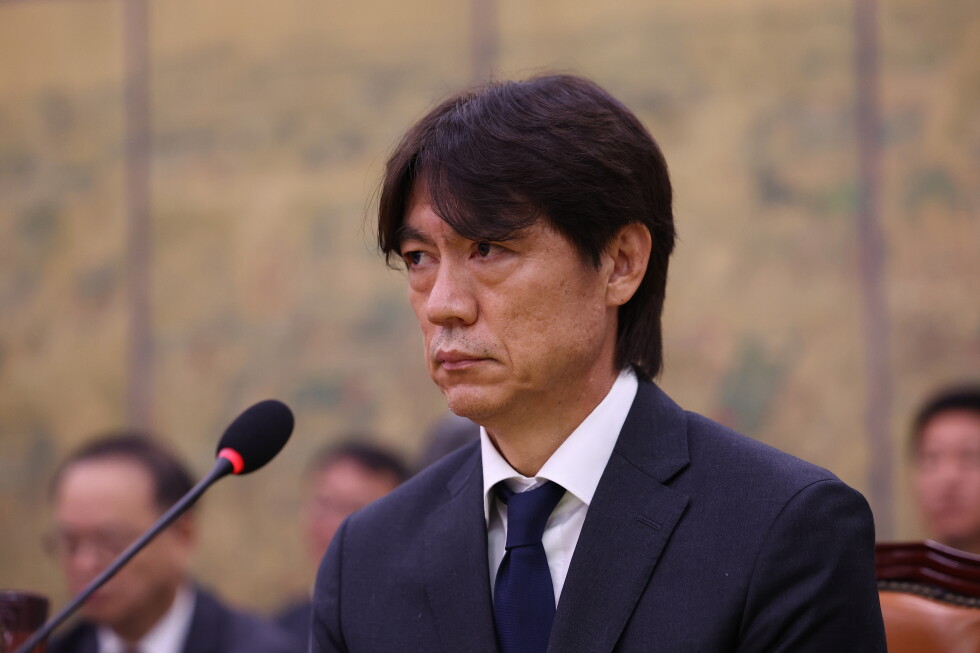
  • Police raid South Korea soccer federation offices in probe of hiring of Hong Myung-bo as coach

    Police raid South Korea soccer federation offices in probe of hiring of Hong Myung-bo as coach

    South Korean law enforcement authorities have launched a new wave of probes into the controversial hiring process of former national men’s football team head coach Hong Myung-bo, executing search warrants at two key locations of the Korea Football Association (KFA) this Thursday. Investigators targeted both the KFA’s main headquarters located in Cheonan, a city roughly 56 kilometers south of the national capital Seoul, and the KFA House situated in central Seoul. Their primary goal is to secure physical and digital evidence that would confirm allegations of improper interference by top KFA officials in the 2024 hiring process that named Hong as the senior coach of the national side.

    The investigation into the hiring irregularities was first initiated shortly after Hong’s appointment nearly two years ago, but the case stalled over the summer with no formal conclusion reached. The probe regained significant momentum and public scrutiny after South Korea’s early exit from the 2026 FIFA World Cup, where the team was eliminated in the group stage – a result that sparked widespread public anger toward the KFA’s leadership and management.

    Following the disappointing World Cup performance, both Hong Myung-bo and KFA president Chung Mong-gyu stepped down from their respective posts. The two figures were summoned to testify before a parliamentary hearing held at Seoul’s National Assembly back in July, where they addressed questions surrounding the controversial hiring process.

    Hong, a legendary figure in South Korean football who served as captain of the 2002 World Cup semi-finalist Korean national team (co-hosted by South Korea and Japan) and also led the national side at the 2014 World Cup, has denied any wrongdoing. During the July hearing, Hong told lawmakers: “When I received the offer, I thought they had all taken the proper steps. People may think things were not so transparent, but I never once asked for any special treatment.”

    According to domestic South Korean media reports, police formally questioned Hong as a person of interest in the case this Tuesday. Details of the closed-door interrogation have not been released to the public as of press time.

    The controversy over the hiring traces back to a 2024 review by South Korea’s sports ministry, which flagged a series of rule breaches by the KFA. Per local reporting, former KFA technical director Lee Lim-saeng privately offered the head coaching position to Hong during a meeting at a bakery near the coach’s residence. The ministry concluded that this private meeting did not qualify as a formal interview as required by the KFA’s own hiring regulations, confirming that the federation had violated its internal recruitment guidelines. At the same time, the 2024 ministry review found no conclusive evidence of illegal activity connected to the hiring.

  • US Senator McConnell discharged from rehab centre and returning home

    US Senator McConnell discharged from rehab centre and returning home

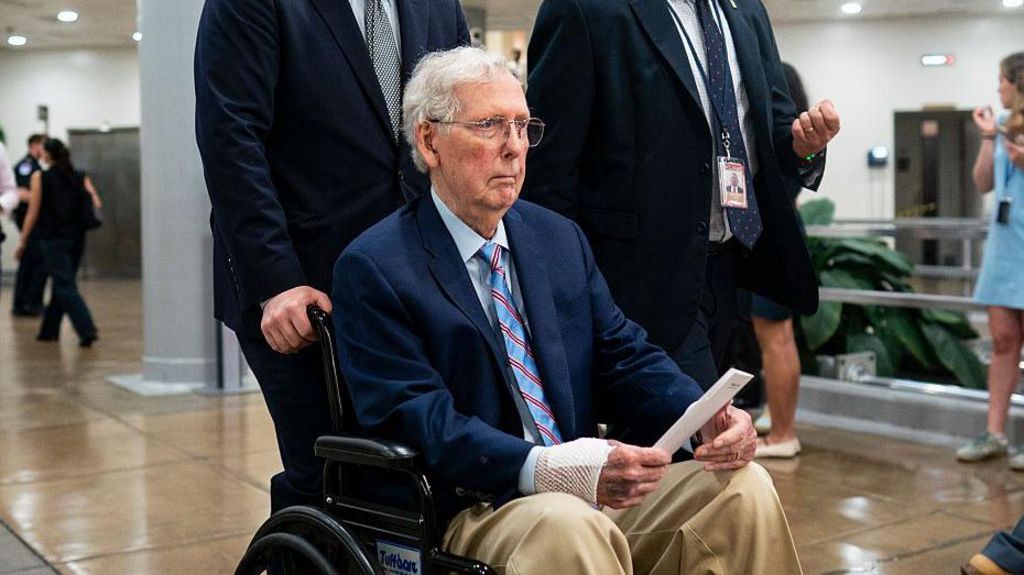
    Long-serving U.S. Senate Republican leader Mitch McConnell has completed his inpatient rehabilitation program and been discharged, announcing Thursday that he will continue his recovery process from his residence. The 84-year-old Kentucky GOP politician first faced a health scare in mid-June, when he was admitted to a hospital following an accidental fall and a diagnosis of mild pneumonia. By last month, he transitioned from acute hospital care to an inpatient rehabilitation facility, noting at the time that he had not received medical clearance to resume his regular duties on the Senate floor.

    In his official statement released Thursday, McConnell laid out his plans for the next phase of recovery: at his home, he will stick to a rigorous schedule of physical therapy to rebuild his strength, while still remaining connected to his policy and political work. The senator emphasized that he will continue to collaborate with his senior staff and fellow congressional colleagues on critical Senate business, pushing back against early assumptions that his absence would put a full pause on his engagement.

    McConnell also expressed public gratitude for the widespread support he has received throughout his recovery. “Elaine and I are grateful for the many well wishes and support from friends, colleagues, and Kentuckians, and for the attentive care I’ve received from excellent doctors, nurses, therapists, and hospital staff,” he said in the statement.

    McConnell’s extended absence from Capitol Hill has ignited consistent public speculation about both his short-term health status and his long-term political future. Over nearly four decades in Senate leadership, McConnell has established himself as one of the most influential power brokers in modern U.S. Republican politics, shaping federal judicial appointments, legislative priorities and party strategy for generations. His current health episode has prompted widespread questions about when — or if — he will return to his post as the top Senate Republican, and what a prolonged absence could mean for the chamber’s agenda ahead of the upcoming 2026 midterm elections.

  • Miss North Carolina USA stripped of title after ‘information’ surfaces

    Miss North Carolina USA stripped of title after ‘information’ surfaces

    In a stunning shake-up to the line-up for the upcoming 75th annual Miss USA pageant, Brittany Boltinhouse, the newly crowned Miss North Carolina USA, has been officially stripped of her title following a comprehensive internal review of newly surfaced misconduct allegations. Pageant organizers have not publicly shared specific details of the problematic conduct, but framed the dethronement as a difficult but necessary choice to uphold the core values and integrity of the Miss North Carolina USA program.\n\nThom Brodeur, president of the national Miss USA organization, released a formal statement clarifying the organization’s zero-tolerance policy for harmful, discriminatory speech and behavior. “The Miss USA organization does not tolerate racism, homophobia, transphobia nor language that strips any person of their dignity,” Brodeur affirmed. Contrary to speculation that the decision stemmed from a single isolated incident, Brodeur emphasized that the reviewed information revealed a pattern of inappropriate conduct spanning an extended period of time. “What was brought to us was not a single moment,” he explained. “It reflected conduct over an extended period of time. That is why this outcome was reached, and I stand behind it without qualification.”\n\nAccording to official announcements, Boltinhouse, 27, who won the Miss North Carolina USA title back in June, was already in active preparation to represent her home state at the national Miss USA competition scheduled to take place in Miami later this month. She was formally removed from her role on Wednesday. A Blaize Productions, the local organizer overseeing the North Carolina pageant, noted that the decision was not made hastily, and came only after a thorough review of all available information. “This decision was not made lightly,” the organisers said in a statement. “It followed a thorough review of recently surfaced information and was based on the totality of the circumstances and our responsibility to preserve the integrity of the Miss North Carolina USA title and the values of our organization.”\n\nBrodeur also confirmed that Boltinhouse has issued a private apology to organizers and plans to release a public statement of her own in the coming days. The BBC has reached out to Boltinhouse directly for additional comment, but had not received a response as of Thursday.\n\nFollowing Boltinhouse’s dethronement, first runner-up Myla Hadley has been tapped to step into the role and will represent North Carolina at the upcoming national Miss USA pageant. The winner of the Miami competition will go on to represent the United States at the global Miss Universe pageant slated for November.\n\nHadley addressed her unexpected new appointment in an Instagram statement Thursday, thanking her supporters and expressing readiness for the opportunity ahead. “I understand the seriousness and level of prestige that this title carries, and I can confidently say that both my team and I are ready to take this on,” she wrote. “While this may seem like a two-week turnaround given the circumstances, I’ve been preparing to represent at Miss USA since I first competed with this organization. I am ready to represent North Carolina.”