博客

  • Officials say Saudi Arabia, Turkey and Pakistan have signed a key defense agreement

    Officials say Saudi Arabia, Turkey and Pakistan have signed a key defense agreement

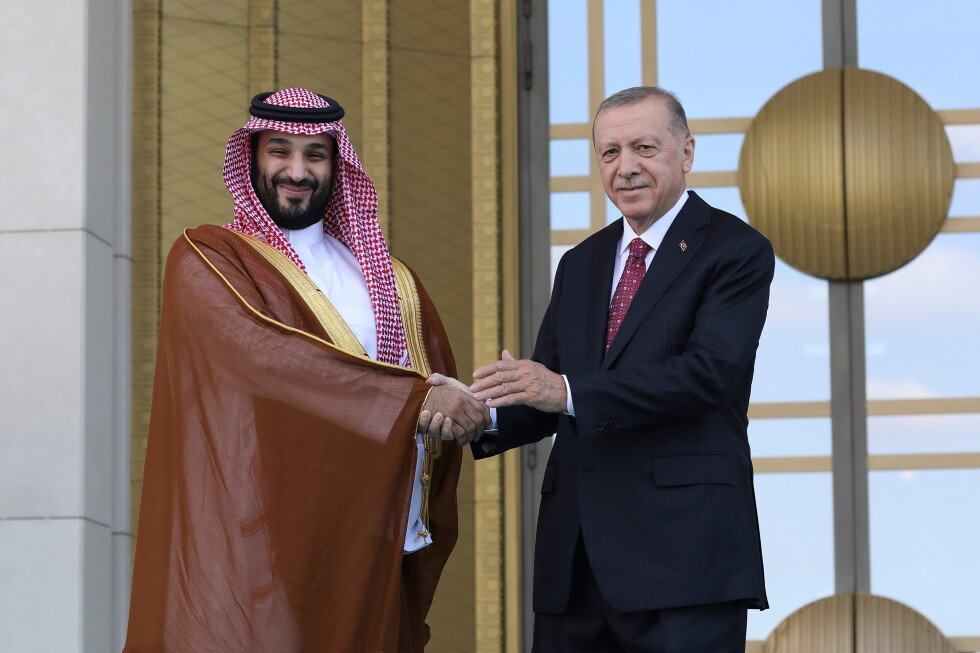
    Amid a wave of escalating security uncertainties across the Middle East and South Asia, Saudi Arabia, Turkey, and Pakistan have formalized a landmark trilateral defense cooperation agreement, Pakistan’s Foreign Ministry confirmed in an official statement released Friday. The signing ceremony took place in Mecca, Islam’s holiest city, bringing together three of the region’s most influential leaders: Saudi Crown Prince Mohammed bin Salman, Turkish President Recep Tayyip Erdogan, and Pakistani Prime Minister Shehbaz Sharif.

    The core principle of the new pact is designed to build unified collective deterrence against external threats: according to the Pakistani Foreign Ministry’s text, any armed aggression against one of the three signatory nations will be considered an attack on all three members. Beyond this mutual defense commitment, the agreement lays the groundwork for expanding defense collaboration across every relevant domain, bringing together three nations with distinct strategic strengths: oil-rich Saudi Arabia, nuclear-armed Pakistan, and Turkey, which boasts NATO’s second-largest standing military and a fast-expanding domestic defense industry.

    According to preliminary reporting from Turkey’s Haberturk television and other local Turkish media outlets, the pact is expected to open the door to deeper practical cooperation, including joint military training exercises, cross-border defense technology transfers, and real-time intelligence sharing between the three states.

    The agreement marks a significant step in Saudi Arabia’s ongoing push to diversify its network of defense partnerships, a shift that comes after the kingdom’s critical energy infrastructure and oil facilities faced repeated targeted attacks amid escalating regional confrontation linked to tensions with Iran. It also builds on a separate bilateral mutual defense pact Islamabad and Riyadh signed just months earlier in September, which already established the principle that an attack on one constitutes an attack on both.

    For Turkey, the new trilateral alliance comes at a moment of sharp diplomatic friction with Israel over the ongoing conflict in Gaza, alongside widening instability across the broader Middle East, including active conflicts in Iran and Lebanon.

    Sharif arrived in Saudi Arabia on Thursday for a three-day official visit, accompanied by a high-level delegation that included Pakistan’s Army Chief Field Marshal Asim Munir, signaling the military’s strong backing for the new partnership. Beyond the defense pact, regional officials noted that the three leaders used the summit to discuss strategies to de-escalate ongoing tensions between the United States and Iran, while also exploring opportunities to expand cross-border trade, deepen economic ties, and build out broader security cooperation frameworks across the region.

    The Pakistani Foreign Ministry emphasized that while Sharif’s visit unfolded against the backdrop of heightened tensions in the Persian Gulf, the engagement was not limited to addressing the immediate crisis. Instead, the long-term goal of the trilateral partnership is to strengthen bilateral ties between all three nations and boost coordinated policy action on shared regional and international challenges.

  • US strikes $1.2bn deal to pay German firm to halt offshore wind projects

    US strikes $1.2bn deal to pay German firm to halt offshore wind projects

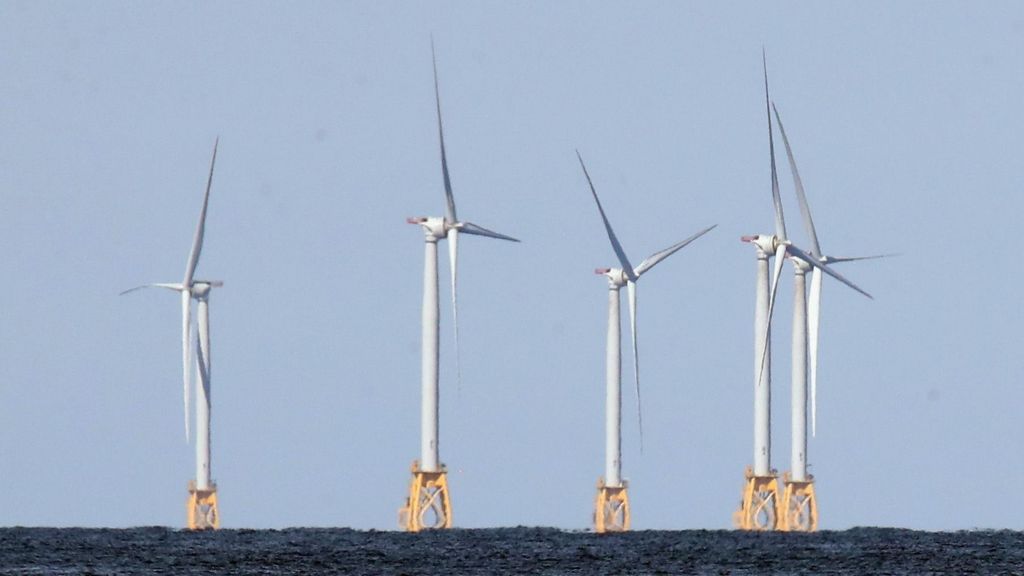
    In a move that underscores the Trump administration’s aggressive rollback of offshore wind energy development, German energy giant RWE has announced it will abandon all its U.S. offshore wind projects after securing a $1.2 billion settlement with the U.S. Department of the Interior (DoI). The company confirmed it will redirect the entire payout to conventional natural gas infrastructure, earmarking $900 million alone for a new liquefied natural gas (LNG) export terminal under construction in Louisiana.

    After a months-long internal review, RWE concluded there was no viable path to secure necessary construction permits for its offshore wind leases in the foreseeable future under the current administration’s regulatory framework. As part of the settlement agreement, the firm will relinquish all its federal wind leases spanning three major regions: the California coast, the Louisiana coast, and the New York Bight, a busy offshore stretch between New York and New Jersey that was targeted for large-scale wind development under prior administrations.

    Despite exiting offshore wind, RWE reaffirmed its long-term commitment to the U.S. energy market, outlining plans to invest roughly $19.6 billion (€17 billion) in expanding its U.S. power generation capacity over the next six years, all of which will focus on conventional fossil fuel and baseload energy projects under the new regulatory landscape.

    Interior Secretary Doug Burgum welcomed the deal in a post to social platform X, framing the agreement as aligned with the administration’s vision for U.S. energy. “Americans deserve an energy system built on common sense, not one propped up by costly, wasteful subsidies,” Burgum wrote. “We welcome RWE’s agreement and voluntary investment in projects that strengthen our nation’s energy security.”

    This settlement marks the third high-profile exit of a major energy company from U.S. offshore wind since Trump returned to office, consistent with his long-standing opposition to renewable wind development and his commitment to boosting the domestic fossil fuel industry. During his 2024 presidential campaign, Trump ran on the iconic fossil fuel-friendly slogan “drill, baby, drill,” and moved quickly to curtail offshore wind after his inauguration.

    Within days of taking office, Trump explicitly stated his administration would not advance new wind projects, dismissing offshore wind turbines as “big, ugly windmills” that pose unacceptable risks to coastal wildlife and marine ecosystems. The administration has since systematically slowed permit approvals for new offshore wind developments and encouraged companies to voluntarily exit existing wind leases in exchange for financial settlements, with incentives to redirect capital to fossil fuel projects.

    The pattern of exits began earlier this year in March 2026, when French energy major TotalEnergies reached a similar settlement to abandon its U.S. offshore wind holdings. In exchange for ending its wind projects, TotalEnergies agreed to shift investment to a new LNG facility in Texas and expand conventional oil exploration in the Gulf of Mexico. Just last month, the administration closed a $129 billion settlement with Duke Energy, a major U.S. utility based in Charlotte, North Carolina. Under that deal, Duke Energy relinquished its offshore wind lease in the Carolina Long Bay area in exchange for the settlement, which the company plans to redirect to conventional energy projects.

    The string of settlements has effectively halted most planned large-scale offshore wind development along U.S. coastlines, rolling back years of progress made under prior administrations to expand renewable energy capacity and cut greenhouse gas emissions from the power sector.

  • Trump-backed Republican congressman loses primary in Tennessee

    Trump-backed Republican congressman loses primary in Tennessee

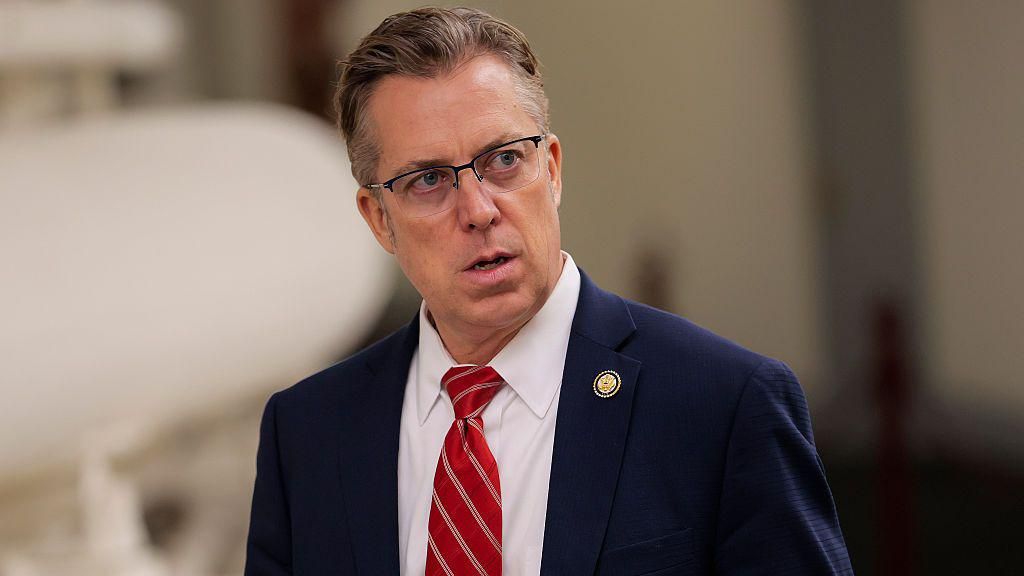
    In a surprising upset that underscores shifting dynamics within the U.S. Republican Party, two-term incumbent Congressman Andy Ogles has been ousted in Tennessee’s 5th District Republican primary, becoming the second candidate backed by former President Donald Trump to lose a nomination contest this week.

    Former state agricultural commissioner Charlie Hatcher secured victory over Ogles in Thursday’s intra-party contest, a result that came just hours after Trump issued a last-minute full endorsement of the incumbent on his Truth Social platform. “Congressman Andy Ogles is doing a fantastic job,” Trump wrote in the post, adding “Andy is a Conservative Warrior who has strong support from his Community.” The defeat follows a similar upset a day earlier in Michigan, where another Trump-endorsed Republican candidate fell short of nomination.

    Ogles, who has represented the safely Republican district since he took office in 2023, leaves the primary race after a tenure marked by repeated high-profile controversies. He was investigated over claims of campaign finance violations, though no criminal charges were ultimately filed, and he has repeatedly denied any wrongdoing. More significantly, he drew widespread backlash from across the political spectrum for virulent anti-Muslim public comments, including posts on X that claimed “Muslims don’t belong in American society” and “America and Islam are incompatible.”

    Hatcher will now advance to the general election this November, where he will face Democratic nominee Chaz Molder, the current mayor of Columbia, who ran unopposed for his party’s nomination. This cycle’s 2026 midterm elections will see all 435 U.S. House seats and 35 of the 100 U.S. Senate seats up for grabs, making control of both chambers of Congress on the line for voters.

    While two high-profile Trump picks have fallen this primary week, the former president’s influence within the GOP remains substantial, with a string of primary victories for his endorsed candidates to offset the losses. In a separate Tennessee primary contest, Trump-backed candidate Amir Hassan underperformed badly against Tom Smith, who had suspended his own campaign in July and endorsed a different contender. But in Michigan, John James secured the Republican gubernatorial nomination despite being dramatically outspent by a wealthy rival, with a last-minute campaign appearance and endorsement from Trump boosting his odds of victory. Trump-endorsed candidates also won gubernatorial nominations in Kansas, and picked up a House primary victory in Washington state, where Amanda McKinney, the former president’s pick, finished first.

    This primary season has already broken modern records for the number of sitting congressional incumbents failing to secure their party’s renomination. According to data from *Vital Statistics on Congress*, six Democratic incumbents and three Republican incumbents have lost their primaries so far — the highest number of incumbent losses in a non-redistricting election cycle since 1970.

  • Thai pupil describes harrowing moment teacher was shot in front of her

    Thai pupil describes harrowing moment teacher was shot in front of her

    On a Friday morning as final weekly classes wrapped up, chaos erupted at one of Thailand’s prestigious educational institutions on the outskirts of Bangkok, sending terrified students flooding out of Debsirin School in Nonthaburi. Law enforcement confirm that a 14-year-old male student opened fire inside the campus, in an attack that has become the deadliest mass shooting the country has seen in years.

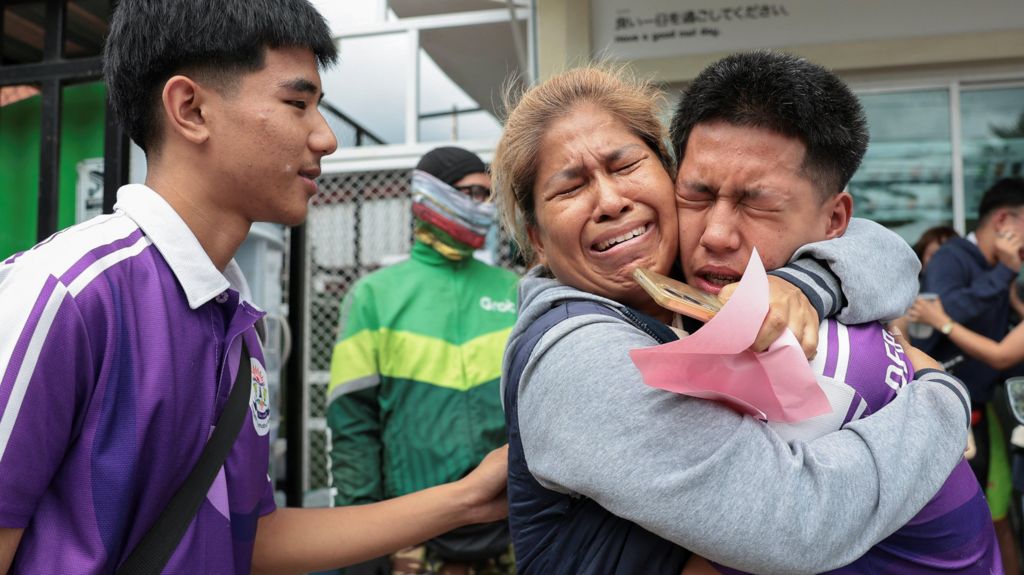
    Multiple surviving students have shared harrowing accounts of their escape from the unfolding violence. A 13-year-old seventh grader, still trembling in her school uniform with her mother standing close by outside the school gates, spoke to reporters about the moment the gunman confronted her classroom. “I was standing right in front of my teacher when she was shot,” she recalled. “She was speaking to me when he appeared.” She described how the shooter methodically moved from classroom to classroom hunting for more targets, forcing her and a group of friends to scale a perimeter fence to flee. The teen told her mother she fully expected to never make it out alive, saying “I thought I’d never see you again.”

    Another 18-year-old student told Reuters he initially mistook the rapid gunfire for holiday firecrackers. “I didn’t think it was a gun at first,” he explained. “There were many shots: bang bang bang. Then it went quiet. Then it started again.” Just meters from the school entrance, first responders worked frantically to load bleeding wounded into ambulances for emergency transport to nearby hospitals, while shocked crowds of onlookers gathered outside, embracing one another and weeping for the lost and injured.

    Police confirm the attacker killed five educators and wounded more than a dozen people, including multiple students, before turning his weapon on himself. Before carrying out the school attack, the teen had already fatally shot his own grandparents at an off-campus location. Investigators have confirmed the 9mm handgun used in the attack belonged to the shooter’s grandfather, a former educator, but have not yet released any information about a possible motive for the violence. A current teacher at the school described the 14-year-old as a high-performing, non-aggressive student, while education officials have noted he was an enthusiastic video game player, though no direct link has been drawn between that hobby and the attack.

    This incident marks the second school shooting in Thailand in 2026, following a February attack in southern Thailand that left a head teacher and a female student dead at the hands of an 18-year-old gunman. It is also the worst mass killing since the 2022 attack in Nong Bua Lamphu province, where a 34-year-old resident killed 37 people, most of them young children, in a shooting and stabbing attack at a local nursery.

    These repeated acts of mass violence have once again brought long-simmering questions about Thailand’s gun control policies to the forefront of national debate. While formal legal restrictions on gun ownership exist in the country, both legal and illegal firearms remain relatively easy for civilians to obtain. Thailand has one of the highest rates of civilian gun ownership in Southeast Asia, and critics argue that authorities have failed to implement meaningful regulatory reforms even as public concern over gun violence has grown.

    Outside the hospital Friday, the boyfriend of one of the slain teachers spoke to reporters, his voice breaking as he fought back tears. “This shouldn’t have happened,” he said.

    Opposition political leaders have already called for urgent action to overhaul the country’s existing gun laws. “An act of violence in an educational institution, which should be one of the safest places in our society, serves as a stark reminder for Thai society to seriously and systematically review gun control measures,” Natthaphong Ruengpanyawut, leader of the People’s Party, wrote in a public Facebook post after the shooting. As the investigation continues in the coming days, pressure is growing on Thai authorities to respond to the public outcry with tangible policy change to prevent future mass casualty attacks.

  • Seven killed after Thai teen shooter opens fire at home and school

    Seven killed after Thai teen shooter opens fire at home and school

    A horrific mass shooting that began at a private residence and spilled over into a prestigious Bangkok-area secondary school has left at least seven people dead, including the 14-year-old perpetrator, and 22 others injured, Thai national authorities confirmed this week.

    According to Thailand’s Minister of Public Health, the teenage shooter first carried out a double homicide at his home, fatally shooting his grandparents before traveling to the Debsirin School Nonthaburi campus, a branch of one of Thailand’s most elite secondary education institutions, located on the northern outskirts of the capital. Once inside the school grounds, the attacker opened fire on faculty and staff, killing five teachers before turning the gun on himself to take his own life.

    Of the 22 people wounded in the rampage, nine remain in critical, life-threatening condition as of the latest official update. Local law enforcement was rapidly dispatched to the campus as the active shooting unfolded, with emergency officials issuing urgent public warnings urging nearby residents to avoid the area and instructing people already trapped inside the school building to find secure hiding spots and wait for first responder extraction. At one point during the response, police updated the public via social media that the shooter had been located inside the school’s computer lab.

    Founded in central Bangkok in 1885, Debsirin School ranks among the most prestigious secondary learning institutions in Thailand, with a sprawling network of regional branches across the country. Its alumni roster includes many of Thailand’s most prominent public figures, spanning senior diplomats, professional athletes, and multiple former national prime ministers.

    Witnesses who managed to escape the campus described chaotic, terrifying scenes as the shooter moved methodically from classroom to classroom. A seventh-grade student who fled the building spoke to the BBC about the moment the attacker reached her classroom, saying he shot the teacher standing just inside the doorway before she could escape and hide, leaving her unable to see further violence unfolding.

    Another student survivor told Reuters that he initially mistook the repeated gunfire for common fireworks, or the loud sound of someone banging a heavy object against a wall. “There were many shots: bang bang bang. Then it went quiet. Then it started again,” he recalled of the terrifying incident.

    Investigators later confirmed that the 9mm handgun used by the shooter was owned by his grandfather, a retired teacher, confirming the weapon was legally registered to the family member.

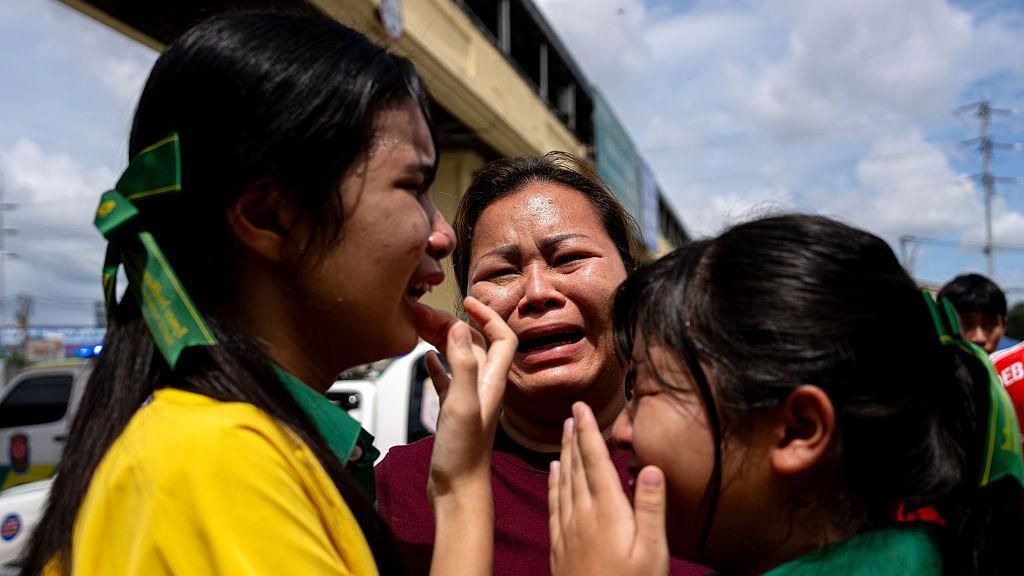
    Photos from the scene show terrified students and staff fleeing the campus in panic, while those who waited outside for updates on missing peers and loved ones appeared visibly distraught in the aftermath. In response to the violence, all other schools within the immediate vicinity canceled remaining classes for the day and arranged for students to return home early to their families.

    Thai Prime Minister Anutin Charnvirakul released an official statement extending his deepest condolences to the families of all victims of the tragedy. He emphasized that the mass shooting “shouldn’t have happened,” noting that the incident underscores the government’s rationale for strict restrictions on civilian gun ownership. “I don’t just feel sorry for the victims but I feel sorry that this happened. How can this happen in our country,” the prime minister said.

    Thailand enforces formal strict gun control legislation on paper, with illegal firearm possession carrying a maximum penalty of 10 years imprisonment. However, consistent, widespread enforcement of these laws has long been a persistent challenge for national authorities. The country has one of the highest rates of civilian gun ownership in all of Southeast Asia, with independent estimates indicating that nearly 40 percent of all guns held by civilians in Thailand are unregistered and held illegally.

  • A Russian retail giant’s warehouse burns after Ukraine’s latest long-range drone attack

    A Russian retail giant’s warehouse burns after Ukraine’s latest long-range drone attack

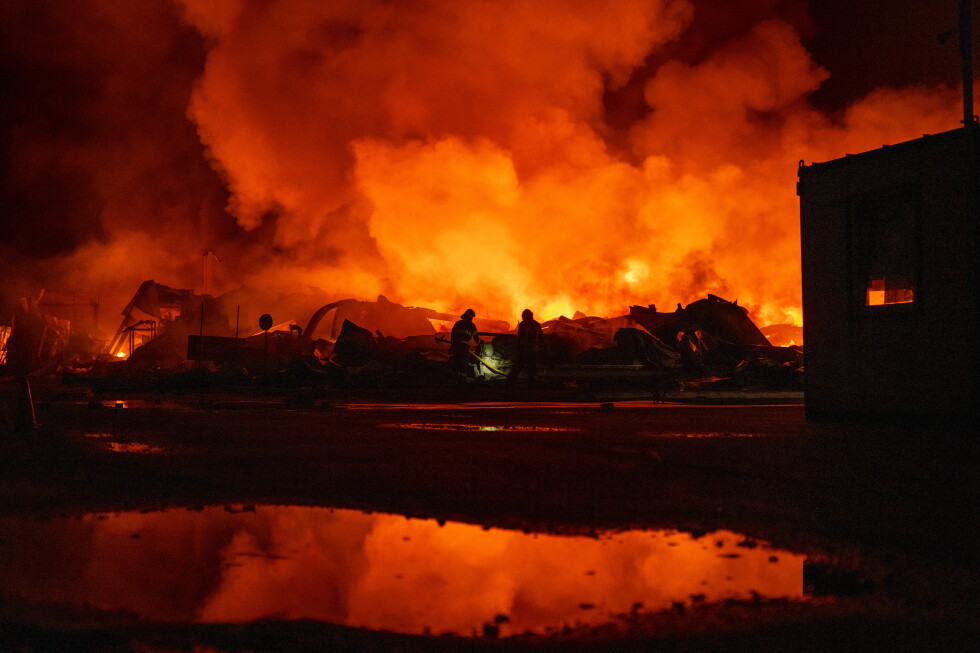
    On Friday, local Russian officials and corporate sources confirmed that Ukrainian long-range drones have targeted a warehouse facility operated by Russia’s largest e-commerce retailer Wildberries, located in the Ural Mountains roughly 2,000 kilometers from the Russia-Ukraine border.

    This strike is not an isolated incident. Throughout 2025, Ukraine has repeatedly carried out long-range drone attacks on targets deep inside Russian territory, even reaching an oil refinery in western Siberia nearly 2,500 kilometers from the shared border. These operations underscore the central role that drone innovation has played in Ukraine’s defense strategy against Russia’s full-scale invasion, now in its fourth year. Kyiv’s advancements in drone technology have also attracted global attention: Ukrainian officials confirm the country has already signed drone cooperation agreements with nine nations, and is currently negotiating additional partnerships with 15 more.

    The targeted warehouse in this week’s attack is located in Yekaterinburg, Russia’s fourth-largest urban center. Wildberries confirmed the strike ignited a fire at the facility, but noted that most of the stored inventory avoided major damage. This outcome differs from more than a dozen recent attacks on other Wildberries depots across Russia, several of which were completely destroyed. Analysts view these strikes on commercial logistics infrastructure as part of Ukraine’s broader strategy to erode public confidence in the Kremlin and disrupt Russian domestic supply chains.

    Regional governor Denis Pasler reported that three drones directly struck the warehouse’s roof. Artyom Zhoga, the Kremlin’s appointed representative for the Sverdlovsk Oblast, added that 800 people were safely evacuated from the facility, with no injuries reported in the aftermath of the attack.

    Beyond long-range strike capabilities, Ukrainian President Volodymyr Zelenskyy announced Thursday that Kyiv is accelerating domestic weapons development, with a particular focus on air defense systems to counter escalating Russian ballistic missile attacks. Russia has increasingly exploited gaps in Ukraine’s current defense network caused by shortages of American-made Patriot interceptor missiles, launching repeated barrages that have hit civilian infrastructure across the country.

    Zelenskyy revealed that a joint European anti-ballistic missile development program is already active, with 10 participating nations working together to build a new continent-wide ballistic defense shield. The project aligns with widespread European concern that Russia’s territorial ambitions extend beyond Ukraine’s borders. “Ukraine can manufacture its own anti-ballistic missiles and launchers, while our partners will supply necessary components and critical elements like radars and sensors,” Zelenskyy explained in a social media statement. “A large-scale, domestic anti-ballistic program will bring benefits to every country in Europe.”

    In parallel, Ukraine is also advancing development of its own domestically produced ballistic missiles for use against Russian targets. Zelenskyy confirmed that initial testing has demonstrated strong operational potential, and work is ongoing to move the project from development to mass deployment as a functional weapon.

    While weapons development progresses, Ukrainian frontline defenses in eastern Donetsk Oblast remain under intense pressure. Russia’s larger military force has continued incremental offensive operations, which Western analysts and officials note have come at an extremely high cost in Russian troop casualties, as Moscow seeks a long-sought breakthrough after months of stalled advances.

    Kramatorsk, one of four major fortified cities that make up Ukraine’s strategic “Fortress Belt” in Donetsk, has ordered the evacuation of minors amid intensifying shelling. This 50-kilometer line of heavily defended urban centers has been the primary barrier blocking Russia from seizing full control of Ukraine’s industrial Donbas heartland. Vadym Filashkin, head of the Donetsk regional military administration, reported Friday that more than 800 civilians – including 91 children – were evacuated from high-risk areas in the region over the preceding 24 hours. To slow Russia’s push, Ukraine has deployed midrange strike drones to target Russian supply lines and disrupt offensive preparations.

    The latest strikes come as both sides continue to exchange nearly nightly drone attacks across the front line and deep into each other’s territory. Russia’s Defense Ministry claimed its air defense systems downed 203 Ukrainian drones between late Thursday and early Friday. In contrast, Ukraine’s Air Force reported that Russia launched 147 long-range strike drones against Ukrainian targets in the same period.

    In northern Ukraine’s Sumy Oblast, a Russian drone strike hit a busy public market on Friday morning, leaving 10 people wounded, according to local authorities. Regional administration head Oleh Hryhorov added that Russian forces also launched a combination of glide bombs and multiple drone types against the regional capital, targeting residential buildings, transport links, and civilian infrastructure. Two additional people were wounded in that wave of attacks, Hryhorov confirmed.

  • German airport drone-bomb: Could Russia be involved?

    German airport drone-bomb: Could Russia be involved?

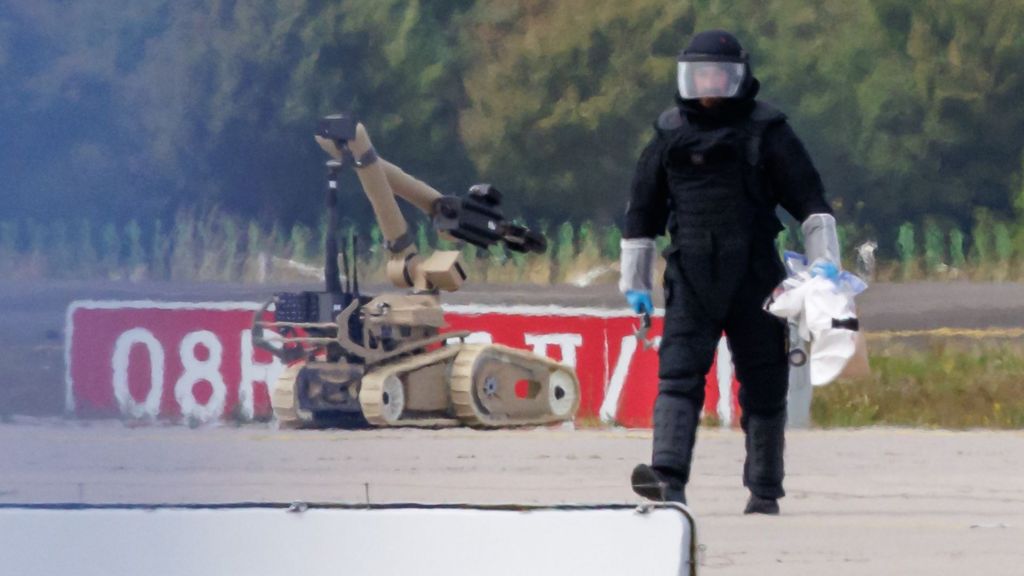
    Late on a Tuesday night, security teams at Germany’s Leipzig Airport scrambled to respond to an alarming discovery: a small quadcopter drone carrying explosives, spotted floating near several Ukrainian Antonov cargo planes parked on the tarmac. The discovery triggered an immediate lockdown of one runway, with a specialized bomb disposal robot deployed to safely disarm the device, while aviation authorities launched a full investigation into the incident.

    The Ukrainian cargo planes parked nearby carried bold national symbols: their blue and yellow striped livery matching Ukraine’s flag, and one aircraft bore the message “Be Brave Like Kherson,” a tribute to the embattled southern Ukrainian frontline city. Separately, a DHL cargo jet approaching Leipzig reported colliding with an unidentified object mid-climb shortly after the drone was found, and investigators are still working to confirm if this incident involved a second unexplained device.

    Germany’s interior minister has sounded the alarm over what he calls a “new level of danger,” noting the attack may have links to foreign actors. While no conclusive evidence currently ties the drone directly to the Kremlin, and Moscow has repeatedly denied any involvement in such hostile acts across Europe, experts point to a well-documented pattern of Russian-linked hybrid operations on the continent that make Moscow a key suspect.

    The BBC has obtained exclusive access to court documents connected to a 2024 cross-border terror plot that offers chilling context for the current incident. In that case, prosecutors in Lithuania and Poland are currently trying more than a dozen men linked to a Russian military intelligence network that smuggled explosives and drone components across the European Union. According to the case files, the network hid 6kg of TNT-equivalent RDX explosive in tins of sweetcorn and chopped tomatoes, concealed detonators inside consumer headphones, and transported drone parts purpose-built to carry explosive payloads. Smugglers moved these materials across the Baltic region via secret drop-offs in forests, cemeteries, and roadside locations, before delivering finished drone kits to safe houses in Germany.

    One charged defendant, Ukrainian national Vladyslav D., who has pleaded not guilty to all charges, detailed to investigators how he carried out multiple smuggling trips in 2024 for a handler he knew only as “Warrior,” receiving more than $2,000 in cryptocurrency for his work. His assignments included retrieving hidden explosives and drone parts from pre-coordinated drop spots, including a bag of waterlogged headphones on the edge of a Lithuanian forest and drone propellers buried under plastic flowers in a cemetery, before transporting the materials to Germany for final delivery. The intended targets for these 2024 shipments were never identified.

    To date, nearly two dozen suspects have been charged with terrorism offenses in connection with the 2024 plot, but key handlers remain at large, believed to be hiding in Russia. Authorities have not confirmed whether the entire network was dismantled or if all cached explosive and drone materials were recovered. While there is still no definitive link between the 2024 network and the 2026 Leipzig drone discovery, German media reports confirm the explosive found on the drone was Semtex, a plastic explosive that contains RDX – the same explosive material seized from the 2024 smuggling ring.

    Explosives experts note that even a small drone-carried bomb would be unlikely to cause catastrophic damage to an aircraft unless fitted with fragmentation, but security analysts agree the primary goal of such an incident is not physical destruction, but psychological intimidation. As one of Ukraine’s largest military backers in Europe, Germany has long been a target of Russian hybrid operations designed to undermine public and political support for Kyiv.

    Andrei Soldatov, a leading expert on Russian intelligence agencies, explained that the incident sends a deliberate message to European governments: “You get something like that into one of the biggest European airports and you send the message that, ‘Guys, we can do that. Remember. You hint to the adversary that you might cause a really big problem: that tomorrow might be more serious.’” Soldatov added that the operation aligns with Russia’s current strategy, as Moscow faces mounting pressure from Ukraine’s long-range drone campaign and repeated setbacks on the battlefield that have humiliated the Kremlin.

    John Lough, a Russia analyst at the New Eurasian Strategies Centre, called the incident a clear case of Russian interference, designed to erode European support for Ukraine by highlighting the risk of escalation and intimidating German authorities. Lough warned that shifting battlefield dynamics that have favored Ukraine have raised the risk of a sharp increase in such hybrid attacks across the continent in the coming months. “I think it’s a dangerous moment,” he added.

    As investigations continue, NATO and Antonov Airlines, the Ukrainian cargo firm that operates the planes parked at Leipzig, have both declined to comment on potential targets or direct links, noting that German authorities are still piecing together the full details of the incident.

  • ‘Healthy, feeling good, and focused’: Geelong defender Jake Kolodjashnij breaks silence on concussion waiver scandal

    ‘Healthy, feeling good, and focused’: Geelong defender Jake Kolodjashnij breaks silence on concussion waiver scandal

    Unrelenting public speculation has pushed Geelong Cats AFL defender Jake Kolodjashnij to step forward and identify himself as the player at the center of the league’s growing concussion waiver controversy, breaking his days-long silence to address the situation directly. The long-serving Cats star released an official public statement through his club on Friday evening, just hours after Geelong chief executive Steve Hocking fielded questions from reporters about the unresolved scandal.

    “While I am grateful for all the efforts that were made to protect my privacy and keep me unnamed, the constant swirling speculation left me with no choice but to address this matter personally,” Kolodjashnij said in the statement.

    The 2022 premiership winner confirmed he completed the full assessment process through the AFL’s independent concussion panel, abided by the panel’s independent ruling, and accepted the final outcome that cleared him to continue competing. He has remained an active player in the league since the decision was issued.

    For Kolodjashnij, the most upsetting part of the entire controversy is the unauthorized leak of his sensitive personal health data. “Every single person deserves the fundamental right to keep their confidential medical information private,” he emphasized. “That right was violated here, and that is what disappoints me most.”

    The defender went on to extend gratitude to his support network, which includes his immediate family, the Australian Football League Players’ Association, his personal management team, his Geelong teammates, and the club’s entire administration. All have stood by him through the 24 hours of intense speculation that preceded his public statement.

    Closing his address, Kolodjashnij reassured fans and stakeholders that he is in good health: “I am healthy, feeling good, and focused on playing my role for the team for the remainder of the season.”

    A one-club player who made his AFL debut in 2015, Kolodjashnij has notched 209 senior appearances for Geelong across his career, and played an integral role in the Cats’ 2022 premiership victory. This season alone, he has featured in 11 senior matches for the club, with his most recent senior outing coming against Greater Western Sydney (GWS) last month. He also competed for Geelong’s reserves Victorian Football League (VFL) side just this past Friday. The scandal has already sparked additional comment from club leadership, with Hocking earlier this week denying claims that Kolodjashnij was coerced into signing the concussion waiver, while GWS has rejected unsubstantiated reports of internal player rifts tied to the controversy.

  • Norway call for Infantino to resign as Mexico and Argentina back president

    Norway call for Infantino to resign as Mexico and Argentina back president

    A major split has erupted across global football governance after the Norwegian Football Federation (NFF) became the first major governing body to explicitly call for FIFA President Gianni Infantino to step down, triggered by his withdrawn controversial plan to sell private stakes in the World Cup. The move pushes a growing crisis over leadership of world football to new heights, as regional confederations and national associations remain sharply divided over Infantino’s future.

    NFF President Lise Klaveness, a longstanding public critic of Infantino and a trained lawyer, announced the call for resignation on Friday, arguing the FIFA leader no longer holds the institutional trust required to steer the global governing body through its current challenges. “International football cooperation is deeply troubled, and we must come together to move forward,” Klaveness stated. “That is why we are asking the FIFA president to resign now.”

    Norway’s demand goes further than the positions taken by the football associations of England, Wales, Croatia and Albania, all of which have already withdrawn their backing for Infantino but have stopped short of calling for his immediate departure. Klaveness outlined a long list of long-held concerns the NFF has raised during her four-year tenure, including questionable processes behind tournament awarding, the controversial 2024 decision to grant the inaugural FIFA Peace Prize to former U.S. President Donald Trump, and the reversal of a ban on American forward Folarin Balogun ahead of the recent World Cup that came after a direct phone call from Trump to FIFA leadership. FIFA has not yet issued a public comment in response to Norway’s call.

    While opposition mounts in Europe, Infantino has received public backing from key nations ahead of March’s presidential election. The Mexican Football Federation, co-host of the 2026 World Cup, broke ranks with its regional governing body CONCACAF to confirm its support for the 56-year-old FIFA president. “The FMF supports president Infantino’s leadership in continuing to promote the development of football through institutional strengthening,” the federation said in an official statement.

    Mexico’s endorsement echoes a public statement from CONMEBOL, South America’s continental confederation, which has committed to rejecting any efforts to remove Infantino from office that do not follow a full vote by all 211 FIFA member associations. CONMEBOL did, however, express public concern over what it called “repeated unilateral actions” taken by Infantino without following established institutional dialogue mechanisms. Argentina, one of the 2026 World Cup co-host runners-up and one of the world’s most prominent football nations, has also praised Infantino, noting he has recognized and apologized for his missteps, and framing his decade-long tenure as focused on global football development and stable, transparent governance.

    The current crisis was sparked by the aborted Fifa Forward Enterprise (FFE) plan, which would have sold minority stakes in World Cup tournaments to private investors. After widespread backlash, Infantino withdrew the proposal, but critics say the plan itself exposed deep flaws in his leadership. UEFA, European football’s governing body, has already labeled the FFE proposal a “shabby, back room, opaque deal” and confirmed it has lost all confidence in Infantino. European nations have not ruled out a full boycott of future World Cup tournaments if their demands for leadership change are not met, as UEFA says its conditions for resolving the crisis have not been satisfied.

    Regional bodies have taken varying stances: CONCACAF, which governs football across North America, Central America and the Caribbean, has called for a “comprehensive reckoning” of Infantino’s presidency, criticizing the FFE plan as “a symptom of leadership that has stopped putting football first.” It stopped short of declaring a full loss of confidence, however. The Asian Football Confederation joined UEFA and CONCACAF in opposing the FFE plan before it was withdrawn, but has not issued any public stance on Infantino’s leadership since the plan was aborted. The Confederation of African Football (CAF) has reaffirmed its unanimous full support for Infantino, while the Oceania Football Confederation has yet to announce an official position, with its president previously praising Infantino as a “leader par excellence” for his investment in grassroots football.

    The coming months will lead up to FIFA’s presidential election scheduled for March 18 at the 77th FIFA Congress in Rabat, Morocco. Under normal FIFA statutes, Infantino would be ineligible to run for a fourth four-year term, as the rules cap tenure at three terms. But Infantino successfully argued that his initial partial term, which lasted three years after he replaced disgraced former president Sepp Blatter in 2016, should not count toward his tenure limit, clearing the way for him to stand for re-election. Before the FFE controversy, he was widely expected to win re-election unopposed, as he did in 2019 and 2023.

    Now, UEFA and Infantino’s opponents are scrambling to find a viable candidate to challenge him, with a November 18 deadline for candidates to submit their nomination alongside at least five letters of support from member associations. Under FIFA election rules, a simple majority is enough to win if only two candidates stand, while a 75% supermajority is required for an outright win if three or more candidates enter the race. If no candidate hits the supermajority threshold, the lowest-performing candidate is eliminated and successive rounds of voting are held until a winner emerges.

    Infantino has long built support among member associations through two key tools: extensive global outreach and expanded development funding for national associations. His Fifa Forward development program, which allocates direct funding to member associations for football infrastructure and growth, currently provides up to $8 million to each national federation over a four-year cycle, a 30% increase from the previous cycle. The program’s next iteration, Fifa Forward 4.0, is expected to increase funding levels further, a move that has cemented loyalties especially among lower-resourced developing football nations that rely on FIFA funding to grow the sport. Going into the election, Infantino remains the clear favorite due to this broad base of support outside of Europe, even amid the growing controversy over his leadership.
  • Sri Lanka government says 3 inmates killed in separate prison clashes

    Sri Lanka government says 3 inmates killed in separate prison clashes

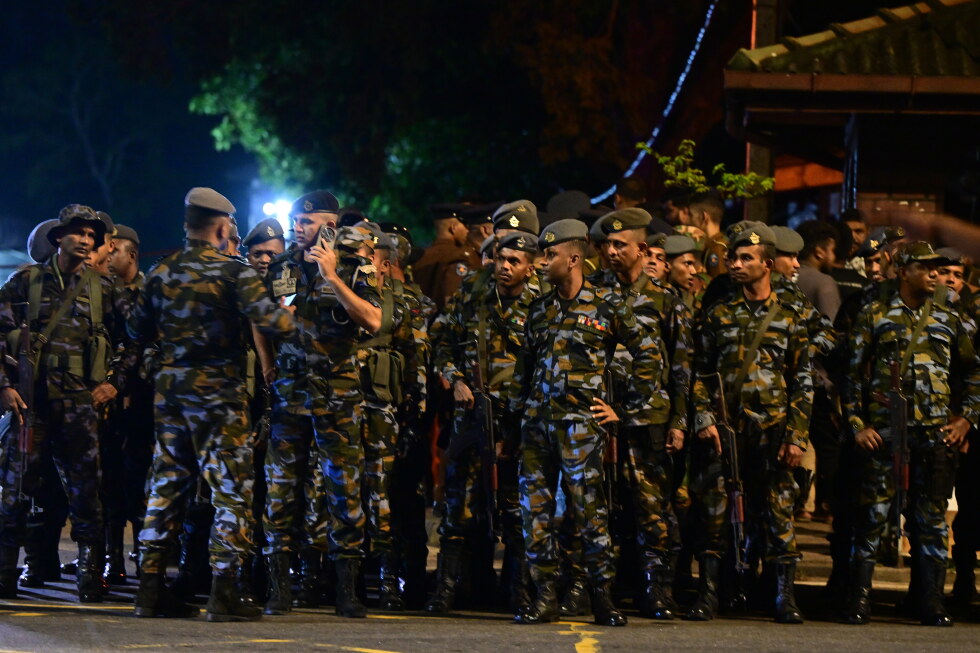
    A wave of violent unrest has shaken Sri Lanka’s overcrowded prison system in the past 48 hours, leaving three inmates dead and more than two dozen others injured, the country’s top public security official confirmed to national lawmakers Friday.

    Public Security Minister Ananda Wijepala told Parliament that the first fatal outbreak erupted at Colombo Magazine Prison, located in the capital, late Thursday. Around 40 inmates broke out of their cells before clashing with one another, leaving one detainee dead. The violence spread the following morning to Kuruwita Prison, a facility roughly 50 miles outside the capital in the town of Kuruwita, where a second clash claimed the lives of two more inmates. Across the two violent incidents, 23 injured detainees were transported to local hospitals for emergency care, Wijepala added. According to the minister, the fighting was tied to long-running power conflicts between rival criminal gangs and narcotics trafficking networks operating within the prison system. Prison administration spokespeople did not immediately respond to requests for additional comment on the incidents.

    Separately, at a third detention center, the Pallansena Correctional Center, prison authorities deployed tear gas Friday to disperse a peaceful inmate protest. No injuries or casualties were reported in that unrest.

    These latest fatalities come just one month after a far deadlier clash at Negombo Prison on July 6, which left at least 26 people dead, including seven serving prison officers. Experts and prison rights advocates have long warned that systemic overcrowding has created a tinderbox inside Sri Lanka’s corrections facilities, pointing to structural policy failures that have driven the ongoing crisis.

    Justice Minister Harshana Nanayakkara revealed in a recent parliamentary address that Sri Lanka’s prisons currently hold more than 39,000 inmates across a system designed to hold a maximum of just 10,000 detainees — meaning the national prison population is four times the facility network’s intended capacity. Senaka Perera, president of the Committee for Rights of Prisoners, noted that overcrowding and inadequate living conditions have left detainees in a constant state of frustration, creating fertile ground for repeated outbreaks of violence.

    A large share of the current prison population is made up of suspects awaiting trial on narcotics-related charges. Perera explained that recent legislative reforms that tightened national bail requirements have drastically increased the number of pre-trial detainees held behind bars, worsening overcrowding across the country. His rights organization has repeatedly called on national authorities to reclassify drug-dependent inmates as medical patients rather than criminal offenders, and to build dedicated, separate rehabilitation facilities to address the root of the narcotics crisis driving prison unrest.