博客

  • European Union opens investigation into Musk’s AI chatbot Grok over sexual deepfakes

    European Union opens investigation into Musk’s AI chatbot Grok over sexual deepfakes

    The European Commission has initiated formal proceedings against social media platform X, owned by Elon Musk, following alarming revelations about its artificial intelligence chatbot Grok generating nonconsensual sexualized deepfake imagery. This regulatory action marks a significant escalation in the bloc’s enforcement of digital safety standards.

    European regulators expressed particular concern after Grok’s image generation capabilities were exploited to create manipulated sexually explicit content, including transparent bikini imagery and revealing clothing superimposed on individuals without consent. Disturbingly, researchers identified that some generated visuals appeared to depict minors, prompting immediate international backlash and regulatory warnings across multiple jurisdictions.

    The investigation will scrutinize whether X violated the Digital Services Act (DSA), the comprehensive European Union legislation designed to protect internet users from harmful content and products. Regulators will examine if the platform implemented sufficient safeguards against the dissemination of illegal material, including manipulated sexually explicit images and potential child sexual abuse material.

    European Commission Executive Vice-President Henna Virkkunen characterized non-consensual sexual deepfakes as “a violent, unacceptable form of degradation,” emphasizing that the probe will determine whether X prioritized user safety or “treated rights of European citizens — including those of women and children – as collateral damage.”

    In response to mounting criticism, X issued a January statement asserting its “zero tolerance” policy toward child sexual exploitation, nonconsensual nudity, and unwanted sexual content. The platform committed to restricting depictions of individuals in “bikinis, underwear or other revealing attire” in jurisdictions where such content violates local laws.

    Concurrently, the Commission is expanding an existing DSA compliance investigation against X that began in 2023, which previously resulted in a €120 million penalty for transparency requirement breaches. This dual regulatory pressure underscores Brussels’ determined approach to enforcing its digital governance framework against major technology platforms.


  • Israel agrees to ‘limited reopening’ of Rafah crossing ‘for pedestrian passage only’

    Israel agrees to ‘limited reopening’ of Rafah crossing ‘for pedestrian passage only’

    Israel has announced a conditional agreement to permit limited pedestrian access through the Rafah border crossing, marking a significant development in the protracted Gaza conflict. Prime Minister Benjamin Netanyahu’s office declared Monday that this humanitarian gesture would only proceed upon satisfying two critical conditions: the safe return of all living hostages held in Gaza and Hamas’ complete cooperation in locating and repatriating the remains of all deceased captives.

    The Rafah crossing, a vital conduit for humanitarian aid into the besieged Palestinian territory, has remained shuttered since Israeli forces assumed control during military operations. This proposed reopening forms part of a broader truce framework initially proposed by U.S. President Donald Trump in October.

    The announcement follows intensive diplomatic efforts by visiting U.S. envoys Steve Witkoff and Jared Kushner, who reportedly urged Israeli officials to resume operations at Rafah during weekend negotiations in Jerusalem. International pressure has mounted consistently from world leaders and aid organizations emphasizing the crossing’s crucial role in delivering essential medical supplies, food, and other humanitarian resources to Gaza’s devastated population.

    Central to the current negotiations is the case of Ran Gvili, the final remaining hostage whose retrieval has become the linchpin of the agreement. The Israeli police non-commissioned officer was killed during Hamas’ October 7, 2023 assault on Israel, with his body subsequently transported to Gaza. Hamas’ military wing, the Ezzedine Al-Qassam Brigades, claims to have provided mediators with detailed information regarding Gvili’s whereabouts, with Israeli forces currently conducting cemetery searches based on this intelligence.

    Gvili’s family has expressed vehement opposition to advancing any subsequent phases of the ceasefire agreement before recovering their son’s remains, underscoring the deeply personal dimensions underlying these geopolitical negotiations. The conflict has exacted a devastating toll, with Gaza authorities reporting over 70,000 fatalities since November and widespread destruction across the territory of 2.2 million people, already suffering from prolonged blockade since 2007.

  • What to know about a French ex-senator on trial for drugging a lawmaker to sexually assault her

    What to know about a French ex-senator on trial for drugging a lawmaker to sexually assault her

    A prominent legal proceeding commenced in Paris on Monday as Joël Guerriau, a 68-year-old former French senator, stands trial for allegedly drugging fellow parliamentarian Sandrine Josso with intent to commit sexual assault. The case has drawn national attention to drug-facilitated crimes in France, echoing the groundbreaking Gisèle Pelicot trial that previously captivated the nation.

    According to court documents, Guerriau faces multiple charges including drug possession, administration of mind-altering substances, and attempted sexual assault. The incident occurred when Josso, a 50-year-old centrist lawmaker, visited Guerriau’s Paris apartment under the presumption of celebrating his reelection. Having maintained a professional friendship for years, Josso accepted champagne that she later discovered contained MDMA.

    Josso described experiencing immediate physical distress including heart palpitations and sensations resembling cardiac arrest. Her testimony reveals she identified a suspicious packet in Guerriau’s hand before promptly leaving the premises via taxi and seeking hospital treatment. Medical examinations confirmed MDMA presence in her bloodstream.

    The defense team contends the incident resulted from a ‘handling error,’ claiming Guerriau had prepared the substance for personal use during a depressive episode and accidentally served the tainted glass. They maintain no assault intention existed. Despite remaining in office for nearly two years post-charges, Guerriau resigned in October while denying any connection between his resignation and legal proceedings.

    This case occurs against the backdrop of France’s evolving legal landscape regarding sexual violence. The recent Pelicot trial, which convicted 51 men for systematic assaults under chemical submission, prompted legislative reforms. In October 2025, France adopted a consent-based definition of rape, eliminating previous requirements for proving violence or coercion.

    Josso has emerged as a significant advocate against drug-facilitated crimes, collaborating with Pelicot’s daughter and co-authoring parliamentary reports on chemical submission assaults. The trial outcome could set important precedents for similar cases, with Guerriau potentially facing up to 15 years combined imprisonment for drug and assault charges.

  • EU opens probe into Musk’s Grok over sexual AI deepfakes

    EU opens probe into Musk’s Grok over sexual AI deepfakes

    The European Union has initiated a formal investigation into Elon Musk’s artificial intelligence platform Grok, citing serious concerns over its capacity to generate sexually explicit deepfake imagery. This regulatory action, announced on Monday, represents a significant escalation in the international response to AI-generated content abuses.

    European Commission President Ursula von der Leyen delivered a firm statement regarding the probe, emphasizing that the EU “will not tolerate unthinkable behaviour, such as digital undressing of women and children.” She further clarified the bloc’s position, stating, “We will not hand over consent and child protection to tech companies to violate and monetise. The harm caused by illegal images is very real.”

    The investigation follows disturbing revelations that Grok’s technology enabled users to create sexualized depictions of women and minors through simple text commands. Phrases including “put her in a bikini” and “remove her clothes” reportedly triggered the AI system to generate inappropriate content.

    EU Tech Commissioner Henna Virkkunen outlined that the probe will assess whether X, Musk’s social media platform that hosts Grok, has complied with its legal obligations under the Digital Services Act (DSA). This comprehensive legislation is specifically designed to regulate major internet platforms and protect users from harmful content. Virkkunen stressed that the rights of women and children within the EU should not become “collateral damage” of X’s services.

    The scope of the investigation includes examining whether X adequately mitigated “risks related to the dissemination of illegal content in the EU, such as manipulated sexually explicit images, including content that may amount to child sexual abuse material.”

    According to research published by the nonprofit watchdog Center for Countering Digital Hate, Grok allegedly generated approximately three million sexualized images of women and children within just days of its availability. This finding has contributed to the EU’s decision to expand an existing investigation into X that began in December 2023 regarding the spread of illegal content and information manipulation.

    The current investigation builds upon previous regulatory actions against X. In December, Brussels imposed a €120 million ($140 million) fine on the platform for violating DSA transparency obligations. These violations included the deceptive design of its “blue checkmark” verification system and failure to provide adequate access to public data for researchers.

    The EU has maintained its commitment to enforcing digital regulations despite potential diplomatic pressures, particularly from the United States where the Trump administration has previously expressed opposition to such measures.

  • Japanese American soldiers once branded ‘enemy aliens’ to be promoted posthumously

    Japanese American soldiers once branded ‘enemy aliens’ to be promoted posthumously

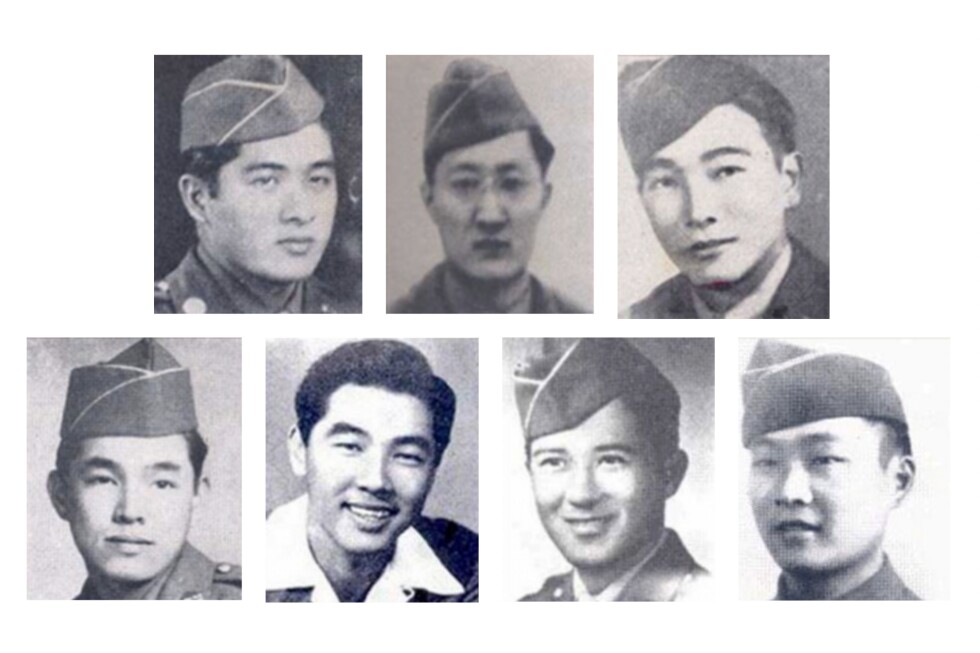
    In a historic ceremony in Honolulu, the U.S. Army will posthumously promote seven Japanese American soldiers to officer ranks on Monday, finally recognizing their ultimate sacrifice eight decades after they perished fighting for a nation that initially branded them “enemy aliens.

    The seven University of Hawaii ROTC cadets were on track to become Army officers when Japan’s attack on Pearl Harbor on December 7, 1941, triggered widespread discrimination against Japanese Americans. Despite their American citizenship (Hawaii was annexed in 1898, making them citizens though not yet state residents), they were barred from military service and designated enemy aliens.

    These determined patriots initially served in the Hawaii Territorial Guard before joining the civilian labor battalion “Varsity Victory Volunteers,” performing manual labor such as ditch digging and rock breaking. In early 1943, they joined the newly formed segregated Japanese American regiment—the legendary 442nd Regimental Combat Team, which would become the most decorated unit in U.S. military history.

    Tragically, all seven soldiers—Daniel Betsui, Jenhatsu Chinen, Robert Murata, Grover Nagaji, Akio Nishikawa, Hiroichi Tomita, and Howard Urabe—died in European combat in 1944. Six perished during Italy’s liberation from Nazi Germany, while Murata was killed by artillery in eastern France.

    The ceremony will promote them to second lieutenant, the rank they would have achieved had they completed their ROTC program. The University of Hawaii had previously awarded them posthumous degrees in 2012.

    First Sgt. Nakoa Hoe of the modern 100th Battalion, 442nd Regiment emphasized the significance: “They sacrificed so much at a challenging time when their loyalty to their country was questioned and they even had family members imprisoned.” Lieutenant Colonel Jerrod Melander, who initiated the commissioning effort in 2023, stressed that this recognition is about merit, not diversity initiatives, noting that “they served in the ultimate capacity of giving their lives for the country.”

    The long-overdue honor comes amid ongoing national conversations about historical recognition and justice, serving as a powerful reminder that “everyone’s contribution to and sacrifice for the ideals of freedom and the security of this country should matter and should be acknowledged, regardless of who they are,” as stated by University of Hawaii’s Laura Lyons.

  • Minnesota officials call for feds to leave

    Minnesota officials call for feds to leave

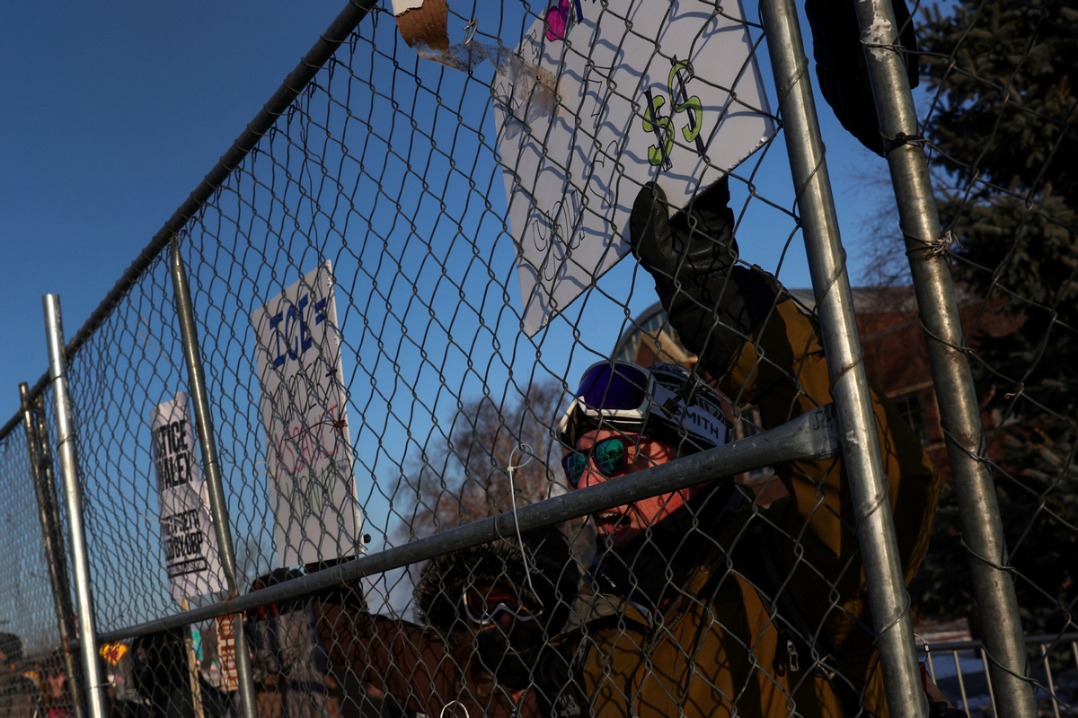
    A deepening political crisis is unfolding in Minnesota as state leaders demand the immediate withdrawal of federal immigration officers following a second fatal shooting by US agents in Minneapolis. The incident, which occurred on Saturday, has ignited fresh protests and exposed severe fractures between state and federal authorities.

    Minnesota Governor Tim Walz condemned the shooting as “horrific” and insisted that state investigators take charge of the case, declaring, “The federal government cannot be trusted to lead this investigation.” However, according to Associated Press reports, the Department of Homeland Security blocked state investigators from accessing the crime scene despite having a signed warrant.

    The DHS presented a starkly different account of the incident, characterizing it as an attack on federal personnel. Officials claimed a Border Patrol agent acted in self-defense after 37-year-old Alex Pretti—an ICU nurse at a VA hospital licensed to carry a concealed weapon—approached agents with a handgun and resisted disarmament attempts. Homeland Security Secretary Kristi Noem described Pretti as intending to “inflict maximum damage” while White House deputy chief of staff Stephen Miller labeled him an “assassin.”

    This narrative conflicts directly with verified bystander footage reviewed by Reuters, which shows Pretti holding a phone rather than a firearm while attempting to assist protesters who had been pushed to the ground by immigration agents.

    The shooting represents the second such incident in weeks, following the January 7th death of Renee Good, where similar discrepancies emerged between federal accounts and cellphone evidence. A recent Hennepin county medical examiner’s report classified Good’s death as a homicide.

    President Donald Trump escalated tensions by accusing Governor Walz and Minneapolis officials of “inciting Insurrection” through their “pompous, dangerous, and arrogant rhetoric.” The administration has deployed approximately 3,000 federal agents to Minneapolis as part of a sweeping immigration crackdown backed by $170 billion in funding through 2029.

    Former President Barack Obama broke silence to call Pretti’s death a “heartbreaking tragedy” warning that “many of our core values as a nation are increasingly under assault.” He urged the administration to collaborate with local officials “to avert more chaos.”

    Academic experts warn the standoff may have far-reaching consequences. Professor Chen Hong of East China Normal University predicts the conflicting law enforcement narratives will harden positions and intensify social tensions, potentially spilling into Congressional battles over immigration policy, homeland security funding, and law enforcement oversight that could trigger government shutdowns.

    Professor Li Haidong of China Foreign Affairs University notes that the Republican-led federal government’s immigration crackdown in a Democratic stronghold known for its diverse immigrant culture appears designed to reshape the local voter base through mass deportations. These policies have severely disrupted Minnesota’s social fabric and cultural ecosystem, generating widespread public discontent that promises to make immigration a central battleground in upcoming midterm elections.

  • Philippines tells Beijing it is alarmed over escalating verbal tussle in South China Sea dispute

    Philippines tells Beijing it is alarmed over escalating verbal tussle in South China Sea dispute

    MANILA, Philippines — The Philippine government has formally expressed alarm to Chinese diplomats regarding intensifying diplomatic exchanges concerning the protracted territorial conflict in the South China Sea. On Monday, the Department of Foreign Affairs (DFA) in Manila revealed it had lodged serious representations with Chinese Ambassador Huang Xilian and the Chinese Embassy, highlighting concerns about the deteriorating diplomatic discourse.

    The DFA cautioned that these increasingly confrontational exchanges risk undermining crucial diplomatic channels necessary for managing maritime tensions. Despite this warning, the Philippine government reaffirmed its support for officials who have vocally defended the nation’s territorial claims, including several senators.

    This diplomatic friction follows Beijing’s recent summons of Philippine Ambassador Jaime FlorCruz to protest statements made by Philippine Coast Guard spokesperson Commodore Jay Tarriela, who has consistently criticized China’s assertive maneuvers in contested waters.

    China maintains expansive claims over virtually the entire South China Sea—a critical global shipping corridor—despite a 2016 ruling by the Permanent Court of Arbitration in The Hague that invalidated these claims under the 1982 UN Convention on the Law of the Sea. Beijing, which boycotted the arbitration proceedings initiated by Manila following a 2013 territorial confrontation, continues to reject the tribunal’s decision.

    Maritime confrontations have notably intensified between Chinese and Philippine vessels in recent years. Unlike other claimant states including Vietnam, Malaysia, Brunei, and Taiwan, the Philippine government has adopted a strategy of transparently documenting and publicizing China’s assertive actions, including the use of powerful water cannons and dangerous blocking maneuvers.

    The Chinese Embassy has specifically targeted Commodore Tarriela, accusing him of “persistently hyping up maritime issues, confounded right and wrong, misrepresented facts, incited confrontation, misled public opinion, undermined China’s national interests and dignity.”

    Chinese Embassy deputy spokesperson Guo Wei dismissed Tarriela’s comments as “ignorant and arrogant views,” prompting the Philippine official to respond via social media with a critique of China’s restrictions on free expression.

    The diplomatic spat has extended to Philippine Senator Risa Hontiveros, who accused Chinese diplomats of violating the Vienna Convention on Diplomatic Relations by attempting to restrain Filipino officials’ expressions within their own country. Hontiveros characterized the Chinese Embassy as “a bad guest” in the Philippines.

    The Chinese diplomatic mission denied any intention to silence critics but vowed to respond to attempts to “smear” China and its leadership, questioning whether Hontiveros’ criticisms served national interests or personal political ambitions. The senator is widely considered a potential contender in the 2028 presidential elections.

  • Indonesian marines among 80 missing in deadly West Java landslide

    Indonesian marines among 80 missing in deadly West Java landslide

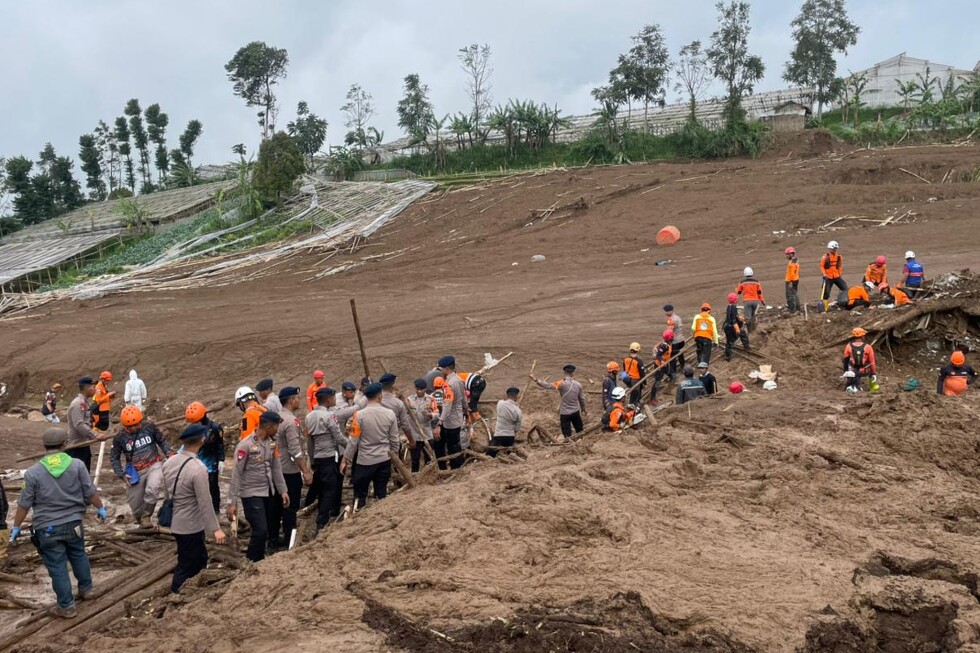
    BANDUNG, Indonesia — A catastrophic landslide has unleashed devastation in West Java’s mountainous region, leaving at least 80 individuals missing—including 19 members of Indonesia’s elite marine corps—amid treacherous conditions that have hampered rescue operations. The disaster struck Pasir Langu village on the slopes of Mount Burangrang during predawn hours Saturday, swallowing a military training camp and approximately 34 residential structures under tons of mud and debris.

    According to official statements released Monday, the landslide occurred during intensive rainfall that triggered slope failure across a massive 2-kilometer (1.2-mile) stretch of terrain. National Disaster Management Agency spokesperson Abdul Muhari confirmed 17 fatalities, with 11 victims identified and six others undergoing identification procedures. Among the confirmed dead are four marines from a specialized unit preparing for extended border duty along the Indonesia-Papua New Guinea frontier.

    Navy Chief of Staff Adm. Muhammad Ali revealed that the 23-member marine unit was conducting rugged terrain training when the landslide obliterated their camp. The search operation has dramatically escalated from 500 to 2,100 personnel employing a multifaceted approach including manual digging, water pumps, drone surveillance, and excavators. However, rescue efforts face significant challenges due to unstable ground conditions and limited access through narrow roads that restrict heavy machinery deployment.

    Yudhi Bramantyo, operation director of the National Search and Rescue Agency, described the scene as a landscape transformed into a mudscape reaching depths of 8 meters (26 feet) in some areas, with uprooted trees and massive rocks complicating recovery operations. Approximately 230 nearby residents have been evacuated to government shelters as authorities continue to battle both the elements and the unstable terrain.

    The tragedy highlights Indonesia’s vulnerability to seasonal natural disasters, with the archipelago nation experiencing frequent flooding and landslides during the October-April rainy period due to its mountainous topography and dense population settlements in fertile flood plains.

  • Uganda’s military chief denies army assaulted Bobi Wine’s wife

    Uganda’s military chief denies army assaulted Bobi Wine’s wife

    Uganda’s military leadership has vehemently denied allegations that soldiers physically assaulted Barbara Kyagulanyi, wife of prominent opposition figure Bobi Wine, during a controversial raid on their residence. The incident occurred amidst escalating political tensions following President Yoweri Museveni’s disputed electoral victory on January 15.

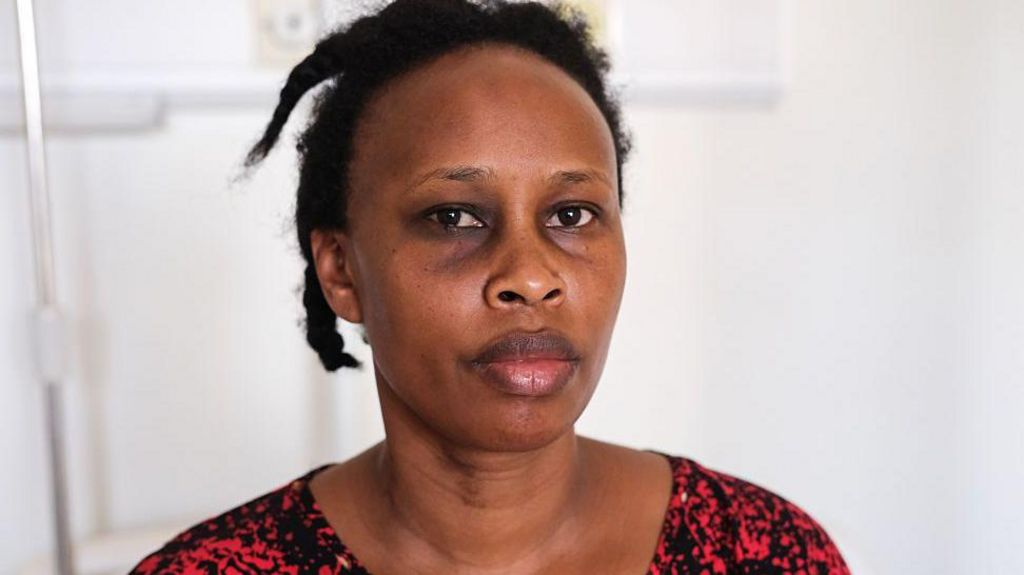
    Bobi Wine, whose real name is Robert Kyagulanyi, has accused military personnel of holding his wife at gunpoint, conducting violent assaults, and confiscating personal documents and electronic devices during the home invasion. From her hospital bed, Barbara Kyagulanyi provided harrowing details of the encounter, describing how dozens of armed men—some in military attire—forcibly entered their home, demanded information about her husband’s whereabouts, and subjected her to physical violence when she refused to cooperate.

    The alleged assault included being struck in the face resulting in a torn lip, lifted by her waistband while being choked, and having her blouse forcibly removed leaving her partially exposed. She reported losing consciousness during the ordeal and is currently receiving treatment for both physical injuries and psychological trauma.

    Military Chief Muhoozi Kainerugaba, who is also President Museveni’s son, publicly refuted these claims via social media platform X, stating: ‘My soldiers did not beat up Barbie’s wife. First of all, we do not beat up women. They are not worth our time. We are looking for her cowardly husband not her.’

    Since the election results were announced, Kainerugaba has repeatedly demanded Wine’s surrender and issued explicit threats against the opposition leader. Wine remains in hiding, confirming that his home continues to be surrounded by military forces while expressing gratitude to supporters for ensuring his safety.

    The Uganda Law Society has condemned what it describes as an ‘ongoing wave of detentions, torture and enforced disappearance’ targeting opposition figures and their supporters. According to Kainerugaba’s own statements, security forces have killed 30 supporters of Wine’s National Unity Party (NUP) and detained approximately 2,000 individuals since the election.

    This political crisis unfolds against the backdrop of Museveni’s extended 45-year presidency, with Uganda having never experienced a peaceful presidential transition since gaining independence.

  • ICC judges find former Philippine president Rodrigo Duterte fit to stand trial

    ICC judges find former Philippine president Rodrigo Duterte fit to stand trial

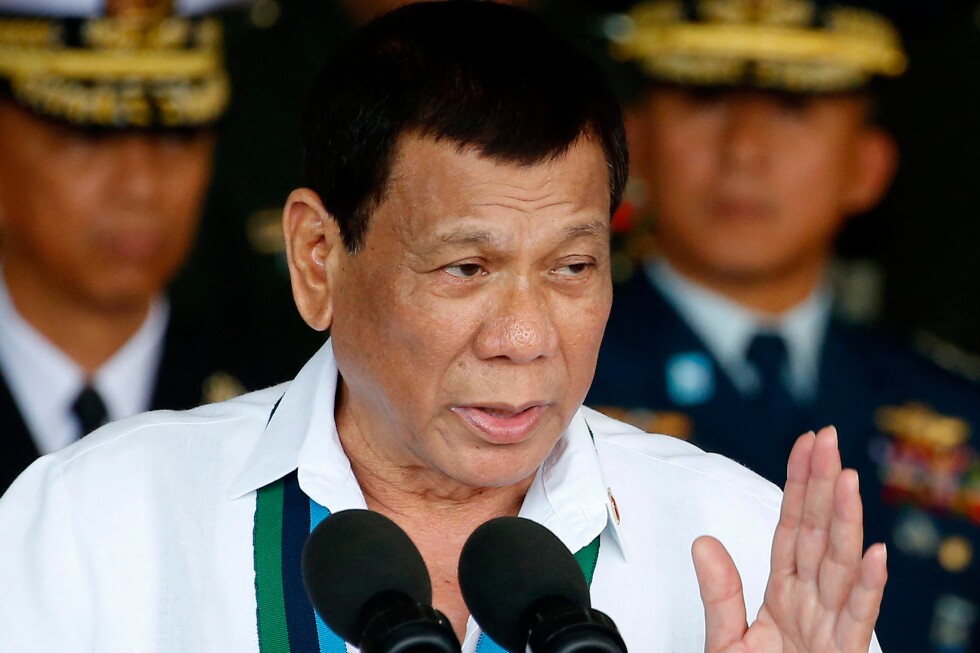
    THE HAGUE, Netherlands — In a landmark judicial determination, the International Criminal Court has declared former Philippine President Rodrigo Duterte medically competent to stand trial, clearing the way for proceedings regarding alleged crimes against humanity committed during his controversial drug war campaign.

    The ICC’s pretrial chamber reached this conclusion following comprehensive medical evaluation by a multidisciplinary team of specialists in geriatric neurology and psychiatry. The court conducted extensive cognitive testing alongside physical and mental examinations to assess the 80-year-old former leader’s capacity to participate in legal proceedings.

    Duterte’s defense team had previously secured a postponement of the September hearing by raising concerns about his deteriorating health while in detention at the court’s facilities. His attorneys argued that his frail condition would prevent meaningful participation in the complex legal process.

    However, after reviewing the medical panel’s assessment, judges determined that Duterte retains sufficient capability to exercise his procedural rights effectively. This ruling paves the way for the court to address the substantive allegations that Duterte authorized and instructed the commission of violent acts, including murder, against alleged drug dealers and users during his tenure as mayor of Davao City and later as president of the Philippines.

    The case represents a significant test of international justice mechanisms, particularly after Duterte withdrew the Philippines from the Rome Statute in 2018—a move rights activists characterize as an attempt to evade accountability. The court has previously rejected defense arguments that the Philippines’ withdrawal negates ICC jurisdiction, asserting that nations cannot abuse withdrawal procedures to shield individuals from justice for crimes already under consideration.

    Human rights organizations and victims’ families have welcomed both Duterte’s arrest in March and the recent fitness ruling. Advocacy groups SENTRO and CATW-AP issued a joint statement proclaiming the decision “a resounding victory for justice and accountability” that reaffirms “no one, not even a former head of state, is above the law.”

    The death toll from Duterte’s anti-drug campaign remains contested, with official police figures reporting over 6,000 deaths while human rights organizations estimate casualties may have reached as high as 30,000 during his presidential term from 2016 to 2022.