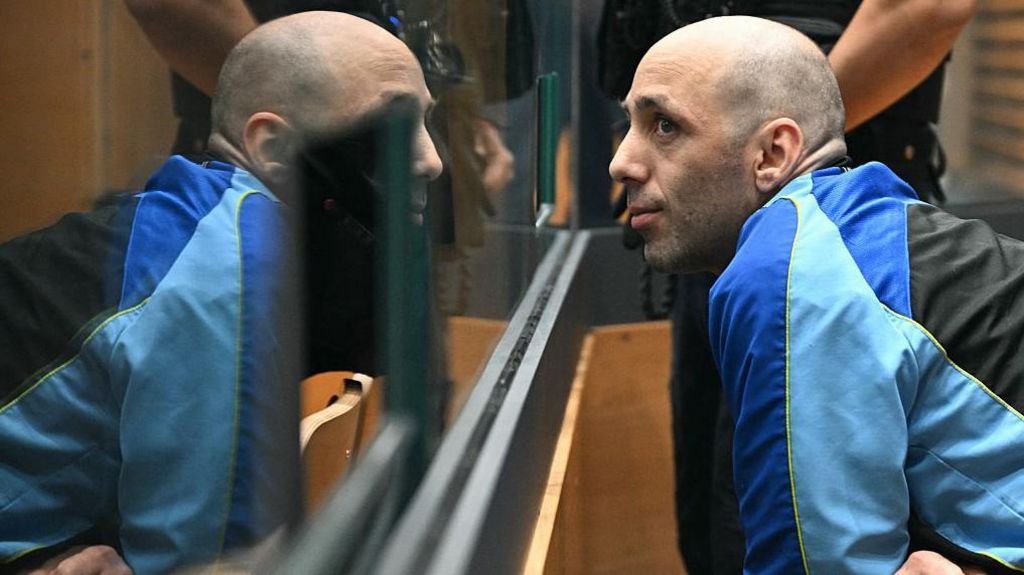
The trial of Cédric Jubillar, a 38-year-old painter-decorator accused of murdering his wife Delphine nearly five years ago, has gripped France as it opened on Monday. The case, shrouded in mystery due to the absence of the victim’s body, has become a social media sensation, with self-proclaimed investigators forming countless chat groups to exchange theories and testimonies. This has frustrated both the police and the families involved. Psychoanalyst Patrick Avrane likened these groups to a ‘bistro counter – but with more people,’ where everyone constructs their own theory. The Jubillar mystery began during the height of the Covid lockdown in December 2020 when Cédric reported his wife missing. Delphine, a 33-year-old night nurse, was in a troubled marriage with Cédric, who was a habitual cannabis user and barely held down a job. The couple, who had two young children, were discussing divorce, and Delphine was in a relationship with another man. Despite extensive searches in the surrounding countryside, Delphine’s body was never found. However, a case was gradually built against Cédric, leading to his detention in mid-2021. The prosecution argues that Cédric had a clear motive due to their impending split, while the defense will question the credibility of key witnesses, including a former cellmate and a former girlfriend who claim Cédric confessed to the murder. The trial, expected to last four weeks, will hear from 65 witnesses and 11 experts, with over 16,000 pages of evidence compiled. Writer Thibault de Montaigu compared the case to a ‘novel by Georges Simenon,’ highlighting the central question: how could a man described as a ‘red-eyed, fuzzy-brained guy who smoked ten joints a day’ have carried out the perfect crime? The court will ultimately decide whether Cédric is a ‘genius bluffer, lucky fool, or poor innocent.’
博客
-

Trump’s immigration war pivots to Asian talent
The Trump administration has recently intensified its stance on immigration, targeting both illegal and legal pathways, including the H-1B visa program, which is crucial for the U.S. tech industry and academia. On September 19, President Trump issued an executive order imposing a $100,000 annual fee on employers hiring H-1B workers, a move that could effectively dismantle the program. This decision sparked immediate backlash, with critics arguing it would severely disrupt the tech sector and universities that rely on skilled foreign workers. The administration quickly backtracked, clarifying the fee would be a one-time charge and exempting existing visa holders. However, the order remains a significant blow to skilled immigration. Additionally, a recent ICE raid on a Hyundai battery factory in Georgia, resulting in the arrest of 475 South Korean workers, has further strained U.S.-South Korea relations and threatened foreign investment. These actions highlight the administration’s broader anti-immigration agenda, which experts warn could harm America’s economic competitiveness and global standing.
-

Kenya toasts success of golden girls in Tokyo
Kenya has emerged as a powerhouse in global athletics, with its female runners leading the charge at the 2025 World Athletics Championships in Tokyo. The East African nation secured second place in the medal table, trailing only the United States, thanks to an extraordinary performance by its women athletes. Out of Kenya’s seven gold medals, six were won by female runners, dominating events ranging from the 800m to the marathon. The championships witnessed historic moments, including Lilian Odira’s stunning victory in the 800m, where she shattered a 42-year-old championship record and her personal best by nearly two seconds. Odira, alongside 1500m champion Faith Kipyegon and marathon winner Peres Jepchirchir, all mothers, showcased that motherhood is no barrier to athletic excellence. Former world 800m champion Janeth Jepkosgei highlighted the cultural shift in Kenyan athletics, emphasizing that these athletes are role models for young African girls, proving that they can excel even after starting families. Beatrice Chebet, the reigning Olympic champion and world record holder, achieved the rare 5,000m-10,000m double, becoming only the third woman in history to do so at a World Championships. Faith Kipyegon, who won her fourth world 1500m title, matched the legendary Hicham El Guerrouj’s record, further cementing her legacy. While Kenya’s women athletes soared, Emmanuel Wanyonyi was the sole male gold medalist, adding the world 800m crown to his Olympic title. The championships also saw Botswana and Tanzania making history with their first-ever gold medals in the men’s 4x400m relay and marathon, respectively. Kenya’s success at the championships underscores a golden era for its female athletes, inspiring a new generation and challenging cultural norms.
-
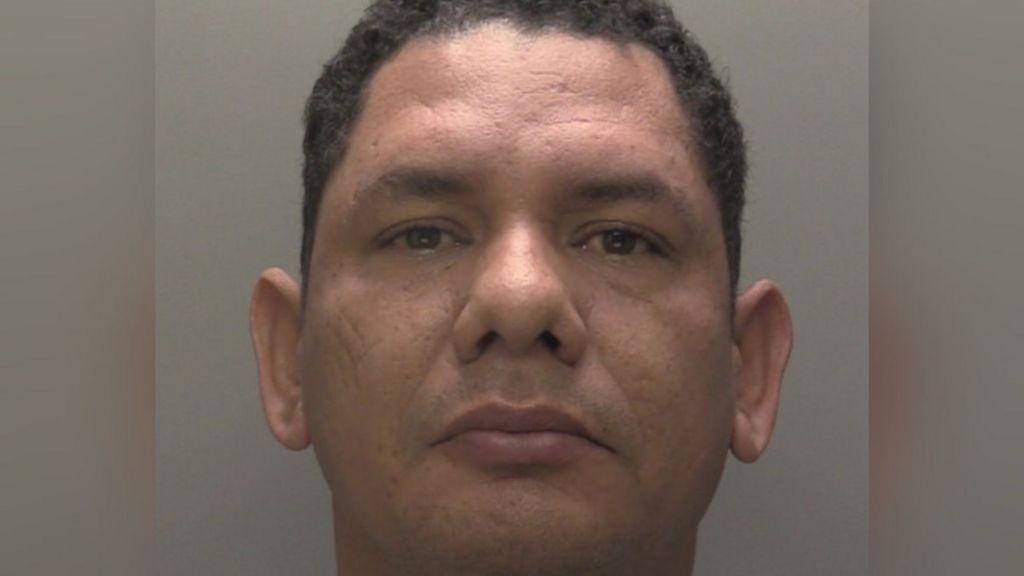
Colombian jailed for £42m cocaine smuggling plot
A Colombian national, Didier Reyes, has been sentenced to 13 years and six months in prison for his pivotal role in one of the UK’s most significant drug seizures. The National Crime Agency (NCA) intercepted over half a tonne of cocaine, valued at more than £42 million, in May 2024. The drugs were smuggled into the UK via a boat landing in Easington, East Yorkshire. Reyes, 40, pleaded guilty to importing cocaine at Hull Crown Court, acknowledging his involvement in the operation. The court revealed that Reyes traveled from Colombia to the UK under the guise of seeking employment in London, using a false identity to book a hotel in Hull. The drug gang utilized vans and an inflatable boat to retrieve waterproofed bales of cocaine dropped by a larger ship in the North Sea. Upon landing near Easington, the gang was apprehended by NCA officers as they checked into a local pub. Judge Mark Bury emphasized Reyes’ significant role in the operation, citing text messages on his phone that indicated direct communication with higher-ranking cartel members in Mexico. Reyes was described as a key intermediary ensuring the safe transport of the cocaine. The judge commended the NCA for their efforts, stating that the seizure had significantly disrupted the UK’s cocaine supply chain. Earlier, two Scottish men, Mark Moran and Daniel Livingstone, were sentenced to 15 years and seven years and nine months, respectively, for their involvement in the plot. NCA Senior Investigating Officer Alan French highlighted Reyes’ crucial role in facilitating the smuggling attempt, noting that without his coordination, the cocaine would not have reached Moran and Livingstone.
-

Thousands protest in Brazil against bill that could grant Bolsonaro amnesty
Tens of thousands of Brazilians took to the streets in major cities on Sunday, voicing their opposition to a controversial bill that could grant amnesty to former President Jair Bolsonaro and his co-defendants. Bolsonaro, who was recently convicted of orchestrating a coup attempt and sentenced to 27 years in prison, remains under house arrest pending appeals. However, his allies in the Chamber of Deputies have expedited legislation that could spare him and his associates from incarceration. Protesters, brandishing placards with messages like ‘shameless Congress’ and ‘the people are sovereign,’ also condemned a constitutional amendment that would complicate criminal proceedings against lawmakers. The amendment, dubbed the ‘Banditry Bill’ by critics, requires secret congressional approval before any legislator can be charged or arrested. Supporters argue it protects lawmakers from ‘judicial overreach,’ while opponents view it as a shield for impunity. The demonstrations, backed by trade unions, social groups, and left-wing parties, drew significant crowds, with over 40,000 attendees in Rio de Janeiro alone. Renowned musicians Chico Buarque, Gilberto Gil, and Caetano Veloso performed at the Rio event, energizing the protesters. President Luiz Inácio Lula da Silva expressed solidarity with the demonstrators on social media, vowing to veto the amnesty bill if it passes the Senate. The protests highlight the deep polarization in Brazil, with Bolsonaro’s supporters staging counter-demonstrations two weeks prior. The Supreme Court’s ruling on Bolsonaro’s coup attempt, which culminated in the January 2023 storming of government buildings, remains a contentious issue. While 50% of respondents in a recent poll believe Bolsonaro should serve prison time, 43% oppose his incarceration, reflecting the nation’s divided stance on justice and democracy.
-
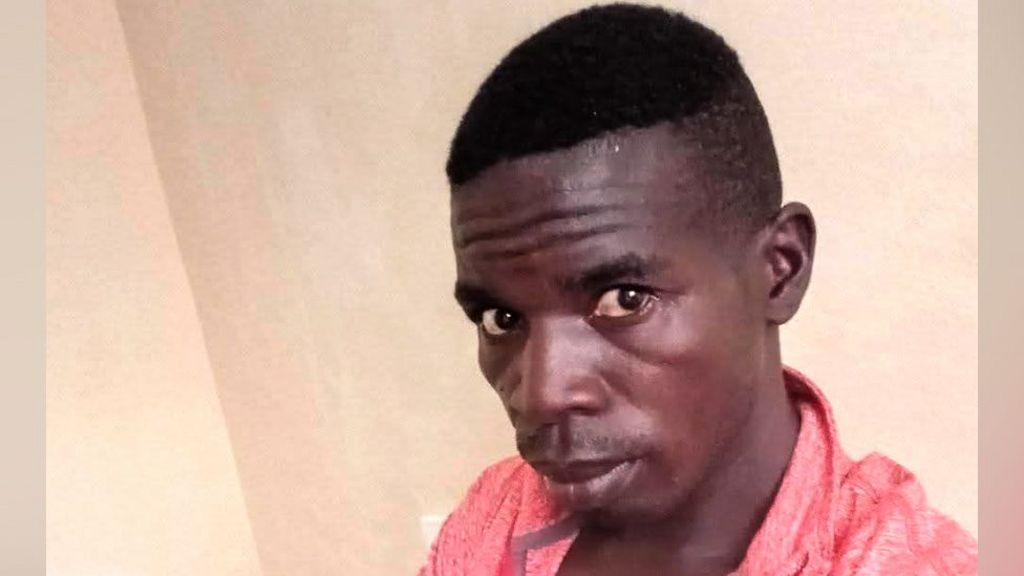
‘I’m Kenyan, don’t shoot’ – the athlete who says he was duped into the Russian army
In a heart-wrenching video released by a Ukrainian army brigade, Evans Kibet, a 36-year-old Kenyan athlete and prisoner of war, tearfully pleaded not to be sent back to Russia, fearing for his life. The aspiring long-distance runner, dressed in a red sports top with the brigade’s flag behind him, claimed he was deceived into joining the Russian army and is desperate to return home to his 16-year-old daughter. The 57th Separate Motorised Infantry Brigade, which shared the video on Facebook, stated that Kibet had fought on the enemy’s side, leaving the credibility of his emotional appeal to viewers’ discretion. The brigade confirmed the interview was conducted with Kibet’s consent, though the BBC has not independently verified this. Kibet’s case highlights the plight of foreign recruits in the Russian army, many of whom are reportedly from poorer countries and end up in Ukrainian prisoner-of-war camps. Petro Yatsenko, Ukraine’s spokesperson on POW treatment, revealed that citizens from Somalia, Sierra Leone, Togo, Cuba, and Sri Lanka are among those currently held. Kibet’s family in Kenya is in shock, with his cousin Edith Chesoi expressing deep trauma and sleepless nights. Known as a humble and dedicated athlete, Kibet had built his life around running, competing in lesser-known races across Europe and Asia. Friends say he had been struggling financially, which may have led him to accept an offer from a sports agent to travel to Russia for races. Kibet insists he went as a visitor, not for military purposes, but was coerced into signing Russian-language documents that bound him to the army. After a week of basic training, he escaped during his first mission and surrendered to Ukrainian soldiers. Kibet’s family is urging Kenyan authorities to intervene, and a senior foreign ministry official assured that the government is actively pursuing the matter. Ukraine has expressed openness to repatriation negotiations if Kenya shows interest. For Kibet’s loved ones, his safety is the only priority. ‘If he made a mistake, let them forgive him. We only want him back,’ his brother said.
-
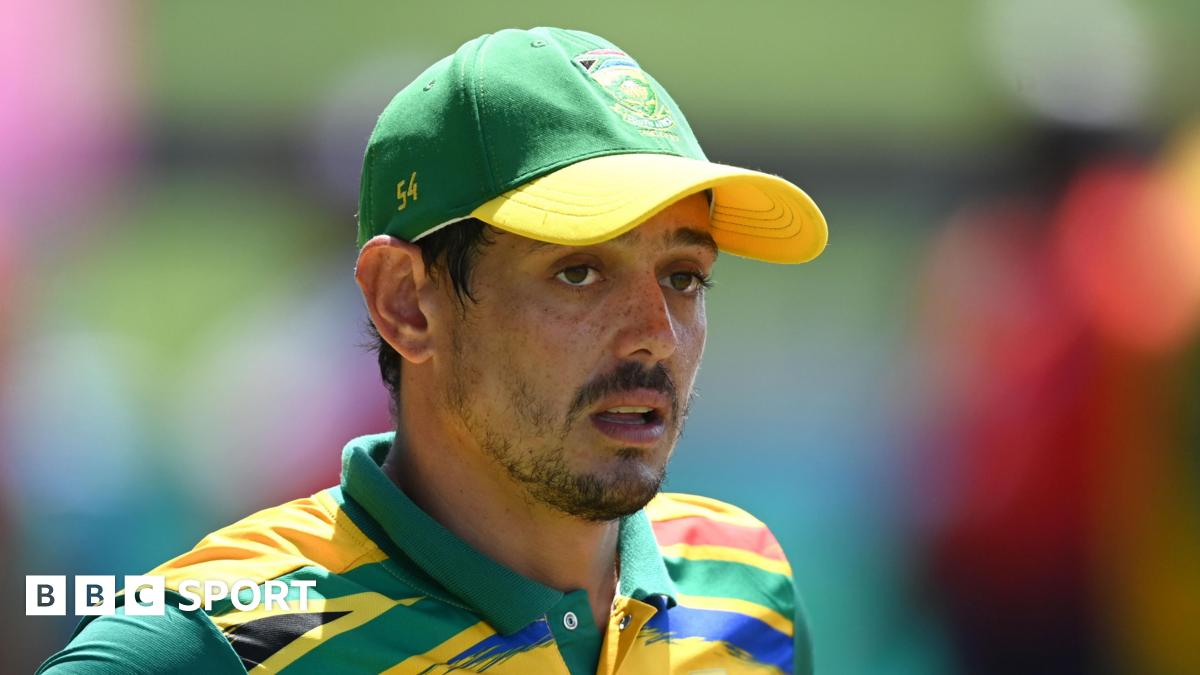
South Africa recall De Kock as he ends retirement
In a surprising turn of events, South African wicketkeeper-batsman Quinton de Kock has reversed his retirement from One-Day Internationals (ODIs) and has been recalled to the national squad for the upcoming series against Pakistan. The 32-year-old, who retired from ODIs after the 2023 World Cup in India, will now feature in both the ODI and T20I series starting next month. This decision comes ahead of two major global tournaments: the T20 World Cup in 2026, co-hosted by India and Sri Lanka, and the 50-over World Cup in 2027, which South Africa will co-host. De Kock, who last played for the Proteas in the T20 World Cup final in June 2024, has been a dominant force in white-ball cricket, amassing 21 ODI centuries since his debut in 2013, trailing only Virat Kohli and Rohit Sharma in this period. His return is seen as a significant boost for South Africa, especially after the recent retirement of Heinrich Klaasen, one of the world’s leading T20 batters. South Africa’s head coach, Shukri Conrad, expressed his enthusiasm about De Kock’s return, stating, ‘Quinton’s return to the white-ball space is a major boost for us. His quality and experience will undoubtedly benefit the team.’ De Kock has been active in various T20 leagues this year, including the SA20, Indian Premier League, Major League Cricket, and the Caribbean Premier League. South Africa’s tour of Pakistan will include two Tests, three ODIs, and three T20s, starting on October 12. Captain Temba Bavuma will miss the Tests due to injury, with Aiden Markram stepping in as the leader. Donovan Ferreira will captain the team in a one-off T20 against Namibia following the Pakistan tour.
-

Botswana declares public holiday after ‘historic’ athletics gold medal
Botswana has made history by becoming the first African nation to win the men’s 4×400 meters relay at the World Athletics Championships in Tokyo. In recognition of this monumental achievement, President Duma Boko has declared Monday, 29 September, a public holiday, coinciding with the eve of the country’s Independence Day. The victorious team, comprising Lee Bhekempilo Eppie, Letsile Tebogo, Bayapo Ndori, and Busang Collen Kebinatshipi, triumphed over the United States, the reigning champions of the past decade, in a thrilling rain-soaked race. South Africa secured the third position. President Boko, addressing the nation from New York where he is attending the UN General Assembly, lauded the athletes as ‘Botswana’s natural diamonds,’ emphasizing their role in elevating the nation’s global stature. This victory marks Botswana’s best-ever performance in the championship, with the country securing fifth place overall in the medal standings, behind the US, Kenya, the Netherlands, and Canada, with two golds, one silver, and a bronze. This achievement follows last year’s historic moment when Letsile Tebogo clinched Botswana’s first Olympic gold in the men’s 200 meters in Paris, a feat that was celebrated with a half-day holiday and a grand reception at the National Stadium in Gaborone. President Boko described the current victory as ‘electric,’ underscoring its significance in Botswana’s rising prominence on the world stage.
-
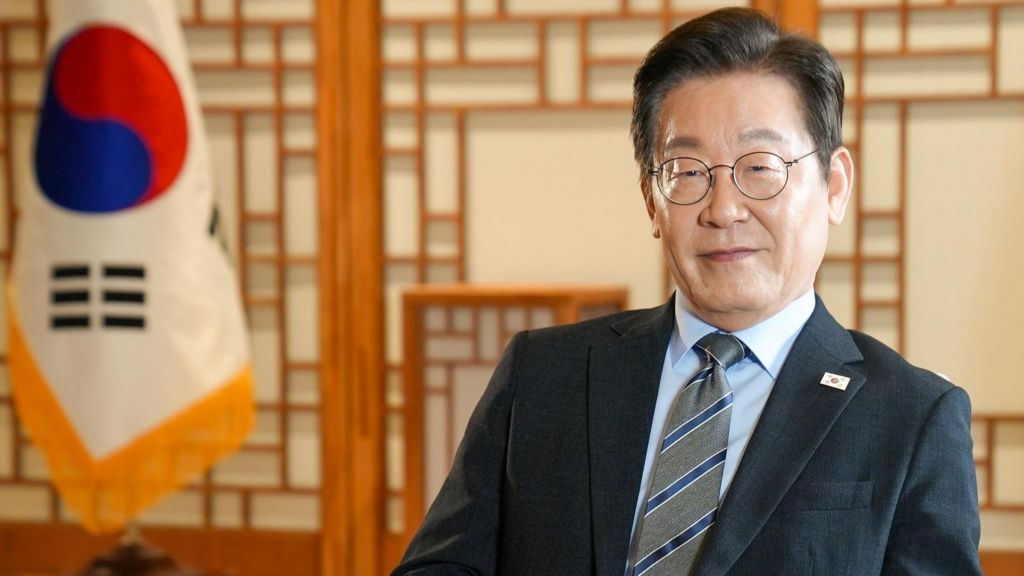
South Korea would accept a Trump-Kim deal to freeze nuclear programme, president tells BBC
In a recent interview with the BBC, South Korean President Lee Jae Myung expressed his willingness to support an interim agreement between former U.S. President Donald Trump and North Korean leader Kim Jong Un, which would involve freezing North Korea’s nuclear weapons production rather than pursuing full denuclearization. President Lee described this approach as a “feasible, realistic alternative” to the long-term goal of denuclearization, emphasizing the need for pragmatic solutions in the face of North Korea’s ongoing nuclear advancements. North Korea, which declared itself a nuclear power in 2022, has consistently vowed to retain its nuclear arsenal, making immediate denuclearization an unlikely prospect. Lee argued that halting North Korea’s nuclear and missile development would offer significant benefits while maintaining the ultimate goal of denuclearization. President Lee, who assumed office in June, has prioritized reducing tensions with North Korea, a stark contrast to his predecessor Yoon Suk Yeol, whose aggressive policies led to heightened regional instability. Lee has also called for the resumption of nuclear talks between the U.S. and North Korea, which stalled in 2019 after the U.S. demanded the dismantling of North Korea’s nuclear facilities. He expressed optimism about the potential for renewed dialogue, citing a degree of mutual trust between Trump and Kim. However, Lee acknowledged the challenges posed by the growing alliance between North Korea, China, and Russia, which he described as a “very difficult situation” for South Korea. Despite these complexities, Lee emphasized the importance of maintaining balanced relationships with both the U.S. and China, while cautiously navigating South Korea’s position in a rapidly shifting global order. Domestically, Lee faces a polarized nation still recovering from the political turmoil of his predecessor’s failed martial law attempt. He has taken steps to rebuild trust with North Korea, including halting radio broadcasts into the North, a move criticized by human rights groups. While North Korea has dismissed Lee’s overtures as “delusional,” the South Korean president remains committed to pursuing a pragmatic path toward peace on the Korean Peninsula.
-
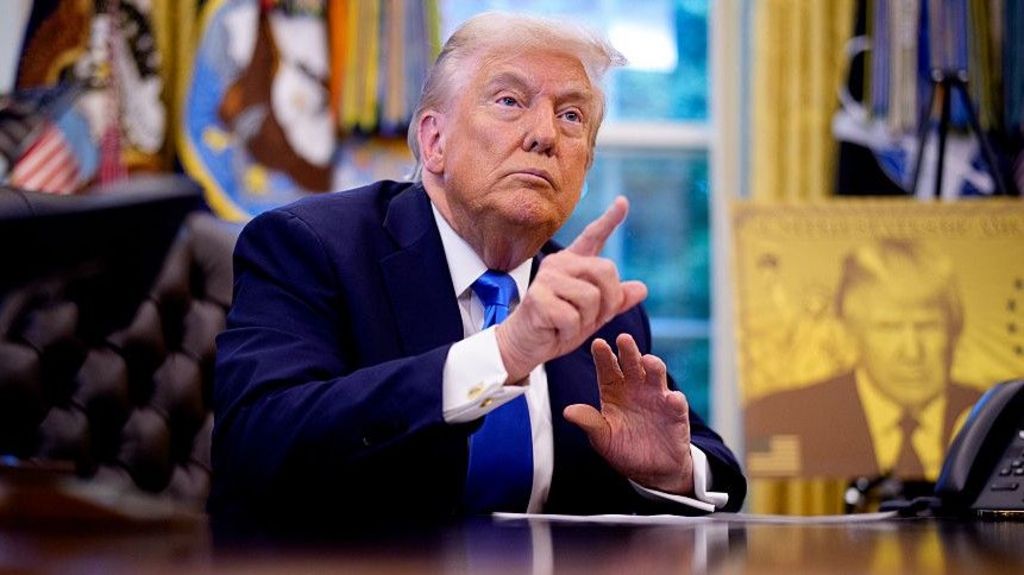
Trump’s $100,000 H-1B visa shock: Why US may lose more than India
The recent announcement by US President Donald Trump to increase the cost of H-1B visas by up to 50 times has sent shockwaves through the tech industry and beyond. The proposed fee hike, raising the cost to $100,000, initially caused widespread panic among Indian workers and Silicon Valley firms. However, the White House later clarified that the fee would only apply to new applicants and be a one-time charge. Despite this adjustment, the long-term implications of the policy remain uncertain, raising concerns about its impact on both the US and Indian economies. The H-1B visa program, which has been a cornerstone of the American tech industry for decades, has allowed millions of skilled workers, predominantly from India, to contribute to the US economy. Indians account for over 70% of H-1B recipients, with significant representation in tech, medicine, and academia. The fee hike, experts argue, could lead to medium and long-term labor shortages in the US, particularly in critical sectors like healthcare and technology. Indian outsourcing giants like TCS and Infosys have already begun adapting by building local workforces and shifting operations offshore. However, the broader impact on the US could be severe, with hospitals facing doctor shortages, universities struggling to attract STEM students, and startups losing access to global talent. Immigration policy analysts warn that the move could force US companies to radically change their hiring policies, potentially offshoring more work and dealing a blow to US innovation and competitiveness. The decision has also left Indian students, who make up a quarter of international students in the US, in a state of uncertainty. Many have already invested significant sums in their education, and the new policy could deter future students from choosing the US as their destination. Legal challenges to the policy are expected, and its full impact remains to be seen. As the dust settles, the H-1B shake-up appears less like a tax on foreign workers and more like a stress test for the US economy and its ability to attract and retain global talent.